Showing posts with label question. Show all posts

Discussion: When Do You Read?

Photo credit: henkrup on Flickr
So over the weekend I read two books in two mornings (George by Alex Gino and Charm & Strange by Stephanie Kuehn, both of which were excellent), and a few days before that I completed my Goodreads challenge of 50 books for this year. Which got me thinking about my reading habits this year.

When I have a lot of work, whether it’s writing or schoolwork or both, I find that I tend to do most of my reading in the afternoon/early evenings, right after I’ve finished my work, but before I’ve checked out for the day. When I took public transportation earlier in the year, I read a lot on the bus, and throughout the school year I occasionally try to read before or between classes.

When I have more free time and/or dedicate a day to reading, as I did this weekend, I’ve found that I really like reading in the morning after I’ve completed my morning work. There was something really nice about cuddling up with a book and reading a large chunk of a story (or, in the case of this weekend, the whole story) and still having the rest of the day to do whatever my heart desires.

So, I guess in a sense, I don’t necessarily read at a consistent time—I just try to steal minutes whenever I can and before I’ve gone into braindead zombie mode (AKA: after 5PM). And sometimes this means I don’t get a whole lot of reading done that day, but sometimes it means I get way more done than I expected.

Overall, I’ve found that making a point to read (almost) every day, even if it’s only a couple pages a day, has not only been great for my reading habits, but has really allowed me to enjoy way more books than I would’ve imagined possible for myself a couple years ago. And I still have eight weeks left to read even more this year. :)

When do you generally read? Do you have a set time and place or are your reading habits more erratic? 

Twitter-sized bite:
When do you usually read? Join the discussion on @Ava_Jae's blog. (Click to tweet

Discussion: Will You NaNo This Year?

Photo credit: mpclemens on Flickr
So NaNoWriMo is THIS SUNDAY—*queue freakout*—and I am buried under revisions. At this point I have no idea whether or not I’ll be able to participate, which isn’t fun especially since I do actually have a half-plotted WIP idea, but revisions have to be my top priority right now (I will talk about this a little in tomorrow’s vlog).

Still! I'm hopeful that maybe, somehow, I’ll finish in time to plot out the WIP idea and try to jump in (and just in case I do—this is my NaNo profile). Not making any promises right now…but we’ll see.

I’m curious, though—who is participating this year? Who is still thinking about it? And remember, I have a NaNoWriMo round-up post with lots of NaNo secrets and tips for your perusal.

Short post is short because I have revisions to do. But let’s hear it: are you participating in NaNoWriMo this year? Why or why not?

Twitter-sized bite:
Will you participate in NaNoWriMo this year? Why or why not? Join the discussion on @Ava_Jae's blog. (Click to tweet)

Discussion: What’s Your Writing Dream?

Photo credit: Loving Earth on Flickr
I’ve often said that every writer’s journey is different, that we all follow different paths and have different goals and methods of getting to our goals. And lately I’ve been thinking about those goals and how every writer has a different writing dream.

I thought it might be fun to share our writing dreams. They don’t have to be realistic, I just thought it’d be a fun and uplifting exercise to share with you guys. :)

For me, my ultimate writing dream is to be able to make a living doing what I love most—writing. I dream of seeing my books on the shelves, of holding a copy of my book in my hand, of walking into a bookstore and seeing my novel there.

What about you?

Twitter-sized bite: 
What’s your ultimate #writing dream? Join the discussion at @Ava_Jae’s blog. (Click to tweet

What Would You Like to See More of in Books?

Photo credit: katerha on Flickr
With the new year well on it’s way and my new reading challenge all set up, I think now’s as good a time as ever to think about books, and more importantly, what I’d love to see more of in my future reading.

To clarify, I’m not saying that any of the elements I mention below aren’t being done—all I’m saying is I’d like to see more. And maybe you would too.

So without further ado, here are five elements I’d like to see more of in my future reading:

  • Diverse characters. I’ve seen a big push for this, especially this year, and I love it. I want to see more characters from different cultures, characters who are disabled, characters who are struggling with mental or chronic illnesses, characters who aren’t defined just by their sexualities or just by their ethnicity or just by their health, but by everything put together. I want diversity within the minorities and I want characters who aren’t just one thing. 

  • Diverse settings. Don’t get me wrong, I love medieval-Europe based fantasies and US-based dystopias as much as anyone else, but what about the rest of the world? One thing I love about Leigh Bardugo's The Grisha trilogy is that it’s a steampunk-like fantasy based off of Russian culture (how cool is that?) and I adored Amanda Sun's Ink for it’s portrayal of (a glimpse, anyway) of modern-day Japanese society. I want more of that.  

  • Unreliable narrators. I can’t even explain to you how much I adore unreliable narrators. Whether they’re deliberately lying or not, I can’t get enough of protagonists who take me on a journey, only to reveal that the journey wasn’t quite like I’d been lead to believe. 

  • Awesome heroines. I want to see girls who embrace who they are, whoever they are. I want to see girls who save themselves, girls who admit they need help, girls whose lives don’t revolve around the next relationship, girls in healthy and loving relationships, girls who are smart, girls who are independent, girls who kick ass and girls who may not kick ass, but sure as hell aren’t waiting around for their prince to come and save them, either. I want to see girls who like to look pretty, girls who don’t care, girls who embrace femininity, girls who fit in with the guys and are comfortable in their own skin. I want to see girls of all shapes, sizes, colors, personalities and everything else, girls who are strong sometimes and broken others, girls who are emotional, girls who are not, and most of all, I don’t want to see them crucified for being themselves. 

  • An expansion in New Adult. Don't get me wrong, Contemporary Romance is great, but I think New Adult has the potential to be so much more than just one subgenre. I've seen some self-published writers push the boundaries in New Adult, and I want to see more—I'd love to see Paranormal and Sci-Fi and Fantasy and Thriller New Adult on the shelves. 

What do you think? Would you like to see more of these or other elements? 

Twitter-sized bites: 
Would you like to see more of something in your reading? Share your thoughts on @Ava_Jae's blog. (Click to tweet)  
What would you like to see more of in books? Join the discussion at @Ava_Jae's blog. (Click to tweet

Discussion: Are Happily Ever Afters Required?

Photo credit: DearPioneer on Flickr
As someone who doesn’t always write happily ever afters, I may be a bit biased in this discussion, but I do think it’s worth discussing nevertheless. 

Like most discussions hosted here at Writability, I don’t think there’s necessarily a right or wrong answer, though I suspect that genre expectations may play a pretty decent role with this topic. People reading horror, for example, have wildly different expectations than those who pick up romance novels. 

But if we’re speaking generally, I suppose the thing to consider is what people generally expect when they pick up a novel, and how acceptable (or advisable?) it is to defy those expectations. 

Usually, in genre fiction, people assume the hero will overcome the antagonist (or antagonistic situation) and live with the spoils of victory, whatever that means for the novel. But what if the hero doesn’t win? Or what if the hero wins, but the victory isn't how they imagined it, or has consequences they didn’t anticipate? 

Personally, I don’t think a happily ever after is a requirement. What is required is that all loose ends are tied up and the story arc comes to completion (more on that in this post)—but that doesn’t necessarily mean your protagonist has to gallop off into the sunset on a white horse. 

To me, bittersweet or even occasionally unhappy endings are a nod to reality. Because sometimes things don’t work out the way we planned or the good outcome we imagined turns out to be not so golden. 

On the other hand, I think it could depend on the reason people are reading: some read to escape reality, others to see echoes of reality or view their reality in a new way. For escapist readers, a not-so-happily-ever-after may be disappointing. 

In the end, you can’t make everyone happy, and as I said before, I don’t think there’s really a right or wrong answer. But it’s certainly something to think about. 

What do you think? Are happily ever afters a requirement?

NOTE: Let’s avoid spoilers, yes? If you know of a book, popular or not with an unhappy ending, feel free to refer to the book, but please avoid details and title mentions. :)

Twitter-sized bites: 
Do you think happily ever afters are a requirement? Join the discussion at @Ava_Jae's blog. (Click to tweet)  
Writer @Ava_Jae muses on the necessity of happily ever afters. What do you think? (Click to tweet

Discussion: Does the Protagonist Have to Be Likable?

Photo credit: KendraMillerPhotography on Flickr
So today I’m asking a question I don’t actually know the answer to. But I think it’d be interesting to discuss.

I’ve often heard of people putting a book down (either literally or in a review) because they contain unlikable protagonists. Of course, what qualifies as likable is entirely subjective, but it’s made me wonder—do our protagonists have to be likable?

I don’t think this is necessarily a hard yes or no answer. I think protagonists should be likable to an extent—if they’re entirely unlikable not many people will want to put up with them—but the goal shouldn’t be to aim for perfection by any stretch (in fact, that’d probably only aggravate the situation).

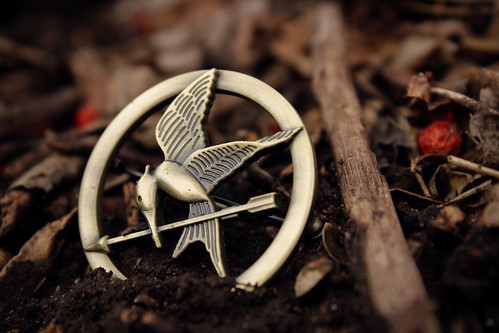
While I don’t think it’s impossible to enjoy a book with an unlikeable protagonist (I personally didn’t find Tris from the Divergent series to be especially likable, nor Warner from Destroy Me…at the beginning, anyway), I suspect this may vary from reader to reader. I have a friend who stopped reading Hunger Games because she found Katniss unlikable, and I’ve seen others rate books poorly because they weren’t a fan of the protagonist.

So now I ask you: do you think it’s necessary for the protagonist to be likable? 

Twitter-sized bites: 
Do you think it's necessary for the protagonist to be likable? Join the discussion at @Ava_Jae's blog. (Click to tweet)  
"Protagonists should be likable to an extent...but the goal shouldn’t be to aim for perfection." (Click to tweet)

My Favorite List: What Do You Want to Write About?

Photo credit: Chapendra on Flickr
When I’m ready to think about starting a new manuscript, the very first thing I do, before I even begin brainstorming, is revisit my favorite list of all time.

This is the list that reminds me why I love to write. It helps me to remember all of the potential for great stories out there, and most of all, it inspires me with all of the things I still want to write about. Because it forces me to ask just that:

What do I want to write about?

This is a list that I add to and rewrite and change all the time. It’s a springboard of ideas, both vague and specific.

I love working on this list, because it makes me excited, both for stories I haven’t written, and for books that I have that cross off items from the list. But most of all, it serves as guaranteed inspiration to launch me into brainstorming.

The list can include anything, from a specific manuscript idea to overcoming a struggle you have with writing. It can be an image, a character name, a trait, an idea, a world, a writing characteristic, or a goal.

I’ve rewritten my list several times (in part because I keep losing the hard copy, but never mind that). To give you an idea, here are a few items on my most recent list:

  • Diverse characters
  • Rich, interesting worlds
  • Combining Sci-Fi & Fantasy
  • Flawed characters 
  • Sympathetic antagonists 
  • Ninjas

I also have some characters names and more plot-specific items, but hopefully you get the idea.

This is the list I go to whenever I’m low on inspiration, or am struggling while trying to brainstorm, or even just want a refresher. It’s my favorite list, and one that I intend to continue to use over the years.

Do you have a what I want to write about list? What are some items that are (or would be) on it? 

Twitter-sized bites: 
Do you keep a list of what you want to write about? Here's why one writer swears by it. (Click to tweet)  
What do YOU want to write about? Writer @Ava_Jae shares her favorite inspiration list. (Click to tweet

Writing Discussion: Do You Work on Multiple WIPs at Once?

Photo credit: buechertiger on Flickr
Every so often on Twitter, I will come across a writer drafting multiple WIPs at once. 

While this shouldn’t surprise me, as I’ve heard of more than a handful of writers (both published and not) who work in much the same way, the discovery inevitably merits raised eyebrows on my part and proud smiles (or fits of nervous laughter) from the other writer. 

I am forever in awe of writers who can pull this off.

You see, I am a very focused person, particularly when it comes to writing and reading. While I often have works marinating in my hard drive for later reworking, when it comes to first drafting or editing, I focus all of my energies on that one WIP. I immerse myself in the story entirely and shut out the rest of my writings until I’ve finished a round of editing, or writing, or whatever the case may be.

What trips me up, I think, is jumping between story worlds. While it clearly works for some writers, it’s something that I find rather jarring.

I’m the same way with reading. Unless two books are entirely different (ergo: a writing craft book and a novel), I don’t often jump between stories, although I do make exceptions. This does occasionally mean that I’ll fall behind in my reading goal when I hit a book that I’m having trouble getting through, but that’s another matter altogether.

Despite my aversion to working on multiple WIPs at once, however, I am well aware that many writers work well jumping from work to work. And so I’m interested to hear from you.

Do you work on multiple WIPs at once? Why or why not?

Twitter-sized bites: 
Writers: Do you write multiple WIPs at once? Join the discussion at @Ava_Jae’s blog! (Click to tweet
Are you a hyper-focused writer, or do you prefer to work on several WIPs at once? (Click to tweet

Do You Listen to Audiobooks?

Photo credit: yum9me on Flickr
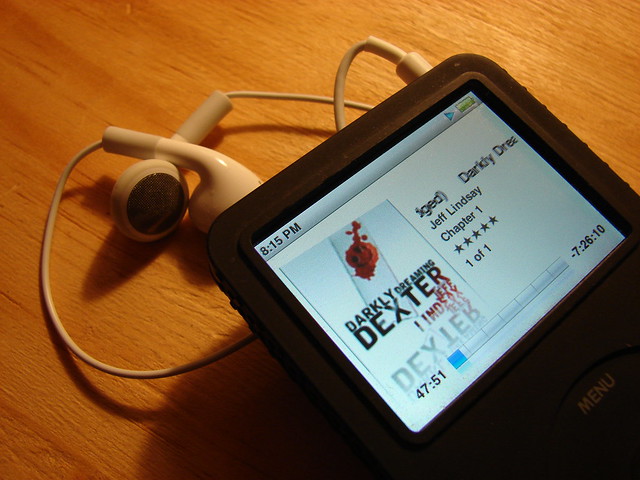
After discussing whether I prefer print or e-books while reading (spoiler: they both have pros and cons, so I don't really have a preference), it was brought to my attention that I totally missed another reading format altogether.

I'm talking about audiobooks.

Now, I didn't neglect to mention them because I consider them somehow inferior to their print & e-book counterparts (I don't). Truth be told, while writing the post, I forgot about audiobooks altogether because I don't listen to them.

I'll admit it's been an extraordinarily long time (years) since I've attempted to listen to an audiobook, but the reason I never really got into it was because I found that I'm too ADD to get the most out of the experience. I tend to daydream while listening, and before I know it, it's been ten minutes and I have no idea what just happened, or how the characters ended up in a new setting, or—how did I get to chapter eighteen?

I do this with TV shows all the time, particularly if I'm multitasking, so I'm well acquainted with the rewind button, but that's besides the point. For me, when I read, I really like to focus on the book—which is what makes reading (versus listening) work so well for me. While I do occasionally catch myself daydreaming while reading (usually a sign that I'm getting bored with the section), it doesn't happen nearly as often as when I am listening to something, regardless of how interesting it is.

The other issue I have with audiobooks is the voice of the narrator—while reading, I develop my own voices for every character in my head (I know I'm not the only one), so occasionally when I hear a book being read aloud, I'll catch myself thinking, "That's not how I imagined that character to sound" or "That character sounds weird" or something that otherwise distracts me from listening to the narration and I start to miss things.

Now. I'd like to clarify that while I've yet to have audiobooks click with me (and I'm certainly not saying they never will!), I don't think by any means that there's anything inherently wrong with them. I understand the advantages to audiobooks—like being able to read (or listen) to a book while driving, or exercising, or a variety of other tasks that would be impossible to do with a print or e-book. I've heard many people say that the main reason they're able to read half as much as they do is because they listen to audiobooks, and I think that's entirely fantastic.

As for now, at least, audiobooks aren't my top choice, but I do intend to try again with the hopes that an audiobook will steal my heart. Books are books, after all.

Do you listen to audiobooks? Why or why not? If so, any recommendations?

Discussion: What's Your Favorite Word Processing Program?

Photo credit: vkotis on Flickr
I am writing this post in Pages. This is normal for me, as I transitioned from writing posts in Word to writing posts in Pages sometime last fall. At the time it was mostly out of necessity—my new computer didn’t have Word and it was less expensive to buy Pages than to buy the whole of Microsoft Office.

After I was gifted with a copy of Office, however, I’d expected that I’d go back to my Word-using days and that would be the end of it.

Except it wasn’t.

I can’t fully explain why I still use Pages to write my blog posts. I tried switching back to Word, but it felt weird—the format was different, the posts looked different and I found I was more comfortable writing my posts in Pages, as I’d become accustomed to. However, while Pages has become my blog post writing go-to software, I don’t use it for novel writing or editing.

I’ve written a post on why Scrivener is awesome in the past, so I won’t reiterate the whole thing, but basically I’ve found that Scrivener is my favorite software for first draft writing and major plot structure changes, largely because of the cork board and daily writing goal features. As I start to get into critiques and more detailed edits, however, I switch over to Word.

Maybe there’s a commenting feature in Scrivener and I just haven’t found it, but Word is a pretty universal program and I have yet to find software to beat it’s commenting system. I love that I can color code my comments by CP and perhaps the habit-forming part of me doesn’t want to let go of Word after using it for years as my novel-writing software. I still translate all of my changes back to Scrivener (copy and paste is a beautiful thing), but for final edits, at least so far, I like to use Word.

So I’m weird and I switch around between Pages, Scrivener and Word, but now I want to hear from you: what word processing programs do you use, and which is your favorite? 

Writing Discussion: Where Do Your Novel Ideas Begin?

Photo credit: Paumadou on Flickr
From the outside, novel-writing appears to be a somewhat nebulous process. Writers wrangle stories from sheer imagination and layer them with complexities and emotions, plot twists and character arcs that leave readers craving more.

The inception of that novel idea is often regarded with some wonder, even to writers. For some, the idea begins as a sentence, or a scene, or a world or situation. For others it begins with a character, or a line of dialogue, or a stray echo after a dream.

I’d like to hear from you: where do your novel ideas begin?

I am absolutely a character-based writer. Every one of my WIP ideas has started with a character, with a world and situation built around them. I find it very difficult to build a character to fit a story—instead, the story evolves from the character.

This is likely a large reason why I tend to neglect setting in my first drafts—I focus instead on learning about my characters, what makes them tick, what makes them them and worry about nailing down a setting in future revisions. Of course not all writers work like that, but character to me is the heart and soul of the novel. I could have a fantastic premise, but if I don’t have equally spectacular character to go with it, the idea fizzles away.

I’m well aware, however, that there are many writers who function quite differently—writers who create an intricate, interesting setting and fantastic premise long before they begin to think about who populates the world. And then there are writers who work somewhere in between—those who develop the two simultaneously and integrate them at the same time.

So now you tell me, writers: where do your novel ideas begin?

When Writing, Cannibalize Everything

Photo credit: Jody Art on Flickr
It happened again! One of you fabulous readers (thank you, Robin) asked a question I haven’t yet answered that I thought most certainly merited a post (yay!). The question was this:
“I read your post about reading what you write, and coming to love your genre. So I was wondering, what if one incorporates other genres and mediums? One of my WIPs is a YA-fantasy adventure with a lot of fairytale elements, but I've taken what I learned reading horror (mostly of Poe) to create dread in my story, and I've paid attention to cinematic techniques seen in films by Studio Ghibli to create an endearing and living world. What is your perspective on cross-referencing genres and mediums?”
I’m sure most of you have heard that you should write what you know. While I partially agree with that (more on that topic some other time), I think it applies especially well when referencing incorporating what you have learned from creative mediums, whether writing, movies, music, etc. You see, I’ve written in the past about why it’s so important for writers to be well-read, and this question right here is one of the many reasons why.

While I tend to read a lot of YA and some MG novels, within those age groups I read from various genres: paranormal fantasy, straight fantasy, sci-fi, dystopian, etc. And from every book that I’ve read, regardless of the genre, I’ve learned something—whether it’s the importance of voice, or including poetry in prose, or what a good opening and memorable characters look like. And when I write and revise, I make a point to look back on those lessons and continue to learn new ones from whatever books I read throughout the course of the year.

One of the most important tasks a writer has is to absorb everything possible—what rain feels like in November when you’ve forgotten an umbrella, how that movie gave you the chills, why that book was so gripping that you stayed up until three in the morning on a work night to finish it, how that song makes you pause every time it comes up on your playlist. Nothing is sacred to the writer—not that terrible cut that required stitches, or your first kiss, or the first time you laid eyes on your newborn. Writers make note of and store their experiences for writing reference later on.

In short, writers cannibalize everything. Or at least, they should. And when it comes to genre, I don’t believe it’s any different.

Let’s think for a moment: when is the last time you read a book or watched a movie that was 150% one genre? Nearly every non-romance genre has some sort of romantic subplot (even The Lord of the Rings which is as straight fantasy as it gets has romance) and many non-mystery novels have some sort of mysterious intrigue and so on. Don’t believe me? Let’s take a look at a couple novels.

  • Across the Universe by Beth RevisAcross the Universe is undoubtedly a YA Sci-Fi novel, but it certainly cross-references other genres as well, the most obvious of which include a romantic subplot and murder mystery. That doesn’t make it a mystery or romance novel, but it still has elements of those genres. To further draw a point, it’s listen on Amazon under “Teens > Mysteries” and at Barnes & Noble.com under “Teens- Romance & Friendship” and “Teens- Science Fiction.” 

  • The Fault in Our Stars by John Green—I would have thought that The Fault in Our Stars would be listed under YA Contemporary, but I’ve found that it is often listed under romance. Regardless, it has elements of romance, realistic fiction, humor and even tragedy. That doesn’t mean you’re going to find it in the Humor section at Barnes & Noble (if you do, it’s been terribly misplaced), but you can’t deny that elements of those genres exist within the novel. It’s listed on Amazon under “Teens > Love & Romance” and at Barnes & Noble.com under “Teens: Realistic.” 

Just two examples of many, but the point is this: genre is rarely cut and dry and you certainly shouldn’t be afraid of drawing from absolutely everything you’ve learned along the way. Your writing will be better for it.

How do you pull from other genres, mediums and experiences in your work? What multi-genre novels can you think of as examples?

Book Titles: How Do You Choose?

Photo credit: dstrelau on Flickr
Choosing an intriguing title for your book is arguably one of the most important parts of marketing. After all, the very first impression any reader will have of your book, before they even glance at your writing, before a book cover is chosen and the summary is read, is the title you choose to represent your story.

As I'm a writer who focuses on character first (as opposed to working out the setting first, then populating the story), my working titles tend to be one of the first things I know about the story: the protagonist's first name. For me, the process of choosing the title is a somewhat nebulous thingabout half of the time it reveals itself while I'm writing the first draft, occasionally it crops up before I even begin writing, and the rest of the time it's something I brainstorm after the first draft is completed.

In the latter cases, choosing a title (to me) can be one of the more difficult parts of writingalthough I'll admit that's probably at least partially due to the fact that I have a tendency of being extremely indecisive. Regardless, choosing a title for your book doesn't have to be a stressful experiencein fact, it can be pretty enjoyable.

When brainstorming book titles I recently tried a new method that I found I really liked, based off of a suggestion I found online (if I find the original post with the exact process, I'll let you guys know). You start with creating a list of themes, images and potential title ideas. As is the case with most brainstorming, this is a stage where you don't censor. Anything you think of goes on the listeven if it's ridiculous or a terrible-sounding title. The idea is to write as many ideas as you can without censoring your writing at all, so that you can go back and eliminate choices later.

Once you have a sizable list, start making note of ideas or images that you like. This is also about the time that you start taking a look at book titles for other works in the same genre, as your title should sound like it fits with other novels that it would potentially be sharing the shelf with. After some mix and matching and comparing to other titles, you choose my favorite potential book titles and get some feedback. If one title stands out as a particular favorite, you know you have a winner.

Choosing a title, however, isn't a writing process that's set in stone: I for one am still experimenting with different methods and I'd like to hear yours.

So now you tell me: how do you choose titles for your WIPs?

Discussion: Can Anyone Become a Great Writer?

Photo credit: cindiann on Flickr
I came across an interesting article the other day from TIME Entertainment on NaNoWriMo. It questioned whether NaNoWriMo was a positive movement for writers or if it’s actually harmful, and while the article brought up some thought-provoking arguments, there was one point in particular that really caught my attention.

The article reads:
"[A] common complaint is that NaNoWriMo devalues writers' talent by indulging the cliche that everyone has the potential to be a great writer if only they'd sit themselves down and actually write. 'NaNoWriMo relies on the peculiarly American belief that every person has a story—or a novel, or a book of any kind—inside...' the Economist's Prospero blog once sneered. 'There is no analogous drive to write the Great French Novel, or the English, or the German. They very notion that a novel is in everybody's grasp, and could be knocked out as a draft in just a month, is far more likely to induce some cringing in other countries.'" (Read the full article here).
The thing is, I really do believe that with enough practice, dedication and determination anyone can become a great writer. We writers aren't born with some magical ability to write exponentially better than everyone else—we don't come out of the womb with full knowledge of the English language and how to write beautiful images and compelling stories. We learn how to write like everyone else—starting with our names in preschool and moving on from there. I reject the idea that in order to be great at something you have to be born with some magical fairy dust that makes you extra talented in a certain field—writing included.

The difference between writers and everyone else isn't that we're born with a supernatural ability to write well—it's that we love to write. The difference between writers and everyone else is that we do spend the extra time needed to hone the craft of writing and learn how to tell stories people want to read. Not everyone wants to be a writer, and not everyone who thinks they want to be a writer loves it enough to stick with it until they're skilled enough to reach a level of successful publication. I believe that anyone can become a great writer, but not everyone will reach that level—or even attempt to, for that matter.

In my mind, NaNoWriMo doesn't devalue writers—it empowers them. It gives writers who are afraid of writing something terrible, of failing halfway through, of not writing well enough to give it a try and write anyway. It reminds writers around the world that we are not alone—that there are hundreds of thousands of other writers out there who are experiencing the same difficulties and frustrations that come hand-in-hand with attempting to become a writer.

At least, that's my opinion. Now I want to hear yours.

What do you think? Can anyone become a writer, or do writers have something that others don't? Does NaNoWriMo devalue writers, or does it empower them?

Writing Discussion: Are You Guilty of Parenticide?

Photo credit: B Tal on Flickr
What do Harry Potter, Katniss Everdeen, Emerson Cole, Juliette Ferrars and the Baudelaire children have in common? If you looked at the title of this post, you can probably guess: they all have at least one missing or deceased parent.

While I suppose part of me (at least subconsciously) knew this was somewhat of a trend, it was really brought to my attention a couple years ago when the ever-fabulous Nathan Bransford talked about it in his Defense of Dead Parents post.

Since then I've been more aware of the issue, and as of late (perhaps partially due to the fact that I've been watching Revolution), I started thinking about it again.

As a writer, it's easy to see why so many parents are, er, removed from the story early on, especially in YA and MG novels. Many novels that feature young protagonists carry the same theme of self-discovery and coming of age—regardless of the situations our young heroes are thrust into, the plot usually involves character growth that will eventually lead them to be strong, self-sustaining individuals that aren't dependent on adults for guidance. In order to reach that stage, however, we need to force our characters to learn to be independent—and that often involves removing a parent or two from the picture.

Of course that's not the only reason—I'm not going to pretend that it's not easier to have MIA parents in novels that feature minors as protagonists for various reasons, the least of which include characters who aren't worried about being home by dinner so that they can go off and have their adventures. Combine that with the fact that a happy family background isn't always the most interesting background, and it's understandable why so many characters are missing parental units.

But then I've seen really fantastic parents in books, from Tris's epically cool mother in Divergent, to the unforgettable Mrs. Weasley in Harry Potter, to Percy Jackson's continuously fabulous mom, and it's got me thinking—are we missing valuable opportunities by ousting the parents before giving them a chance?

I want to hear from you—are you guilty of parenticide in your novels? What do you think of the trend that's permeated books and other media? Share your thoughts in the comments below! 

Reviving Characters: Should It Be Done?

Photo credit: Superburschi on Flickr
Now that we've discussed how to kill our characters off, I'd like to talk about a related (and less depressing) issue: bringing our characters back from the dead.

I'm sure most of you have encountered this phenomena in a book—and if you haven't, you almost certainly have seen it in a movie: the protagonist (or an otherwise beloved character) is presumed dead, then—TA DA!—by some miraculous feat/magic/loophole/bending of time and space the character turns out to be alive.

I sort of have mixed feelings on the whole just kidding, he's not dead thing. On one hand, it usually turns out to be either a character that we absolutely adore, so I'm normally pretty happy that said character survived, if only because the alternative is slightly horrible. On the other hand, the technique sometimes feels like cheating.

That's not to say that every character revival ever written is cheating, and so it should never be used—I think when handled well, character revivals can be a great way to play with the reader's emotions. However, if you aren't careful, character revivals can start to cheapen death within the story.

What I mean is this—when the character revival trick is overdone, readers start to expect it. Future character deaths become less meaningful because readers begin to anticipate that chances are, the character will be revived later on. It's not permanent—it doesn't mean anything.

And even if the revivals aren't overdone, it's very easy for a character to start to feel invincible after cheating death. After all, if he can't die, that's one less thing for the reader to worry about.

I'm not saying that I don't enjoy the occasional character revival (particularly when they save my favorite characters), nor am I saying that I've never (or never will) write a character revival—as I said earlier, I think there's a time and place for them and that they can be effective, when done carefully.

But as writers, it is something we have to be careful with if we don't want to risk cheating our readers.

So what do you think? Should character revivals be used? Do you enjoy reading or writing them, or do they make you feel cheated? Don't forget to share your thoughts in the comments below!

Discussion: Should Chapters Be Getting Shorter?

Photo credit: Siddy Lam on Flickr
While discussing the tendency of e-readers to influence people to buy and read more books, one of you wonderful readers asked an interesting question, namely, whether or not long chapters are becoming less desirable in a world with decreasing attention spans.

I found this question particularly interesting because I hadn't thought much about the connection between decreasing attention spans and chapter length, but I do think the two are somewhat related.

Like many things in the writing world, I think the answer to the question largely depends. You see, I don't believe that there's a magic one-size-fits-all chapter length that works in every situation. In a sense, chapters are like paragraphs in that their length depends largely on their content.

Yes, decreasing attention spans are an issue, but I think they're less correlated to the physical length of the chapter and more to the writing itself—most readers, I imagine, would have little problem reading a thirty-page chapter as long as the writing keeps them interested. On the other hand, a five-page chapter could be unbearable if the story is boring and the writing simply doesn't grab the reader.

In my experience, at least, I've found that chapter length is often influenced by the style and tone of the book—some books are filled with fifty+ short 2-10 page chapters, while others are divided into significantly larger (and fewer) sections. Furthermore, I suspect that average chapter length is also probably affected by genre, although I unfortunately wasn't about to find any statistics on that online (although if you find any, please feel free to leave me a link in the comments).

So what does this mean for writers?

While working on your story, I would worry less about chapter length and more about keeping the chapters interesting. Chapter length tends to come somewhat intuitively to writers—we often have a good idea as to when it's time to start a new chapter, and when we get it wrong, there's always editing. If your story calls for longer chapters with many sections within the chapters, then so be it. Short attention spans don't matter as long as you keep the reader interested.

Those are my thoughts, but now I want to hear from you: do you think long chapters are becoming less desirable over time? How do you decide how long to make your chapters?

Discussion: Is Cursing in YA Novels Acceptable?

Photo credit: Jennifer R. Graevell Photography (Flickr)
As some of you may have guessed by my reading habits displayed for all to see on Goodreads, or based off my not-so-subtle theme of nearly all YA books in my book reviews, I write YA novels. Over the past few months I've seen this question that's really made me pause and think come up again and again, namely, is cursing acceptable in books meant for teenagers?

The thing is, there isn't a straightforward right or wrong answer. YA writers face an interesting dilemma, because while we know that most teenagers do indeed use less than flowery language, some wonder if using foul language in books (or other media) just perpetuates the problem.

Personally, I avoid cursing. I make a point to keep this blog clean of any foul language and rarely do I share any posts on Twitter/tumblr/Facebook/what-have-you that contains any sensitive four-letter words. But as I progressed through my journey as a YA writer, I slowly had to come to accept that while I rarely cursed, that didn't mean that my characters couldn't (or wouldn't) either. My censorship of their language felt forced and unrealistic.

You see, we are not our characters, nor are we required to always agree with everything our characters do, think or say, however, that doesn't necessarily save us from the argument that cussing in literature can influence teenagers and young readers in a negative way.

It's a chicken-or-the-egg argument—do teenagers curse because they hear and read it in the media, or is the cussing that they're exposed to in books, music, video games and movies negligible because by the time they start exposing themselves to that kind of media, they've already heard it?

I don't have the answers, but I think it calls for an interesting discussion, so I turn it over to you guys.

What do you think? Is cursing in YA novels acceptable? Does it negatively influence readers, or is it just a part of creating realistic teenage characters?

Writing Mistake: Are Your Characters Invincible?

Photo credit: Cihan Unalan on Flickr
I write stories with a lot of action: explosions, gunshots, sword fights, wars, chase scenes, gruesome wounds, death—you name it, I’ve probably at least thought about incorporating it into one of my WIPs. So as you could imagine, very few of my characters have made it through my stories completely unscathed, but it recently occurred to me that despite the injuries and deaths and fight scenes, I’d often been too nice to my characters.

It wasn’t that I didn’t let them get hurt—I certainly did—my problem was that I often allowed them to recover quickly and with next to no consequence besides a couple scars.

In my case, the problem wasn’t that it was necessarily unrealistic—I’ve written paranormal, straight fantasy and sci-fi, so there was always a valid reason for the quick recovery. No, my problem is that I wasn’t allowing my characters to be truly affected by their physical, emotional and mental damage. I was protecting them without even realizing it, and as a consequence I was missing out on huge opportunities for character deepening and plot progression.

I’d accidentally written invincible characters.

Humans are strong, but physical, emotional and mental breakdowns are all (often unavoidable) parts of life—and our characters shouldn’t be exempt. When we allow our characters to be invincible, we discount the true weight of what it means to be damaged. We are, in essence, telling our readers not to worry about our characters, because they’ll be just fine regardless of what happens to them.

Sometimes we have to remind ourselves (and our readers) that our characters are fragile—that it’s possible for them to break and suffer the repercussions of violence or traumatic experiences. That their injuries and experiences are serious, and that life-altering damage is possible.

I’m not saying that all of your characters should suffer permanent physical, emotional or mental damage throughout the course of your WIP—what I am saying is that sometimes we forget to consider that lasting repercussions are a possibility. Sometimes we forget to ask what if that fight left more than just a scar? Sometimes we forget that our characters can break—even the ones we want to protect from serious damage.

So I for one will be on the lookout for invincible characters in my writing—they don’t exist in real life and they have no place on the page, either.

Have you ever written invincible characters? What did you do about it?

Do Your Characters Fail Enough?

Photo credit: amboo who? on Flickr
I've written before about the importance of being a sadist if you're a writer and on allowing your characters to earn their victories, but it occurred to me that I missed an equally important and somewhat related point, namely, allowing your characters to fail.

Let's face it — very rarely do we as readers or writers want our characters to lose, particularly when that character is the protagonist or otherwise well liked. But allowing our characters to fail time and time again is an essential part of both plot progression and character development that writers should be careful not to overlook.

What makes character failures so important, you ask? Let's take a look at the various advantages of allowing your character to lose:

Character failures...

  • Raise the stakes. One of the easiest ways to quickly (and dramatically) raise the stakes in your story is to allow your characters to fail. For example, not only do Faramir and his men lose the battle at Osgiliath, forcing them to retreat to Minas Tirith, but when they attempt to retake the fortress he is severely wounded and most of his men are slaughtered, leaving Minas Tirith with less soldiers, a crazy, cowardly leader and another impending battle that they are sure to lose (The Return of the King by J.R.R. Tolkien). 

  • Test your character. Failures reveal another side of our characters — it tests their strength (physical, emotional and mental), their determination and the nature of their character. Will your protagonist crumble under pressure? How does he handle failure — does it make him angry? Hopeless? More determined to succeed? Who will buckle under the pressure first? These are questions that can only be answered when your characters face failures. 

  • Emphasize the victory. The biggest and best victories are the ones that the characters have earned by persevering through the toughest odds. Victories handed to your characters on a silver platter are worthless — as they say, nothing worth having comes easily, and your character victories should be no different. 

These are just a few advantages of allowing your characters to lose, but now I'd like to hear from you — do you allow your characters to fail often? What other advantages do characters failures have?
Related Posts Plugin for WordPress, Blogger...