Showing posts with label character development. Show all posts

Vlog: Is Your Protagonist Too Passive?

Is your protagonist too passive? What does that even mean? Today I'm talking about a common protagonist issue and why it's important to keep in mind.


RELATED VLOGS:


Have you ever written a passive protagonist?

Twitter-sized bite:
What is a passive protagonist and why is that a problem? @Ava_Jae breaks down this common character issue in today's vlog. (Click to tweet)

Vlog: On Writing Marginalized Characters

What should you know about writing marginalized characters? Today I'm talking about some of the important things to remember.


RELATED VLOGS:


What do you think?

Twitter-sized bite:
Thinking about writing marginalized characters but don't know where to start? @Ava_Jae breaks down important things to keep in mind. (Click to tweet)

On Writing Nuanced Relationships

Photo credit: alhussainy on Flickr
I've been thinking a lot lately about how people are complicated. How we can still love people who have hurt us—even repeatedly, even without apology. How one person can do wonderful and terrible things, how they can hurt someone without intending to and intentions don't matter when they do; how apologies don't have to be accepted and even when they are it doesn't always mean things will go on as they were.

I've been thinking about all of that and how that affects relationships, particularly when those relationships are between family members.

While I'd never claim complicated family relationships don't exist in kidlit (YA included), I do think depictions tend to happen along a good/bad binary. Either families are lovely and wholesome (the Weasleys) or they're downright awful and abusive (the Dursleys). But when writing about families, I've increasingly wanted to depict something more complicated, more nuanced. Families who love each other, but also sometimes lash out, or make damaging mistakes. And sometimes those mistakes can't be undone with an apology.

It's a hard thing to write. Hitting the balance between bad and good in a way where the bad doesn't outweigh the good (at least, unintentionally) can be a challenge—and like most things in writing, it takes a lot of feedback to figure out if you've hit the mark. But it's a challenge I'll continue to tackle with different characters in different ways.

Have you written complicated character relationships? What was it like? 

Twitter-sized bite:
Author @Ava_Jae blogs about the challenge of writing complicated character relationships. (Click to tweet)

Do You Use Character Trinkets?

Photo credit: Nancy Big Crow on Flickr
It can be really interesting to consider what items your characters treasure. Most of the time, these items hold more sentimental value than actual value—in A Gathering of Shadows, for example, Lila carries a shard of a statue from the first book as a sort of security blanket. In the same series, Kell's item is his magic coat—he doesn't go anywhere not wearing it, if he can help it.

Trinkets your characters carry can be a subtle way to deepen your characters, or hint at what they're feeling. A character might reach for their trinket when they're nervous, or upset, for some kind of reassurance. They might wear their trinket for all to see or display it in a prominent place—or they might hide it, as something too personal to share with others.

I like using trinkets to help ground my characters—after all, many of us can relate to reaching for something familiar in our uncertain moments. Of course the danger, for me, is I sometimes forget the characters have them, then have to add them back in during revisions (whoops!), but I do think they can be a useful (and easy) way to add another dimension to your characters.

So now I'm curious: do you use character trinkets?

Twitter-sized bite:
What items do your characters treasure? @Ava_Jae talks using trinkets to deepen your characters. (Click to tweet)

Vlog: How to Write Realistic Relationships

It's Valentine's Day! So in honor of everyone's favorite (*cough*) romantic holiday of the year, here are some tips on writing realistic relationships.


RELATED LINKS: 


What are some of your favorite relationships from books, movies, or TV shows?

Twitter-sized bite:
Working on a relationship in your WIP? @Ava_Jae vlogs some tips on writing realistic relationships. #writetip (Click to tweet)

A Key to a Compelling Story

Photo credit: humbletree
I've been doing lots of reading lately, both for clients and for myself, and it's got me thinking about what makes a story compelling. The world building? The writing? The characters? The plot? The truth is it's really all of the above, but I've found there's one essential key that writers sometimes forget: your protagonist's goal.

From the first to last page, your protagonist should always have some kind of goal. Maybe that goal won't be the same on the first page as it is on the last—and that's okay. What's important is the characters leading your story are always leading somewhere, because they want to accomplish something.

Without that goal, you tend to get a story with a meandering plot. The characters will walk around and stumble into plot-affecting even rather than creating or chasing those events down themselves. This slows the pacing down considerably because your characters are never after anything, they're just reacting, so there's little build up to the events that make the story turn.

This is why, when plotting, I frequently like to start with the protagonist and their goal. Even if that goal changes throughout the course of the book—which is not uncommon with my manuscripts—it gives me a starting point to build the rest of the plot around. If I know what the protagonist wants, I can immediately plan out the tension and conflict—the protagonist not getting what they want, and their struggle to try to get it.

So whether you're a plotter or a pantser, it's often a good idea to figure your protagonist's goal out and keep it mind as you write. After all, you'll never know where it'll take you until you try—and it's a lot easier to build it up the first time than it is to try to revamp it later.

When do you figure out your protagonists's goals? 

Twitter-sized bite:
Have you covered this compelling story key in your latest WIP? @Ava_Jae talks the importance of character goals. (Click to tweet)

How to Write Convincing Unreliable Narrators

Photo credit: erichhh
I really enjoy unreliable narrators, something I've mentioned on the blog here before. There's something especially memorable and impactful about discovering partway through a book that the one character you've trusted implicitly—the character telling the story—has in fact been lying to you, or not telling the whole truth.

Of course, pulling off a convincing unreliable narrator who keeps secrets convincingly isn't as easy as it sounds (and it doesn't sound easy to begin with). It can be tough to toe the line between keeping whatever secrets your narrator is keeping and doing it in a way that both makes sense to the story, especially in hindsight, and fits the character without being overly convenient.

So how do you do that? The main keys that I've found revolve both around character and realism.

  • Character. In order to pull off an unreliable narrator, why they're unreliable has to make sense for their character. A character who values honesty above all else isn't going to skew the facts of the story on their favor, for example. Unreliable narrators, especially those that are being purposefully unreliable, are often smart, strategic characters with quite a bit of charisma—which is necessary for the character to convincingly deceive the readers until the time comes for the reveal.

  • Realism. This is an issue I see in published books even, from time to time, and it tends to cause a lot of griping from readers, and understandably so. Sometimes, when a POV character is keeping a secret, they mention the secret all the time. They remind readers that they have a secret but don't say what the secret is. I'm filing this under realism because, quite frankly, this isn't realistic. The whole point of having a secret is not talking about it—that's what a secret is. So to reference a secret and not say what it is becomes a tease that makes little sense in context—and it tends to turn readers against the narrator. 

With both of those elements tackled, you'll be well on your way to creating a stronger unreliable narrator.

What tips do you have for writing convincing secrets and unreliable narrators?

Twitter-sized bite:
How do you write a convincing unreliable narrator? @Ava_Jae shares a couple tips. (Click to tweet)

Vlog: 3 Common Protagonist Problems

Writing a compelling protagonist is essential to every book—so today I'm sharing three common protagonist problems so hopefully you can avoid these mistakes.


RELATED LINKS: 


Have you made these mistakes with your protagonists before?


Twitter-sized bites:
Working on a novel? Make sure your MC doesn't have these 3 common protagonist problems. #vlog (Click to tweet
Writing a compelling protagonist is key—but does your MC have these 3 common protagonist problems? (Click to tweet)

Are Your Characters Flawed?

Photo credit: Jenavieve on Flickr
Every once in a while, I fall into the trap of loving my characters too much. By this I don't mean that I don't put them through hell twice-over—I can't think of a single manuscript where that was a problem for me *insert evil smiley face*—instead, I mean sometimes I forget about something rather important: flaws.

More times than not, this happens for secondary characters—the best friend, the love interest, the people that, for all intents and purposes, you're supposed to love. Sometimes, for these characters, I do such a great job making them lovable that I forget they're not actually supposed to be perfect until a reader pokes me and asks what their flaw is and I can't answer.

Whenever this happens, I open up my copy of The Negative Trait Thesaurus by Angela Ackerman and Becca Puglisi (the geniuses behind The Emotion Thesaurus). It has an enormously long list of possible character flaws, with descriptions of each flaw, what causes it, what it may lead to, etc. which often helps inspire me when it comes to developing flaws that make sense for the character.

And that is the key there: the flaw should fit organically into your character so that it doesn't feel tacked on or ill-fitting. It wouldn't make sense, for example, for Sherlock Holmes to be obtuse or not think through his actions—but his arrogance and bluntness definitely makes sense for who he is.

It's definitely important to remember flaws when creating characters, because characters without them start to feel too perfect—and consequently too unrealistic—if you're not careful. And besides, a character well-balanced with flaws can create new opportunities for tension and conflict, which is always a pretty nice bonus.

What are some of your favorite flawed characters?

Twitter-sized bite: 
Are your characters flawed? @Ava_Jae talks the importance of balanced character development. (Click to tweet)

Vlog: On Character Motivations and Goals

On the importance of character goals and motivations for all of your major characters.


RELATED LINKS: 


How and when do you figure out your character goals and motivations? 

Twitter-sized bite: 
Author @Ava_Jae vlogs about the importance of character goals & motivations for all of your major characters. (Click to tweet)

How to Write Deep POV

Photo credit: queensu on Flickr
So I've been doing lots of critiquing for clients lately, which means I've been thinking a lot about point of view and how to delve into point of view effectively. I find that this is really essential for a lot of reasons, most importantly because oftentimes when readers find they can't connect to a character, it's because this is missing—the connection to the character on a level that feels real.

Without a connection, readers put a book down—and shallow point of view can often be a big factor into why.

So how do you write deep point of view? How do you establish that connection? While a foolproof, guaranteed system doesn't exist (because, of course, all readers are different), there are five things that play into a point of view that feels real.

  1. Through their eyes. So I wrote a whole post about writing description through character a while back, so I won't reiterate that part in too much detail, but the thing to remember is when you're writing in either first person or limited third, everything should be filtered through the POV character's eyes. Description isn't neutral; it's an extension of the POV character's mind. What seems to be to your character, in their POV, is until later proven not to be. 

  2. Thoughts. When writing in close POV, readers should be privy to all of your POV character's thoughts. What they think about other people, their attitudes toward any given situation, how they interpret events around them, etc. Remember to think about what your character is thinking about at any given moment, so we understand what the world and events mean to them.

  3. Emotions. Similarly, whenever something happens to your character, you want to think about how it makes them feel. Missing emotion is a pretty common reason why readers don't connect to characters; after all, it's really hard to empathize with someone who is emotionally shutting you out. This is something I've struggled with in my own writing—in early drafts of Beyond the Red, for example, Kora was so set on being strong that she shut me, the writer, out and made it really hard for me to figure out what she was feeling as the events took place. It took a lot of focused revision and prodding on my part to really delve into her character and get her to show me, and the readers, that she wasn't as cold as she sometimes to seemed to be.

    Related to this, however, is making sure that you show your POV character's emotions rather than telling the readers about them. Saying "I was angry" isn't nearly as effective as showing that anger, from the ways it physically affects your character to how it tints their thoughts, dialogue, and actions. I wrote a post about writing emotion effectively a while back focused on this exactly, and I very highly recommend The Emotion Thesaurus by Angela Ackerman and Becca Puglisi, which makes showing emotion exponentially easier.

  4. Physical sensations. From the five senses, to pain, to how emotions physically affect your POV characters, physical sensations are essential to making the readers feel as though they're experiencing what your POV character does. By immersing readers in sensory images as your POV character experiences the world, you'll pull them deeper into your book.

  5. (No) filtering. And last, but not least, removing filter phrases is a great way to strengthen writing and deepen perspective. Filter phrases like "I saw," "she realized," "he felt," "they smelled," etc. all distance readers from the perspective because it adds a layer of writer-speak that subtly reminds the readers they're reading a book. I explain in detail about this in the linked post, so I won't say much more, but limiting the amount of filter phrases you use can be a great way to further deepen POV.

So those are five ways to help forge a connection between your POV character and your readers. It can be a lot of work, and totally something you can save for revisions, by the way, but it's work that I find ultimately pays off every time.

Have you tried any of these methods to deepen character POV in your writing?

Twitter-sized bites:
Struggling to get readers to connect to your characters? @Ava_Jae shares 5 POV-deepening tips. (Click to tweet
How do you get readers to connect to your characters? @Ava_Jae shares 5 tips. #writetip (Click to tweet

Let’s Talk About Crowley

Photo credit: drkold on Flickr
So it’s nearly Halloween, and as tends to happen every year I’ve come to realize I hadn’t really posted anything Halloween-y this month. But as Writability has had several Halloweens, I’ve already posted about writing fears (debunked), rounded up my excellent villains posts, and talked about scary books. Which has left me all month trying to answer to annual question of “what will I post about around Halloween?”

I was coming up empty until last night when, starting Season 10 of Supernatural, it occurred to me that what was become one of my favorite characters is most definitely a villain.

So let’s talk about Crowley.

For those of you who do not watch Supernatural (and if you don’t—why not?), here is a brief, mostly non-spoilery rundown: Crowley is introduced as a crossroads demon (a demon who makes deals with people, usually to give them something they really want in exchange for their soul ten years later), who gleefully maneuvers a homophobic man into kissing him (crossroads demons seal all of their deals with a kiss). From there, over the course of many seasons, he gradually moves up (or down?) the demon hierarchy until he becomes a very important person of evilness.

Crowley does some pretty despicable things throughout his time on the show, including kidnapping and torturing people—some of which are characters we like, double-crossing the protagonists several times over, and manipulating just about everyone all to serve his own interests. On paper, Crowley is not a character to gravitate towards.

But on the other hand, he also has some…shall we say endearing traits? For example, his nonchalant attitude, the way he nicknames Sam “Moose” and Dean “Squirrel” (I don’t know why, but I can’t hate it), his never-ending sarcasm and dry British humor, the way he’s always one step ahead (have I mentioned lately I love smart villains?) and let’s not forget that along the way, he does actually help the protagonists…who then go ahead and try to kill him anyway many times, because he’s a demon. And evil. So.

On top of that, Crowley also has one trait that really stuck out to me most: he never breaks his contracts. Does he create loopholes? Absolutely. But he keeps to his word down to the letter. I won’t go as far to say that he’s honorable, but there’s something to be said for a character that keeps to their word.

So basically, what I’m saying here is as evil of a character as Crowley is, he has depth. He’s not one-sided—something that really comes into play when spoilery things happen in Seasons 8 and 9 and, I’m assuming, 10. By now, at the beginning of Season 10, I can no longer deny that he’s grown on me as a character, and for reasons I won’t get into because spoilers, he’s even become sympathetic.

It will probably not surprise you to hear that I really enjoy writing (and reading, and watching) multi-dimensional, and when possible, sympathetic, villains. Because for me, at least, while I do occasionally enjoy villains who are indisputably one-sidedly evil, the ones that surprise me with other sides of their personalities and even force me to like them (because, curse them, sometimes they have moments that are so damn likable) are frequently the ones that stick with me long after they meet their demise.

Assuming they meet their demise at all, that is…

Do you enjoy multi-dimensional villains? Who are some of your favorites?

Twitter-sized bites:
How do you make villains likable? @Ava_Jae analyzes one of SPN's most popular villains, Crowley, to answer. (Click to tweet)  
Like layered villains? @Ava_Jae talks about her favorite SPN villain Crowley and explores what makes him likable. (Click to tweet)

Vlog: How to Name Your Characters

Naming characters can be fun! But also sometimes frustrating and confusing and time-consuming. So I'm sharing my top character-naming tips. 


RELATED LINKS:
What resources and methods do you use to name your characters?

Twitter-sized bite:
Ready to name your characters, but not sure where to start? @Ava_Jae vlogs her top character-naming tips. (Click to tweet

Are Your Characters Too Passive?

Photo credit: Brother O'Mara on Flickr
So one of the critiques I’ve received a few times on WIPs I’ve been revising this year is centered on my characters. Specifically, characters who aren’t active enough.

Now, by “not active enough” I don’t mean that they didn’t exercise enough (though I mean, that might be the case too, but anyway). When you get the critique that your characters are too passive, it usually means they’re being reactive far too often. Things are happening to them, and they’re reacting to what’s happening, but they aren’t acting as agents of change. Which can quickly become a problem.

Now the good news is after getting this critique on two different projects, I’m now being super extra careful when plotting future WIPs to make sure that doesn’t happen again (because surprise! This is so much easier to fix when your book is a bunch of bullet points and flashcards). Bad news is if you get this critique on an existing, written manuscript, you’re going to have to roll up your sleeves and do some heavy lifting to fix it if it’s a widespread problem.

So how do you fix passive characters?

  1. Consider where your protagonist is reacting where they could be taking action. Depending on how widespread the issue is, this may be after a certain point in your manuscript, or something you’ll need to consider throughout the plot. Either way, pick some major points where your protagonist could be creating change and jot them down. 

  2. Be open to making big changes. This is important because when you change the way your characters behave, particularly when you’re giving them more agency to make change, well, there are going to be changes. But being afraid to revamp part or most of your plot will prevent you from making the fixes you need, so the best you can do is accept right now that there will possibly be large changes that you’ll need to make. And that’s okay. 

  3. Ask yourself, “What decision can my protagonist make that would create a change?” Brainstorm several ideas until you come up with something that makes sense for your plot and you’re happy with. Some ideas you come up with might sound ridiculous, but don’t filter—just write down whatever you come up with and filter them later. While ideally you want to go with a change that will weave into your existing plot well, as I said in the last point, don’t be afraid to go with something that’ll require a little legwork. Ultimately, you want to go with whatever will make your story the best that it can be—and sometimes that means a lot of work while revising. 

Have you ever encountered this problem, either in your own work or in a book/movie/TV show?

Twitter-sized bite:

Are your characters too passive? @Ava_Jae talks how to fix this problematic issue. (Click to tweet)

On Developing Characters

Photo credit: notfrancois on Flickr
Fun fact: after I’ve finished plotting a potential book from start to finish and I’ve prepared everything I need to to start writing, I know very little about my characters.

I mean, when it comes to my protagonist and love interest(s), I know super basics like name and physical description, but if I’ve fleshed out any personality at all it’s usually only a really vague idea, if anything.

The truth is, I don’t really get to know my characters until I’ve started first drafting—and that also goes for my protagonist. And for me, this where the fun almost-pantsing comes in—because while I know pretty much how the plot is going to lay out, I don’t really know how my characters are going to develop, at least, not in the first draft.

This is also why I don’t call a WIP a WIP until I’ve hit 10,000 words—I have, on more than one occasion, started writing a totally solid idea then put it away because the protagonist’s voice just didn’t sit with me. But that’s something I really can’t predict until I’ve started writing.

There are a few things my protagonists tend to have in common: they’re often snarky because I’m a snarkmonster IRL, they’re often internally conflicted because I love writing internal conflict, and many times they’re outcasts of some sort, because I love writing characters on the fringe of society.

But honestly? That stuff can manifest in limitless ways, and there’s still so much room for drastically different personalities, and ways of speaking and thinking and viewing the world. And I love figuring it out along the way, and I never tire of having a protagonist surprise me with a stray thought, or memory, or off-handed comment, or unexpected action that I never could have predicted from day one.

In later drafts is where I then take those personality seeds and push them further. It’s where I dig into characters and unearth the stuff the first draft hinted at—it’s where I push them harder to be raw and real.

Unlike plotting, I tend to develop my characters really instinctively. From a wisp of an idea upon character conception to a fully-developed, layered character over time.

And that’s how I develop my characters. How do you develop yours?

Twitter-sized bite:

Writer @Ava_Jae shares how she develops characters instinctively. What does character development look like for you? (Click to tweet)

Vlog: Elements of a Great Protagonist

What makes a great protagonist? Today I'm talking five essential elements to engaging protagonists. What would you add to the list?


RELATED LINKS: 


Twitter-sized bite: 
What makes a great protagonist? @Ava_Jae vlogs about five essential elements of an engaging MC. (Click to tweet)

Vlog: On Writing Messy Characters

Are your characters too perfect? Today I talk about writing my favorite types of characters: the ones that are messy, raw, and real.


RELATED LINKS: 
Do you write messy characters? What are some examples from books/TV/movies, etc.?

Twitter-sized bite: 
Are your characters too perfect? @Ava_Jae vlogs about writing messy characters & why you may want to consider it. (Click to tweet)

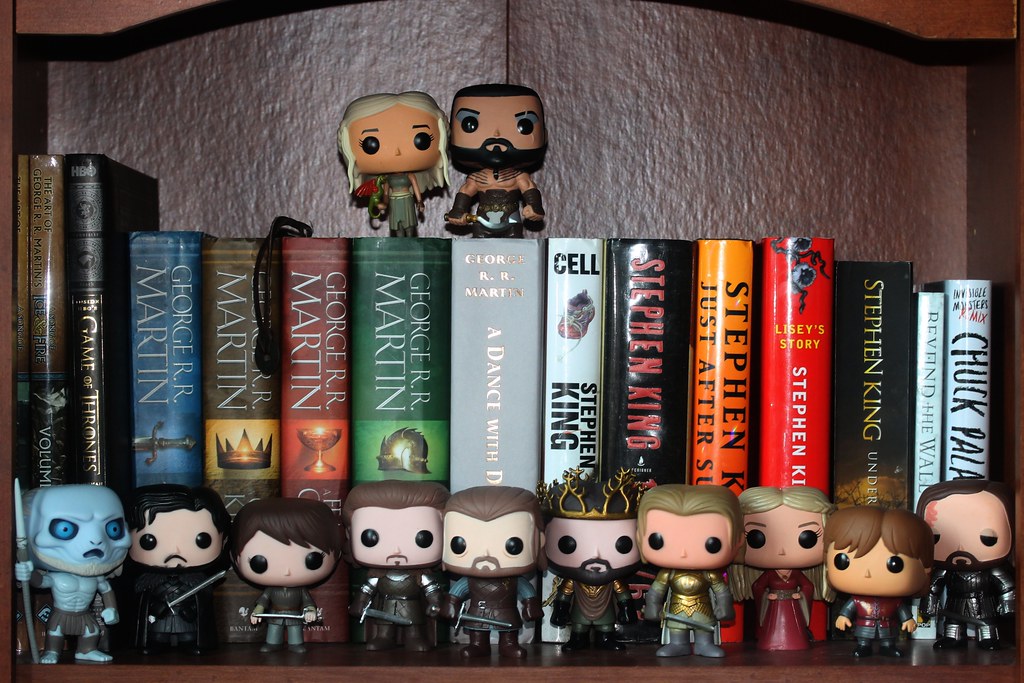
Character Development Lessons from Game of Thrones

Photo credit: pullip_junk on Flickr
So about two months ago I finally did that thing everyone and their brother was telling me to do: I watched Game of Thrones.

While usually I’m the kind of person that prefers to read the books before watching the movie (or, in this case, TV show), as the A Song of Ice and Fire books didn’t really grab me when I tried to pick up the first one, I made an exception this time. And…well…

Okay fine, I’ll say it—I’m hooked. (Yes, yes, you were all right, congratulations everyone. *sigh*)

I’ve been thinking for a little bit about why I’ve been enjoying the series so much, and the answer, for me at least, lies in the characters. Because damn, GRRM writes crazy interesting characters. Even the totally despicable ones are fascinating in their own right, which really appeals to me.

And so, because the characters are so very well written, I think there are some lessons that we, as writers, can learn from them. So let’s take a look at what makes these characters so interesting.

  • Every character has motivations, dreams, etc. What’s great about this is I’m not even talking about just the main ensemble characters—even minor characters, “evil” characters, and characters with short life spans are fully fleshed out with plans, dreams, desires, fears and powerful motivations. Whether it’s Olenna Tyrell (Margaery’s grandmother), Walder Frey, Renly Baratheonor someone else, every character is layered and ridiculously well-developed. 

  • No one is all good or all bad. Good characters make selfish decisions, and antagonistic characters have people they care about and base their decisions on (somewhat understandable) motivations. In fact, I’d say more characters fall somewhere in the gray area morality-wise than very good or very bad—which becomes especially interesting because you’re never quite sure how they’re going to behave. 

  • Characters make mistakes. Fatal ones, in fact, that end up getting themselves (or people they care about…or both) killed. This is huge because not only does it humanize the characters (after all, who doesn’t make mistakes?) but it also makes us doubly worried about them when we know their decisions could go awry very very quickly. Which leads me to…

  • Every character is in danger. This is sort of a controversial point about GoT, but I actually love it. Oftentimes, people go into a book (or series, or movie) assuming that the main “good” characters are going to emerge unscathed (or, you know, at least survive). No such assumptions can be made about GoT, which I weirdly like because it means I worry about everyone. It’s realistic (in the sense that no one is magically safe) and something I really admire about the series. 

Do you watch (or read) Game of Thrones? What lessons have you learned? 

Twitter-sized bite: 
Watch or read Game of Thrones? @Ava_Jae shares character development lessons to be learned from this popular series. (Click to tweet)

Writing Excellent Villains Round-Up

Photo credit: Annoying Noises on Flickr
So Halloween is next week, and so is NaNoWriMo, which means now is the perfect time to talk about villains. Right? Right. 

But first, story time. 

Once upon a time, baby writer Ava thought that in order for villains to be truly villainous, they had to be super 666% evil with metaphorical twirling mustaches and maniacal laughing fits that they practiced in their (evil) mirrors. She was convinced that the best bad guys were just that—super dripping-with-evil bad. 

She was wrong. By a lot, really. 

As it turns out, I’ve found that some of the most interesting characters, whether antagonist or protagonists, aren’t completely good or completely evil—they’re gray characters. And so I wrote a post on writing gray characters

It’s also important, when developing and writing your characters, especially if you want them to feel “real,” is to figure out what they want and what their motivation is—something, I think, that’s especially important for protagonists and antagonists. It also helps to know what your characters are afraid of, because yes, even your villain has fears, too. (Or at least they should). 

Finally, I’ve learned along the way that if you don’t love your villain, chances are your readers won’t love him (or even remotely like him), either. 

Also, for fun, here are my top five favorite villains.

Now go forth and write excellent villains! 

What tips do you have for writing great villains? 

Twitter-sized bites:
In preparation for #NaNoWriMo & Halloween, @Ava_Jae shares helpful links for getting your villains right. (Click to tweet)  
Brainstorming your antagonist for an upcoming WIP? Writer @Ava_Jae shares helpful links on writing villains. (Click to tweet)

How to Write Effective Betrayal

Photo credit: kukkurovaca on Flickr
Betrayal has been a relatively common theme in writing basically from the very beginning. From the Trojan Horse in The Iliad, to Judas in The Bible, to Shakespeare’s et tu, Brute? and more, betrayal is no stranger to fiction.

Writing betrayal effectively, however, isn’t always as easy as it sounds.

I’ve found there are two major components to keep in mind when writing a betrayal:

  1. Set up. A key component to effective betrayal is a set up that makes sense without being obvious. This is a tricky balance to achieve—on one hand, you don’t want your readers to be able to guess that a character is going to turn out to be a traitor, but on the other hand, if it comes too out of the blue, your readers won’t believe it and will accuse you of cheating. And rightfully so.

    Sometimes this requires some reworking after the first draft has been written, which is totally okay. And many times it takes several rounds back and forth with CPs and betas to get the balance right, which is also okay. But do make sure you take the time to get this balance down. 

  2. Emotional involvement. If the traitor isn’t someone your protagonist cares about, then the betrayal isn’t really that powerful of a betrayal. The closer the traitor is to your protagonist, the more it hurts, which is something you definitely want to go for when writing betrayal. After all, if the betrayal doesn’t upset your protagonist, your readers aren’t really going to care, either. 

As I can’t really give examples of effective betrayals without totally spoiling major plot points, I won’t name any names, however a great way to learn about how to craft an effective betrayal (or, in some cases, how not to do it) is to read books with betrayals in them. So make sure you take some time to catch up on that TBR list.

So those are just a couple things to keep in mind when writing betrayals, but now I want to hear from you: what tips do you have for writing effective betrayals?

Twitter-sized bites:
Do you have a betrayal in your WIP? Writer @Ava_Jae shares some tips to help you get it right. (Click to tweet)  
Et tu, Brute? Writer @Ava_Jae shares two key components to writing an effective betrayal. (Click to tweet)
Related Posts Plugin for WordPress, Blogger...