Showing posts with label character. Show all posts

Vlog: Is Your Protagonist Too Passive?

Is your protagonist too passive? What does that even mean? Today I'm talking about a common protagonist issue and why it's important to keep in mind.


RELATED VLOGS:


Have you ever written a passive protagonist?

Twitter-sized bite:
What is a passive protagonist and why is that a problem? @Ava_Jae breaks down this common character issue in today's vlog. (Click to tweet)

On Writing Nuanced Relationships

Photo credit: alhussainy on Flickr
I've been thinking a lot lately about how people are complicated. How we can still love people who have hurt us—even repeatedly, even without apology. How one person can do wonderful and terrible things, how they can hurt someone without intending to and intentions don't matter when they do; how apologies don't have to be accepted and even when they are it doesn't always mean things will go on as they were.

I've been thinking about all of that and how that affects relationships, particularly when those relationships are between family members.

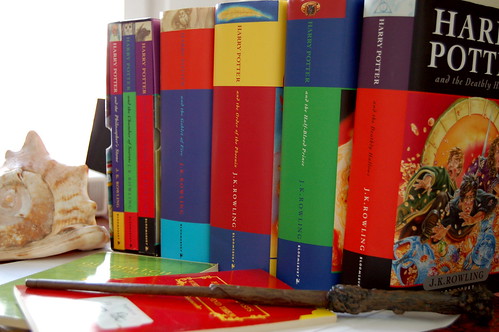
While I'd never claim complicated family relationships don't exist in kidlit (YA included), I do think depictions tend to happen along a good/bad binary. Either families are lovely and wholesome (the Weasleys) or they're downright awful and abusive (the Dursleys). But when writing about families, I've increasingly wanted to depict something more complicated, more nuanced. Families who love each other, but also sometimes lash out, or make damaging mistakes. And sometimes those mistakes can't be undone with an apology.

It's a hard thing to write. Hitting the balance between bad and good in a way where the bad doesn't outweigh the good (at least, unintentionally) can be a challenge—and like most things in writing, it takes a lot of feedback to figure out if you've hit the mark. But it's a challenge I'll continue to tackle with different characters in different ways.

Have you written complicated character relationships? What was it like? 

Twitter-sized bite:
Author @Ava_Jae blogs about the challenge of writing complicated character relationships. (Click to tweet)

Do You Use Character Trinkets?

Photo credit: Nancy Big Crow on Flickr
It can be really interesting to consider what items your characters treasure. Most of the time, these items hold more sentimental value than actual value—in A Gathering of Shadows, for example, Lila carries a shard of a statue from the first book as a sort of security blanket. In the same series, Kell's item is his magic coat—he doesn't go anywhere not wearing it, if he can help it.

Trinkets your characters carry can be a subtle way to deepen your characters, or hint at what they're feeling. A character might reach for their trinket when they're nervous, or upset, for some kind of reassurance. They might wear their trinket for all to see or display it in a prominent place—or they might hide it, as something too personal to share with others.

I like using trinkets to help ground my characters—after all, many of us can relate to reaching for something familiar in our uncertain moments. Of course the danger, for me, is I sometimes forget the characters have them, then have to add them back in during revisions (whoops!), but I do think they can be a useful (and easy) way to add another dimension to your characters.

So now I'm curious: do you use character trinkets?

Twitter-sized bite:
What items do your characters treasure? @Ava_Jae talks using trinkets to deepen your characters. (Click to tweet)

Vlog: How to Kill Your Characters

Last week I talked about writing fights and someone asked about the somewhat inevitable: killing your characters. So today I'm talking about how to off your characters effectively.


RELATED VLOGS:


What tips do you have for killing characters?

Twitter-sized bite:
Is your character death falling flat? @Ava_Jae vlogs some tips on killing your characters effectively. #writetip (Click to tweet)

Tips for Writing Marginalized Characters

Photo credit: green umbrella on Flickr
Writing marginalized characters, whether you are marginalized yourself or not, can feel somewhat intimidating when you care about getting representation right. The burden of responsibility, especially at first, can feel especially heavy with the knowledge that getting something wrong can harm our readers. Of course, erasing marginalized characters from a narrative entirely—the alternative to writing marginalized characters—is equally damaging, especially because it happens so often. Which leaves writers who care about respectful representation and not doing harm to their readers left to navigate how to get it done right.

So where do you start?

  • Listening. The truth is the process starts long before you start actually writing any marginalized characters—and that's with listening to marginalized people. It means boosting their voices and paying attention when they talk about damaging tropes, stereotypes, and messages perpetuated in the media. It means listening and trying to understand when they say something has hurt them and why.

    Writing marginalized characters respectfully begins with listening to marginalized people in real life and educating yourself on all the ways the media—books, TV shows, movies, etc—has failed them in the past so you can try to avoid those pitfalls yourself. And that means listening when it makes you uncomfortable, and listening when you're tempted to disagree, and listening to a variety of voices in every community because opinions vary and no one community is a monolith.

  • Researching. So you've heard about damaging tropes and stereotypes from listening to marginalized people—great. Now it's time to dig into those and do your own separate research to see what other things should be avoided, whether it's one wording over another, a trope you didn't realize was a trope, etc. It also means finding examples of representation done right and understanding what it is about that particular example that worked so well. What did they do that the represented community was happy with? What could they have done better? These are all things you can learn from to better your own writing.

  • Read #ownvoices books. You're not going to get a better education that books featuring marginalized characters written by authors who share that marginalization. Read as many #ownvoices books featuring characters who share the marginalization(s) of whatever characters you're writing as you can.

  • When you've finished writing and revising with everything you've learned—hire sensitivity readers. Writing in the Margins is a great database, and Twitter also has lots of sensitivity readers who tweet about their services, which you'll come across if you're following plenty of people in Book/Writing Twitter. I like to hire sensitivity readers to check not only my protagonist and love interest, but other major characters as well, if I can. For Into the Black, for example, I worked with four sensitivity readers to check different aspects of marginalization for three characters. Truthfully, the more you can get checked, the better—and always, always thank your sensitivity readers for their time and do not argue with them if you disagree. Seriously, don't. Sensitivity readers are there to help, they have the expertise you don't, and it's your job to listen to them.

  • Know you may very well do all of this and still get it wrong. And if that happens, your job is to go back to step one—listen—then apologize and do everything you can to do better next time.

What tips would you add?

Twitter-sized bite:
Want to include marginalized characters in your writing, but not sure where to start? @Ava_Jae shares some tips. (Click to tweet)

A Key to a Compelling Story

Photo credit: humbletree
I've been doing lots of reading lately, both for clients and for myself, and it's got me thinking about what makes a story compelling. The world building? The writing? The characters? The plot? The truth is it's really all of the above, but I've found there's one essential key that writers sometimes forget: your protagonist's goal.

From the first to last page, your protagonist should always have some kind of goal. Maybe that goal won't be the same on the first page as it is on the last—and that's okay. What's important is the characters leading your story are always leading somewhere, because they want to accomplish something.

Without that goal, you tend to get a story with a meandering plot. The characters will walk around and stumble into plot-affecting even rather than creating or chasing those events down themselves. This slows the pacing down considerably because your characters are never after anything, they're just reacting, so there's little build up to the events that make the story turn.

This is why, when plotting, I frequently like to start with the protagonist and their goal. Even if that goal changes throughout the course of the book—which is not uncommon with my manuscripts—it gives me a starting point to build the rest of the plot around. If I know what the protagonist wants, I can immediately plan out the tension and conflict—the protagonist not getting what they want, and their struggle to try to get it.

So whether you're a plotter or a pantser, it's often a good idea to figure your protagonist's goal out and keep it mind as you write. After all, you'll never know where it'll take you until you try—and it's a lot easier to build it up the first time than it is to try to revamp it later.

When do you figure out your protagonists's goals? 

Twitter-sized bite:
Have you covered this compelling story key in your latest WIP? @Ava_Jae talks the importance of character goals. (Click to tweet)

Vlog: 3 Common Protagonist Problems

Writing a compelling protagonist is essential to every book—so today I'm sharing three common protagonist problems so hopefully you can avoid these mistakes.


RELATED LINKS: 


Have you made these mistakes with your protagonists before?


Twitter-sized bites:
Working on a novel? Make sure your MC doesn't have these 3 common protagonist problems. #vlog (Click to tweet
Writing a compelling protagonist is key—but does your MC have these 3 common protagonist problems? (Click to tweet)

Are Your Characters Flawed?

Photo credit: Jenavieve on Flickr
Every once in a while, I fall into the trap of loving my characters too much. By this I don't mean that I don't put them through hell twice-over—I can't think of a single manuscript where that was a problem for me *insert evil smiley face*—instead, I mean sometimes I forget about something rather important: flaws.

More times than not, this happens for secondary characters—the best friend, the love interest, the people that, for all intents and purposes, you're supposed to love. Sometimes, for these characters, I do such a great job making them lovable that I forget they're not actually supposed to be perfect until a reader pokes me and asks what their flaw is and I can't answer.

Whenever this happens, I open up my copy of The Negative Trait Thesaurus by Angela Ackerman and Becca Puglisi (the geniuses behind The Emotion Thesaurus). It has an enormously long list of possible character flaws, with descriptions of each flaw, what causes it, what it may lead to, etc. which often helps inspire me when it comes to developing flaws that make sense for the character.

And that is the key there: the flaw should fit organically into your character so that it doesn't feel tacked on or ill-fitting. It wouldn't make sense, for example, for Sherlock Holmes to be obtuse or not think through his actions—but his arrogance and bluntness definitely makes sense for who he is.

It's definitely important to remember flaws when creating characters, because characters without them start to feel too perfect—and consequently too unrealistic—if you're not careful. And besides, a character well-balanced with flaws can create new opportunities for tension and conflict, which is always a pretty nice bonus.

What are some of your favorite flawed characters?

Twitter-sized bite: 
Are your characters flawed? @Ava_Jae talks the importance of balanced character development. (Click to tweet)
Vlog: On Character Motivations and Goals

On the importance of character goals and motivations for all of your major characters.


RELATED LINKS: 


How and when do you figure out your character goals and motivations? 

Twitter-sized bite: 
Author @Ava_Jae vlogs about the importance of character goals & motivations for all of your major characters. (Click to tweet)
How to Get Your Characters to Connect

Photo credit: GraceOda on Flickr
So I've been doing a lot of editing lately, while also first drafting and reading, which means I've been thinking a lot about characters. Specifically, how to spark that magical character-reader connections.

Oftentimes, when writers are querying, they'll hear from agents or editors that the reader just didn't connect with their work. There can be a million reasons for this, but when the connection is missing from your characters, I've found there's often a reason you can point to directly in the manuscript, and many times that reason is a lack of depth in the POV.

When reading, the best books don't make you feel like you're reading about someone, they make you feel as though you're experiencing whatever the characters are experiencing. You feel their pain, you know their emotions, you hear their thoughts, you see what they see and smell what they smell and feel what they feel. Of course, you aren't literally experiencing everything, but a great book will make the connection feel so deep it's almost as if you are.

So how do you accomplish that with your characters? There are a few keys you can focus on to really deepen that connection:


  • Show emotion. I wrote a whole blog post on writing emotion effectively and the difference between telling and showing emotion, but the short version is this: every time you see a named emotion ("I was so angry," "he looked sad," etc.) in your WIP, stop and think about how you can rewrite it without naming that emotion. Think about what that emotion makes your character feel physically, how it affects their thoughts, and actions. Think about what it feels like to experience that emotion— and rather than naming it, describe it instead and let the readers put together the pieces. (P.S.: A truly excellent resource that makes this a billion times easier is The Emotion Thesaurus by Angela Ackerman and Becca Puglisi—I can't recommend it enough!)

  • Cut down on filtering. Similarly, I've also already written a blog post on how to (and why you should) remove filter phrases, but I'll do a quick summary here: filtering is a form of telling, and appears in phrases like "I thought," "I remembered," "I saw," "I smelled," "I felt," etc. It's often unnecessary and adds a layer of distance between the reader and the character because you're filtering what your character is experiencing through writer-speak. By removing the phrases whenever possible and just describing your characters experiences instead, the writing becomes more immediate and helps to establish that sense of closeness to the POV character(s). 

  • Get us in your POV character's head. What are your characters thinking? Why do they make decisions the way they do? How do they come to one conclusion or another? In limited third or first person POV, readers should know what your POV character is thinking (and feeling) at all times. Even if readers disagree with your character's reasoning for one decision or another, they should see your character's thought process there on the page, so they never have to stop and ask themselves, "but why did they do that?" This often requires slowing down while writing to think about what your characters are thinking or feeling as the events of their story happens—but this is vital to getting your readers to feel as though they really understand your characters. 

So those are my top getting-your-characters-to-connect tips! Now I want to hear from you: what gets you to connect to characters in books you read? 

Twitter-sized bites: 
Having trouble getting readers to connect to your characters? @Ava_Jae shares some connection-forging tips. (Click to tweet)  
How do you get your characters to connect to readers? Author @Ava_Jae shares some tips. (Click to tweet)
On Major Character Deaths

Photo credit: kev-shine on Flickr
So as I work on various projects, watch Game of Thrones, and read books that I suspect will have major character deaths (and finish a book that did have an important character death that destroyed me), I've been thinking lately about how we kill characters off—and what it means when we do.

Now, I've already posted about how to kill characters with impact, so I'm not going to reiterate that again. But instead I'm thinking about the why—why we choose to kill characters, how we choose what characters to kill, and what it means when we pick one character over the other. I've been thinking about how certain marginalized groups are frequently killed off first on TV, and I've been thinking about all the factors that go into deciding why one character should be killed off over another or why certain characters need to die at all.

I've thinking about controversial decisions in which major characters have been killed (like the protagonist of one major YA series not all that long ago). And I've been thinking about why some readers freak out and trash one book if a protagonist or major character dies, but not another book with another major character death. What makes one character death better than the other? What makes one death acceptable and one not so much?

There are a lot of factors to think about when killing off characters, especially if said characters come from marginalized groups with high fictionalized body counts. You need to think about what it means for this particular character to die. You need to think about why it's essential for that character, and not another, to be killed off. You need to think about what it'll mean to the readers that this character survives, but this other one doesn't.

I personally don't have a problem with major characters, even protagonists, dying (aside from, you know, the emotional trauma)—it's just a sign to me that no character is safe in that particular author's works, which if anything just makes future reading of their books more terrifying...in a good way. But I think the key to pulling off major character deaths is to make sure you have a good reason for it besides bottling reader tears for science. It has to mean something for the overall plot and the story itself—it has to be so integral to the story that anything else couldn't work as effectively.

Of course, it can be really tough to figure out what's essential and what isn't in your own work sometimes, which is yet another reason why critique partners are 100% necessary in the writing process. And even then you may get conflicting opinions—writing is super subjective!—so you'll have to listen to your gut. But I think the thing to remember, when considering a major character death (or several), is to make sure there's a reason for it so it doesn't read as an arbitrary attempt at shocking readers and to be sure that you pull it off in a way that is thoughtful and meaningful.

Easier said than done, of course. But when done well, and done with purpose, it can be an incredibly effective way to make sure your story leaves a mark.

What do you think about major character deaths?

Twitter-sized bite: 
Author @Ava_Jae talks killing major characters with purpose & making sure the death fits the story. (Click to tweet)

How to Make Up Character Names

Photo credit: bump on Flickr
So while I've shared a couple posts on naming characters, I've had some people ask about making names up, which is sometimes required when you're naming characters who are part of a made-up culture, who speak a made-up language. Which was exactly what happened while I was writing Beyond the Red.

Some of the names in the book include Eros, Kora, Dima, Jarek, Serek, Asha, Roma, Anja, Iro, Daven, and Zek. Of course, many of the names in there exist in our world, but one way to create and choose names that sound cohesive is to think about sounds.

The first name I started with when creating Beyond the Red's cast was Eros. I obviously did not make up the name Eros—it's the name of the Greek god of love—but what attracted me to the name was the soft vowel sounds and the way the name flowed. Kora's name followed shortly thereafter, and I began thinking about similarities between their names: they're both two syllables, and have soft vowels connected by an /r/.

I then began thinking about what I wanted the language Kora speaks to sound like. I knew I wanted to use some Spanish influence, given that I know how Spanish pronunciation works very well, but I also wanted to use more hard sounds like /k/, and I knew I wanted "j" to be pronounced more like /y/, like in languages like Swedish.

With those rules in mind I started brainstorming sounds to figure out the phonemics of the language. I did this in a private room, but it probably would've sounded ridiculous to anyone listening in because I was basically blabbering jibberish while deciding what sounds I liked. But it worked, and while I mashed random phonemes together (for example, /ya/ + /rek/ = Jarek) I wrote down the ones that sounded like they could be names.

The more names I had, the easier it was to come up with ones that sounded similar enough to fit, but were still clearly distinguishable. I figured out early on that I liked names that ended in vowels (Kora, Dima, Asha, Roma...) and played with the sound system I was developing until I had a decently-sized group of names that all fit together.

When it came to names for nomads—humans who descended from a large group of people from Earth—I thought more about language change and how I could modify existing names. I ended up with a lot of shortened versions of existing names, like Nol (Nolan), Jessa (Jessica), Aren (Aaron), and so on. I also chose some names based off of English words, like Day and Gray, and altogether ended up with a cast whose names made sense together, but were clearly distinguishable from Sephari (alien) names like Kora and Dima.

There are many different processes and strategies, I'm sure, to creating character names, but being the language nerd that I am, this is the one that worked for me. And maybe it might be effective for you too.

Have you ever made up character names? 

Twitter-sized bite: 
How do you make up character names? @Ava_Jae shares one technique she used while writing her debut. (Click to tweet

Vlog: On Writing Messy Characters

Are your characters too perfect? Today I talk about writing my favorite types of characters: the ones that are messy, raw, and real.


RELATED LINKS: 
Do you write messy characters? What are some examples from books/TV/movies, etc.?

Twitter-sized bite: 
Are your characters too perfect? @Ava_Jae vlogs about writing messy characters & why you may want to consider it. (Click to tweet)

Fictional Parents: An Obstacle or a Missed Opportunity?

Photo credit: alvarezperea on Flickr
So I thought today I’d write a post rounding up some of my favorite parents from various books I’ve read, but when the time came to start listing them…it occurred to me that I couldn’t really think of all that many.

I’ve already written about the parenticide trend, so I guess I shouldn’t have been all that surprised, but I hadn’t really thought about just how much it permeates kid lit in well over a year (when I wrote that last post).

That being said, with some help from lovely Twitter friends, I managed to think of a grand total of three awesome parental figures. Which…isn’t much, but it’s a start.

In no particular order!
  1. Harry Potter (J.K. Rowling): Arthur and Molly Weasley

    Where to begin with the Weasleys? On top of being overall wonderful parents to their extraordinarily large family, they also pseudo-adopted Harry, have the best combination of quirks, and are badass wizards when they need to be. They were the loving parents Harry didn’t have in his childhood, and they even had time to knit embarrassing Christmas sweaters for all of them every year.

  2. The Mortal Instruments (Cassandra Clare): Lucian (“Luke”) Graymark and Jocelyn Fray

    Technically, Luke is Clary’s kinda-not-really-step-dad because Clary’s biological dad is decidedly not awesome (at least, not at parenting). But Luke has really grown on me throughout the series (note: I’ve only read the first three books so far). Without spoiling the extent of his badassness to those who haven’t read the books or watched the movie yet, all I’ll say is he’s the perfect blend of caring step-dad and awesome character.

    Jocelyn, on the other hand, is a little MIA for a while, but the more you learn about her, the more you realize the full extent of what a wonderful (and pretty darn cool) mother she is.

  3. Artemis Fowl (Eoin Colfer): Butler

    So, ok, Butler isn’t Artemis’s father—and his parents are actually in the series, but, well, they’re not exactly my favorite. But Butler! If you ask me, he’s more of a father figure to Artemis than his actual father is, and he’s certainly sacrificed a hell of a lot more for Artemis than the Senior Fowl. So in my book, Butler wins the Awesome Parent of the Year award. 
With these examples aside, the fact that it took so much digging for me to even come up with three examples got me thinking. Naturally, I understand the reasons parenticide works so well in kid lit, but the huge majority of dead, negligent, or just terrible parents in literature in contrast to the awesome parents mentioned in this post has made me wonder if maybe we’re missing out on an opportunity when we kill off parents in books. Every situation is different, of course, but I think I’d like to see more involved parents, and badass parents, and parents who are just plain awesome.

What do you think? Are fictional parents an obstacle or a missed opportunity?

Twitter-sized bites: 
Writer @Ava_Jae muses on parenticide and some of kid lit's best parents. Do you agree? (Click to tweet)  
Are fictional parents an obstacle or a missed opportunity? Join the discussion at @Ava_Jae's blog. (Click to tweet)

Discussion: Does the Protagonist Have to Be Likable?

Photo credit: KendraMillerPhotography on Flickr
So today I’m asking a question I don’t actually know the answer to. But I think it’d be interesting to discuss.

I’ve often heard of people putting a book down (either literally or in a review) because they contain unlikable protagonists. Of course, what qualifies as likable is entirely subjective, but it’s made me wonder—do our protagonists have to be likable?

I don’t think this is necessarily a hard yes or no answer. I think protagonists should be likable to an extent—if they’re entirely unlikable not many people will want to put up with them—but the goal shouldn’t be to aim for perfection by any stretch (in fact, that’d probably only aggravate the situation).

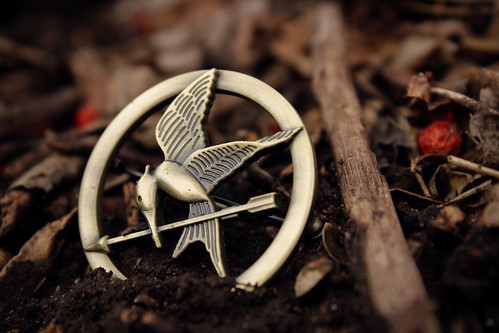
While I don’t think it’s impossible to enjoy a book with an unlikeable protagonist (I personally didn’t find Tris from the Divergent series to be especially likable, nor Warner from Destroy Me…at the beginning, anyway), I suspect this may vary from reader to reader. I have a friend who stopped reading Hunger Games because she found Katniss unlikable, and I’ve seen others rate books poorly because they weren’t a fan of the protagonist.

So now I ask you: do you think it’s necessary for the protagonist to be likable? 

Twitter-sized bites: 
Do you think it's necessary for the protagonist to be likable? Join the discussion at @Ava_Jae's blog. (Click to tweet)  
"Protagonists should be likable to an extent...but the goal shouldn’t be to aim for perfection." (Click to tweet)

On Writing Characters Who are Nothing Like You

Photo credit: found_drama on Flickr
Fun fact: up until recently, I found it more difficult to write female POV characters than male POV characters. 

Now that’s not to say that I consistently wrote one with a greater degree of success than the other, but I often found the voice harder to nail with my female POV characters than I did with the guys. 

For the longest time I couldn’t really figure out why that was—as a heterosexual woman, it would make sense that I’d find it easiest to write from a female POV…right? 

Problem was, I often got bored with the voices of my female characters. They largely came out sounding the same, which I knew was a problem, and if I was being honest with myself, they really weren’t all that interesting. It wasn’t until I wrote a WIP with a female POV character who was absolutely nothing like me that I realized the problem—my previous female characters were too much like myself. 

Writing is an opportunity to take a journey through someone else’s eyes. It’s a chance to step out of yourself and experience someone else’s life. I love that about writing, and so it makes sense to me that I love to write characters that are very different from me. 

Granted, parts of myself do slip into my character’s personalities. Many of my MCs share my love for sarcasm and have analytical minds. Some of them have trouble with empathy, like me, and many of them are pretty strategically-minded.

I’ve often seen people online ask how to write characters different from themselves, and the biggest bit of advice I’ve seen is one that I couldn’t agree with more: think of them as people first. Beyond race, gender, religion or sexual orientation, our characters are people first. They have opinions, desires, fears and dreams like everyone else, they have tempers and motivations and pet peeves and loved ones. 

If you figure out who they are first, the rest falls into place. It’s just a matter of getting to know them well enough so that you can. 

Do you find it difficult or easy to write a character unlike yourself? Why? 

Twitter-sized bites: 
"Beyond race, gender, religion or sexual orientation, our characters are people first." (Click to tweet
Do you find it difficult or easy to write a character unlike yourself? Join the discussion at @Ava_Jae's blog. (Click to tweet

Tension Shortcut: Bumpy Character Relationships

Photo credit: Anant Nath Sharma on Flickr
When writing, one of my favorite things to do is to make my characters argue, or at least get irritated (or preferably, infuriated) at each other.

It’s not that I don’t want my characters to ever get along, in fact, it’s important that those who are meant to work together learn to at the very least tolerate each other. But if you make the relationships between your main characters too easy, you’ll be missing out on major potential for tension and conflict.

One of the easiest ways to keep your story interesting, even between the more exciting, edge-of-your-seat scenes, is to administer a tension transfusion. A simple scene of two characters sharing the same space with nothing particularly interesting going on can become fascinating if one character is secretly angry at the other, of if they’re both openly angry, or if one character recently hurt the other, or if they’re irritated at each other, or…

I think you get the idea.

Tension between characters can be used in just about any situation and is a great way to add an underlying thread of conflict to be woven into your story.

Here’s a quick example from City of Ashes by Cassandra Clare. After an incident I’m not going to spoil, but I will say involves fighting and people getting hurt, Clary (the protagonist) is assessing the situation and calming down when Jace (the sort of love interest) and company come onto the scene. Jace and Clary, at this point, are not getting along, and so what would have been an otherwise relatively calm (in comparison, anyway) scene is rife with tension:
“‘What,’ [Jace] said, with a sharp and deliberate annoyance, ‘do you think you’re doing?’
Clary glanced down at herself. She was still perched on the coffee table, knife in hand. She fought the urge to hide it behind her back. ‘We had an incident. I took care of it.’
‘Really.’ Jace’s voice dripped sarcasm. ‘Do you even know how to use that knife, Clarissa? Without poking a hole in yourself or any innocent bystander?’” (City of Ashes, page 231) 
Very quick example, as I said, but the banter is significantly more interesting if only because Jace is furious with Clary to begin with, so when he arrives he brings with him a whole new wave of conflict.

Tension between characters, to me, is always fun to write, and it’s a quick, easy way to inject some conflict into any scene.

Have you used this method to include tension in your scenes? 

Twitter-sized bites: 
Do your characters get along too well? You may be missing out on potential tension and conflict. (Click to tweet)  
Looking for a way to add tension do your WIP? Writer @Ava_Jae shares a quick way to add conflict. (Click to tweet)

How to Write Realistic Dialogue

Photo credit: AnyaLogic on Flickr
I’ve often found it’s easy to tell a writer’s skill level by taking a look at their dialogue. With just a few lines, you can easily tell if the dialogue is working (or not), which is important because character speech can easily make or break an otherwise great story. 

The good news is well-written dialogue can really make your manuscript shine, and if you remember certain guidelines while writing or editing, it can make all the difference. 

So when writing dialogue...

Don’t: 

  • Let your characters ramble. In reality, we ramble while having conversations all the time. We switch from topic to topic, sometimes randomly, and go on unnecessarily about silly little details that are fun to talk about.

    Don’t let your characters do this. Everything your characters say should have a purpose, and unnecessary ramblings are not allowed in fiction.

  • Use it to convey obvious information. Or, as some writers like to call it, use the “As you know, Bob.” If your protagonist is a dentist with three kids, the way to tell us not to have her mention to her friend, “As you know, my three kids Elana, Mike and Maggie have beautiful teeth because I put my dentist skills to good use at home.”

    If both characters in a conversation know a particular bit of information that you want your readers to know, chances are you don’t want to use dialogue to tell us. Characters have no reason to tell each other information they already know, and readers will recognize it for the poorly disguised info-dump that it is.

  • Mention names every couple lines. This is a pretty common mistake, and it’s easy to do. Thankfully, it’s also very easy to fix (the “Find” feature is a beautiful thing).

    Point is, your characters are certainly allowed to mention each other’s names, particularly when they’re trying to get their attention or make a point. But they should not  mention each other’s names several times in a conversation, or even in every conversation. We don’t do this is real life, and neither should our characters. 


Do: 

  • Think about context. In this case, by “context” I mean your character’s background and surroundings. A high-class 18th-century woman is going to speak very differently from an uneducated man of that time, or a teenager in today’s society, or a king from another world. How your characters speak, what they choose to say and to whom is very much dependent on the setting, your character’s background, and personality, which are all important to remember while writing dialogue.

  • Remember everyone speaks differently. If you removed all of your dialogue tags, you should still be able to pick out which of your characters said what. Every one of your characters should have a different voice and viewpoint that should come across in the dialogue.

  • Read it aloud. I’ve written in the past about the importance of reading your WIP out loud, but even if you don’t read your entire WIP out loud, you shouldn’t definitely try to at least read your dialogue aloud. Or have someone else read it to you.

    Why? Dialogue should sound natural and flow easily, and sometimes, what flows in our minds when we read, doesn’t actually flow as well as we think. Reading our writing out loud solves that problem, because the awkward phrases your brain doesn’t trip over, your tongue will still catch. 


Consider: 

  • Silence can be powerful. Sometimes, what a character doesn’t say is just as powerful (or even more powerful) than what they do say. Silence, in a way, is it’s own form of dialogue.

  • Straightforward isn’t always the answer. It wasn’t until semi-recently that it occurred to me that just because a character asks a question, doesn’t mean whoever they’re talking to has to answer. Eureka! Changing the subject, answering a question with a question, or dancing around the answer can sometimes be even more interesting than the answer itself. As a bonus, unanswered questions also make for added tension and intrigue.

  • “Said” isn’t evil. While action tags and non-said dialogue tags are great in moderation, “said” is not a word that needs to be avoided. The nice thing about “said” is that it acts as an invisible dialogue tag. That’s not to say that you should use it every time, but it’s actually less noticeable than the alternative tags and are often overlooked while reading. 


What tips do you have for effective dialogue? 

Twitter-sized bites:
Is your dialogue realistic? Writer @Ava_Jae shares dos, don'ts and tips to remember while writing dialogue. (Click to tweet)   
Having trouble with dialogue? Take a look at these tips for writing realistic conversations. (Click to tweet)

How to Write Description Through Character

Photo credit: mark lorch on Flickr
While working on a WIP a couple years ago, my CP at the time pointed out to me that my teenage boy protagonist was having some rather un-teenage-boy-like thoughts. 

The problem was that some of the flowery analogies and purplish prose I had used were clashing with his voice, and she challenged me to ask myself if he would really think that. 

Since then, I have become much more aware of how my characters think and act, down to their choice of words and mannerisms. But one of the best aspects I took away from that CP comment, to me, actually applies to description. 

You see, when writing in first person, or even limited or close third, it’s very important to always keep the character in mind, but not just in the sense of getting to know them and perfecting their voices. You need to be able to climb into their heads and not only imagine the scene from their eyes in the sense of how they will react to their situation or their actions thereafter, but pin down what they notice when writing description. 

For a long time I thought of description as a sort of third-party affair. It was something I needed to include in order for the readers to understand where the action was taking place, but until my CP made that comment about my protagonist, I didn’t realize that it was much more than that. 

Because when you’re writing a story from a character’s POV, you need to filter the entire story from his or her POV. And that includes description. 

So when I talk about writing description through character, I mean that you need to think about not just what it is that you’re describing, but what your POV character would notice about it. 

For example, a poor character entering his neighbor’s run-down home would probably notice the smell of food cooking in the kitchen, or pictures on the walls, or some of the items scattered around the house. A rich character entering that same home, however, would likely notice how small everything was, the cracks in the walls, the peeling paint, and buckets for catching rainwater from the leaky ceilings. Their perspectives are different, and because of that, they would notice different details about the same place. 

This works the same way for character descriptions as well, in the cases of characters describing another character. Here’s a great example from John Updike’s short story “A&P”:
“She was the queen. She kind of led them, the other two peeking around and making their shoulders round. She didn't look around, not this queen, she just walked straight on slowly, on these long white prima donna legs. She came down a little hard on her heels, as if she didn't walk in her bare feet that much, putting down her heels and then letting the weight move along to her toes as if she was testing the floor with every step, putting a little deliberate extra action into it.”
What I love about this example (and the rest of the examples scattered throughout the text), is that rather than giving us a laundry list of descriptions, we get the full description from the POV character’s mind. The first thing he notices about this particular girl isn’t her hair or eye color, it’s her long prima donna legs and the way she walks. The whole short story is full of the kind of description through character I’m talking about, so if you’re interested, you can read the whole thing here

So next time you write a description from anything other than an omniscient POV, take the time to consider what your POV character would notice first, and what tidbits he or she may ignore. The extra thought may be exactly what you need to write an interesting, unique description. 

Do you write your descriptions through your characters? 


Twitter-sized bites: 
What is description through character and why is it important? Writer @Ava_Jae explains. (Click to tweet)  
Do you write your descriptions through the lens of your character? Here's why you should. (Click to tweet)

Writing Tip: Describe with Telling Details—Character

Photo credit: horizontal.integration on Flickr
On Wednesday, I covered the importance of telling details when writing description for settings. Now I want to discuss an equally important type of description that also relies (when done well) on the same kind of details.

I’m sure you’ve all come across a passage, whether in your writing or someone else’s, in which a character was meticulously described from the specific tint of his eyes to the size of his nose and the make of the shoes on his feet. And chances are, the description started to lag and didn’t really leave a lasting impression, despite everything the writer threw at you. 

The problem wasn’t that the character wasn’t described enough, in fact, it was the opposite problem—the character was drowning in so much description that nothing could stand out and leave an impression. 

That’s why a few telling details are always better than paragraphs upon paragraphs of listed descriptions. If you use too much description, your readers won’t be able to pick out what physical markers are unique to your characters—but by utilizing a couple telling details instead, you’ll paint a picture of your characters much more effectively.

Let’s take a look at some examples. In both excerpts, the respective protagonists are seeing a love interest for the first time, and both authors do an excellent job characterizing them with just a couple specific details.  
“A boy was staring at me. 
I was quite sure I’d never seen him before. Long and leanly muscular, he dwarfed the molded plastic elementary school chair he was sitting in. Mahogany hair, straight and short. He looked my age, maybe a year older, and he sat with his tailbone against the edge of the chair, his posture aggressively poor, one hand half in a pocket of dark jeans.” 
The Fault in Our Stars by John Green, pages 8-9.
What really seals the description here? To me, it isn’t his mahogany hair that makes the image—it’s his “aggressively poor” posture and the way his long form dwarfs the plastic elementary school chair. Those are the kinds of details that you want focus on when describing your characters. 

Next example:
“I turn toward my new husband. My cheeks are hot; I know they will be blotchy and shining with sweat when he lifts the shield from my face.  
He releases my hand. I clench it into a fist to keep from wiping it on my terno. I see his fingers on the hem of my veil. They are brown and thick with short, clean nails. Not scholar’s hands, like Master Geraldo’s. He lifts up the veil, and I blink as cooler air floods my cheeks. I peer up at the face of my husband, at black hair that sweeps back and curls at his neck, at brown eyes warmer than cinnamon, at a mouth as strong as his fingers.” 
The Girl of Fire and Thorns by Rae Carson, page 14.
What I love about this excerpt is that our very first impression of her new husband isn’t his stunning good looks—it’s his fingers and clean nails as he grasps her veil before lifting it over her face. I also love the way that Ms. Carson reminds us of his fingers by comparing the strength of his mouth to the strength of his hands at the end of the paragraph.  

So those are two examples of excellent use of telling details while describing characters, but now I want to hear from you. Do you use telling details when describing characters? Any examples you’d like to share from your work, or books that you've read?

Twitter-sized bites: 
Do you use telling details to describe your characters? Here's why you may want to. (Click to tweet
Are you drowning your readers in description? Here's how to make your character descriptions pop. (Click to tweet)
Related Posts Plugin for WordPress, Blogger...