Showing posts with label avoiding flat characters. Show all posts

Vlog: Is Your Protagonist Too Passive?

Is your protagonist too passive? What does that even mean? Today I'm talking about a common protagonist issue and why it's important to keep in mind.


RELATED VLOGS:


Have you ever written a passive protagonist?

Twitter-sized bite:
What is a passive protagonist and why is that a problem? @Ava_Jae breaks down this common character issue in today's vlog. (Click to tweet)

Vlog: Elements of a Great Protagonist

What makes a great protagonist? Today I'm talking five essential elements to engaging protagonists. What would you add to the list?


RELATED LINKS: 


Twitter-sized bite: 
What makes a great protagonist? @Ava_Jae vlogs about five essential elements of an engaging MC. (Click to tweet)

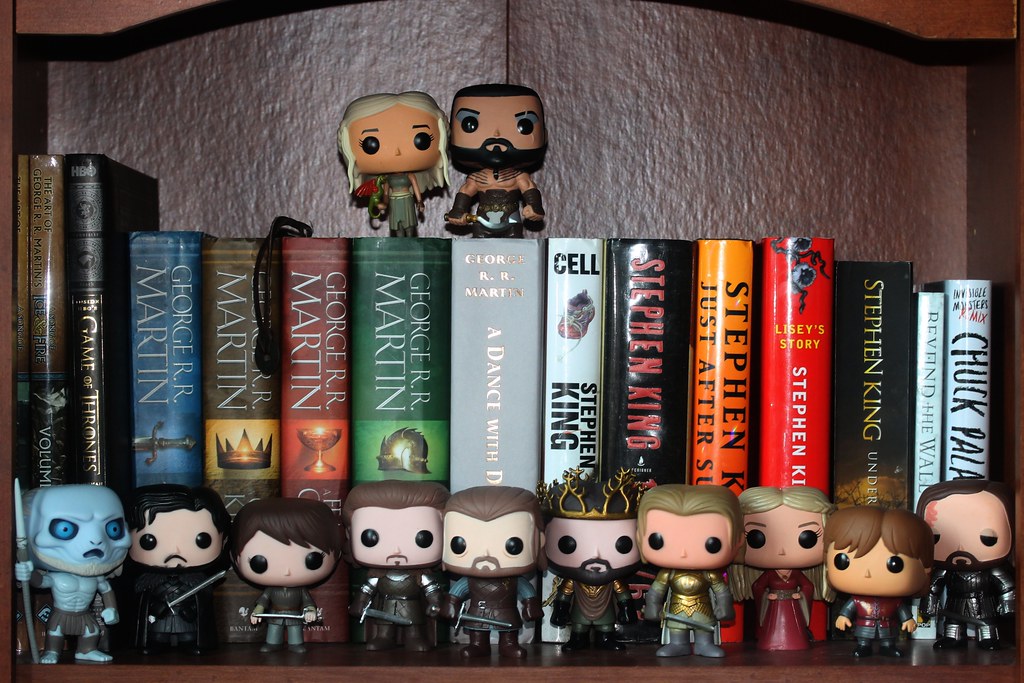
Character Development Lessons from Game of Thrones

Photo credit: pullip_junk on Flickr
So about two months ago I finally did that thing everyone and their brother was telling me to do: I watched Game of Thrones.

While usually I’m the kind of person that prefers to read the books before watching the movie (or, in this case, TV show), as the A Song of Ice and Fire books didn’t really grab me when I tried to pick up the first one, I made an exception this time. And…well…

Okay fine, I’ll say it—I’m hooked. (Yes, yes, you were all right, congratulations everyone. *sigh*)

I’ve been thinking for a little bit about why I’ve been enjoying the series so much, and the answer, for me at least, lies in the characters. Because damn, GRRM writes crazy interesting characters. Even the totally despicable ones are fascinating in their own right, which really appeals to me.

And so, because the characters are so very well written, I think there are some lessons that we, as writers, can learn from them. So let’s take a look at what makes these characters so interesting.

  • Every character has motivations, dreams, etc. What’s great about this is I’m not even talking about just the main ensemble characters—even minor characters, “evil” characters, and characters with short life spans are fully fleshed out with plans, dreams, desires, fears and powerful motivations. Whether it’s Olenna Tyrell (Margaery’s grandmother), Walder Frey, Renly Baratheonor someone else, every character is layered and ridiculously well-developed. 

  • No one is all good or all bad. Good characters make selfish decisions, and antagonistic characters have people they care about and base their decisions on (somewhat understandable) motivations. In fact, I’d say more characters fall somewhere in the gray area morality-wise than very good or very bad—which becomes especially interesting because you’re never quite sure how they’re going to behave. 

  • Characters make mistakes. Fatal ones, in fact, that end up getting themselves (or people they care about…or both) killed. This is huge because not only does it humanize the characters (after all, who doesn’t make mistakes?) but it also makes us doubly worried about them when we know their decisions could go awry very very quickly. Which leads me to…

  • Every character is in danger. This is sort of a controversial point about GoT, but I actually love it. Oftentimes, people go into a book (or series, or movie) assuming that the main “good” characters are going to emerge unscathed (or, you know, at least survive). No such assumptions can be made about GoT, which I weirdly like because it means I worry about everyone. It’s realistic (in the sense that no one is magically safe) and something I really admire about the series. 

Do you watch (or read) Game of Thrones? What lessons have you learned? 

Twitter-sized bite: 
Watch or read Game of Thrones? @Ava_Jae shares character development lessons to be learned from this popular series. (Click to tweet)

How to Write a Great Antagonist

Photo credit: _Teb on Flickr
So while working on my last couple manuscripts, I’ve been thinking a lot about antagonists. Specifically, on antagonists that I really actually love.

I already wrote a post listing my top five favorite antagonists (spoiler: they include the fabulousness that is the Darkling, Warner, Khan, Moriarty and the Graceling baddie), but as a writer, I’ve known for a while that I wanted to write antagonists that I cared about just as much as I did the protagonist.

Happily, I’ve started to work toward exactly that, and I’ve been picking up a couple tips along the way:

  1. Get to know them (and love them) first. This, by far, has been the biggest help to me in writing antagonists I care about. By thinking of them as characters first, rather than the evil force that makes my protagonist’s life difficult, I’ve been able to connect with them better in the brainstorming stages, so that when they arrive on the page, I don’t see them strictly as the evil obstacle.

  2. Understand their motivation. The thing about the antagonist, is most times, they don’t think they’re doing the wrong thing (or if they recognize what they’re doing is wrong, they have a way to justify it to themselves).

    Very few people do evil for the sake of doing evil. The choices they make are based on beliefs, experiences and some kind of worldview that shapes their way of thinking and ultimately influences their decisions. By understanding why your antagonist does the things he (or she) does—and even better, why he thinks what he’s doing is the right choice—your antagonist will turn out to be a much more interesting and developed character, than they would have otherwise.

  3. Make them sympathetic (or at least understandable/relatable). This is related to the last point, but not entirely the same. Lately I’ve been thinking about what my antagonists’ lives are like off-screen (or off the page). Who do they care about? What do they like to do? What are they afraid of? What do they dream about? What secrets do they hold dear to them? Even if most of this information never comes up in your manuscript, knowing the bigger picture of your antagonists’ lives can give you plenty of opportunity to make them a little more relatable or human, so that the readers don’t view them as just the opposing force. 

  4. Make them formidable. There are few things more disappointing than an awesome bad guy who is easily defeated. You antagonist should be a major obstacle for your protagonist—the hero of your story should struggle to overcome him. In order for us to truly appreciate the protagonists victory, his journey there has to be a struggle, and the moment that your protagonist fights the antagonist should be a battle that won’t easily be forgotten. 

  5. Avoid the clichés. Basically, everything in that linked post is what you should avoid if you want your antagonist to be taken seriously. Evil monologues, twirling mustaches and maniacal laughter are best saved for the corny movies. 

So those are my tips for writing a great antagonist, now I want to hear from you: What tips do you have for writing awesome baddies? 

Twitter-sized bites:
Do you struggle when writing antagonists? Writer @Ava_Jae shares 5 tips that may help. (Click to tweet)  
"Very few people do evil for the sake of doing evil" and other antagonist-writing tips from writer @Ava_Jae. (Click to tweet)

How to Write Strong Supporting Characters

Photo credit: Yoshplay! on Flickr
I’ve mentioned this before, but some of my favorite characters ever aren’t the protagonists of their respective stories—they’re supporting characters. Sturmhond (Siege and Storm), Magnus Bane (The Mortal Instruments), Kenji Kishimoto (Shatter Me) and Sirius Black (Harry Potter) are easily among my top favorite characters, and none of them are protagonists.

We often discuss how to write strong, interesting characters with our minds on the protagonists, but supporting characters are just as important and should receive just as much attention as our protagonists do when being written and developed.

But what makes for a strong supporting character?

  • They have their own lives and backstories. Now, that doesn’t mean you have to go into every detail of that backstory in the narrative (in fact, with few exceptions, it’s probably best that you don’t). But knowing the lives of our characters, supporting characters included, helps us to create a more three-dimensional, fully-realized character. And speaking of which…

  • Their world doesn’t revolve around the protagonist. Your supporting characters have their own dreams, priorities and goals. Sometimes their goals may intersect with your protagonist’s goal, sometimes not, but they don’t live to serve your protagonist. When they’re offscreen, they’re still going about their lives, experiencing the world and moving towards some kind of goal—all things you’ll want to keep in mind when writing your supporting characters. 

  • They have their own motivations. And sometimes (though not always) those motivations may come at odds with your protagonist. Again, remember that even when your supporting characters are working directly with your protagonist towards the same goal, their motivations may not be the same as your main character—and that’s something you’ll want to consider and keep in mind. 

What else is important to remember when writing supporting characters?

Twitter-sized bites: 
Supporting characters need just as much development as protagonists, and here's why: (Click to tweet)  
What makes for a strong supporting character? Writer @Ava_Jae explains a few important characteristics. (Click to tweet)

On Letting Your Characters Go

Photo credit: Chris Guillebeau on Flickr
So I’m a little weird.

In the past I’ve written about ways to get to know your characters, but over the course of several manuscripts, I’ve come to realize that my methods for getting to know my characters has changed over time.

You see, I’ve come to realize that while I’ve become a plotter as far as the events of a manuscript goes, when it comes to my characters, I tend to pants them. Or…rather…write them off the cuff, not take off their…ehem.

Anyway.

I usually have a general idea as to what the main characters will be like (usually the protagonist, love interest or significant other and the antagonist), and I usually have physical descriptions all set up, but I don’t really get to know them until I start writing. Why? Because I kept finding that just about every time I tried to force a character into a particular personality, it came out flat and…well, forced.

So instead of fighting my characters and trying to shove them into a particular personality box, I’ve been trying a new method of just letting them do their own thing. I start with a vague image of what they look like and what I think they might be like, then run with it. And so far at least? It’s been pretty fun to watch them develop, and on more than one occasion, they’ve surprised me.

Now, that doesn’t mean that they’re perfect after the first draft—far from it. I often have to take some time during revisions to really pull out elements of their personality and make them distinctive, interesting characters with their own backstory, and flaws, and a life of their own. For me, at least, the time to pull out character sheets and brainstorming methods comes after I’ve already drafted them and gotten to know them a bit—because now I have a solid starting point to build off of.

So that’s my current method—now I want to hear from you: how do you get to know your characters?

Twitter-sized bites: 
When do you meet your characters? Here's why a plotter stopped planning characters before drafting. (Click to tweet
Writers, how do you get to know your characters? Join the discussion at @Ava_Jae's blog. (Click to tweet

My Top Five Favorite Villains

Photo credit: Med PhotoBlog on Flickr
So it’s October and I haven’t posted a single tidbit about Halloween or creepy things or even fears for crying out loud, so today I’m going to amend that. With villains. Specifically, my favorite ones. 

To quote one of my favorites listed below (bonus points if you know who), every fairy tale needs a good old fashioned villain. Villains make our protagonists fight for their happy ending, and truth be told, without them, there wouldn’t be much of a story. 

So without further ado, here are my top five favorite villains (in no particular order): 

  1. The Darkling. (The Grisha Trilogy by Leigh Bardugo) So the Darkling wins my favorite antagonist ever award. He’s got that I know I shouldn’t like you and yet I can’t help it type appeal, he’s powerful, intelligent and best of all, he’s sympathetic. You know he’s horrible and probably a little crazy and yet the thought of him dying is not a happy one. At least, not to me. 

  2. Graceling’s antagonist. (The Graceling Realm Trilogy by Kristin Cashore) Seeing how a large portion of Graceling is about figuring out who the antagonist is, I’m not going to spoil it and give this person’s name. But I will say this antagonist is twisted in a way that never stops being intriguing, and the more I got to know him, the more I wanted to know more. 

  3. Warner. (The Shatter Me Trilogy by Tahereh Mafi) Ahhhh, Warner. I have to admit, in Shatter Me, I wasn’t 100% sure why Warner had such an enormous fan base—I mean, yes, he was a great villain, but why all the swooning?

    Then I read Destroy Me. And Unravel Me. And now I am 100% in camp swoon over Warner.

    Again, what really drew me to him was the more I read about him, the more I began to understand him and the more he became a sympathetic antagonist. And I find that the more I understand about an antagonist, the harder it becomes to root for his demise, and to me, that’s a good thing. 

  4. Khan. (Star Trek: Into Darkness variety) I’m not going to pretend to be a Trekkie, because I’m not, but if there’s one thing that I love, it’s smart characters—particularly of the ridiculously smart variety. And this is no different for antagonists. So basically that whole Spock/Khan trying to outwit each other bit was my favorite thing ever. (Plus that scene on Kronos? Awesome).

    Back to smart antagonists: the reason I like them so much is because they’re genuinely difficult to beat. They don’t make stupid self-dooming mistakes, and they certainly don’t make it easy on the protagonist, which makes me that much more nervous for the protagonist and that much more desperate to find out how they finally defeat the antagonist.  

  5. Moriarty. (Sherlock variety) Basically everything I said about Khan applies to Moriarty. Except on top of being a genius, he’s crazy eccentric, definitely a tad bit creepy and is totally unpredictable. I’d probably love him for any one of those traits, but combined altogether? Yes, please. 

Who are your favorite villains from books, TV shows, movies, etc. and why? 

Twitter-sized bites: 
Who are your top five favorite villains from books, TV shows, movies, etc.? Join the discussion at @Ava_Jae's blog: (Click to tweet
Personalized tweet: [INSERT FAVORITE VILLAIN NAME] is my favorite villain—who is yours? Join the discussion at @Ava_Jae's blog: (Click to tweet)
 

Adding Contrast to Your Writing: Character

Photo credit: sally_monster on Flickr
It’s often said that some of the best movies out there are so-called “emotional roller coasters.” We praise books with ups and downs; books that make us laugh and cry.

In short, we love stories with contrast.

Contrast is an element of writing that is not often discussed, but is key to layered, interesting stories. It helps us emphasize strong emotion, highlight characters and can even be worked into symbol and theme.

While I can’t cover the full spectrum of contrast opportunities in one post, here are some key ways you can incorporate contrast within your cast of characters.

  • Personality. If you take a look at just about any famous group of characters, chances are you’ll find quite a bit of contrast within the group. One of my favorite examples is Gimli and Legolas from The Lord of the Rings. Physical differences aside, the two could not be more different, and yet they work side by side and even become friends by the end of the trilogy. 

  • Voice. Contrasting voices will manifest in primarily two different ways in novels: through dialogue and POV switching. While the much more common method is through dialogue (as not all novels have changes in POV), both can be highly effective to highlight contrasts in character, in this case Artemis Fowl and two gnomes Pip and Kip.

    Here’s an example from The Last Guardian by Eoin Colfer (page 49):
“‘Listen to me, you lowlife. This is Artemis Fowl. You may have heard of me.’
‘Oooh, Artemis Fowl. Wonder boy. We’ve heard of you alright, haven’t we Kip?’
Kip nodded, dancing a little jig. ‘Artemis Fowl, the Oirish boy who chased leprechauns. Sure and begorrah everyone has head of that smarty-pants.’” 
I think it goes without saying that no one will be mistaking Artemis’ speech for either gnome. 
  • Morals/ worldview. The great thing about contrasting morals and ideologies in stories is that it makes for great tension and conflict between characters. A great example is in Season 7 of House, when medical student Martha Masters is added to the team. Masters is a brilliant young doctor, but she follows a very stringent moral code—one that frequently clashes with House’s less than traditional (and sometimes legal) methods. 

These are just a couple examples of how you can introduce contrast within your cast to help flesh out your world and create more opportunities for conflict. When used correctly (and not overdone), contrast can help to make your WIP more dynamic and interesting and open up doors of opportunity for your plot.

Now it’s your turn: Do you utilize contrast amongst your characters? What examples of contrasting characters can you think of?

Every Character is Important

Photo credit: SewPixie on Flickr
I came across a quote not too long ago that went along the lines of this: your readers should want to read the unwritten book of each of your characters (if anyone knows the full quote and attribution, please let me know. I unfortunately couldn’t find it again when I searched).

It got me thinking, because I’ve seen many books written by secondary characters from a series, like Destroy Me (yet unreleased) by Tahereh Mafi written from the Shatter Me antagonist’s POV, and The Iron Knight by Julie Kagawa written from the Iron Fey Series love interest’s POV. Veronica Roth even released a scene from the love interest’s POV of her Divergent series titled Free Four and Stephanie Meyer wrote The Short Second Life of Bree Tanner, written from a minor character’s POV from the Twilight series.

It got me thinking, because we writers tend to be pretty good at developing our protagonists, love interests and antagonists, but what about the rest of the cast? What about the minor characters and secondary (non-love interest) characters? Those tend to get less attention.

Unless you’re a plotting master/first drafter extraordinaire, it’s not easy to develop minor and secondary characters as well as you’ve (hopefully) developed the protagonist and other major characters in the first draft—hell, even fully developing your protagonist and major characters in the first draft is quite an accomplishment on its own. But as you start working through revisions, it may be a good time to take a good look at the characters that didn’t get as much attention at the beginning of the writing process. How well do you know them? Is there room for growth that you could incorporate into the plot?

I’m not suggesting that you delve into the background of every character in your book (at least, not within the prose, anyway). All I’m saying is that every character is important, and if you intend to make them more than cardboard cut-outs, you’ll need to take some time getting to know them, so that they come alive on the page.

Don’t sell your minor characters short. If you take the time to develop them, I think you might find that many of them will turn out to be just as interesting and fun to develop as your major characters.

UPDATE: I found the quote! It was a tweet from agent Jonny Geller:
Do you take the time to get to know your minor characters? What is your favorite minor character from a book?

Character Development: Fear

Photo credit: ia7mad on Flickr
Everyone is afraid of something—most of us, many things. That may seem a bit cliché or redundant to say, but while we do our best to avoid fear in our everyday lives, we should punctuate on it in our writing.

What do I mean?

Fear humanizes us. It's something we all share as a species and an emotion that our characters should share as well—even the bravest and baddest of them all. You see, a character without fear is automatically unbelievable and more difficult to connect with—not to mention missing out on plenty of plot opportunities a character with a few fears has.

When looking to develop your characters, I highly recommend you get to know their fears—five each is a good place to start. The fears should range from anywhere as deep and integrated into the plot such as the fear of dying alone, to something as silly and simple as the fear of butterflies (which is a real fear by the way, linked to the fear of moths and called lepidopterophobia, but I digress).

It's not enough to be aware of our characters fears, however. Once you've developed a list, it's time to take a look at them and figure out how you can incorporate a couple of them into your plot.

Is your main character afraid of rabbits? Make sure she comes across a field full of those adorable little bouncing fluff balls.

Is your secondary afraid of bright colors? (again, a real fear believe it or not)—send him on a trip to Vegas.

Is your antagonist terrified of losing a loved one? Incorporate it into the plot.

I'm sure many of you noticed in my last example I used the antagonist, which brings me to my next point: evil characters have fears, too.

Yes, I know, it sometimes seems like an oxymoron to think of our antagonists as actually afraid of something, but the best, deepest antagonists have fears of their own that often color their actions and—at times—even causes them to make some fatal mistakes.

When it comes to fears, your antagonist should be no different from your main character —even the most nefarious of villains must be afraid of something to be believable. Their fears could be simple and linked to the plot—fear of losing power, for example, or fear of failure. I recommend, however, that you try to give your antagonist a normal, humanizing fear as well.

What if your antagonist's greatest fear really was losing a loved one? What would happen if his fear came true—or, perhaps, if it already did?

Discovering and developing our character's fears is a fantastic way to deepen your host of characters and make them more believable—not to mention the plot possibilities it provides you (how many times did Ron Weasley have to face his fear of spiders, for example? Or Indiana Jones and his phobia of snakes?)

Then once you've figured out what your cast is afraid of, it's time to start incorporating them into the plot.


Do you know what your characters are afraid of? Have you exploited their fears in your WIP?

On Writing Memorable (Minor) Characters

Photo credit: Rubin 110 on Flickr
Everyone is the center of their own universe. Really, think about that for a moment. Each of us have our own lives, families, friends, memories, dreams and fears. We all have regrets and joys, disappointments and celebrations.

And your characters are no different, or at least, they shouldn't be.

It seems like a no-brainer, especially when we're writing our main characters— most of are aware that we need to know their fears and dreams and all the little intricacies that bring them to life.

But what about our less important characters? I don't mean the second lead here, I mean the bell boys and bus drivers and bartenders that populate your world. Writing them tends to be a secondary thing— characters that arise out of necessity and convenience rather than careful planning and development.

But even our least important characters have their own personality, experiences and lives and if you aren't utilizing it, you're missing out on a huge opportunity.

Writing less important characters doesn't have to be boring— in fact if it is boring, you probably have a flat character on your hands that needs some revising. Let's take a quick look at a hypothetical example. Say you're writing a scene in which your male MC (Mike) and female secondary (Sara) are going to have a conversation at a bar downtown, so naturally you need a bartender. In your first round of writing you slap down Bartender A.

Bartender A is named Greg. He's butch and bald and over-muscled and smells like beer. He grunts when Mike orders his drink and hands his order over silently. Your characters have their conversation and are able to ignore Bartender A easily.

It could work. But it's boring. Let's try Bartender B.

Bartender B is named Rachel. She's young and pretty and smiles at Mike when he orders his drink and even flirts back a little when he says something flirtatious, which makes Sara jealous. A little better, but still stereotypical.

Bartender C is named Holland. She's in her late twenties and relatively attractive, but hides behind her rectangle glasses, stutters a little and ignores Mike when he says something flirtatious. She interrupts their conversation to ask Sara if she'd like a refill frequently but never asks Mike.

Then she leaves Sara her number.

We could go on and on with various bartenders, but I think out of the three we know which one is going to leave the biggest impression.

Every character you write has their own motivations, fears and desires and provides an opportunity be memorable. Are you using your minor characters to their fullest potential?

Who are your favorite minor characters? What made them your favorite?

Writing: Mastering the Balance


Photo credit: Digitalnative on Flickr

I received an e-mail the other day asking about how an author can balance having a voice, giving her novel a tone, and allowing her characters to have separate personalities. I’m pretty sure I read the question at least half a dozen times before I had any semblance of an answer.

Balance is one of those things in writing that takes a while to really get down—I’m still working on fine-tuning the balance in my writing myself. Our prose should have voice—but not so much that it drowns out our characters. We need to include detail—but don’t want to bombard our readers with too much. We need a good plot—but a well-formed plot means nothing if our characters are flat.

Balance.

I don’t know about you guys, but my first drafts are rarely balanced. Thinking back to the first draft of my current WIP, I had a lot of plot and action and barely any voice. My love-interest was as cardboard as it gets and my antagonist… well he had potential, but some of his dialogue was embarrassing in retrospect and his motivations were shaky, at best.

Finding balance the first time around in your writing is really hard, and I don’t think most of us get it right immediately. And that’s ok.

Balance doesn’t often flow naturally—it takes some tweaking. Think about anything you’ve ever done that required balance—balancing a soda can on its edge, for example. Chances are, unless you have some ridiculous ninja-like balancing skills, you didn’t just set the can on its edge and walk away—you held onto it and tweaked it until it felt like it might stay, then you let go.

Writing is the same way. Nine out of ten times, the first thing you throw onto paper isn’t going to be perfectly balanced. It’ll take revisions—a round where you focus on getting the voice right, a round where you get the details pitch perfect, another where you focus on dialogue and so on and so forth. In my experience, anyway, balance doesn’t come right away—you tweak your manuscript in every which way until— aha!— you get it right.

It’s not an easy thing to master, but no one ever said writing was easy.

Have you had trouble finding balance in your WIP? Tell us your experience!

Do You Really Know Your Characters?

Photo credit: Thomas Milne on Flickr
So I posted the other day about inner beauty versus outer beauty and it got me thinking: if every one of your characters looked and sounded exactly the same, would you be able to tell them apart?

This could be a really good test of characterization. In a hypothetical world where we are all copies, how would you tell your character apart from everyone else? Does he shuffle instead of walking? Does he keep his eyes low and shoulders hunched or is he brimming with confidence? What about the way he talks? Does he curse a lot? Does he stutter? Does he speak in short, abrupt sentences or long, eloquent phrases?

Since I’ve been rather philosophical and haven’t posted any exercises in a while, try this one:

Take two of your characters and pretend they looked and sounded exactly the same. Ask yourself how you would tell them apart and write down every difference you can think of. The way they hold themselves, the way they walk, they way they talk, how they would react to different situations—anything goes. If you have trouble differentiating between the two, you might need to work on a little more characterization.

Since I love The Hunger Games, I’ll use two of the main characters as an example:

Katniss
Peeta
Makes unwavering eye contact
Stands with her shoulders back
Walks with her chin up
Blunt—doesn’t really care about eloquence
Fiery temper
Makes eye contact, then looks away
Slouches slightly
Shuffles
Soft-spoken, has a way with words
Patient


I could go on, but I think you get the idea.

So lets see it, guys—how would you tell your characters apart? 

Getting to Know Your Characters

Photo credit: Rob Ellis on Flickr
Looking back, a problem I had in many of my earlier WIPs was that all of my characters sounded the all of them, but most were definitely far too similar.
same. Ok, maybe not

I often didn’t recognize the problem until I was nose-deep in revisions, and by that stage it was very difficult to fix it. No longer was it a matter of tweaking dialogue here and there—the only way to correct it was to completely rewrite the character.

Not an enjoyable experience, let me tell you. Especially when it plagues more than one character. Oftentimes I didn’t do it; I started a new WIP instead.

So how can you avoid this? Is there any way to prevent flat characters in a first draft?

The answer is yes. And although I can’t guarantee your characters will be perfect the first time around (in fact, they probably won’t) taking a few extra steps before and while you write can help tremendously.

So! What am I talking about?

Do this BEFORE you write:

Interview your characters…about each other. One of the biggest problems I tend to have in the early stages of writing is voice. This is a significant issue since I often write in first person.  I’m sure I’m not the only one who has encountered this.

So! To remedy the everyone-sounds-the-same disease, let your characters tell you about each other. Even if you’re in the early brainstorming stages, you must have some idea of at least two characters. If you don’t, make up another characters, because you’re going to need them eventually.

Do you have at least two characters in mind? Good, now whip out a blank sheet of paper (or blank document) and label the top with your character’s name. For the sake of not utterly confusing you all, let’s say you have one character named Jimmy and another named Rachel. 

So, slap a nice, big, fat, JIMMY at the top of the page. Now ask yourself, what does Jimmy think of Rachel? and write down what he tells you exactly. Even if you’re writing your WIP in third person, I recommend trying this exercise in first. The nuances you get from discovering each character’s voice will be just as useful in third person as they will in first.

Now write let Rachel tell you about Jimmy. Do this with all of your major characters and note the differences in the voice. Maybe Jimmy curses a lot and uses a lot of short sentences. Or maybe Rachel speaks eloquently and thinks Jimmy is an uneducated moron. Or maybe the other way around. Go all out. Don’t let your characters leave anything behind. Promise them confidentiality so they don’t hold back. Write at least a paragraph.

You’ll get not only different voices out of it, but you’ll learn what the characters think of each other, which is particularly invaluable.

HINT: Are your characters being too nice to each other? Let Rachel rant about that time Jimmy pissed her off. It’ll be more fun to write and you’ll be surprised what gems turn up. 

Finished? Awesome! Now…

Do this BEFORE and WHILE you write:

Create character sheets. These include their name, age, birthday, birth place, physical description, fears, hobbies, dreams, desires, family background, etc. etc. If you don’t want to make up your own, that’s fine, there are plenty of excellent resources out there. I highly recommend this blog post for a list of great writer resources and specifically The Novel Notebook for useful novel-building worksheets galore.

Links aside, character sheets are immensely useful for keeping track of trivia about your characters and avoiding the OH NO FLAT CHARACTER syndrome. Remember that even your minor characters have their own lives that can color what they do and make them more interesting.

CHALLENGE:  Fill out a character sheet for EVERY character. Yes, every character. That means even the taxi driver. Why? Because he has a family, dreams and fears too. And if you take the time to get to know him, he might just surprise you with something memorable.

Know your characters before you write, and I guarantee they’ll be much more fleshed out in your first draft than they would have otherwise.

Since we’re talking about characters, who are your favorite characters? You may pick as many as you like. 

Related Posts Plugin for WordPress, Blogger...