Showing posts with label evil. Show all posts

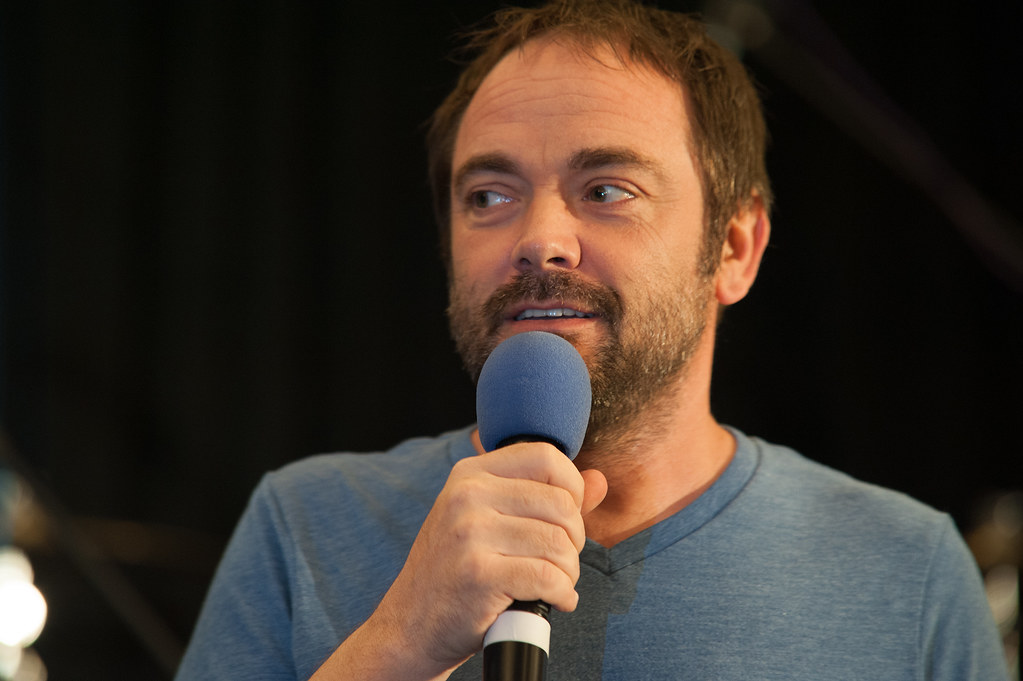
Let’s Talk About Crowley

Photo credit: drkold on Flickr
So it’s nearly Halloween, and as tends to happen every year I’ve come to realize I hadn’t really posted anything Halloween-y this month. But as Writability has had several Halloweens, I’ve already posted about writing fears (debunked), rounded up my excellent villains posts, and talked about scary books. Which has left me all month trying to answer to annual question of “what will I post about around Halloween?”

I was coming up empty until last night when, starting Season 10 of Supernatural, it occurred to me that what was become one of my favorite characters is most definitely a villain.

So let’s talk about Crowley.

For those of you who do not watch Supernatural (and if you don’t—why not?), here is a brief, mostly non-spoilery rundown: Crowley is introduced as a crossroads demon (a demon who makes deals with people, usually to give them something they really want in exchange for their soul ten years later), who gleefully maneuvers a homophobic man into kissing him (crossroads demons seal all of their deals with a kiss). From there, over the course of many seasons, he gradually moves up (or down?) the demon hierarchy until he becomes a very important person of evilness.

Crowley does some pretty despicable things throughout his time on the show, including kidnapping and torturing people—some of which are characters we like, double-crossing the protagonists several times over, and manipulating just about everyone all to serve his own interests. On paper, Crowley is not a character to gravitate towards.

But on the other hand, he also has some…shall we say endearing traits? For example, his nonchalant attitude, the way he nicknames Sam “Moose” and Dean “Squirrel” (I don’t know why, but I can’t hate it), his never-ending sarcasm and dry British humor, the way he’s always one step ahead (have I mentioned lately I love smart villains?) and let’s not forget that along the way, he does actually help the protagonists…who then go ahead and try to kill him anyway many times, because he’s a demon. And evil. So.

On top of that, Crowley also has one trait that really stuck out to me most: he never breaks his contracts. Does he create loopholes? Absolutely. But he keeps to his word down to the letter. I won’t go as far to say that he’s honorable, but there’s something to be said for a character that keeps to their word.

So basically, what I’m saying here is as evil of a character as Crowley is, he has depth. He’s not one-sided—something that really comes into play when spoilery things happen in Seasons 8 and 9 and, I’m assuming, 10. By now, at the beginning of Season 10, I can no longer deny that he’s grown on me as a character, and for reasons I won’t get into because spoilers, he’s even become sympathetic.

It will probably not surprise you to hear that I really enjoy writing (and reading, and watching) multi-dimensional, and when possible, sympathetic, villains. Because for me, at least, while I do occasionally enjoy villains who are indisputably one-sidedly evil, the ones that surprise me with other sides of their personalities and even force me to like them (because, curse them, sometimes they have moments that are so damn likable) are frequently the ones that stick with me long after they meet their demise.

Assuming they meet their demise at all, that is…

Do you enjoy multi-dimensional villains? Who are some of your favorites?

Twitter-sized bites:
How do you make villains likable? @Ava_Jae analyzes one of SPN's most popular villains, Crowley, to answer. (Click to tweet)  
Like layered villains? @Ava_Jae talks about her favorite SPN villain Crowley and explores what makes him likable. (Click to tweet)

Writing Excellent Villains Round-Up

Photo credit: Annoying Noises on Flickr
So Halloween is next week, and so is NaNoWriMo, which means now is the perfect time to talk about villains. Right? Right. 

But first, story time. 

Once upon a time, baby writer Ava thought that in order for villains to be truly villainous, they had to be super 666% evil with metaphorical twirling mustaches and maniacal laughing fits that they practiced in their (evil) mirrors. She was convinced that the best bad guys were just that—super dripping-with-evil bad. 

She was wrong. By a lot, really. 

As it turns out, I’ve found that some of the most interesting characters, whether antagonist or protagonists, aren’t completely good or completely evil—they’re gray characters. And so I wrote a post on writing gray characters

It’s also important, when developing and writing your characters, especially if you want them to feel “real,” is to figure out what they want and what their motivation is—something, I think, that’s especially important for protagonists and antagonists. It also helps to know what your characters are afraid of, because yes, even your villain has fears, too. (Or at least they should). 

Finally, I’ve learned along the way that if you don’t love your villain, chances are your readers won’t love him (or even remotely like him), either. 

Also, for fun, here are my top five favorite villains.

Now go forth and write excellent villains! 

What tips do you have for writing great villains? 

Twitter-sized bites:
In preparation for #NaNoWriMo & Halloween, @Ava_Jae shares helpful links for getting your villains right. (Click to tweet)  
Brainstorming your antagonist for an upcoming WIP? Writer @Ava_Jae shares helpful links on writing villains. (Click to tweet)

Vlog: How to Make Your Villains Awesome

Today's vlog is about sexy villains! Or Vampire Diaries. Or Klaus. Or something.

Happy viewing!


Twitter-sized bite:
Do you have trouble writing villains? Writer @Ava_Jae vlogs about how to make them memorable. (Click to tweet

How to Write a Great Antagonist

Photo credit: _Teb on Flickr
So while working on my last couple manuscripts, I’ve been thinking a lot about antagonists. Specifically, on antagonists that I really actually love.

I already wrote a post listing my top five favorite antagonists (spoiler: they include the fabulousness that is the Darkling, Warner, Khan, Moriarty and the Graceling baddie), but as a writer, I’ve known for a while that I wanted to write antagonists that I cared about just as much as I did the protagonist.

Happily, I’ve started to work toward exactly that, and I’ve been picking up a couple tips along the way:

  1. Get to know them (and love them) first. This, by far, has been the biggest help to me in writing antagonists I care about. By thinking of them as characters first, rather than the evil force that makes my protagonist’s life difficult, I’ve been able to connect with them better in the brainstorming stages, so that when they arrive on the page, I don’t see them strictly as the evil obstacle.

  2. Understand their motivation. The thing about the antagonist, is most times, they don’t think they’re doing the wrong thing (or if they recognize what they’re doing is wrong, they have a way to justify it to themselves).

    Very few people do evil for the sake of doing evil. The choices they make are based on beliefs, experiences and some kind of worldview that shapes their way of thinking and ultimately influences their decisions. By understanding why your antagonist does the things he (or she) does—and even better, why he thinks what he’s doing is the right choice—your antagonist will turn out to be a much more interesting and developed character, than they would have otherwise.

  3. Make them sympathetic (or at least understandable/relatable). This is related to the last point, but not entirely the same. Lately I’ve been thinking about what my antagonists’ lives are like off-screen (or off the page). Who do they care about? What do they like to do? What are they afraid of? What do they dream about? What secrets do they hold dear to them? Even if most of this information never comes up in your manuscript, knowing the bigger picture of your antagonists’ lives can give you plenty of opportunity to make them a little more relatable or human, so that the readers don’t view them as just the opposing force. 

  4. Make them formidable. There are few things more disappointing than an awesome bad guy who is easily defeated. You antagonist should be a major obstacle for your protagonist—the hero of your story should struggle to overcome him. In order for us to truly appreciate the protagonists victory, his journey there has to be a struggle, and the moment that your protagonist fights the antagonist should be a battle that won’t easily be forgotten. 

  5. Avoid the clichés. Basically, everything in that linked post is what you should avoid if you want your antagonist to be taken seriously. Evil monologues, twirling mustaches and maniacal laughter are best saved for the corny movies. 

So those are my tips for writing a great antagonist, now I want to hear from you: What tips do you have for writing awesome baddies? 

Twitter-sized bites:
Do you struggle when writing antagonists? Writer @Ava_Jae shares 5 tips that may help. (Click to tweet)  
"Very few people do evil for the sake of doing evil" and other antagonist-writing tips from writer @Ava_Jae. (Click to tweet)

My Top Five Favorite Villains

Photo credit: Med PhotoBlog on Flickr
So it’s October and I haven’t posted a single tidbit about Halloween or creepy things or even fears for crying out loud, so today I’m going to amend that. With villains. Specifically, my favorite ones. 

To quote one of my favorites listed below (bonus points if you know who), every fairy tale needs a good old fashioned villain. Villains make our protagonists fight for their happy ending, and truth be told, without them, there wouldn’t be much of a story. 

So without further ado, here are my top five favorite villains (in no particular order): 

  1. The Darkling. (The Grisha Trilogy by Leigh Bardugo) So the Darkling wins my favorite antagonist ever award. He’s got that I know I shouldn’t like you and yet I can’t help it type appeal, he’s powerful, intelligent and best of all, he’s sympathetic. You know he’s horrible and probably a little crazy and yet the thought of him dying is not a happy one. At least, not to me. 

  2. Graceling’s antagonist. (The Graceling Realm Trilogy by Kristin Cashore) Seeing how a large portion of Graceling is about figuring out who the antagonist is, I’m not going to spoil it and give this person’s name. But I will say this antagonist is twisted in a way that never stops being intriguing, and the more I got to know him, the more I wanted to know more. 

  3. Warner. (The Shatter Me Trilogy by Tahereh Mafi) Ahhhh, Warner. I have to admit, in Shatter Me, I wasn’t 100% sure why Warner had such an enormous fan base—I mean, yes, he was a great villain, but why all the swooning?

    Then I read Destroy Me. And Unravel Me. And now I am 100% in camp swoon over Warner.

    Again, what really drew me to him was the more I read about him, the more I began to understand him and the more he became a sympathetic antagonist. And I find that the more I understand about an antagonist, the harder it becomes to root for his demise, and to me, that’s a good thing. 

  4. Khan. (Star Trek: Into Darkness variety) I’m not going to pretend to be a Trekkie, because I’m not, but if there’s one thing that I love, it’s smart characters—particularly of the ridiculously smart variety. And this is no different for antagonists. So basically that whole Spock/Khan trying to outwit each other bit was my favorite thing ever. (Plus that scene on Kronos? Awesome).

    Back to smart antagonists: the reason I like them so much is because they’re genuinely difficult to beat. They don’t make stupid self-dooming mistakes, and they certainly don’t make it easy on the protagonist, which makes me that much more nervous for the protagonist and that much more desperate to find out how they finally defeat the antagonist.  

  5. Moriarty. (Sherlock variety) Basically everything I said about Khan applies to Moriarty. Except on top of being a genius, he’s crazy eccentric, definitely a tad bit creepy and is totally unpredictable. I’d probably love him for any one of those traits, but combined altogether? Yes, please. 

Who are your favorite villains from books, TV shows, movies, etc. and why? 

Twitter-sized bites: 
Who are your top five favorite villains from books, TV shows, movies, etc.? Join the discussion at @Ava_Jae's blog: (Click to tweet
Personalized tweet: [INSERT FAVORITE VILLAIN NAME] is my favorite villain—who is yours? Join the discussion at @Ava_Jae's blog: (Click to tweet)
 

Stop the Spam

Photo credit: buggolo on Flickr
As any of you who have been doing the social media thing for more than a week know, there is a certain four-lettered evil that lurks the waters of every social media site and attacks at seemingly random (and infuriating) intervals.

Yes, I’m talking about the boiling black evil that is spam.

I try to be an optimistic person and I like to give people the benefit of the doubt, especially when I receive spam from non-robot accounts. I say things like, well maybe they’re new or maybe they don’t realize that’s considered spam and I ignore the first offense. (The second offense, however, gets a healthy dose of the spam gun).

Look, I understand why well-intentioned people spam. I understand wanting more Twitter followers or more likes on your Facebook page or more exposure to your awesome blog or more sales of your book. I get it, honestly, I do. But there’s a right and wrong way to go about achieving those goals, and spamming people with links to said pages is definitely not the right way.

Now what exactly counts as spamming? some of you may be wondering. Behold the examples: 

  • Sending someone a link that they did not ask for = SPAM.

  • DMing someone a link that they did not ask for = SPAM.

  • Leaving a link to your blog/book/whathaveyou on someone’s blog/FBwall/whatever that they did not ask for = SPAM.

  • Tweeting about your book/blog/whateveritis = NOT SPAM (but if you overdo it, people may treat it as such anyway, so be careful).

When in doubt, if you want to share a link to your blog/Amazon page/FB, to someone who didn’t ask for it, don’t. It’s pretty simple.  

You see, the problem with spam is that it’s counter-productive, because when people see they’ve been spammed a link, more times than not they react the same way: by blocking you. Not only did they not open your link to see what you had to share, but now you’ve just blacklisted yourself, or at least left a bad impression.

The way to earn more followers or page views isn’t to spam people with links—it’s to earn more followers and page views by being genuine and supportive of others and creating great content worth sharing. Once you’ve done those things, you won’t need to spam because other people will be sharing your pages to their friends and followers for you. And trust me, it feels much better to have happy followers share your work than to try to peddle your pages on your own.

So go out there, be a good person, and stop the evil spread of spam. Your followers and page views will be glad that you did.

What do you think? Am I being too harsh on spam? Have you ever been happy about a link that was spammed to you? Share your thoughts in the comments below. 

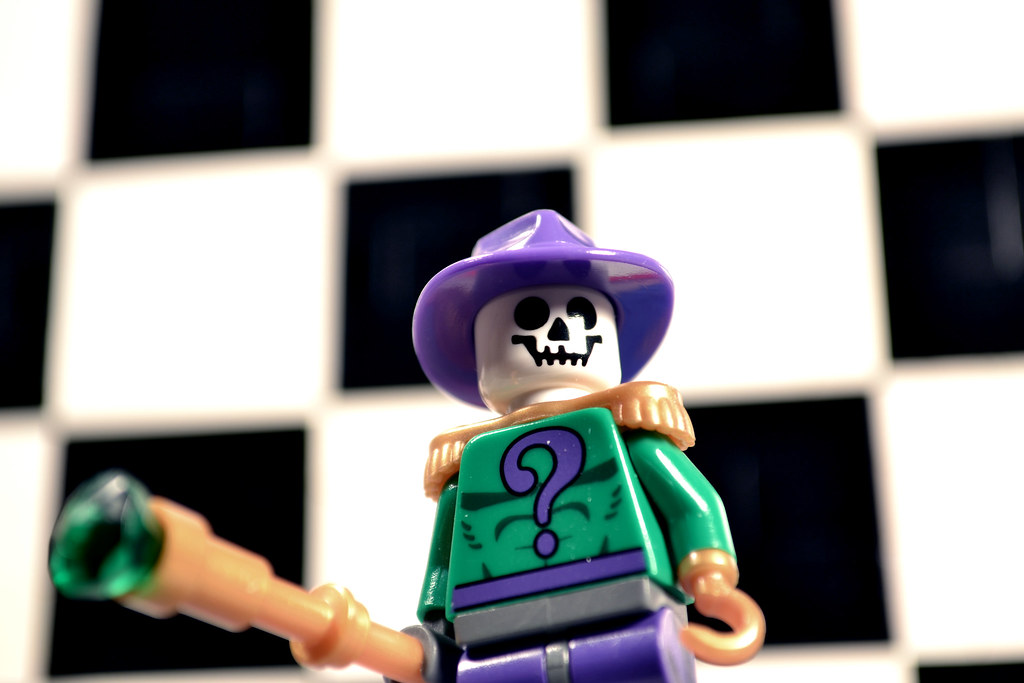
How (Not) to Write Amazing Villains

Photo credit: L. Marie on Flickr
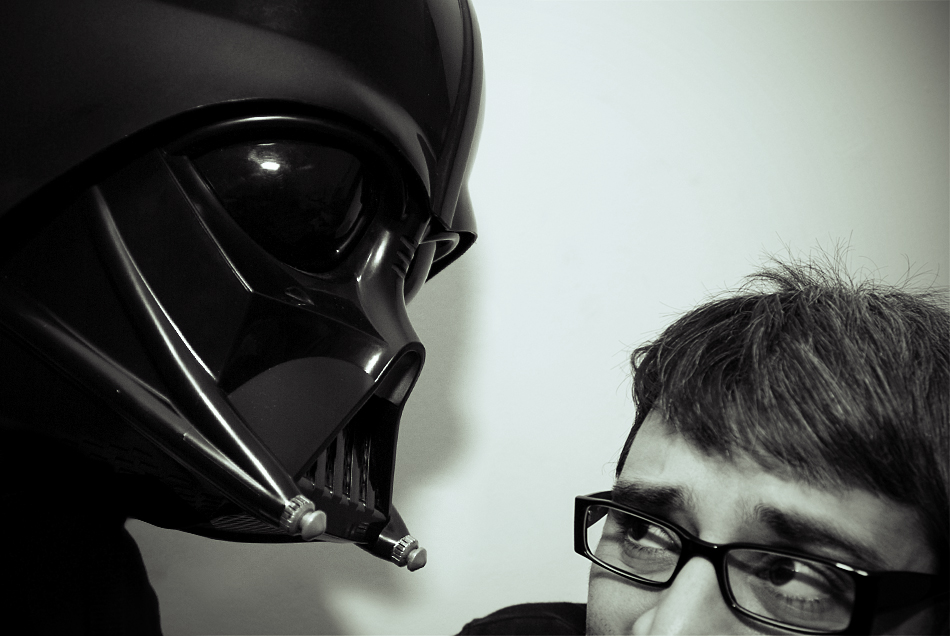
Darth Vader. Lord Voldemort. President Snow. Professor Umbridge. These are names that will forever live in infamy in our minds—names that struck fear in the hearts of more than a couple characters.

As writers, we often like to analyze the best of the best to discover their secrets so that we too can write characters worthy of being listed with them. After much research, I have uncovered the keys to brilliant villains, and because I’m a generous person, I’m posting them for all of you to see.

So, without further ado, here are the only tips you will ever need to write the perfect villain.*

Ten Keys to Writing Amazing Villains:

  1. Evil name. No villain can be successful without an evil name. This is why Peter Pettigrew will never be listed beside Lord Voldemort. He was doomed from the start with such a silly-sounding name (sorry Peter, but Lord Pettigrew just doesn’t have the same ring to it).

  2. Evil eyes. The eyes—oh! The eyes! Unless your villain has terrifying eyes, how can you expect him to terrify the other characters with a single glance? Don’t handicap your villain by giving him normal (or worse—pretty) eyes.

  3. Evil monologue. This really goes without saying (because we all know how crucial the monologue is), but monologues make or break your villain. If your antagonist doesn’t go on for at least five pages about his nefarious plot to destroy the world with his excruciatingly evil death ray and how there’s nothing your protagonist can do about it, then it doesn’t matter how evil his eyes are because he (or she) has failed as a villain. 

  4. Evil lack of hair. No one will take your villain seriously with a full head of hair. Can you imagine Lord Voldemort with hair? Exactly.

  5. Evil mustache. The twirly kind, so your villain can spin his finger in it while monologing. (And yes, even the female villains require one).

  6. Evil laugh. Case and point: MegaMind. 

  7. (via Dhruv1sCeLT on YouTube) 

  8. Evil smile. To be revealed just before your villain does something particularly nefarious, so that your protagonist knows something horrific is about to happen. And just to be creepy. Because all villains are creepy.

  9. Evil cat/snake/pet. Voldemort had his snake, Umbridge had her kitten obsession and the Grinch had his dog. Coincidence? I think not.

  10. Evil lair. Living in a normal home or suburb will slowly leech away your villain’s evilness. This must not happen. Give him a lair—preferably one with skeletons hanging on the walls and horrific torture devices and his death ray pointed at the sky. That way, when he captures your protagonist and brings him back to the lair, his evilness with literally resonate off the walls. 

  11. Evil evil. This is the MOST IMPORTANT point. It doesn’t matter how evil his name or eyes or cat is if your villain’s evilness is not appropriately evil. Your antagonist must not have even a single redeeming quality, or his whole character will be ruined. Ruined! Your villain must live, breath, think and eat evil (cauliflower will do. Cauliflower is very evil).  The moment your reader starts to sympathize with your villain is the moment he has lost his credibility. Whatever you do, don’t let your villain show even a glimmer of un-evilness.

So that’s it. You now know how to write the most evil, terrifying villain in existence. Now get to work.

*= Assuming you want your villain to be so cliché-ridden that no one will be able to take him seriously at all.

What evil keys would you add to the list? 

On Character Motivation

Photo credit: Lord Mariser on Flickr
It has occurred to me that while writing, one of the best things a writer can do is question every action from every character. Why did your protagonist say that? Why did your secondary react to that snide remark so violently? Why did your antagonist plant a bomb in a toy factory? Why won't that random taxi driver stop talking?

What I mean to say is that every action any character in your novel takes must have a motivation (and P.S: speaking is an action).

Think about your everyday life for a moment—from waking up in the morning to climbing into bed at the end of the day—and I think you'll find that there is very little (if anything at all) that you do without any motivation or reasoning at all. Even something as simple as eating lunch (motivation: you were hungry) or playing video games (motivation: you were bored, or didn't want to do something else, or really just wanted to reach that achievement, etc.) has some form of reasoning behind it.

What's my point? We don't do anything without motivation and neither should our characters.

This tends to be an obstacle when certain plot points need to be met, so our characters must do stupid or evil things in order to accomplish our goals for the manuscript. Without enough planning, when looking back at the WIP, writers often stumble across scenes where characters do something without a clearly defined motivation.

This happens most often with antagonists. In most novels, the antagonist must do some pretty terrible things to the main character in order for the plot to progress—whether it's stealing his lover or trying to kill him or embarrassing him in school (or at work)—antagonists must set our characters back and create conflict.

But antagonists are characters too, and they need to be well developed with believable motivations or their actions will fall flat.

Because I love the Harry Potter series and one of the best ways to learn how to improve your writing is by taking a look at the expertise of the greats, I'm going to use the most evil and yet still believable bad guy I have yet encountered in a book.

That's right: I'm talking about Voldemort.

As most of you know (regardless of whether or not you've read the series), Voldemort does many a terrible thing to our main character Harry. Without spoiling anything for those of you few readers who have yet to read the series, Voldemort kills Harry's parents when he's a baby, tries to kill him a dozen or so times throughout his lifetime, frees the most evil of wizards from Azkaban (wizard prison), murders many of Harry's friends and loved ones as well as tortures and kills others, goes through a very painful process of fragmenting his soul and murders his loyal followers when their usefulness expires.

And yet, Voldemort doesn't do things only because he's evil—he has a goal, a motivation: to be the greatest wizard who ever lived—greater even than the famous Albus Dumbledore. Above all else, he wants power and immortality.

Unfortunately for Voldemort, there's this pesky orphaned teenager who keeps getting in his way.

Despite all the evil, horrendous things Voldemort does, never once did J.K. Rowling fall into the trap of making him do things just to be evil—everything he did led back to his number one goal, every horrible action he took had a motivation.

Can you say the same for your characters?

Take a look at your WIP. Can you justify your characters' actions with motivations--or are they simply acting for the sake of the plot?

Why Gatekeepers Aren't Evil


Photo credit: Army Man Chaz on Flickr
Not every book you write is meant to get published. I know it sounds harsh, but the hard truth is that not every book you put your heart and soul into is destined for the limelight.

And that’s ok.

It doesn’t sound like a good thing and it’s far from encouraging, but guys, this is why gatekeepers are a good thing.

Because when you’re writing—whether it’s your first novel or your fifth—it feels like the one. The book that’s going to break out and be a success. The one that people will talk about—the one that will finally get published. But the truth is, although every book feels like the one, not every novel will live up to that expectation.

No one is born ready to write fantastic books. It takes time to learn your craft, to figure out what works in a novel and what doesn’t, to discover how to write a voice different from your own, how to pace, write great dialogue and edit. Those things don’t come naturally. It takes hard work and practice and practice and more practice.

But how do you practice? You write. You go through the months or years or however long it takes to write a novel and create characters who haunt your every thought and build a world you’ll never forget because it’s a part of you. You write and you rewrite and you dream and when you finish you celebrate because you’ve done something incredible—you’ve created a story that is uniquely you. A story that only you could have written.

And that’s amazing. You’re amazing.

But that first novel you write? It’s not always going to be ready. And maybe neither will your second, or your third or fourth or sixth. And maybe it will, but that’s not the point—the point is that you practice and you keep going and you write even after you realize the time has come to put down that WIP and start again.

And it’s hard. It’s hard to shelf a manuscript you put months—even years—of your life into. It’s hard to put it away and give up on those dreams of seeing it flourish. But it’s necessary. It’s part of the process. It brings you one step closer to writing the one, the real one that will be ready for the spotlight.
But until then, we need gatekeepers.

Guys, I’m glad self-publishing wasn’t around the way it is today five years ago. Frankly, I’m relieved. Because the novels that I wrote then—they felt like the one. And I loved them—I still do—but I loved them so much I might have uploaded them long before they were ready.

Because honestly, they weren’t ready. I wasn’t ready. I thought I was ready—I convinced myself that my books were ready—but looking back at them now I can clearly see that I had a long way to go. And the only thing that stopped me from releasing them way before it’s time were gatekeepers. You know, agents.

Don’t get me wrong—I’m not saying if you can’t find an agent for your work it’s definitely not ready. There are countless books out there that were rejected time and time again only to go on and become a bestseller. I get that. Agents can’t tell the future, and they aren’t always right.

But sometimes they are. Sometimes those rejection letters are really a blessing in disguise—sometimes they stop you from launching before you’ve had the time to really develop your craft.

Things are different now. We don’t need to use the gatekeepers like we did. We have the option to self-publish whenever we want and for some of us, it’s the right thing to do. But it’s not right for everyone, because not everyone is ready.

Don’t publish your book just because you can. Publish it because you’ve really thought about it, because you’ve lost count of how many times you’ve rewritten it and you’ve had others look at it, then you rewrote it again, then you gave it some time and when you came back to it, it still felt ready. Publishing should never be a spur-of-the-moment decision. Never.

Because sometimes we need the gatekeepers. Sometimes we need someone to tell us to hold off, to say you’re not quite there yet, keep going.

And as long as you keep going, as long as you don’t give up, I promise you the one will come. Then you’ll be glad you waited as long as you did.

So those are my thoughts. What do you think—are gatekeepers evil?  
Related Posts Plugin for WordPress, Blogger...