Showing posts with label gatekeepers. Show all posts

Query Tip: Do Your Research

Photo credit: andercismo on Flickr
Most writers are well aware that writing successful query letters is no easy task. We gripe and groan about them nearly as often as we do about synopses writing (which is another bucket of glitter and sunshine). Pile the added pressure of knowing that the query letter is the first (and sometimes last) impression publishing professionals have of your book, and it's no wonder that query letter writing is every writers favorite (*cough*) task.

While I've already written about ways (not) to write the best query letter in existence, I'd like to talk about a hugely important part of the querying process that gets overlooked far more than it should; that is, the research.

I follow quite a few agents on Twitter and I'm always surprised by the amount of times I see them talking about query letters they receive for genres they don't represent, or queries that blatantly disregard their guidelines. It seems obvious, but those are mistakes that writers frequently make simply because they failed to do their research.

In a way I understand—for the new writer who has never traversed the parts of the internet that make agent and editor research easy, it can be a little daunting. So to help to amend that, I've put together a list of my top five favorite go-to places for agent research all nice and easy for you to find:

  1. Literary Rambles. Run by the fantastic Casey McCormick and Natalie Aguirre, Literary Rambles is the first place I check when researching agents. They have a huge database of spotlighted literary agents that is frequently updated, and every spotlight is chock full of information—a bio, likes, dislikes, quotes, links to interviews, clients, sales, submission guidelines and query tips. For an example of this fabulousness, check out agent Sarah LaPolla's spotlight

  2. AgentQuery. What I really like about AgentQuery is the ability to search their literary agent database by genre. If you use their full search feature (recommended), you can tailor your search by keywords, multiple genres (fiction and non-fiction) and filter it by whether or not the agent accepts e-mail queries, is a member of AAR, and is actively seeking clients. AgentQuery really takes the hard work out of finding agents for your genre. 

  3. Predators & Editors. This site is a must when researching. Predators & Editors has an enormous list of agents and editors, both legitimate and not. They'll let you know if the agency you're looking into has sales or if you should be wary of them. There are a lot of scammers out there, as well as well-intentioned but entirely inexperienced people out there. Be careful and make sure the agency or publishing house you're looking into is legitimate before you submit your query. 

  4. Absolute Write Water Cooler. What I really like about Absolute Write is that while the other sites provide a neutral, objective profile of the agents, Absolute Write has an agent forum where writers share their personal experiences. Everything from submission times, to responses, to happy news is discussed on the boards as well as not-so happy warnings and bewares. Absolute Write is yet another fantastic place to check before you hit send, and the agent and publishers index is a great place to start. 

  5. Twitter. I know Twitter doesn't sound like a helpful research stop, but you would be surprised what agents tweet about. I've seen a fair share about agent tastes, current wish lists, query tips and faux pas on Twitter alone. For those who are interested, I have a running Twitter list of agents (currently 128 members and growing) that makes it easy follow some fantastic publishing pros. 

Regardless of what you use, make sure you take the time to do your research before you start to write your query letters. Not only will it save you time, but you'll learn quite a bit about agent preferences and the pulse of the industry.

So those are my top five to-go research places, but now I want to hear from you. Where do you go to do your agent research?

Why Gatekeepers Aren't Evil


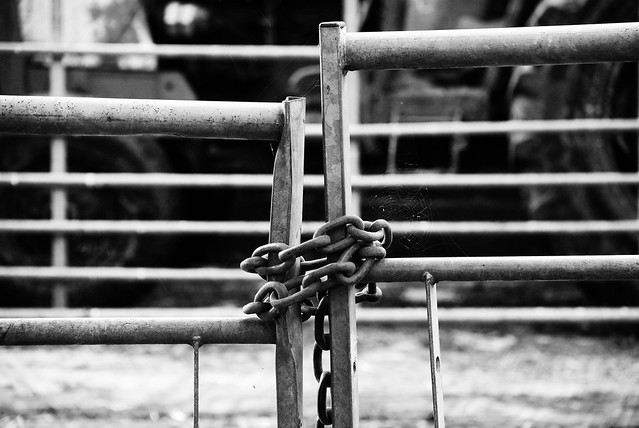
Photo credit: Army Man Chaz on Flickr
Not every book you write is meant to get published. I know it sounds harsh, but the hard truth is that not every book you put your heart and soul into is destined for the limelight.

And that’s ok.

It doesn’t sound like a good thing and it’s far from encouraging, but guys, this is why gatekeepers are a good thing.

Because when you’re writing—whether it’s your first novel or your fifth—it feels like the one. The book that’s going to break out and be a success. The one that people will talk about—the one that will finally get published. But the truth is, although every book feels like the one, not every novel will live up to that expectation.

No one is born ready to write fantastic books. It takes time to learn your craft, to figure out what works in a novel and what doesn’t, to discover how to write a voice different from your own, how to pace, write great dialogue and edit. Those things don’t come naturally. It takes hard work and practice and practice and more practice.

But how do you practice? You write. You go through the months or years or however long it takes to write a novel and create characters who haunt your every thought and build a world you’ll never forget because it’s a part of you. You write and you rewrite and you dream and when you finish you celebrate because you’ve done something incredible—you’ve created a story that is uniquely you. A story that only you could have written.

And that’s amazing. You’re amazing.

But that first novel you write? It’s not always going to be ready. And maybe neither will your second, or your third or fourth or sixth. And maybe it will, but that’s not the point—the point is that you practice and you keep going and you write even after you realize the time has come to put down that WIP and start again.

And it’s hard. It’s hard to shelf a manuscript you put months—even years—of your life into. It’s hard to put it away and give up on those dreams of seeing it flourish. But it’s necessary. It’s part of the process. It brings you one step closer to writing the one, the real one that will be ready for the spotlight.
But until then, we need gatekeepers.

Guys, I’m glad self-publishing wasn’t around the way it is today five years ago. Frankly, I’m relieved. Because the novels that I wrote then—they felt like the one. And I loved them—I still do—but I loved them so much I might have uploaded them long before they were ready.

Because honestly, they weren’t ready. I wasn’t ready. I thought I was ready—I convinced myself that my books were ready—but looking back at them now I can clearly see that I had a long way to go. And the only thing that stopped me from releasing them way before it’s time were gatekeepers. You know, agents.

Don’t get me wrong—I’m not saying if you can’t find an agent for your work it’s definitely not ready. There are countless books out there that were rejected time and time again only to go on and become a bestseller. I get that. Agents can’t tell the future, and they aren’t always right.

But sometimes they are. Sometimes those rejection letters are really a blessing in disguise—sometimes they stop you from launching before you’ve had the time to really develop your craft.

Things are different now. We don’t need to use the gatekeepers like we did. We have the option to self-publish whenever we want and for some of us, it’s the right thing to do. But it’s not right for everyone, because not everyone is ready.

Don’t publish your book just because you can. Publish it because you’ve really thought about it, because you’ve lost count of how many times you’ve rewritten it and you’ve had others look at it, then you rewrote it again, then you gave it some time and when you came back to it, it still felt ready. Publishing should never be a spur-of-the-moment decision. Never.

Because sometimes we need the gatekeepers. Sometimes we need someone to tell us to hold off, to say you’re not quite there yet, keep going.

And as long as you keep going, as long as you don’t give up, I promise you the one will come. Then you’ll be glad you waited as long as you did.

So those are my thoughts. What do you think—are gatekeepers evil?  
Related Posts Plugin for WordPress, Blogger...