Showing posts with label improving your craft. Show all posts

5 Good Habits for Writers

Photo credit: Jonathan_W (@whatie) on Flickr
Oftentimes when discussing habits, we talk about negative habits to try to break. But certain habits can actually be beneficial to try to cultivate.

Developing good writer-related habits is a great way to keep your writer side from getting dusty and continue to build your skills a day at a time.

Some good habits for writers include:
  1. Read a little every day. This is one I’m still working on, but have enjoyed the results so far. You don’t have to read for hours every day—even just a couple minutes a day can get you through a book in a couple weeks. But it’s insanely important for writers to read, and doing so even for a couple minutes a day is a great way to make sure you don’t neglect this important step. 

  2. Write (or edit) a little every day. Again, this doesn’t have to be a lot. My blog keeps me writing or editing six out of seven days of the week, and that’s just a couple hundred words. But the more you write and edit, the more you learn and develop your craft, and like reading, even just a couple minutes a day adds up. 

  3. Observe observe observe. I’ve written a full post about this before, but in short, pay attention to life. Every moment you live, every smell you inhale, every taste you experience, every touch you feel and sight you see can be used in your writing. Whether it’s the sting of a paper cut, the whistling, dangerous beauty of a blizzard, or really bad Chinese food, savor life to the fullest so that you can then incorporate it into your writing. 

  4. Find inspiration. Read a book, watch your favorite movie, visit new places, listen to new bands, try new experiences, go through Pinterest or tumblr and spend time away from the screen. Inspiration can come from just about anywhere—you just have to be open to finding it. 

  5. Daydream. Just about every one of my best ideas, the ones that have eventually become novels, started off as daydreams. I’ve found that most writers tend to be daydreamers anyway, and it’s a great way to tap into your innermost thoughts and see where they take you. 
What habits would you recommend for writers?

Twitter-sized bites: 
Habits aren't always bad—here are five that may help to cultivate the writer in you. (Click to tweet)  
Every day is an opportunity to develop your craft. Have you picked up these good habits for writers? (Click to tweet)

When is a Good Time to Tell?

Photo credit: World Bank Photo Collection
So I’m sure you’ve all heard about the evils of telling rather than showing. When I critique, it’s the number one thing I mention, because it’s so important to get it right, and so difficult to nail down.

However, something that writers don’t talk about quite as often—and really should—is when you should tell instead of show. Because as evil as telling sometimes is, it’s important to know when you don’t need to show everything.

Some good times to tell instead of show include:
  • When showing the passage of time. Sometimes books take place over the course of several weeks, or months, or even years—and in those scenarios the readers don’t usually need to know what happens every single day. This can also be used to speed through a couple hours, or even a couple minutes to get to the meat of the story. 

  • When skipping over unimportant/uneventful moments of your characters’ lives. No one has a life so interesting that every moment of every day needs to be detailed. There’s a reason publishing professionals often say they don’t want to read about your characters brushing their teeth. Even J.K. Rowling summarized much of Harry’s summers with the Dursleys. 

  • When conveying backstory or history. Of course there are times when history or backstory is better conveyed through showing, but that’s a case-by-case basis. In most situations, you’ll want to gradually reveal bits of history and backstory, and oftentimes that’ll be done through bits and pieces of telling. 

Some times you definitely shouldn’t tell:
  • When writing emotion. This is so huge to me. Whenever I see in my own writing or someone else’s a named emotion (ergo: He was sad, She looked excited), I immediately mark it with a big fat red SHOW DON’T TELL. When it comes to emotion, showing is nearly always more effective than telling, regardless of the POV or whose emotion you’re describing. (This is yet another reason The Emotion Thesaurus is my best friend). 

  • When writing sensory descriptions. If you’re writing sensory descriptions, you’re already well on your way to showing wonderful details, but it’s still possible to fall into the telling trap. Sensory descriptions are there to help the reader picture what’s going on, so “He smelled garbage in the air” isn’t as powerful as “The night reeked of rotting bananas and spoiled milk.” 

  • In your opening. This one isn’t set in stone by any means, and I’m sure there are exceptions where it could work, but whenever I look at openings, something that nearly always grabs me is effective showing, whereas something that nearly always makes me close the book is telling right off the bat. The opening is supposed to suck the reader into the story and make them forget they’re reading—if you start your book with summary (which is, in essence, what telling is), you immediately distance your reader, something very dangerous in your opening. 

Those aren’t comprehensive lists by any means, so I want to hear from you: what other situations can you think of in which you should or definitely shouldn’t tell? 

Twitter-sized bites:
They say, "show don't tell," but when SHOULD you tell? (Click to tweet
Writers often say, "show don't tell," but here are a couple instances where telling may be preferable. (Click to tweet)

Writing Tool: THE EMOTION THESAURUS

Photo credit: Goodreads
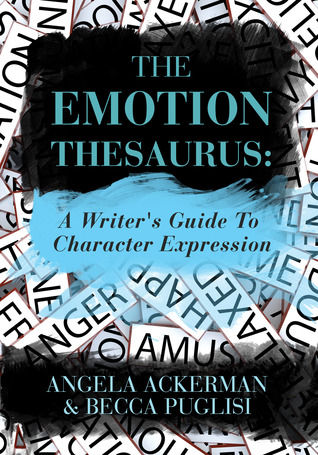
Every once in a while I’ll come across a book that I can’t help but rave about and recommend to everyone who will listen. The Emotion Thesaurus by Angela Ackerman and Becca Puglisi (who also run the ever-so-helpful blog The Bookshelf Muse) is one of those books. 

Before I rave about its awesomeness, here’s the Goodreads summary:
“One of the biggest problem areas for writers is conveying a character's emotions to the reader in a unique, compelling way. This book comes to the rescue by highlighting 75 emotions and listing the possible body language cues, thoughts, and visceral responses for each.  
Using its easy-to-navigate list format, readers can draw inspiration from character cues that range in intensity to match any emotional moment. The Emotion Thesaurus also tackles common emotion-related writing problems and provides methods to overcome them.  
This writing tool encourages authors to show, not tell emotion and is a creative brainstorming resource for any fiction project.”
I tweeted a while back that The Emotion Thesaurus is perpetually open in my Nook app while revising, and I wasn’t exaggerating. Whenever I reach a moment where I’m struggling to describe an emotion, or I get a CP note asking for more emotion from a character, I open up The Emotion Thesaurus.

It’s not a book that you necessarily read from cover to cover (although you’re more than welcome to), it’s a resource that you open when trying to describe a particular (or several) emotions. What I love about it is it not only lists body language cues, thoughts and physical responses, but it also lists cues of suppressed emotion (which I use all the time). As a bonus, it has writing tips at the end of every chapter.

To top it off, none other than Kristen Lamb recently recommended The Emotion Thesaurus in The Huffington Post (under #4) as have dozens of other writers across the web. And out of nearly 500 reviews on Goodreads, it has a 4.57 star average—and with good reason.

I honestly can’t recommend this book enough to writers of all stages. It will forever change the way you think about and write emotion—or at least, it did for me.

What resources do you use to help write emotion? 

Twitter-sized bites: 
Is THE EMOTION THESAURUS by @AngelaAckerman & @beccapuglisi on your bookshelf? Here's why it should be. (Click to tweet)  
Do you struggle with writing emotion? Then this wonderful writing tool may be exactly what you need. (Click to tweet

Writer Fear, Debunked: I’ll Never Write This Well Again

Photo credit: meaganmakes on Flickr
Not too long ago, I received another lovely e-mail from one of you wonderful readers, and in it was mentioned a fear that I suspect most writers know all too well.

Sometimes, when we write something that we’re particularly proud of, whether it’s a paragraph, scene, chapter, short story, poem, or book, we get this little nagging voice that says this is the best you’ll ever do. 

Sometimes, when we struggle after that great story or whatever it is, the voice says, you’ve plateaued. Might as well settle for mediocrity, because you’re not going to get better than this. 

Sometimes, when the struggle continues, the voice says, you’ll never write as well as that passage again. It’s over. 

And let’s be honest. Sometimes, we’re tempted to listen to that voice. 

Don’t do it. 

The wonderful thing about writing is that it’s a skill that we can always improve. There’s always more to learn, more ways to develop and hone our craft, more techniques and tips that even the top earners of the field are still taking in. There isn’t a final master level and we never plateau. 

The thing I love about writing is that much of the learning is subconscious. We learn every time we read a new book, every time we read a tip that resonates with us, every time we sit down and start writing. We learn with every edit we incorporate, every manuscript we evaluate, every tear we shed (figurative or literal) over revisions or getting that line just right. 

So whenever you reach a point when you start to think you’ll never write as well as that sentence/paragraph/passage/book/whatever, I want you to stop and tell that voice to shut up. 

Because not only will you write as well as that passage—you’ll write better. One day you’ll look back at what you thought was your best and you’ll realize just how much you’ve improved because your work now? It makes that fabulous passage look average. 

As long as you keep reading and writing and pushing to improve, I promise you you’ll get better. It may not feel like it, and you may not even realize it at first, but with every scene you write and book you read and sentence you edit, you are improving. You are learning. 

You are writing better than ever before. 

Have you ever heard the nagging voice? What did you do to overcome it? 


Twitter-sized bites: 
Have you ever worried that you'll never write as well as you have before? Here's why you shouldn't. (Click to tweet
Worried that your writing skill may have plateaued? You don't need to, and this is why. (Click to tweet)

4 Ways to Improve Your Writing

Photo credit: amypalko on Flickr
As writers, we are always looking to improve (or at least, we should be). Like many skills, writing is not a craft that you ever master—there is always more to learn and more ways to improve. 

Most writing resources and blogs (including this one) will tell you the number one way to improve your writing is to write—which is true. You cannot improve your writing if you don’t practice and take the lessons you learn along the way and incorporate them into your words. 

But rather than writing another post about the importance of writing, I’d like to discuss some other ways for writers to improve their skills.  

  1. Pay attention to your surroundings. Whether you’re washing the dishes, taking a walk in the park or stuck in parking-lot-like rush hour traffic, paying attention to our experiences is the first step to conveying a sense of verisimilitude (or realism) in our writing. I’m sure you have all at one point or another come across a passage while reading and thought yes, that’s exactly what that’s like! While those moments can feel like magic, they don’t come to the author through spontaneous inspiration—they begin by paying attention to our experiences so that we can accurately convey them on the page. 

  2. Critique as much as possible. You wouldn’t think that critiquing others makes you a better writer, but it truly does. I’ve written in length about this before, so I won’t go into it in detail, but in short, forcing yourself to pay attention to what works and what doesn’t in other people’s work makes it easier to then recognize the same patterns in your own work, particularly when editing. 

  3. Read widely and often. Stephen King said it best: “If you don’t have the time to read, you don’t have the time (or the tools) to write.” I’ve written about this before as well, but it’s worth saying again: writers MUST read in order to improve.   

  4. Take note of what you like/dislike while reading. I don’t mean that you literally have to write things down (although that doesn’t hurt), but while you’re reading it’s good to pay attention to what you like and what you don’t like. Was that description particularly evocative? What was it about it that really engaged you? Did that chapter feel as if it dragged? Why do you think that was the case? Reading actively is a great way to learn different techniques and writing nuances than you can then incorporate into your own work. 
Other than writing, what methods would you add to the list? 

Twitter-sized bites: 

Writers are always looking for ways to improve their craft. Have you tried these four methods? (Click to tweet)  
What do you do to improve your writing? Writer @Ava_Jae discusses four ways to help improve your craft. (Click to tweet

How to Edit in Passes

Photo credit: Law H8r on Flickr
As I work on the second draft of my newest WIP, I’ve decided to try something a little different while working on my edits. 

I’ve mentioned in the past that I like to be pretty organized when I tackle my edits, and I often employ editing lists to help me to capitalize on that organization. Even with the list method, however, editing can quickly become exhausting, and so this time around I wanted to focus on a method that would allow me to get through my edits without burning out. 

And so I decided to enhance the list method with focused passes. 

You see, oftentimes the biggest issue with editing is that writers start to feel overwhelmed by the enormity of the edit at hand. Most times there will be several things to fix in any given draft, but the focused pass forces you to tackle one problem at a time. 

Basically, the idea behind a focused edit pass is to go through your WIP with one goal in mind. Maybe it’s to authenticate dialogue, or expand on your setting, or fix a major plot hole, but whatever it is, you go through your WIP and fix that one problem, until whatever it is is cohesively worked out throughout the entirety of your WIP. 

For example, say you’re adding a character. Using the focused pass method, you would go through your WIP from beginning to end, adding all scenes, mentions and effects that character leaves, and you ignore all other problems while doing so. It isn’t until you’ve fully integrated the new character into your WIP that you move on to the next problem—and again, you focus solely on the new issue. 

Ideally, I recommend starting with the most difficult fix and moving on from there, because once you’ve fixed the big problems, everything else will feel easier in comparison. 

So far, I’ve found that isolating the issues and focusing on them one at a time has allowed me to handle the issues without being overwhelmed. And when you’re neck-deep in edits, that can be quite a blessing. 

How do you handle your edits? Do you try to tackle everything chronologically, use passes, or another method? 

Twitter-sized bites:  
Do your edits leave you feeling overwhelmed? Here's a quick tip to help avoid writer burnout. (Click to tweet).  
Is your list of needed edits enormous? Here's how editing in passes helps one writer keep focused. (Click to tweet)

How to Avoid Writing Info-Dumps

Photo credit: quinn.anya on Flickr
Easily one of the more difficult aspects of writing a novel is balancing explanation with prose. Giving readers enough information to understand the story without drowning them in particulars.

In other words, explaining without info-dumping.

The reason info-dumps can be so tricky to avoid is because it’s often difficult for writers to determine how much is too much, and oftentimes, in an effort to avoid confusing readers, we overdo it. We explain way too much at once and end up freezing the story altogether to rant on and on about why elements of the story work the way they do. It’s like freezing the action in the middle of the movie to say and now for a little history…

It’s jarring, and it often results in bored readers.

What makes this even tricker is that the opposite problem is one that is just as deadly—not explaining enough, which results in losing readers entirely to confusion and frustration. This is a common problem as well, because as the authors of the story, we sometimes forget that readers aren’t privy to the information we have stored away in our skulls.

The key is to reach a sweet spot in between by spreading the information out throughout the novel.

What this requires is a prioritization of information. Right from the beginning, you need to determine what information is essential for readers to understand immediately— information about your characters, the setting, the world rules, etc. That information should be sprinkled throughout the beginning of your novel.

From there, determine what else is important, but you can hold off on revealing without utterly confusing your readers. History, backstory and more detailed explanations usually fall into this category, and this information should be spread out throughout the middle-end of your book.

Regardless of when the information is conveyed, the important thing is to make sure you spread it out. Have a couple characters talk about something important—then interrupt them. Show us the way your fantasy world works rather than explaining it over the course of a couple pages.

If you strategically sprinkle bits of information throughout your prose, you’ll teach your readers all they need to know to understand your story without drowning them in information—and that’s exactly what you want.

Have you ever written an info-dump? What did you do to fix it? 

Twitter-sized bites: 
Are you drowning your readers in information? Avoid info dumps now. (Click to tweet)
Make your readers happy: strategically sprinkle bits of information throughout your prose. (Click to tweet)

Query Critiques: More Important Than You Think

Photo credit: Frederic Guillory on Flickr
While I’ve written several times about the importance of having critique partners and getting your work (gently) ripped to shreds, it has occurred to me that we’ve yet to discuss another very important step to the critiquing process: getting your query letter looked at.

Most writers are not enormous fans of the query letter writing stage—in fact, many writers have no problem admitting that it’s on the lower end of enjoyable things to write.

Writing a good query involves summarizing your book into a couple paragraphs in a way that makes others have a good understanding of your story and want to read more, while also making your book stand out. It also involves accurately reflecting the tone of your book, giving away enough so that readers understand the main idea of your novel without giving away too much, and writing it in a way that flows.

In short: query letters are hard.

Good news, is there is a way to improve your query and get valuable insight into how to improve it, and it’s called a critique.

The nice thing about query critiques is that they don’t take a huge commitment. Writers can trade three or four drafts of their critiques over the course of a couple days, versus trading 60-100k word manuscripts over the course of a month.

But like beta-reading and manuscript-swapping, query critiques are enormously helpful, because they allow you to get outside feedback before industry professionals start looking at it critically.

Because the truth is this: the query is the first impression industry professionals have of your work, and if you don’t polish it as well as you did your book, it won’t matter how much you edited, or how beautiful your writing is, because many professionals won’t get to your actual pages. Your query has to make your book stand out and shine, or you’re likely to get rejections regardless of how well-written your book is.

Query letters aren’t easy to get right, but if you trade query critiques with other writers, not only will you get valuable feedback on how to improve your letter, but you’ll also begin to develop an understanding for what works and what doesn’t in a query.

It’s a win-win, and it’s a step that you definitely don’t want to skip.

Have you ever critiqued a query or had your query critiqued? What was your experience like? 

Three Important Critique Tips

Photo credit: Bunches and Bits {Karina} on Flickr
While we’ve discussed the importance of being critiqued and critiquing others, and we’ve talked about how to be a fabulous critique partner (both seriously and sarcastically), it occurred to me that I haven’t really written in depth about the hardest part of critiquing: that is, reading your critique. 

Asking for a critique is a funny thing: we are, in essence, asking people to read our work with the intention of finding faults. Of pointing out every gaping plot hole and embarrassing word choice that you accidentally repeated six times on the same page. 

And let’s face it—as helpful as it is to have those mistakes pointed out to us, it can sometimes be hard to swallow. No one likes to have their mistakes circled and underlined in blaring red marker, even if it is an important part of developing our craft and improving our stories. 

I’m not promising that these three tips will make all your future critiques feel like butterflies and cotton candy, but if you keep these things in mind, it will (hopefully) make it a little easier. Starting with...

  1. Read it, then PUT IT AWAY. Seriously. I know I’ve mentioned this briefly before, but it’s worth repeating because it helps so much. When you first read a critique, most of us tend to start to feel things. Sometimes is horror, other times it’s embarrassment or anger and sometimes it’s straight-out despair.

    In order to edit in the right frame of mind (or even read your critique in the right frame of mind, for that matter), those emotions need to be put aside, and that can be difficult to do when you first get a critique. So put it aside, eat something delicious or watch your favorite TV show or read a book. Take your mind off the critique and those initial emotions, then come back to it later with the mindset of making your work better.

    It really can make all the difference.

  2. Don’t get defensive. This is a danger that we sometimes see in public critiques or reviews. And it’s understandable—your writing is very personal. It is, in essence, an extension of you, so when people point out the flaws or say it needs work, it can feel like a personal attack.

    The thing to remember is that it’s not a personal attack, and you did ask for this critique. But if you get defensive, there’s no way you’ll be able to switch into the right mindset and learn from the experience of being critiqued—which really is the whole point of this exercise.

    So when you feel the defensive monster raging inside you, tell it to shut up and keep reading.

  3. Not everyone is right. This is important, particularly in public critiques or when dealing with new critique partners and beta readers. The thing is, sometimes well-intentioned people will make bad suggestions, or sometimes people will completely misunderstand your work and make a suggestion that is contrary to your vision. The thing to remember is that not everything that everyone says is right, and in the end you know your work best. 

What tips do you have for receiving critiques? 

Write What You Know?

Photo credit: Chiot's Run on Flickr
Most writers hear pretty early on that you should write what you know. While many writers agree that writing what you know is key to genuine writing, others point to speculative and fantasy genres where much of the writing is clearly not based off of knowledge on the writer’s part and use that as proof that writing what you know isn’t sound advice.

The debate, I believe, depends largely on how you interpret those four words.

Taken literally, the “write what you know” adage could be seen as automatically disqualifying any novel with fantasy, supernatural or science-fiction elements. We obviously can’t write about magic, supernatural abilities and paranormal creatures from experience, and thus, can’t necessarily write what we know. 
But when applied to our characters experiences and surroundings, the “write what you know” adage couldn’t be more relevant.

You see, the key to making our readers experience what our characters are going through is to weave truths into the writing. When your protagonist is walking through a rainstorm in November, don’t just mention the rain—think back to the last time you were outside in a storm and describe how it felt. When your character is guilt-ridden over something he just did, don’t say he feels guilty—describe the heat flashes and nausea and fear that comes with every bout of guilt.

Writing what you know doesn’t mean that if you’re a single mother from Montana, you can only write about single mothers who live in Montana. Writing what you know doesn’t mean you have to move to Thailand to write a story set in the Far East.

The true meaning of write what you know is to draw from everyday life. It means you need to pay attention to the world and even the most simple of everyday occurrences, because you never know when you’ll need to relive a moment of your life in order to realistically write a similar experience for your book.

How do you interpret the "write what you know" adage? Do you utilize it in your writing?

Critique Partners: They’re Not Optional

Photo credit: Nic's events on Flickr
Most writers learn very quickly that writing is a close and personal process. Like most artistic undertakings, it takes intense concentration, hard work and quite a bit of patience to complete the monumental task of writing a book.

After writing the first couple drafts, every writer eventually comes to conclude that they can no longer edit their work effectively. For new writers, this often is interpreted as my WIP is finished, but more experienced writers know better.

When you reach this point, it isn't because you've done everything possible to make your book as good as it can be. No, more times than not, this point is reached when you've been working on your WIP for too long—when you know the story, the characters, the words far too well to make any substantial edits.

Just to clarify, this happens to every writer. Reaching this point doesn't mean you're a bad writer or need more experience or anything to that effect
it just means you've been working hard on your project and you need a break. You need to find some beta readers and critique partners.

Writers, especially new writers, often like to skip this step for various reasons, but if you truly want to make your book as good as possible, if you really want your WIP to reach its potential, you need to find some good critique partners.

As the creators of our story, we can only see so much
we're too close to the WIP to recognize plot holes that an outside reader will see instantly; we've been over the words too many times to recognize the weaknesses that permeate our writing. It invariably happens to every writereven the professionals use insight from outside eyes to improve their WIPs, because for writers, critique partners are not optional. Not if you want to make your book as good as it can be, at least.

A good critique partner will take a chapter you thought was fully polished and hand it back to you with enough red ink to set the bulls running.

A good critique partner will gently point out the weaknesses in your writing, so that you can be aware of them moving forward and work to improve.

A good critique partner will show you the worst of your manuscript, but they'll also show you the potential behind your story, the life sitting just beneath the surface that with a little work you can release onto the page.

I won't pretend that critiques are easy
they can often be emotionally and mentally exhausting, and many times will make you want to crawl under a rock with your inadequate manuscript held tightly against your chest. But good critique partners will set you on the right path to improve your story, and with enough hard work on your part and insight on theirs, your WIP will be ready for the big leagues.

So get out there and find some critique partners. You'll be glad you did when you have a new and improved manuscript on your hands.

Do you use critique partners and/or beta readers? Why or why not? If so, have they been helpful to you?

Why Gatekeepers Aren't Evil


Photo credit: Army Man Chaz on Flickr
Not every book you write is meant to get published. I know it sounds harsh, but the hard truth is that not every book you put your heart and soul into is destined for the limelight.

And that’s ok.

It doesn’t sound like a good thing and it’s far from encouraging, but guys, this is why gatekeepers are a good thing.

Because when you’re writing—whether it’s your first novel or your fifth—it feels like the one. The book that’s going to break out and be a success. The one that people will talk about—the one that will finally get published. But the truth is, although every book feels like the one, not every novel will live up to that expectation.

No one is born ready to write fantastic books. It takes time to learn your craft, to figure out what works in a novel and what doesn’t, to discover how to write a voice different from your own, how to pace, write great dialogue and edit. Those things don’t come naturally. It takes hard work and practice and practice and more practice.

But how do you practice? You write. You go through the months or years or however long it takes to write a novel and create characters who haunt your every thought and build a world you’ll never forget because it’s a part of you. You write and you rewrite and you dream and when you finish you celebrate because you’ve done something incredible—you’ve created a story that is uniquely you. A story that only you could have written.

And that’s amazing. You’re amazing.

But that first novel you write? It’s not always going to be ready. And maybe neither will your second, or your third or fourth or sixth. And maybe it will, but that’s not the point—the point is that you practice and you keep going and you write even after you realize the time has come to put down that WIP and start again.

And it’s hard. It’s hard to shelf a manuscript you put months—even years—of your life into. It’s hard to put it away and give up on those dreams of seeing it flourish. But it’s necessary. It’s part of the process. It brings you one step closer to writing the one, the real one that will be ready for the spotlight.
But until then, we need gatekeepers.

Guys, I’m glad self-publishing wasn’t around the way it is today five years ago. Frankly, I’m relieved. Because the novels that I wrote then—they felt like the one. And I loved them—I still do—but I loved them so much I might have uploaded them long before they were ready.

Because honestly, they weren’t ready. I wasn’t ready. I thought I was ready—I convinced myself that my books were ready—but looking back at them now I can clearly see that I had a long way to go. And the only thing that stopped me from releasing them way before it’s time were gatekeepers. You know, agents.

Don’t get me wrong—I’m not saying if you can’t find an agent for your work it’s definitely not ready. There are countless books out there that were rejected time and time again only to go on and become a bestseller. I get that. Agents can’t tell the future, and they aren’t always right.

But sometimes they are. Sometimes those rejection letters are really a blessing in disguise—sometimes they stop you from launching before you’ve had the time to really develop your craft.

Things are different now. We don’t need to use the gatekeepers like we did. We have the option to self-publish whenever we want and for some of us, it’s the right thing to do. But it’s not right for everyone, because not everyone is ready.

Don’t publish your book just because you can. Publish it because you’ve really thought about it, because you’ve lost count of how many times you’ve rewritten it and you’ve had others look at it, then you rewrote it again, then you gave it some time and when you came back to it, it still felt ready. Publishing should never be a spur-of-the-moment decision. Never.

Because sometimes we need the gatekeepers. Sometimes we need someone to tell us to hold off, to say you’re not quite there yet, keep going.

And as long as you keep going, as long as you don’t give up, I promise you the one will come. Then you’ll be glad you waited as long as you did.

So those are my thoughts. What do you think—are gatekeepers evil?  

Are You Really Done Editing?


So you’ve finished editing. You’ve poured your heart and soul into your manuscript then spent countless hours cutting, rearranging, rewriting, reimagining your WIP. But have you really finished editing?

Time and time again I’ve seen new writers announcing to the world that their WIP is ready for submission after a month or two of writing and editing. I’ve seen the excitement turn to eventual disappointment when the stack of rejections arrives. And it’s frustrating. Because I’ve been there. I know how it feels. And when I see someone else making the same mistake I did, I kind of want to repeatedly bash my head into a wall.

But of course, that wouldn’t do anything but damage the wall and give me a migraine.

It goes without saying that finishing a manuscript is exciting, I mean, you just wrote a book for crying out loud, you have every right to be excited! And when you finish that first round of edits, it’s exhilarating—you’re that much closer to a completed, fully polished novel.

But 9/10 times, one round of edits doesn’t cut it.

I’m not saying that it’s impossible to write a beautiful first draft that only needs a round or two of edits—every writer is different and I can think of at least one published author that I know of that writes tight first drafts, but that’s not the norm.

I’ve written before about the Never-Ending Editing Syndrome, but I failed to mention the other end of the spectrum: not editing enough.

It happens; even I’ve done it, and it’s an honest mistake, because when you’re looking at your work it’s hard to tell when it’s ready.

A few years ago, the consequences of premature submission were relatively minimal: most of the time, agents just wouldn’t bite. It hurt, but the determined writer would move on and create another book. They’d learn from their experience and become better.

But now, with self-publishing available, the consequences are much more serious. Publishing an e-book prematurely equates to low sales and mediocre (or bad) reviews. It damages not only your reputation, but your self-confidence. It’s a crushing blow.

Of course there are ways to recover from such a mistake, but it hurts a lot more than being privately rejected by agents. So what can you do to prevent premature submission?

Get beta readers and critique partners. I recommend readers who aren’t related to you or your best friends. Friends and family tend to go one of two ways when it comes to beta reading and critiquing: too nice or too mean. Are there exceptions? There are always exceptions. But for our purposes I’d suggest finding at least one writer to look at your work first. They’ll be the most helpful in making sure it’s ready.


Take your time. Repeat after me: this is not a race. This is NOT a race. Don’t rush through the writing, don’t rush through the editing, don’t rush through any part of the process. I don’t care if it takes you years to finish. Don’t think about publishing when you’re writing. Don’t think about submitting to agents or when you’re going to self-publish when you’re editing. Focus on making your story the best it can be and worry about that other stuff later.

Do at least three drafts. To repeat what I said about exceptions, I’m not claiming that it’s impossible to write a tight manuscript in less than three drafts. However, I am saying that for many of us, three drafts is a minimum. Why?

The first draft is the first draft. It’s to get your thoughts down, to learn about your characters and slap down a basic plot. It’s where you learn about your story.

The second draft is the beginning of refinement. That’s when you prepare it for readers, when you deepen your characters and fill in plot holes and strengthen the weak sections of your manuscript.

The third draft incorporates feedback from your readers. It’s takes into account where people got bored, what they didn’t understand, what they thought could use a little more work and it fixes it.

By the third draft you’ve hopefully covered most of your problems. But unless you’re the Chuck Norris of editing (and maybe you are! I’m not doubting your ability, really I’m not), please don’t submit before you’ve done three.

Stop comparing. Stop that. It’s not doing anyone any good and it’s just going to get you all nervous and doubty and you really don’t need the added stress.

There’s isn’t a magic number of drafts when it’ll be perfect every time. Everyone is different, every manuscript is different. But if you remember to breathe, to take your time, to focus only on improving your work, then you’ll know when it’s ready.

And it’ll be worth the wait.

What are your thoughts on editing? Are three drafts too much (or too little?) Have you ever submitted too early? 

Never Settle

In the seventh grade I had a Geography teacher who everyone was afraid of. I was told that he was strict and that the class would be especially difficult because he was teaching it. Naturally, on my first day of school, I was nervous.

My teacher had high expectations for a group of twelve year olds, it’s true, but they weren’t impossible to meet. You see, he told us he lived by a Japanese motto that said there is no such thing as perfection because whatever you do can always be better. It may sound harsh, but when implemented into his grading system it meant if he thought you deserved it, you could earn more than 100%.

You’d think that a perfectionist myself would hate a system in which you could never reach perfection, but I thrived off of it. It became a competition—what was the highest grade I could get? I spent hours on a project that many of my classmates spent minutes on. I worked hard and it paid off—there was more than one occasion when I received marks of 125% or more.  

Nostalgia aside, I think my Geography teacher was onto something. You see, he didn’t mean that our work would never be good enough for high marks, he meant quite the opposite—that we should never settle for just “good enough.” That we can always improve and we should never stop reaching for better.

You can apply this to almost anything, but as this is a writing blog, I’m going to apply to Butterbeer cupcakes. You can’t get better than that.

Kidding! Though those cupcakes look pretty delicious, I must say.

Err, anyway. Writing. Right.

Now before you think I’m contradicting what I said before about the Never-Ending Editing Syndrome (and I’m totally not), allow me to explain myself. Although editing is indeed the time that you improve your writing in whatever WIP you’re working on, I’m not talking about just one project.

When I say never settle for “good enough,” I don’t just mean a WIP (although that’s certainly part of it), I mean your writing as a whole.

I don’t care if you’re a NYT Bestselling author with six-figure advances. There is always room for improvement. Always. Your craft isn’t something you should ever allow to plateau—strive to improve every day, read books about writing, critique others work, have people critique your work, look for ways to pull your writing apart and make it better.

Every day is a day that you can get better at what you do. Never settle for enough talent, enough practice, enough anything.

You can always get better.

I read writing books all the time. And re-read them with highlighters. And re-read them again with different highlighters. What are your favorite books about the craft?  

Related Posts Plugin for WordPress, Blogger...