Showing posts with label emotions. Show all posts

Vlog: How to Write Without Filtering

Want to make your writing feel more authentic and immediate? Today I'm sharing some tips on writing without filtering.


RELATED LINKS: 

Do you use these tips while revising? 

Twitter-sized bite: 
Want to make your writing more authentic & immediate? Author @Ava_Jae vlogs about writing without filtering. (Click to tweet)

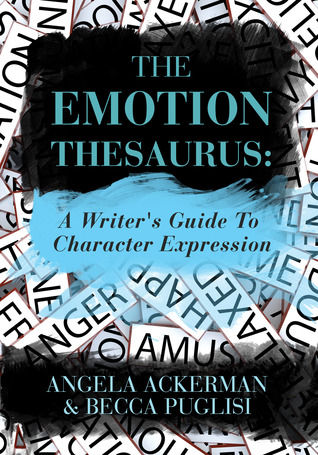
Writing Tool: THE EMOTION THESAURUS

Photo credit: Goodreads
Every once in a while I’ll come across a book that I can’t help but rave about and recommend to everyone who will listen. The Emotion Thesaurus by Angela Ackerman and Becca Puglisi (who also run the ever-so-helpful blog The Bookshelf Muse) is one of those books. 

Before I rave about its awesomeness, here’s the Goodreads summary:
“One of the biggest problem areas for writers is conveying a character's emotions to the reader in a unique, compelling way. This book comes to the rescue by highlighting 75 emotions and listing the possible body language cues, thoughts, and visceral responses for each.  
Using its easy-to-navigate list format, readers can draw inspiration from character cues that range in intensity to match any emotional moment. The Emotion Thesaurus also tackles common emotion-related writing problems and provides methods to overcome them.  
This writing tool encourages authors to show, not tell emotion and is a creative brainstorming resource for any fiction project.”
I tweeted a while back that The Emotion Thesaurus is perpetually open in my Nook app while revising, and I wasn’t exaggerating. Whenever I reach a moment where I’m struggling to describe an emotion, or I get a CP note asking for more emotion from a character, I open up The Emotion Thesaurus.

It’s not a book that you necessarily read from cover to cover (although you’re more than welcome to), it’s a resource that you open when trying to describe a particular (or several) emotions. What I love about it is it not only lists body language cues, thoughts and physical responses, but it also lists cues of suppressed emotion (which I use all the time). As a bonus, it has writing tips at the end of every chapter.

To top it off, none other than Kristen Lamb recently recommended The Emotion Thesaurus in The Huffington Post (under #4) as have dozens of other writers across the web. And out of nearly 500 reviews on Goodreads, it has a 4.57 star average—and with good reason.

I honestly can’t recommend this book enough to writers of all stages. It will forever change the way you think about and write emotion—or at least, it did for me.

What resources do you use to help write emotion? 

Twitter-sized bites: 
Is THE EMOTION THESAURUS by @AngelaAckerman & @beccapuglisi on your bookshelf? Here's why it should be. (Click to tweet)  
Do you struggle with writing emotion? Then this wonderful writing tool may be exactly what you need. (Click to tweet

On Manipulating Reader Emotions

Photo credit: .bravelittlebird on Flickr
One of the first signs of a good book, to me, is when I begin to react to the story. Whether that first
reaction is a snicker, a gasp, or even a grimace, when I start to react to the words on the page, I know chances are good that I’m going to enjoy the book.

It’s these kind of reactions that I look for when reading my drafts aloud to my unsuspecting test subject (AKA: my lucky first reader). If my first reader laughs or gasps in the right places, I know the WIP is resonating emotionally, which is exactly what I want.

Before beta readers and critique partners, however, it can be difficult to determine whether or not your novel hits the right emotional chords. Truly, the only way to be sure that you’ve succeeded is with outside feedback, but there is a way to know whether or not you’re on the right track.

The answer is deceptively simple: it’s you.

A quick aside: I’m not really an emotional person. I’ve only ever shed tears over one movie in my lifetime (and I watch a lot of movies), and as far as I can remember, I’m pretty sure I’ve never cried while reading a book. I’ve come close, and I’ve definitely felt profound sadness over unfortunate events and losses in fictional stories, but I’ve yet to ugly cry over a book.

I tell you this, because despite my steely emotions, I pay close attention to how I’m feeling while I’m writing. As the creator of the characters and the world in your novel, it’s safe to say that you care the most for your story and its inhabitants, so if your writing isn’t affecting you emotionally as you write, chances are it’s not going to affect your readers, either.

As the lovely Robert Frost said, “No tears in the writer, no tears in the reader. No surprise in the writer, no surprise in the reader.” 

You are the first indicator of emotional resonance (or lack thereof) in your novel. If you find yourself tearing up over a particularly heavy passage, or snickering over some great dialogue, chances are you’re on the right track to a great story.

Writers: what signs do you look for to check for emotional resonance in your novels? Readers: what books have you read that left particularly powerful emotional echoes? 

Twitter-sized bites:
The key to determining whether or not your story hits the right emotional chords? It’s you. (Click to tweet
Does your WIP resonate emotionally? Here’s one way to see if you’re on the right track. (Click to tweet)

Character Development: Make Them Angry

Photo credit: joshjanssen on Flickr
You probably don't need me to tell you that a story without emotion isn't a story worth reading. Emotion is an integral part of who we are as humans—everything from sadness to excitement, happiness to fear, influences who we are and changes the way we experience our everyday lives.

Humans are emotional, and in order to ensure that our stories are interesting and our readers connect with our characters, our characters must be emotional as well. Emotions are a key part of character development, and I'd like to focus on one of my favorites to write: anger.

Anger is an interesting emotion—it fuels us with a particular type of energy that demands action, and it can affect characters in many different ways. For some, it clouds judgment and incites violence, for others it inspires an unquenchable motivation, and still for others it pushes them into deep, dark places. I like to make my characters angry for a couple reasons:

  • It's a particularly strong and passionate emotion. You can be a little sad (disappointment), slightly excited (anticipation), sort of afraid (nervous) and kind of happy (optimistic). It’s not often, however, that you feel slightly angry. Anger demands energy and passion in a way that many other emotions don't, and for that reason alone it can be a fantastic tool for character development and plot progression. 

  • It tests a character's self-control. Anger often makes us want to do things we normally wouldn't even consider doing. Whether or not our characters act on these impulses truly tests the bounds of their self-control and ability to think clearly under times of high stress. 

  • It often fuels action. This is closely tied to the last point, but depending on a character's level of self-control, anger can often fuel action—and usually not the kind of action that you look back on proudly, which makes for great plot. 

  • It reveals quite a bit about the affected character. One of the many reasons I believe strong emotions like anger are closely linked to character development is because how they react to the emotion and what causes the emotion speaks volumes about the character. What makes your characters angry? Is it something personal, like betrayal, or something more global, like injustice? Knowing what triggers these powerful emotions is absolutely essential to effective character development. 

Making your characters angry is a fantastic way to move the plot forward, push your characters into making mistakes, develop them, and (not the least of which) make for some interesting scenes. Once you've figured out how to set your characters off, make sure you build opportunities into your plot to infuriate them. Your plot will thank you.

How do you use character anger in your writing?
Related Posts Plugin for WordPress, Blogger...