Showing posts with label The Emotion Thesaurus. Show all posts

How to Write Emotion Effectively

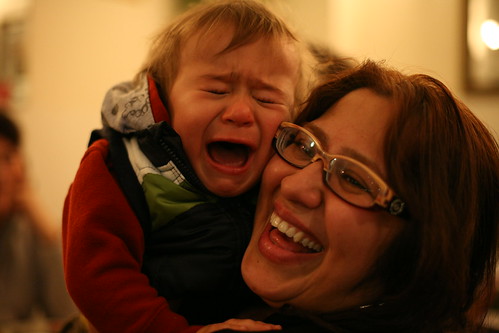
Photo credit: Robert Scoble on Flickr
I’ve mentioned my editing philosophy when it comes to emotions in the past, namely, if I see a told emotion (i.e.: he looked furious), I mark it with a note along the lines of stop telling and show us.

But showing emotion is sometimes a little easier said than done. Where do you even begin? If you’re having trouble, it may help to use these four steps:

  1. Identify the emotion you’re trying to show. For the purpose of the example, let’s go with fear. But of course this could be anything. 

  2. Write down some associated words/common traits of that emotion. There are two sources you can use to try to figure these out—your experience, and The Emotion Thesaurus (or, ideally, both). The idea is to develop a list of related words or descriptors of an emotion. You'll want to draw on your experience to determine how exactly that emotion will affect your character. For fear, that might mean feeling cold, increased heart rate, clammy palms, prickling, jumpiness, hyperventilating, etc. The nice thing about The Emotion Thesaurus is that the list is developed for you, so you can skip right on over to the next step...

  3. Choose a couple best suited for the situation and your character. Emotions affect everyone differently, and different levels of emotion (nervousness versus outright terror, for example) may affect the same person in different ways. Once you have your list prepared, you want to take a couple traits or reactions that you think best fit the scenario and your character, and use them together. For the sake of the example, I’m going to use feeling cold, an increased heart rate and shaking. 

  4. Rewrite using your new words. Taking the words you've chosen from step three, rewrite the emotion with more impact. 

So, for example, you may have started with…
I was terrified as I grabbed my phone.  
Using the steps above, you could end up with something like...
My heart rammed against my ribcage. Ice breathed down the back of my neck as I snatched my phone. My fingers were shaking so badly that I hit the wrong number and had to start over...
You get the idea. The goal, in the end, is to write emotion without explicitly stating it. With the right combination of characteristics, imagery, thoughts and actions, your readers should be able to infer the emotion through context.

What other tips do you have for showing emotion effectively?

Twitter-sized bites: 
Having trouble showing emotion in your writing? Here are four easy steps to get you on the right track. (Click to tweet)
Do you have trouble writing emotion? Writer @Ava_Jae shares four easy steps to showing emotion effectively. (Click to tweet)  

Guest Post: The Positive Trait Thesaurus SNEAK-A-PEEK

Photo credit: Angela Ackerman
Hello lovelies! I have a special post for you today, because Writability is welcoming it’s first ever guest post! Yay! 

Remember when I raved about the incredible writing tool that is The Emotion Thesaurus? Well, I asked the wonderful Angela Ackerman (co-author of The Emotion Thesaurus and one of the lovely bloggers behind The Bookshelf Muse) if she’d be willing to share a guest post here, and she graciously accepted. Even better—she offered to share with us a sneak preview of one of the two new books she and Becca will be releasing shortly. Enjoy!

Hi Ava—thank you for the invite! Becca and I are so happy to show a glimpse of our new baby, The Positive Trait Thesaurus: A Writer’s Guide to Character Attributes. This book is built to help writers during the brainstorming stage of character creation, encouraging a deeper understanding of personality attributes so they can build interesting, layered characters!

The bulk of the book consists of entries like the one below (courageous), designed to put writers deeper into the heads of their characters so they can better understand what makes them tick. It also explores how to hook readers through likable character traits, the role positive attributes play in character arc, and how the right attributes contribute to self-growth, strengthening the protagonist so that he can defeat opposition and achieve his goals.

COURAGEOUS

DEFINITION: possessing the mental or moral resilience to face opposition, danger, or difficulties despite one’s fear

CATEGORIES: achievement, interactive, moral

SIMILAR ATTRIBUTES: brave, dauntless, heroic, valiant

POSSIBLE CAUSES: 
The desire to honor role models by living up to their moral standard and/or sacrifice
The belief that one must not let fear stand in the way of what is right
Wanting to protect others from harm or suffering
Having a strong moral code
Believing one person can make a difference and the future is determined by one’s actions

ASSOCIATED BEHAVIORS:  
Doing what is right instead of what is easy
Facing danger, uncertainty, or hardship with strength
Being strong for others
Being confident
Standing up for those who are not equipped to stand up for themselves
Stepping up when leadership is needed
Facing fear to achieve a goal
Understanding one’s shortcomings
Enduring pain or suffering with a show of strength
Telling the truth when it’s important
Speaking up when others stay silent
Facing the unknown
Showing compassion and empathy for others
Putting oneself in danger so others will be safe
Following one’s beliefs even when it’s dangerous to do so
Living one’s life according to one’s beliefs
Having a strong sense of one’s purpose
Believing in justice and equality
Determination
Having a strong mental focus when it’s needed
Having high stamina and perseverance
Accepting responsibility for one’s actions
Being willing to step outside of one’s comfort zone
Giving someone a second chance, or asking for a second chance
Not being defeated by rejection or failure
Having strong convictions
Knowing when to speak and when to stay silent
Being in control of one’s emotions
Putting others before oneself
Focusing on the end goal; not allowing oneself to be sidetracked
Knowing what one believes and not allowing others to sway those beliefs
Resiliency; the ability to keep trying even after multiple failures

ASSOCIATED THOUGHTS: 
Jon’s going to be devastated. But the news should come from me, not a stranger. 
Mom and Dad might be disappointed, but this is something I need to do.
Mrs. Bloom shouldn’t treat Marc differently than me. I’m going to talk to her.
This isn’t exactly safe, but Rick’s sister is in there and someone’s got to get her out.
That kid is struggling in the current. I need to get out there now!

ASSOCIATED EMOTIONS: determination, guilt, resignation, somberness, wariness, worry

POSITIVE ASPECTS: Courageous characters will make up for what is lacking in any circumstance. After reflection or a moral assessment, they will step up, no matter the odds, because they know that it’s the right thing to do. People who show courage have a core of inner strength and a strong moral compass. They’re willing to put the welfare of others first when it counts most. They feel fear, but can master it, and do not allow it to alter their decisions. Characters who are courageous lead by example, even if they are unsuited to a task. Others are inspired by their courage and often strive to honor it by showing courage themselves.

NEGATIVE ASPECTS: Courage, while commendable, is not always smart. Characters with this trait sometimes don’t see beyond the immediate situation to the long-term impacts of a choice or action. When pausing to think might be the best course of action, courageous characters can be impulsive and respond emotionally, letting their desire to act override wisdom.

EXAMPLE FROM LITERATURE: Frodo, the simple hobbit from The Lord of the Rings trilogy, is the least suited for a dangerous mission against a deadly, powerful foe. Yet his willingness to set forth provides an incredible lesson in courage. Lacking the strength of humans, the battle training of dwarves, and the magic of wizards, Frodo makes his way to Mount Doom to destroy the one ring before it can send Middle Earth into darkness. His fortitude and strength comes from within, and despite his fear, he ultimately saves the world. Other Examples from Literature and Film: Harry Potter (Harry Potter franchise), Herman Boone (Remember the Titans)

TRAITS IN SUPPORTING CHARACTERS THAT MAY CAUSE CONFLICT: gullible, manipulative, reckless, self-destructive, selfish, timid, violent, weak-willed

CHALLENGING SCENARIOS FOR THE COURAGEOUS CHARACTER:
Facing a situation where one has failed in the past
Dealing with a phobia
Having to choose between doing what’s right and doing what’s popular
Facing a decision that will mean life or death for someone else
Showing courage despite a hardship, disability, or great personal cost

One of the most enjoyable parts of writing is brainstorming our characters, deciding who they will become. Understanding who they are at their very core is so important because just like us, their personality is a filter for all their actions, decisions and choices. There is literally no end to the number of unique, complex characters a writer can create!

For more information on this book, or it’s evil twin, The Negative Trait Thesaurus: A Writer’s Guide To Character Flaws, you can visit our blog, or their new home on Goodreads: Flaw Book & Positive Attribute Book. Born together, these two books will also be released together on October 21st.

Don’t they sound amazing? I, for one, will be picking up a copy of each when they’re released. Thanks for stopping by, Angela! 

Twitter-sized bites: 
Did you enjoy @AngelaAckerman & @beccapuglisi's EMOTION THESAURUS? Get a sneak peek of the next books. (Click to tweet)
Looking for writing tools? Check out a sneak peek of soon-to-be-released THE POSITIVE TRAIT THESAURUS. (Click to tweet)

When is a Good Time to Tell?

Photo credit: World Bank Photo Collection
So I’m sure you’ve all heard about the evils of telling rather than showing. When I critique, it’s the number one thing I mention, because it’s so important to get it right, and so difficult to nail down.

However, something that writers don’t talk about quite as often—and really should—is when you should tell instead of show. Because as evil as telling sometimes is, it’s important to know when you don’t need to show everything.

Some good times to tell instead of show include:
  • When showing the passage of time. Sometimes books take place over the course of several weeks, or months, or even years—and in those scenarios the readers don’t usually need to know what happens every single day. This can also be used to speed through a couple hours, or even a couple minutes to get to the meat of the story. 

  • When skipping over unimportant/uneventful moments of your characters’ lives. No one has a life so interesting that every moment of every day needs to be detailed. There’s a reason publishing professionals often say they don’t want to read about your characters brushing their teeth. Even J.K. Rowling summarized much of Harry’s summers with the Dursleys. 

  • When conveying backstory or history. Of course there are times when history or backstory is better conveyed through showing, but that’s a case-by-case basis. In most situations, you’ll want to gradually reveal bits of history and backstory, and oftentimes that’ll be done through bits and pieces of telling. 

Some times you definitely shouldn’t tell:
  • When writing emotion. This is so huge to me. Whenever I see in my own writing or someone else’s a named emotion (ergo: He was sad, She looked excited), I immediately mark it with a big fat red SHOW DON’T TELL. When it comes to emotion, showing is nearly always more effective than telling, regardless of the POV or whose emotion you’re describing. (This is yet another reason The Emotion Thesaurus is my best friend). 

  • When writing sensory descriptions. If you’re writing sensory descriptions, you’re already well on your way to showing wonderful details, but it’s still possible to fall into the telling trap. Sensory descriptions are there to help the reader picture what’s going on, so “He smelled garbage in the air” isn’t as powerful as “The night reeked of rotting bananas and spoiled milk.” 

  • In your opening. This one isn’t set in stone by any means, and I’m sure there are exceptions where it could work, but whenever I look at openings, something that nearly always grabs me is effective showing, whereas something that nearly always makes me close the book is telling right off the bat. The opening is supposed to suck the reader into the story and make them forget they’re reading—if you start your book with summary (which is, in essence, what telling is), you immediately distance your reader, something very dangerous in your opening. 

Those aren’t comprehensive lists by any means, so I want to hear from you: what other situations can you think of in which you should or definitely shouldn’t tell? 

Twitter-sized bites:
They say, "show don't tell," but when SHOULD you tell? (Click to tweet
Writers often say, "show don't tell," but here are a couple instances where telling may be preferable. (Click to tweet)

Writing Tool: THE EMOTION THESAURUS

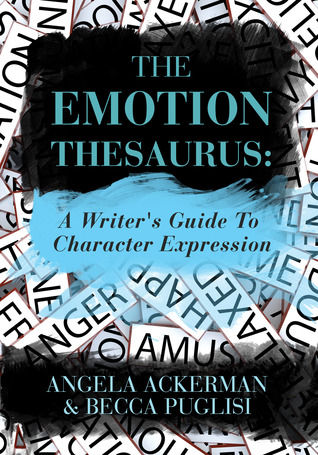
Photo credit: Goodreads
Every once in a while I’ll come across a book that I can’t help but rave about and recommend to everyone who will listen. The Emotion Thesaurus by Angela Ackerman and Becca Puglisi (who also run the ever-so-helpful blog The Bookshelf Muse) is one of those books. 

Before I rave about its awesomeness, here’s the Goodreads summary:
“One of the biggest problem areas for writers is conveying a character's emotions to the reader in a unique, compelling way. This book comes to the rescue by highlighting 75 emotions and listing the possible body language cues, thoughts, and visceral responses for each.  
Using its easy-to-navigate list format, readers can draw inspiration from character cues that range in intensity to match any emotional moment. The Emotion Thesaurus also tackles common emotion-related writing problems and provides methods to overcome them.  
This writing tool encourages authors to show, not tell emotion and is a creative brainstorming resource for any fiction project.”
I tweeted a while back that The Emotion Thesaurus is perpetually open in my Nook app while revising, and I wasn’t exaggerating. Whenever I reach a moment where I’m struggling to describe an emotion, or I get a CP note asking for more emotion from a character, I open up The Emotion Thesaurus.

It’s not a book that you necessarily read from cover to cover (although you’re more than welcome to), it’s a resource that you open when trying to describe a particular (or several) emotions. What I love about it is it not only lists body language cues, thoughts and physical responses, but it also lists cues of suppressed emotion (which I use all the time). As a bonus, it has writing tips at the end of every chapter.

To top it off, none other than Kristen Lamb recently recommended The Emotion Thesaurus in The Huffington Post (under #4) as have dozens of other writers across the web. And out of nearly 500 reviews on Goodreads, it has a 4.57 star average—and with good reason.

I honestly can’t recommend this book enough to writers of all stages. It will forever change the way you think about and write emotion—or at least, it did for me.

What resources do you use to help write emotion? 

Twitter-sized bites: 
Is THE EMOTION THESAURUS by @AngelaAckerman & @beccapuglisi on your bookshelf? Here's why it should be. (Click to tweet)  
Do you struggle with writing emotion? Then this wonderful writing tool may be exactly what you need. (Click to tweet
Related Posts Plugin for WordPress, Blogger...