Showing posts with label guest post. Show all posts

Guest Post: On Inclusion and Representation by Ariel Kalati

NOTE: Hey everyone! As I buckle down to try to finish final papers, I've got a special guest post for you guise from Ariel Kalati, of the Ch1Con and Ch21Con convention team! It's a great annual convention I absolutely encourage you to consider, and this year they'll have speakers including Karuna Riazi, Amanda Foody, and Christine Herman, which is pretty cool! Hope you enjoy the guest post!


Hi, I’m Ariel Kalati, and I do want to talk to you all about Ch1Con and Ch21Con. First off, though, I’ve promised some insightful publishing thoughts. Over the last few years of being part of publishing Twitter, I have met so many amazing people and seen so many organizations working towards diversifying publishing. What particularly intrigues me is the need for #OwnVoices work- not just representation of marginalized groups, but the presence of marginalized people in all parts of the publishing process.

The need for #OwnVoices is there for many reasons: more accurate representation, providing income for marginalized people, and ideally one day, a shift in the power dynamics of the publishing world. However, I’ve noticed a reason that is more personal and emotional in nature, but not any less important. Being surrounded entirely by people who don’t understand your identity and your struggles can be scary. Even with allies, it can be alienating. And seeing books that are only published by privileged authors can cause that same sense of alienation.

Panels and attendees at publishing conferences can be just as important. To create a truly effective and open publishing community, you need all sorts of voices. Groups like We Need Diverse Books have been calling out whitewashed panels for years now. But smaller organizations and individuals can also work to ensure a diversity of voices. At Chapter One Events, for example, one of our foremost goals is to make sure that every young writer who attends feels safe and feels that their individual voice can be heard. A major way to ensure that is to support all kinds of marginalized identities, in places like our author panels and speaker lists, and by using our online presence to support #OwnVoices books.

I don’t think we’re a perfect organization in this regard yet. But I think that moving towards diversity is about wanting to help alleviate that sense of alienation for marginalized people. And creating a safe space for young writers to congregate and learn about their craft goes hand in hand with that goal. I hope that Chapter One Events follows in the footsteps of other great nonprofits and writing organizations in creating safety and community for all voices.

Make sure you check out Ch1Con and Ch21Con! 

Guest Post: Chapter One Con Mentorship Interview

NOTE: Hey guise! I've got Chapter One Con, a great conference for young writers, sharing an interview today from the mentors of their annual mentorship program! Hope you enjoy, and make sure you check out Chapter One Con!

Chapter One Conference just wrapped up its annual Mentorship program. At Ch1Con, they believe in helping young writers, and through this program they teach young writers about the publishing process, from start to finish. As the 2017 mentorship program wraps up, they are proud to present THIS IS THE END, an anthology of the short stories that our mentees worked on doing the program! 

From familial trauma to mind games, you never know quite what will lead to the end. During the autumn of 2017, the team behind writerly nonprofit organization Chapter One Events mentored two talented young writers through the publishing process, giving them a head start on becoming the successful authors of tomorrow. Now, read the stories on which these up-and-coming writers worked, along with four by the Chapter One Events mentors themselves. Each of these stories leads to a startling conclusion. Are you ready for the end?
The celebrate the release of the anthology, Brett Jonas asked a few of the team members about their experience as mentors this year. These are their responses.

What was the most interesting part of mentoring a young writer? Had you done something like this before?
Julia: The most interesting part of mentoring a young writer always, for me, is the types of questions they ask. Mentees approach each topic from a different angle based on their personal life experience, which leads to unique and really interesting questions that force me as a mentor to look at what I'm teaching them from a new perspective. I always feel like I have a different, more well-rounded understanding of a subject after teaching it. This was my second year directing the Chapter One Events Mentorship Program and I'm really grateful for the experience.

Ariel: I think the most interesting part was seeing how they responded to my advice. I've done editing work for literary agents before, but in that work, I never got to see how the writers responded to my ideas. With this work, I got to see how another person's story transformed. (I also participated in last year's mentoring program, but I worked on mechanical errors, which are a totally different approach from structural edits). 
Katelyn: I have had the opportunity to mentor a young writer before and I think it's really fun, unique experience. I love being able to help young writers explore their own voice, their characters, and their story overall. I think the most interesting part definitely has to be the chance to see the world through the eyes of a writer who is still finding herself. (Or himself, but I worked with a female author this year.) Technically, we never really know ourselves as people or as writers. We are always growing, changing, and figuring out better ways to tell our stories, but I find it particularly special being able to work with someone who is just starting to find and craft her passion. It's definitely a rewarding experience for me, just like I hope it was for her!

Allison: I mentored in short story submissions last year, too, and it's always fascinating what different areas of writing our participants are familiar with. Short stories or novels, genre fiction or contemporary--we always get a wide range in writing backgrounds, thus, we also get a wide range of questions about how the submission process works. Everyone has different priorities, and different points of confusion, so I enjoy seeing questions it never would have occurred to me to ask.

Did you contribute a story to the anthology, and if so, where did you get the inspiration for it?

Julia: I did contribute a story this year! It's an old one, from way back during the Dark Ages (aka 2012), when I was seventeen. Because it's been so long, I don't entirely remember the thought process that went into writing it, but I believe I wrote it based off a prompt about relationships formed through the internet. (It's much sweeter than most of my writing, but I figured the anthology could use a little boost of levity and it fit really well with Brett's ADORABLE contribution.)

Katelyn:
Unfortunately, I did not have the opportunity to submit a story this year. One of the downsides of being a writer as an adult is that you have to start scheduling into your day. Don't get me wrong, this is something you have to do as a young writer too, but when you start mixing in work and all of the responsibilities you now have as an adult, it is easy to look at writing as less of a priority than it should be. And, trust me, I know how much crap kids these days have to go through if they want to simply get by; it's honestly ridiculous. So, if that's you, if your life is busier than you know what to do with but you still want to write, then take it from someone who knows too well: make the time for it. You'll thank yourself later.

Allison: I didn't contribute a story to the anthology this year (didn't have anything short enough that fit the theme), but this feels like a good place to mention that my contribution to last year's anthology has since been sold as a reprint to a YA short fiction podcast, Cast of Wonders. "What You're Missing" will appear in audio there sometime in 2018. I wrote the first draft of this dystopian short in high school and never had much confidence in it, so if it hadn't been for the story's inclusion in a Ch1Con anthology, I might never have dared to buff it up and send it out to the pro-level publication which eventually bought it. I hope all our participants (past, present, and future) will consider submitting their stories to similar markets--thinking of this anthology as not just an "end goal", but the starting point to even greater writing success. Which, really, is what the program is all about!


In your opinion, why is the Ch1Con Mentorship a successful program? Would you have told your past self to sign up for it?
Julia: I'm definitely a little biased here, as the director of the program, but I think what makes the Chapter One Events Mentorship Program so successful is the fact that it truly teaches mentees about each step of the publication process. We cover from query letters to editorial letters (and everything in between), so by the end, mentees really understand what publishing will look like when they're ready to pursue it. I would absolutely tell my past self to sign up for this program. Little Julia would have had a stroke over an opportunity like this. Learning how to read publishing contracts? Getting a behind-the-scenes look at the editorial process? I wish something like this had existed when I was first starting out.

Ariel: I think it's a successful program because a lot of young people, especially high schoolers, don't necessarily have access to serious workshopping for creative writing projects. Their English teachers might have a lower standard for creative work, or might only teach them editing in regards to analytical writing. This is a place where they can work on a story in a serious way, and I think that's great. I would tell my past self to sign up for it, for her own sake, but I'm not sure I would inflict my sensitive high school self on the Ch1Con volunteers. 
Katelyn: Oh my gosh, I love the Chapter One Mentorship program. My past-self would have LOVED this. I will be the first to admit that I was one of those kids with super unrealistic expectations of how the publishing industry works. To me, the idea that I would be a published author by the age of 18 (before I even graduated from high school) was completely realistic. As most people in publishing industry can attest: this is not true. So much work and effort goes into publishing a novel - even shorter works like poems and short stories - that a lot of young writers are completely unaware of. This process is invaluable because it provides young writers a step-by-step introduction to not only the publishing process in general, but also to a lot of the intricate behind the scenes work, like what an editorial letter looks like, how to write a query letter, and what the difference is between copyediting, proofreading, and editorial editing (among a bunch of other things). Instead of having to do a lot of research and crossing your fingers that you are getting the best advice, all of these tips, tricks, and lessons are in one convenient package. I would highly, highly recommend this program to anyone wanting to broaden their understanding of publishing, editing, and/or how to better themselves as a writer in general.

Allison: Speaking mostly about the week I mentor for, my strategy has been to gather up all the information I would've liked to know much earlier. Standard operating procedure, as well as little tips and tricks--learned from my own experience, and from listening to writers further along than I am. When you're a young (and/or new) writer, it's easy to get frustrated by how much you have left to learn, and while this feeling never really goes away (since we will all continue learning until we die) it's nice to get a wealth of information gathered together in one place. To get direct advice from your peers, and ask all your questions somewhere besides a browser search bar. I'd have loved to experience something like this program when I was first learning, as it would have saved me a lot of confusion and anxious Googling.

What’s Driving Your Plot? by Janice Hardy

Hello, friends! Today I've got a special guest for you guise, Janice Hardy, author of The Healing Wars trilogy and several writing books, most recently Understanding Conflict (And What It Really Means). Hope you enjoy!

Conflict encompasses a wide scope of problems and situations, and can be as varied and interesting as you want to make it. But no matter what type of conflict a character faces, it presents a challenge in how to resolve the conflict. That challenge leads to a choice on the best course of action, and that choice forces the character to act. And that’s good, since those challenges, choices, and actions create and drive the plot (the combination of internal and external conflicts). Without conflicts, the protagonist would have no problems at all, and there'd be no story.

On one side, we have the external conflicts. These are challenges the protagonist has to physically overcome to resolve the core conflict problem (and all the smaller problems along the way). They’re the actions she takes to fix the problems preventing her from getting her goal. They’re what make up most of the action in the plot, since this is what the protagonist does from scene to scene.

For example:

  • Protagonist wants to find her missing sister, but someone has stolen the security tapes covering the parking lot she was last seen in.
  • Protagonist wants to impress her date on their trail ride, but she has no idea how to ride a horse.
  • Protagonist wants to surprise his girlfriend with breakfast in bed, but he has to get her kids out of the house first.

External conflicts are based on how the protagonist uses her intelligence, skills, and resources (or lack thereof) to overcome an external challenge. The key thing to remember with external conflicts is that resolving them takes action—the protagonist does something. While she might take a moment (or longer) to come up with a plan to overcome the challenge, it’s what she does that resolves it.

Generally speaking, the scene will unfold like this: The protagonist will be trying to achieve a goal when she’s presented with a challenge (she’s trying to do something in a scene and something stops her—the conflict). She’ll either react on instinct and try to overcome that challenge, or take time to decide what to do (how much time is up to the writer). The difficulty of the challenge, the level and type of conflict, and the competence of the protagonist determine how that challenge is resolved. What happens at the end of the challenge leads to the next goal of the plot and the next challenge.

This is essentially plotting in conceptual form. Pursue a goal, face a challenge, outsmart or overpower it, proceed to the next challenge with a new goal.

Of course, just watching someone complete a series of tasks can get boring after a while. Most external challenges just require skill, strength, or intelligence to overcome, others will be much harder to resolve due to personal issues. To counter potential task boredom, another layer of conflict is often added to keep the story interesting. This is where the internal conflicts kick in.

Internal conflicts are the emotional, ethical, or mental struggles a character faces while trying to decide what to do about an external problem. The challenge isn’t a physical thing in the way, but a struggle within the protagonist to make the right choice. It’s the mental and emotional debate the protagonist needs to have in order to resolve an external problem.

For example:

  • Protagonist wants to save her missing sister, but doing so will reveal a secret she can’t afford to have known.
  • Protagonist wants to be loved, but her refusal to compromise keeps her alone.
  • Protagonist wants to romance his girlfriend, but he doesn’t want to risk making her kids mad and their not liking him.

An external task that’s easy to complete can be made difficult by adding an emotional roadblock. What needs to be done is clear, but the protagonist doesn’t want to resolve it that way for personal reasons. Either the right choice has consequences she doesn’t want to suffer, or there is no good choice—whatever she does has serious ramifications.

Internal conflicts are based on who the protagonist is and what has happened to her in her life, and this past makes it harder for her to make decisions and resolve her external challenges. They typically come from the morals and ethics of the character, and more often than not, choosing one side negates the other and the protagonist can’t have it both ways.

Internal conflicts are great opportunities to put the protagonist in the hot seat and force her to decide who she is and what she stands for. How far is she willing to go to help a friend? What will she risk? What does she value? Her struggles while making a decision shows readers who she really is as a person.

Mixing the two create a plot- and story-driving engine that keeps readers invested in what problems might be faced and where the emotional challenges will come from. It not only piques readers’ interest about what could happen, but it makes them wonder why, and anticipate how the protagonist will overcome the conflict.

So, what’s driving your plot?


Looking for more tips on creating conflict? Check out my latest book Understanding Conflict (And What It Really Means), an in-depth guide to how to use conflict in your fiction.

Janice Hardy is the award-winning author of the fantasy trilogy, The Healing Wars, and multiple books on writing, including Understanding Show, Don't Tell (And Really Getting It), Planning Your Novel: Ideas and Structure and Revising Your Novel: First Draft to Finished Draft. She's also the founder of the writing site, Fiction University. For more advice and helpful writing tips, visit her at www.fiction-university.com or @Janice_Hardy.

Guest Post: Finding Your Writerly Community by Brett Jonas

Hey friends! I have one more guest post for you this month, from Chapter One Young Writers' Conference team member Brett Jonas! I had an incredible time at the conference back in 2014, and the very affordable early bird pricing for the 2017 conference is open until June 1st! Make sure you guise check it out if getting to Chicago is feasible for you. :) 

Take it away, Brett!


When you’re first starting out, writing can seem like a solitary hobby. You sit, alone, in the library. You sit, alone, in the coffee shop. You sit, alone, in your bedroom. But there are other writers out there, and there is nothing that writers love doing more than procrastinating on their writing by hanging out with other writers! Whether online or in person, meeting new writers is lots of fun—and it doesn’t have to be hard to do. Here are a few things that might help you find your writerly community.

  1. Twitter

    Ava has already written several great posts on Twitter for writers, so I’ll just point you to some of her posts about it, but Twitter can be amazing for making friends who are just as passionate about writing as you are! A good way to start is by using some of the well-known writer hashtags and interacting with other people who use them.

  2. NaNoWriMo

    Every year in November, hundreds of thousands of people participate in NaNoWriMo, which stands for National Novel Writing Month, where the goal is to write fifty thousand words in a month. If that seems a bit extreme, you can check out Camp NaNoWriMo, which happens in the summer, and has a flexible word count. With NaNoWriMo, you can meet people in the forums, and during the Camps, you get put in a virtual “cabin” with several other writers, which is a great way to meet new friends!

  3. Writing Conferences

    Chances are, there’s a great writer’s conference somewhere close to you. And if there isn’t, it’s a good excuse to get out and take a trip! Writing conferences can be absolutely amazing. Not only do you get out of your house, but you get to learn from incredible people in publishing and meet writers in person. And I’ve found that, after you get home from a writer’s conference, you’re pretty excited and inspired and ready to get back to writing.

    There are writing conferences all over the country, like Midwest Writers and the Writer’s Digest Conference, but my personal favorite is Chapter One Young Writers Conference (or Ch1Con). It’s a conference for young writers (ages 11 through 23), put on by young writers (including me!). Speakers for the 2017 conference include Kody Keplinger (New York Times Bestselling author of RUN, THE DUFF, and more), literary agent Brent Taylor, and more. Ch1Con has always been an amazing experience for me, and I’d love to meet you there!


Brett Jonas is a writer, reader, Christian, lover of chocolate, and over-user of smiley faces. After being homeschooled her whole life, she’s now taking classes at the local community college and working in her family’s business, Goat Milk Stuff, with her seven younger siblings. In the rare moments when she’s not writing, working, or doing homework, you can find her doing things for the Chapter One Young Writer's Conference or wasting time on Twitter as @BookSquirt, where she loves making friends and using too many exclamation points.

Where have you found your writerly community? 

Twitter-sized bite:
Struggling to find a writer community? @BookSquirt shares some tips for finding those connections. (Click to tweet)

Guest Post: What Reading Picture Books Can Teach You About Writing Novels by M.E. Bond

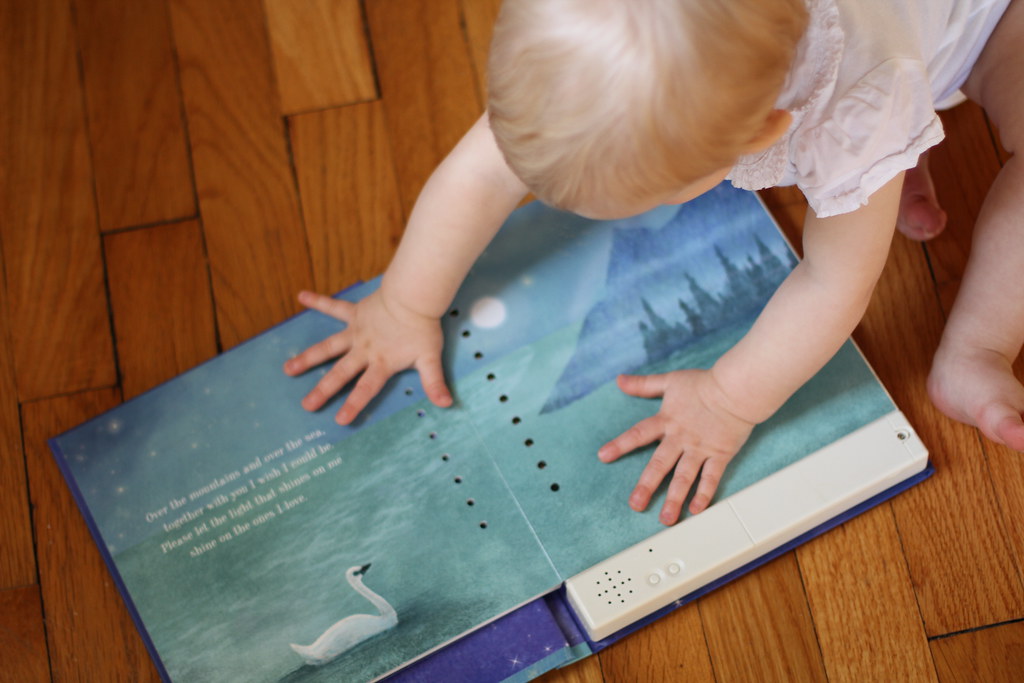
Photo credit: Megan Hemphill (Prairie & Co) on Flickr
With three kids under five I read a lot of picture books. In fact we usually have two dozen different picture books out from the library at any given time. So how can I use all this reading to benefit my writing, even though I'm working on adult novels? I came up with six ways to use picture books to my advantage; I think they'll help you, too.

  1. Mimic plot and structure. If you stop and think about what makes a satisfying picture book, you're sure to find applications for novel-writing. How is conflict introduced and resolved? How are surprise endings constructed? How do repeated imagery and phrases tie the story together?

  2. Reflect on rhyme and rhythm. You're probably not writing your novel in rhyme, but the rhyme and rhythm in a good picture book will inspire you to think about word choice and the cadence of your sentences. 

  3. Know what to leave unsaid. Often the best part of reading picture books is studying the relationship between the words and pictures. Think about what you want to convey with your writing and what you should leave to your reader's imagination.

  4. Consider different ways to approach a story. You'll often find picture books on the same topics – be it counting, welcoming a new baby, or getting ready for bed – not to mention those based on traditional stories (like these two retellings of the same Jewish folktale). Let them guide you as you take some time to think about different approaches to story-telling. 

  5. Find inspiration. The subject matter of picture books may well give you an idea for your next novel or an addition to your work in progress. For example, any of these 17 picture books about historical heroines could spawn a dramatic adult novel.

  6. Remember the joy of writing. When you're pressed for time reading aloud a beloved picture book may be the best way to remind yourself of the wonder of words and the magic of stories. Then you can press on, reinvigorated, to tackle your adult projects.

How do picture books inspire you? (And which are your favourite?)


M.E. Bond is a part-time writer and full-time mother living in Calgary, Alberta, Canada. She spends her writing time blogging about history, archives, and libraries, and endlessly revising her first novel, a mystery set on a university campus.

Blog | Twitter | Goodreads (including two shelves of favorite picture books)

Twitter-sized bite:
What can you learn from reading picture books? @MEBond_writer shares her experience on @Ava_Jae's blog. (Click to tweet)

Guest Post: The Author Portrait by Rachel Linn

Photo credit: María Garrido on Flickr
Be honest, when you sit down at your computer to compose your magnum opus, there’s a lot of knee-jiggling, nail-biting, and an alarming amount of palm-sweating. You want to experience the joy of putting words on the page, but the weight of actually writing things down keeps you poised on the edge of creation-- sometimes for months. This chronic paralysis develops because you’ve conflated who you are with what you create. It won’t resolve until you understand you are not The Author.

Margaret Atwood felt “the act of writing comes weighted with a burden of anxieties. The written word is so much like evidence—like something that can be used against you later.” And she wrote The Handmaid’s Tale for goodness sake! If anyone has a body of evidence to show off, it’s Atwood.

But the woman who wrote that quote in 2002 isn’t the same woman who wrote The Handmaid’s Tale in 1985. Yet she’s expected to be THE AUTHOR OF THE HANDMAID’S TALE all the time. While eating lunch. While brushing her teeth. While meeting rabid fans. Another Atwood gem applies here: “Wanting to meet an author because you like his work is like wanting to meet a duck because you like pâte.”

You can’t meet The Author because that person doesn’t exist. The person sitting there watering the keyboard with overmoist palms is not The Author. But it becomes impossible to separate yourself from the looming mythos you’ve create when you believe every sentence is a piece of your soul. So instead of getting anything done, you wait for The Author to show up and do it right. Aaaaany day now.

To cope with this paralysis, I’ve borrowed (stolen) Michel Foucault’s concept of the author function. Since “author function” sounds like a car part, I call it the author portrait instead. The author portrait’s not a person, but a curated accumulation of writing/performance that happens to be attached to a person. Namely you. It’s both an invention and a reflection: your ever evolving professional portrait. So your current draft doesn’t have to be profound any more than your grocery list does. They are just things you write down. When looking through your draft, don’t ask “Will readers like me?” Ask “Does this work enhance the author portrait I’m painting?” When critique partners criticize your work, realize they are critiquing your author portrait, not you as a person.

It’s dangerous to imagine you and your work are one entity, because your writing is meant to be consumed by others while you most certainly are not. Sometimes we fill ourselves with beautiful books and forget what we see is someone else’s author portrait. Behind that finished pâte was a grisly process where a person sweated over a keyboard (or quill pen) until they got over their own mythos and wrote. You and your author portrait are not the same, (and thank goodness) because you are so much more than The Author.

What do you think?


Rachel Linn is a dramaturg/librarian/writer in Atlanta who is passionate about novels, manga, gaming, and fan studies. She has a PhD in Interdisciplinary Arts and and MA in Theatre specializing in critique and critical analysis. On the side she writes a blog with her filmmaker husband called MarriedtotheAuthor.com.

Twitter-sized bite:
On Margaret Atwood, the Author Portrait, and more, @Married2tAuthor shares her guest post on @Ava_Jae's blog. (Click to tweet)

Guest Vlog: How to Make Writer Friends with Lily Meade

Networking can seem a little intimidating at first—but really, it's about making great writerly friends. The lovely Lily Meade is here today to talk about how to make friends with other writers.


RELATED LINKS: 


How do you make writer friends?

Twitter-sized bite:
Want to make some writer friends but not sure where to start? @LilyMeade shares some tips on @Ava_Jae's YT channel. (Click to tweet)

Guest Post: Why Do You Write? by Rafia Khader

Photo credit: freestocks.org on Flickr
Why do you write?

Sure, you love to write. But have you ever asked yourself why you love to write?

If you’re anything like me, writing might be the only way you feel you can communicate with others. As someone who is both shy and introverted, writing is not a choice. It’s a compulsion. Writing allows me the space to be myself and truly be heard.

I grew up feeling alone, not resonating with any of the narratives I saw around me as a child and as an adolescent. To a certain extent, I still feel that way as a thirty-year old.

I am a former overweight, Canadian-born, Muslim woman of Indian ethnicity living in a post-9/11 America.

You can imagine how middle and high school must have been like for me. I’ll give you a hint: I wasn’t a popular kid. It wasn’t just that I was different - I felt invisible. One of my closest friends in high school didn’t even know I was Muslim until senior year.

The issues that are important to me aren’t the issues most people seem to care about. Even within the different communities I am a part of, I feel like an outlier.

I don’t fit in with any of the narratives that surround me.

But I want to desperately fit in.

So, that’s why I write. Because when I do so, I get to create my own narrative. I fit in in the world that I create.

Even though most people will probably never understand my enthusiasm for the Oxford Comma, or why I am so obsessed with coming up with the perfect plot line for that book I just need to write, I know why I write and why I must continue to do so.

Writing has been a constant companion for me when (most of) the rest of the world told me I didn’t belong.

So, why do you write? Maybe all that you’ve been through is pointing you in the direction you must now go. I know that the unique experiences I’ve had will inform the kind of book I write. And maybe that’s exactly what the world needs. Are you willing to share your story with the rest of the world?


Rafia Khader is a writer, blogger, and aspiring novelist with a penchant for cake and cows. She shares her reflections on life, faith, marriage, and writing - all with a dash of humour - on her blog Cake & Cows


Twitter-sized bite:
Why do you write? Rafia Khader shares why she puts words on the page—join the discussion on @Ava_Jae's blog. (Click to tweet)

Guest Post: So You’ve Been Called Out—How Not to Make It Worse by Jennifer Austin

Photo credit: guidancefs on Flickr
I’ve seen a number of incidents—mostly plastered all over Twitter—involving an author being called out for bad representation in their book, or possibly something they’ve said online. I’m not going to get into the topic of calling it “mob mentality” (don’t do that) or blaming the critiquers for their “nasty tone” instead of just listening to what is being said (don’t do that either.) But I think a guide for authors in this situation might be somewhat helpful.

  1. STOP: Whatever thought just came to the top of your head, just stop. Don’t tweet. Don’t blog. Don’t comment. If someone is calling out your words, there’s a reason, even if you don’t agree with it. So stop. Don’t respond.

  2. LISTEN: It may not be possible for you to read the critiques (think of them as critiques, not attacks.) They can hurt, and some of us don’t have the mental well-being to handle those comments unfiltered. So ask a friend to do it and give you an overview. Someone feels hurt. Your words caused it. You need to know why.

  3. APOLOGIZE: This is hard to do, but do it. Apologize. On Twitter, on your blog, whatever avenue you have open to you. Don’t turn it into “this was my intent so don’t be mad at me” post. It’s okay to explain yourself, but that needs to be very secondary to apologizing for the hurt you’ve caused and promising to do better next time. 

  4. LEARN: This might be the most difficult part. You have to learn from your mistake. Maybe your intent wasn’t to hurt anyone, but you did. You need to learn why, through listening to what they have to say and doing more investigation into the particular aggression you committed. Our internal biases are built on years of society telling us untrue things. We’ve been propped up and rewarded for believing some hurtful crap. It’s time to unlearn those biases. Google the subject matter at hand. Explore the countless writing resources out there that explain some of the very microaggressions we writers fall into without meaning to. But it is imperative that we learn and do better, otherwise we are just fulfilling an endless cycle of hurt and anger for all parties involved.

We have an obligation to our readers to provide the best books and social media profiles that we can, and this includes supporting readers of many different identities. Identities we may not share, but choose to write or talk about. We have a long reaching power to affect teens with our words. Alienating them, hurting them, causing them to question who they are, is not what I want to do with that power. I’d rather show them the love and support they need and deserve. Let that be your literary legacy.

What do you think?

Jennifer Austin is a YA writer who used to keep her little sisters up at night by telling them long, fantastical stories. Now she writes them down. And lets her family sleep. She can most often be found sitting in a patch of sunshine weaving new worlds, or trying to make sense of the current political one. Find her at Jennifer Austin-Author or @JLAustin13

Twitter-sized bite:
So you've been called out—@JLAustin13 talks about how not to make it worse on @Ava_Jae's blog. (Click to tweet)

Guest Post: On the Importance of Working with the Right CPs by Mary Kate Pagano

Photo credit: Thomas Hawk on Flickr
Critique partners: critical to the writing process. But we all know that by now, don't we?

I wanted to talk about finding the right critique partners for you. Specifically, how important it is to ensure you're working with critique partners who are familiar with the kind of stuff you write.

I took a writing class not too long ago that was simply called "Novel Writing", so the students were people from all walks of life, writing all sorts of things. Each week we critiqued one person's submission; we went around the room and everyone said what they did and didn't like about it, and at the end, the writer got to ask questions.

It wasn't a terrible format, except that with the wide variety of people in the class, some of the critique I got was...less than helpful.

"I don't understand why anyone writes in the present tense," said one person. "It doesn't make sense to me. You're writing a story that already happened, so how can it be happening NOW?" 
"Your tone is too conversational," said another. "Like a kid talking." 
"I hate the first person," said a third.

There were some other criticisms, but you get my point. These people were not helpful, because my piece was an excerpt from a YA novel. And these people had never read YA literature.

This is an extreme example--though some of those people did reach out to me after the class was over to see if we could continue CPing, and I foolishly said yes because I didn't have any CPs yet!--but it just highlighted to me how hugely important it is to be working with CPs who know what you're going for.

I didn't last long working with those people. And it's clear to me now why.

YA literature isn't so drastically different from adult literature that I'm saying someone who reads or writes some adult can't be a good CP. They just need to also be familiar with YA. A category in which the first person and present tense are OF COURSE acceptable. Where the voice of the novel may sound conversational. Where coming-of-age themes are important.

Needless to say, I've been a bit pickier about who I work with on a CP basis now. And by the same token, when people reach out to me for CPing who write in a genre about which I know little (i.e. erotica, or someone even asked me once to critique a child's picture book), I think it's much better for both of us that I (nicely) turn them down.

How about you? Did you also make mistakes when first working with CPs? What have you learned?

Mary Kate Pagano has been voraciously reading and writing since she learned how, but it's only in the last six years or so that she's drummed up the courage to actually attempt to publish a novel. She has three finished YA manuscripts under her belt and will be querying all once she's satisfied with them (which is taking some time :) You can find her writerly and readerly musings over at www.wanderlustywriter.com and also catch her writerly and readerly (and sometimes random) tweets at https://twitter.com/wandrlstywriter.

Twitter-sized bite:
Working w/ CPs is important but @wandrlstywriter talks abt why working w/ the *right* CPs is essential. (Click to tweet)

Another Guest Post Contest!

Photo credit: Rick Payette on Flickr
It's that time again! I'm going to be traveling in May, so I've decided to run another guest post contest! I've done this twice before and the results have always been fantastic so I'm happy to do it again. I've got 4-5 openings for posts in May, which will be up Monday the 8th, Wednesday the 10th, Friday the 12th, Wednesday the 17th, and possibly Friday the 19th. I'll be accepting posts from TODAY to Friday, April 21st, and I'll notify those who have been chosen on the 28th.

Posts should be about writing, books or publishing. I’ll also accept posts about social media geared to writers (i.e.: my tumblr for writers post). Before you submit, make sure I haven’t already covered the topic you’ve written about (or are thinking you might write about) by checking my directory. As of this post, I’ve written 1,121 posts, so I’ve covered, um, a lot.

That said, if I've written about something you'd like to write about, but you have another take on it, or different tips, etc. you're welcome to enter a post on that topic. As long as it's not too similar to what I already have, it'll work. :)

Keep in mind! I’m all for taking a subject that might not traditionally be writing-related and show how it could be helpful to writers. Or put a writerly spin on it. Or something.

As for what I’m looking for, I'd love to host some new voices here on Writability. Bonus points to posts that make me laugh. Or think. Or see something in a new way. Given the political climate, I'm also open to political posts if they relate to writers or writing in some way.

The four to five posts I choose will include a mini-bio of the writer (you!) and up to five links of your choosing, which should hopefully get you some nice exposure since Writability gets pretty steady views (on average over 1,000 hits a day). I also expect that you try to answer any comments on your guest post because the community here is wonderful and they'd love to hear from you!

If I don’t get enough entries, I’ll just write up more posts myself. Or if I don’t feel the entries are quite what I’m looking for, I’ll write up posts myself. So as was the case with the last guest post contest, whether or not this works entirely depends on you guise.

So you’re interested in entering? Awesome!

  • Please use my contact form between now and Friday, April 21st 11:59PM EST to enter a guest post that you have written. The very first line should be "GUEST POST CONTEST ENTRY" in all caps. Like that. Copy and paste the whole post into the message box there below the first line.

  • You may enter as many posts as you like, as long as they meet the requirements.

  • Posts should be between 100 and 500 words. 250 is roughly average and anything longer than 500 will probably not be chosen. 

  • Please use block formatting (no indents, single space, double space between paragraphs, plain text) to make my life easy when copying and pasting. 

  • I’ll choose four to five of my favorite entries. What makes them my favorite may vary. Be yourself, write something that would work well subject-wise on this blog and you've got yourself a good shot. 

  • In the event that I get way more entries than I expected, I reserve the right to close the entry period early. Conversely, if I don't get enough entries that I think would fit, I may choose less than four or five (or none at all).

Good luck!

Twitter-sized bite:
Want a chance to guest post on a blog with +1,000 hits/day? @Ava_Jae is hosting a guest post contest until 4/21/17! (Click to tweet)

Why I Use Adverbs as Placeholder Words by Janice Hardy

Hey guys! I've got another special guest post today from award-winning author of The Healing Wars trilogy, Janice Hardy! Today she's talking about adverbs and placeholder words, so hope you guys enjoy!

P.S.: Janice is hunkering down during the hurricane, so she may not immediately be able to answer comments, but will as soon as she can!


You’ve no doubt heard it over and over: Never use adverbs in your writing. Sound advice, but if you follow it to the extreme, you could miss out on their very useful properties.

As bad a reputation as adverbs have, they’re handy during a first draft. They allow you to jot down how a character feels or how they say something without losing your momentum. You can keep writing, and go back and revise later.

They’re also wonderfully helpful red flags that point out opportunities to revise and flesh out what your character is doing. They’re like your brain telling you about the emotional state of your character, and pointing out a place you might want to examine further.

For example:

  • I walked cautiously across the room to the back door.

Here, “cautiously” is doing the explaining, telling that this person is nervous in some way. You could find another word for “walked cautiously” like tiptoed, sneaked, or slipped, but that only solves the adverb problem. It doesn’t do anything to capitalize on what your subconscious might be telling you. Instead, try looking deeper and showing someone being cautious in a way that helps characterize and further show the scene.

  • I scanned the room, checking for tripwires, pressure plates, anything that looked like it might be a trap. Clear. I darted for the door.

This is interesting and tells you a lot more about what’s going on, which probably saves you words somewhere else. Especially since there’s a decent chance the description in that scene might be a little flat. If you had a better sense of the character’s emotional state and what that character was doing, you probably wouldn’t have used the adverb in the first place.

Adverb tells are used most often in dialogue. They’re dropped in to show emotion or description without conveying what that emotion or description is:

  • "I hate you,” she said angrily.

In this instance, “angrily” doesn’t say how the character speaks. Does she shout? Snarl? Spit? The adverb is vague and adds nothing to the sentence that readers didn’t already assume by reading the dialogue. It’s a pretty good guess saying, “I hate you” means she’s angry.

Dramatizing the anger would show and thus make the scene more interesting. This character might bang her fist on a table, mutter snide comments under her breath, spit in someone’s face, or even pull out a Sig Sauer nine mil and blow some guy’s brains out. All of those would be more exciting than “angrily,” which can mean something different to everyone who reads it.

By using an ambiguous adverb, not only are you falling into lazy writing, you’re missing a great opportunity for characterization. The gal who would mutter snide comments is not the same gal who’d break out that Sig.

Now, let’s look at a line like:

  • "I hate you,” she said softly.

Many people would swap out “softly” for whisper in this instance, but whisper isn’t the same as speaking softly. You can speak softly and not whisper. “Softly” is an adverb that conveys something specific depending on the context in which it’s used. It denotes tone as well as volume, attitude as much as forcefulness. What we pair with this adverb changes how we read it.

  • She clenched her fists so tight her knuckles went white. “I hate you,” she said softly. (Implies controlled anger.)

  • She giggled, covering her mouth when the teacher turned their way and glared. “I hate you,” she said softly. (Implies playfulness.)

  • She kept the table between them, moving as he did around the edge. “I hate you,” she said softly. (Implies fear or apprehension.)

All three sentences use the same adverb, but notice how each has a different feel to it based on what came before it. Anger. Playfulness. Fear. Can you replace the adverb with something else? Sure. You could even drop the tag entirely. Do you have to just because it contains an adverb? No. It all depends on what you want that line to convey to readers.

Adverbs work when showing the action would take more words than using the adverb, and that would gunk up the story. It could even shift focus to the wrong detail and confuse readers.

For example:

  • She muttered incoherently.

This is clear and says what it needs to say. You could eliminate “incoherently” and dramatize it, but that might put too much focus on something that doesn’t need that much focus.

  • She muttered half-words that didn’t make any sense.

Every writer will have their own preference here, but “incoherently” feels clearer to me in this instance than “half-words that didn’t make any sense.” I may not want readers trying to figure out what she’s trying to say; I just want them to know she’s not saying anything that makes sense. Making a point of what she’s saying instead of how she’s saying it could lead readers down the wrong path.

The reader/writer disconnect can happen at any time. Look at where you use adverbs and identify what you’re trying to do with them. If what’s in your head isn’t making it to the page, you could wind up with a disconnect.

  • "Oh, that’s just wrong,” Bob said angrily.

Here, the adverb is used to denote anger, but it makes readers decide what Bob’s anger looks like and how he acts when he’s angry. You might know Bob cracks jokes so he doesn’t blow up, so you read his dialogue in a sarcastic tone, but readers might think Bob screams and yells, or maybe he gets quiet and dangerous. They could read that same line in different ways according to what “angrily” means to them.

Adverbs are effective placeholder words that let your subconscious know where you can craft stronger scenes and sentences. It’s not always about replacing them with stronger words. Sometimes those adverbs are pinpointing an important aspect that would make the scene sing if you fleshed it out.

Adverbs, generic nouns, boring adjectives, even clichés—are valuable first-draft gems to quickly insert a basic emotional note into a scene without having to stop the drafting to find the perfect word or description.

How do you feel about adverbs? Do you find them useful or do you avoid using them?


Check out my new book, Understanding Show, Don't Tell (And Really Getting it), and learn what show, don't tell means, how to spot told prose in your writing, and why common advice on how to fix it doesn't always work.


Janice Hardy is the award-winning author of The Healing Wars trilogy and the Foundations of Fiction series, including Planning Your Novel: Ideas and Structure, a self-guided workshop for planning or revising a novel, the companion Planning Your Novel Workbook, and Revising Your Novel: First Draft to Finished Draft. She's also the founder of the writing site, Fiction University. For more advice and helpful writing tips, visit her at www.fiction-university.com or @Janice_Hardy.


Win a 10-Page Critique From Janice Hardy

Three Books. Three Months. Three Chances to Win.

To celebrate the release of my newest writing books, I'm going on a three-month blog tour--and each month, one lucky winner will receive a 10-page critique from me.

It's easy to enter. Simply visit leave a comment and enter the drawing via Rafflecopter. At the end of each month, I'll randomly choose a winner.


a Rafflecopter giveaway


*Excerpted from Understanding Show, Don't Tell (And Really Getting It)


Twitter-sized bite:
Author @Janice_Hardy talks adverbs & placeholder words on @Ava_Jae's blog + a giveaway! (Click to tweet)

A Day in the Life of Literary Agent Jennifer Johnson-Blalock

Today I've got a special treat for you guys! Lovely literary agent Jennifer Johnson-Blalock is here today talking about a day in the life of a literary agent. Enjoy!

One of the literary agent truths that I usually find delightful (but is occasionally maddening) is that there’s truly no typical day. We do so many different tasks that there’s constant variety. With that in mind, though, here’s what one version of my day might look like:

  • 9ish: I wake up, reluctantly. I’m really not a morning person nor an early riser. I glance at my phone to see if I got any emails overnight—one of my clients lives in England, so sometimes she writes to me during her morning/our middle of the night. There’s nothing urgent, so I get ready for the day. I go to our office once or twice a week to check in, but today is not that day. 

  • 10-10:30: I answer emails—confirm lunch, weigh in on a client’s ideas for her next book, respond to an invitation to participate in the agent’s round of a writing contest, and skim through the first round of a client’s copyedits. Meanwhile, I gchat with my colleague, Caitie Flum, about the manuscript I read last night. 

  • 10:30-11:30: I work on editing a new client’s manuscript. The macro changes I want her to make—amping up the sexual tension, quickening the pace at the beginning—aren’t too significant, so I go ahead and start a line edit. It’ll take me several uninterrupted hours to finish, so it’s best done on the weekend, but I can get into it now and have a better sense for how much work it needs. 

  • 11:30-12:15: The daily dose of news and deals from Publishers Marketplace comes out. There’s a deal that could be a good comp for another client’s book that’s almost ready to go on submission. I pull out that submission list and research possible editors. 

  • 12:30-2: I run down to the West Village to have lunch with an editor from Penguin (every house has their neighborhood spots)—she saw the deal announcement for my last book and wanted to meet to chat more about what we were both working on and looking for. I tell her about the book I started editing earlier. 

  • 2-5: An email came through while I was at lunch with a contract for the deal I closed last month. I push the edits aside to focus on this—I want to respond as quickly as possible so the author (and I) can get paid. I pull up the most recent contracts the agency has done with this publisher to compare. 

  • 5-6: I have a response drafted for the contract, but I want to look at it one more time in the morning with fresh eyes. I don’t have the energy left that edits require, so I turn to my query inbox and spend an hour reading and responding. 

  • 6-8:30: I go to a mixer for acquiring editors and agents working in adult fiction. Publishing mixers can be tiring—a room full of introverts being forced to people!—but it’s a great way to meet many editors you haven’t yet connected with. I leave with several business cards and a new submission possibility for one of my clients. 

  • 8:30-10:30: Food. TV. Break. 

  • 10:30-11:30: I get in bed and read a couple partial manuscripts I requested. I make notes on my phone with thoughts for my responses. 

  • 11:30-12:30: I read a non-work book that’s still kind of a work book—a recently pubbed, prominent work of women’s fiction that I want to discuss with a client when I’m finished. 

  • 12:30: Nightnight. 

And that’s my day…or one version of it, at any rate. I obviously don’t go to a mixer or have a contract to review every day. Sometimes I have a call with a potential client or email back and forth with a client about a cover. Occasionally I won’t have a lunch, but I’ll have an afternoon coffee or evening drinks date with an editor. Very occasionally (and getting rarer every day), I won’t have anything pressing happening, and I can read submissions during the day. And of course, I’m on email and Twitter throughout; none of the tasks are quite that uninterrupted.

But I hope that gives you a glimpse into the many sorts of tasks that an agent performs. Keep in mind also that the balance of tasks shifts as an agent move throughout her career. Newer agents often have more time to devote to potential clients—but many of them are also juggling second jobs or assistant duties with their agent work. This job can be tough, particularly since I only get paid when my clients do (so much pressure), but I’m never, ever bored.


Jennifer Johnson-Blalock joined Liza Dawson Associates as an associate agent in 2015, having previously interned at LDA in 2013 before working as an agent's assistant at Trident Media Group. Jennifer graduated with honors from The University of Texas at Austin with a B.A. in English and earned a J.D. from Harvard Law School. Before interning at LDA, she practiced entertainment law and taught high school English and debate. Follow her on Twitter @JJohnsonBlalock, and visit her website: www.jjohnsonblalock.com.

Twitter-sized bites: 
Curious about a day in the life of a literary agent? @JJohnsonBlalock shares what one day might look like. (Click to tweet

The Benefits of Story Structure by Janice Hardy

Hey guys! I've got a very special guest post today from award-winning author of The Healing Wars trilogy, Janice Hardy! Today she's talking about story structure, so hope you guys enjoy!


I've never been a "wing it" kind of gal, so story structure has always appealed to me. I find it comforting, and it lets me worry about the story itself and not whether or not I'm missing anything important. Even better, I can quickly drape any idea I have over my favorite structure to see if there's actually enough there to write an entire book.

If there is, then understanding basic story structure makes both the plotting and the writing of that book a lot easier. Story structure offers plot turning points to aim for and provide a framework for the plot. Even if you're a pantser, structure can help during revisions when you have a first draft done and want to make sure all your plot points are working.

Some writers worry that structure will create a formulaic novel. If you follow them exactly and take them literally, then yes, that could happen, but the strength of story structure is to let it guide you and remind you of the important plot elements of a novel. The turning points are more conceptual and suggest types of situations to aim for. And even when a novel does follow them exactly, if done well, readers don't even notice. The novel feels tightly plotted, not predictable.


How Story Structures Work

Structure is like the line drawings in a coloring book. How you create your story (color in the line drawings) is up to you, but the structure provides guides and boundaries to help keep you focused. Turning points such as, "leave the ordinary world" are just a way of saying, "the protagonist does something new that starts the plot." This can be a literal "enter a magic wardrobe and discover Narnia," or "decide to wear a dress to school for the first time ever to catch the eye of the boy you like."

Each turning point represents a major shift in what the protagonist is experiencing, and the choices she has to make to move forward.


Why You Want to Use a Story Structure

What makes any structure so valuable as a tool is that the details of each turning point can be anything you want them to be. The structure is just a frame to hang the story on, and having solid, proven turning points can help you decide what events need to happen to get the most out of your own plot.

They also help you find holes in your plot and places where the stakes might need to be raised. If you notice the protagonist never fails, that's a red flag that you might not have enough at stake or enough conflict driving the plot. Or you might not have a solid character arc that allows your protagonist to grow. Structure is a guide, and the scenes and problems encountered are all up to you.


My Favorite Choice: The Three Act Structure

Although there are many common structure, my favorite is the Three-Act Structure. Not only is it the most common story structure out there, it's an easy to use structure for both beginning and experienced writers.

People have broken the Three-Act Structure down in a myriad of ways, but it unfolds basically like this:


Act One: The Beginning (The Setup and Discovery of the Problem)

Act one is roughly the first 25% of the novel and focuses on the protagonist living in her world and being introduced to the problems she needs to resolve. Something about her life is making her unhappy, but she’s not yet ready to do anything about it. She might not even be aware of the problem, but feels unsatisfied in some way. She's presented with an opportunity to change her life, and she either accepts the challenge or tries to avoid it and gets dragged into it anyway. By the end of the first act, she's on the plot path that leads to the climax of the novel.

Act one is all about showing the protagonist's world (her life, dreams, issues, etc, as well as the literal setting) and letting readers see the problems and flaws she'll need to overcome to get what she ultimately wants. In essence, it's where you say "See how messed up this gal's life is? This is what she has to fix before she can win."


Act Two: The Middle (Figuring Things Out)

Middles make up roughly 50% of a novel. The protagonist leaves what’s familiar to her and undergoes a series of challenges that will allow her to get what she wants and solve the Act One problem. She struggles and fails repeatedly, learning the valuable lessons she’ll need in Act Three to defeat the antagonist.

Good middles show this struggle and growth, and braids together the plot and subplots, crashing the conflicts against each other. Each clue, discovery, and action brings the protagonist closer to the Act Two disaster that sends her hurtling toward the climax and resolution of the novel. She’ll start off with some level of confidence, sure of her plans, but as things spiral out of control she’ll become more and more uncertain and filled with self-doubt until she’s forced to consider giving up entirely.

Act Three: The End (Facing the Antagonist and Resolving the Problem)

The ending is the last 25% of the novel. The protagonist decides to take the problem to the antagonist. She’ll use all the things she’s learned over the course of the novel to outwit and defeat that antagonist. They battle it out, and she’ll win (usually), then the plot wraps up and readers see the new world the protagonist lives in, and the new person she’s become after undergoing these experiences.

The final battle with the antagonist doesn’t have to be an actual battle, just two conflicted sides trying to win. The protagonist gathers herself and any allies and challenges the antagonist. There is often a journey involved, either metaphorical or literal, as a final test.

Having a general sense of how these three acts unfold in your novel can be enough information for you to write it. Structure doesn't have to be a detailed outline of every scene and what happens. It's just a frame in the shape of the story you want to tell.

Do you use a story structure? If so, which one?


Win a 10-Page Critique From Janice Hardy

Three Books. Three Months. Three Chances to Win.

To celebrate the release of my newest writing books, I'm going on a three-month blog tour—and each month, one lucky winner will receive a 10-page critique from me.

It's easy to enter. Simply visit leave a comment and enter the drawing via Rafflecopter. One entry per blog, but you can enter on every stop on the tour. At the end of each month, I'll randomly choose a winner.

a Rafflecopter giveaway
Looking for tips on writing your novel? Check out my book Planning Your Novel: Ideas and Structure, a series of self-guided workshops that help you turn your idea into a novel, and the just-released companion guide, the Planning Your Novel Workbook.


Janice Hardy is the award-winning author of The Healing Wars trilogy and the Foundations of Fiction series, including Planning Your Novel: Ideas and Structure, a self-guided workshop for planning or revising a novel, and the companion Planning Your Novel Workbook. She's also the founder of the writing site, Fiction University. For more advice and helpful writing tips, visit her at www.fiction-university.com or @Janice_Hardy.


Website | Facebook | Twitter | Goodreads | Amazon | Barnes & Noble | iTunes | Indie Bound


Twitter-sized bite:
Author @Janice_Hardy talks the benefits of story structure on @Ava_Jae's blog + a giveaway! (Click to tweet)
Related Posts Plugin for WordPress, Blogger...