Showing posts with label The Fault in Our Stars. Show all posts

Vlog: Harry Potter Spells Book Rec Tag

Slightly longer vlog today because my CP Vicki Leigh tagged me in a Harry Potter spells book rec tag! And so I thought I'd have some fun and join along.

Happy viewing!


THE BOOKS:


Twitter-sized bite: 
Writer @Ava_Jae participates in a Harry Potter spells book rec vlog tag. Have you read these awesome books? (Click to tweet

Vlog: #YAforHaters: 5 Book Recs

It's my 500th post! And I'm spending it talking about my favorite thing ever: books. Specifically, awesome books.

In concordance with Megan Whitmer's fabulous #YAforHaters vlog tag, as well as the awesome Twitter tags #PromoteaYAInstead and #NoShameYA, I'm sharing five books I'd recommend to those who haven't read YA or say they don't like YA.

Enjoy!


What books would you recommend to those who haven't read YA or say they don't like YA? 

Twitter-sized bites: 
Writer @Ava_Jae joins @MeganWhitmer's #YAforHaters vlog tag & shares 5 books she'd rec to YA newbies or haters. (Click to tweet
What books would you rec to YA newbies or haters? Writer @Ava_Jae shares her 5 picks: #PromoteaYAInstead #NoShameYA (Click to tweet)

Why I Loved Watching The Fault in Our Stars

Photo credit: theglobalpanorama on Flickr
NOTE: Don't forget, you have until Friday (6/13) to enter a guest post that could be featured here on Writability! Go here for details.

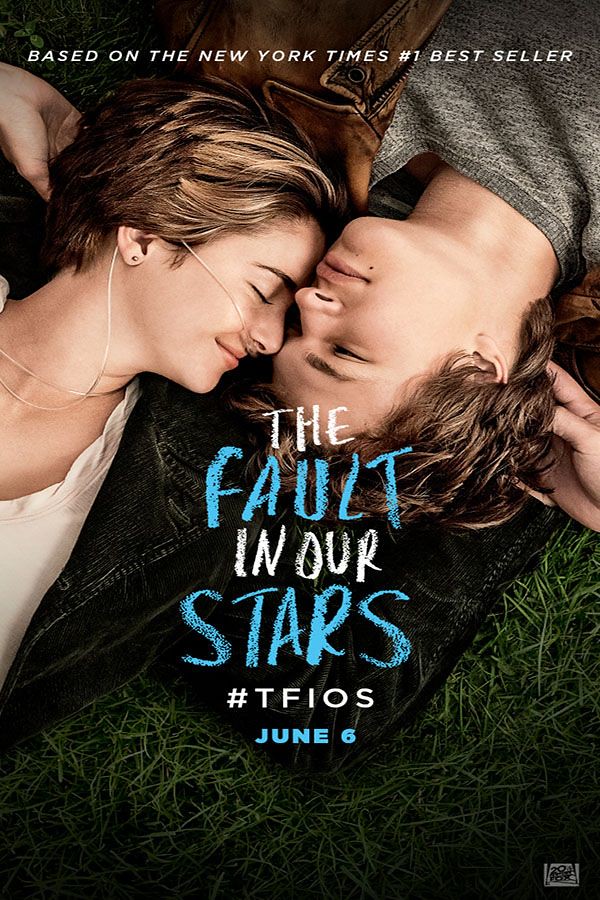
So the TFiOS grand opening weekend is over, and like many others, I saw the movie on opening night. And I loved it.

Movie adaptations are tough. On one hand, we want them to be as faithful to the book as possible, but on the other, movies are not books, and they shouldn’t be handled the same way as a book. Sometimes, staying perfectly faithful to the book means making a not-so-great movie, so there needs to be a balance between making a great film representation of the book and remaining faithful to what’s on the page.

To me, the TFiOS movie hit that balance beautifully.

It wasn’t just the acting (which was incredible), or the casting (which was perfect), or the cinematography and plot and set design. It was the feel of the movie, with a tone that matched Hazel’s snarky, cynical attitude in the book. It was the carefully chosen direct quotes and perfectly timed voice-overs and actors that really embodied the characters just like I’d imagined them in the book. It was respectfully handled portrayals of disability and perfectly awkward, sweet, funny and heartbreaking moments that fit the book so well.

The TFiOS movie was everything I could have hoped for in an adaptation, and it gives me hope for future YA adaptations. Because the sooner people realize YA books to screen can be truly fantastic movies and take them seriously, the sooner people may stop writing stupid articles degrading a whole category of novels and the sooner I’ll see more of my favorites in theaters.

So if you haven’t seen it yet? Do it. You’ll probably love it.

Have you seen the TFiOS movie yet? If so, what did you think? If not, do you plan to?

Twitter-sized bites: 
Why the #TFiOS movie gives one writer hope for future YA adaptations. (Click to tweet)  
Have you seen the TFiOS movie yet? What did you think? Join the discussion on @Ava_Jae's blog. (Click to tweet)

Book Beginnings: Where to Start?

Photo credit: Mine
I’ve been doing a lot of editing and critiquing lately. Between working on my WIP, reading for CPs and being semi completely addicted to Write on Con’s critique boards, I’m not exaggerating when I say I’ve spent several days switching between several forms of critiquing and editing. 

I’m not complaining—I love it. But because of that, I’ve read a fair share of opening scenes lately that reminded me of the importance of starting your novel in the right place. 

Deciding where to start your book can be a difficult task. Oftentimes, new writers especially will fall into the trap of starting their novels too early, dumping a load of backstory at the beginning before the action starts. While this can be useful for first drafts to help the writer understand more about the story, when it comes to revised drafts for the readers, it’s often necessary to cut the backstory and weave it throughout the prose. 

The key to starting your novel in the right place is to start the first scene right at the cusp of where the story begins. 

That may sound obvious, but it actually requires you to think about where your story starts. Usually, and most effectively, this is right before the inciting incident—that is, the event that changes the course of your protagonist’s life. 

Let’s take a look at a few published novels and analyze where their respective authors began their stories: 

Inciting Incident: When Alina’s convoy is attacked in The Fold, she unwittingly awakens a dormant power that she never knew she had.  
Where the story starts: Alina and the convoy are about to enter The Fold. 
Inciting Incident: Katniss’s sister is chosen during The Reaping to enter The Hunger Games, so Katniss takes her place to save her life.  
Where the story starts: Her last hunting expedition just before The Reaping. 
Inciting Incident: Hazel meets Augustus Waters, the boy who turns her life upside down (in a good way).  
Where the story starts: At the Cancer Support Group, just before Hazel meets Augustus. 
I think the pattern here is pretty clear. 

Identifying the right place to start your novel is easier than you might think—once you’ve established your inciting incident, all you need to determine is where to start that gives your readers just enough information about your character and their surroundings to care when the incident arrives. 

Because just at the moment when your readers begin to connect to your characters is when you want to throw your characters into the event that will change everything for them. 

How do you determine where to start your story? 

Twitter-sized bites: 
Does your novel start in the right place? Writer @Ava_Jae discusses how to determine a good place to begin. (Click to tweet) 
The right book beginning is key to hooking your readers. Did you start your novel in the right place? (Click to tweet)

Writing Tip: Describe with Telling Details—Character

Photo credit: horizontal.integration on Flickr
On Wednesday, I covered the importance of telling details when writing description for settings. Now I want to discuss an equally important type of description that also relies (when done well) on the same kind of details.

I’m sure you’ve all come across a passage, whether in your writing or someone else’s, in which a character was meticulously described from the specific tint of his eyes to the size of his nose and the make of the shoes on his feet. And chances are, the description started to lag and didn’t really leave a lasting impression, despite everything the writer threw at you. 

The problem wasn’t that the character wasn’t described enough, in fact, it was the opposite problem—the character was drowning in so much description that nothing could stand out and leave an impression. 

That’s why a few telling details are always better than paragraphs upon paragraphs of listed descriptions. If you use too much description, your readers won’t be able to pick out what physical markers are unique to your characters—but by utilizing a couple telling details instead, you’ll paint a picture of your characters much more effectively.

Let’s take a look at some examples. In both excerpts, the respective protagonists are seeing a love interest for the first time, and both authors do an excellent job characterizing them with just a couple specific details.  
“A boy was staring at me. 
I was quite sure I’d never seen him before. Long and leanly muscular, he dwarfed the molded plastic elementary school chair he was sitting in. Mahogany hair, straight and short. He looked my age, maybe a year older, and he sat with his tailbone against the edge of the chair, his posture aggressively poor, one hand half in a pocket of dark jeans.” 
The Fault in Our Stars by John Green, pages 8-9.
What really seals the description here? To me, it isn’t his mahogany hair that makes the image—it’s his “aggressively poor” posture and the way his long form dwarfs the plastic elementary school chair. Those are the kinds of details that you want focus on when describing your characters. 

Next example:
“I turn toward my new husband. My cheeks are hot; I know they will be blotchy and shining with sweat when he lifts the shield from my face.  
He releases my hand. I clench it into a fist to keep from wiping it on my terno. I see his fingers on the hem of my veil. They are brown and thick with short, clean nails. Not scholar’s hands, like Master Geraldo’s. He lifts up the veil, and I blink as cooler air floods my cheeks. I peer up at the face of my husband, at black hair that sweeps back and curls at his neck, at brown eyes warmer than cinnamon, at a mouth as strong as his fingers.” 
The Girl of Fire and Thorns by Rae Carson, page 14.
What I love about this excerpt is that our very first impression of her new husband isn’t his stunning good looks—it’s his fingers and clean nails as he grasps her veil before lifting it over her face. I also love the way that Ms. Carson reminds us of his fingers by comparing the strength of his mouth to the strength of his hands at the end of the paragraph.  

So those are two examples of excellent use of telling details while describing characters, but now I want to hear from you. Do you use telling details when describing characters? Any examples you’d like to share from your work, or books that you've read?

Twitter-sized bites: 
Do you use telling details to describe your characters? Here's why you may want to. (Click to tweet
Are you drowning your readers in description? Here's how to make your character descriptions pop. (Click to tweet)

How to Write Romance Well

Photo credit: vicki wolkins on Flickr
I received an interesting question over the weekend from a lovely reader (thanks, Robin) that uncovered an area that I haven't thoroughly discussed here at Writability. 

I'm talking about romance. 

I'll admit that I started this post with some trepidation, as I do not write genre romance. Now, that's not to say that I don't ever write romance—in fact, I often include a romantic subplot in my novels—but for me, romance isn't the core of the story, it's more of an enhancement. 

Nevertheless, even as a subplot, romance can go drastically wrong if not handled correctly, and so I still think it's important to discuss how to write it effectively. 

I suspect that romance in writing is something that every writer handles a little differently. For me, I usually establish what characters will be romantically involved before I write a word (with exception to instances where characters surprise me). At the very beginning of the writing process, I usually have a general sense of who the characters are, what they are like and a bit of their background, but I don't really get to know the true core of my characters until the writing begins. 

In my experience, the romantic subplots unfold much the same way—a natural growing relationship between two characters rather than a meticulously planned this then that plot. That's not to say that I don't plan it at all—I usually set down milestones while planning/outlining (first date, first kiss, etc.), but I try to be as flexible as possible while writing it. 

There are two dangers that I look out for when working out romantic relationships between characters:

  1. Forced love. I've written a post detailing the dangers of forced romance in writing, so I'm not going to dive into it here. What I will say, is that the danger of over-planning a romantic relationship between characters is this forced romance. It's pretty easy to tell if your characters are victim to this danger—the relationship between them will feel stiff and unnatural, and reaching those milestones will feel much more difficult than it should be. The romance should unfold naturally, so if you're fighting your characters to get them to like each other, that's a pretty good sign that you might want to reconsider your romantic subplot.

  2. Insta-love. This totally clever term was coined by one of my CPs, and I have stolen it (with permission) will be using it from here on out. Insta-love is a problem on the opposite side of the spectrum, and it's one that many writers often struggle with. Sometimes, when writing romance, we writers start to get a little impatient. We want to get to the good parts—the first kisses and the first l-word and those moments in romance that make our heart flutter. And sometimes, in our eagerness to get to the good stuff, we push our characters along a little too quickly. We end up with love at first sight and premature kisses and saying I love you so quickly that our readers get whiplash.

    The good news is that while this is a common problem, it's relatively easy to fix in revision. Your characters have chemistry—this is good—you just need to push on the brakes a little so it doesn't feel so sudden. Remember, most relationships don't form overnight, and if you want your readers to fall in love with your romance, you need to give them time, too. 
Once you've avoided those two major dangers, you can breathe easily knowing you're likely on the right track with your romance.

And for examples of particularly well-written romantic subplots, check out Graceling by Kristin Cashore and The Fault in Our Stars by John Green.  

What tips do you have for writing romance? Any book recommendations with well-written romantic elements?

When Writing, Cannibalize Everything

Photo credit: Jody Art on Flickr
It happened again! One of you fabulous readers (thank you, Robin) asked a question I haven’t yet answered that I thought most certainly merited a post (yay!). The question was this:
“I read your post about reading what you write, and coming to love your genre. So I was wondering, what if one incorporates other genres and mediums? One of my WIPs is a YA-fantasy adventure with a lot of fairytale elements, but I've taken what I learned reading horror (mostly of Poe) to create dread in my story, and I've paid attention to cinematic techniques seen in films by Studio Ghibli to create an endearing and living world. What is your perspective on cross-referencing genres and mediums?”
I’m sure most of you have heard that you should write what you know. While I partially agree with that (more on that topic some other time), I think it applies especially well when referencing incorporating what you have learned from creative mediums, whether writing, movies, music, etc. You see, I’ve written in the past about why it’s so important for writers to be well-read, and this question right here is one of the many reasons why.

While I tend to read a lot of YA and some MG novels, within those age groups I read from various genres: paranormal fantasy, straight fantasy, sci-fi, dystopian, etc. And from every book that I’ve read, regardless of the genre, I’ve learned something—whether it’s the importance of voice, or including poetry in prose, or what a good opening and memorable characters look like. And when I write and revise, I make a point to look back on those lessons and continue to learn new ones from whatever books I read throughout the course of the year.

One of the most important tasks a writer has is to absorb everything possible—what rain feels like in November when you’ve forgotten an umbrella, how that movie gave you the chills, why that book was so gripping that you stayed up until three in the morning on a work night to finish it, how that song makes you pause every time it comes up on your playlist. Nothing is sacred to the writer—not that terrible cut that required stitches, or your first kiss, or the first time you laid eyes on your newborn. Writers make note of and store their experiences for writing reference later on.

In short, writers cannibalize everything. Or at least, they should. And when it comes to genre, I don’t believe it’s any different.

Let’s think for a moment: when is the last time you read a book or watched a movie that was 150% one genre? Nearly every non-romance genre has some sort of romantic subplot (even The Lord of the Rings which is as straight fantasy as it gets has romance) and many non-mystery novels have some sort of mysterious intrigue and so on. Don’t believe me? Let’s take a look at a couple novels.

  • Across the Universe by Beth RevisAcross the Universe is undoubtedly a YA Sci-Fi novel, but it certainly cross-references other genres as well, the most obvious of which include a romantic subplot and murder mystery. That doesn’t make it a mystery or romance novel, but it still has elements of those genres. To further draw a point, it’s listen on Amazon under “Teens > Mysteries” and at Barnes & Noble.com under “Teens- Romance & Friendship” and “Teens- Science Fiction.” 

  • The Fault in Our Stars by John Green—I would have thought that The Fault in Our Stars would be listed under YA Contemporary, but I’ve found that it is often listed under romance. Regardless, it has elements of romance, realistic fiction, humor and even tragedy. That doesn’t mean you’re going to find it in the Humor section at Barnes & Noble (if you do, it’s been terribly misplaced), but you can’t deny that elements of those genres exist within the novel. It’s listed on Amazon under “Teens > Love & Romance” and at Barnes & Noble.com under “Teens: Realistic.” 

Just two examples of many, but the point is this: genre is rarely cut and dry and you certainly shouldn’t be afraid of drawing from absolutely everything you’ve learned along the way. Your writing will be better for it.

How do you pull from other genres, mediums and experiences in your work? What multi-genre novels can you think of as examples?

On Writing "Real" Characters

Photo credit: Gene Wilburn on Flickr
Many months ago I read The False Prince by Jennifer Nielsen (review here) and upon completing it, I was hit with a revelation—your point of view character doesn’t have to reveal everything, he can tell the story however he’d like to. I know that doesn’t sound like a particularly stunning revelation—and it’s not like I didn’t know that before, but I’d never seen it executed so well in a first person POV novel, and it made me start to think.

You see, what I really liked about The False Prince was that Sage, the protagonist and POV character, wasn’t entirely honest with the readers about both large and small reveals. He skipped over events and failed to mention specific information, not because he didn’t know it, but because he didn’t want to reveal that information to the readers. The result was rather fascinating, because it felt like Jennifer Nielsen wasn’t writing the story—Sage was, and he was writing it the way he wanted to, rather than the way the author was dictating, and I think for writers that is a result that is highly desirable.

We often talk about character development and getting to know our characters and writing multi-faceted characters with flaws and fears like the rest of us, but in the end it all comes down to this: do your characters feel real or do they feel like characters?

Now I’m not saying it’s a terrible thing if your characters feel like characters, rather than 100% I-might-run-into-this-person-on-the-street-real. There are plenty of characters from successful books that are good, interesting characters that people want to read about, but don’t necessarily feel like you could possibly run into said character on the street. 

Take Voldemort, for example—as far as villains go, I think Voldemort proved to be an interesting, deep (and deplorable) antagonist, and he certainly was strong enough to remain an opposing foe throughout the course of seven novels. Despite that, I’m not sure I would say that he was so incredibly realistic that I could imagine him to be a real person living on Earth. It’s not a bad thing—it’s just where the readers’ suspension of disbelief comes into play.

But then I read novels like The Fault in Our Stars by John Green where the characters are so vibrant, quirky and multi-faceted that they feel like they could truly be real teenagers living among us. Like The Fault in Our Stars isn’t a novel at all, but Hazel Grace’s memoir. The characters feel real.

There isn’t a magical button you can press or sentence you can write to automatically make your characters entirely realistic—it’s usually a combination of a particularly strong voice, realistic thoughts and decisions (and not always good ones) and actual flaws, fears and other humanizing factors. Once accomplished, however, it’s an effect that can truly make your characters stand out and remain memorable, even long after your readers have put away your story and started something else.

Have you ever encountered a character that felt real? What character was it, and how do you think that effect was achieved?

On Reading and Learning from Books

Photo credit: JKim1 on Flickr
After writing about reading so-called "bad books" last week, I noticed a theme cropping up in the following discussion, namely, learning from what we read.

When you're a writer, reading is more than just a hobby to pass the time— books are our bread and butter and they provide us with an arsenal of tools to use in our writing. Reading is about as optional to the writer as watching movies is to a Hollywood director or studying the brain and nervous system is to the neurosurgeon.

The great thing about reading is that especially for the writer, it's never a waste of time— whether you like the book or not, there's something to be learned.

You see, when you don't like whatever you're reading, the writer asks why— what is it about the book that you don't like? Does the pacing feel off? Are the characters not connecting with you? Does the dialogue feel forced? Once you've figured out what aspect (or aspects) feel off to you, push harder— what is it about the dialogue that makes it feel flat? How would you make it better? Why aren't the characters connecting? Is it a particular character that isn't working? Why?

On the other hand, when you love whatever you're reading, the writer asks why again— what is it about the book that really resonates with you? Is it the voice? The characters? Something about the plot itself? What exactly is working and how could you incorporate something like it into your writing?

Here are two examples from books I really enjoyed:

From Shatter Me by Tahereh Mafi (page 22):

"I take a sharp hit of oxygen. 'Funny. So did I.'

1

2

3 seconds pass.

He cracks a grin so wide, so amused, so refreshingly sincere it's like a clap of thunder through my body."

Honestly, you can't open to a page in Shatter Me without finding at least one poetic line full of refreshing imagery and voice. Shatter Me taught me about putting poetry back into the novel and not being afraid to break the rules.

From The Fault in Our Stars by John Green (page 53):

"When I got out of the movie, I had four text messages from Augustus.

        Tell me my copy is missing the last twenty pages or something.

        Hazel Grace, tell me I have not reached the end of this book.

        OH MY GOD DO THEY GET MARRIED OR NOT OH MY GOD WHAT IS THIS

        I guess Anna died and so it just ends? CRUEL. Call me when you can. Hope all's okay."

Something I absolutely loved about The Fault in Our Stars was that both Augustus and Hazel sounded like actual teenagers I could meet at my local mall. Everything from the witty (and hysterical) dialogue, to the text messages like the ones I quoted screamed authentic teenager, and I loved how genuine it felt. The Fault in Our Stars reminded me about the importance of authenticity in dialogue and narration.

Lessons like these are best absorbed when we see them in action—that is, when we see them working in a book. So go pick up a book and read. You never know what you might learn that will help your writing in the future.

Now it's your turn: What have you learned about writing from reading a book?

Why Writers Must Be Observers

Photo credit: Raymond Larose on Flickr
Contrary to popular belief, a writer must be more than a person who just writes. Of course writing is our primary goal, but in order to write authentically, we must first be vigilant observers. All the time.

You see, we writers have a pretty unique job; we are tasked with a mission to bring the impossible to life on the page, to create stories that pluck our readers from their everyday lives and to bring attention to details of the world around them that ring perfectly true. 

But in order to achieve that, we must first observe the world around us. When there’s a wicked thunderstorm and the trees are bowing to the wind and the claps of thunder and lightning send most people searching for their flashlights, the writer should be listening and watching very carefully, while asking, how would I describe this?

When overwhelmed with emotion—whether it’s happiness, anger, frustration or something else—writers must pause and pay attention to exactly how they feel so that when their characters experience the same emotion, it can be described with authenticity. A great example of this is one of my favorite passages from The Fault in Our Stars by John Green:

“Much of my life had been devoted to trying not to cry in front of people who loved me, so I knew what Augustus was doing. You clench your teeth. You look up. You tell yourself that if they see you cry, it will hurt them, and you will be nothing but A Sadness in their lives, and you must not become a mere sadness, so you will not cry, and you say all of this to yourself while looking up at the ceiling, and then you swallow even though your throat does not want to close and you look at the person who loves you and smile.” (Page 213-214)

I know that seems like a pretty depressing favorite passage, but the reason it stuck out to me so much is because when I read it for the first time, I nodded along and thought, yes, it’s exactly like that. Granted, my way of thinking when upset is pretty different from Hazel’s (the POV character), but the clenching of teeth and looking up at the ceiling and swallowing when your throat is so tight it’s painful are all things I’m sure many of us have experienced when trying not to cry.

Another (lighter) example from Shatter Me by Tahereh Mafi:

“Every butterfly in the world has migrated to my stomach.” (Page 155) 

This example is less literal than the first, but I think we all know the feeling Juliette (the POV character) is referencing.

Our goal as writers is to take every day real things and translate them into words that remind our readers of that exact moment. That ring true and honest and have them nodding along and saying yes, that’s it, it’s just like that. But in order to do that we must first pay attention to everything, all the time, and take mental (or real) notes as we move through our lives and experience the world.

Then after observing, we translate those moments back into words so that we can share them with someone else.

Have you ever encountered a sentence or passage that felt exactly right? 

Book Review: The Fault in Our Stars by John Green


Photo credit: Goodreads
So as happy as I've been with the format of my last two monthly mini book reviews, after reading The Fault in Our Stars by John Green in about a day, I knew I had to write it a separate book review.

Before I start ranting about how incredible the book was, here is the Goodreads summary:

Diagnosed with Stage IV thyroid cancer at 12, Hazel was prepared to die until, at 14, a medical miracle shrunk the tumours in her lungs... for now. Two years post-miracle, sixteen-year-old Hazel is post-everything else, too; post-high school, post-friends and post-normalcy. And even though she could live for a long time (whatever that means), Hazel lives tethered to an oxygen tank, the tumours tenuously kept at bay with a constant chemical assault. Enter Augustus Waters. A match made at cancer kid support group, Augustus is gorgeous, in remission, and shockingly to her, interested in Hazel. Being with Augustus is both an unexpected destination and a long-needed journey, pushing Hazel to re-examine how sickness and health, life and death, will define her and the legacy that everyone leaves behind.

First and foremost, I'd like to say that John Green didn't write just another cancer book. The Fault in Our Stars is so much more than that, because Hazel and Augustus (the two main characters) are more than just two kids with cancer.

The Fault in Our Stars was simply beautiful. I don't often use that word to describe a book, but after reading the final sentences, I couldn't think of a better word to describe it. John Green has written something special—a story that feels absolutely true, that strikes you with the beauty and honesty of the prose, that will make you laugh and cry and leave you feeling like you experienced Hazel's story yourself. Like her memories are really yours.

I can't recommend this book enough. It instantly became one of my favorites, and it's one I'm sure I'll re-read in the future.

The Fault in Our Stars more than deserves its long run on the New York Times bestseller list. John Green has written something truly spectacular. 

What Makes You Keep Reading?

Photo credit: photosteve101 on Flickr (planetofsuccess)
After reading a certain blue, white and black book written by John Green in a single day, I started thinking. Truth is, the only thing The Fault in Our Stars has in common with most of the books I read is that it happens to be a YA novel. There aren't any high-action scenes or evil villains to destroy or superpowers or magic or spaceships or horrific dystopian societies that must be overturned.

And yet, I whipped through its 318 pages like nobody's business and loved every moment of it. So it got me thinking: what really makes readers keep reading?

Because sure, cliffhangers and gun fights and epic magical battles and action-packed pages can definitely keep a reader hooked, but there are underlying threads deeper than that keep us turning pages in a book. That make it impossible not to continue reading.

Some Underlying Threads:

  1. Make the readers care about the characters. This is a must. What's the point of reading to find out what happens to a character if it doesn't matter? (Answer: there is no point, so they won't read any further). Whether it's a voice that's impossible to ignore, or situations that make your protagonist sympathetic, or an endearing personality or all three, the readers have to care about the characters.

  2. Keep the reader guessing. Will Katniss and Peeta survive The Hunger Games? Will Harry ever get to go to wizarding school? Will Hazel and Augustus ever find out what happens after An Imperial Affliction ? Although this is pretty directly tied to the last point, we need to keep the readers (and the characters) asking questions throughout the book. As soon as all of the questions are answered and choices are made, there are few reasons to continue reading.

  3. Tension. I wrote an entire post on tension, so I'm not going to rehash the whole thing, but in short no tension = no reason to keep reading = book that doesn't get read.

There are other underlying threads, I'm sure, but these three are really what have stood out to me as I continue to read some truly fantastic books. And what better way to learn how to improve your writing than reading a great book?

Have you read any un-put-downable books lately? What makes you keep reading?
Related Posts Plugin for WordPress, Blogger...