Showing posts with label romance. Show all posts

Vlog: How to Write Romantic Subplots

You asked, I answered! Today I'm discussing romantic subplots and how to put ~feels~ into a book that isn't strictly romance.


RELATED VLOGS:


Twitter-sized bite:
How do you add romantic relationships to a book where romance isn't the main focus of the plot? Gabe (@Ava_Jae) talks writing romantic subplots. (Click to tweet)

Vlog: How to Write Memorable Kiss Scenes

How do you write a YA kiss scene that's memorable for all the right reasons? Today I'm talking about some key things to remember while your characters smoosh their faces together.


RELATED LINKS: 


What tips do you have for writing kiss scenes?

Twitter-sized bite:
How do you write a YA kiss scene that's memorable for all the right reasons? @Ava_Jae shares their tips. (Click to tweet)

Vlog: How to Write Realistic Relationships

It's Valentine's Day! So in honor of everyone's favorite (*cough*) romantic holiday of the year, here are some tips on writing realistic relationships.


RELATED LINKS: 


What are some of your favorite relationships from books, movies, or TV shows?

Twitter-sized bite:
Working on a relationship in your WIP? @Ava_Jae vlogs some tips on writing realistic relationships. #writetip (Click to tweet)

Romance & Love Writing Roundup

Photo credit: yanni on Flickr
So tomorrow is Valentine’s Day, which naturally means I should write about romance and love or something like that. Except, as I scrolled through my love/romance-related blog archives, I realized I’ve already done that a lot.

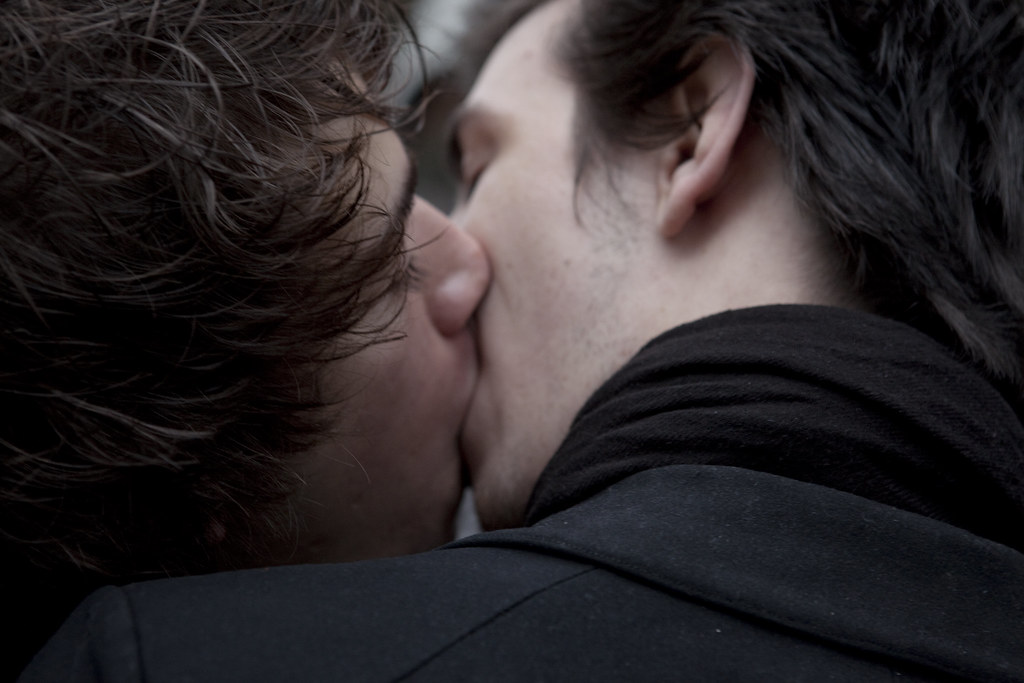
So! I’m going to share with you guys all of Writability’s current romance/love/face-smooshing related posts for your browsing pleasure.

In chronological order!


Whether you’ll be celebrating Valentine’s Day with a loved one or with a tub of ice cream and Netflix, I hope you all have a fantastic weekend!

Do you know of any great romance-writing posts?

Twitter-sized bite: 
Struggling to get your romantic subplots down? @Ava_Jae rounds up love, kissing & romance-writing posts for V-day. (Click to tweet)

How to Write Awesome Kiss Scenes

Photo credit: °]° on Flickr 
“Stop.
Stop time.
Stop the world.
Stop everything for the moment he crosses the room and pulls me into his arms and pins me against the wall and I’m spinning and standing and not even breathing but I’m alive so alive so very very alive
and he’s kissing me.” 
Ignite Me by Tahereh Mafi (Pages 316-317)
My characters like kissing. Some more than others, but amongst my characters at least, it’s a well-known fact that kissing is fun.

Kissing, as it turns out, is also fun to write (coincidence? I think not), but when someone on Twitter asked me for tips for writing good kissing scenes, I realized I’d somehow managed to neglect this topic here on Writability. What. An. Oversight.

I’m remedying that right now.

When it comes to books, kissing scenes tend to be significant for one reason or another. Whether it’s a first kiss, a make up kiss, a crap we shouldn’t have done that (but we really wanted to) kiss, a love-declaring kiss or a kissing because we have to but wait I actually like this kiss (or something else entirely), kissing, in novels, tend to be pretty big turning points for characters.

The best kisses, I’ve found, are rife with meaning. What makes them so fun to read and write isn’t just that the characters are mashing their lips together (though don’t get me wrong—that’s fun too), it’s the implications behind the kiss. Whether it’s the yes! Finally they’re together! or noooo you two aren’t supposed to make out! what makes kissing so fun to read and write is that it means something.

Now, that’s not to say that your characters can’t ever kiss just to show affection, or because they just can’t keep their faces off each other (both are valid reasons for lip-smooshing). But chances are, in writing and in reading, the kisses that get the most page time and in-depth description are the ones that are significant for one reason or another.

As far as the actual writing and description of said kissing goes, it really depends 100% on you and your book. Whether you’re writing YA, NA or even Adult, how much description you go into completely depends on what you’re comfortable with and what’s right for the book. Cruel Beauty by Rosamund Hodge, for example, completely glosses over the kissing and sex, barely getting into any description at all—which is totally okay. Ignite Me and Unravel Me by Tahereh Mafi, meanwhile, go into way more description and include a lot of metaphors and poetic language and those make out scenes last several pages. Let it be known Ignite Me and Unravel Me have some of my favorite YA kisses ever. Which is why I shared that one above.

Anyway.

The important thing to pay attention to while writing kiss scenes is what the kiss means for your characters (especially your POV character). If your character is kissing some random stranger at a party and thinking about what a terrible kisser the partner is, that’s just as important to note as a love-declaring let’s be alone together kiss. Even if your characters don’t know what this kiss means, just that they’re kissing and they like it (or not), it’s important to get that across to your readers.

So next time your characters start getting it on, make sure you take some time to think about the significance behind their physical togetherness. Oftentimes an extra spike of meaning into an already awesome kiss can be exactly what you need to take it to the next level.

What books have some of your favorite kisses? 

Twitter-sized bites: 
"What makes kissing so fun to read and write is that it MEANS something." #writetip (Click to tweet)  
Do you have kissing in your WIP? Writer @Ava_Jae shares some tips on getting those romantic scenes right. (Click to tweet

Why Do Your Characters Like Each Other?

Photo credit: Boris SV
When working on my last MS, I encountered an unexpected problem—at least, unexpected to me. 

I was writing a dual-POV novel with romance-y bits, and in a scene where one character confessed having feelings for one of my POV characters, one of my critique partners wrote a note along the lines of: ok, but why does he like her? 

I stared at that question for a while. She’s a POV character! I protested in my mind. Why wouldn’t he like her? 

So I sat down and began writing a list of (oh-so obvious) reasons why said character likes my POV character. Or, I tried to write a list, but stared at the paper and realized, with no small amount of horror, that I had no idea. 

You see, the love interest liked my POV character because that was what I’d planned. But somehow, I’d never really figured out why the love interest would like her to begin with, which, for romance purposes, is a tad bit important. 

Without a legitimate reason for your love interests to have feelings for each other, you run the risk of writing the always evil insta-love. Romance without a reason for characters to be interested in each other to begin with is unbelievable, because while initial attraction is easy, a real relationship won’t get very far if the characters don’t know why they like each other. 

This is something that I’m going to be paying special attention to from here on out, especially while revising, and it’s a question I recommend you ask yourselves while editing as well. Because if your characters don’t know why they like each other, I promise you your readers won’t know either. 

Do you know why your love interests like each other? 

Twitter-sized bites: 
So your characters are falling for each other. But do you know why? (Click to tweet)  
Do you know why your love interests like each other? Writer @Ava_Jae talks the importance of knowing the answer. (Click to tweet)

Romance in Writing: Murder the Insta-Love

Photo credit: unclefuz on Flickr
Without naming names, I'm sure most of you can think of at least one novel you've read in which the characters fell in love far too quickly. Where the relationship evolves from learning each other's names to making out and saying the l-word in the span of a couple chapters or in-story days. 

I'm talking about the second of two dangers I mentioned in my recent writing romance well post—insta-love.

There are two major problems with insta-love, namely, it's unrealistic and it cheapens the romance.

Why is it unrealistic? Let's look at everyday life—while there are cases of love at first sight, the truth is that those instances are far from the majority. Relationships take time to build, and that initial excited infatuation often fades over time (this is the difference between a crush and love. Some scientists believe there are three stages to love—and needless to say, the first stage is not true love).

The deeper problem beneath being unrealistic is that your readers may stop to question it—and any moment that your readers stop reading to question something in your book, is a moment that they've been pulled out of the narrative, something that as a writer, you want to avoid at all costs. Love and romance between two characters should feel natural, but if your readers are questioning it, then the romance clearly needs work.

Why do I say that insta-love cheapen the romance? A relationship between your characters should be special. If it truly matters to your characters (and it should if you intend to make them romantic partners), then you need to make it matter to your readers. If the characters fall together instantly, however, then the relationship won't have time to build—not between your characters, and not to your readers, either. Remember, it's not just your characters that have to get used to each other—your readers need to get used to your characters and their relationships as well.

Ultimately, your goal is to make your characters fall in love, yes, but it's also to make your readers fall in love with your characters and the relationship they have.

If you suspect that your characters may have fallen victim to insta-love, then there's a very good chance that they might have (we writers have excellent instincts—we just don't always want to listen to them). To make sure, however, I recommend getting some CPs and beta readers to take a look at your WIP and ask them to look out for insta-love. Like most things in writing, it's much easier to recognize a flaw in someone else's work than it is to recognize it in your own.

Have you ever written or read insta-love? If the former, how did you fix it? If the latter, how did it affect your perception of relationship?

How to Write Romance Well

Photo credit: vicki wolkins on Flickr
I received an interesting question over the weekend from a lovely reader (thanks, Robin) that uncovered an area that I haven't thoroughly discussed here at Writability. 

I'm talking about romance. 

I'll admit that I started this post with some trepidation, as I do not write genre romance. Now, that's not to say that I don't ever write romance—in fact, I often include a romantic subplot in my novels—but for me, romance isn't the core of the story, it's more of an enhancement. 

Nevertheless, even as a subplot, romance can go drastically wrong if not handled correctly, and so I still think it's important to discuss how to write it effectively. 

I suspect that romance in writing is something that every writer handles a little differently. For me, I usually establish what characters will be romantically involved before I write a word (with exception to instances where characters surprise me). At the very beginning of the writing process, I usually have a general sense of who the characters are, what they are like and a bit of their background, but I don't really get to know the true core of my characters until the writing begins. 

In my experience, the romantic subplots unfold much the same way—a natural growing relationship between two characters rather than a meticulously planned this then that plot. That's not to say that I don't plan it at all—I usually set down milestones while planning/outlining (first date, first kiss, etc.), but I try to be as flexible as possible while writing it. 

There are two dangers that I look out for when working out romantic relationships between characters:

  1. Forced love. I've written a post detailing the dangers of forced romance in writing, so I'm not going to dive into it here. What I will say, is that the danger of over-planning a romantic relationship between characters is this forced romance. It's pretty easy to tell if your characters are victim to this danger—the relationship between them will feel stiff and unnatural, and reaching those milestones will feel much more difficult than it should be. The romance should unfold naturally, so if you're fighting your characters to get them to like each other, that's a pretty good sign that you might want to reconsider your romantic subplot.

  2. Insta-love. This totally clever term was coined by one of my CPs, and I have stolen it (with permission) will be using it from here on out. Insta-love is a problem on the opposite side of the spectrum, and it's one that many writers often struggle with. Sometimes, when writing romance, we writers start to get a little impatient. We want to get to the good parts—the first kisses and the first l-word and those moments in romance that make our heart flutter. And sometimes, in our eagerness to get to the good stuff, we push our characters along a little too quickly. We end up with love at first sight and premature kisses and saying I love you so quickly that our readers get whiplash.

    The good news is that while this is a common problem, it's relatively easy to fix in revision. Your characters have chemistry—this is good—you just need to push on the brakes a little so it doesn't feel so sudden. Remember, most relationships don't form overnight, and if you want your readers to fall in love with your romance, you need to give them time, too. 
Once you've avoided those two major dangers, you can breathe easily knowing you're likely on the right track with your romance.

And for examples of particularly well-written romantic subplots, check out Graceling by Kristin Cashore and The Fault in Our Stars by John Green.  

What tips do you have for writing romance? Any book recommendations with well-written romantic elements?

Related Posts Plugin for WordPress, Blogger...