Showing posts with label Rosamund Hodge. Show all posts

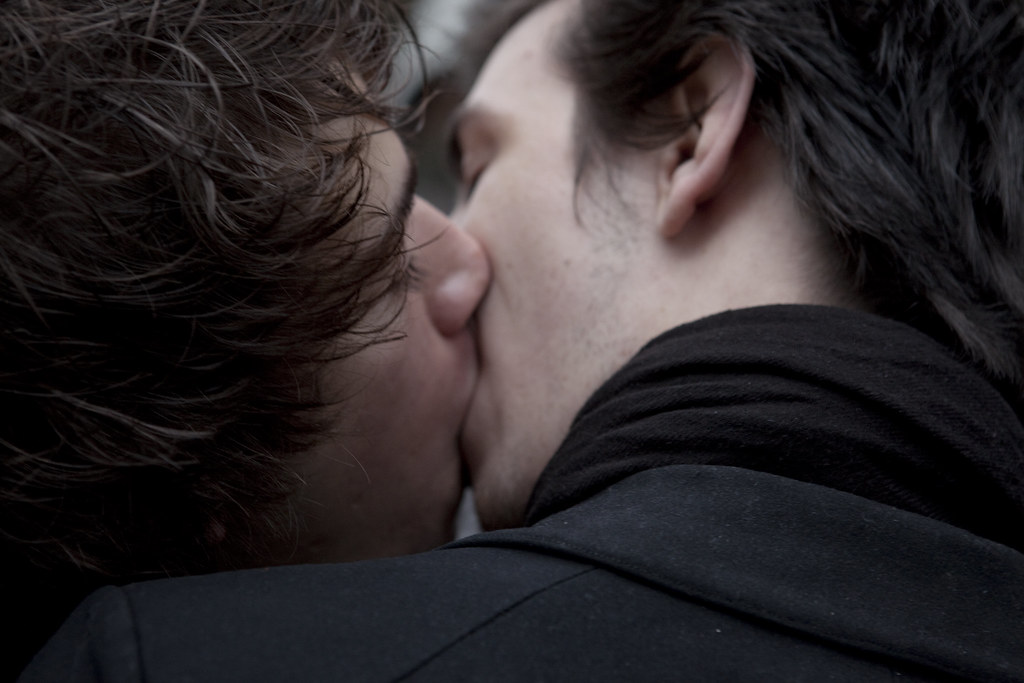
How to Write Awesome Kiss Scenes

Photo credit: °]° on Flickr 
“Stop.
Stop time.
Stop the world.
Stop everything for the moment he crosses the room and pulls me into his arms and pins me against the wall and I’m spinning and standing and not even breathing but I’m alive so alive so very very alive
and he’s kissing me.” 
Ignite Me by Tahereh Mafi (Pages 316-317)
My characters like kissing. Some more than others, but amongst my characters at least, it’s a well-known fact that kissing is fun.

Kissing, as it turns out, is also fun to write (coincidence? I think not), but when someone on Twitter asked me for tips for writing good kissing scenes, I realized I’d somehow managed to neglect this topic here on Writability. What. An. Oversight.

I’m remedying that right now.

When it comes to books, kissing scenes tend to be significant for one reason or another. Whether it’s a first kiss, a make up kiss, a crap we shouldn’t have done that (but we really wanted to) kiss, a love-declaring kiss or a kissing because we have to but wait I actually like this kiss (or something else entirely), kissing, in novels, tend to be pretty big turning points for characters.

The best kisses, I’ve found, are rife with meaning. What makes them so fun to read and write isn’t just that the characters are mashing their lips together (though don’t get me wrong—that’s fun too), it’s the implications behind the kiss. Whether it’s the yes! Finally they’re together! or noooo you two aren’t supposed to make out! what makes kissing so fun to read and write is that it means something.

Now, that’s not to say that your characters can’t ever kiss just to show affection, or because they just can’t keep their faces off each other (both are valid reasons for lip-smooshing). But chances are, in writing and in reading, the kisses that get the most page time and in-depth description are the ones that are significant for one reason or another.

As far as the actual writing and description of said kissing goes, it really depends 100% on you and your book. Whether you’re writing YA, NA or even Adult, how much description you go into completely depends on what you’re comfortable with and what’s right for the book. Cruel Beauty by Rosamund Hodge, for example, completely glosses over the kissing and sex, barely getting into any description at all—which is totally okay. Ignite Me and Unravel Me by Tahereh Mafi, meanwhile, go into way more description and include a lot of metaphors and poetic language and those make out scenes last several pages. Let it be known Ignite Me and Unravel Me have some of my favorite YA kisses ever. Which is why I shared that one above.

Anyway.

The important thing to pay attention to while writing kiss scenes is what the kiss means for your characters (especially your POV character). If your character is kissing some random stranger at a party and thinking about what a terrible kisser the partner is, that’s just as important to note as a love-declaring let’s be alone together kiss. Even if your characters don’t know what this kiss means, just that they’re kissing and they like it (or not), it’s important to get that across to your readers.

So next time your characters start getting it on, make sure you take some time to think about the significance behind their physical togetherness. Oftentimes an extra spike of meaning into an already awesome kiss can be exactly what you need to take it to the next level.

What books have some of your favorite kisses? 

Twitter-sized bites: 
"What makes kissing so fun to read and write is that it MEANS something." #writetip (Click to tweet)  
Do you have kissing in your WIP? Writer @Ava_Jae shares some tips on getting those romantic scenes right. (Click to tweet

So You Want To Write YA High Fantasy?

Photo credit: Lisa Brewster on Flickr
So this is the first entry in a new series I'm starting here at Writability! Yay! If all goes well and you guys like what you see, I hope to cover many genres and categories, including ones I don't write, which should be interesting. I hope you all enjoy! :)
“So, high fantasy isn’t dead. If you say it is, you’re not looking in the right places. Perhaps the good stuff doesn’t get as much attention as it deserves, but it’s out there, changing perspectives and broadening imaginations, reminding us of what it is to be human, and daring girls who love nail polish and boys to dream of something more.” —Sarah J. Maas ("Is High Fantasy Dead? (Um, No.)")
What is it? 

Royalty, medievalism, magic, sword fights, evil wizards, elves, orcs, trolls, dragons and very little technology are a few of the elements you’ll see when reading high fantasy. In Young Adult, it often means princes and princesses, or young powerful people (whether highly skilled, gifted with magic or otherwise special), lots of action, great pacing and romances. What’s not to like?

Pros/Cons of Writing YA High Fantasy: 

Pros: 

  • You can do just about anything. Everything should fit in the world you create and make sense for your book, of course, but other than that, the sky’s the limit. Want a dragon made of fire? Go for it. A character who can control lightning? Write it and it’s yours. 

  • Medievalism is the bomb. Let’s face it, sword fights are often way more fun to watch than shootouts, royalty never gets boring to read or write about (to me) and that low-tech I mentioned before means you have to work around lack of technology obstacles, sometimes with magic, sometimes without. 

  • Young adults tend to have more independence. This varies, of course, but in medieval times, young adults were often viewed as mini-adults—they have way more responsibilities and pressure on their shoulders than teens today. And that makes for great book fodder. 

Cons: 

  • World building is tough. To me, this is kind of a pro, too, because world building can be insanely fun. But it can also be a massive headache. You’re building an entire world from nothing, and it can get complicated and exhausting, but it’s also pretty rewarding. 

  • A lot of it’s been done already. This to me is also in a way a pro—I’m starting to see a call for high fantasy based off non-western European cultures, which I think is fantastic (i.e.: The Girl of Fire and Thorns by Rae Carson, Shadow and Bone by Leigh Bardugo and Prophecy by Ellen Oh). There are so many cultures out there who each had their own medieval-like periods and mythologies that I think could be really interesting in high fantasy. So while it’s a tougher market because we’ve seen a lot of similar high fantasies, I think it also pushes us to try new things, which isn’t such a bad thing after all. 

  • It’s a tough market. Yeah, well, so is the rest of YA. If you love high fantasy, this shouldn’t deter you. 

Recommended Reading: 

Reading is important! Really. Whatever genre you’re writing in, you should be pretty well versed in what’s out there.

Note: I’ve read and enjoyed all of these except for the last one—but I’ve heard good things about Finnikin.
For more, check out this Goodreads list of YA Fantasy novels, which includes books that aren't High Fantasy, but Fantasy nonetheless, and this Goodreads list of High Fantasy novels, which includes books that aren't YA.

Helpful Links: 
Do you enjoy reading or writing YA High fantasy? Share your experience! Also, should I continue this series? Let me know what you think!

Twitter-sized bites: 
Thinking about writing YA High Fantasy? Writer @Ava_Jae shares some tips, recommendations and more. (Click to tweet
Do you write YA High Fantasy? Share your experience at @Ava_Jae's new So You Want to Write series! (Click to tweet)
Related Posts Plugin for WordPress, Blogger...