Showing posts with label So You Want to Write. Show all posts

So You Want to Write YA Thrillers?

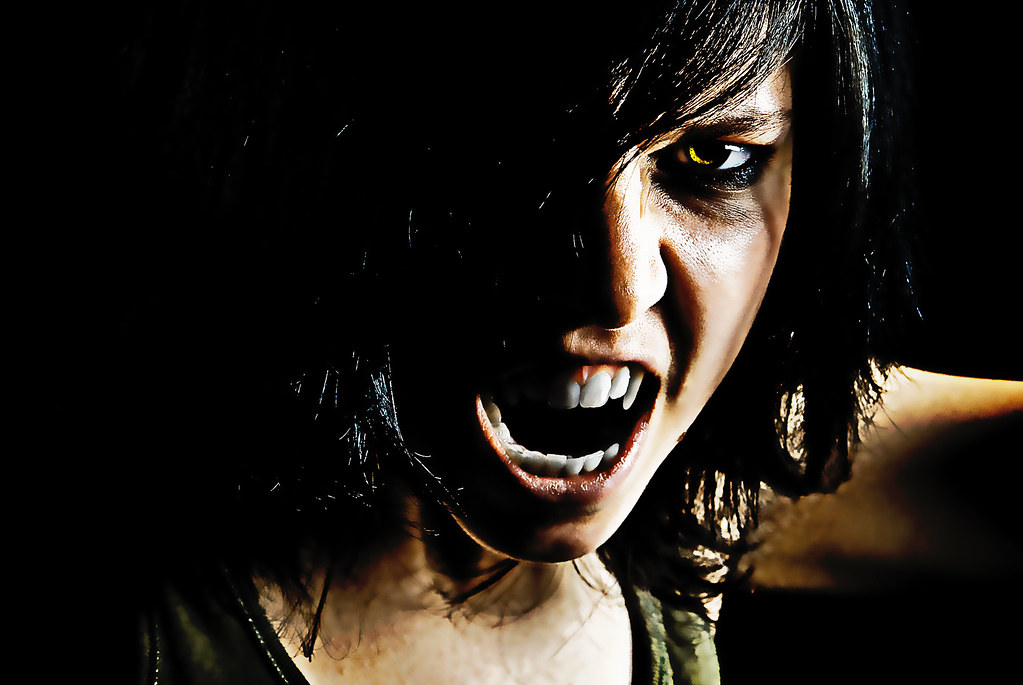
Photo credit: @lattefarsan on Flickr
So next up in the So You Want to Write series, a genre that I quite enjoy and am quickly realizing I don’t read nearly enough of: YA Thrillers.

What is it?

YA Thrillers are fast-paced stories, often (but not always) about either a protagonist who ends up in the sights of a killer or a protagonist who winds up on a dangerous revenge-spree. Either way, there’s bound to be a body count, a ton going on, very high stakes (usually the protagonist’s life) and lots of twists and turns that’ll keep you guessing.

Pros/Cons of Writing YA Thrillers:

Pros:

  • Hasn’t had a major boom (but isn’t dead either). The lack of a major boom thing is actually a pro because it means it’s not oversaturated (or about to be oversaturated). It seems to be selling well enough, best I can tell, so the state of the publishing market shouldn’t be a deterrent. 

  • Fast-paced and very twisty. If you like writing twists and quickly paced books, YA Thrillers may be the sweet spot for you. 

  • High stakes. Personally, I’ve always found high stakes fun to write, and more times than not the protagonist’s life is on the line in YA Thrillers. So again, if that’s something you enjoy writing… :)

Cons:

  • Complicated balance. A big part of Thrillers is to keep the reader guessing, which can often be tricky to write. How do you drop enough clues and red herrings for the ending to make sense without it being obvious? That’s a question you’ll have to navigate carefully as a YA Thriller writer. 

Recommended Reading:

As I have said before and will continue to do so: you must read the genre you write in. It is so important to keep up to date with what’s selling, what’s been written, what’s been overdone, etc. and the best way to do that is to read as much as possible.

Note: Aside from Far From You, I haven’t read any of the below, but they sound great. And they’re YA Thrillers, at any rate.

Helpful Links:


Do you enjoy reading or writing YA Thrillers? Share your experience! 

Twitter-sized bites: 
Thinking about writing YA Thrillers? Writer @Ava_Jae shares some tips, recommendations and more. (Click to tweet
Do you write YA Thrillers? Share your experience at @Ava_Jae’s So You Want to Write series. (Click to tweet)

So You Want To Write YA Contemporary?

Photo credit: Nicola since 1972 on Flickr
It’s been a while since I’ve updated the So You Want To Write series, and apparently I never wrote about writing a YA Contemporary, so! Here we go.

What is it?

YA Contemporary novels are what is often described as “Realistic Fiction.” Except for young adults—that is, teens. These feature a world, that for all intents and purposes, is our own and usually takes place in the present, but occasionally jumps back a decade or two (but not much more than that.) There is often (but not always) some kind of romantic subplot, and sometimes (though again, not always) they are what are known as “issue books.”

The main tenant, however, is teenagers dealing with something in our world.

Pros/Cons of Writing YA Contemporary:

Pros:


  • Popular at the moment. After the explosion known as The Fault in Our Stars, YA Contemporary got a hugenormous boost, which has not only lead to a boost of new YA Contemporary novels, but also of many more YA Contemporary movie deals, which personally I think is pretty darn awesome. So right now, YA Contemporary novels are selling really well, which is fabulous, but also has a down side which I’ll get to below. 

  • Very good for diving into difficult topics. If you’re a contemporary-minded writer who’d really like to dive into a difficult topic that feels important to you, YA Contemporary is a great place to do it. Not only are those kinds of books actually selling rather well, but it also allows you to create books that could be cathartic for teens who have experienced whatever you’re writing about, or a great point of discussion for those ready to learn more. 

  • Will probably never go completely out of style. While I do think the genre is on the verge of slowing down a bit (more on that below), I kind of tend to think that books about life and reality will never completely go away. This is an opinion, of course, and I could be totally wrong, but contemporary novels have been around forever and I don’t think they’re going anywhere. 

  • Opportunity to explore teen life as it actually is today. Teen lives are rich and interesting and wonderful and painful and everything in between. And if exploring that in our world is your bread and butter, this is the genre for you.

Cons:

  • Popular at the moment. Right, so, downside of writing in a genre that is currently popular is chances are very likely you’ve already missed the wave. It also means there are still a lot of people trying to sell their YA Contemporaries in a very crowded market, but…I mean, the rest of YA is equally crowded. So. 

Recommended Reading:

I’ll keep saying this forever and ever: you must read the genre you write in. It is vital—vital—to understand what else is being published, what’s selling well, what’s not, what’s been done, what works, what doesn’t. And the only way you learn this is by reading what’s being published now.

Note: I’ve either read, want to read, or have heard amazing things about the books listed below.


Helpful Links:

Do you enjoy reading or writing YA Contemporary? Share your experience!

Twitter-sized bites:

Thinking about writing YA Contemporary? Writer @Ava_Jae shares some tips, recommendations and more. (Click to tweet)

Do you write YA Contemporary novels? Share your experience at @Ava_Jae’s So You Want to Write series. (Click to tweet)

So You Want to Write NA Contemporary Romance?

Photo credit: idea ablaze on Flickr
Note: The inevitable has happened, my friends. After 600+ posts, I've accidentally re-written a post. The original is here, and this one is slightly different (since, you know, I wrote it thinking I hadn't written it yet). Think of it as having 1.5x the resources if you want to write NA Contemporary Romance. :) 

What is it? 

College (or college-age, at least), swoony book boyfriends (and girlfriends), awesome voices, awkward moments, stepping into adulthood, there are so many components of NA Contemporary Romances.

What do they have in common? They all feature college-age protagonists, are in a modern day setting, and the plot largely revolves around a romance.

Pros/Cons of Writing NA Contemporary Romance: 

Pros: 

  • Wonderful voices. Like YA, one of my favorite things about NA are the incredibly diverse and powerful voices. There’s a very distinct sound to NA and some really wonderful voices that set them apart and absolutely fit the age range of their protagonists. 

  • Adorable (or heart-wrenching) romances. The tone in NA novels varies greatly, but in the end, the romances are really great. From the light, fluffy and adorable to the darker, emotionally-ridden conflicts, the romances stick with you long after the book has ended. 

  • Very popular (right now). Which means there’s so much to choose from! And it’s pretty good from a marketing standpoint, because books in popular categories and genres generally have a better chance of selling well. 

Cons: 

  • Stigma/common misconceptions. There are a lot of people out there who still believe (and say) that New Adult is Young Adult with sex. Or that New Adult is the same as erotica. Neither of which are true, but it is an assumption a lot of people make about the category, particularly NA Contemporary Romance. 

  • Mostly digital. I mean, this is really only a con if your dream is to be traditionally published in print. NA is actually doing really well in the digital marketplace, and some NA authors have gone on to be traditionally published after their digitally published books took off (see Tammara Webber, Cora Carmack and Jennifer Armentrout, for example). But at the moment at least, NA is mostly a digital phenomena, and while it’s (painfully) slowly breaking in the traditional print sphere, it’s not quite there yet. 

  • Very popular (right now). Which means it’s easy to get lost in the crowd. Being part of a popular movement definitely has it’s pros and cons. 

Recommended Reading: 


As I’ve said in every other So You Want To Write post, reading in the genre (and category) you’re writing in is mandatory. Lucky for you, there are loads of awesome books out there to enjoy and learn from.

Note: I’ve read (and enjoyed) all of these except for Unteachable, which is on my TBR list because I’ve heard great things about it.


For more, check out Goodreads’s New Adult page (which includes more than just Contemporary Romance) and their Popular New Adult books books shelf (which are mostly, but possibly not all Contemporary Romance).

Helpful Links:


Do you enjoy reading or writing NA Contemporary Romance? Share your experience! 

Twitter-sized bites: 
Thinking about writing NA Contemporary Romance? Writer @Ava_Jae shares some tips, recommendations and more. (Click to tweet)  
Do you write NA Contemporary Romance? Share your experience at @Ava_Jae’s So You Want to Write series. (Click to tweet

So You Want to Write YA Dystopian?

Photo credit: mithrandir3 on Flickr
What is it? 

According to dictionary.com, a dystopia is “a society characterized by human misery, as squalor, oppression, disease, and overcrowding.”

If YA Dystopian novels are to be believed, dictionary.com is pretty on the money.

Oppressive (and usually horrible) governments, revolution, disease, poverty, strict laws and an all around unhappy (or soon to be unhappy) society are all markers of dystopian novels. Though that’s really just a sampling of dystopian issues.

Note: Post-apocalyptic and Dystopian novels are not always the same thing. Some Dystopian novels do indeed happen after an apocalypse (making them Post-apocalyptic as well), but not all Dystopian novels are Post-apocalyptic and not all Post-apocalyptic novels are Dystopian as well.

Pros/Cons of Writing YA Dystopian: 

Pros: 

  • Insta-conflict. The great thing about Dystopian novels is conflict is a given—it’s literally built into the society and the setting, so all you need are some captivating characters with a little push to get things going. This means most Dystopian novels make for very exciting reads (and, as it happens, really fun writing experiences).

  • Typically fast-paced. Like I said in the previous point, YA Dystopian novels tend to be pretty exciting to read and write. There’s usually quite a bit of action and the stakes are often hugenormous  with dire consequences if the protagonist fails.

  • Play with worst-case scenarios. So many Dystopian novels are based off What If? scenarios and expanded to extremes. These can be really fun to play with when brainstorming and writing, as characters in extreme circumstances are usually pretty enjoyable to write and read. 

Cons:

  • Extremely tough market. Like YA Paranormal, YA Dystopian, unfortunately is currently a dead genre. As I said when explaining YA Paranormal, that doesn’t mean it’s impossible to sell a YA Dystopian novel right now—it just means it’s extremely difficult due to a seriously overcrowded market.

  • A lot’s already been done (several times over). This is related to the first con, but because the market is so overcrowded and there are so many YA Dystopian novels out there, that means there’s very little out there in the Dystopian world that hasn’t already been done to death. That being said, just because it’s already been done doesn’t mean you can’t write it—it just means you need to make yours unique and amazing in a different way.

  • Lots of worldbuilding. If you like worldbuilding, this isn’t really a bad thing, but it is good to keep in mind. While you’re not necessarily making a world up from scratch like you might in a High Fantasy novel, you are still building a world that doesn’t exist—a world with laws and expectations and a culture unlike our own. 

Recommended Reading: 

I say this every time, and I will continue to do so: you must read the genre you write in. No really. You do.

Knowing your category and genre is key to adding something meaningful to the market. So do yourself a favor and read up on some of these fabulous book. (Caveat: I haven’t read all of these, but I’ve heard good things about the ones I haven’t read).


Helpful Links: 

Do you enjoy reading or writing YA Dystopian novels? Share your experience!

Twitter-sized bites: 
Thinking about writing YA Dystopian novels? Writer @Ava_Jae shares some tips, recommendations and more. (Click to tweet)   
Do you write YA Dystopian novels? Share your experience at @Ava_Jae’s So You Want to Write series. (Click to tweet

So You Want to Write YA Sci-Fi?

Photo credit: Alex Abian on Flickr
NOTE: Today I'm guest posting at the wonderful Writer Diaries blog where I'm discussing how to prepare for The Call! Definitely check it out and say hi! :)

What is it? 

Space ships, aliens, inter-planetary travel, time travel, alternate universes, robots, futuristic technology…the list goes on.

The realm of Sci-Fi is enormous—there are so many possibilities and sub genres (Space Opera! Dystopia! Apocalyptic!) and the possibilities are pretty near endless. What often gets confusing, however, is the line between Sci-Fi and Fantasy. The way I see it, if the elements and events are remotely possible and grounded in science (rather than magic & mythical creatures), then it’s Sci-Fi.

Pros/Cons of Writing YA Sci-Fi: 

Pros: 

  • Loads of variety. Like I mentioned above, there’s just as much variety in Sci-Fi as there is in Fantasy or anywhere else. Aliens, robots, spaceships and time-traveling men in blue police boxes only just scratch the surface. 

  • Imagine the possibilities. One of the many cool things about Sci-Fi is technically, the stories could actually happen. Because they’re grounded in reality and science, many Sci-Fi stories, hypothetically, could happen in the future (and many older Sci-Fi stories have technology that didn’t exist then, but exists today, which I think is awesome). 

  • They’re often action-packed. From space battles to wars to end-of-the-world scenarios, YA Sci-Fi novels are rarely boring. 

Cons: 

  • Sexism. This is a rather ugly truth, and thankfully things are changing, but sadly there are people out there who won’t pick up a Sci-Fi novel written by a woman. (There are also people out there who won’t pick up any novel written by a woman, but I digress). It’s something I hope, if you’re a female Sci-Fi writer, you never encounter, but the truth is, it’s still out there. 

  • Tough world building. Like YA High Fantasy, there’s a lot of massive world building necessary to really make your YA Sci-Fi novel shine. But world building is fun (at least, to me), and while it’s difficult, it’s pretty incredible to see what you come up with when you push yourself (or have others push you). 

Recommended Reading: 

I’ll continue to repeat that reading in the genre you’re writing isn’t optional. But the good news is there are plenty of awesome books to enjoy.

Note: While I haven’t read all of these, the ones I haven’t read I either want to read, have heard good things about, or were rating highly on Goodreads (or all three).


For more, check out Goodreads’ Science Fiction shelf, with breakdowns for each category (aliens, apocalyptic, cyberpunk, robots, space opera, etc.) and YA Science Fiction shelf.

Helpful Links: 

Do you enjoy reading or writing YA Sci-Fi? Share your experience! 

Twitter-sized bites: 
Thinking about writing YA Sci-Fi? Writer @Ava_Jae shares some tips, recommendations and more. (Click to tweet)  
Do you write YA Sci-Fi? Share your experience at @Ava_Jae’s So You Want to Write series. (Click to tweet

So You Want to Write YA Paranormal?

Photo credit: alandberning on Flickr
What is it? 

Angels, demons, fairies, occult, vampires, werewolves, witches, shapeshifters, grim reapers, ghosts and just about anything else that’s not quite human are all within the paranormal realm.

A few exceptions include aliens, which are Sci-Fi, and Greek gods, which tend to be viewed as mythology/fantasy. Oftentimes, there’s a romance involved (though that’s not mandatory) and there’s nearly always tons of action—which is part of the reason I love it so much. :)

Pros/Cons of Writing YA Paranormal: 

Pros: 

  • Tons of variety. When most people think of paranormal, they tend to jump straight to vampires, but that’s just one option available in this huge world that is YA Paranormal. The list I had above include just some of the options available to paranormal writers—the possibilities really are endless. For example, one of my CPs wrote a pretty awesome YA Paranormal about Dreamcatchers who fight Nightmares, which is releasing later this year—like I said, there are loads of possibilities. 

  • Everyday life with a (huge) twist. This is the other part of paranormal novels that I adore—more times than not, the books are set up so that it seems like our everyday world, except for this often hidden element of whatever flavor of paranormal the book has. Many paranormal books even operate under the assumption that the paranormal aspect is there, but most people don’t know about it, which I personally love, because it allows me to imagine that paranormal stuff operates IRL. 

  • Exciting reads. Paranormal books tend to have pretty exciting plots, because the element that makes them paranormal also tends to be rather dangerous. If you like to write fast-paced novels, YA Paranormal definitely qualifies. 

Cons: 

  • Very tough market. I’ve already written about dead genres here, so I won’t go into that again, but YA Paranormal is very much considered a dead genre. That doesn’t mean it’s impossible to sell or find representation for a YA Paranormal manuscript, but it’s definitely tough. If you have a great idea for a YA Paranormal manuscript, however, I don’t think this should deter you from writing it—it’s just good to be aware of the state of the market. 

  • Some stigma. The whole Twilight effect is still in play with paranormal, so many people tend to automatically equate YA Paranormal with Twilight and make judgments. This is especially true if your book has vampires or werewolves (which is a shame, because there are plenty of awesome vampire novels out there). Again, this shouldn’t deter you if you’re passionate about YA Paranormal, but chances are you’ll encounter this when you tell people what you write. 

Recommended Reading: 

As I’ve said before, reading in the genre you’re writing is not optional. No really.

Note: While I haven’t read all of these, the ones I haven’t read I either want to read, have heard good things about, or were rating highly on Goodreads (or all three).


For more books, Goodreads has a whole section dedicated to paranormal books, with breakdowns for each category (angels, ghosts, werewolves, etc.) and a list dedicated solely to YA Paranormal

Helpful Links: 


Do you enjoy reading or writing YA Paranormal? Share your experience! 

Twitter-sized bites: 
Thinking about writing YA Paranormal? Writer @Ava_Jae shares some tips, recommendations and more. (Click to tweet
Do you write YA Paranormal? Share your experience at @Ava_Jae's So You Want to Write series. (Click to tweet)

So You Want To Write YA High Fantasy?

Photo credit: Lisa Brewster on Flickr
So this is the first entry in a new series I'm starting here at Writability! Yay! If all goes well and you guys like what you see, I hope to cover many genres and categories, including ones I don't write, which should be interesting. I hope you all enjoy! :)
“So, high fantasy isn’t dead. If you say it is, you’re not looking in the right places. Perhaps the good stuff doesn’t get as much attention as it deserves, but it’s out there, changing perspectives and broadening imaginations, reminding us of what it is to be human, and daring girls who love nail polish and boys to dream of something more.” —Sarah J. Maas ("Is High Fantasy Dead? (Um, No.)")
What is it? 

Royalty, medievalism, magic, sword fights, evil wizards, elves, orcs, trolls, dragons and very little technology are a few of the elements you’ll see when reading high fantasy. In Young Adult, it often means princes and princesses, or young powerful people (whether highly skilled, gifted with magic or otherwise special), lots of action, great pacing and romances. What’s not to like?

Pros/Cons of Writing YA High Fantasy: 

Pros: 

  • You can do just about anything. Everything should fit in the world you create and make sense for your book, of course, but other than that, the sky’s the limit. Want a dragon made of fire? Go for it. A character who can control lightning? Write it and it’s yours. 

  • Medievalism is the bomb. Let’s face it, sword fights are often way more fun to watch than shootouts, royalty never gets boring to read or write about (to me) and that low-tech I mentioned before means you have to work around lack of technology obstacles, sometimes with magic, sometimes without. 

  • Young adults tend to have more independence. This varies, of course, but in medieval times, young adults were often viewed as mini-adults—they have way more responsibilities and pressure on their shoulders than teens today. And that makes for great book fodder. 

Cons: 

  • World building is tough. To me, this is kind of a pro, too, because world building can be insanely fun. But it can also be a massive headache. You’re building an entire world from nothing, and it can get complicated and exhausting, but it’s also pretty rewarding. 

  • A lot of it’s been done already. This to me is also in a way a pro—I’m starting to see a call for high fantasy based off non-western European cultures, which I think is fantastic (i.e.: The Girl of Fire and Thorns by Rae Carson, Shadow and Bone by Leigh Bardugo and Prophecy by Ellen Oh). There are so many cultures out there who each had their own medieval-like periods and mythologies that I think could be really interesting in high fantasy. So while it’s a tougher market because we’ve seen a lot of similar high fantasies, I think it also pushes us to try new things, which isn’t such a bad thing after all. 

  • It’s a tough market. Yeah, well, so is the rest of YA. If you love high fantasy, this shouldn’t deter you. 

Recommended Reading: 

Reading is important! Really. Whatever genre you’re writing in, you should be pretty well versed in what’s out there.

Note: I’ve read and enjoyed all of these except for the last one—but I’ve heard good things about Finnikin.
For more, check out this Goodreads list of YA Fantasy novels, which includes books that aren't High Fantasy, but Fantasy nonetheless, and this Goodreads list of High Fantasy novels, which includes books that aren't YA.

Helpful Links: 
Do you enjoy reading or writing YA High fantasy? Share your experience! Also, should I continue this series? Let me know what you think!

Twitter-sized bites: 
Thinking about writing YA High Fantasy? Writer @Ava_Jae shares some tips, recommendations and more. (Click to tweet
Do you write YA High Fantasy? Share your experience at @Ava_Jae's new So You Want to Write series! (Click to tweet)
Related Posts Plugin for WordPress, Blogger...