Showing posts with label genre. Show all posts

So You Want to Write YA Thrillers?

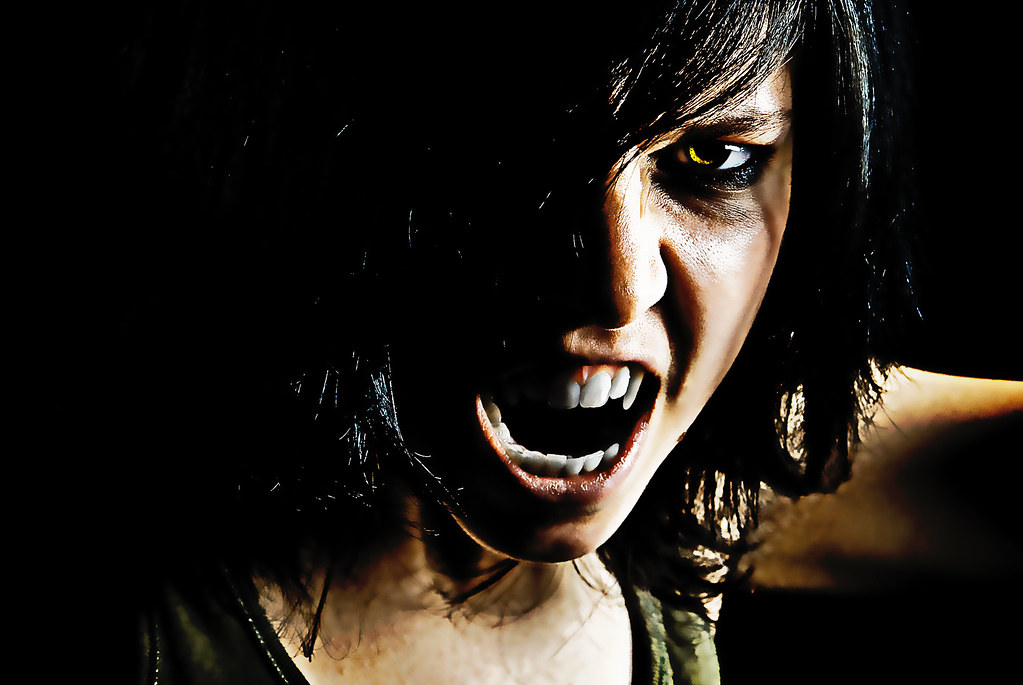
Photo credit: @lattefarsan on Flickr
So next up in the So You Want to Write series, a genre that I quite enjoy and am quickly realizing I don’t read nearly enough of: YA Thrillers.

What is it?

YA Thrillers are fast-paced stories, often (but not always) about either a protagonist who ends up in the sights of a killer or a protagonist who winds up on a dangerous revenge-spree. Either way, there’s bound to be a body count, a ton going on, very high stakes (usually the protagonist’s life) and lots of twists and turns that’ll keep you guessing.

Pros/Cons of Writing YA Thrillers:

Pros:

  • Hasn’t had a major boom (but isn’t dead either). The lack of a major boom thing is actually a pro because it means it’s not oversaturated (or about to be oversaturated). It seems to be selling well enough, best I can tell, so the state of the publishing market shouldn’t be a deterrent. 

  • Fast-paced and very twisty. If you like writing twists and quickly paced books, YA Thrillers may be the sweet spot for you. 

  • High stakes. Personally, I’ve always found high stakes fun to write, and more times than not the protagonist’s life is on the line in YA Thrillers. So again, if that’s something you enjoy writing… :)

Cons:

  • Complicated balance. A big part of Thrillers is to keep the reader guessing, which can often be tricky to write. How do you drop enough clues and red herrings for the ending to make sense without it being obvious? That’s a question you’ll have to navigate carefully as a YA Thriller writer. 

Recommended Reading:

As I have said before and will continue to do so: you must read the genre you write in. It is so important to keep up to date with what’s selling, what’s been written, what’s been overdone, etc. and the best way to do that is to read as much as possible.

Note: Aside from Far From You, I haven’t read any of the below, but they sound great. And they’re YA Thrillers, at any rate.

Helpful Links:


Do you enjoy reading or writing YA Thrillers? Share your experience! 

Twitter-sized bites: 
Thinking about writing YA Thrillers? Writer @Ava_Jae shares some tips, recommendations and more. (Click to tweet
Do you write YA Thrillers? Share your experience at @Ava_Jae’s So You Want to Write series. (Click to tweet)

A Basic Genre Index (Part Two)

So part one of the genre index was a success! And I promised you guys part two, so here it is. I know this doesn’t cover every genre ever (there are wayyyyyyy too many, especially if you go into subgenres and subgenres of subgenres!) but I do think these two posts cover the major ones. I hope.

Enjoy!

Mystery
Photo credit: practicalowl on Flickr


Oftentimes (though not always), these involve a body and figuring out who is behind it. Sometimes it’s many bodies. Often it features the detective (whether an actual detective or someone just taking on the role of detective) trying to solve the case. These tend to be spooky and exciting and usually end with a confrontation between the killer and the protag and sometimes blend with Thrillers. Even when it doesn’t involve a killer though, there is some kind of mysterious circumstance that the protagonist is trying to puzzle out. And the stakes are often high.

Examples: The Good Girl by Mary Kubica, The Cuckoo’s Calling by Robert Galbraith, Vanishing Girls by Lauren Oliver, The Dead Key by D.M. Pulley, All the Little Pieces by Jilliane Hoffman, Charlie, Presumed Dead by Anne Heltzel. (Others)


Historical Fiction
Credit: Sweet Carolina Photography (Flickr)


As the title would suggest, this is fiction that takes place in the past—the real past, that is. (Otherwise you’re talking Historical Fantasy, which is related, but not quite the same.) The past can be anything from BC times to medieval times, to Tudor-era or Regency or something else. Generally, it’s a time period that’s considered historical though, and of course the story that takes place isn’t true.

Examples:
The Help by Kathryn Stockett, The Book Thief by Markus Zusak, Fever 1793 by Laurie Halse Anderson, Atonement by Ian McEwan, The Boy in the Striped Pajamas by John Boyne, The Kite Runner by Khaled Hosseini, Code Name Verity by Elizabeth Wein, To Kill a Mockingbird by Harper Lee, Memoirs of a Geisha by Arthur Golden, The Other Boleyn Girl by Philippa Gregory, The Valley of Amazement by Amy Tan, The Notorious Pagan Jones by Nina Berry, Tangled Webs by Lee Bross. (Others)


Contemporary Romance
Photo credit: Stephen Burch on Flickr


This is romance that takes place today! In our world. With no supernatural creatures or superpowers. Romance is at its heart (as opposed to non-romance Contemporary), and these are stories that could actually happen.

Examples: Trust the Focus and Make It Count by Megan Erickson, Under the Lights by Dahlia Adler, The Summer of Chasing Mermaids by Sarah Ockler, Days Like This by Danielle Ellison, Second Position by Katherine Locke, The Fault in Our Stars by John Green, When We Collided by Emery Lord, The Sound of Us by Ashley Poston, The Night We Said Yes by Lauren Gibaldi, Last Year’s Mistake by Gina Ciocca, Hello, I Love You by Katie M. Stout, The Revenge Playbook by Rachael Allen, To All the Boys I’ve Loved Before by Jenny Han. (Others)

For more info on writing (NA) contemporary romances, check out this post.


Erotica
Photo credit: Bert Werk on Flickr


This is romance that is super steamy and explicit. The focus, here, is the sex. Without the sex, there isn’t a story (unlike most Romances where sex emphasizes the story, but the story wouldn’t fall apart without it, necessarily). If you’re looking for a sexy read that doesn’t spare any details, this is where you want to go.

Examples: Changing His Game by Megan Erickson, Beautiful Bastard by Christina Lauren, Fifty Shades of Grey by E.L. James, Rush by Maya Banks, Up in Smoke by Tessa Bailey, The Best Laid Plans by Tamara Mataya, Strings by Kendall Grey, Crash into You by Roni Loren, The Siren by Tiffany Reisz, Fast, Fresh, and Hot by Eliza Madison. (Others)


Contemporary
Photo credit: Laura4Smith on Flickr


Like Contemporary Romance, these books in our world and could actually happen—the difference is that the romance (if there is one) isn’t necessarily the glue that holds everything together. These books cover other issues that are the point and may or may not have a romantic subplot (versus a romantic main plot). They also tend to be really voice-heavy and memorable for the writing itself.

Examples: I’ll Give You the Sun by Jandy Nelson, Fangirl by Rainbow Rowell, None of the Above by I.W. Gregorio, Made You Up by Francesca Zappia, Tiny Pretty Things by Sona Charaipotra and Dhonielle Clayton, Everything, Everything by Nicola Yoon, Between the Notes by Sharon Huss Roat, Love May Fail by Matthew Quick. (Others)


Magical Realism
Photo credit: martinak15 on Flickr


So this is probably the hardest one to define. The way I understand it, Magical Realism is similar to Contemporary in that it usually takes place in a world very much like our own, but there’s an extra something that couldn’t be real. Maybe the something is a curse, or a chance to re-do your day, or a magical substance in an otherwise normal town. Think of it as Contemporary with a twist—but the twist can’t be so huge that it becomes Paranormal or Fantasy. It’s a fine line.

Examples: Glory O’Brien’s History of the Future by A.S. King, The Status of All Things by Liz Fenton and Lisa Steinke, The Strange and Beautiful Sorrows of Ava Lavender by Leslye Walton, Belzhar by Meg Wolitzer, One Hundred Years of Solitude by Gabriel García Márquez, The Night Circus by Erin Morgenstern, The House of Spirits by Isabel Allende, Landline by Rainbow Rowell, Every Day by David Levithan, Bone Gap by Laura Ruby. (Others)

Twitter-sized bites:
Do you find genres confusing? @Ava_Jae breaks down more common genres in part two of her genre index. (Click to tweet)  
Mystery, Historical Fiction, Magical Realism and more—how well do you know your genres? (Click to tweet)

A Basic Genre Index (Part One)

I frequently talk about genre and category here, and I tend to speak about them in pretty offhanded terms, with the assumption that everyone knows what I’m talking about. I imagine many of you do, but I’m also aware that it’s very likely at least some people don’t. And many could probably use clarification with some labels anyway.

So! I thought I’d create what was supposed to be a mini index of the major genres. Except the post was getting way too long, so I split it into two. Enjoy part one!


Fantasy
Photo credit: .Natty.Dread. on Flickr

Magic, dragons, elves, wizards, witches, portals, fairies, mages—anything goes in a fantasy novel. These books are built off fantastical worlds where the impossible is impossible and where the mythical is reality.

Examples: A Game of Thrones by George R.R. Martin, The Lord of the Rings by J.R.R. Tolkien, Harry Potter by J.K. Rowling, Half Bad by Sally Green, The Witch Hunter by Virginia Boecker, The Queen of Tearling by Erika Johansen, Red Queen by Victoria Aveyard, Throne of Glass by Sarah J. Maas, Shadow and Bone by Leigh Bardugo, The Girl of Fire and Thorns by Rae Carson, Graceling by Kristin Cashore.

For more info on writing fantasy, check out this post. (Others)


Paranormal
Photo credit: gaelx on Flickr


Technically this is a subgenera of fantasy, but it’s so big I thought it merited it’s own category. Paranormal books are a step closer to reality than epic fantasies, but they include supernatural creatures like angels, vampires, fairies, ghosts, werewolves, shapeshifters, etc. Think the TV show Supernatural.

Examples: Twilight by Stephanie Meyer, Ink by Amanda Sun, The Unbecoming of Mara Dyer by Michelle Hodkin, Shiver and The Raven Boys by Maggie Stiefvater, The Coldest Girl in Coldtown by Holly Black, The Diviners by Libba Bray, Paranormalcy by Kiersten White, Hush, Hush by Becca Fitzpatrick, The Immortal Rules by Julie Kagawa. (Others)

For more info on writing paranormal, check out this post


Science Fiction (Sci-Fi)

Photo credit: Scott Smith (SRisonS) on Flickr


Science Fiction is similar to fantasy in that the worlds and situations aren’t real (at the time they are written, at least), but the so-called “fantastical” elements are based in science, rather than magic. The idea here is the made-up stuff could be real, scientifically-speaking. It’s just not real right now.

Examples: Across the Universe by Beth Revis, Salvage by Alexandra Duncan, The 5th Wave by Rick Yancey, The Martian by Andy Weir, The Cage by Megan Shepherd, The Edge of Forever by Melissa E. Hurst, Cinder by Marissa Meyer, These Broken Stars by Amie Kaufman and Meagan Spooner, Alienated by Melissa Landers. (Others)

For more info on writing sci-fi, check out this post


Dystopia

Photo credit: playingdead on Flickr
Dystopian novels are a subgenre of Sci-Fi, but as they’ve gotten pretty huge on their own, it felt important to list them separately. Dystopian novels frequently feature futuristic oppressive governments that are often overthrown at the end of the book. Expect speculative societies with extremely strict rules and characters who unwittingly find themselves at the center of a revolution (though that isn’t always the case).

Examples: Brave New World by Aldous Huxley, Divergent by Veronica Roth, The Hunger Games by Suzanne Collins, The Murder Complex by Lindsay Cummings, Under the Never Sky by Veronica Rossi, The Choosing by Rachelle Dekker, Red Rising by Pierce Brown, Ready Player One by Ernest Cline, The 100 by Kass Morgan, The Selection by Kiera Cass, Shatter Me by Tahereh Mafi, Legend by Marie Lu, Matched by Ally Condie. (Others)

For more info on writing dystopias, check out this post.


Horror

Photo credit: Moyan Brenn on Flickr
These books are written to scare. Or at least creep you out a little. Monsters, murderers, paranormal situations out to get you—these characters usually go through horrifying situations that end in a lot of people dying in terrible ways.

Examples: Rot and Ruin by Jonathan Maberry, Follow You Home by Mark Edwards, Ten by Gretchen McNeil, Sweet by Emmy Laybourne, House by Ted Dekker and Frank Peretti, The Enemy by Charlie Higson, Anna Dressed in Blood by Kendare Blake, Feed by Mira Grant, World War Z by Max Brooks, anything written by Stephen King, The Silence of the Lambs by Thomas Harris. (Others)


Thriller
Photo credit: @lattefarsan on Flickr


Thrillers are similar to horror, but here, it tends to be about a killer going after people (rather than something supernatural). Sometimes the two blend a little, but these are exciting, fast-paced novels where the threat of death is a constant.

Examples: Hushed by Kelley York, Gone Girl by Gillian Flynn, Black Iris by Leah Raeder, Luckiest Girl Alive by Jessica Knoll, Thr3e and Adam by Ted Dekker, The Girl on the Train by Paula Hawkins, The Devil You Know by Trish Doller, Delicate Monsters by Stephanie Keuhn, The Rules by Nancy Holder and Debbie Viguié. (Others)


Humor

Photo credit: Arnett Gill on Flickr
These books are funny. The point is to tell a story that makes you laugh quite a bit. These are often written by celebrities, and when they’re not they tend to also cross into other genres. So yes.

Examples: Me Talk Pretty One Day by David Sedaris, Yes Please by Amy Poehler, Is Everyone Hanging Out Without Me? (And Other Concerns) by Mindy Kaling, Beauty Queens by Libba Bray, Me and Earl and the Dying Girl by Jesse Andrews, Denton’s Little Deathdate by Lance Rubin, Hyperbole and a Half: Unfortunate Situations, Flawed Coping Mechanisms, Mayhem, and Other Things That Happened by Allie Brosh. (Others)

So that’s just the first part! I’ll finish part two for you guys shortly. :)

UPDATE (7/24/15): Part two is live!

Twitter-sized bite:
Do you find genres confusing? @Ava_Jae breaks down some of the most common genres in today's post. (Click to tweet

Vlog: What Genre is Your WIP?

50th vlog!! Figuring out what genre and category your work in progress is can sometimes be tricky, but here are some tips.


RELATED LINKS:


What tips do you have for figuring out what genre and category your WIP is? 

Twitter-sized bite: 
Do you know what genre & category your WIP is? @Ava_Jae vlogs some steps to help identify it. (Click to tweet)

Vlog: Genre vs. Category

Today I'm clarifying two frequently used pub/book world terms: genre and category. They're not the same!


RELATED LINKS: 


What other differences between genre vs. category would you add to the list? 

Twitter-sized bites: 
Not sure what the difference is between genre and category? Writer @Ava_Jae breaks it down in her vlog. #pubtip (Click to tweet)  
In today's vlog, @Ava_Jae says genre and category are not the same. What do you think? (Click to tweet)

On Writing in Multiple Genres

Photo credit: martinak15 on Flickr
As many of you know, my debut Beyond the Red is a YA Sci-Fi. What less of you know, is the book I just recently sent off to my agent is a NA Paranormal, and the book I’m revising now is a YA Fantasy. I also have a YA Paranormal in the drawer that I hope to one day revive, though whether or not that’ll happen remains to be seen. 

Basically, what I’m trying to say is I write in several categories and genres.

Oftentimes, I’ve come across posts about creating an author brand. The examples given usually involve authors who specialize in a single genre, and I’ve seen some (but definitely not all) insinuate that it’s in an author’s best interests to focus on a single, cohesive audience.

I totally get that, and I’m not trashing that strategy. I think it can be a totally viable, and strong strategy for genre authors, like Sarah Dessen, Gayle FormanJodi Picoult and John Green, for example. You know exactly what kind of book to expect from those authors, and their fans are indisputably loyal.

All of this talk of branding, however, sometimes gets interpreted to mean that authors can’t (or shouldn’t) write in multiple genres. And I don’t think that’s quite true.

While I think the strategy for an author who writes in multiple genres is naturally going to be different than an author who focuses on one (including the fact that not all fans of author genre A will read author genre B), that doesn’t mean that an author can’t be successful writing in multiple genres and categories.

Of course, I’m a little biased, so let me give some examples:


All of these authors have published (or have book deals) in multiple genres and/or categories, and I’m sure there are loads more—these are just the ones I was able to think of quickly.

It’s not often discussed, but I think especially today, writing in multiple categories and genres is becoming increasingly more common. Which, for writers who love writing in different genres and categories, is possibly the best news ever.

So whether you write in one genre or five, I encourage you to write whatever your heart desires. After all, ultimately, it’s not the genre or the category that sells a book—it’s the passion behind the story itself.

What do you think? Is it smart for writers to write in multiple genres or categories?  

Twitter-sized bites: 
Is it smart for authors to write in multiple categories or genres? Writer @Ava_Jae weighs in her thoughts. (Click to tweet
Do you think writers should write in multiple categories or genres? Join the discussion on @Ava_Jae's blog. (Click to tweet)

So You Want to Write YA Dystopian?

Photo credit: mithrandir3 on Flickr
What is it? 

According to dictionary.com, a dystopia is “a society characterized by human misery, as squalor, oppression, disease, and overcrowding.”

If YA Dystopian novels are to be believed, dictionary.com is pretty on the money.

Oppressive (and usually horrible) governments, revolution, disease, poverty, strict laws and an all around unhappy (or soon to be unhappy) society are all markers of dystopian novels. Though that’s really just a sampling of dystopian issues.

Note: Post-apocalyptic and Dystopian novels are not always the same thing. Some Dystopian novels do indeed happen after an apocalypse (making them Post-apocalyptic as well), but not all Dystopian novels are Post-apocalyptic and not all Post-apocalyptic novels are Dystopian as well.

Pros/Cons of Writing YA Dystopian: 

Pros: 

  • Insta-conflict. The great thing about Dystopian novels is conflict is a given—it’s literally built into the society and the setting, so all you need are some captivating characters with a little push to get things going. This means most Dystopian novels make for very exciting reads (and, as it happens, really fun writing experiences).

  • Typically fast-paced. Like I said in the previous point, YA Dystopian novels tend to be pretty exciting to read and write. There’s usually quite a bit of action and the stakes are often hugenormous  with dire consequences if the protagonist fails.

  • Play with worst-case scenarios. So many Dystopian novels are based off What If? scenarios and expanded to extremes. These can be really fun to play with when brainstorming and writing, as characters in extreme circumstances are usually pretty enjoyable to write and read. 

Cons:

  • Extremely tough market. Like YA Paranormal, YA Dystopian, unfortunately is currently a dead genre. As I said when explaining YA Paranormal, that doesn’t mean it’s impossible to sell a YA Dystopian novel right now—it just means it’s extremely difficult due to a seriously overcrowded market.

  • A lot’s already been done (several times over). This is related to the first con, but because the market is so overcrowded and there are so many YA Dystopian novels out there, that means there’s very little out there in the Dystopian world that hasn’t already been done to death. That being said, just because it’s already been done doesn’t mean you can’t write it—it just means you need to make yours unique and amazing in a different way.

  • Lots of worldbuilding. If you like worldbuilding, this isn’t really a bad thing, but it is good to keep in mind. While you’re not necessarily making a world up from scratch like you might in a High Fantasy novel, you are still building a world that doesn’t exist—a world with laws and expectations and a culture unlike our own. 

Recommended Reading: 

I say this every time, and I will continue to do so: you must read the genre you write in. No really. You do.

Knowing your category and genre is key to adding something meaningful to the market. So do yourself a favor and read up on some of these fabulous book. (Caveat: I haven’t read all of these, but I’ve heard good things about the ones I haven’t read).


Helpful Links: 

Do you enjoy reading or writing YA Dystopian novels? Share your experience!

Twitter-sized bites: 
Thinking about writing YA Dystopian novels? Writer @Ava_Jae shares some tips, recommendations and more. (Click to tweet)   
Do you write YA Dystopian novels? Share your experience at @Ava_Jae’s So You Want to Write series. (Click to tweet

So You Want to Write YA Paranormal?

Photo credit: alandberning on Flickr
What is it? 

Angels, demons, fairies, occult, vampires, werewolves, witches, shapeshifters, grim reapers, ghosts and just about anything else that’s not quite human are all within the paranormal realm.

A few exceptions include aliens, which are Sci-Fi, and Greek gods, which tend to be viewed as mythology/fantasy. Oftentimes, there’s a romance involved (though that’s not mandatory) and there’s nearly always tons of action—which is part of the reason I love it so much. :)

Pros/Cons of Writing YA Paranormal: 

Pros: 

  • Tons of variety. When most people think of paranormal, they tend to jump straight to vampires, but that’s just one option available in this huge world that is YA Paranormal. The list I had above include just some of the options available to paranormal writers—the possibilities really are endless. For example, one of my CPs wrote a pretty awesome YA Paranormal about Dreamcatchers who fight Nightmares, which is releasing later this year—like I said, there are loads of possibilities. 

  • Everyday life with a (huge) twist. This is the other part of paranormal novels that I adore—more times than not, the books are set up so that it seems like our everyday world, except for this often hidden element of whatever flavor of paranormal the book has. Many paranormal books even operate under the assumption that the paranormal aspect is there, but most people don’t know about it, which I personally love, because it allows me to imagine that paranormal stuff operates IRL. 

  • Exciting reads. Paranormal books tend to have pretty exciting plots, because the element that makes them paranormal also tends to be rather dangerous. If you like to write fast-paced novels, YA Paranormal definitely qualifies. 

Cons: 

  • Very tough market. I’ve already written about dead genres here, so I won’t go into that again, but YA Paranormal is very much considered a dead genre. That doesn’t mean it’s impossible to sell or find representation for a YA Paranormal manuscript, but it’s definitely tough. If you have a great idea for a YA Paranormal manuscript, however, I don’t think this should deter you from writing it—it’s just good to be aware of the state of the market. 

  • Some stigma. The whole Twilight effect is still in play with paranormal, so many people tend to automatically equate YA Paranormal with Twilight and make judgments. This is especially true if your book has vampires or werewolves (which is a shame, because there are plenty of awesome vampire novels out there). Again, this shouldn’t deter you if you’re passionate about YA Paranormal, but chances are you’ll encounter this when you tell people what you write. 

Recommended Reading: 

As I’ve said before, reading in the genre you’re writing is not optional. No really.

Note: While I haven’t read all of these, the ones I haven’t read I either want to read, have heard good things about, or were rating highly on Goodreads (or all three).


For more books, Goodreads has a whole section dedicated to paranormal books, with breakdowns for each category (angels, ghosts, werewolves, etc.) and a list dedicated solely to YA Paranormal

Helpful Links: 


Do you enjoy reading or writing YA Paranormal? Share your experience! 

Twitter-sized bites: 
Thinking about writing YA Paranormal? Writer @Ava_Jae shares some tips, recommendations and more. (Click to tweet
Do you write YA Paranormal? Share your experience at @Ava_Jae's So You Want to Write series. (Click to tweet)

On Writing Dead Genres

Photo credit: anne symons on Flickr
So this is a purely 100% opinionated post. I’m not the final word on this topic (or any topic, for that matter), nor will I pretend to be. These are just my thoughts, pure and simple.

Okay? Okay.

So once upon a time I wrote a couple YA Paranormal manuscripts. Six, to be exact, though some of them could maybe fit under other sub genres, too. Not the point.

Point is, out of those six manuscripts, one of them I fell so totally in love with. That’s not to say I didn’t like the others—I did and still have hopes for some of them—but this one manuscript I spent years refining. I wrote it and rewrote it and changed POVs and switched out characters and doubled the length and you guys, it was the best thing I’d written at the time. My CPs loved it, I loved it and I was really hoping it’d be The One.

Except it wasn’t the one. It garnered a little interest (meaning that one fabulous small press showed interest, but alas passed in the end). And that was it. No partial requests, definitely no full requests, just years of rejection letters and disappointments.

Looking back, I’m happy all of that happened, but this post isn’t about that. This post is about dead genres.

Like YA Dystopian, YA Paranormal is still largely considered a dead genre—meaning, it’s a genre that was over-saturated to the point of drowning and now is extremely difficult to break into. Not impossible, mind you (in fact, one of my lovely CPs found and agent and sold her YA Paranormal MS the same time I was looking for representation for mine), but really crazy difficult. Because most editors have seen enough YA Paranormal to last them a rather long time, so selling YA Paranormal or Dystopian manuscripts is very difficult, which means finding representation for those genres is equally difficult.

This is why people in the publishing world often advise writers seeking traditional publication not to write to trends. Because unfortunately, the time between a manuscript being sold and ending up on the shelves often takes years, so by the time a writer sees a trend, writes it, finds representation, gets it sold and the release date arrives, that trend is way long gone.

That doesn’t mean, however, that if you adore YA Paranormal or Dystopia (or any dead genre, for that matter), that you shouldn’t write it.

I don’t regret that time I spent working on that manuscript that I had to put away. I learned so so much from it, and I still hope one day to be able to share it with the world.

But I’m not going to pretend that it was an easy experience to get over.

I will forever and always advocate that writers write what they want to read (and, for that matter, want to write), and if that’s another Paranormal or Dystopian or otherwise difficult genre, more power to you. Write it, make it awesome and don’t be afraid to dream.

But at the same time, it’s good to be aware of the market and know if you’re trying to break into an especially crowded area. It’s good to know that you love your manuscript, but maybe things are really tough right now for that genre, and you might have to put it away for a time. It’s good to try anyway and hope for the best, but in the meantime, consider working on another project. Because what you’re doing is tough, and it’s only tougher if you don’t have another manuscript dream about and hope for.

Agent Sarah LaPolla gave some very relevant and concise advice couple days ago:
So if you’re writing in a dead genre, I think it’s awesome and brave and if that’s what you love, then keep at it. But make sure you’re open-minded when considering future projects and always always keep a close eye on the market, so at the very least, you know where you stand.

What do you think? Have you ever written in a dead genre?

Twitter-sized bites:
What are dead genres and how do they affect writers? @Ava_Jae shares her thoughts on this publishing phenomenon. (Click to tweet)  
Writers, have you ever written a dead genre MS? Share your experience at @Ava_Jae's blog. (Click to tweet)

How to Determine Your WIP's Genre

Photo credit: Send me adrift. on Flickr
Oftentimes, I’ve seen agents talk about receiving queries for manuscripts pitched with three or more genres, which is a problem because it shows that the writer isn’t really sure what the genre is.  

Determining your genre can, at times, be tricky, especially if your WIP has crossover elements (that is, elements that would appeal to other genres or categories). But long before you begin querying, it’s very important that you have a solid grasp on what your WIP’s genre and category are.

That being said, here are some steps to take when determining your manuscript’s genre and category.

  1. Understand the difference between genre and category. Genre and category are not words that can be used interchangeably—they refer to two very different categorical labels.

    A book’s genre refers to the type of subject matter, that is, Fantasy, Contemporary, Adventure, Thriller, Horror, Sci-Fi, etc. Within a genre there are sub genres—Paranormal Fantasy, Urban Fantasy, Space Opera, Dystopia, Steampunk, etc.

    The category, on the other hand, refers to the age group, such as Picture Book, Middle Grade, Young Adult, New Adult and Adult. Within each category is a wide range of genre possibilities—Middle Grade Adventure, Young Adult Sci-Fi, New Adult Paranormal, Adult Thriller, etc. For your WIP’s purposes, you’ll want to know the category and genre (or subgenre, if applicable). One of each. There’s no such thing as a Middle Grade Young Adult Adventure Contemporary Romance Fantasy. Got it? Ok.

    For a slightly more detailed look at category vs. genre, take a look at this post.

  2. Narrow down to whatever genres you think your WIP might be. If you’re going through this process, it’s because you’re not entirely sure what genre or category fits your book best. That’s ok, like I said, it can be tricky sometimes. Write down whatever genres and/or categories you think may fit your book, then move on to the next step. 

  3. Get to know those genres/research. This is the step that will take the longest. The only way to really determine what genre best fits your manuscript is to get to know those genres. Read books in the genres you’re considering, get to know the tropes that exist within the genres and do some research online. Read, research, repeat until you’re comfortable with the genres. 

  4. Ask yourself, “Which genre is closest to my manuscript?” Now this, to me, is the trickiest step. The thing is, there’s a lot of variety within every genre. For example, the Twilight series is extraordinarily different from The Coldest Girl in Coldtown, even though both are YA Paranormal dealing with vampires—and both are markedly different from Ink, which is still Paranormal but doesn’t have any vampires at all. Matched is not the same as The Hunger Games even though both are YA Dystopias and Across the Universe is very different from The 5th Wave even though both are YA Sci-Fi.

    The key is not to look at every element your WIP has. Just because there’s romance doesn’t mean you’ve written a Romance novel, and just because you’ve written a futuristic Sci-Fi novel doesn’t mean you’ve written a Dystopia.

    What you want to focus on is what the main elements of your WIP are and decide what genre best embodies those elements. The Shatter Me series, for example, has many paranormal elements, but the prevailing main element is fighting the oppressive Reestablishment, which is a dystopian-type government in a very dystopian setting, and thus is mainly categorized as a Dystopian novel. The Mortal Instruments series has vampires, werewolves, fairies, etc. but is categorized as Urban Fantasy because of it’s very urban NYC-setting. Across the Universe has a heavy mystery element, but is categorized as Sci-Fi because the main elements involve a spaceship and technological advances like long-term space travel and cryogenics. 

If your WIP has crossover appeal, that’s definitely not a bad thing, but it’s not an excuse to slap three or four genres on your manuscript, either. Choose the category and genre that fits your manuscript best and let your book (and the summary of your book) reveal the rest.

Have you had difficulty determining a category or genre for your manuscript or a book you’ve read? How did you figure it out? 

Twitter-sized bites: 
“If your WIP has crossover appeal…it’s not an excuse to slap three or four genres on your MS…” (Click to tweet)  
Struggling to determine your WIP’s category or genre? Writer @Ava_Jae shares four steps to figuring out your genre. (Click to tweet

YA: It’s Not a Genre

Photo credit: ginnerobot on Flickr
I imagine the title of this post may have some lovers of Young Adult novels arriving with pitchforks and calling down fire and brimstone from the heavens, but hold your horses, because it’s not what you think.

Anyone who so much as peeks at my Goodreads shelf can see that I love YA. Out of the fourteen books I’ve read thus far this year, eight of them were YA novels, and out of the twenty-one I read last year, fourteen were YA. I also love writing YA, and the first thing I do upon walking into Barnes & Noble is beeline it over to the Teen section, so I think it goes without saying that I’m a YA junkie. (It’s not a problem. I can stop whenever I want to—I just don’t want to).

So when I say that YA isn’t a genre, I’m not trying to insult anyone, or somehow degrade the wonderful world that is YAtopia. I’m actually talking technicalities.

YA, like MG, Adult, and I suspect NA as well (although that’s another post all on its own), are all categories. They describe a target audience and expectations of general themes threaded throughout the books. For YA, that means a protagonist between the ages of thirteen and seventeen, and a sort of coming-of-age theme, to start. That’s a super simplified version, and there’s more to YA, but for the sake of not drowning you in information, let’s leave it at that.

Within each of those categories, there are then genres: Sci-Fi, Fantasy, Romance, Contemporary, Horror, Historic, Thriller, Mystery, etc. And within those genres, there are sub-genres: dystopia, epic fantasy, paranormal romance, urban fantasy, contemporary romance, regency, post-apocalyptic, psychological thriller, the list goes on.

All of the books within those genres share close similarities; all paranormal romance involve some sort of creature or supernaturally-enabled love interest; dystopias involve some sort of future society, usually with an extremely controlling (and often evil) governmental system; epic fantasy involves swords and horses, and occasionally magic and otherwise magical creatures.

But within the category of YA, the books are markedly different. The Fault in Our Stars is nothing like The Hunger Games, and Graceling is nowhere near similar to City of Bones. What brings them together is the general age group of the protagonists and the coming-of-age theme woven throughout their respective stories. But they’re certainly not the same genre.

So those are my thoughts on the categorization of the wonderful realm that is YA, but now I want to hear from you: do you consider MG, YA or Adult a genre? Why or why not? 

Twitter-sized bites: 
Is YA a category or a genre? One writer shares her thoughts on the matter. (Click to tweet
Are MG, YA and Adult genres? Join the discussion at @Ava_Jae's blog. (Click to tweet)

When Writing, Cannibalize Everything

Photo credit: Jody Art on Flickr
It happened again! One of you fabulous readers (thank you, Robin) asked a question I haven’t yet answered that I thought most certainly merited a post (yay!). The question was this:
“I read your post about reading what you write, and coming to love your genre. So I was wondering, what if one incorporates other genres and mediums? One of my WIPs is a YA-fantasy adventure with a lot of fairytale elements, but I've taken what I learned reading horror (mostly of Poe) to create dread in my story, and I've paid attention to cinematic techniques seen in films by Studio Ghibli to create an endearing and living world. What is your perspective on cross-referencing genres and mediums?”
I’m sure most of you have heard that you should write what you know. While I partially agree with that (more on that topic some other time), I think it applies especially well when referencing incorporating what you have learned from creative mediums, whether writing, movies, music, etc. You see, I’ve written in the past about why it’s so important for writers to be well-read, and this question right here is one of the many reasons why.

While I tend to read a lot of YA and some MG novels, within those age groups I read from various genres: paranormal fantasy, straight fantasy, sci-fi, dystopian, etc. And from every book that I’ve read, regardless of the genre, I’ve learned something—whether it’s the importance of voice, or including poetry in prose, or what a good opening and memorable characters look like. And when I write and revise, I make a point to look back on those lessons and continue to learn new ones from whatever books I read throughout the course of the year.

One of the most important tasks a writer has is to absorb everything possible—what rain feels like in November when you’ve forgotten an umbrella, how that movie gave you the chills, why that book was so gripping that you stayed up until three in the morning on a work night to finish it, how that song makes you pause every time it comes up on your playlist. Nothing is sacred to the writer—not that terrible cut that required stitches, or your first kiss, or the first time you laid eyes on your newborn. Writers make note of and store their experiences for writing reference later on.

In short, writers cannibalize everything. Or at least, they should. And when it comes to genre, I don’t believe it’s any different.

Let’s think for a moment: when is the last time you read a book or watched a movie that was 150% one genre? Nearly every non-romance genre has some sort of romantic subplot (even The Lord of the Rings which is as straight fantasy as it gets has romance) and many non-mystery novels have some sort of mysterious intrigue and so on. Don’t believe me? Let’s take a look at a couple novels.

  • Across the Universe by Beth RevisAcross the Universe is undoubtedly a YA Sci-Fi novel, but it certainly cross-references other genres as well, the most obvious of which include a romantic subplot and murder mystery. That doesn’t make it a mystery or romance novel, but it still has elements of those genres. To further draw a point, it’s listen on Amazon under “Teens > Mysteries” and at Barnes & Noble.com under “Teens- Romance & Friendship” and “Teens- Science Fiction.” 

  • The Fault in Our Stars by John Green—I would have thought that The Fault in Our Stars would be listed under YA Contemporary, but I’ve found that it is often listed under romance. Regardless, it has elements of romance, realistic fiction, humor and even tragedy. That doesn’t mean you’re going to find it in the Humor section at Barnes & Noble (if you do, it’s been terribly misplaced), but you can’t deny that elements of those genres exist within the novel. It’s listed on Amazon under “Teens > Love & Romance” and at Barnes & Noble.com under “Teens: Realistic.” 

Just two examples of many, but the point is this: genre is rarely cut and dry and you certainly shouldn’t be afraid of drawing from absolutely everything you’ve learned along the way. Your writing will be better for it.

How do you pull from other genres, mediums and experiences in your work? What multi-genre novels can you think of as examples?
Related Posts Plugin for WordPress, Blogger...