Showing posts with label dystopia. Show all posts

A Basic Genre Index (Part One)

I frequently talk about genre and category here, and I tend to speak about them in pretty offhanded terms, with the assumption that everyone knows what I’m talking about. I imagine many of you do, but I’m also aware that it’s very likely at least some people don’t. And many could probably use clarification with some labels anyway.

So! I thought I’d create what was supposed to be a mini index of the major genres. Except the post was getting way too long, so I split it into two. Enjoy part one!


Fantasy
Photo credit: .Natty.Dread. on Flickr

Magic, dragons, elves, wizards, witches, portals, fairies, mages—anything goes in a fantasy novel. These books are built off fantastical worlds where the impossible is impossible and where the mythical is reality.

Examples: A Game of Thrones by George R.R. Martin, The Lord of the Rings by J.R.R. Tolkien, Harry Potter by J.K. Rowling, Half Bad by Sally Green, The Witch Hunter by Virginia Boecker, The Queen of Tearling by Erika Johansen, Red Queen by Victoria Aveyard, Throne of Glass by Sarah J. Maas, Shadow and Bone by Leigh Bardugo, The Girl of Fire and Thorns by Rae Carson, Graceling by Kristin Cashore.

For more info on writing fantasy, check out this post. (Others)


Paranormal
Photo credit: gaelx on Flickr


Technically this is a subgenera of fantasy, but it’s so big I thought it merited it’s own category. Paranormal books are a step closer to reality than epic fantasies, but they include supernatural creatures like angels, vampires, fairies, ghosts, werewolves, shapeshifters, etc. Think the TV show Supernatural.

Examples: Twilight by Stephanie Meyer, Ink by Amanda Sun, The Unbecoming of Mara Dyer by Michelle Hodkin, Shiver and The Raven Boys by Maggie Stiefvater, The Coldest Girl in Coldtown by Holly Black, The Diviners by Libba Bray, Paranormalcy by Kiersten White, Hush, Hush by Becca Fitzpatrick, The Immortal Rules by Julie Kagawa. (Others)

For more info on writing paranormal, check out this post


Science Fiction (Sci-Fi)

Photo credit: Scott Smith (SRisonS) on Flickr


Science Fiction is similar to fantasy in that the worlds and situations aren’t real (at the time they are written, at least), but the so-called “fantastical” elements are based in science, rather than magic. The idea here is the made-up stuff could be real, scientifically-speaking. It’s just not real right now.

Examples: Across the Universe by Beth Revis, Salvage by Alexandra Duncan, The 5th Wave by Rick Yancey, The Martian by Andy Weir, The Cage by Megan Shepherd, The Edge of Forever by Melissa E. Hurst, Cinder by Marissa Meyer, These Broken Stars by Amie Kaufman and Meagan Spooner, Alienated by Melissa Landers. (Others)

For more info on writing sci-fi, check out this post


Dystopia

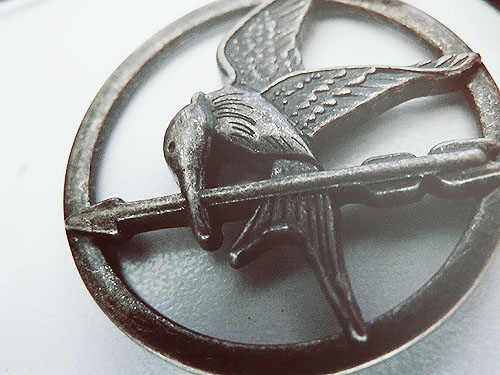
Photo credit: playingdead on Flickr
Dystopian novels are a subgenre of Sci-Fi, but as they’ve gotten pretty huge on their own, it felt important to list them separately. Dystopian novels frequently feature futuristic oppressive governments that are often overthrown at the end of the book. Expect speculative societies with extremely strict rules and characters who unwittingly find themselves at the center of a revolution (though that isn’t always the case).

Examples: Brave New World by Aldous Huxley, Divergent by Veronica Roth, The Hunger Games by Suzanne Collins, The Murder Complex by Lindsay Cummings, Under the Never Sky by Veronica Rossi, The Choosing by Rachelle Dekker, Red Rising by Pierce Brown, Ready Player One by Ernest Cline, The 100 by Kass Morgan, The Selection by Kiera Cass, Shatter Me by Tahereh Mafi, Legend by Marie Lu, Matched by Ally Condie. (Others)

For more info on writing dystopias, check out this post.


Horror

Photo credit: Moyan Brenn on Flickr
These books are written to scare. Or at least creep you out a little. Monsters, murderers, paranormal situations out to get you—these characters usually go through horrifying situations that end in a lot of people dying in terrible ways.

Examples: Rot and Ruin by Jonathan Maberry, Follow You Home by Mark Edwards, Ten by Gretchen McNeil, Sweet by Emmy Laybourne, House by Ted Dekker and Frank Peretti, The Enemy by Charlie Higson, Anna Dressed in Blood by Kendare Blake, Feed by Mira Grant, World War Z by Max Brooks, anything written by Stephen King, The Silence of the Lambs by Thomas Harris. (Others)


Thriller
Photo credit: @lattefarsan on Flickr


Thrillers are similar to horror, but here, it tends to be about a killer going after people (rather than something supernatural). Sometimes the two blend a little, but these are exciting, fast-paced novels where the threat of death is a constant.

Examples: Hushed by Kelley York, Gone Girl by Gillian Flynn, Black Iris by Leah Raeder, Luckiest Girl Alive by Jessica Knoll, Thr3e and Adam by Ted Dekker, The Girl on the Train by Paula Hawkins, The Devil You Know by Trish Doller, Delicate Monsters by Stephanie Keuhn, The Rules by Nancy Holder and Debbie Viguié. (Others)

Humor

Photo credit: Arnett Gill on Flickr
These books are funny. The point is to tell a story that makes you laugh quite a bit. These are often written by celebrities, and when they’re not they tend to also cross into other genres. So yes.

Examples: Me Talk Pretty One Day by David Sedaris, Yes Please by Amy Poehler, Is Everyone Hanging Out Without Me? (And Other Concerns) by Mindy Kaling, Beauty Queens by Libba Bray, Me and Earl and the Dying Girl by Jesse Andrews, Denton’s Little Deathdate by Lance Rubin, Hyperbole and a Half: Unfortunate Situations, Flawed Coping Mechanisms, Mayhem, and Other Things That Happened by Allie Brosh. (Others)

So that’s just the first part! I’ll finish part two for you guys shortly. :)

UPDATE (7/24/15): Part two is live!

Twitter-sized bite:
Do you find genres confusing? @Ava_Jae breaks down some of the most common genres in today's post. (Click to tweet

So You Want to Write YA Dystopian?

Photo credit: mithrandir3 on Flickr
What is it? 

According to dictionary.com, a dystopia is “a society characterized by human misery, as squalor, oppression, disease, and overcrowding.”

If YA Dystopian novels are to be believed, dictionary.com is pretty on the money.

Oppressive (and usually horrible) governments, revolution, disease, poverty, strict laws and an all around unhappy (or soon to be unhappy) society are all markers of dystopian novels. Though that’s really just a sampling of dystopian issues.

Note: Post-apocalyptic and Dystopian novels are not always the same thing. Some Dystopian novels do indeed happen after an apocalypse (making them Post-apocalyptic as well), but not all Dystopian novels are Post-apocalyptic and not all Post-apocalyptic novels are Dystopian as well.

Pros/Cons of Writing YA Dystopian: 

Pros: 

  • Insta-conflict. The great thing about Dystopian novels is conflict is a given—it’s literally built into the society and the setting, so all you need are some captivating characters with a little push to get things going. This means most Dystopian novels make for very exciting reads (and, as it happens, really fun writing experiences).

  • Typically fast-paced. Like I said in the previous point, YA Dystopian novels tend to be pretty exciting to read and write. There’s usually quite a bit of action and the stakes are often hugenormous  with dire consequences if the protagonist fails.

  • Play with worst-case scenarios. So many Dystopian novels are based off What If? scenarios and expanded to extremes. These can be really fun to play with when brainstorming and writing, as characters in extreme circumstances are usually pretty enjoyable to write and read. 

Cons:

  • Extremely tough market. Like YA Paranormal, YA Dystopian, unfortunately is currently a dead genre. As I said when explaining YA Paranormal, that doesn’t mean it’s impossible to sell a YA Dystopian novel right now—it just means it’s extremely difficult due to a seriously overcrowded market.

  • A lot’s already been done (several times over). This is related to the first con, but because the market is so overcrowded and there are so many YA Dystopian novels out there, that means there’s very little out there in the Dystopian world that hasn’t already been done to death. That being said, just because it’s already been done doesn’t mean you can’t write it—it just means you need to make yours unique and amazing in a different way.

  • Lots of worldbuilding. If you like worldbuilding, this isn’t really a bad thing, but it is good to keep in mind. While you’re not necessarily making a world up from scratch like you might in a High Fantasy novel, you are still building a world that doesn’t exist—a world with laws and expectations and a culture unlike our own. 

Recommended Reading: 

I say this every time, and I will continue to do so: you must read the genre you write in. No really. You do.

Knowing your category and genre is key to adding something meaningful to the market. So do yourself a favor and read up on some of these fabulous book. (Caveat: I haven’t read all of these, but I’ve heard good things about the ones I haven’t read).


Helpful Links: 

Do you enjoy reading or writing YA Dystopian novels? Share your experience!

Twitter-sized bites: 
Thinking about writing YA Dystopian novels? Writer @Ava_Jae shares some tips, recommendations and more. (Click to tweet)   
Do you write YA Dystopian novels? Share your experience at @Ava_Jae’s So You Want to Write series. (Click to tweet

Will Print Books Become Obsolete?

Photo credit: shutterhacks on Flickr
After reading a particularly interesting NPR article on why we should stop having e-book vs. print book arguments, and a post from agent Rachelle Gardner on what will happen to book signings in the age of e-books, it has occurred to me that it's not so far-fetched to think that one day, print books may indeed become obsolete. That's not to say that it's particularly likely that it'll happen any time soon or that we should all brace for the book apocalypse, but it's something, I think, that we need to increasingly consider a possibility.

Now, imagining a world without print books is, for some people, not far removed from imagining some sort of horrific dystopia. A world without print books is a world without bookstores—a world without a new book smell, or the crinkle of turning pages, or the subtle yellow tint of an aged book.

A world without print books is a world without real, physical bookshelves—except in the homes of those old-fashioned book collectors who scour the web for a limited-edition print copy of their favorite novels.

A world without print books is a world where everyone must charge their e-readers at night or else risk not being able to read the next day due to a low battery. It's a world where no one can know what you're reading just by glancing at the spine in your lap, a world where book signings, indeed, become a tad more complicated.

Note that I did not say a world without print books is a world without reading or a world without authors.

You see, because a world without print books is something else, too—it's a world where children don't have to lug twenty-pound book bags to school or must use textbooks that are falling apart because it's too expensive to replace them or even must hide what they read because what would their classmates think if boys were caught reading girly books or vice versa?

A world without print books still has, ironically enough, print books on the market—they're just harder to come by and a tad more expensive. Owning a print copy of your favorite novel isn't commonplace—it's special. It means you took the time to get your hands on a limited-edition print copy, it means you are one of those slightly eccentric and mostly archaic book collectors (which is a title, I'm sure, that you wear proudly).

Yes, it's painful to imagine the closing of bookstores or the diminishing of book signing events and it's hard to look at our bookshelves and think that those paper things we took for granted all those years may one day be much more difficult to come by.

But just as people continued to listen to music long after the digital revolution in the music industry, people will continue to read and authors will continue to write. The written word will still be out there, and those stories we've learned to fall in love with will continue to be created and published—and really, isn't that the point?

Let me get this straight: I love print books just as much as any other book collector—I love adding books to my shelf and seeing those beautiful, colorful spines line up neatly next to each other as much as the next person. I love the new book smell, I love the feeling of turning the pages and looking at the texture of the page and how the text was laid out and even how the font that the publisher chose fits with the tone of the novel.

I love all of those things, and it's sad to think of a world where those nuances will no longer be appreciated.

But a world without print books is not the end of the world. There will always be something to read, new stories to immerse ourselves into and new characters to fall in love with.

I hope not to live to see a print-book-free world, but if I do, I guess I'll be one of those crazy book-collector types who hunt down those special limited-edition print copies like it's nobody's business. And I guess I'll proudly add it to my bookshelf while the younger members of my family roll their eyes at me.

Because although print books may one day become obsolete, they will never lose their place in our hearts. 

Dystopia: The New Vampire?

With the last Twilight movies on the horizon and mounting hype over upcoming movies like The Hunger Games and Divergent, many are left wondering if dystopia is the new vampire.

For those of you who don’t know, here’s a quick definition of dystopia from dictionary.com:

dys·to·pi·a
   [dis-toh-pee-uh
–noun
a society characterized by human misery, as squalor, oppression,disease, and overcrowding.

— n
an imaginary place where everything is as bad as it can be

[C19 (coined by John Stuart Mill ): from dys-  + Utopia ]

In summary, it’s the opposite of utopia. And its increasing popularity is more than evident on the shelves.

So in the sense that vampires are slowly going out of fashion and dystopia is building quite the fan base, I’d say that yes dystopia is the new vampire. However. HOWEVER. There is an enormous difference between the two genres that I think will set dystopia apart from the vampire craze that flooded bookstores not that long ago.

Before I go on, I want to say first and foremost that I’m not dissing any vampire novels. They had (and some still do) a huge following and it appealed to a large base of particularly excitable pre-teens and teenagers who snatched up more than a few of them. They were entertaining and people liked them, which is why they became popular in the first place.

So I give Twilight and the rest of the vampire books out there a lot of credit. They caught onto something that really resonated with people.

The only bone I have to pick with vampire novels is that a lot of them are the same. I’m not saying they all have the same plot (that would be an unfair generalization) but the vast majority of vampire books I glanced at in the bookstores went something like this: girl meets boy. Boy (sometimes girl) is a vampire. Boy loves girl but is afraid to hurt her. Girl thinks boy is mysterious and doesn’t care about the danger. TENSION.

Entertaining? Absolutely. But I got a little tired of it pretty quickly.

And that’s where dystopian is different. Whereas there was only so much you could do with a vampire story, a large range of dystopian novels are emerging. What makes dystopian different is that each story has a different society. Every novel has new challenges and new obstacles to overcome. Are there similarities? Of course, but there’s potential for a lot of variety.

For example: The Hunger Games by Suzanne Collins (c’mon, I couldn’t write a post about dystopian novels without mentioning The Hunger Games at least twice). Basic plot involves a competition in which two teenagers from each of the twelve districts are forced to enter every year. The competition? Survival of the fittest. Last one still alive wins.

Now compare this to Wither by Lauren DeStefano. There aren’t any competitions here, initiations or factions. Wither’s focus is on something entirely different: genetic engineering gone wrong. In this dystopian novel, scientists accidently triggered a time bomb in every human so that women only live to the age of twenty and men twenty-five. As a result, girls are married off in the early teen years and forced to bear children in order to keep humanity alive.

I don’t need to go on to explicate the difference between Wither and The Hunger Games.

So what’s the point Ava? They’re different, so what?

In my opinion the end of the vampire age is coming because people got bored. The stories became repetitive and readers wanted something different. I think the vampire craze is coming to a close not because of a lack of talent or anything like that, but a lack of variety.

Dystopian is different. There can be huge variations and still fit within the realm of dystopia. Of course there will be repetition, but I think there's much more potential for variety than the vampire craze was ever able to offer.

And that will give it the momentum it needs to carry forward.

What do you think? Is dystopia just another passing craze? Will variety make a difference?

Related Posts Plugin for WordPress, Blogger...