Showing posts with label love. Show all posts

Romance & Love Writing Roundup

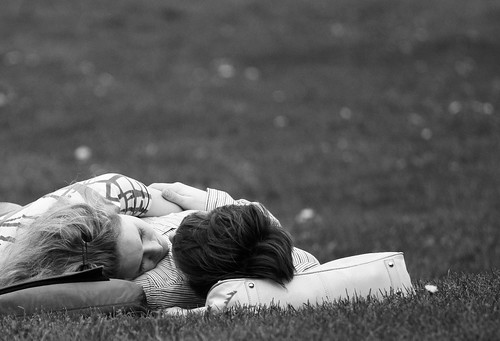
Photo credit: yanni on Flickr
So tomorrow is Valentine’s Day, which naturally means I should write about romance and love or something like that. Except, as I scrolled through my love/romance-related blog archives, I realized I’ve already done that a lot.

So! I’m going to share with you guys all of Writability’s current romance/love/face-smooshing related posts for your browsing pleasure.

In chronological order!


Whether you’ll be celebrating Valentine’s Day with a loved one or with a tub of ice cream and Netflix, I hope you all have a fantastic weekend!

Do you know of any great romance-writing posts?

Twitter-sized bite: 
Struggling to get your romantic subplots down? @Ava_Jae rounds up love, kissing & romance-writing posts for V-day. (Click to tweet)

Why Do Your Characters Like Each Other?

Photo credit: Boris SV
When working on my last MS, I encountered an unexpected problem—at least, unexpected to me. 

I was writing a dual-POV novel with romance-y bits, and in a scene where one character confessed having feelings for one of my POV characters, one of my critique partners wrote a note along the lines of: ok, but why does he like her? 

I stared at that question for a while. She’s a POV character! I protested in my mind. Why wouldn’t he like her? 

So I sat down and began writing a list of (oh-so obvious) reasons why said character likes my POV character. Or, I tried to write a list, but stared at the paper and realized, with no small amount of horror, that I had no idea. 

You see, the love interest liked my POV character because that was what I’d planned. But somehow, I’d never really figured out why the love interest would like her to begin with, which, for romance purposes, is a tad bit important. 

Without a legitimate reason for your love interests to have feelings for each other, you run the risk of writing the always evil insta-love. Romance without a reason for characters to be interested in each other to begin with is unbelievable, because while initial attraction is easy, a real relationship won’t get very far if the characters don’t know why they like each other. 

This is something that I’m going to be paying special attention to from here on out, especially while revising, and it’s a question I recommend you ask yourselves while editing as well. Because if your characters don’t know why they like each other, I promise you your readers won’t know either. 

Do you know why your love interests like each other? 

Twitter-sized bites: 
So your characters are falling for each other. But do you know why? (Click to tweet)  
Do you know why your love interests like each other? Writer @Ava_Jae talks the importance of knowing the answer. (Click to tweet)

Weird Writing Trends: Sexy Stalkers?

Photo credit: rithban on Flickr
I’ve noticed a rather strange trend in writing and YA novels. It isn’t really new, per say, and I suspect
that a certain best-selling series-turned blockbuster movies may have helped to kick it off, but every once in a while I see books employ sexy stalkers and I don’t really understand it. 

Before I go any further, let me explain what I mean about “sexy stalker.” 

A sexy stalker is a very attractive guy (or girl, hypothetically, though I haven’t seen this yet) who follows around/creeps on/knows way too much about/appears in bedrooms (or other private places)/aka STALKS the protagonist of the novel. Usually the protagonist is female and usually she doesn’t mind the stalking. Usually she falls in love with her stalker and so it’s all ok. Usually they end up in some kind of relationship and all of that strange behavior is chalked up to love and protectiveness

It’s weird.

The thing I don’t understand, is that stalkers are a real thing. There are actually people out there who obsessively and inappropriately follow around and “research” an unfortunate victim of their so-called affection. There are actually cases of women and girls (and probably boys and men, too) who are afraid to go places or even be at home alone because of said harassment. There are restraining orders and police and courts involved and it’s not a pretty thing. 

It’s also definitely not sexy. 

Stalkers are scary. They make people actually fear for their lives. They make people too scared to go to school, or work, or whatever the case may be. 

They don’t make people fall in love, and a relationship with a stalker isn't normal. 

When I’ve seen it in books, I’ll admit that for the most part, I’ve ignored it. I’ve quirked my eyebrow at the weirdness and the protagonist’s blanket acceptance of stalkerish tendencies and moved on with the story. 

But it still got me thinking. It still made me wonder why it’s ok for boys to be stalkers in books—no, why it’s sexy for boys to be stalkers in books. I’m wondering why our female protagonists are falling in love with boys who have borderline control issues and overprotective/obsessive tendencies. 

I’m wondering what we’re telling kids when our protagonists have boyfriends who sneak into their bedrooms to watch them sleep at night, and follow them around when they’re out with their friends to presumably save them when they’re attacked.

Maybe it’s just me, but that kind of relationship just doesn’t seem healthy. Or sexy. Or in any way desirable. 

But maybe it’s just me. Or maybe it’s not. 

I want to hear from you: have you seen the sexy stalkers trend? Am I the only one who finds it strange?

Romance in Writing: Murder the Insta-Love

Photo credit: unclefuz on Flickr
Without naming names, I'm sure most of you can think of at least one novel you've read in which the characters fell in love far too quickly. Where the relationship evolves from learning each other's names to making out and saying the l-word in the span of a couple chapters or in-story days. 

I'm talking about the second of two dangers I mentioned in my recent writing romance well post—insta-love.

There are two major problems with insta-love, namely, it's unrealistic and it cheapens the romance.

Why is it unrealistic? Let's look at everyday life—while there are cases of love at first sight, the truth is that those instances are far from the majority. Relationships take time to build, and that initial excited infatuation often fades over time (this is the difference between a crush and love. Some scientists believe there are three stages to love—and needless to say, the first stage is not true love).

The deeper problem beneath being unrealistic is that your readers may stop to question it—and any moment that your readers stop reading to question something in your book, is a moment that they've been pulled out of the narrative, something that as a writer, you want to avoid at all costs. Love and romance between two characters should feel natural, but if your readers are questioning it, then the romance clearly needs work.

Why do I say that insta-love cheapen the romance? A relationship between your characters should be special. If it truly matters to your characters (and it should if you intend to make them romantic partners), then you need to make it matter to your readers. If the characters fall together instantly, however, then the relationship won't have time to build—not between your characters, and not to your readers, either. Remember, it's not just your characters that have to get used to each other—your readers need to get used to your characters and their relationships as well.

Ultimately, your goal is to make your characters fall in love, yes, but it's also to make your readers fall in love with your characters and the relationship they have.

If you suspect that your characters may have fallen victim to insta-love, then there's a very good chance that they might have (we writers have excellent instincts—we just don't always want to listen to them). To make sure, however, I recommend getting some CPs and beta readers to take a look at your WIP and ask them to look out for insta-love. Like most things in writing, it's much easier to recognize a flaw in someone else's work than it is to recognize it in your own.

Have you ever written or read insta-love? If the former, how did you fix it? If the latter, how did it affect your perception of relationship?

Discussion: Why Do You Love Writing?

Photo credit: DaveAustria.com on Flickr
So it's the day after Valentine's Day and I totally didn't write about romance or even mention the word "love" in Wednesday's post, so I thought it appropriate to mention a love-related topic today. Except not quite in a romance-y way because mushy gushy romance day was yesterday. So.

Assuming that most of you reading this are writers or readers who enjoy reading writing blogs, I'm sure many of you have on more than one occasion come across a post detailing all the downsides of being a writer. Hell, you may have even read some of those posts here, because I like to be realistic when talking about the whole writing thing.

But sometimes when the days are particularly hard, or when you have more than a handful of rejections sitting in your inbox, or you look at your writing and wonder why you're even bothering to attempt to write, we writers need a little reminder as to why we embarked upon this writing journey to begin with. Sometimes we forget why we ever wanted to be writers to begin with, why we tell others we love to write so much, why we subject ourselves to rejection after rejection or an assortment of other disappointments that invariably come with the territory. Sometimes we need to take the time to remember why we love to write.

For me, the answer lies in the characters. I never tire of falling in love with new characters and watching them grow and change. I never get bored watching them interact with each other—whether it's a page of witty dialogue or an argument that ends badly. There's something truly incredible about creating characters people care about, and writing a story people want to read, and devising a world with just words that continues to fascinate me.

There's something about creating something out of nothing that I absolutely love, and it gets me time and time again, manuscript after manuscript.

You guys, we writers have the coolest job on the planet: we pull characters and entire worlds from our imaginations and release them to the world for others to see and expand upon. And we do it all with combinations of letters and our minds.

And if you ask me, that's pretty darn cool. And I'll always love it.

Join the discussion! Why do you love writing or reading other people's writing?

Discussion: What Do You Love to Write About?

“Love. Fall in love and stay in love. Write only what you love, and love what you write. The key word is love. You have to get up in the morning and write something you love, something to live for.” –Ray Bradbury (via Brainyquote
Photo credit: Bethan on Flickr
Like most art, writing is fueled entirely by our passions. Our obsession with translating imaginary worlds, people and situations into words on the page—our want—no, need—to create something out of nothing. But while we writers all share a passion for creation with words, what exactly it is that we like to create—that is, what we like to write about—varies greatly from writer to writer. 

The important part isn’t what we write, per say—it’s that we write whatever it is that we love to write about. For some, that’s contemporary romances with quirky characters that have readers laughing and crying throughout the course of the novel; for others it’s action-packed with paranormal or magical elements that awe or terrify our readers. Sometimes it’s lighthearted stories about growth and development, and other times it’s much heavier themes about loss and death. There isn’t a right or wrong answer—there is only passion.

I can’t stress enough how important it is to write what you love. Forget genres or what’s currently trending on the marketplace or what’s been popular in the past—the best thing you can do for yourself and your future readers is to write something that you’re passionate about, because the first step to getting your readers to fall in love with your story is to love it yourself.

Identifying elements that you love to write about is a fantastic way to kick off brainstorming for new projects or to re-infuse current WIPs with that new WIP excitement you had when you first began writing. I dare you to create a list of elements you love to write about and not want to write about it.

As for me, I love to write about deeply conflicted characters. I love exploring (and exploiting) inner demons, and overcoming impossible odds, and fighting not just external forces, but internal battles as well. I love writing about relationships—both romantic and not—about the impossible, the improbable and the so-called non-existent. I love to write about characters who haunt me long after I’ve finished writing for the day, I love to test the boundaries of their strength, their will, their self-preservation and their love.

And in the end, after I’m sure they hate me for it, I love making them stronger from their experience.

That’s a sample of my love list—now I want to hear yours: what do you love to write about?

Discussion: What’s Your Favorite Part of the Writing Process?

Photo credit: Léoo on Flickr
If you had asked me what my favorite part of the writing process was when I first began writing, I would have answered it without a second thought—first drafting. I loved everything about the first draft, from the discovery of new characters and places, to experiencing the journey alongside my characters, to the wonderful feeling of accomplishment upon writing THE END on the last page. In my mind, no other writing process beat the thrill of a first draft.

Now don’t get me wrong—I still love first drafting for all of the same reasons and more, but over time I’ve come to realize that first drafting is no longer my favorite part of writing: revision is.

It feels like a strange confession considering it wasn’t that long ago that I was still trying to teach myself to learn to love the editing process, but I can honestly say that my view on a process that I once dreaded has changed entirely.

Because yes, the discovery process is easily one of my favorite aspects of writing, and I love meeting new characters and worlds with new rules and norms, but there’s something even more satisfying about diving into the story and really getting to know everything about it. I love learning all about my characters and watching them come to life on the page a little more after each revision. I love taking a rough draft full of potential and excitement and carving it into something better—into a fully realized story with depth and nuances and characters and situations brimming with so much energy that they feel real.

I love writing. And I adore revision because it reminds me of why I love writing so much in the first place. It reminds me that all of the time and effort I’ve put into this WIP is worth it, because I can see my work improving before my very eyes.

So while for me, first drafting is fun, revision has become even more exciting. And that’s fine by me.

Let the discussion begin: What is your favorite part of the writing process and why?

The Problem with Love Triangles


Photo credit: wallyg on Flickr
Now before you pull out the pitchforks and light the stake, let me say I enjoy love triangles as much as the next person. It’s fun to choose a side on the Katniss-Peeta-Gale argument and even though I’m pretty sure I know who won the Meghan-Puck-Ash war (The Iron Fey series, for those of you wondering), it’s been fun to read about it, and it’s no secret that the Twilight phenomenon benefited greatly from the infamous Bella-Edward-Jacob love triangle (hello Team Edward and Team Jacob shirts).

But as of late, especially in YA novels, it seems that love triangles have become somewhat of a prerequisite—a cliché, even. Many novels follow the girl has male best friend/meets new boy/but best friend has loved her all along/oh but the new boy is so hot/but the best friend/but new hot guy!- plot, and hey, I’m certainly not complaining about it—as I said before, love triangles can certainly be one of the guilty pleasures we like to read, but it makes me start to wonder…are they becoming overdone?

I’d like to clarify that I’m well aware there are many YA novels that avoided the love triangle completely—Divergent by Veronica Roth and Across the Universe by Beth Revis are two examples I can think of off the top of my head—but the more I see the best friend/new guy love triangle, the more I’ve started to realize that it has indeed started to become a cliché.

The problem with love triangles, my friends, is that they’re becoming predictable.

I’m not saying that this means we shouldn’t write any more love triangles, or that love triangles are bad in any way. What I am saying is if you do decide to write a love triangle into your story, you might want to ask yourself how your love triangle is any different from the others already out there. I challenge you not to rely on your first plotting love triangle instinct—I challenge you to push beyond the best friend/hot new guy cliché. Ask yourself what the purpose of your love triangle is—what are you trying to show your readers?

A strength, I think, of love triangles is it shows something we don’t often like to talk about—that love is messy. Love isn’t this neat little thing we can put into a box and tie off with a ribbon—love is confusing and exhausting and it has a mind of its own and sometimes love is wonderful but sometimes love is cruel. Love triangles show us all that—they show us that we don’t always know as much about love as we originally planned, that love can create a wonderful relationship, yes, but sometimes love hurts because it doesn’t always strike both ways. Sometimes, (and in the case of love triangles—always) there will be someone left out.

To me, that’s the purpose of love triangles, but until we break out of the formulaic relationships that many novels have fallen victim to, that message—that purpose—gets lost in the mix. Rather than a story about love, it can quickly become another generic boy-meets-girl-meets-boy scenario, and although they’re fun to read, they don’t always hit home.

I like love triangles, and when done correctly I think they can add a powerful dimension to our stories. But don’t let your characters become part of another formula—show us their relationship means something more.

What do you think about love triangles? Are they amazing? Are they cliché? What’s your favorite love triangle from a novel?  

Why I Love to Edit

So a few days ago, precisely one month after finishing a draft of my WIP, I had the pleasure of tweeting this:
Although many of my wonderful writer tweeples responded with glee, I got more than a couple of messages that went along the lines of err, I don't know, Ava. Editing? Want to do mine for me? *wink wink* 

It got me thinking. 

Once upon a time, long, long ago in a galaxy far, far away, I used to hate editing. It's not that I thought it unnecessary—I knew it was necessary—I just couldn't stand the thought of re-reading something I wrote half a dozen (or—God forbid—more) times. I'd already done the hard work of getting the first draft down, did I really want to spend months or years flipping things around and cutting passages and adding new things and re-reading re-writing re-reading re-writing? 

Over the course of trunking many-a-novel, I learned the hard way about the importance of editing—real editing, and I realized that if I was going to bring the fullest potential out of my stories, I had to learn to love to edit. Period. 

Surprisingly, saying ok, I need to love editing now didn't magically make me start to love to edit. What did change my opinion of editing (and this is a little surprising), was editing the same WIP over the course of two and a half years. 

I'll admit, initially I got pretty sick of it, and when I discovered after a break from the WIP that it needed complete re-writing after a couple of rounds of edits already, I resisted the process. I didn't want to re-write it—it would take weeks, and then I'd probably need to edit it again and what if it needed more re-writing after that? 

I rewrote it. Then something weird happened. 

Photo credit: AlaskaTeacher on Flickr
As I looked over the WIP again, I realized it was entirely different from the first draft—no, no just different, better. Sure, it still needed work, but it was improving, I could see it improving right there in front of me. I knew it was better, and to be entirely honest, it felt great. 

And suddenly, editing wasn't so bad after all. 

When I didn't like editing, I was looking at it all the wrong way—I thought of it as this extra step, this horrendous extra task that inevitably meant more hard work and when I sat down in front of the computer I thought, ugh, I have to edit today. 

What I didn't realize is that editing is so much more than that—it's a chance to refine your work, to really make your writing shine, and once you start to see your work evolve, well, it can be kind of fun. 

I'm not saying editing isn't hard, time-consuming work—it absolutely is. What I am saying is that the way you look at it can largely change your experience. 

Let's face it, if you want to be a writer, you're going to be doing a lot of editing. Whether it's editing your first or second or fifth or fifteenth draft, editing your query letter or synopsis or author bio or blurb, editing your first book or your twentieth book, the life of the writer is an endless cycle of writing and editing and editing and writing. 

It's part of the process, and it's a step that you can't skip. So if we have to do it anyway, we might as well try to enjoy it, right? 

What do you think? Am I crazy for loving to edit? What are your favorite and least favorite parts of the editing process?

How Important is Loving Your Novel?


Photo credit: quinn.anya on Flickr
So not too long ago I read this post from fellow writer Ara Grigorian (@araTHEwriter on Twitter) in which he made an interesting statement:

If you don't have a passion for your story, you'll get sick of her, before she's had the chance to evolve and shine into the beauty you know she will become.”

He argued that you need to love your story if you hope to reach a fully completed manuscript, then went on to ask if he was being overdramatic.

I don’t think he was being overdramatic—in fact, I think he was right on.

The thing with writing a book is it takes a long time—more than time, it takes a huge amount of effort. It’s emotionally draining and exhausting work that often requires huge amounts of rewriting after you’ve already poured your heart and soul into the story. And no, I’m not being overdramatic, either.

Seriously guys, if you don’t believe 150% in your novel, who else is going to believe in it? If you aren’t absolutely sure that you love your characters, your story—then guess what? Maybe you shouldn’t be writing it at all.

I’m going to push further. Maybe you love your story, but there’s this one character you aren’t so sure about. That iffy feeling you have about that character shouldn’t be ignored. That’s a sign, guys. That’s your subconscious telling you, “Hey, you could probably do better with that character.” Do NOT ignore the iffy feeling!

Here’s a homework assignment: if you have a completed manuscript and you feel “meh” about one of your characters—scrap them and rewrite them completely. It’s a scary thought, I know. It’s a lot of work. But it’s absolutely worth the effort, trust me. I’ve done it myself.

Maybe it isn’t a character you feel iffy about, maybe it’s a scene, or a chapter, or a paragraph or a sentence—hell, maybe it’s even a word. Point is, if you don’t love it, then chances are you could make it better. So what are you waiting for?

Because the truth is guys, you need to love every aspect of your story. How will you endure reading it 10-15 (or more) times if you don’t believe in the words on the page? How will you survive a review that points out the flaws in your story if you weren’t sure about it to begin with?

You need to be passionate about your story—there’s no way around it. Writing a novel isn’t easy. There will be times you’ll be tempted to give up, moments when you’ll glare at your manuscript and swear that if you’d rather be mauled by a pack of rabid ferrets then read it one more time. And when you reach that moment, you’ll have to make a choice—do I continue, start over or give up?

And there isn’t a wrong choice, really. It just comes down to how much you love your story.

What do you think? Are we being overdramatic? Is loving your story really that important? 

Writing and Love

 “It’s like falling in love, no matter how bad your last breakup is, when you’re falling in love you think this time it’s going to be perfect.”—Amanda Hocking

I got this quote off of an interview on YouTube I saw two days ago of (as you deduced from the tag) indie extraordinaire, Amanda Hocking. Maybe it’s because it was timely for me since I’d just finished my WIP hours earlier, but the quote resonated with me.

Because to me at least, starting a new book is exactly like that. When you start a new manuscript you don’t think about the others sitting in the drawer (or hard drive, as it may be). You’re focused on the story, you fall in love with your new character, your new plot twists, your new moments.

Some days the writing comes easy and the words come pouring out and at the end of the day you’re elated with your progress. Some days each word fights its way out and you want nothing more than to throw your keyboard (or laptop) across the room and scream at the sky.

But then you reach that magical moment where you can write “The End” and it’s all worth it. Because you just finished your manuscript and you have a real, completed full-length story written by your hands. Sure there’s a lot of work ahead. Sure there will be editing, writing and re-writing. But it’s written and it’s is special, you can feel it. Something inside you is tempted to believe that this time it’s really going to happen.

But it’s not always perfect.

I think every writer goes through this, which is why it makes the rejection even harder. We all have faith in our books; otherwise we wouldn’t put them out there. So to be told repeatedly in (as often is the case) a form letter no less, that our work just doesn’t have that spark, is devastating. It’s like, as Amanda put it, a bad breakup.

It doesn’t hurt any less each time the query process comes to a close and the manuscript takes its place with the others, and yet when we start a new story it’s rejuvenating. Beautiful. New characters, new journeys, new worlds! Your words take a life of their own and you fall in love all over again.

The cycle is exhausting, but that’s just part of life as a writer. And although I’m not yet published, I know without a shadow of a doubt that the heartbreak is worth it. I love every second of being a writer. Because it’s not about being famous and making it big.

It’s about the story. The characters. The writing. And ultimately, it’s about you.  

Here’s the full interview. I found it refreshing and inspirational. Hope you guys do, too:

Related Posts Plugin for WordPress, Blogger...