Showing posts with label description. Show all posts

Vlog: Things to Remember While Writing Description

How do you come up with description? How much is too much? Today I'm talking about an all-too important element of writing a story: description. 


RELATED VLOGS:


How do you tackle writing description?

Twitter-sized bite:
Struggling to get description right in your WIP? @Ava_Jae shares some description-writing tips. (Click to tweet)

Vlog: On Writing Description

You've asked, I'm answering: how do you write description? How much description is too much or too little? I'm sharing my thoughts on this essential part of novel writing.


RELATED VLOGS:


What tips would you add for writing description?

Twitter-sized bites:
How much description is too much? How much is too little? @Ava_Jae vlogs some tips. (Click to tweet
Struggling to get your description right? @Ava_Jae shares some tips in today's vlog. (Click to tweet)

Fixing the First Page Feature #27

Photo credit: archer10 (Dennis) OFF on Flickr
Somehow, it's the last week of September, which means the time has arrived to critique another first page here on Writability.

As per usual, I'll start by posting the full first 250 excerpt, after which I'll share my overall thoughts, then my redline critique. I encourage you guys to share your own thoughts and critiques in the comments (because I'm one person with one opinion!), as long as it's polite, thoughtful, and constructive. Any rude or mean comments will be unceremoniously deleted.

Let's go! 

Title: SAVING ERIIA'S WINDSTORM

Genre/Category: YA Fantasy

First 250 words:

"The entire throne room was filled to bursting, elves in every row, some even filling the spaces between seats and walls. The day the king banished his own daughter was not a day to miss. 
But Eriia didn’t see the elves in the seats, high above her and behind. She saw only the two thrones before her, one empty and the other with the tall, imposing figure of her father. She hadn’t meant to hurt anyone, she really didn’t. She had just wanted to prove to her father that she was good enough, so she wove a spell to light a candle, something Ileon had been doing since he was five. Now he was eleven and could make fire into shapes, dancing dragons and flowers and things Eriia couldn’t even name, and she was nine and set the Hanging Castle on fire, because she had no control. 
'Eriia,' her father’s voice boomed. He wouldn’t even call her a princess anymore. 'You’ve become quite the spectacle to this family.'
'Father, I—' she tried to say, but King Cepheus held up a hand and a frown. 
'You destroyed part of the castle. You’re lucky no one was hurt, but our poor Queen is sick in bed from the smoke. Do you realize what you’ve done?'
'Father, I’m—'
'You’ve always been a menace, causing trouble since you were young.'
Hot tears welled up in Eriia’s eyes. She hadn’t meant to make trouble. Trouble just always found her. 
'Where’s mother?' Eriia looked up at her father, 'Where’s mama? Does she know?'"

Awww. This is sad. :( Okay, interesting opening with nice details but I'm sensing this is a prologue. It's hard to say how necessary a prologue is without looking at the first couple chapters, but given that this is when Eriia is nine and this is a YA, I'm assuming this is just background information on how she got banished. While I understand the urge to start there, as I imagine a princess getting banished from her kingdom is a pretty big deal, I suspect it'd probably still be better to start closer to the actual inciting incident, whatever that is, and fill in this background information either woven into the text, or through a flashback or something, or both.

It's not badly written or anything (far from it!), but in terms of plot and tendencies I've seen with many, many prologues, that'd be my guess.

On a different note, I'd also like to see more description—the throne room is filled to bursting, but what does it look like? She sees the thrones—what do they look like? I was having a bit of trouble picturing the room where the scene takes place.

Now for the in-line notes!

"The entire throne room was filled to bursting, elves in every row, some even filling the spaces between seats and walls. The day the king banished his own daughter was not a day to miss. Nice.
But Eriia didn’t see the elves in the seats, high above her and behind. She saw only the two thrones before her, one empty and the other with the tall, imposing figure of her father. She hadn’t meant to hurt anyone, she really didn’t. She had just wanted to prove to her father that she was good enough, so she wove a spell to light a candle, something Ileon had been doing since he was five. This is a great detail and gives us some nice, subtle world building and tells us she has a brother (or I'm assuming, anyway). Now he was eleven and could make fire into shapes, dancing dragons and flowers and things Eriia couldn’t even name,. 
and sShe was nine and set the Hanging Castle on fire, because she had no control. Moved this down a line to give it more punch. :)
'Eriia,' her father’s voice boomed. He wouldn’t even call her a princess anymore. This is also a great detail to bring attention to. 'You’ve become quite the spectacle to this family.'
'Father, I—' she tried to say, but King Cepheus held up a hand and a frowned. Adjusted both because we don't need the dialogue tag (we know she's speaking because "Father") and also "a frown" sounds like "he held up a frown" which is not what you meant. :)
'You destroyed part of the castle. You’re lucky no one was hurt, but our poor Queen is sick in bed from the smoke. Do you realize what you’ve done?'
I recommend inserting some of Eriia's emotions and thoughts in here. We have her external responses (dialogue) but until two lines from here we don't really get any internal reactions at all, and I think they'd help. This must be a really emotional scene for her, so where are her emotions? 'Father, I’m—'
'You’ve always been a menace, causing trouble since you were young.'
Hot tears welled up in Eriia’s eyes. She hadn’t meant to make trouble. Trouble just always found her. This is a great paragraph and makes me sad, which is good because I'm connecting emotionally with your protagonist.
'Where’s mother?' Eriia looked up at her father, 'Where’s mama? Does she know?'"

Overall, the writing is really well done. There's more I'd like to see, like I mentioned (description, internal emotions and thoughts), but what's there is nicely polished and I only felt like it needed a few tweaks. If I saw this in the slush, I'd keep reading.

So all in all, while I'm not convinced it's starting in the right place and I think it could use more embellishing, this is a really solid start. Nicely done, Magdalyn!

I hope that helps! Thanks for sharing your first 250 with us!

Would you like to be featured in the next Fixing the First Page critique? Keep an eye out for the next giveaway in October!


Twitter-sized bite:
.@Ava_Jae talks prologues, description, internal emotion and more in the 27th Fixing the First Page Feature. (Click to tweet)

Fixing the First Page Feature #2

Photo credit: bittermelon on Flickr
Okay! So as per usual, I’m going to start off by posting the full 250 excerpt, then I’ll share some overall thoughts, then my redline critique. As I said last time, I super awesomely encourage you guys to share your own thoughts and critiques, as long ask it’s polite, thoughtful and constructive. Any rude or mean comments will be deleted.

Let’s begin! 

Title: FATHERS AND FENDER GUITARS 
Genre/Category: YA Contemporary 
First 250:  
As I waited in the doorway of Rusty’s Dive Bar, Greg the bouncer, and I had become friends. I’d learned about his five cats, his next tattoo, and now, dating advice. “If he ain’t on time, you can’t trust him with a dime.” 
“Whitman’s running late. He’ll be here before the band starts.” I resumed twisting one of my red curls around a finger. Since I wasn’t old enough—or allowed to—drive at night, I’d gotten dropped off with plenty of extra time. “So, which of your cats is the nicest?” 
Before he could answer, the bar’s radio blasted a Union Juliet song. I winced. Greg apologized. “Sorry, dearie. They too rowdy for you?” 
“I don’t like punk rock.” 
“You’re missing out. Back in the day, Union J played the straight up truth.” 
The kids tagging one of Cleveland’s many abandoned buildings next to us must have been inspired by the song, because he started to spraypaint Union Juliet’s logo. IAO, FAA. Two sets of three letters, crossing at the letter A. 
As the tagger circled the A with red paint, changing it from a letter to a political sign, someone shouted my name—or rather the name I’d been using for the last eight months. 
“Elaine Nickels!” 
Bouncer Greg elbowed me. “He’s here!” 
“That’s not my boyfriend.” I said. 
The approaching voice shouted my name again. Logan. Seeing him was all I needed to bolt away from the bar, running until I could no longer hear the song.

Hmmm okay. So overall I think this is a solid start, but it could use a lot more detail and sensory imagery so the readers can really get a feel of the scene, the surroundings, etc. Rusty’s Dive Bar sounds like it could be a really interesting and unique setting, so I’d love to see more about it so I could really get into the character of the place. I like how at the end we start getting a sense of the tension that’s to come, and I’m definitely curious about Logan and why Elaine’s initial instinct is to run. I’m also curious about why Elaine changed her name. But overall, it’s definitely not a bad start—I just think it could use a little extra oomph added to it. 

Now the in-line edits: 

As I waited in the doorway of Rusty’s Dive Bar, Greg the bouncer, and I had become friends. Copyediting is not my area of expertise, but the commas are definitely tripping me up in this first sentence, particularly around “Rusty’s Dive Bar, Greg the bouncer, and I….” I’d learned about his five cats, his next tattoo, and now, dating advice. How does she feel about the dating advice (and cats and tattoo stories)? This would be a good opportunity to give us some of your protag’s personality. “If he ain’t on time, you can’t trust him with a dime.” 
“Whitman’s running late. He’ll be here before the band starts.” I resumed twisting one of my red curls around a finger. Since I wasn’t old enough—or allowed to—drive at night, I’d gotten dropped off with plenty of extra time. I’m not sure what you’re trying to imply with the "allowed to" aside. As for the second bolding in that sentence, does that mean she’s been waiting a long time? How does she feel about Whitman’s lateness? Again, if you give us some insight as to what’s going on in her head, we can really learn a lot about your protagonist’s personality. This is a huge part of voice, which is extremely important in YA (particularly Contemporary). “So, which of your cats is the nicest?” 
Before he could answer, the bar’s radio blasted a Union Juliet song. I winced. Greg apologized. “Sorry, dearie. They too rowdy for you?” 
“I don’t like punk rock.” 
“You’re missing out. Back in the day, Union J played the straight up truth.” 
The kids tagging one of Cleveland’s many abandoned buildings next to us must have been inspired by the song, because he started to spraypaint Union Juliet’s logo. Spray paint is two words. IAO, FAA. Two sets of three letters, crossing at the letter A. Is this two different logos? Or are all six letters layered over each other? I’m having a little trouble picturing this.  
As the tagger circled the A with red paint, changing it from a letter to a political sign, someone shouted my name—or rather the name I’d been using for the last eight months. Be specific—I assume you’re referring to the anarchy moniker with the political sign reference, so say so. “Elaine Nickels!”
Bouncer Greg elbowed me. “He’s here!” 
“That’s not my boyfriend.Comma, not period should be after “boyfriend.” I said. This would be a good place to start to give us a taste of how she’s feeling upon realizing the person who’s calling her is not someone she wanted to see. Give us some physical, visceral reactions so we can really feel her emotions.  
The approaching voice shouted my name again. A mini-description of the guy coming over would be helpful here, so we can picture him. Logan. Seeing him was all I needed to bolt away from the bar, running until I could no longer hear the song. Give us some description—does she have to push through a crowd to get away? Does she run past the taggers in the alley? Down the street? Is it hot? Cold? Rainy? Muggy? Some sensory images would be great here. 

Like I said above, this is a good start, but it needs some filling in. With some extra sensory details, we’ll really be able to get a better picture so we can experience what the protagonist is experiencing. If I saw this in the slush, I’d probably keep reading, though I’d already be thinking that if there isn’t much more description, it’s probably going to be a pass. In order for readers to connect to a story, they need to be able to become completely immersed in the writing, and that’s difficult to do without enough imagery. 

It doesn’t have to be a lot (and in fact, it shouldn’t be a lot). But a few sprinkles here and there of telling details will really help to make this shine. 

Thanks for sharing your first 250, Carrie Ann! 

Would you like to be featured in a Fixing the First Page Feature? Keep an eye out for the next giveaway! 

Twitter-sized bite: 
Writer @Ava_Jae talks sensory details and imagery in openings in the second Fixing the First Page critique. (Click to tweet)

World-building Tip: 15 Details to Remember

Photo credit: Stuck in Customs on Flickr
After building a new planet from scratch for a recently completed WIP, I think it’s safe to say that I’ve spent the past many months learning a hell of a lot about world-building.

While I’ve nowhere near mastered the art (I don’t think you ever master any aspect of writing), I did come to realize through many revisions and devouring many richly built books, that a major factor in building a fully-realized world involves getting to know your world down to the intricate details.

While there are probably hundreds of details that go into building a world for your novel, I’ve narrowed down a list of fifteen particularly important ones (at least to me), to help you develop your world.
  1. Setting. Where is your world? What is the landscape like? If you’re building from scratch, it is a Pangea? An island? Several continents? The lay of the land affects just about everything, and thus should be figured out pretty early on. 

  2. Climate. Does your story take place in a humid rainforest? A desert? Somewhere mountainous with arid, frozen fields? A riverside oasis? Does the climate vary, or is it primarily one type? Climate plays a huge role in the development of culture, food, clothing, etc. 

  3. Other cultures/countries. One of my favorite elements about some of my most-adored fantasy books like Shadow & Bone, The Girl of Fire and Thorns and Graceling is the presence of several cultures. To me, this really helps flesh out the world, because we learn that our MC’s surroundings isn’t all that there is to it. Are there other cultures in your world besides the one your MC is in? Do they get along? Ignore each other? Clash frequently? How are they different? These are all questions you can answer to help to fully flesh out a rich and interesting world.

  4. Social structure. What are the classes like? Is your society primarily one class, or are there different castes? Do the classes intermingle, or is that forbidden? 

  5. Clothes. What do the people wear? Does it depend on social class or culture? Remember that whatever the normal attire is, it should be climate-appropriate. 

  6. Government. Is it one government? Several? Is it a monarchy, democracy, oligarchy, anarchy, republic, some combination thereof, or something else entirely? 

  7. Technology. As far as technological process goes, where is your society as a whole? Are they the equivalent of medieval times? Some form of steampunk? A modern-day equivalent? Far advanced? 

  8. Language. Do your characters speak English or something else? Does everyone speak the same language? Does the language differ depending on formalities? Are there dead languages? You don’t necessarily have to make up a language (although if you’re a nerd like me, you very well might), but language barriers are certainly something to consider when building your world. 

  9. Measurements. This is one I didn’t really think about until it occurred to me that minutes, weeks, months, feet, inches and miles didn’t exist in the world I was building. How do your people measure time? Distance? Temperature? Knowing is more important than you might think. 

  10. Food. This is a fun one, and can be a great reflection of the world. What is a typical meal for your characters? Does it differ depending on social classes or ethnicities? It’s likely that the type of food your characters eat will be heavily influenced by their surroundings (for example, coastal cities will probably eat a lot of seafood while landlocked people will depend more on foods that are grown or hunted), which is why knowing your setting and climate early on is so important. 

  11. History. How did your society come to be? Who are important figures for your people? What historical heroes and villains have played a part in your world? These types of details are great for naming cities, events or months (July and August, for example, come from Julius and Augustus Caesar, and we all know who Washington D.C. and Washington state were named after). This will also affect relationships between countries or territories (assuming you have more than one), laws, customs, legends, etc.  

  12. Religion. What religions are prevalent in your world? Does everyone share the same religion (either by choice, custom or law), or does it vary? Do they believe in science or something more concrete than deities? Do they have monotheistic, polytheistic or atheistic beliefs? Is religion (or not believing in a religion) taboo? 

  13. Customs. This covers just about everything from daily rituals (like shaving, brushing teeth, or even praying) to larger-scale yearly rituals, such as birthdays (if they celebrate them), holidays or other life events that are considered significant. What is a funeral like? Or a birth? Is there an age that’s particularly important to celebrate? Are there significant historical dates or religious beliefs that determine important days? Do they believe that celebrations shouldn’t be done at all? 

  14. Values. What is important to your society? Beauty? Physical strength? Intellect? Education? Athletics? Wealth (and if so, what determines wealth? It doesn’t necessarily have to be currency)? Are material goods important, or is something less tangible like faith, relationships or power more important? Do values clash between countries or cultures? 

  15. Ethnicities. Is your world monoethnic? Are there several ethnicities, and if so, where did they come from? Is it location-based? Are certain ethnicities considered more desirable than others? Are any ethnicities persecuted or worshipped? 
There are just a couple factors to consider when building a world for your novel. What details make a book’s world come alive to you? 

Twitter-sized bites:
Building a world for your WIP? Here are 15 details to remember while developing your setting. (Click to tweet)  
Effective world-building isn't easy, but writer @Ava_Jae shares 15 details important to any richly built setting. (Click to tweet)
How to Write Description Through Character

Photo credit: mark lorch on Flickr
While working on a WIP a couple years ago, my CP at the time pointed out to me that my teenage boy protagonist was having some rather un-teenage-boy-like thoughts. 

The problem was that some of the flowery analogies and purplish prose I had used were clashing with his voice, and she challenged me to ask myself if he would really think that. 

Since then, I have become much more aware of how my characters think and act, down to their choice of words and mannerisms. But one of the best aspects I took away from that CP comment, to me, actually applies to description. 

You see, when writing in first person, or even limited or close third, it’s very important to always keep the character in mind, but not just in the sense of getting to know them and perfecting their voices. You need to be able to climb into their heads and not only imagine the scene from their eyes in the sense of how they will react to their situation or their actions thereafter, but pin down what they notice when writing description. 

For a long time I thought of description as a sort of third-party affair. It was something I needed to include in order for the readers to understand where the action was taking place, but until my CP made that comment about my protagonist, I didn’t realize that it was much more than that. 

Because when you’re writing a story from a character’s POV, you need to filter the entire story from his or her POV. And that includes description. 

So when I talk about writing description through character, I mean that you need to think about not just what it is that you’re describing, but what your POV character would notice about it. 

For example, a poor character entering his neighbor’s run-down home would probably notice the smell of food cooking in the kitchen, or pictures on the walls, or some of the items scattered around the house. A rich character entering that same home, however, would likely notice how small everything was, the cracks in the walls, the peeling paint, and buckets for catching rainwater from the leaky ceilings. Their perspectives are different, and because of that, they would notice different details about the same place. 

This works the same way for character descriptions as well, in the cases of characters describing another character. Here’s a great example from John Updike’s short story “A&P”:
“She was the queen. She kind of led them, the other two peeking around and making their shoulders round. She didn't look around, not this queen, she just walked straight on slowly, on these long white prima donna legs. She came down a little hard on her heels, as if she didn't walk in her bare feet that much, putting down her heels and then letting the weight move along to her toes as if she was testing the floor with every step, putting a little deliberate extra action into it.”
What I love about this example (and the rest of the examples scattered throughout the text), is that rather than giving us a laundry list of descriptions, we get the full description from the POV character’s mind. The first thing he notices about this particular girl isn’t her hair or eye color, it’s her long prima donna legs and the way she walks. The whole short story is full of the kind of description through character I’m talking about, so if you’re interested, you can read the whole thing here

So next time you write a description from anything other than an omniscient POV, take the time to consider what your POV character would notice first, and what tidbits he or she may ignore. The extra thought may be exactly what you need to write an interesting, unique description. 

Do you write your descriptions through your characters? 


Twitter-sized bites: 
What is description through character and why is it important? Writer @Ava_Jae explains. (Click to tweet)  
Do you write your descriptions through the lens of your character? Here's why you should. (Click to tweet)

Writing Tip: Describe with Telling Details—Character

Photo credit: horizontal.integration on Flickr
On Wednesday, I covered the importance of telling details when writing description for settings. Now I want to discuss an equally important type of description that also relies (when done well) on the same kind of details.

I’m sure you’ve all come across a passage, whether in your writing or someone else’s, in which a character was meticulously described from the specific tint of his eyes to the size of his nose and the make of the shoes on his feet. And chances are, the description started to lag and didn’t really leave a lasting impression, despite everything the writer threw at you. 

The problem wasn’t that the character wasn’t described enough, in fact, it was the opposite problem—the character was drowning in so much description that nothing could stand out and leave an impression. 

That’s why a few telling details are always better than paragraphs upon paragraphs of listed descriptions. If you use too much description, your readers won’t be able to pick out what physical markers are unique to your characters—but by utilizing a couple telling details instead, you’ll paint a picture of your characters much more effectively.

Let’s take a look at some examples. In both excerpts, the respective protagonists are seeing a love interest for the first time, and both authors do an excellent job characterizing them with just a couple specific details.  
“A boy was staring at me. 
I was quite sure I’d never seen him before. Long and leanly muscular, he dwarfed the molded plastic elementary school chair he was sitting in. Mahogany hair, straight and short. He looked my age, maybe a year older, and he sat with his tailbone against the edge of the chair, his posture aggressively poor, one hand half in a pocket of dark jeans.” 
The Fault in Our Stars by John Green, pages 8-9.
What really seals the description here? To me, it isn’t his mahogany hair that makes the image—it’s his “aggressively poor” posture and the way his long form dwarfs the plastic elementary school chair. Those are the kinds of details that you want focus on when describing your characters. 

Next example:
“I turn toward my new husband. My cheeks are hot; I know they will be blotchy and shining with sweat when he lifts the shield from my face.  
He releases my hand. I clench it into a fist to keep from wiping it on my terno. I see his fingers on the hem of my veil. They are brown and thick with short, clean nails. Not scholar’s hands, like Master Geraldo’s. He lifts up the veil, and I blink as cooler air floods my cheeks. I peer up at the face of my husband, at black hair that sweeps back and curls at his neck, at brown eyes warmer than cinnamon, at a mouth as strong as his fingers.” 
The Girl of Fire and Thorns by Rae Carson, page 14.
What I love about this excerpt is that our very first impression of her new husband isn’t his stunning good looks—it’s his fingers and clean nails as he grasps her veil before lifting it over her face. I also love the way that Ms. Carson reminds us of his fingers by comparing the strength of his mouth to the strength of his hands at the end of the paragraph.  

So those are two examples of excellent use of telling details while describing characters, but now I want to hear from you. Do you use telling details when describing characters? Any examples you’d like to share from your work, or books that you've read?

Twitter-sized bites: 
Do you use telling details to describe your characters? Here's why you may want to. (Click to tweet
Are you drowning your readers in description? Here's how to make your character descriptions pop. (Click to tweet)
Writing Tip: Describe with Telling Details—Setting

Photo credit: Armando Maynez on Flickr
I've often found that you can tell a new writer from an experienced one by the way they handle description. 

New writers often feel as though they have to describe everything. They go on paragraph after paragraph (or even several pages) going through every last minuscule detail of every setting (and/or every character), oftentimes stopping the action altogether to paint a perfect picture of the character’s surroundings. 

To be fair, it’s an easy mistake to make, and one that I readily admit I made with my first novel. You see, writers understand how important it is to paint a picture for the reader and make the setting come alive. What many new writers often mistakingly believe, however, is that they must describe the hell out of everything in order to make the readers see. 

But the truth is, that’s not the case at all. You don’t need to describe everything in order to create full images for the reader—you just need to describe a couple important telling details. 

What I mean by important telling details are specific aspects of your setting that embody the spirit of the surroundings. Ideally, you’ll want details that appeal to all five senses (although you don’t need to use all five at once). 

Because I’m about to re-read Shadow and Bone by Leigh Bardugo before reading the sequel Siege and Storm, I thought I’d show you a great example of an effective description of one of the many places the main character Alina encounters in the richly decorated world that Ms. Bardugo created. And I’ve bolded examples of telling details: 
“For a moment, all my fear disappeared, eclipsed by the beauty that surrounded me. The tent’s inner walls were draped with cascades of bronze silk that caught the glimmering candlelight from chandeliers sparkling high above. The floors were covered in rich rugs and furs. Along the walls, shimmering silken partitions separated compartments where Grisha clustered in their vibrant kefta. Some stood talking, others lounged on cushions drinking tea. Two were bent over a game of chess. From somewhere, I heard the strings of a balalaika being plucked. The Duke’s estate had been beautiful, but it was a melancholy beauty of dusty rooms and peeling paint, the echo of something that had once been grand. The Grisha tent was like nothing I had ever seen before, a place alive with power and wealth. 
Shadow and Bone by Leigh Bardugo, page 40. 
One paragraph. That’s all Ms. Bardugo uses to describe the bulk of the Grisha tent, and yet I think we can agree that by the end of the paragraph, you have a great sense of not only Alina’s current surroundings, but how it differs from the surroundings she’s accustomed to (ergo: the Duke’s estate). 

The fact of the matter is, you don’t need very much to build a rich setting. You just need to describe a handful of the right details and let the reader fill in the rest. 

What are some of your favorite settings from books? Do you remember any of the telling details that made it stand out to you? 


Twitter-sized bites: 
Is describing everything necessary to paint a rich setting for the reader? One writer says no. (Click to tweet).  
What are telling details and why are they important? Writer @Ava_Jae explains. (Click to tweet)
On Underestimating Your Readers


I thought I knew about this rule, but it was really only recently that I fully grasped it.

Photo credit: Per Jensen on Flickr
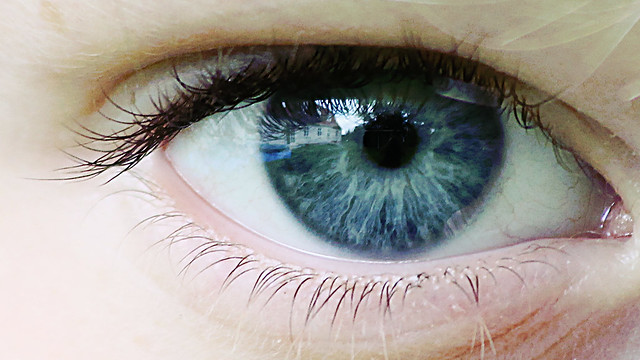
You see, I’m a little obsessed with eyes (turns out, much of the female population is—go figure). In my art, for example, if I don’t like the way the eyes turn out, chances are I’ll dump the whole thing. I didn’t think this obsession translated into my writing until someone pointed out to me that my very male, very distressed protagonist probably wasn’t going to be noticing everyone’s eye color in the opening scene. A quick scan through my manuscript showed that I’d mentioned pretty much everyone’s eye color—including minor show-up-once characters.

Oops.

Turns out, that pretty much applied to hair color too. Apparently my knee-jerk descriptions rely on the two.

As the author of our stories, we know what everyone looks like. We have a mental image of every character, every face, and our instinct is to try to paint in our readers the exact same image as the one in our minds.

Yeah, not gonna happen—nor should it.

We all have imaginations—and that includes our readers. Even if you go through the trouble of describing the way your love interest’s blonde hair never looks neat and the tint of his brown eyes and how he’s just shy of six foot and athletic and loves Levi jeans and Etnies and wears the same blue t-shirt every day, your readers will each have a different mental image of your character.

So if they’re going to imagine their own version anyway, should you really take the time to describe every character in every scene down to hair and eye color?

The short answer is no.

Guess what? Readers don’t want to know about every detail—they want to know the important details. Don’t tell us your character has black hair, blue eyes, stands at 5’9” and has a runner’s body—tell us about his crooked smile and the dimple on his cheek and the way his eyes completely pass you up when he walks past you. That’s much more powerful—agreed?

Truth is, if you leave out that your love interest’s dark hair is actually dark brown (not black) like Veronica Roth did, your readers aren’t going to feel cheated, nor will they be unable to picture your character. Whatever you don’t tell them, they’ll fill in for themselves.

It seems that sometimes we forget that readers have imaginations, too. Don’t underestimate them—they can fill in the blanks.

Leave out the general details and strive for the specific, important ones and your readers will love you for it. 

Do your favorite descriptions fully describe the character or setting, or do they choose specific details?
Related Posts Plugin for WordPress, Blogger...