Showing posts with label POV. Show all posts

Vlog: How to Write Third Person When You're Used to First

You asked, I answered! Today I'm talking about the easiest way to think about writing third person when you're used to writing in first.


RELATED VLOGS: 


Twitter-sized bite:
Want to dabble with third person but have only ever written in first? Gabe (@Ava_Jae) shares some tips on trying out the new perspective. (Click to tweet)

How Many POVs Are Too Many?

Photo credit: Ram Balmur on Flickr
Judging by the various critiques I've done over the years, point of view, it seems, trips a lot of writers up. It's easy enough to understand why—when you come up with a great cast of characters, it can be tempting to think the more perspectives in the story, the more readers will connect with characters—and therefore, the story. Furthermore, exploring different character perspectives can be a great way to get to know the characters, which then makes it much easier to write them as fully realized people in your novel.

Only problem is too many POVs in a novel can make a story confusing, unfocused, and leave writers connecting with no one at all. But how many perspectives are too many?

The truth is, there isn't a magic number, because it's going to vary novel-to-novel. But the key to figuring it out is answering this question:

Whose story is this novel?

This requires paring down to the core of your story. It means thinking about what the story is really about and who the story is really about. Usually the answer will be one, maybe two characters, but sometimes the answer will be a little bigger than that. That's fine, the key is to just be honest with yourself when you answer the question.

Remember, when it comes to novel-writing, readers rarely need the perspectives of various periphery characters in order to understand the story. Sometimes—I'd wager many times—a minimal approach really works best.

How do you determine who your novel is really about?

Twitter-sized bite:
How many POVs are too many? And how can you tell? @Ava_Jae breaks down this common WIP problem. (Click to tweet)

Different Kinds of POV Slips and How to Avoid Them

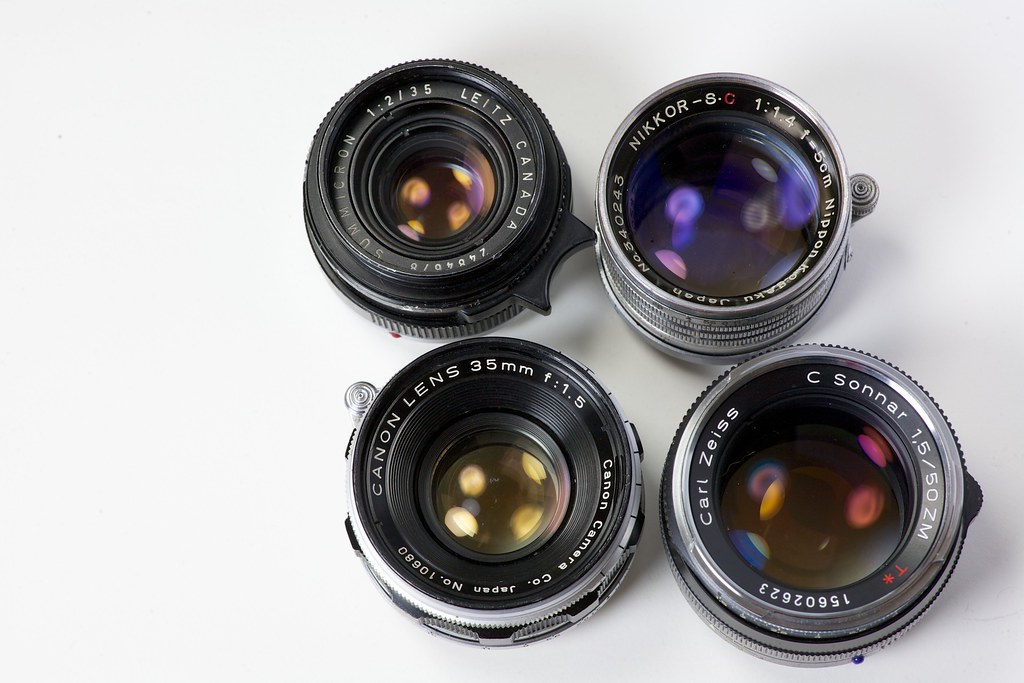
Photo credit: Sonnar3 on Flickr
One of my most common critiques when editing samples or full manuscripts revolves around POV slips. POV slips are incredibly common, in large part because there's a variety of them and because, well, when you're the author who knows everything it's easy to forget your POV character isn't privy to everything you know.

POV slips,  however, can be incredibly jarring and are a glaring, guaranteed way to remind the reader they're reading a book—in the sense that the writing draws attention to itself and distracts from the story, which is the opposite of what you want.

So what are the different kinds of POV slips? Let's take a look at some:

  • The switch. This happens when the POV outright changes to another character's perspective without a scene break. While not technically a mistake in omniscient POV, in just about any other POV (first person, third limited, etc.) this is absolutely a mistake, and a confusing one at that. While it's fine to write a story from multiple perspectives (although you want to make sure you have a vital reason for doing so), you definitely want to make sure to break up the POVs. Jumping back and forth between two or more characters in a single scene without breaking them up is a surefire way to give your readers whiplash.

  • POV character knows something they shouldn't. This has a lot of varieties too, and happens most often in third person. Your POV character shouldn't know what other characters are thinking (unless they're telepathic), feeling (unless they're empathic), secretly planning, smelling, seeing, etc without the other characters telling them. So, for example, if Arya is the POV character: 
Arya laughed. Helena thought it was the most beautiful laugh she'd ever heard. 
That doesn't work because Arya can't know what Helena is thinking.  
  • POV character sees themself (without a reflection). This happens most often with blushing, but there are other similar slip ups. Basically, while a character can experience what it feels like to blush, they can't physically see their face reddening without a reflection. Which is why I tend to go with "My face warmed" rather than "My face turned red." 

There are other varieties, but the common thread of POV slips is your perspective slips outside of the limitations of the perspective. There's a reason first and third person limited are limited perspectives—it means the readers can only know what the perspective characters know. They can only experience the world of the book through the eyes of the perspective characters. And even if you're writing a book with multiple perspective characters, you have to stick with one at a time within each scene and consider what that particular perspective characters knows and experiences at that particular time. 

It can be a challenging thing for sure, but hey, no one said writing a book was easy. And in the end, the challenge can force you to think in different ways, which is never a bad thing. 

Have you made any of these mistakes?

Twitter-sized bite:
What are different kinds of POV slips and why should you avoid them? @Ava_Jae breaks down this common writing error. (Click to tweet)

POV (Should) Influence Every Word

Photo credit: chefalfalfa on Flickr
While working on freelancing projects as of late, I've been thinking a lot about POV, and all the things a well-done immersive POV entails. When I first began writing, I thought POV was about focus—as in, the POV character was the character you had to focus on most in your writing, but that was about it. I knew, on paper, that you were supposed to "step into their shoes" so-to-speak, but I don't think I really knew what that meant until many years later when I began working with a critique partner who is truly excellent at writing immersive character perspectives.

When said critique partner pointed out to me, in an old work of mine, that I was using rather flowery language for an allo cishet non-artsy teen boy perspective, it sort of blew my mind. Because I realized, for the first time, that character perspective affects literally every word.

Your character perspective changes:

  • what words and phrases are used to describe things.
  • what readers know about the world, surroundings, and other characters. 
  • what readers see in any given scene. 
  • what readers think about other characters or various situations. 

The perspective, in other words, pretty much makes the story. 

That's why it's so important to really hone in on our characters' POVs. We need to understand the way they think, the way they speak, the way they feel even when they're trying to hide it, what they care about, what they look at, etc. It really does come down to asking ourselves, "would my perspective character use this word?" or "would my perspective character notice this?" There isn't a single part of the story that perspective doesn't affect in some way, and that's essential to remember. 

While it's not something I think you need to worry about too extensively while first drafting, it is definitely important to check—again, and again, and again—while revising. Because readers will notice when a perspective doesn't really fit a character, and long before that, not paying enough attention to perspective will limit your ability to deepen a story and make your characters truly feel memorable and real. 

Do you step into your characters' shoes when writing?

Twitter-sized bite:
Author @Ava_Jae says POV should influence every word in your WIPs. What do you think? (Click to tweet

Do You Need That POV?

Photo credit: evans.photo on Flickr
I recently mentioned that POV issues are one of the most common critiques I have for manuscripts I edit. Of those, I'd say probably the most frequently POV issue I come across is unnecessary POVs.

I totally understand why this is a common problem. It can be hard, when you've decided to write a multi-POV story, to decide what POVs are needed to tell the story. After all, you're the author, you could write a story with five, eight, ten, fifteen POVs if you wanted to—but as is the case with many things, just because you can doesn't mean you should.

So how do you know how many POVs to use? And how to you decide what characters should get their own POV?

I always start with this rule of thumb: use as few POVs as you need to tell the story. This is a case where more is not the merrier. Why? Because switching POVs is jarring to readers, and the more times you do it with the more characters you use, the harder it is to get used to any one perspective. There are some readers out there who won't read multi-POV novels simply because they don't like head-hopping, so you really need to have a good reason for every POV that you use. As is the case with all things in writing, there should be a reason for everything.

But what counts as a good reason? Well...

It starts with really understanding your plot. What is the point of the story? What is the central goal and conflict? You'll want to make sure your POV characters are absolutely central to the story, in that you can't tell the story without their perspective. It means every POV character is directly tied to the central goal, so that their story is the story. What you don't need is to give supporting characters perspective chapters—every POV character should be tied enough into the plot that they'd count as a protagonist too. POV characters shouldn't just support the story, they should be the story.

So say you have a cast of characters and are still working on the plot, so you aren't sure who to make a perspective character. The way you choose is actually less complicated than you'd think: you always want to go with the character(s) who have the most at stake and would be most affected by the plot. And in the case of YA, these should all be teen characters.

Choosing perspectives for your story can be tricky at times, but I do think it gets easier with practice. Just make sure to consistently challenge yourself to only use as many POVs as you need to tell the story, and you'll be off to a great start.

Have you ever written a WIP with too many (or few!) POV characters? Or have you read any published books with that problem?

Twitter-sized bite: 
How many POVs should you use? What characters should get their own POV? @Ava_Jae talks choosing POVs. (Click to tweet)

Vlog: On Writing Distinctive POVs

You asked, I answered: today I'm talking how to write distinctive POVs, especially when working on multi-POV novels.


RELATED LINKS: 


Do you find it challenging to differentiate your POVs?

Twitter-sized bite: 
Author @Ava_Jae vlogs on writing distinctive POVs, especially when writing multi-POV novels. (Click to tweet)

Vlog: How to Choose POV Characters

Choosing POV characters can be tough, especially if you're not sure how many POVs to use. So today I'm sharing some tips to keep in mind when deciding which characters will tell your story.


RELATED LINKS:


How do you choose POV characters? 

Twitter-sized bite:
Struggling to decide what character(s) should narrate your WIP? @Ava_Jae vlogs tips on choosing POV characters. (Click to tweet)

How to Write Deep POV

Photo credit: queensu on Flickr
So I've been doing lots of critiquing for clients lately, which means I've been thinking a lot about point of view and how to delve into point of view effectively. I find that this is really essential for a lot of reasons, most importantly because oftentimes when readers find they can't connect to a character, it's because this is missing—the connection to the character on a level that feels real.

Without a connection, readers put a book down—and shallow point of view can often be a big factor into why.

So how do you write deep point of view? How do you establish that connection? While a foolproof, guaranteed system doesn't exist (because, of course, all readers are different), there are five things that play into a point of view that feels real.

  1. Through their eyes. So I wrote a whole post about writing description through character a while back, so I won't reiterate that part in too much detail, but the thing to remember is when you're writing in either first person or limited third, everything should be filtered through the POV character's eyes. Description isn't neutral; it's an extension of the POV character's mind. What seems to be to your character, in their POV, is until later proven not to be. 

  2. Thoughts. When writing in close POV, readers should be privy to all of your POV character's thoughts. What they think about other people, their attitudes toward any given situation, how they interpret events around them, etc. Remember to think about what your character is thinking about at any given moment, so we understand what the world and events mean to them.

  3. Emotions. Similarly, whenever something happens to your character, you want to think about how it makes them feel. Missing emotion is a pretty common reason why readers don't connect to characters; after all, it's really hard to empathize with someone who is emotionally shutting you out. This is something I've struggled with in my own writing—in early drafts of Beyond the Red, for example, Kora was so set on being strong that she shut me, the writer, out and made it really hard for me to figure out what she was feeling as the events took place. It took a lot of focused revision and prodding on my part to really delve into her character and get her to show me, and the readers, that she wasn't as cold as she sometimes to seemed to be.

    Related to this, however, is making sure that you show your POV character's emotions rather than telling the readers about them. Saying "I was angry" isn't nearly as effective as showing that anger, from the ways it physically affects your character to how it tints their thoughts, dialogue, and actions. I wrote a post about writing emotion effectively a while back focused on this exactly, and I very highly recommend The Emotion Thesaurus by Angela Ackerman and Becca Puglisi, which makes showing emotion exponentially easier.

  4. Physical sensations. From the five senses, to pain, to how emotions physically affect your POV characters, physical sensations are essential to making the readers feel as though they're experiencing what your POV character does. By immersing readers in sensory images as your POV character experiences the world, you'll pull them deeper into your book.

  5. (No) filtering. And last, but not least, removing filter phrases is a great way to strengthen writing and deepen perspective. Filter phrases like "I saw," "she realized," "he felt," "they smelled," etc. all distance readers from the perspective because it adds a layer of writer-speak that subtly reminds the readers they're reading a book. I explain in detail about this in the linked post, so I won't say much more, but limiting the amount of filter phrases you use can be a great way to further deepen POV.

So those are five ways to help forge a connection between your POV character and your readers. It can be a lot of work, and totally something you can save for revisions, by the way, but it's work that I find ultimately pays off every time.

Have you tried any of these methods to deepen character POV in your writing?

Twitter-sized bites:
Struggling to get readers to connect to your characters? @Ava_Jae shares 5 POV-deepening tips. (Click to tweet
How do you get readers to connect to your characters? @Ava_Jae shares 5 tips. #writetip (Click to tweet

POV Choices in YA

Photo credit: Hometown Beauty on Flickr
For many years now, as a writer I’ve been drawn to first person narratives. All but one (my first) of my many WIPs were written with “I”s and “me”s and to say that I’ve devoured a ton of first person YA narratives over the years is an understatement.

As of late, and for a while now, first person has become super popular in YA (I’m guessing Twilight may have something to do with this, given that it was the first first-person YA I’d ever come across and that series was kiiiiinda a big deal, but don’t quote me on that) though it is absolutely not the only POV option out there. So as a writer trying to decide which POV to use, how do you make that choice?

Let’s take a look at your options.

First person:

“This is worse, so much worse, than them seeing some stupid drawings. 
(Self-Portrait: Funeral in the Forest
But Zephyr’s not saying anything, he’s just standing there, looking like his Viking self, except all weird and mute. Why? 
Did I disable him with my mind?” 
-I’ll Give You the Sun by Jandy Nelson, page 5

I suspect first person is so popular now in YA especially because it gives a direct access to the emotional and tumultuous minds of teen protagonists, with the opportunity of a boatload of voice to boot. It’s easy enough for readers to transition into because we generally think in first person, so it feels as though the readers are really in the protagonist’s head, rather than being in a story. I find it an effortless POV to slip into while writing, and it frequently just comes to me naturally which is why I tend to use it so often, but that’s not necessarily the case with everyone.


Second person:

“You’re going to get out. You’ve beaten her. You can find Mercury. You will get three gifts.

But you’ve got to keep going.

You’ll be at the end of the loch in a minute.

Doing well. Doing well.

Not far now.

Soon be able to see over into the valley, and—” 
-Half Bad by Sally Green, page 12

Second person POV is the POV we all learned in middle school not to use. I remember my English teachers telling us second person POV was pretty near pointless to attempt because it was too easy for readers to pull out of the narrative (along the lines of I'm not doing what the book says I'm doing), and generally, second person POV is very rare in YA.

Now while I've yet to come across a YA written entirely in second person (the example I gave above uses sections of second person narrative, but is primarily written in first person), that's not to say that it can't be done. It would, however, probably be super difficult, given alone that readers just aren't used to it. (And honestly? Noooo idea how that would sell, publishing-wise.)

All of that said, you may want to play around with second person if you'd like to try a raw, immediate, and unsettling POV that'll keep your readers on the edge of feeling like everything is a little off. 
 

Third person: 

“Walking to school over the snow-muffled cobbles, Karou had no sinister premonitions about the day. It seemed like just another Monday, innocent but for its essential Mondayness, not to mention its Januaryness. It was cold, and it was dark—in the dead of winter the sun didn’t rise until eight—but it was also lovely. The falling snow and the early hour conspired to pain Prague ghostly, like a tintype photograph, all silver and haze.”

-Daughter of Smoke & Bone by Laini Taylor, page 1

So I frequently mention voice when talking about first person, but the truth is the third person YAs I’ve read are also really really voice-y. Like the above. Mondayness and Januaryness and that imagery and—

I should probably stop fangirling and talk to you about third person perspective.

In terms of distance, third person perspective is slightly more distant to readers in that they aren’t plopped right in the POV character’s head—instead, they’re fed the story through a narrator, who, depending on how the POV is written (third person limited vs. omniscient, for example) will filter the story through that particular characters thoughts and feelings like first person, but through a separate narration.

That was confusing. Third person can do just about everything first person can do, but can also pull back more than first person can (though it doesn’t have to).

So what POV should you use? The truth is, it’s totally up to you to decide what feels most natural for the story (and for you). But the above are some things you may want to consider when deciding. If you experiment and read widely, you’ll figure out what’s right for your manuscript.

What POV do you prefer to read/write?

Twitter-sized bite:
Brainstorming a new WIP idea and not sure what POV to use? @Ava_Jae breaks down your options & things to consider. (Click to tweet)

Vlog: How to Write Multi-POVs

Thinking about writing a multi-POV novel, but don't know where to start? I share my top multi-POV writing-tips with some book recommendations.


RELATED LINKS: 

Have you ever attempted to write a multi-POV novel? 

Twitter-sized bites: 
"Every POV needs to be absolutely essential to the story" & other multi-POV writing tips from @Ava_Jae. #vlog (Click to tweet)  
Thinking about writing a multi-POV novel? @Ava_Jae vlogs her top multi-POV writing tips. (Click to tweet)

How to Differentiate Your POVs

Photo credit: elliemcc11 on Flickr
Writing in multiple POVs is one of my favorite things to play around with. It’s exhilarating to get into more than one character’s head, and analyze the plot from different perspectives, and really see how the characters view each other. It can also be a great way for easy, built-in hooks because you can end one POV chapter on a cliffhanger and the readers have to read a whole chapter from a different POV before finding out what happened *insert maniacal laughter here.*

Writing in multiple POVs, however, can be really tricky. Because not only are you fully fleshing out one POV character until you can speak and think like them on the page, but you have to do it twice. Or three times. Or however many times depending on the number of perspectives you’re using.

I've found that the hardest part of that is largely getting your characters to sound different.

In a multiple POV novel, a reader should be able to randomly open up to any page in the book, read a sentence, and know whose POV they’re in without any context. Readers notice when characters sound the same, and it can be really jarring because readers realize that they are, in essence, not reading a character’s POV, but hearing the author’s voice come through. (And also, having to flip back to the beginning of the chapter to remember whose POV they’re in is no bueno).

But how do you make sure your POV characters sound different? Here are my top two tips:

  1. Learn the way each character speaks. Some people speak in long sentences, some prefer short. Some characters have a wide vocabulary and use words like “inexplicably,” “horrendous,” and “capable” in every day speech, others do not and stick to more basic words and phrases. Some characters curse frequently, others think “hell” is a bad word. There are regional differences, accents, and varied slang. There are characters who are insecure and ask loads of questions, and characters who are angry and speak aggressively. The possibilities are quite literally endless, and it’s absolutely vital that you understand where each of your characters fit in—and that you make sure they’re different enough that readers won’t get confused.

  2. Always think about the POV character’s perspective. A rich character and poor character walk into a small room lined with bookshelves brimming with old books. These two characters are going to have wildly different perspectives on the same setting. The character used to opulence might notice how dusty everything is, the cracks on the ceiling, the old rug, the cracked bookcases. The character who grew up in poverty might be stunned by the amount of books in the room, and notice how cozy the shag rug is, and wonder how anyone could have the time to read so many books. This is a super basic example, but the point is this: your two POV characters have different backgrounds and personalities coloring how they see the world. It’s up to you, the author, to know the difference.

Unsurprisingly, the key to writing great multiple POV novels is to get to know each of your perspective characters really really well. While you’re writing, it’s vital to remember that ultimately, you aren’t telling the story—your characters are. And when you’re working with multiple POVs, each character is going to tell the story a little differently. Your job is to navigate the differences and make them feel real.

What are some of your favorite multi-POV novels? 

Twitter-sized bites: 
When writing many POVs @Ava_Jae says, "each character is going to tell the story a little differently." Do you agree? (Click to tweet)  
Struggling to make your many POV characters sound distinct? Writer @Ava_Jae shares some multi-POV writing tips. (Click to tweet)

How to Write Description Through Character

Photo credit: mark lorch on Flickr
While working on a WIP a couple years ago, my CP at the time pointed out to me that my teenage boy protagonist was having some rather un-teenage-boy-like thoughts. 

The problem was that some of the flowery analogies and purplish prose I had used were clashing with his voice, and she challenged me to ask myself if he would really think that. 

Since then, I have become much more aware of how my characters think and act, down to their choice of words and mannerisms. But one of the best aspects I took away from that CP comment, to me, actually applies to description. 

You see, when writing in first person, or even limited or close third, it’s very important to always keep the character in mind, but not just in the sense of getting to know them and perfecting their voices. You need to be able to climb into their heads and not only imagine the scene from their eyes in the sense of how they will react to their situation or their actions thereafter, but pin down what they notice when writing description. 

For a long time I thought of description as a sort of third-party affair. It was something I needed to include in order for the readers to understand where the action was taking place, but until my CP made that comment about my protagonist, I didn’t realize that it was much more than that. 

Because when you’re writing a story from a character’s POV, you need to filter the entire story from his or her POV. And that includes description. 

So when I talk about writing description through character, I mean that you need to think about not just what it is that you’re describing, but what your POV character would notice about it. 

For example, a poor character entering his neighbor’s run-down home would probably notice the smell of food cooking in the kitchen, or pictures on the walls, or some of the items scattered around the house. A rich character entering that same home, however, would likely notice how small everything was, the cracks in the walls, the peeling paint, and buckets for catching rainwater from the leaky ceilings. Their perspectives are different, and because of that, they would notice different details about the same place. 

This works the same way for character descriptions as well, in the cases of characters describing another character. Here’s a great example from John Updike’s short story “A&P”:
“She was the queen. She kind of led them, the other two peeking around and making their shoulders round. She didn't look around, not this queen, she just walked straight on slowly, on these long white prima donna legs. She came down a little hard on her heels, as if she didn't walk in her bare feet that much, putting down her heels and then letting the weight move along to her toes as if she was testing the floor with every step, putting a little deliberate extra action into it.”
What I love about this example (and the rest of the examples scattered throughout the text), is that rather than giving us a laundry list of descriptions, we get the full description from the POV character’s mind. The first thing he notices about this particular girl isn’t her hair or eye color, it’s her long prima donna legs and the way she walks. The whole short story is full of the kind of description through character I’m talking about, so if you’re interested, you can read the whole thing here

So next time you write a description from anything other than an omniscient POV, take the time to consider what your POV character would notice first, and what tidbits he or she may ignore. The extra thought may be exactly what you need to write an interesting, unique description. 

Do you write your descriptions through your characters? 


Twitter-sized bites: 
What is description through character and why is it important? Writer @Ava_Jae explains. (Click to tweet)  
Do you write your descriptions through the lens of your character? Here's why you should. (Click to tweet)

How to Write Multiple POVs

Photo credit: yuan2003 on Flickr
Quite a while ago, I wrote a post on why you might consider using multiple POVs in your WIP, but it
occurred to me that I never followed it up with a post covering the how.

A general rule of thumb I follow is to tell the story in as few POVs as possible. If you can tell the full story of your novel in a single POV, then there’s no reason to add a second or third POV (remember: nothing in your novel should be unnecessary). If, on the other hand, you need more than one POV to fully tell your story, then multiple POVs are certainly something you’ll need to consider.

Once you’ve decided that using multiple POVs is the right choice for your novel, and you’ve chosen your POV characters, the most important step is your first step: getting to know your characters.

The process is no different from getting to know your protagonist in a single POV novel, except that you’ll repeat the process with every one of your POV characters. Depending on what your first draft process is like, you can hypothetically leave a couple questions unanswered when jumping into your first draft, but by the time you’ve churned out your final draft you should know each of your POV characters equally well.

The reason this is so crucially important for multiple POV novels, is that if you don’t know one character as well as the other, rather than reading distinct voices, all of the characters start to sound like the one you know the best.

In order for a multiple POV novel to work, every POV must have his or her own distinctive voice. A reader should be able to open up a chapter, read a couple lines and figure out what character they’re reading with relative ease. If the voices start to blend together and mirror each other, you know it’s time to sit down and really get to know your characters.

One thing that has helped me with multi-POV problems is to sit down and differentiate what makes your POV characters different. I’ve found that making a list of these differences—ideological differences, varied fears and dreams, and particularly how they speak and think differently—helped me to narrow down a specific voice and focus for each POV character.

When done correctly, multiple POVs can add an extra interesting element to your WIP. The key is just to take enough time to do it effectively.

Have you ever written multiple POVs? If so, what was your experience like? If not, have you read any multi-POV novels that stuck with you?  

Why Use Multiple POVs?

Photo credit: --Tico-- on Flickr
So not too long ago I wrote a post on how to choose a POV character and once again, one of you fantabulous commenters asked a question that inspired a post—this time, on using multiple POVs. 

Adding a second or third POV into your story isn’t a decision to be taken lightly—it’s much more challenging to write two or three (or more) distinctive voices than it is to write one, and creating effective transitions between the POV shifts is tricky. On top of the technical challenges behind crafting multiple POVs into a novel, there’s the added obstacle that some readers just don’t like multiple POVs because they find the head-hopping jarring and difficult to follow. When you write multiple POVs, you run the risk that a reader may put your book down simply because they didn’t like the way you handled having more than one POV character.

However, when done correctly, multiple POVs can add an interesting dimension to your story.

Multiple POVs allow your reader to see your story from many angles—they don’t necessarily have to take one character’s word for granted, and the ability to hop between many characters’ heads can be especially interesting when the characters don’t necessarily see eye to eye. As an added bonus, it also allows you to give the reader more information than either one character has—not only do they know what Character A knows, but they have access to Character B’s mind as well.

In Across the Universe (Beth Revis), for example, the readers have access to both Amy and Elder’s thoughts, who see the events that unfold in the story from completely different perspectives as Amy is a passenger on the spaceship Godspeed who was cryogenically frozen and accidentally awakened many decades before she was supposed to be woken up, while Elder is a ship-born teenager who is being raised to become the next leader of Godspeed. Readers very quickly learn the customs, beliefs and shifts in language (i.e.: “frex” instead of another four-letter word) from Elder’s thoughts, while we sympathize with Amy who is, in essence, one of us—an Earth born girl trying to understand the new world she was thrust into.

Unlike Across the Universe, however, The Iron Fey series (Julie Kagawa) used multiple POVs in an entirely different way—while the first three books were told from Meghan Chase’s POV, the final book of the series, The Iron Knight gave readers a glimpse into winter fey Ash’s mind. Without spoiling anything, this shift in POV was necessary due to events that happened in the third book that led to Meghan and Ash’s separation, and The Iron Knight is largely about Ash trying to return to her. While the POV shift was a little more jarring as readers were already accustomed to hearing from Meghan (not Ash), I personally found the extra insight into Ash’s mind to be a fascinating experience.

There are many different ways of handling multiple POVs, but the key to writing it is to make sure that both POVs are absolutely necessary to the story. If so, it can be a great way to add an extra layer of complexity to your plot, but if not, you run the risk of losing readers who will wonder why the extra POV was necessary to begin with.

What do you think of multiple POVs in books? Do you enjoy reading or writing them? Why or why not?

How to Choose a POV Character

Photo credit: davidz on Flickr
There are many factors to consider and questions to answer when you decide to write a book. What genre and age group do you want to write in? Should you write in first person or third? Past or present tense? Will you do any plotting beforehand or pants the whole thing entirely?

One of the earliest questions you must answer, however, before you even write a single word of your soon-to-be Work In Progress (or WIP, for those of you wondering) is which character will be your point of view (POV) character?

Choosing a POV character is arguably the most important part of novel-planning for limited third or first person POV stories, because it affects absolutely everything in the story—from voice, to plot points, to how (and what) information will be revealed to your readers. The POV character that you choose will affect every word in your story, because the story will be filtered through his or her lens.

But while sometimes the POV character is obvious right from the start, choosing a POV character is not always so cut and dry. In those instances when you’re not entirely sure whose POV you should write from, there are two major questions you must ask yourself:

  • Which character has the most at stake? This is the most important question—which character has the most to lose? Readers don’t want to hear from a character who has nothing to lose—that character won’t be emotionally invested in the story and so neither will your readers be. The character who will take the biggest risks, who will suffer if he doesn’t succeed, who is so emotionally invested and entangled in the story that he couldn’t remove himself from it even if he wanted to—that’s the character you want narrating your story.

    Once you’ve determined which character has the most at stake and will be most affected by the plot, you can then move on to the second question.

  • Am I invested enough in this character to stay in his/her head for 300+ pages? This is important because sometimes, especially in the early plotting of our story, we don’t know enough about our characters to really determine how interested we are in them. Before you start writing, however, it is vital that you make your character interesting enough to you that you look forward to spending the next many months living inside of his head—because when you’re writing, especially in a close POV, that’s exactly what you’re doing. If you’re not interested enough in your character to do so, you can pretty much guarantee your readers won’t be very interested either, assuming you even finish the story.

Let’s test two examples:

  • Harry Potter (J.K. Rowling)—The Harry Potter series has an enormous cast of characters, but the obvious choice for POV character would be one of the main three characters—Harry, Ron and Hermione. Out of the three, Harry definitely has the most at stake—the most evil wizard of all time tried to kill him when he was an infant and left him an orphan, and now that he’s older, that same evil wizard is returning and he hasn’t forgotten about little Harry Potter. The interest bit (very slight spoiler), as we learn later on, is if Voldemort had interpreted the prophecy that led him to attack Harry when he was a baby differently, he may have tried to kill Neville Longbottom instead, and the first story would likely have been Neville Longbottom and the Sorcerer’s (or Philosopher’s) Stone, instead.

  • The Hunger Games (Suzanne Collins)—It could be argued that anyone chosen in the Reaping has pretty near equal stakes—there can only be one winner of the Hunger Games, so every tribute has their life on the line. Why then, did Suzanne Collins choose Katniss as a POV over Peeta or any of the other tributes? I’m sure there were many reasons, but the two that stand out to me the most are these: Katniss has a little more at stake than Peeta, in that Peeta knows his family will survive without him if he doesn’t win the Hunger Games, while Katniss isn’t so sure and (IMO) Katniss is a more interesting character than Peeta.

    That’s not to say that Peeta is boring—but he’s good with the crowd, he’s level-headed and consistent, while Katniss is terrible at public relations (a big deal for Hunger Games tributes), has a relatively short fuse, doesn’t trust anyone and is incredibly stubborn. All of these factors give her more trouble during the games, and put the readers on an emotional rollercoaster throughout the plot.

Choosing a POV character isn’t a process that should be taken lightly, but once you’ve chosen the right character to carry your story, the rest will fall into place.

How do you choose a POV character? Have you ever switched your POV character after you started writing? Share your experience in the comments below—I’d love to hear from you.
Related Posts Plugin for WordPress, Blogger...