Showing posts with label multi-POV. Show all posts

How Many POVs Are Too Many?

Photo credit: Ram Balmur on Flickr
Judging by the various critiques I've done over the years, point of view, it seems, trips a lot of writers up. It's easy enough to understand why—when you come up with a great cast of characters, it can be tempting to think the more perspectives in the story, the more readers will connect with characters—and therefore, the story. Furthermore, exploring different character perspectives can be a great way to get to know the characters, which then makes it much easier to write them as fully realized people in your novel.

Only problem is too many POVs in a novel can make a story confusing, unfocused, and leave writers connecting with no one at all. But how many perspectives are too many?

The truth is, there isn't a magic number, because it's going to vary novel-to-novel. But the key to figuring it out is answering this question:

Whose story is this novel?

This requires paring down to the core of your story. It means thinking about what the story is really about and who the story is really about. Usually the answer will be one, maybe two characters, but sometimes the answer will be a little bigger than that. That's fine, the key is to just be honest with yourself when you answer the question.

Remember, when it comes to novel-writing, readers rarely need the perspectives of various periphery characters in order to understand the story. Sometimes—I'd wager many times—a minimal approach really works best.

How do you determine who your novel is really about?

Twitter-sized bite:
How many POVs are too many? And how can you tell? @Ava_Jae breaks down this common WIP problem. (Click to tweet)

Different Kinds of POV Slips and How to Avoid Them

Photo credit: Sonnar3 on Flickr
One of my most common critiques when editing samples or full manuscripts revolves around POV slips. POV slips are incredibly common, in large part because there's a variety of them and because, well, when you're the author who knows everything it's easy to forget your POV character isn't privy to everything you know.

POV slips,  however, can be incredibly jarring and are a glaring, guaranteed way to remind the reader they're reading a book—in the sense that the writing draws attention to itself and distracts from the story, which is the opposite of what you want.

So what are the different kinds of POV slips? Let's take a look at some:

  • The switch. This happens when the POV outright changes to another character's perspective without a scene break. While not technically a mistake in omniscient POV, in just about any other POV (first person, third limited, etc.) this is absolutely a mistake, and a confusing one at that. While it's fine to write a story from multiple perspectives (although you want to make sure you have a vital reason for doing so), you definitely want to make sure to break up the POVs. Jumping back and forth between two or more characters in a single scene without breaking them up is a surefire way to give your readers whiplash.

  • POV character knows something they shouldn't. This has a lot of varieties too, and happens most often in third person. Your POV character shouldn't know what other characters are thinking (unless they're telepathic), feeling (unless they're empathic), secretly planning, smelling, seeing, etc without the other characters telling them. So, for example, if Arya is the POV character: 
Arya laughed. Helena thought it was the most beautiful laugh she'd ever heard. 
That doesn't work because Arya can't know what Helena is thinking.  
  • POV character sees themself (without a reflection). This happens most often with blushing, but there are other similar slip ups. Basically, while a character can experience what it feels like to blush, they can't physically see their face reddening without a reflection. Which is why I tend to go with "My face warmed" rather than "My face turned red." 

There are other varieties, but the common thread of POV slips is your perspective slips outside of the limitations of the perspective. There's a reason first and third person limited are limited perspectives—it means the readers can only know what the perspective characters know. They can only experience the world of the book through the eyes of the perspective characters. And even if you're writing a book with multiple perspective characters, you have to stick with one at a time within each scene and consider what that particular perspective characters knows and experiences at that particular time. 

It can be a challenging thing for sure, but hey, no one said writing a book was easy. And in the end, the challenge can force you to think in different ways, which is never a bad thing. 

Have you made any of these mistakes?

Twitter-sized bite:
What are different kinds of POV slips and why should you avoid them? @Ava_Jae breaks down this common writing error. (Click to tweet)

Do You Need That POV?

Photo credit: evans.photo on Flickr
I recently mentioned that POV issues are one of the most common critiques I have for manuscripts I edit. Of those, I'd say probably the most frequently POV issue I come across is unnecessary POVs.

I totally understand why this is a common problem. It can be hard, when you've decided to write a multi-POV story, to decide what POVs are needed to tell the story. After all, you're the author, you could write a story with five, eight, ten, fifteen POVs if you wanted to—but as is the case with many things, just because you can doesn't mean you should.

So how do you know how many POVs to use? And how to you decide what characters should get their own POV?

I always start with this rule of thumb: use as few POVs as you need to tell the story. This is a case where more is not the merrier. Why? Because switching POVs is jarring to readers, and the more times you do it with the more characters you use, the harder it is to get used to any one perspective. There are some readers out there who won't read multi-POV novels simply because they don't like head-hopping, so you really need to have a good reason for every POV that you use. As is the case with all things in writing, there should be a reason for everything.

But what counts as a good reason? Well...

It starts with really understanding your plot. What is the point of the story? What is the central goal and conflict? You'll want to make sure your POV characters are absolutely central to the story, in that you can't tell the story without their perspective. It means every POV character is directly tied to the central goal, so that their story is the story. What you don't need is to give supporting characters perspective chapters—every POV character should be tied enough into the plot that they'd count as a protagonist too. POV characters shouldn't just support the story, they should be the story.

So say you have a cast of characters and are still working on the plot, so you aren't sure who to make a perspective character. The way you choose is actually less complicated than you'd think: you always want to go with the character(s) who have the most at stake and would be most affected by the plot. And in the case of YA, these should all be teen characters.

Choosing perspectives for your story can be tricky at times, but I do think it gets easier with practice. Just make sure to consistently challenge yourself to only use as many POVs as you need to tell the story, and you'll be off to a great start.

Have you ever written a WIP with too many (or few!) POV characters? Or have you read any published books with that problem?

Twitter-sized bite: 
How many POVs should you use? What characters should get their own POV? @Ava_Jae talks choosing POVs. (Click to tweet)

Vlog: On Writing Distinctive POVs

You asked, I answered: today I'm talking how to write distinctive POVs, especially when working on multi-POV novels.


RELATED LINKS: 


Do you find it challenging to differentiate your POVs?

Twitter-sized bite: 
Author @Ava_Jae vlogs on writing distinctive POVs, especially when writing multi-POV novels. (Click to tweet)

Vlog: How to Choose POV Characters

Choosing POV characters can be tough, especially if you're not sure how many POVs to use. So today I'm sharing some tips to keep in mind when deciding which characters will tell your story.


RELATED LINKS:


How do you choose POV characters? 

Twitter-sized bite:
Struggling to decide what character(s) should narrate your WIP? @Ava_Jae vlogs tips on choosing POV characters. (Click to tweet)

My Favorite Multi-POV Novels

Writing multi-POV novels is a tough business. Between writing a fully-formed plot with multiple characters who are all (somewhat) equally involved and invested in the narrative (and thus deserving of their perspective), keeping all the voices distinct, making sure the multiple character arcs line up, and everything else involved, it can be a lot. I've already written posts on how to write multi-POV novels, dual-POV writing tips, choosing POV characters, etc., but one tip I give a lot is to read what you want to write. So if you want to write multi-POV novels, reading them can be really helpful.

I haven't, however, really talked much about multi-POV novels I've enjoyed, so I'm going to fix that now with a list. So if you're looking for multi-POV books, take a look at these:


Six of Crows duology by Leigh Bardugo

What's extra great about this one (besides, you know, everything) is Bardugo mastered not only third-person multi-POV, but she did it while also honing each POV character's distinct voice. It is excellent.


Illuminae Files trilogy by Jay Kristoff and Amie Kaufman

This one's an interesting example, because there are SO many POV characters. In Illuminae, there's Kady, Ezra, AIDAN (the AI), people transcribing video files, and probably more than I'm forgetting. The trilogy is told in a found materials format, which is unusual, and awesome, and the way multiple POVs are balanced and played with makes for super interesting reading.


Shades of Magic trilogy by V.E. Schwab

Another excellent multi-POV in third person trilogy. Also I just really love V.E. Schwab's third person voice like whoa.


Across the Universe trilogy by Beth Revis

This is the first dual-POV YA I read and wow, I loved it. It's an old example but remains the book that taught me how effective first person dual-POV can be, so I will continue recommending it forever.


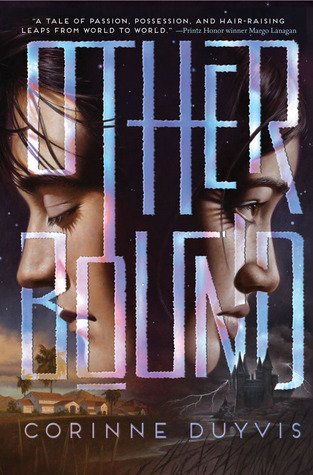
Otherbound by Corinne Duyvis

This is a great one because not only is it dual-POV chock full of great representation, but the two POV characters literally live in different worlds. So that's pretty neat.


The Scorpio Races by Maggie Stiefvater

This book is really beautifully written and another great example of distinct YA third person dual-POV voices.


Others (both that I've read and haven't): The 5th Wave by Rick Yancey, Carry On and Eleanor & Park by Rainbow Rowell, The Mortal Instruments series by Cassandra Clare, Faking It by Cora Carmack, Starbound trilogy by Amie Kaufman, Under the Never Sky trilogy by Veronica Rossi, Legend trilogy by Marie Lu, This is Where it Ends by Marieke Nijkamp, and Mind Games by Kiersten White.

What are some of your favorite multi-POV novels?

Twitter-sized bite:
What are some of your favorite multi-POV novels? @Ava_Jae shares some picks & kicks off the discussion on her blog. (Click to tweet)

Vlog: How to Write Multi-POVs

Thinking about writing a multi-POV novel, but don't know where to start? I share my top multi-POV writing-tips with some book recommendations.


RELATED LINKS: 

Have you ever attempted to write a multi-POV novel? 

Twitter-sized bites: 
"Every POV needs to be absolutely essential to the story" & other multi-POV writing tips from @Ava_Jae. #vlog (Click to tweet)  
Thinking about writing a multi-POV novel? @Ava_Jae vlogs her top multi-POV writing tips. (Click to tweet)
Related Posts Plugin for WordPress, Blogger...