Showing posts with label dual-POV. Show all posts

How Many POVs Are Too Many?

Photo credit: Ram Balmur on Flickr
Judging by the various critiques I've done over the years, point of view, it seems, trips a lot of writers up. It's easy enough to understand why—when you come up with a great cast of characters, it can be tempting to think the more perspectives in the story, the more readers will connect with characters—and therefore, the story. Furthermore, exploring different character perspectives can be a great way to get to know the characters, which then makes it much easier to write them as fully realized people in your novel.

Only problem is too many POVs in a novel can make a story confusing, unfocused, and leave writers connecting with no one at all. But how many perspectives are too many?

The truth is, there isn't a magic number, because it's going to vary novel-to-novel. But the key to figuring it out is answering this question:

Whose story is this novel?

This requires paring down to the core of your story. It means thinking about what the story is really about and who the story is really about. Usually the answer will be one, maybe two characters, but sometimes the answer will be a little bigger than that. That's fine, the key is to just be honest with yourself when you answer the question.

Remember, when it comes to novel-writing, readers rarely need the perspectives of various periphery characters in order to understand the story. Sometimes—I'd wager many times—a minimal approach really works best.

How do you determine who your novel is really about?

Twitter-sized bite:
How many POVs are too many? And how can you tell? @Ava_Jae breaks down this common WIP problem. (Click to tweet)

Different Kinds of POV Slips and How to Avoid Them

Photo credit: Sonnar3 on Flickr
One of my most common critiques when editing samples or full manuscripts revolves around POV slips. POV slips are incredibly common, in large part because there's a variety of them and because, well, when you're the author who knows everything it's easy to forget your POV character isn't privy to everything you know.

POV slips,  however, can be incredibly jarring and are a glaring, guaranteed way to remind the reader they're reading a book—in the sense that the writing draws attention to itself and distracts from the story, which is the opposite of what you want.

So what are the different kinds of POV slips? Let's take a look at some:

  • The switch. This happens when the POV outright changes to another character's perspective without a scene break. While not technically a mistake in omniscient POV, in just about any other POV (first person, third limited, etc.) this is absolutely a mistake, and a confusing one at that. While it's fine to write a story from multiple perspectives (although you want to make sure you have a vital reason for doing so), you definitely want to make sure to break up the POVs. Jumping back and forth between two or more characters in a single scene without breaking them up is a surefire way to give your readers whiplash.

  • POV character knows something they shouldn't. This has a lot of varieties too, and happens most often in third person. Your POV character shouldn't know what other characters are thinking (unless they're telepathic), feeling (unless they're empathic), secretly planning, smelling, seeing, etc without the other characters telling them. So, for example, if Arya is the POV character: 
Arya laughed. Helena thought it was the most beautiful laugh she'd ever heard. 
That doesn't work because Arya can't know what Helena is thinking.  
  • POV character sees themself (without a reflection). This happens most often with blushing, but there are other similar slip ups. Basically, while a character can experience what it feels like to blush, they can't physically see their face reddening without a reflection. Which is why I tend to go with "My face warmed" rather than "My face turned red." 

There are other varieties, but the common thread of POV slips is your perspective slips outside of the limitations of the perspective. There's a reason first and third person limited are limited perspectives—it means the readers can only know what the perspective characters know. They can only experience the world of the book through the eyes of the perspective characters. And even if you're writing a book with multiple perspective characters, you have to stick with one at a time within each scene and consider what that particular perspective characters knows and experiences at that particular time. 

It can be a challenging thing for sure, but hey, no one said writing a book was easy. And in the end, the challenge can force you to think in different ways, which is never a bad thing. 

Have you made any of these mistakes?

Twitter-sized bite:
What are different kinds of POV slips and why should you avoid them? @Ava_Jae breaks down this common writing error. (Click to tweet)

Vlog: On Writing Distinctive POVs

You asked, I answered: today I'm talking how to write distinctive POVs, especially when working on multi-POV novels.


RELATED LINKS: 


Do you find it challenging to differentiate your POVs?

Twitter-sized bite: 
Author @Ava_Jae vlogs on writing distinctive POVs, especially when writing multi-POV novels. (Click to tweet)

Vlog: How to Choose POV Characters

Choosing POV characters can be tough, especially if you're not sure how many POVs to use. So today I'm sharing some tips to keep in mind when deciding which characters will tell your story.


RELATED LINKS:


How do you choose POV characters? 

Twitter-sized bite:
Struggling to decide what character(s) should narrate your WIP? @Ava_Jae vlogs tips on choosing POV characters. (Click to tweet)

My Favorite Multi-POV Novels

Writing multi-POV novels is a tough business. Between writing a fully-formed plot with multiple characters who are all (somewhat) equally involved and invested in the narrative (and thus deserving of their perspective), keeping all the voices distinct, making sure the multiple character arcs line up, and everything else involved, it can be a lot. I've already written posts on how to write multi-POV novels, dual-POV writing tips, choosing POV characters, etc., but one tip I give a lot is to read what you want to write. So if you want to write multi-POV novels, reading them can be really helpful.

I haven't, however, really talked much about multi-POV novels I've enjoyed, so I'm going to fix that now with a list. So if you're looking for multi-POV books, take a look at these:


Six of Crows duology by Leigh Bardugo

What's extra great about this one (besides, you know, everything) is Bardugo mastered not only third-person multi-POV, but she did it while also honing each POV character's distinct voice. It is excellent.


Illuminae Files trilogy by Jay Kristoff and Amie Kaufman

This one's an interesting example, because there are SO many POV characters. In Illuminae, there's Kady, Ezra, AIDAN (the AI), people transcribing video files, and probably more than I'm forgetting. The trilogy is told in a found materials format, which is unusual, and awesome, and the way multiple POVs are balanced and played with makes for super interesting reading.


Shades of Magic trilogy by V.E. Schwab

Another excellent multi-POV in third person trilogy. Also I just really love V.E. Schwab's third person voice like whoa.


Across the Universe trilogy by Beth Revis

This is the first dual-POV YA I read and wow, I loved it. It's an old example but remains the book that taught me how effective first person dual-POV can be, so I will continue recommending it forever.


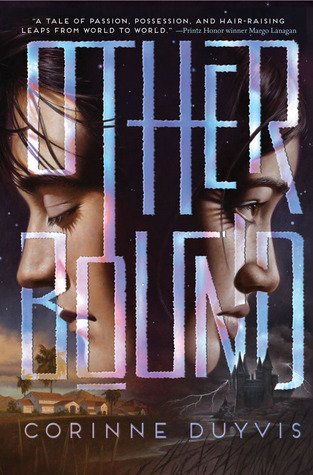
Otherbound by Corinne Duyvis

This is a great one because not only is it dual-POV chock full of great representation, but the two POV characters literally live in different worlds. So that's pretty neat.


The Scorpio Races by Maggie Stiefvater

This book is really beautifully written and another great example of distinct YA third person dual-POV voices.


Others (both that I've read and haven't): The 5th Wave by Rick Yancey, Carry On and Eleanor & Park by Rainbow Rowell, The Mortal Instruments series by Cassandra Clare, Faking It by Cora Carmack, Starbound trilogy by Amie Kaufman, Under the Never Sky trilogy by Veronica Rossi, Legend trilogy by Marie Lu, This is Where it Ends by Marieke Nijkamp, and Mind Games by Kiersten White.

What are some of your favorite multi-POV novels?

Twitter-sized bite:
What are some of your favorite multi-POV novels? @Ava_Jae shares some picks & kicks off the discussion on her blog. (Click to tweet)

Vlog: How to Write Multi-POVs

Thinking about writing a multi-POV novel, but don't know where to start? I share my top multi-POV writing-tips with some book recommendations.


RELATED LINKS: 

Have you ever attempted to write a multi-POV novel? 

Twitter-sized bites: 
"Every POV needs to be absolutely essential to the story" & other multi-POV writing tips from @Ava_Jae. #vlog (Click to tweet)  
Thinking about writing a multi-POV novel? @Ava_Jae vlogs her top multi-POV writing tips. (Click to tweet)

How to Differentiate Your POVs

Photo credit: elliemcc11 on Flickr
Writing in multiple POVs is one of my favorite things to play around with. It’s exhilarating to get into more than one character’s head, and analyze the plot from different perspectives, and really see how the characters view each other. It can also be a great way for easy, built-in hooks because you can end one POV chapter on a cliffhanger and the readers have to read a whole chapter from a different POV before finding out what happened *insert maniacal laughter here.*

Writing in multiple POVs, however, can be really tricky. Because not only are you fully fleshing out one POV character until you can speak and think like them on the page, but you have to do it twice. Or three times. Or however many times depending on the number of perspectives you’re using.

I've found that the hardest part of that is largely getting your characters to sound different.

In a multiple POV novel, a reader should be able to randomly open up to any page in the book, read a sentence, and know whose POV they’re in without any context. Readers notice when characters sound the same, and it can be really jarring because readers realize that they are, in essence, not reading a character’s POV, but hearing the author’s voice come through. (And also, having to flip back to the beginning of the chapter to remember whose POV they’re in is no bueno).

But how do you make sure your POV characters sound different? Here are my top two tips:

  1. Learn the way each character speaks. Some people speak in long sentences, some prefer short. Some characters have a wide vocabulary and use words like “inexplicably,” “horrendous,” and “capable” in every day speech, others do not and stick to more basic words and phrases. Some characters curse frequently, others think “hell” is a bad word. There are regional differences, accents, and varied slang. There are characters who are insecure and ask loads of questions, and characters who are angry and speak aggressively. The possibilities are quite literally endless, and it’s absolutely vital that you understand where each of your characters fit in—and that you make sure they’re different enough that readers won’t get confused.

  2. Always think about the POV character’s perspective. A rich character and poor character walk into a small room lined with bookshelves brimming with old books. These two characters are going to have wildly different perspectives on the same setting. The character used to opulence might notice how dusty everything is, the cracks on the ceiling, the old rug, the cracked bookcases. The character who grew up in poverty might be stunned by the amount of books in the room, and notice how cozy the shag rug is, and wonder how anyone could have the time to read so many books. This is a super basic example, but the point is this: your two POV characters have different backgrounds and personalities coloring how they see the world. It’s up to you, the author, to know the difference.

Unsurprisingly, the key to writing great multiple POV novels is to get to know each of your perspective characters really really well. While you’re writing, it’s vital to remember that ultimately, you aren’t telling the story—your characters are. And when you’re working with multiple POVs, each character is going to tell the story a little differently. Your job is to navigate the differences and make them feel real.

What are some of your favorite multi-POV novels? 

Twitter-sized bites: 
When writing many POVs @Ava_Jae says, "each character is going to tell the story a little differently." Do you agree? (Click to tweet)  
Struggling to make your many POV characters sound distinct? Writer @Ava_Jae shares some multi-POV writing tips. (Click to tweet)

5 Dual-POV Writing Tips

Photo credit: kurichan+ on Flickr
So as many of you already know, I love dual-POV narratives. Reading multiple perspectives to me, is fascinating when done correctly, and writing it just never gets boring.

Writing dual-POV narratives, however, can be a little tricky, particularly if you haven’t done it before. Before you start, you’re going to want to make sure that having multiple perspectives is the right choice for your WIP (quick way to figure this out is to determine if you need more than one POV to tell your story. If you don’t, then stick with one POV). Even after you decide it’s the right option, multiple POVs can be tricky to manage, and so I’d like to share five tips to make your lives a teensie bit easier:

  1. Make sure the voices are distinct. This one can be a killer if you don’t get it right. In any multi-POV novel, you should be able to flip to a random page, read a couple sentences, and know which character is speaking. If you find yourself reading and having to check back to the beginning of the chapter to see whose speaking, then that’s usually a blaring sign that your voices aren’t distinct enough. Which leads me to the next point… 

  2. Really get to know your characters. This is the number one way to get two distinct, interesting voices—you need to know your characters inside and out. Level of education, slang, language choices, how their backgrounds affect their perspectives, temperament and values all play into perspective, and you need to know every one of those elements and how they affect your character’s voice.

    Even description varies in POV—what one character notices, pays attention to, and what they think about their surroundings will all vary depending on their individual perspectives. (More on that here).

  3. Pick up where the other character left off. I’m not going to say that I’ve never seen a successful flashback-like format where we went through the same event (or parts of the same event) from multiple character perspectives—I have, and it can work if the perspectives are enormously different. But most of the time, the most effective multi-POV method I’ve seen involves one character picking up where the other left off.

    The reason this works so well is because it avoids redundancy—if two characters are in relatively similar situations, then we really don’t need to see both of them eating lunch together twice from each perspective. By picking up where the previous POV character left off, you keep the story moving without giving readers a sense of massive deja vu. 

  4. Carefully consider why you’re choosing one POV for a particular scene. Dual-POV narratives often alternate back and forth with every chapter—but it doesn’t have to. The most important thing to consider when plotting out your dual-POV book, is why you’re choosing that particular POV for that particular scene.

    Generally, the POV we want to be in is the POV most affected by the events unfolding in that scene. So, for example, if a character’s house catches fire, we want to be in the POV of the character in the house, experiencing the fire—not the neighbor walking down the street outside. If a character is being arrested, we want the POV of the arrested character, not the friend watching from the sidelines, etc.

    Sometimes this can be a little tricky because both characters are affected by the unfolding events. When this happens, you’ll want to think about who is most affected, and if that’s equal, then consider which POV would be the most interesting. 

  5. Read books with multiple POVs. This almost goes without saying, but before you even start thinking about writing a multi-POV novel, you’re going to want to pick up some books with multiple POVs to see how it’s done. Some of my favorite multi-POV novels include the Across the Universe series by Beth Revis, The 5th Wave by Rick Yancey, and Faking It by Cora Carmack. I also recommend Every Day by David Levithan, which doesn’t have multiple POVs, but one POV in several bodies, which brings to light a lot of really interesting points about perspective. 

So those are my dual-POV tips—now I want to hear from you: what have you seen that works (or definitely doesn’t work) in effective dual-POV narratives?

Twitter-sized bites: 
Working on a dual or multi-POV WIP? Writer @Ava_Jae shares five tips you may find helpful. (Click to tweet)  
Five tips you may want to keep in mind when writing a dual-POV novel. (Click to tweet
Related Posts Plugin for WordPress, Blogger...