Showing posts with label J.K. Rowling. Show all posts

Why Mega-Successful Authors are Good News for Everyone

Photo credit: Beacon Radio on Flickr
So there’s this post floating around from the Huffington Post that activated some massive internal raging. 

I’m not going to link to it, because I don’t want to give it extra free traffic, but if you’re so inclined, it’s pretty easy to find on Twitter, as it involves telling J.K. Rowling to stop writing adult books because she’s hogging up all the success—but it’s ok for her to write kid lit because those books aren’t as good anyway. Yep. 

As much as I'd like to rage about why kidlit is just as important as adult literature, I know I'm preaching to the choir here, so I'm going to focus on something equally important (and a little less screamy).

The thing that some people, particularly people outside of the publishing industry tend to forget, is that there’s room for everyone to be successful. In fact, one author’s mega-success is actually good for everyone else.

Think about it.

Let’s take J.K. Rowling, for example. The Harry Potter series was one of the first major crossover kid lit titles that blew the door wide open for other kid lit successes. Why? Well let’s take a look.

Harry Potter, as we all know, sold incredibly well. Incredibly x a million. Hugely successful books means more money for publishers—who then have more cash to buy more books from writers and give more debuts a chance, more money for bookstores—who then run less of a risk of crashing and burning like Borders, and more money for the authors—who, quite frankly, deserve their success. But it’s not just the money—hugely successful books are the direct result of more people reading. 

Why is more people reading a good thing, you ask? I can’t even tell you how many people I’ve heard say “I didn’t like reading but I loved [insert popular book title here].” Successful books show people who didn’t think they liked to read that reading can actually be great. Successful books get more people buying books, and guess what? Many times when they finish reading said successful book, they look for another book. Because maybe reading isn’t so bad after all and they’ll like the next book just as much as that successful book they just read.

Time and time again, successful books have proven that they help so much more than the author.

The Twilight series brought the spotlight down on YA lit.

The Hunger Games series opened the door to a variety of fantastic dystopian novels, like say, a little series called Divergent.

The 50 Shades of Grey series gave a huge boost to erotica sales.

All of these books created new readers—people who didn’t really read much before because they thought they wouldn’t like it and changed their minds after reading that successful book. And that’s good for everyone, because more readers = more book sales, and more book sales = good news for writers.

See, this one huge aspect of the publishing world that I love—we can genuinely be happy for each other’s successes, even (and especially) crazy-massive successes, because it’s good news for everyone. Books are not a market like cars or laptops or iPads where the customer will only buy one for several years. The success of one book opens the door for the successes of many others, and to me, that’s one of the many things that makes this community so incredibly wonderful.

So let’s cut the jealousy and the bitterness and just be happy and supportive for one another, okay? There’s no need for negativity in this incredible community that I will always love.

What do you think? 

Twitter-sized bites: 
Writer @Ava_Jae breaks down why mega-successes like J.K. Rowling & E.L. James are good for the publishing community. (Click to tweet)  
.@Ava_Jae says “…there’s room for everyone to be successful [in the publishing industry].” What do you think? (Click to tweet

Stupid Characters vs. Stupid Decisions: They're Not the Same

Photo credit: karly ilustraciones on Flickr
Throughout the course of a lifetime, we all make less than intelligent decisions from time to time—some of us more than others—so it should be no surprise that occasionally, our characters make choices that are many miles south of brilliant.

We see examples of these stupid (and often infuriating) decisions in even the most popular books and movies. For example:

  • The Harry Potter series (J.K. Rowling): Harry Potter makes more than a handful of astoundingly stupid decisions throughout the seven book series. Troll in the dungeon? Why yes, first years with little to no experience with magic are certainly capable of fighting off a raging troll. Mermaids make it clear that you may only save one student from underwater prison during the TriWizard Tournament? Harry the hero must save them all (because apparently he really thinks Dumbledore would let them die). 

  • Insurgent (Veronica Roth): Without spoiling anything, Tris makes plenty of decisions that fall short of the "intelligent" mark, many of which nearly get her killed. 

  • The Return of the King (J.R.R. Tolkien): And let's not forget to mention a certain overly curious hobbit (*cough* Pippin) who sneaks a peek at the shiny seeing stone that Gandalf made quite clear was off-limits. 

So what makes these regrettable decisions acceptable to readers? The answer is simple: there's a large difference between a stupid character and a stupid decision.

You see, when writing, unintelligent character decisions or mistakes can create great opportunities for character growth, plot progression and conflict. Whether it involves said character dealing with the consequences of his unfortunate decision, or other characters facing the repercussions of the act, stupid decisions can create great plot material (more on that in this post).

A stupid character, on the other hand, isn't nearly as useful.

Now you may be wondering what I mean by stupid character. To clarify, a stupid character...

  • Makes bad decisions just for the sake of making a bad decision (ergo: has no legitimate reason to make said bad decision). 

  • Ignores easy solutions to plot problems just because they didn't think of it. 

  • Blatantly misses fairly obvious clues/makes false deductions with little backing. 

  • And so on. 

The main difference between stupid characters and stupid decisions is the reasoning behind the poor choices: effective unfortunate decisions are made with a legitimate reason—the character has the proper motivation to make the decision and it makes sense for the character. More times than not, the character will be aware that the decision he/she is about to make isn't exactly the brightest decision, but their motivation behind the choice overpowers the part of them that knows it's a bad idea. Stupid characters, on the other hand, make unintelligent decisions just because. There's little rhyme or reason beside the writer needing to fill a plot hole, and using stupid characters is a high ineffective way to do it.

In short, stupid decisions can be useful, but stupid characters should be banished from your writing forever.

What examples of stupid characters or stupid decisions from books or movies can you think of?

How to Kill Characters With Impact

"You are writing children's books. You need to be a ruthless killer." —J.K. Rowling (via this fabulous interview on BBC
Photo credit: bionicteaching on Flickr
A somewhat morbid topic, today.

Depending on the genre, it's not uncommon for writers to begin a novel knowing that not all characters will survive to see the final pages. Writing an effective character death, however, is more than just describing how they meet their unfortunate end—you have to make the readers care. But how?

Let's take a look at some examples:

SPOILER WARNING: If you haven't read any of the below books (or seen their movies, for that matter), please skip over their examples, unless you'd like to see some major plot spoilers.

  • The Hunger Games (Suzanne Collins): Yes, I know I use this example a lot, but it was particularly fitting for this post. Needless to say, a lot of characters die over the course of The Hunger Games trilogy, and some character deaths left more impact than others. The first few unnamed tributes who die around the cornucopia at the very beginning of the hunger games have forgettable deaths—Katniss doesn't even know their names, and as horrible as it sounds, when they die the readers don't particularly care. This is the case for many of the less important tributes that Katniss isn't emotionally connected with.

    But then Rue passes away, and everything changes. Rue's death matters to Katniss, and so it matters to us. She's more than just another tribute—Katniss had taken a protective role over her, so when Rue dies, Katniss is devastated, and it certainly does not go forgotten amongst the readers.

  • The Fellowship of the Ring (J.R.R. Tolkien): Like The Hunger Games, to say that a lot of characters die throughout the course of the Lord of the Rings trilogy is a bit of an understatement. In books like these with a lot of character deaths, it is especially important to make certain deaths matter. Near the end of The Fellowship of the Ring when Gandalf is pulled into the abyss of the cavern (and thus, supposedly dies), he leaves the fellowship deeply impacted by his absence. Gandalf was the wisest and in many ways strongest of the fellowship, so when he is lost, the fellowship loses a great deal of hope with him. His death matters.

  • Harry Potter (J.K. Rowling): There were quite a few powerful character deaths throughout the course of the Harry Potter series, but the one that affected me the most was that of Sirius Black. Sirius was by no means a perfect godfather to Harry, but he represented hope for change and a better life for Harry. For the first time, Harry had the opportunity to live away from the Dursleys, to live with a wizard who understood him, cared for him and actually valued him. Even more so—Sirius was a link to the parents that Harry never knew.

    So when he died, readers were stunned. Harry was entirely ripped apart by Sirius' death, and even J.K. Rowling admitted that she cried after writing it. Why? Because his death left great emotional impact—it mattered. 

I think the pattern here is clear—reader cared about these various character deaths because their deaths left an impact. These weren't arbitrary characters— they were important to the protagonists of their respective novels, and thus important to the readers.

The key to making your readers care about a character death is a) to choose characters who have connected with the readers and b) make those deaths mean something—not just to the plot, but to the surviving characters.

If it matters to the protagonist, chances are it's going to matter to the readers. Allow your character deaths to leave a large impact and your readers will remember it.

What do you think goes into an effective character death? Any tips for writing the end of a character?

Character Development: Exploiting Weaknesses

Photo credit: Karen Roe on Flickr
Earlier this week, I wrote about the dangers of writing invincible characters, and today I’m covering a related topic, which if used correctly can help you to avoid creating the aforementioned problematic characters.

Just as everyone has a weakness (and most of us, many weaknesses), our characters should struggle with faults as well—whether it’s a debilitating fear of butterflies, an injury that never fully healed, or an inability to trust others, the most realistic of characters struggle with various flaws. Once these weaknesses have been established, it’s our job as the writer to exploit them.

Now I’m not saying that because I’m a sadist (although it is helpful for writers to be in touch with their inner sadist), but because there are many advantages to exploiting our characters’ flaws:

  • It gives us opportunity to deepen our characters. With the exception of whiny protagonists, most characters don’t like to reveal their weaknesses—and they certainly don’t enjoy facing them. But forcing your characters to confront their flaws not only make your characters stronger (when they overcome their weaknesses, anyway), but gives your readers a good look at a side of your characters usually hidden away. 

  • It provides extra scenes/plot opportunities. This point doesn’t really need much explaining—those weaknesses don’t exploit themselves, you know. 

  • It cures Superman syndrome. I know that Superman technically has a weakness (kryptonite), but those invincible characters I mentioned earlier fit under this category, and the easy cure is to give them weaknesses and let them be affected by them. Fighting flaws helps to humanize your characters and make them relatable. When your characters start to feel the burn—push harder. They’ll turn out stronger (character wise, at least) and more developed because of it. 

But don’t take my word for it. Here are some quick examples of this very technique used by authors:

  • Insurgent (Veronica Roth)—an injury Tris receives at the end of Divergent lasts for more than a couple of pages in Insurgent, while a decision she made around the same time she received her injury plagues her with debilitating guilt and panic attacks throughout the course of the sequel. 

  • The Return of the King (J.R.R. Tolkien)—Pippin’s curiosity gets the best of him and he steals the seeing stone from Gandalf, nearly dies when he sees the eye of Sauron, and leads Sauron to believe that he (not Frodo) has the ring. While this does help Frodo, it also puts Pippin’s life in danger. 

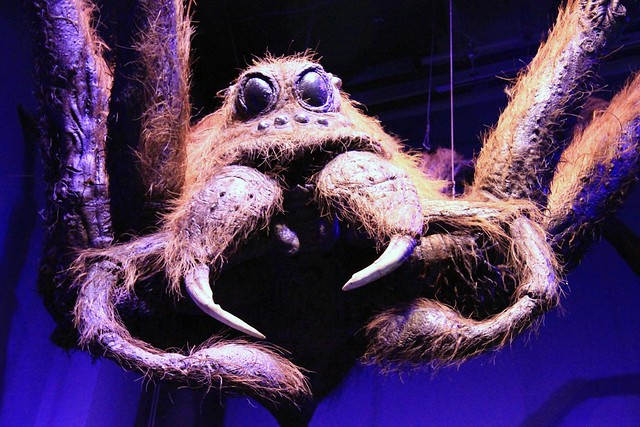
  • Harry Potter and the Chamber of Secrets (J.K. Rowling)—Let’s not forget the classic with a certain arachnophobic Ron facing the acromantula Aragog and his…err…children in the Dark Forest. 

In the end, delving into our characters’ flaws provides us with ample opportunity to challenge our characters and further the plot—opportunities that we would miss without a healthy dose of writer sadism.

Do you exploit your characters’ weaknesses? What other examples of this technique can you think of?

How to Choose a POV Character

Photo credit: davidz on Flickr
There are many factors to consider and questions to answer when you decide to write a book. What genre and age group do you want to write in? Should you write in first person or third? Past or present tense? Will you do any plotting beforehand or pants the whole thing entirely?

One of the earliest questions you must answer, however, before you even write a single word of your soon-to-be Work In Progress (or WIP, for those of you wondering) is which character will be your point of view (POV) character?

Choosing a POV character is arguably the most important part of novel-planning for limited third or first person POV stories, because it affects absolutely everything in the story—from voice, to plot points, to how (and what) information will be revealed to your readers. The POV character that you choose will affect every word in your story, because the story will be filtered through his or her lens.

But while sometimes the POV character is obvious right from the start, choosing a POV character is not always so cut and dry. In those instances when you’re not entirely sure whose POV you should write from, there are two major questions you must ask yourself:

  • Which character has the most at stake? This is the most important question—which character has the most to lose? Readers don’t want to hear from a character who has nothing to lose—that character won’t be emotionally invested in the story and so neither will your readers be. The character who will take the biggest risks, who will suffer if he doesn’t succeed, who is so emotionally invested and entangled in the story that he couldn’t remove himself from it even if he wanted to—that’s the character you want narrating your story.

    Once you’ve determined which character has the most at stake and will be most affected by the plot, you can then move on to the second question.

  • Am I invested enough in this character to stay in his/her head for 300+ pages? This is important because sometimes, especially in the early plotting of our story, we don’t know enough about our characters to really determine how interested we are in them. Before you start writing, however, it is vital that you make your character interesting enough to you that you look forward to spending the next many months living inside of his head—because when you’re writing, especially in a close POV, that’s exactly what you’re doing. If you’re not interested enough in your character to do so, you can pretty much guarantee your readers won’t be very interested either, assuming you even finish the story.

Let’s test two examples:

  • Harry Potter (J.K. Rowling)—The Harry Potter series has an enormous cast of characters, but the obvious choice for POV character would be one of the main three characters—Harry, Ron and Hermione. Out of the three, Harry definitely has the most at stake—the most evil wizard of all time tried to kill him when he was an infant and left him an orphan, and now that he’s older, that same evil wizard is returning and he hasn’t forgotten about little Harry Potter. The interest bit (very slight spoiler), as we learn later on, is if Voldemort had interpreted the prophecy that led him to attack Harry when he was a baby differently, he may have tried to kill Neville Longbottom instead, and the first story would likely have been Neville Longbottom and the Sorcerer’s (or Philosopher’s) Stone, instead.

  • The Hunger Games (Suzanne Collins)—It could be argued that anyone chosen in the Reaping has pretty near equal stakes—there can only be one winner of the Hunger Games, so every tribute has their life on the line. Why then, did Suzanne Collins choose Katniss as a POV over Peeta or any of the other tributes? I’m sure there were many reasons, but the two that stand out to me the most are these: Katniss has a little more at stake than Peeta, in that Peeta knows his family will survive without him if he doesn’t win the Hunger Games, while Katniss isn’t so sure and (IMO) Katniss is a more interesting character than Peeta.

    That’s not to say that Peeta is boring—but he’s good with the crowd, he’s level-headed and consistent, while Katniss is terrible at public relations (a big deal for Hunger Games tributes), has a relatively short fuse, doesn’t trust anyone and is incredibly stubborn. All of these factors give her more trouble during the games, and put the readers on an emotional rollercoaster throughout the plot.

Choosing a POV character isn’t a process that should be taken lightly, but once you’ve chosen the right character to carry your story, the rest will fall into place.

How do you choose a POV character? Have you ever switched your POV character after you started writing? Share your experience in the comments below—I’d love to hear from you.

Do Your Characters Make Enough Mistakes?

Photo credit: Alex E. Proimos on Flickr
After re-watching The Lord of the Rings: Return of the King for the umpteenth time, it occurred to me just how crucial character mistakes are to the plot—and not just in The Lord of the Rings, but in nearly every bestseller that I can think of. And I’m not talking about minor character mistakes, either—I’m talking plot-changing horrendous errors that cause death and maiming. These characters make mistakes that they can never take back—mistakes that leave them scarred in more ways than one.

Let’s take a look at a few examples (some of these are a little spoilery, so proceed with caution):

  • The Lord of the Rings: Return of the King (J.R.R. Tolkien)Paranoid about people trying to take the ring from him, Frodo sends Sam away, follows Gollum into a rather eerie tunnel alone and nearly gets eaten by Shelob, the giant spider. And he sort of decides at the last possible second that he’s not going to destroy the ring after all, so Gollum has to bite his finger off to get it away from him.

  • The Harry Potter series (J.K. Rowling)Over the course of seven novels Harry makes some judgments about Snape and accuses him of more than a couple horrendous crimes, and we all know how that turned out. Oh, and there’s also that nasty habit he has of running into situations unprepared that often leads to people dying.  

  • Divergent (Veronica Roth)Tris refuses to forgive a certain depressed teenager and says some horrible (if not deserved) things to him and shortly thereafter he commits suicide.

These are just a few examples, but the list goes on.

There’s something to be learned from these characters’ less-than-stellar decision-making skills, namely, that characters make mistakes just like their real-life counterparts—except their mistakes often have more dire consequences.

But character errors are more than just a chance to make our readers want to slam their heads into walls: they provide opportunity for character growth, great tension-filled plot points and a chance for our readers to relate to them. We all make mistakes, and reading about a character who never makes mistakes not only misses a whole slew of plot possibilities, but also makes the character significantly more difficult to relate to.

In short, I encourage you to make sure your characters make plenty of errors along their journeys. Don’t be afraid to let them royally mess up or make the consequences of their actions dire.

Because just like reality, mistakes are essential for our growth, and unlike reality, they make the plot significantly more interesting.

What do you think? Are character mistakes important? Do your characters make enough mistakes?

What Makes a Great Final Sentence?

"Your first chapter sells your book. Your last chapter sells your next book."—Mickey Spillane (from Plot & Structure by James Scott Bell).
Photo credit: lynn.gardner on Flickr
I wrote a post a while back about what makes a great first sentence, but it occurred to me that I never followed it up with an equally important discussion on the second most important sentence in your novel—the final sentence.

I think what Mr. Spillane said about the first and last chapter of a book applies to the first and last sentence—while the first sentence is largely responsible for hooking the reader, the last sentence must resonate with your readers, or else you risk losing them to an unsatisfying ending. That's not to say that a terrible ending can be completely saved by a stellar last sentence, but the final sentence is like the final note in a composition—it should echo and leave the reader with a certain tone. If done correctly, the final sentence provides closure and often mirrors the beginning, creating a full circle.

But of course we can't talk about final sentences without examples, so I've provided some sentences that I thought were especially effective. The sentence(s) in brackets are the ones that come before the final sentence that I included to provide a little context:

"[I am no longer Tris, the selfless, or Tris, the brave.] I suppose that now, I must become more than either." –Divergent by Veronica Roth
"[It's like a game. Repetitive. Even a little tedious after more than twenty years.] But there are much worse games to play." –Mockingjay by Suzanne Collins
"[The scar had not pained Harry for nineteen years.] All was well." –Harry Potter and the Deathly Hallows by J.K. Rowling
What I love about these examples is the way they echo overarching themes that repeated themselves throughout the book or series. For those who haven't read it, much of Divergent was about Tris (the protagonist) trying to choose her identity between two factions: the Abnegation girl her family raised her as, which values selflessness, versus the Dauntless girl she had chosen to be, which valued courage. Her acknowledgment that she must become more than either both confirms one of the great revelations of the novel (without spoiling anything—that Tris is different from most) and points to the future books where we know she will have to be strong to survive.

In two of the three examples I purposely included the final sentence of a series because they so effectively wrapped up not just their respective novels, but the series.


In the case of Mockingjay we all know what games Katniss is referring to when she says, "there are much worse games to play" and it leaves the reader nodding in agreement while thinking back to the events of all three books.


In the Harry Potter example, the throbbing of Harry's scar was a foreboding sign throughout the series that became more and more frequent throughout the course of seven books as Voldemort became more powerful. To say that Harry's scar hadn't hurt him for nineteen years really confirms the final sentence that all is (finally) well.


So in short, a great final sentence does two of three things:

  1. Reflects elements from the novel/series.
  2. Wraps up both the book and series OR wraps up the book while leading into the sequel.
Once your final sentence accomplishes both of those things, you know you have a great final note on your hands.

Now it's your turn: What else do you think a final sentence should do? What are your favorite final sentences and what made them so memorable?

How to Make Your Readers Believe Anything

Photo credit: seasonal wanderer on Flickr
I’ll admit the title sounds a little ominous, like I’m about to spill the secrets of world domination, and in a way I suppose I am—dominating the world of literature, at least.

Regardless of however the title may or may not sound, I’m not really referring to mind control—I’m referring to suspension of disbelief.

As writers, you have the unique ability to make anything possible. You aren’t bound by laws of physics or reality or even time—whatever you can imagine, you can create on the page. Dragons, zombies, angels, horned beaver-goats—writers set the rules to the worlds that they create.

But as Aunt May so famously told a young Spiderman: with great power comes great responsibility.

With every book (or series) you write, you set up the rules of that reality. Whether it’s literary fiction, epic fantasy, sci-fi, paranormal, etc., it’s your job as the writer to establish some form of boundaries and guidelines. In the Harry Potter series, for example, J.K. Rowling established early on that even the most powerful wizards prefer performing magic with wands, while in Eragon (Christopher Paolini), magic was performed without the use of any wands whatsoever and in The Girl of Fire and Thorns (Rae Carson), magic could only be performed with the aid of the rare Godstone.  

The key is to set up rules that fit with whatever genre you write in. Readers of fantasy expect a certain amount of, well, the fantastic—whether its dragons, magic, elves, all of the above or something entirely different—there are expectations within the genre that you as a writer in that genre have to adhere to. If The Lord of the Rings ended with an alien invasion or a stampede of pink squirrels made of sugar, readers would riot because it completely breaks the rules that J.R.R.Tolkein so carefully established.

Beyond world rules however, writers have the important job of ensuring that their characters don’t act out of character, and thus break the readers’ suspension of disbelief. If Katniss, for example, started flirting with Cato because he was cute, or Harry Potter decided to join Voldemort and become a Death Eater, to say that they’d be breaking character would be a huge understatement.

There are two very simple things writers must do to ensure suspension of disbelief:

  1. Set up the rules. Establish (or hint at) world rules quickly, as well as the rules (or personalities) of your characters.

  2. Stick with them.

It’s ok to occasionally break a rule, but make sure it’s justified—establish a new rule that renders the broken rule obsolete, or give a character a motivation for his otherwise unbelievable action, but make sure it’s fully explained in your book, or risk losing that suspension of disbelief.

Have you ever read a book that shattered your suspension of disbelief? What do you think caused it? What’s your favorite example of suspension of disbelief? 

What Makes a Book a Bestseller?

Photo credit: Eckhart Public Library on Flickr
With the release of The Hunger Games movie just a few weeks away and the internet still buzzing with J.K. Rowling's big book announcement, it's unsurprising really, that many of us have bestsellers on the brain.

Over the course of the past decade, we've seen huge explosions of book fandom, of so-called "overnight successes" complete with hoards of raving fans that would make a rock star proud. We've seen Harry Potter become a household name, Twilight fans battle it out between sparkly vampires and werewolves and The Hunger Games open up the door for a slew of popular dystopian novels.

But what do the bestsellers have in common?

For the sake of not slapping you with a ridiculously long post, I'll stick to comparing two: Harry Potter and The Hunger Games. Upon first glance, these novels may seem to be about as similar as Twilight vampires are to Dracula—Harry Potter is a middle grade novel about a boy wizard who ultimately has to save the world from the very evil Lord Voldemort and The Hunger Games is a young adult book about a girl who enters a fight for the death in order to save her family and ends up fighting for a much greater cause.

Upon closer inspection, however, these two books actually have quite a bit in common.

How Harry Potter and The Hunger Games are similar:

  • Memorable, flawed characters. I wrote an entire post about my love for flawed characters in which both Harry Potter and Katniss were mentioned, so I won’t go through the entire thing again, but in short, flawed characters are infinitely more believable than their perfect counterparts and memorable characters can truly make a book special. What would Harry Potter be without Dobby, Hagrid, the Weasley twins, Filch or even Umbridge? Or The Hunger Games series without Cinna, Prim, Haymitch and Effie?

  • Detailed world-building. There's a reason Universal built Harry Potter land and it isn't just because castles are pretty. The wizarding world J.K. Rowling built is simply incredible—from the moving staircases and talking portraits in Hogwarts, to the creepy old shops of Knockturn Alley and the wonder of platform 9 3/4, I can think of few people who read Harry Potter and didn't want to visit.

    The world of The Hunger Games —although certainly not on anyone's vacation list—was built just as carefully so that Panem didn't seem quite as far-fetched as it might have without the proper details. Everything from the craziness of the Capitol with their ridiculous priorities and fashion trends to the specialization of the districts and the mysterious District 13 rang just true enough for suspension of disbelief.

  • Great evil to fight. From a frighteningly powerful mass-murdering wizard with a devout—and decidedly twisted following—to a powerful president who smells like blood and roses, there's no question that Harry and Katniss had very powerful and evil figureheads to fight throughout their journeys.

  • Very high stakes. With the fate of the entire world (both wizarding and normal) on Harry's shoulders and the people of Panem depending on Katniss—failure for these two characters is unfathomable. If they lose, they won't be the only ones to suffer—everyone's fate depends on their success.

For the sake of brevity I'll stop the list there, but let's continue this discussion in the comments:

What other elements do bestsellers (these or others) have in common? What do you think makes a book a bestseller?

What Makes a Great First Sentence?

“When it comes to selling your book, the most important words you’ll ever write are those on page one.” –Jodie Rhodes, President, Jodie Rhodes Literary Agency (from Hooked by Les Edgerton).
Photo credit: soyrosa on Flickr
Most readers and writers alike can agree that the first page—and even more so, the first line—of a book carries a very heavy responsibility. I’d even go as far to say that the first line in your book is the most important sentence in the entirety of your WIP. Why?

The first line determines if the reader will go on to the second (then third and fourth, etc.) line (obvious, I know, but important).

The first line is the very first impression readers (and agents, and editors) have of your manuscript.

The first line carries the responsibility of hooking your readers into the story, or else they likely won’t move on. (No pressure).

Most of us can agree that the importance of the first sentence is undeniable. But what makes a good first sentence?

Hooked by Les Edgerton focuses on, as the title suggests, hooking your readers with your first scene and naturally, your first sentence (it’s a good read for those of you who’d like a really in-depth look at the topic beyond the little bit that I talk about here, but I digress). My favorite point in the book however, came with his theory on the two things that should belong in first sentences.

According to Edgerton, every first sentence should hint at trouble and raise a question. Taking a look at some great (in my opinion) opening lines, I have to agree with him. Let’s take a look:

“When I wake up, the other side of the bed is cold.”—The Hunger Games by Suzanne Collins

I’ve seen this line used time and time again as an example of a great first line and I don’t know about you guys, but I think it’s brilliant. It also holds up to Edgerton’s theory—although the trouble isn’t stated directly (it rarely is in first lines), there is certainly a sense of foreboding as our main character wakes to a cold, empty bed. The question of course is obvious—why is the other side of the bed cold? Who was she (Katniss, the protagonist) expecting to be there?

“I’ve been locked up for 264 days.”—Shatter Me by Tahereh Mafi

The trouble and questions are pretty clear here—the trouble is clearly that our protagonist (Juliette) has been locked up for nearly a year. We don’t know where exactly, but by the term “locked up” we can assume it’s some kind of prison. The question of course is why? Why lock someone up for that long? What did she do to deserve imprisonment? You must read to find out.

“I see darkness.”—Saint by Ted Dekker

Trouble? Well, waking to darkness isn’t often a good thing and although we know little about the protagonist’s situation from this first sentence, we most certainly have a sense that something bad is about to happen—or perhaps something bad already has. Either way, we want to know why our main character only sees darkness (the question), so we have to read on to find out.

“There is one mirror in my house.”—Divergent by Veronica Roth

The trouble here is a little more subtle than in the last two examples. We don’t know for sure from the first sentence that anything bad is going to happen, but just the fact that we have to ask why our main character only has one mirror in her house (and why, as we quickly find out, the mirror is hidden) gives us a sense that something isn’t quite right.

“Mr. and Mrs. Dursley, of number four, Privet Drive, were proud to say that they were perfectly normal, thank you very much.” –Harry Potter and the Sorcerer’s Stone by J.K. Rowling

How could I go through this kind of post without including Harry Potter? Obviously, I couldn’t.

In all seriousness, this is the kind of sentence that uses a sort of reverse-psychology. Just the fact that Mr. and Mrs. Dursley feel the need to say that they’re perfectly normal indicates that they probably aren’t (which foreshadows trouble) and also leads the reader to ask why they feel it’s important everyone know that they’re normal. Do people think they’re strange? If so, why? We must read on to find the answer.


A sense of foreboding and raising questions can go a long way to grab your readers’ attention right from the first line—are you using this technique in your writing?

What are your favorite first lines? Do they create a sense a trouble and raise questions? I’d love to hear them! 

Talent is Overrated

Photo Credit: The U.S. Army on Flickr (Creative Commons)
I made a statement in my last post that raised a few eyebrows, so I’d like to expand on it. When talking about whether or not you can lose the ability to write (in case you missed it, you can’t), I said this:

Don’t have the talent? Talent is overrated. You don’t need talent; you need practice.

First and foremost, I’m not denying the existence of talent. Certainly some people are blessed with an advantage that starts them further off than their peers. But talent alone doesn’t get you anywhere—you need hard work, perseverance and patience. Talent without the work is a missed opportunity. Wasted potential.

But that’s what talent is—potential. It’s a starting point that says, “Hey, you’ve got something here. Imagine how much better you could be with some practice.” But without the practice, guess what? You’re no better than anyone else.

The problem I have with talent is that people use the perceived lack of it as an excuse to give up. They look at others in their field who’ve taken the time to refine their skill and say, “Look at all that talent. I will never have that.”

What they don’t realize is that what they’re looking at isn’t talent at all—it’s determination. Its years of rejection and work and more work until they too can claim success. Then people look at them and call them talented.

Here’s a little secret: J.K. Rowling and Stephen King weren’t born with the ability to write great novels any more than gold medalists are born knowing how to win at the Olympics. They worked hard for years refining their skills before they made it big and people put them on a pedestal.

There is no shortcut to success and talent is no exception. Hard work, guys. That’s what talent is.

So next time you’re tempted to chalk someone’s success up to talent, take a moment to learn about who they were before they were discovered. I’m willing to bet there’s years of work, years of failures and doubts and fears that were overcome with pure determination.

And if they can do it without natural-born talent, why can’t you?

What do you think? Is talent overrated or is it more necessary than I think it is? 
Related Posts Plugin for WordPress, Blogger...