Showing posts with label prologue. Show all posts

Fixing the First Page Feature #30

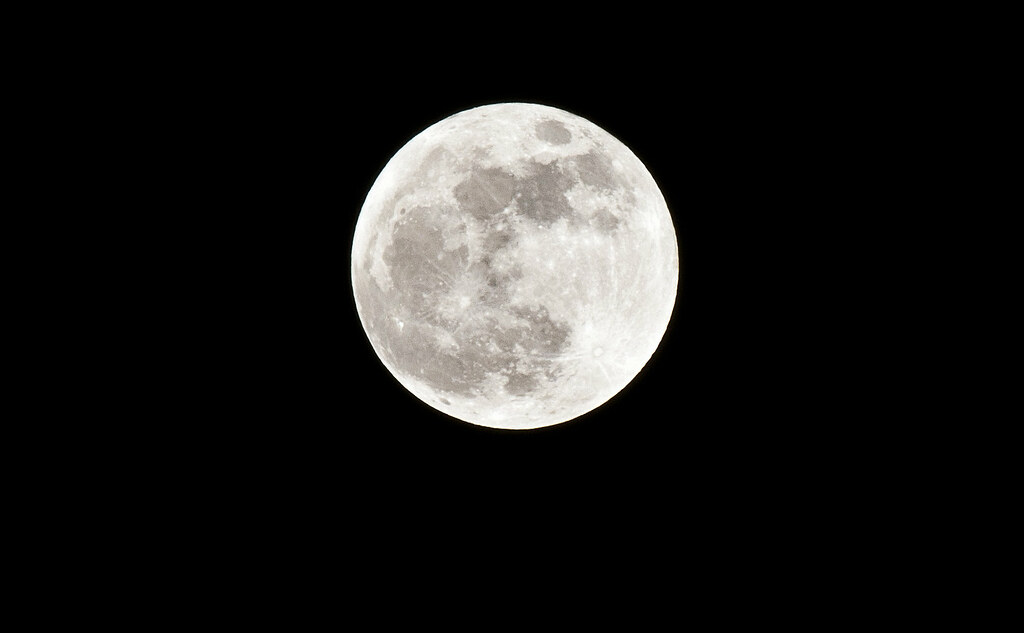
Photo credit: hharryus on Flickr
We're now in the final days of 2016. I've got a lot of mixed feelings about it, but the one definite positive thing is it's now time for the last Fixing the First Page Feature of 2016!

As usual, I'll start by posting the full first 250 excerpt, after which I'll share my overall thoughts, then my redline critique. I encourage you guys to share your own thoughts and critiques in the comments (because I'm one person with one opinion!), as long as it's polite, thoughtful, and constructive. Any rude or mean comments will be unceremoniously deleted.

Let's do this.

Title: MOONCHILD

Genre/Category: YA Fantasy

First 250 words: 

"The priests are always telling me that my mother should never have bathed me in the moon. It sets a girl up for mischief, and worse as she gets older. Now that I’m nearing sixteen, I’m far too old to be forgiven for knowing things no natural person should. 
I remember the moon-baths clearly enough, even though I wasn’t quite four when my mother was found out and taken away to Temple. I remember being cold and cranky, whining and stomping as she stripped away my overdress and tunic.

'No, moma, no!' I would shout, my cries echoing off the garden walls. I must have woken up half the compound with my yelling, but no one ever shouted back or lit a lantern to see what all the commotion was. 
'Calm down, Luna, just calm down,' my mother would say. She tried to distract me with special full-moon songs, and showed me how the light played in the big, round basin. I did like to watch the silvery ribbons dash around the polished bottom, swirling like watersnakes. Sometimes she could win a giggle from me before I remembered that I wasn’t going to like what came next.

It wasn’t just the icy feeling of the night air against wet skin - I didn’t like the squirmy feeling the bright water woke in my belly. I’d thrash and protest the whole time, even though mother would promise better and better treats each time if I would just be good. 
I was never good."

Wow, interesting! This definitely has a cool fantasy feel and I'm super intrigued by the moon baths and what that means and where this is going. This is, however, a prologue, so I'm immediately wondering whether this is the right place to start. It's hard for me to really say one way or the other without reading the full prologue and checking out the first chapter, but generally, I tend to recommend flashback prologues are integrated into the story rather than starting way before the story starts and then jumping into the present day.

So props for an interesting opening, but be careful with prologues—I suspect you may be better off starting with the start of the story and incorporating this elsewhere. But either way this does set up some nice world building and intrigue so yay.

Now for the in-line edits.

"The priests are always telling told me that my mother should never have bathed me in the moon. Beautiful opening line and image—I also like how it sets up tension right away. Well done. It sets a girl up for mischief, and worse as she gets older. Now that I’m nearing sixteen, I’m far too old to be forgiven for knowing things no natural person should. Iiiiinteresting. :D
I remember the moon-baths clearly enough, even though I wasn’t quite four when they found my mother was found out and taken took her away to Temple. Adjusted to make the sentence active (vs passive). I remember being was cold and cranky, whining and stomping as she stripped away my overdress and tunic. Adjusted to remove filtering (I remember).

'No, moma, no!' I would shouted, my cries echoing off the garden walls. I must have woken up half the compound with my yelling, but no one ever shouted back or lit a lantern to see what all the commotion was. 
'Calm down, Luna, just calm down,' my mother would say said. She tried to distract me with special full-moon songs, and showed me how the light played in the big, round basin. I did liked to watch the silvery ribbons dash around the polished bottom, swirling like watersnakes. Sometimes she could win won a giggle from me before I remembered that I wasn’t going to like what came next.

It wasn’t just the icy feeling of the night air against wet skin - I didn’t like the squirmy feeling the bright water woke in my belly. Adjusted to remove some filtering and wordiness. I’d thrash and protest the whole time, even though mother would promised better and better treats each time if I'd would just be good. 
I was never good."

Okay, after reading this a second time, I'm more sure that the flashback part should be moved. However, I think I'd recommend the first paragraph was kept. It really sets up great tension and kicks off with some early world building, and I could easily see it used as a transition into the present day story rather than the flashback. I don't know exactly where the story actually starts, but I suspect it'd be easy enough to keep it as the opener even if the flashback is moved later in the narrative.

Other than that, the main thing I'm noticing is some wordiness and filtering, which I adjusted above, but I definitely recommend the author check the rest of her manuscript for both, because if there's this much in the first 250, it's a good signal there's probably plenty more throughout the book.

If I saw this in the slush I'd skim through the rest of the prologue and jump to the opening to see if it grabbed me.

I hope that helps! Thanks for sharing your first 250 with us, Juniper!

Would you like to be featured in the next Fixing the First Page critique? Keep an eye out for the first giveaway of 2017!

Twitter-sized bite: 

.@Ava_Jae talks prologues, great opening paragraphs, wordiness and more in the 30th Fixing the First Page Feature. (Click to tweet

Fixing the First Page Feature #27

Photo credit: archer10 (Dennis) OFF on Flickr
Somehow, it's the last week of September, which means the time has arrived to critique another first page here on Writability.

As per usual, I'll start by posting the full first 250 excerpt, after which I'll share my overall thoughts, then my redline critique. I encourage you guys to share your own thoughts and critiques in the comments (because I'm one person with one opinion!), as long as it's polite, thoughtful, and constructive. Any rude or mean comments will be unceremoniously deleted.

Let's go! 

Title: SAVING ERIIA'S WINDSTORM

Genre/Category: YA Fantasy

First 250 words:

"The entire throne room was filled to bursting, elves in every row, some even filling the spaces between seats and walls. The day the king banished his own daughter was not a day to miss. 
But Eriia didn’t see the elves in the seats, high above her and behind. She saw only the two thrones before her, one empty and the other with the tall, imposing figure of her father. She hadn’t meant to hurt anyone, she really didn’t. She had just wanted to prove to her father that she was good enough, so she wove a spell to light a candle, something Ileon had been doing since he was five. Now he was eleven and could make fire into shapes, dancing dragons and flowers and things Eriia couldn’t even name, and she was nine and set the Hanging Castle on fire, because she had no control. 
'Eriia,' her father’s voice boomed. He wouldn’t even call her a princess anymore. 'You’ve become quite the spectacle to this family.'
'Father, I—' she tried to say, but King Cepheus held up a hand and a frown. 
'You destroyed part of the castle. You’re lucky no one was hurt, but our poor Queen is sick in bed from the smoke. Do you realize what you’ve done?'
'Father, I’m—'
'You’ve always been a menace, causing trouble since you were young.'
Hot tears welled up in Eriia’s eyes. She hadn’t meant to make trouble. Trouble just always found her. 
'Where’s mother?' Eriia looked up at her father, 'Where’s mama? Does she know?'"

Awww. This is sad. :( Okay, interesting opening with nice details but I'm sensing this is a prologue. It's hard to say how necessary a prologue is without looking at the first couple chapters, but given that this is when Eriia is nine and this is a YA, I'm assuming this is just background information on how she got banished. While I understand the urge to start there, as I imagine a princess getting banished from her kingdom is a pretty big deal, I suspect it'd probably still be better to start closer to the actual inciting incident, whatever that is, and fill in this background information either woven into the text, or through a flashback or something, or both.

It's not badly written or anything (far from it!), but in terms of plot and tendencies I've seen with many, many prologues, that'd be my guess.

On a different note, I'd also like to see more description—the throne room is filled to bursting, but what does it look like? She sees the thrones—what do they look like? I was having a bit of trouble picturing the room where the scene takes place.

Now for the in-line notes!

"The entire throne room was filled to bursting, elves in every row, some even filling the spaces between seats and walls. The day the king banished his own daughter was not a day to miss. Nice.
But Eriia didn’t see the elves in the seats, high above her and behind. She saw only the two thrones before her, one empty and the other with the tall, imposing figure of her father. She hadn’t meant to hurt anyone, she really didn’t. She had just wanted to prove to her father that she was good enough, so she wove a spell to light a candle, something Ileon had been doing since he was five. This is a great detail and gives us some nice, subtle world building and tells us she has a brother (or I'm assuming, anyway). Now he was eleven and could make fire into shapes, dancing dragons and flowers and things Eriia couldn’t even name,. 
and sShe was nine and set the Hanging Castle on fire, because she had no control. Moved this down a line to give it more punch. :)
'Eriia,' her father’s voice boomed. He wouldn’t even call her a princess anymore. This is also a great detail to bring attention to. 'You’ve become quite the spectacle to this family.'
'Father, I—' she tried to say, but King Cepheus held up a hand and a frowned. Adjusted both because we don't need the dialogue tag (we know she's speaking because "Father") and also "a frown" sounds like "he held up a frown" which is not what you meant. :)
'You destroyed part of the castle. You’re lucky no one was hurt, but our poor Queen is sick in bed from the smoke. Do you realize what you’ve done?'
I recommend inserting some of Eriia's emotions and thoughts in here. We have her external responses (dialogue) but until two lines from here we don't really get any internal reactions at all, and I think they'd help. This must be a really emotional scene for her, so where are her emotions? 'Father, I’m—'
'You’ve always been a menace, causing trouble since you were young.'
Hot tears welled up in Eriia’s eyes. She hadn’t meant to make trouble. Trouble just always found her. This is a great paragraph and makes me sad, which is good because I'm connecting emotionally with your protagonist.
'Where’s mother?' Eriia looked up at her father, 'Where’s mama? Does she know?'"

Overall, the writing is really well done. There's more I'd like to see, like I mentioned (description, internal emotions and thoughts), but what's there is nicely polished and I only felt like it needed a few tweaks. If I saw this in the slush, I'd keep reading.

So all in all, while I'm not convinced it's starting in the right place and I think it could use more embellishing, this is a really solid start. Nicely done, Magdalyn!

I hope that helps! Thanks for sharing your first 250 with us!

Would you like to be featured in the next Fixing the First Page critique? Keep an eye out for the next giveaway in October!


Twitter-sized bite:
.@Ava_Jae talks prologues, description, internal emotion and more in the 27th Fixing the First Page Feature. (Click to tweet)

Vlog: On Prologues

I had a request for a vlog on prologues, so here we go. Some thoughts on those sneaky chapter zeroes and why they're sometimes problematic.


RELATED LINKS:

What do you think about prologues? Do you use them often or enjoy them while reading?

Twitter-sized bites: 
Why are prologues often pointed out as a problem? @Ava_Jae shares her thoughts in today's vlog. (Click to tweet)  
How do you know if your prologue is working? @Ava_Jae vlogs about prologue cliches & problematic openings. (Click to tweet)

7 Signs You Should Cut Your Prologue

Photo credit: sociotard on Flickr
Those of you who follow me on Twitter may or may not have seen this last week:

Ah, the joy of the prologue debate.

The thing is, I’ve been finding more often than not, people need their prologues much less than they think they do. And it’s understandable—I mean, it’s tough to be able to look at your work objectively and decide what scenes you need and don’t need, and it can be even tougher when you’re talking about the opening of your book.

So without further ado, I thought I’d share seven signs that you may want to consider cutting your prologue.

  1. Your prologue is your main character’s birth. Listen, I know people say to start where you story starts, but we don’t mean literally. I can’t think of a time when I read a prologue recounting the protagonist’s birth that I didn’t think it wasn’t unnecessary. I promise you, we don’t need to know the details of your protagonist’s birth. We really, really don’t.

    Also, in the spirit of full disclosure, I did this with my first manuscript. And it wasn’t necessary then, either (I just didn’t know it at the time).

  2. Your prologue is all (or mostly) exposition. Nope. Don’t start your book with exposition. Why? Because you’re telling. And if you start your book off with a load of telling, then readers are immediately going to think the rest of your manuscript has tons of telling. Not only that, but exposition tends to be a really slow way to start a book and not an incredibly effective hook.

    I understand that you want to get information across—you should! But there are way more effective ways to get information across than with an expository opening. Consider sprinkling that information throughout your prose, instead—not only will it help you avoid the evils of info-dumping, but it’ll be much more interesting to read.

  3. Your prologue features not your main character. I’m not saying this never works—in fact, I’ve seen it work. However, this can be a very confusing way to open a book.

    Think about it—a reader who opens up your book, knowing little to nothing about it, is going to read the first few pages and think that the character it’s focused on is, indeed, your protagonist. When they finish the prologue and learn that the character is in fact not your protagonist, it can be a little jarring. Very jarring, if we’re being honest.

  4. Your prologue isn’t directly related to your main character. If it isn’t clear how the events that unfold in your prologue affect your main character (and thus the main plot), then your prologue is going to not only be confusing, but most will consider it unnecessary (and so should you).

  5. Your prologue is a false start. I’ve seen prologues that are full of action and mystery and intrigue…and then the first chapter is incredibly slow and has little to do with the prologue. Don’t do this.

    The reason you want to avoid false starts is it doesn’t accomplish what you think it does—sure, it might get people reading through the prologue, but once they reach the first chapter they’ll realize that the prologue was really just a bait-and-switch hook.

    I get that you want to start with an interesting hook, and you should start with an interesting hook. But the answer isn’t through a super exciting and mostly unrelated prologue–the answer is to look at your real opening (that is, your first chapter) and figuring out whether you’re starting in the right place and how to include your hook in that opening scene.

  6. Your prologue features your antagonist doing something super evil. I’m not saying this never works, but it’s so painfully overdone, especially in fantasy novels. For me, they don’t give the dramatic effect they may have when this trope first started—now I just tend to roll my eyes and think thoughts that rhyme with “melodramatic.” And that’s not how you want people reacting to your opening.

    And again, full disclosure, my first ever manuscript's prologue did this, too...yes it committed two grave sins.

  7. You’re not sure whether or not to include your prologue when querying or submitting. So this isn’t something you’ll see in your manuscript—this is actually your subconscious letting you know you don’t need your prologue.

    If your book doesn’t absolutely 100% need the prologue to be understood, then you don’t need it. Period. Which means if you’re even considering sending your query off without your prologue, then your inner writer is tapping you on the shoulder and letting you know it’s time to get the scissors.
What signs can you think of to add to the list?

Twitter-sized bites:
Do you need your prologue? Editorial intern @Ava_Jae shares 7 signs you may want to cut it. (Click to tweet
Do you have a prologue in your MS? Writer @Ava_Jae shares 7 signs that you might not need it. (Click to tweet)

The Prologue War


Photo credit: tonyetone on Flickr
If you’ve been paying attention to the realm of writing for any lengthy amount of time, I’m sure you know about The Great Prologue Debate. It’s a war that’s been going on for ages and undoubtedly has many casualties.

To prologue or not to prologue, that is the question.

So before we start throwing punches and whipping out weapons of mass destruction, let’s take a look at the core of the matter: What is a prologue?

According to dictionary.com, the definition of a prologue is this:

Since we’re talking about writing, the definition I’m most interested in is number four: “an introductory scene, preceding the first act of a play, opera, etc.” (emphasis added)

The keyword there (as I’ve emphasized with certain slanty letters) is “preceding.” Prologues, by definition, happen before the action—before the story really starts.

So now you’re thinking, yes, ok Ava, we know what a prologue is—what’s your point? Well, my point is pretty simple: most of the time, the story should start where the story starts. You’d think that goes without saying, but prologues break that rule.

I’m not saying that they never work—in fact I'm guilty of writing a prologue myself (albeit, in my first ever WIP) and I've read prologues that I liked. But prologues are used and abused and oftentimes they aren’t necessary.

Sometimes they give the readers valuable background information or set the mood or a dozen other functions. And sometimes the only way to accomplish that goal effectively is indeed through a prologue.

However. If you have a prologue and there is any other way to get that information in, to set the mood, whatever you’re trying to achieve by writing a prologue, then you don’t need it. Could you conceivably tell the reader that your story's version of magic only works during the day and that faeries are actually fatally allergic to mushrooms within your prose? Yes? Then cut the prologue.

Maybe you need the prologue to slap some tension in the beginning of your novel because your first chapter starts off a bit slow. In that case, yes a prologue works, but it’d be even better if you inserted tension in your first chapter instead of relying on a prologue. Just a thought.

So, to prologue or not to prologue? Truthfully, it’s up to you. But if you must include a prologue, my advice to you is simple: make it snappy, make it interesting and make it important. Then finish writing the rest of your story.

Now it’s your turn to weigh in, my lovely readers. To prologue, or not to prologue?
Related Posts Plugin for WordPress, Blogger...