Showing posts with label Every Day. Show all posts

Holiday Book Recommendations of 2014


So I came across Victoria Schwab’s holiday book recommendation post on tumblr the other day, and I immediately knew I wanted to do something similar, because what mixes better than books and Christmas gifts? (Rhetorical question. The answer is nothing).

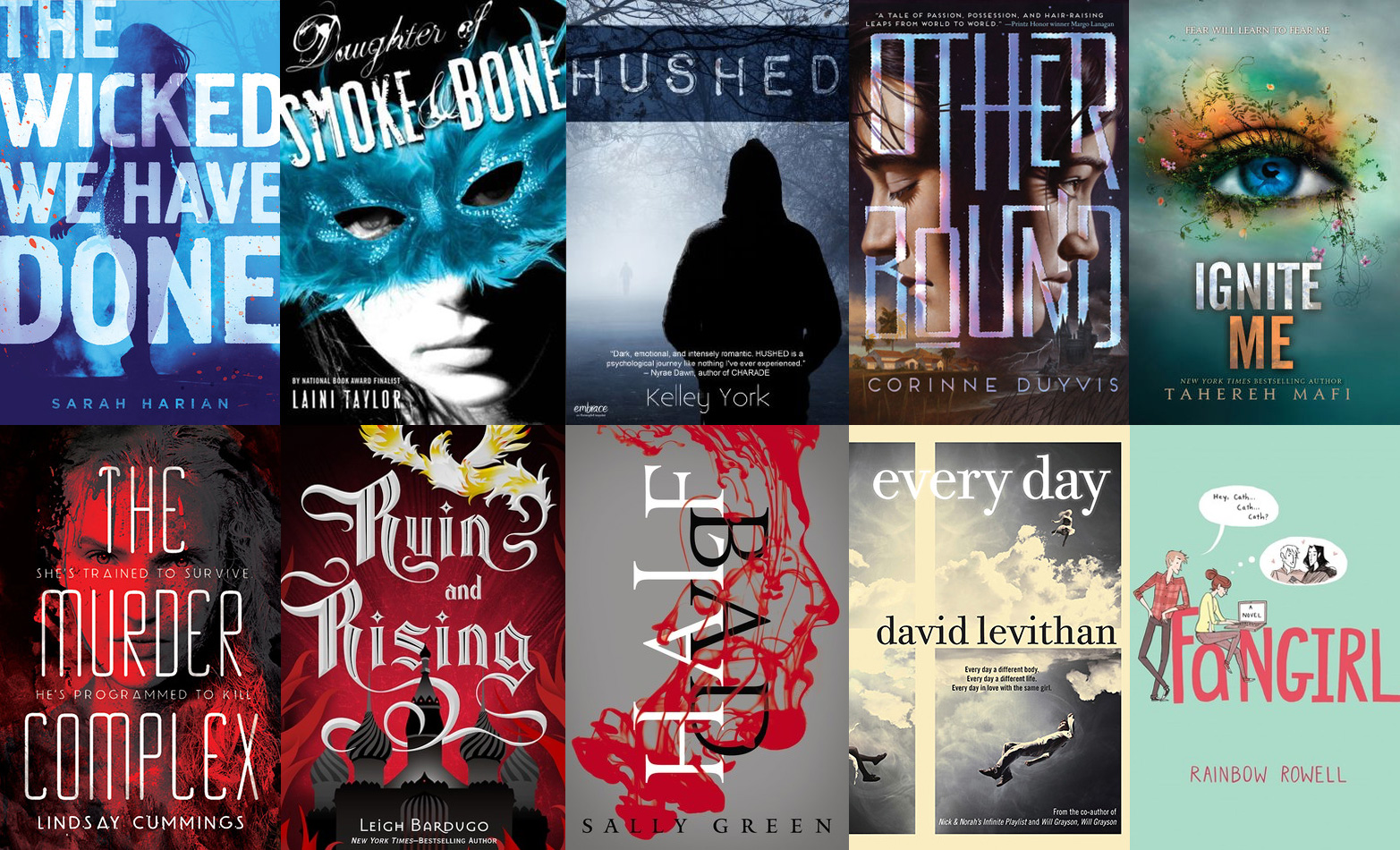
The books listed below are the ten best books I’ve read (thus far) this year. Not all of them were released this year, but they’re all amazing and definitely recommended.

In the order I read them (from beginning of the year to end)!


What are some of the best books you’ve read this year? 

Twitter-sized bites: 

.@Ava_Jae shares her top ten favorite reads of the year. Have you read any of these excellent books? (Click to tweet)  
What are some of the best books you've read this year? Writer @Ava_Jae shares her top ten list. (Click to tweet)

Vlog: #YAforHaters: 5 Book Recs

It's my 500th post! And I'm spending it talking about my favorite thing ever: books. Specifically, awesome books.

In concordance with Megan Whitmer's fabulous #YAforHaters vlog tag, as well as the awesome Twitter tags #PromoteaYAInstead and #NoShameYA, I'm sharing five books I'd recommend to those who haven't read YA or say they don't like YA.

Enjoy!


What books would you recommend to those who haven't read YA or say they don't like YA? 

Twitter-sized bites: 
Writer @Ava_Jae joins @MeganWhitmer's #YAforHaters vlog tag & shares 5 books she'd rec to YA newbies or haters. (Click to tweet
What books would you rec to YA newbies or haters? Writer @Ava_Jae shares her 5 picks: #PromoteaYAInstead #NoShameYA (Click to tweet)

How YA Books Have Made Me a Better Writer


NOTE: Don't forget, you have until THIS Friday (6/13) to enter a guest post that could be featured here on Writability! Go here for details.

So I’ve already mentioned several times the importance of reading what you write, and why reading is not optional for writers, and why we shouldn’t shame each other for our reading choices.  

But in light of a certain article shaming adults for liking YA, and in honor of the fabulous #PromoteaYAInstead and #NoShameYA, I want to share how YA books have made me a better writer. Because they have.

The Shatter Me series by Tahereh Mafi taught me that the conventional rules and styles of language can be broken, and broken beautifully. They taught me that poetry, beautiful imagery and action aren’t mutually exclusive. The Shatter Me series also remains an awesome example of how to completely nail character development over the course of a series.

The Across the Universe series by Beth Revis arguably has influenced me the most with my writing. The AtU series taught me Sci-Fi doesn’t have to be robots and super technical science-y things—it can be mixed with romance and mystery and make for some awesome reading. It taught me that dual POV is a thing I actually like, and, as it turns out, love to write. It also taught me some really neat stylistic tricks and reminded me that action, death and things blowing up is fun to read and write about.

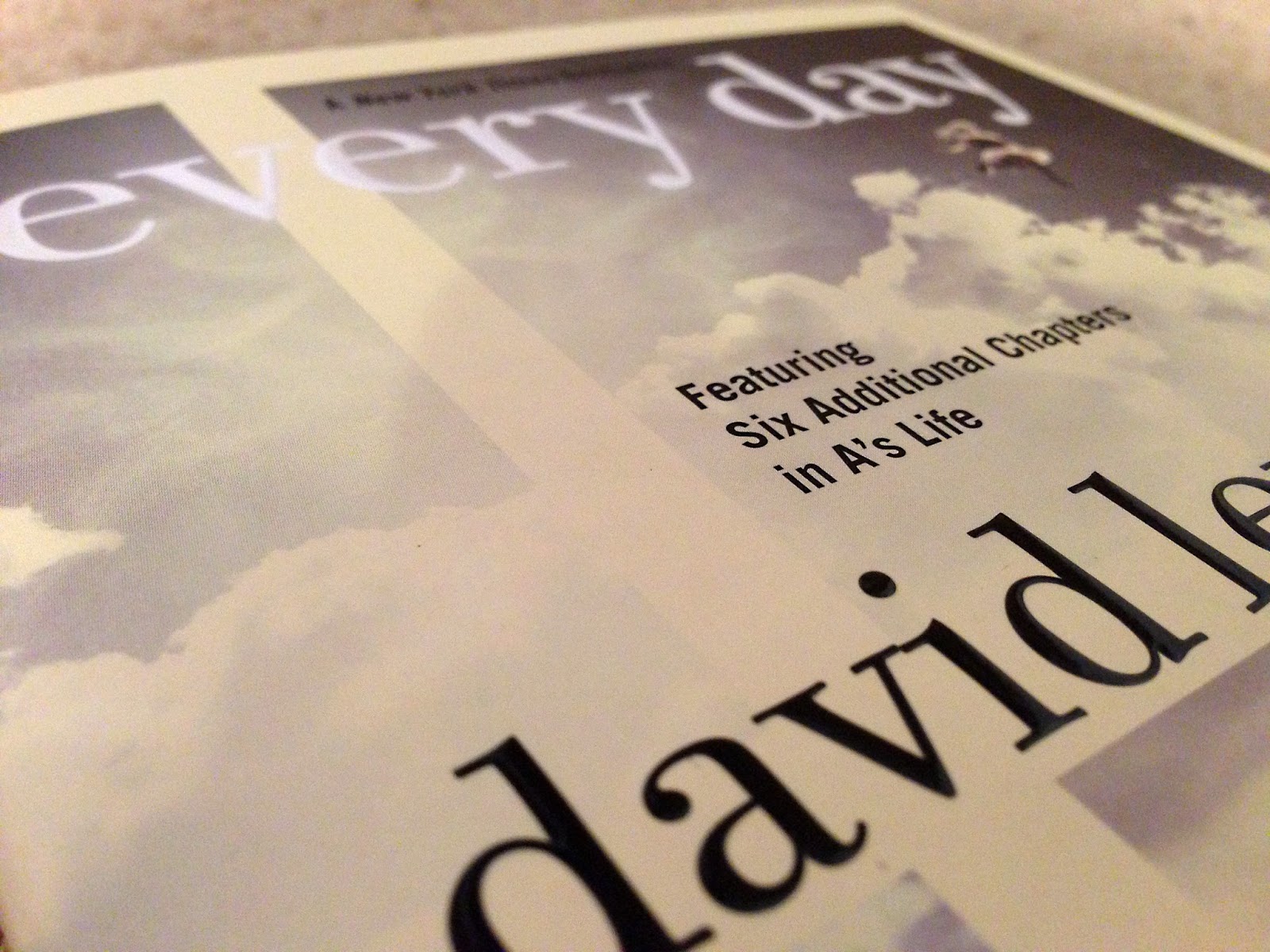
Every Day by David Levithan taught me about the power words can have when they connect to a reader and really get them to empathize. It’s a reminder that every person (and character) has their own story. It also serves as a brilliant example of how to get your readers to connect to a character with just a couple pages.

There are so many lessons to be learned from YA, whether it’s for writers or everyday life. And if YA isn’t your thing, that’s totally okay, but know that the rest of us? We’ll continue to proudly read some really awesome books, and learn from them along the way.

These are just a few examples of lessons I’ve learned from YA, but now I want to hear from you. What have you learned from YA novels? 

Twitter-sized bites: 
Writer @Ava_Jae shares lessons she's learned from YA novels. Have you learned anything from YA? Join the discussion! (Click to tweet)  
How YA books have made @Ava_Jae a better writer. #PromoteaYAInstead #NoShameYA (Click to tweet

On Writing to Make a Difference

Photo credit: Mine!
There’s been a lot of really wonderful discussion lately on diversity, sexism, ableism and so much more that’s been absolutely incredible to see. And it’s got me thinking about writing, and more specifically, about the messages we can send with our manuscripts.

Let me start by saying I don’t go into a book setting out to send some kind of message. Most of the time, I’m not even aware of the themes in my manuscripts until I’ve edited several times or a CP has pointed one out to me and I just smile and nod like, “oh yeah, I totally did that on purpose.”

Back to the matter at hand.

I’ve been thinking about books like Easy (Tammara Webber) which feature a love interest who very clearly understands and respects boundaries and shows one of the healthiest, most respectful relationships I’ve ever seen in a book.

I’ve been thinking about books like Every Day (David Levithan) which puts you in the shoes of characters who are depressed, who are addicts, who are of varying sexual orientations and all have fascinating and equally valid perspectives and challenge you to empathize with them equally.

I’ve been thinking about books the challenge the status quo with little things—with diverse casts and strong characters and calling out harmful tropes for what they are.

And I’ve been thinking we can make a difference with our writing. And it doesn’t have to be a big message book or a story with a moral—it can be a respectful relationship, or a respectfully represented minority or a couple well-placed lines.

Because you never know how that character, scene, or line will affect a reader. Or many readers. And really, that’s all it takes to make a difference.

Have you read any books that made a difference to you?

Twitter-sized bites: 
"You never know how that character...will affect a reader...that's all it takes to make a difference." (Click to tweet)  
Have you read any books that made a difference to you? Join the discussion on @Ava_Jae's blog. (Click to tweet)

On Clichés and Writing

Photo credit: Tom Newby Photography
Oh, clichés. We writers hear about them all the time—how to avoid them and how to recognize them and exorcise them from our work to avoid the dreaded words of this is a cliché.

But lately I’ve been thinking about plot-related clichés and how, while we’re advised to avoid them whenever possible, they sometimes work.

The Hunger Games, The Coldest Girl in Coldtown and Every Day all start with their protagonists waking up. And each of them make it interesting and necessary and twist the cliché in a way that works.

Divergent the opens with a cliché writers are often told to avoid: characters describing themselves while looking in a mirror. And yet Roth did it and got away with it why? Because she made it work.

Now does that mean as writers that we shouldn’t bother trying to avoid clichés? Not so much. As many of Amy Trueblood’s first five pages interviews with agents have shown, clichés in openings in particular are often an instant turn-off for agents who see them way overused. But on the other hand, I don’t think the use of a cliché means the immediate death of your manuscript either…as long as it’s handled well.

Let’s take a look at the opening clichés in the published books I mentioned above.

The Hunger Games (Suzanne Collins) starts like this:
“When I wake up, the other side of the bed is cold. My fingers stretch out, seeking Prim`s warmth but finding only the rough canvas cover of the mattress. She must have had bad dreams and climbed in with our mother. Of course, she did. This is the day of the Reaping.”
Why does this work? Because this isn’t a typical character waking up and brushing their teeth like every other day morning. This opening is laced with foreshadowing and a sense of foreboding, and right off the bat readers are left with questions.

Now The Coldest Girl in Coldtown (Holly Black):
“Tana woke lying in a bathtub. Her legs were drawn up, her cheek pressed against the cold metal of the faucet. A slow drip had soaked the fabric on her shoulder and wetted locks of her hair. The rest of her, including her clothes, was still completely dry, which was kind of a relief. Her neck felt stiff; her shoulders ached…”
Why does this work? Because Tana woke in a bathtub for crying out loud. We know (or at least, sincerely hope) this isn’t normal and as she begins to take in her surrounds, we get the sense more and more that something is off.

Now Every Day (David Levithan):
“I wake up. 
Immediately I have to figure out who I am. It’s not just the body—opening my eyes and discovering whether the skin on my arm is light or dark, whether my hair is long or short, whether I’m fat or thin, boy or girl, scarred or smooth.The body is the easiest thing to adjust to, if you’re used to waking up in a new one each morning…” 
I think it’s pretty obvious why this works so well, namely, our protagonist immediately tells us he wakes up on a new body every day. That this is normal for him, which to me, is insanely intriguing.

Finally, Divergent (Veronica Roth):
“There is one mirror in my house. It is behind a sliding panel in the hallway upstairs. Our faction allows me to stand in front of it on the second day of every third month, the day my mother cuts my hair.” 
Why does this work? Because when she looks at her reflection, she has to sneak a look, because it’s not allowed. Tris has rarely ever seen her reflection up to that point, and is only permitted to sit in front of a (hidden) mirror once every three months.

These are just a couple examples, but the point is this: while clichés are generally best to be avoided, if you’re creative with them and make them unique to your manuscript in one way or another, they can still work.

What do you think? Have you ever tried to make a cliché work in a manuscript of yours? 

Twitter-sized bites: 
Are clichés a death sentence to your MS? Here's why writer @Ava_Jae says not necessarily. (Click to tweet
"While clichés are generally best to be avoided...they can still work." (Click to tweet)
Related Posts Plugin for WordPress, Blogger...