Showing posts with label endings. Show all posts

Vlog: Elements of a Great Book Ending

You guys asked, I answered: here are some tips on writing a great book ending. And also a spiel about why they terrify me. (Spoiler: endings are hard.)


Also! The quote! I have found it:
"Your first chapter sells your book. Your last chapter sells your next book."—Mickey Spillane (from Plot & Structure by James Scott Bell, which is a fantastic writing craft book, by the way).
RELATED LINKS: 


What tips do you have for writing a great book ending? What elements do some of your favorite endings have?

Twitter-sized bites: 
Struggling to figure out how to end your WIP? Writer @Ava_Jae vlogs some book ending tips. (Click to tweet)  
What goes into a great book ending? Writer @Ava_Jae vlogs essential elements to a powerful finale. (Click to tweet)

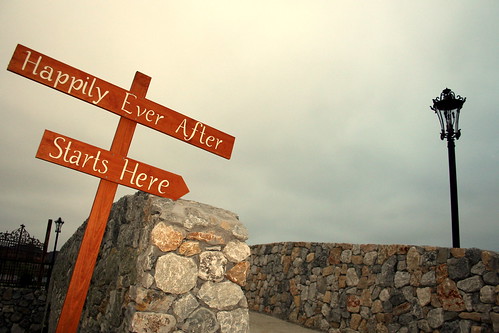
Discussion: Are Happily Ever Afters Required?

Photo credit: DearPioneer on Flickr
As someone who doesn’t always write happily ever afters, I may be a bit biased in this discussion, but I do think it’s worth discussing nevertheless. 

Like most discussions hosted here at Writability, I don’t think there’s necessarily a right or wrong answer, though I suspect that genre expectations may play a pretty decent role with this topic. People reading horror, for example, have wildly different expectations than those who pick up romance novels. 

But if we’re speaking generally, I suppose the thing to consider is what people generally expect when they pick up a novel, and how acceptable (or advisable?) it is to defy those expectations. 

Usually, in genre fiction, people assume the hero will overcome the antagonist (or antagonistic situation) and live with the spoils of victory, whatever that means for the novel. But what if the hero doesn’t win? Or what if the hero wins, but the victory isn't how they imagined it, or has consequences they didn’t anticipate? 

Personally, I don’t think a happily ever after is a requirement. What is required is that all loose ends are tied up and the story arc comes to completion (more on that in this post)—but that doesn’t necessarily mean your protagonist has to gallop off into the sunset on a white horse. 

To me, bittersweet or even occasionally unhappy endings are a nod to reality. Because sometimes things don’t work out the way we planned or the good outcome we imagined turns out to be not so golden. 

On the other hand, I think it could depend on the reason people are reading: some read to escape reality, others to see echoes of reality or view their reality in a new way. For escapist readers, a not-so-happily-ever-after may be disappointing. 

In the end, you can’t make everyone happy, and as I said before, I don’t think there’s really a right or wrong answer. But it’s certainly something to think about. 

What do you think? Are happily ever afters a requirement?

NOTE: Let’s avoid spoilers, yes? If you know of a book, popular or not with an unhappy ending, feel free to refer to the book, but please avoid details and title mentions. :)

Twitter-sized bites: 
Do you think happily ever afters are a requirement? Join the discussion at @Ava_Jae's blog. (Click to tweet)  
Writer @Ava_Jae muses on the necessity of happily ever afters. What do you think? (Click to tweet

How to Make the Most of Your Chapter Endings

Photo credit: mfhiatt on Flickr
While we recently discussed the importance of getting a book ending right, I’d like to talk about another form of endings, that to me are equally important.

Of course, as you I’m sure so astutely gathered from the title, I’m talking about chapter endings.

While writing and revising, I like to imagine that one day, a reader will be reading my book in the middle of the night, and will eventually have to decide do I read another chapter or go to bed?

My goal, in that hypothetical situation, is to make it difficult for the aforementioned reader to put the book down. I want my readers to think I’ll just read one more chapter, then realize ten chapters later that they hadn’t intended to read this much. If I do my job correctly, putting the book down will never be an easy decision.

Although it may feel like it, accomplishing this feat isn’t a work of magic—it’s a combination of tension, intrigue and great chapter endings. But what exactly makes a great chapter ending?

My favorite kinds of chapter endings tend to go one of three ways:

  1. They drop shocking information. Usually this is a big reveal, some kind of plot twist, or unexpected danger to the character. I tend to be quite fond of these in my own writing, because as I’m drafting they make me want to continue writing.

    Example: “Someone closes a hand over my mouth.” —Unravel Me by Tahereh Mafi (page 341)

  2. They leave you asking questions. These questions can range from how the hell is the character going to get out of this to who is that mysterious stranger that keeps appearing everywhere? The point is, if you leave your readers with questions about the story at the end of a chapter, chances are they’ll want to continue reading to try to get those answers.

    Example: “‘He’s not joking,’ Brendan says to me. ‘And I hope you know how to use a gun.’” —Unravel Me by Tahereh Mafi (page 119)

  3. They end on a haunting or particularly evocative note. These can vary pretty widely, but sometimes the right image to echo the mood of the book or whatever is happening can be just the transition a reader needs to push them on to the next chapter.

    Example: “Because it’s so difficult to fight what you cannot control and right now I can’t even control my own imagination as it grips my hair and drags me into the dark.” —Unravel Me by Tahereh Mafi (page 109)

I used all of my examples from Unravel Me because I particularly love how Ms. Mafi ends her chapters, and I often found myself saying one more chapter while reading. I raved about its genius here.

While those aren’t the only three ways to end a chapter in an interesting manner, they happen to be my favorite techniques, and I’ve found that they work well. But now I want to hear from you: what techniques do your favorite chapter endings use? 

Twitter-sized bites: 
What makes a great chapter ending? Writer @Ava_Jae shares some tips on effective ways to end your chapters. (Click to tweet)  
Are you making the most of your chapter endings? (Click to tweet)

How to Write Effective Endings

Photo credit: Olivander on Flickr
Throughout the course of writing several manuscripts, my methods, skills and tools have changed pretty dramatically. But there’s one thing that has remained constant in my first drafting process, regardless of the genre, word count, method or experience: the ending always intimidates me.

When I played around with pantsing, the reason for this intimidation was pretty obvious: I was writing a book and I had no idea how it was going to end. It terrified me to think that I was eventually going to reach what I knew had to be the conclusion, and I would sit and wonder how I could possibly conclude this book.

Outlining, however, didn’t solve my ending anxiety. Sure, it helped that I actually knew what would happen (it helped a lot, actually), but the thought of it still terrified me. What if it’s not epic enough? What if I end too soon (a common problem of mine)? What if there are too many questions at the end? What if my readers are disappointed? What if what if what if?

I am the master of book-ending angst.

Thankfully, after writing several pretty terrible endings (and a couple good ones, I hope), and reading an abundance of endings that have completely blown me away, I’ve learned a couple important elements necessary in every good ending.

  • Address the main problem/antagonist. When I first wrote this bullet, I said “solve the main problem,” but that’s not entirely true. You see, your protagonist doesn’t necessarily have to win every time, but you must address the problem one way or the other. If your character defeats the antagonist and saves the world, great, you can check off this bullet. But maybe your character doesn’t win, at least not entirely, and the antagonist is wounded but gets away. That’s acceptable, too—the key is that the main problem is addressed in some way, usually with a big victory, or a major loss on your protagonist’s part. At the end of the day, your protagonist should have tried his or her darndest to fix the main problem that’s been comprising the plot of your novel, and whether they win or lose is up to you. 

  • Tie up loose ends and provide closure. It’s important to note, that even if you’re writing the first book of a series, you still must tie up loose ends. Naturally, you can still leave some series-wide questions open and hint at possibilities of future plots and problems. But as for the main plot itself, the big problem must be addressed and your readers should not be left still wondering about several subplots or questions by the end of the book. For a series, the endings are about balance: leaving enough questions that the reader will want to move on to the next book, but still answering enough that it stands alone and creates a complete arc.

    As for standalone novels, or the last book of a series, all loose ends must be tied up and accounted for. You readers should have a sense of closure and all subplots and mystery questions should be answered.

  • Complete the character arcs. This is an element that I’ve often struggled with because character arcs, at least for me, often happen organically. Unless your protagonist is a static character, he or she will likely be changed by whatever they experience throughout the course of your book—and your ending should reflect that change, whether it’s maturity, a new outlook or worldview, etc. 

  • Bonus: echo the beginning. This isn’t a requirement, but some of my favorite endings echo images or lines from the beginning of the book. It really gives the book a full-circle feel and helps to create closure. I go into detail about this wonderful effect in my great final sentences post so I won’t go into it again, but if you can manage it, I definitely recommend it. 

What tips do you have for writing effective endings? 

Twitter-sized bites:
Having trouble with your WIP's ending? Here are some tips to writing effective endings. (Click to tweet)  
Does writing "the end" intimidate you? Writer @Ava_Jae shares some tips for effective endings. (Click to tweet
Related Posts Plugin for WordPress, Blogger...