Series or Standalone: Which Do You Prefer?

Just for fun, I decided to count up the books on my physical shelf (so these figures don’t include my e-book collection) and figure out the percentage of series versus standalone novels. Because that’s what everyone does for fun, right? Right.

Anyway. It was no surprise to me to find that the large majority of the books on my shelf were part of a series, but what I found interesting was the enormous discrepancy between series and standalone books, at least on my shelf.

For context purposes, my shelf is comprised of 37% Adult novels (nearly all from one author, heh heh)  48% Young Adult and 15% Middle Grade.
And for more context, the genre breakdown is as follows: 62% Fantasy (of all types—Paranormal, Urban Fantasy, High, etc.), 17% Thriller, 7% Sci-Fi (Note to self: buy more Sci-Fi), 3% Contemporary, 10% Dystopian and 1% Horror.
Now the series figures. Are you ready?

A whopping 82% of my bookshelf are books that are part of a series (versus 18%, for those who don’t like math).
And out of the series books, 44% are part of a trilogy.
Out of those standalone novels, 73% are Adult.
Out of the trilogies, 77% were Young Adult and 23% were Adult. (The two Middle Grade series I’ve collected on my shelf are part of a longer series).
So this probably says a lot more about my book buying habits than it does about trends and the industry, but I know I’m not the only one whose noticed that as of late at least, series seems to be king. Particularly trilogies. And I’ve noticed that some people seem to be getting tired of it.

I read a post not too long ago that mentioned that years ago, the promise of a trilogy made it easier to sell a book. It makes sense—the promise of more books equates more money in the long run, however, the post also mentioned that nowadays, you’re about equally likely to sell a standalone compared to a trilogy. (I forget what post this was from, but if anyone recognizes it feel free to let me know. I like giving credit where credit is due).

As far as reading goes, I’m not sure that I really have a preference. I love trilogies, series and duologies alike, although the trilogy format always seemed to be a perfect amount to complete a full story arc to me (although I still love longer series just as much, *ehem* Artemis Fowl, Harry Potter, Mortal Instruments and Percy Jackson). A series allows us to extend our time in worlds we love with characters we love, and I think that’s really special.

I’ve also seen a new trend of series comprised of companion novels, like the Graceling series the Losing It series, which I find especially interesting because they allow us to learn more about the story world an see aspects of that world that the original main characters couldn’t show us. And that, to me, is fascinating. As an added bonus—no cliffhangers! Every book has a fully completed arc from start to finish.

All that being said, I enjoy standalone novels just as much. The Fault in Our Stars was perfect on it’s own, as were some of my Adult favorites like Immanuel’s Veins, Thr3e and The Bride Collector.

As for writing, all of the manuscripts I’ve written thus far were written with a series in mind (although I haven’t written any sequels for reasons explained here). But with NaNo coming up and new ideas taking hold, I think I’d like to play with straight-out standalones in the future. With maybe an idea or two for companion books. Who knows?

So those are my thoughts, now I want to hear from you: when reading or writing (or both), do you prefer series or standalone novels? Why? 

Twitter-sized bites: 
When reading or writing, do you prefer series or standalone novels? Join the discussion at @Ava_Jae's blog. (Click to tweet)  
To series or not to series? Writer @Ava_Jae counts her books, makes pie charts & shares series & standalone stats. (Click to tweet)  

Quotation Marks: Not for Emphasis

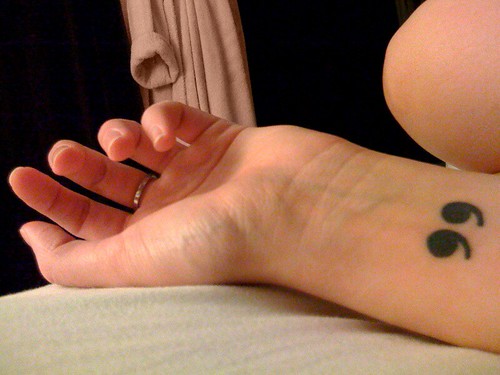
Photo credit: interpunct on Flickr
A quick, (hopefully) informative post on today, on the proper use of quotation marks outside of
dialogue.

In this case, I’m not talking about using quotation marks for titles or to directly quote someone or something (which is entirely correct, and I imagine most of you know how to do that). Instead, I’m debunking a quotation mark myth.

There’s a common misconception about quotation marks that they can be used to emphasize something with a sort of air quote usage. I’ve often seen signs for “fresh” food or a “great” service, but you’re actually shooting yourself in the foot when you try to use quotations for emphasis.

Because the truth is, quotation marks outside of dialogue aren’t used for emphasis—they’re used to indicate something isn’t really whatever is within the quotation marks, that is, to denote sarcasm. So for example…

That “fresh” food isn’t actually fresh.

That “great” service is probably pretty terrible.

That “cheese” sandwich might not actually be edible.

Some other examples...

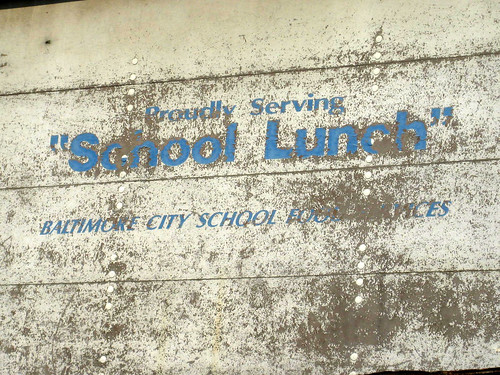
Photo credit: Brett Jordan on Flickr
Um...yikes?

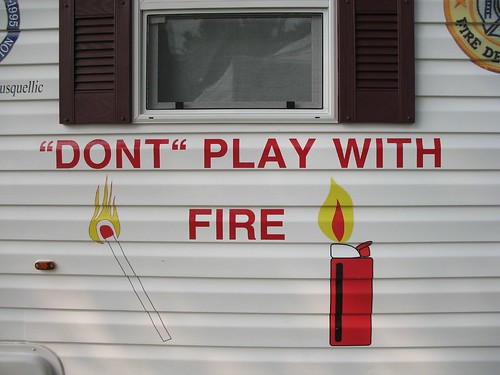
Photo credit: The Letter E on Flickr
I gotcha. *wink wink*

Photo credit: alexliivet on Flickr
And I am now very "hungry."

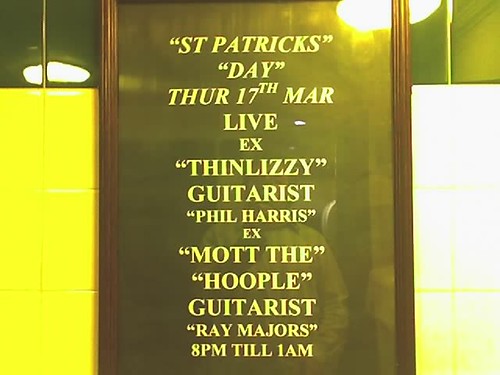
Photo credit: hodgers on Flickr
Yeah...I don't even know what to do with that. 

Don’t believe me? Check out this great (and more comprehensive) post from The Write Practice

Repeat after me: quotation marks should not be used for emphasis, unless you want to be the subject of much snark and ire. Unless you’re trying to be snarky, in which case, air quote away.

What grammatical technicalities do you tend to trip up on? 

Twitter-sized bites: 
Do you use quotation marks for emphasis? You may be using them incorrectly, and here's why. (Click to tweet
Writer @Ava_Jae debunks a common misconception on quotation marks—with fun pictures. (Click to tweet)

How Important is Word Count?

Photo credit: harvest breeding on Flickr
In a word? Very.

While I don’t think it’s something you need to stress over while first drafting—you can always refine during your revisions—after the first draft, you may want to take a good, hard look at your word count and make sure it’s within what’s expected for your genre and category. Particularly if you’re pursuing traditional publishing.

The truth is, if you’re way over or under the expected word count for your genre, it’s often a sign of a wide-scale problem in your WIP. That 200k-word YA tells agents that you need some major cutting: maybe your plot is unfocused, or you’ve got too many lengthy descriptions, or your pacing is way off, or the writing itself is rambling and unpolished. By the same token, that 25k YA tells publishing professionals that the story isn’t fleshed out. Maybe it’s true (which is likely), and maybe it’s not, but those are some of the assumptions that you’ll be facing.

If you’re not sure what the right word count is for your genre/category, here’s a great breakdown by agent Jennifer Laughran, which covers just about every fiction category except for New Adult and Adult.

Are there exceptions to the rule? Sure. There are always outliers, both successful and not on both sides of the scale, but the fact of the matter is, if you’re a debut novelist trying to get published, you don’t want to give publishing professionals a reason to automatically reject you. And a word count way over or under what is expected is one of those reasons.

In case you don’t read that fantastic post I linked to above, here’s a short snippet that I think is really important:
“* It is really not advisable to go over 100,000 words as a debut author, unless you already have a following. Consider yourself warned - 100k is often the magic number that makes editors and agents curse, cry, and possibly delete. Not that you CAN'T be published over 100k, it definitely happens for select super-awesome YA fantasy in particular... just that it really will be yet another hurdle for you.” 
(Read the rest of the post here. No really. Go read it). 
Getting published is difficult enough—the last thing you want is to make it more difficult for yourself by trying to be an exception to the rule.

Do you think word count is important? Why or why not?

Twitter-sized bites: 
Getting your manuscript's word count right is more important than you might think—and this is why. (Click to tweet)  
Don't try to be an exception to the rule—here's why getting your word count right is so important. (Click to tweet)

My Top Five Favorite Villains

Photo credit: Med PhotoBlog on Flickr
So it’s October and I haven’t posted a single tidbit about Halloween or creepy things or even fears for crying out loud, so today I’m going to amend that. With villains. Specifically, my favorite ones. 

To quote one of my favorites listed below (bonus points if you know who), every fairy tale needs a good old fashioned villain. Villains make our protagonists fight for their happy ending, and truth be told, without them, there wouldn’t be much of a story. 

So without further ado, here are my top five favorite villains (in no particular order): 

  1. The Darkling. (The Grisha Trilogy by Leigh Bardugo) So the Darkling wins my favorite antagonist ever award. He’s got that I know I shouldn’t like you and yet I can’t help it type appeal, he’s powerful, intelligent and best of all, he’s sympathetic. You know he’s horrible and probably a little crazy and yet the thought of him dying is not a happy one. At least, not to me. 

  2. Graceling’s antagonist. (The Graceling Realm Trilogy by Kristin Cashore) Seeing how a large portion of Graceling is about figuring out who the antagonist is, I’m not going to spoil it and give this person’s name. But I will say this antagonist is twisted in a way that never stops being intriguing, and the more I got to know him, the more I wanted to know more. 

  3. Warner. (The Shatter Me Trilogy by Tahereh Mafi) Ahhhh, Warner. I have to admit, in Shatter Me, I wasn’t 100% sure why Warner had such an enormous fan base—I mean, yes, he was a great villain, but why all the swooning?

    Then I read Destroy Me. And Unravel Me. And now I am 100% in camp swoon over Warner.

    Again, what really drew me to him was the more I read about him, the more I began to understand him and the more he became a sympathetic antagonist. And I find that the more I understand about an antagonist, the harder it becomes to root for his demise, and to me, that’s a good thing. 

  4. Khan. (Star Trek: Into Darkness variety) I’m not going to pretend to be a Trekkie, because I’m not, but if there’s one thing that I love, it’s smart characters—particularly of the ridiculously smart variety. And this is no different for antagonists. So basically that whole Spock/Khan trying to outwit each other bit was my favorite thing ever. (Plus that scene on Kronos? Awesome).

    Back to smart antagonists: the reason I like them so much is because they’re genuinely difficult to beat. They don’t make stupid self-dooming mistakes, and they certainly don’t make it easy on the protagonist, which makes me that much more nervous for the protagonist and that much more desperate to find out how they finally defeat the antagonist.  

  5. Moriarty. (Sherlock variety) Basically everything I said about Khan applies to Moriarty. Except on top of being a genius, he’s crazy eccentric, definitely a tad bit creepy and is totally unpredictable. I’d probably love him for any one of those traits, but combined altogether? Yes, please. 

Who are your favorite villains from books, TV shows, movies, etc. and why? 

Twitter-sized bites: 
Who are your top five favorite villains from books, TV shows, movies, etc.? Join the discussion at @Ava_Jae's blog: (Click to tweet
Personalized tweet: [INSERT FAVORITE VILLAIN NAME] is my favorite villain—who is yours? Join the discussion at @Ava_Jae's blog: (Click to tweet)
 

Encouraging Stats for the Querying Writer

Photo credit: ladytimeless on Flickr
Fun fact: I love reading How I Got My Agent stories. They’re exciting and often full of smile-worthy GIFs and squeeing and it’s kind of the whole reason I like watching the blind auditions of The Voice; there’s something really special about seeing someone taking a real-life step into their dream.

Oftentimes, at the end of these How I Got My Agent stories, writers will include their query statistics, which include numbers like how many queries they sent out, how many rejections they received vs. how many partial/full requests they received, etc.

What I found really interesting was the sheer number of writers who reported sending well over fifty queries before finding representation. And so out of curiosity I collected data from thirty How I Got My Agent stories scoured across the web.

The results, to me at least, were both surprising and somewhat encouraging.

Out of thirty now-agented writers, the average number of queries sent before finding representation was 59. The most was 154 (although four writers sent over 100 queries), and the least was ten. The majority of those writers only received one offer of representation—and that’s all it takes. You only need one yes.

Think about that: most of these writers, all who now have agents, received a lot of rejections. When we say rejection is just part of the process, that all writers face their fair share and then some, we really mean it.

Everyone gets rejected. Everyone gets disappointed or discouraged, and I’m willing to bet that just about every writer who has entered the query trenches has at one point or another seen a form rejection.

It’s an unavoidable part of the process, and it’s not fun, but it’s ok.

So whether you’re querying now or will be in the future, remember that rejection is expected.

And above all, remember this: in the end, it doesn’t matter how many rejections you get. Because all you need is one yes.

Have you entered the query trenches? 

Twitter-sized bites: 
Entering the query trenches soon? Here are some encouraging statistics to keep you going. (Click to tweet)  
"In the end, it doesn't matter how many rejections you get. Because all you need is one yes." (Click to tweet

How to Fast Draft

Photo credit: Chapendra on Flickr
On average, it takes me about three to six weeks to complete a first draft.

To be fair, with two notable exceptions, most of my first drafts are on the slim side, from about 40 to 65k (though I usually aim for more than that in later drafts). But as far as first drafting goes, I am, what many would consider, a fast drafter.

So why do I tell you this? Because NaNoWriMo is nearly here. And reaching 50k at the end of the month, my friends, requires fast drafting.

So for those of you who are new to the mystical ways of writing faster than the Energizer bunny on speed, here are five quick tips to help you get through your first draft quickly.

  1. Plot first. If you’re a committed pantser, then more power to you. It’s not impossible to fast draft without some sort of outline, but if you’re open to plotting before you begin, I highly recommend it. Why? Because put simply, it’s a hell of a lot easier to write quickly when you know where you’re going. 

  2. Don’t look back. No really. Don’t. The key to fast drafting is to turn off your editing brain and write. If you want to make 50k by the end of the month, you don’t have time to fix that terrible first chapter or rewrite that cringe-worthy scene. Right now, you don’t need to worry about writing well—you just need to write. That’s it.

    It’s ok to write badly. I promise. Worry about making the words pretty while you’re revising. For now, just get the bones down. 

  3. Write or Die. If you’ve read my blog before, you know about my love affair with Write or Die. I won’t rave about it yet again here—all I’ll say is if you’re even the tiniest bit prone to getting distracted and/or staring blankly at the screen, unsure of what to write, then I dare you to try Write or Die just once. 

  4. Word wars. If you’re on Twitter, chances are you’re going to find more than a couple writers who are participating in NaNoWriMo, or are otherwise writing. We writers love to tell Twitter when we’re actually being productive, and I’ve found that a great motivator to write quickly and stay focused is to have word sprints or word wars with other writers. Check out hashtags like #wordmongering, #amwriting and #NaNoWriMo to find other writers who are getting some words down. 

  5. Daily writing goals: stick with them. And this is the holy grail of fast drafting rules: make a daily writing goal and do everything you can to meet it. For NaNoWriMo, your daily writing goal will likely be 1,667 words (assuming you plan to write every day). If you have Scrivener, you can set a goal and time frame and every day it’ll recalculate the words you need to write to complete your goal (which is pretty shnazzy if I do say so myself). If you don’t have Scrivener and you miss a day, don’t fret—just recalculate your daily writing goal and keep writing. 

So those are my fast-drafting tips, now I want to hear from you: what tips do you have for NaNoWriMo (or fast-drafting in general)?

Twitter-sized bites: 
Getting reading for #NaNoWriMo? Here are five quick tips for your future fast-drafting needs. (Click to tweet)  
Gearing up for #NaNoWriMo? Fast-drafter @Ava_Jae shares five tips for reaching the elusive 50k in 30 days. (Click to tweet)

My Favorite List: What Do You Want to Write About?

Photo credit: Chapendra on Flickr
When I’m ready to think about starting a new manuscript, the very first thing I do, before I even begin brainstorming, is revisit my favorite list of all time.

This is the list that reminds me why I love to write. It helps me to remember all of the potential for great stories out there, and most of all, it inspires me with all of the things I still want to write about. Because it forces me to ask just that:

What do I want to write about?

This is a list that I add to and rewrite and change all the time. It’s a springboard of ideas, both vague and specific.

I love working on this list, because it makes me excited, both for stories I haven’t written, and for books that I have that cross off items from the list. But most of all, it serves as guaranteed inspiration to launch me into brainstorming.

The list can include anything, from a specific manuscript idea to overcoming a struggle you have with writing. It can be an image, a character name, a trait, an idea, a world, a writing characteristic, or a goal.

I’ve rewritten my list several times (in part because I keep losing the hard copy, but never mind that). To give you an idea, here are a few items on my most recent list:

  • Diverse characters
  • Rich, interesting worlds
  • Combining Sci-Fi & Fantasy
  • Flawed characters 
  • Sympathetic antagonists 
  • Ninjas

I also have some characters names and more plot-specific items, but hopefully you get the idea.

This is the list I go to whenever I’m low on inspiration, or am struggling while trying to brainstorm, or even just want a refresher. It’s my favorite list, and one that I intend to continue to use over the years.

Do you have a what I want to write about list? What are some items that are (or would be) on it? 

Twitter-sized bites: 
Do you keep a list of what you want to write about? Here's why one writer swears by it. (Click to tweet)  
What do YOU want to write about? Writer @Ava_Jae shares her favorite inspiration list. (Click to tweet

Related Posts Plugin for WordPress, Blogger...