Showing posts with label querying. Show all posts

Vlog: 4 Questions Every Pitch Must Answer

Whether you're working on a query, proposal, back cover copy, or just need to be prepared to talk about your book, there are four questions every pitch must answer. Do you know what they are?


Does your latest pitch answer these four questions? 

Twitter-sized bite: 
Working on a query letter, elevator pitch, or back cover copy? @thegabecole talks about 4 essential questions every pitch must answer. (Click to tweet

When is Your Manuscript Submission-Ready?

Photo credit: AstridWestvang on Flickr
So the other day I asked Twitter if anyone had writing questions they wanted answered in a blog post, and as expected, writers of Twitter came through with lots of great questions. The first one, was this:

"What do you do after you've finished draft one and had beta readers review? Hire a professional editor? More beta readers?"

This is a great question, and one that kind of ties into a big part of working a novel, namely, how do you know when you're ready to submit?

This answer, of course, is going to vary writer to writer. But generally, my process looks like this:

  1. Draft the book—first draft. 
  2. Take a break from the book. 
  3. Revise—second draft (which often requires many rounds of revisions).
  4. Send to first round of critique partners. 
  5. Revise with first round notes—third draft (which also often requires many rounds of revisions). 
  6. Send to second round of critique partners, plus sometimes first sensitivity readers.
  7. Revise with second round notes—fourth draft (which also (surprise!) often requires several rounds of revisions). 
  8. Send to sensitivity readers I haven't already sent it to. 
  9. Revise with sensitivity readers notes—fifth draft. 
  10. Send to agent. 

If I didn't have an agent, step ten would be to start querying. Basically, that's the point where I say, "okay, I've made this as good as I can for now—it's time to get some industry opinions." That's the point where I believe I've taken all the steps I can to make my work as good as it's going to get for now. 

While I personally never hired a freelance editor to work on my manuscripts (mostly because, to be completely transparent, I couldn't afford it), I am, as most of you know, a freelance editor. So I'm very well aware that many writers work with freelance editors before querying—which is cool! As an editor, I do everything I can to point out the problem areas and make suggestions to help my clients better prepare their manuscripts for submission. Very rarely have I worked with a client where I thought they were already pretty much ready to go (I can think of maybe two or three cases total, in nearly a year of freelancing)—so I do think it can be helpful to work with an editor before you submit, if that's something you can afford. 

As a freelance editor, however, I always recommend working with critique partners and betas first, before you hire a freelance editor. There's a ton you can learn from other writers—for free!—so that you get the basic stuff out of the way before you work with a professional. So if I were to work with a freelance editor, I'd personally make that my Step 10, before I sent the manuscript off to query. 

Ultimately, here's what you want to make sure you cover before you start querying:

  • Have I made my work the best I can reasonably make it at this time? 
  • Have I worked with others to make sure I've fixed problems I couldn't catch on my own? 
  • If representing a (or many!) marginalized group(s), have I worked with sensitivity readers and taken their notes into account to make sure I've respectfully and accurately portrayed that marginalization to the best of my ability? 

The steps you take—and how many steps you take, and in what order—are going to vary both on your manuscript and your own process. I now take many more steps that I did years ago when I first started out—and it's not a coincidence that my work has improved markedly since then. But what's important is you're honest with yourself about whether you've really done enough to get your manuscript ready—and when you reach that point, you take a deep breath, and let your work fly.

What steps do you take to make your manuscript query-ready?

Twitter-sized bites: 
When do you know your manuscript is submission-ready? Author & freelance editor @Ava_Jae shares some thoughts. (Click to tweet
What steps should you take to prepare your manuscript before querying? Author @Ava_Jae shares her process. (Click to tweet)

Vlog: 4 Common Query Mistakes

So you've written your manuscript, revised it death, traded with critique partners, revised it again, and now you're ready to query. But before you start, make sure you aren't making any of these four common query mistakes.


RELATED LINKS: 


Have you made any of these query mistakes? (I know I sure have!)

Twitter-sized bite: 
Getting ready to query? Make sure you don't make any of these common query mistakes. #vlog (Click to tweet)

Vlog: How to Pitch Your Book

So you've written your book and the time has come to figure out how to pitch it. Whether you need an elevator pitch or you're preparing to query (or both!) today I'm sharing some tips for perfecting your pitches.


RELATED LINKS:


Have you had to pitch your book in person yet?

Twitter-sized bite:
Have you perfected your elevator and query pitches? @Ava_Jae vlogs some tips for pitching your book like a pro. (Click to tweet)
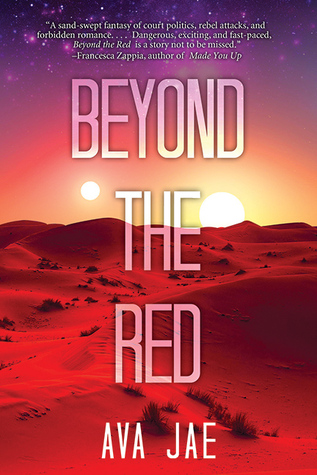
Looking Back: BEYOND THE RED's Query

So! YA Scavenger Hunt is over (and for those of you who participated—I hope you had fun!), and for the hunt as exclusive content I shared BEYOND THE RED's query. Now that the hunt is over, however, I thought it'd be fun to share with you guys.

So without further ado, here is the query that led to my signing with an agent:

Dear Ms. Fury:

I am querying you because you requested that I do so with the first three chapters of my manuscript after reading my Secret Agent pitch. 
Kora, an eighteen-year-old alien queen, has a problem as vast as the endless crimson deserts. As she’s the first female ruler of her territory in generations, her people clamor for her younger twin brother on the throne, even in the face of his violent rages. But despite assassination attempts, a mounting insurgency of nomadic human rebels, and pressure to find a mate to help her rule, she's determined to protect her people from what think they want: her brother ruling them. 
Eros is a nineteen-year-old rebel soldier hated by aliens and human alike for being a half-blood. But that doesn’t stop him from defending his people, at least until Kora’s soldiers raze his camp to the ground and take him captive. He’s given an ultimatum: be an enslaved bodyguard to Kora, or be executed for his true identity—a secret kept even from him. Some choice. Without another way out, he begrudgingly agrees to keep her safe.

When Kora and Eros are framed for the attempted assassination of her betrothed, they must flee. Alone, under the light of the four moons, Kora realizes her feelings for Eros may be more than respect. But out in the vastness of the desert, they aren’t safe from predators—or dehydration. Their only chance is to turn themselves in to the high court, but when they uncover a violent plot to end the human insurgency in the process, they must find a way to work together to prevent genocide.

SLAVE & SIRA is a dual-POV 74,000-word New Adult Sci-Fi novel with crossover potential that may be described as THE GIRL OF FIRE AND THORNS on a technologically advanced alien planet. It is a standalone novel with series potential.

I run a writing blog, Writability, which is two years old and receives nearly 1,000 daily page views. I've also written guest posts for top-tier blog Problogger, and I am a reading intern at [redacted literary agency].

Thank you for your time and consideration.

Fun asides:

  • Beyond the Red was originally New Adult (which surprises approximately no one when I mention it).

  • Beyond the Red's old title is not nearly as awesome as the one it ended up with (have I mentioned how much I agonize over titles?)

  • This query was actually later revised again and again and again as I continued submitting to other agents (before I got the call, of course). Goes to show there's some wiggle-room in terms of polish.

  • Due to a blog contest (which I mention here) my now-agent actually read the first page before the query. Which in this case worked very well in my favor. :)

Twitter-sized bite:
Want to see a query that worked? @Ava_Jae shares the query that led to her signing w/ an agent. (Click to tweet

Top Ten Querying Tips

Photo credit: Bethan on Flickr
So it occurred to me that it's been a while—a long while since I've posted about querying, probably because querying has been far from my mind as of late and also I have a ton of posts about querying. But! Querying is still very much a very important part of the traditional publishing process, and as I've been reading plenty of queries for work, I realized there's no time like the present to talk about it on the blog again.

So here we go. Top ten querying tips, many of which have existing blog posts to expand upon. Enjoy!

  1. Do your research! I really can't emphasize enough how important research is before you start querying. Your query letter may be absolutely incredible, but if you send it to someone who is closed to queries, or who doesn't represent your genre, it's not going to get read. Furthermore, you want to make sure the agent you're querying is someone you genuinely would want to work with—so do your best to try to get a feel for what the agent is like before you start sending out query letters. (Bonus: here's a vlog on query research.)

  2. Follow submission guidelines. This is so important! Not following submission guidelines is a really easy way to get rejected. Don't send page 30-35 of your book if the submission guidelines ask for the first five pages. Don't use attachments if the submission guidelines tell you not to. Follow directions and you are much more likely to leave a good impression.

  3. Stick to one page. This is the expected format, and considering how many queries agents and editors see every day (that is to say, a TON), you can probably easily understand why. Furthermore, if you can't keep your query to a page, agents and editors may get the impression that you're overly wordy and don't know how to make cuts in your manuscript, either. Which is not in your favor.

  4. The book is the most important. While it's great to know if you have some sort of credentials for your particular book, the focus and bulk of your query should absolutely be on the story. Trust me when I say you don't need three paragraphs about yourself—the story is what agents and editors need to know about the most. (Bonus: here are five things you don't need in your query.)

  5. Use details. This is the number one problem I see in queries and pitches alike—the summary is so general that it sounds like a hundred other books. When writing your query, make sure to include details that are specific to your book. What sets your book apart from others like it? How is this story uniquely geared to your book? What makes yours different? In an industry where thousands of pitches pass across agent and editor desks every year, this is absolutely vital. (Link in title of this point shares tips for writing details in queries.)

  6. Book comps are your friend. I've actually really come to love book comps and use them even now when I pitch a story idea to my agent—or before that, when I'm brainstorming an idea to start with. Book comps are great because they show you know the market, they give an idea of where your book would fit on the shelf, and they show there's a potential audience for your book. For tips on choosing book comps, check out the link at the beginning of this point.

  7. Get your query critiqued. This is a frequently overlooked step, but I think it's really, really helpful. I highly recommend getting your query critiqued by both your critique partners, who have read your book, and by writers who haven't read your manuscript. Their combined feedback will help you determine whether the query fits your book and whether it's intruiguing on it's own without being confusing to those who haven't read your book.

  8. Keep track of your submissions. This is a very helpful organizational step that will ensure you don't send the same query to the same agent, or you don't accidentally send simultaneous submissions to two agents at the same agency. I highly recommend QueryTracker for this purpose.

  9. Pitch contests are cool too. There are pitch contests semi-frequently on Twitter, that are both really exciting and fun and also can be a great opportunity to get requests from agents. I actually found my agent through a blog contest, so I know first hand that these can sometimes be effective. :)

  10. Find distractions. Once you've started querying, I highly recommend you find something to distract you. If you're able to write while querying, working on a new project can be great, but if not, now's a good time to catch up on your TBR pile, or spend time with family, or watch a couple movies you've been wanting to see, etc. Just find something to keep your mind busy. (Bonus: here's a vlog on how to survive the query wars.)

What tips would you add to the list? 

Twitter-sized bite: 
Getting ready to query? @Ava_Jae shares her top 10 query tips + lots of linked resources. (Click to tweet)

Vlog: About The Call

Today in response to a tumblr ask, I'm talking all about The Call with an agent, some basic things to expect, and some things to think about before and during this publishing milestone.


RELATED LINKS: 


Do you have any questions about The Call? I'll do my best to answer them below! 

Twitter-sized bites: 
Curious about what The Call with an agent is like? @Ava_Jae vlogs her experience + things to think about beforehand. (Click to tweet
Preparing for the eventual Call with an agent? @Ava_Jae vlogs about some things to think about beforehand. (Click to tweet)

Books Written Before Debuts: Stats

Photo credit: kenteegardin on Flickr
So a little while ago, while I was looking for statistics about the number of books various authors had written before writing their debuts, I found that there was shockingly little information out there. I mean, sure, if you hunted for it you’d find some scattered answers, but I couldn't find an easy database with averaged information.

So I asked around Twitter to see if anyone knew of such a database. And no one did. But the genius @Bibliogato suggested I take an unofficial Twitter poll and hope it got RTed enough to get some decent data. 

So I did. And wow, did it ever get enough RTs. 

Overall, I got over 200 responses from traditionally published writers all over Twitter, which was pretty incredible. Combined with some data I found online from specific authors, it gave me a pretty interesting spread of information. 

The question I asked specifically, was how many novels the respondents had written before writing their debut novel. 

83.8% of respondents said that they’d written at least one novel before writing their debut. The most common answer was one (so debut was the second book), followed very closely by three (debut was fourth). The average was 3.24 books written before debuting. 

  • 16.2% debuted with their first novel. 
  • 17.1% debuted with their second novel. 
  • 13.1% debuted with their third novel. 
  • 16.7% debuted with their fourth novel. 
  • 14% debuted with their fifth novel. 
  • 7.7% debuted with their sixth novel. 
  • 6.2% debuted with their seventh novel.
  • 9% wrote seven or more books before writing their debuts. 


The spread: 


That data point of 20+ books written before debuting? That’s a HUGE author. Like, Twitter-verified, NYT bestseller. AKA: don’t give up. 

Some interesting anecdotes: 

  • One writer spent 17 years writing short stories before writing their debut. 
  • One writer wrote over 40 novellas before writing their debut.
  • One writer spent 10 years writing fan fiction before writing their debut. 
  • One writer spent 25 years writing four books. 
  • One writer spent 13 years writing one book (their debut). 
  • Many writers didn’t sell the first book they signed an agent with. 

All in all, there was a really wide spread here, but I think the takeaway is not to give up. Maybe it’ll only take you one book, and maybe it’ll take you twenty. But if you keep working at it, and writing, and revising, and sending your book out there—one way or another, I think you’ll make it.

What do you think of the statistics? 

Twitter-sized bites: 
.@Ava_Jae asked pubbed writers on Twitter how many books they wrote before writing their debuts. Here are her stats. (Click to tweet)  
Writer @Ava_Jae shares her results from her unofficial Twitter poll on how many books pubbed writers wrote before their debuts. (Click to tweet)  
Feeling discouraged about having to trunk a novel? @Ava_Jae shares statistics you might find encouraging. (Click to tweet

How to Polish Your WIP Before Sending

Photo credit: LucasTheExperience on Flickr
So you’ve traded with CPs and betas several times, completed more rounds of revision and drafts than you care to think about, and now it’s nearly time to send your MS out. Whether “out” to you means querying, submissions, or to your agent or editor, this can frequently be a nerve-wracking experience.

The final step, however, before hitting “send” on those e-mails is to do one last polish to fix minor issues that can sometimes pull readers out of the narrative or bring attention to the writing. These are some things I try to look for when I do a final polish:

  • Overuse of adverbs. While I’m not a writer who believes that all adverbs are evil and need to be annihilated, too many adverbs are frequently a sign of not-as-strong-as-could-be writing. Luckily, this is a relatively easy (if not time-consuming) fix. I generally do a quick “ly” search and eliminate the unnecessary ones, adjust phrases and words to make them stronger and make sure I don’t have too many on a single page. 

  • Repeated words/phrases/writer ticks. Arched eyebrows, smirking, lip-biting, runnings hands through hair and sighing are actions that my characters tend to repeat a lot. I’m not sure exactly why they’re such crutch phrases when I’m drafting (possibly because I do these things a lot myself?), but invariably my CPs find at least one of these way, way overused in my drafts—and so I do a quick search and destroy to weed some out.

  • Unnecessary dialogue tags. This is a very common and easy mistake—and one I still catch myself doing frequently. If you have an action tag with dialogue, then you don’t also need a dialogue tag. For example:

    Meh: “What is it?” he asked, tucking her hair behind her ear.

    Better: “What is it?” He tucked her hair behind her ear.

    It’s redundant and pretty easy to spot.

  • Similar character/place names. In early drafts of Red I had SO many S names. S character names, S place names, I just really liked S okay? But unfortunately it gets confusing when you have too many character or place names that sound similar or all start with the same letter, so this is something to keep an eye out for. If you’re not sure, it can sometimes help to write out all the character and place names alphabetically—it’ll become obvious very quickly if you have too many that all start with the same letter or sound similar.

  • Continuity errors. This frequently happens when you revise in stages like I do. Sometimes, when you change something major (or even not major, but something that affects other things) you miss little continuity issues. Or you’re like me and forget that you killed off a character in this latest revision round, so that character is magically accidentally resurrected in the final chapter—oops. This can be a little trickier to spot on your own, especially if you’ve looked at your MS so many times, but CPs and betas are quite excellent at honing in on them. 

  • Told emotions. I’ve already written a post on how to show emotion effectively, so I won’t get into the details again, but this is another very easy to catch fix. When I’m searching for told emotions, I like to do a quick search in my WIP for emotion tags: sad, scared, happy, excited, nervous, etc. Like most search and destroy methods, you don’t need to get rid of every example of told emotion, but many times there are ways to show emotion much more effectively than just naming the emotion, and that’s what you’re looking for here—opportunities to make the sentence stronger. 

  • Paragraph/sentence length variety. This one can be checked with a quick visual scroll through. Pay attention to the shapes of your paragraphs and where your periods end. Try to avoid giant bricks of text and if you know you tend to overuse a particular sentence/paragraph style (i.e.: short or overly long sentences) keep an eye out to make sure you haven’t overdone it. 

So those are my go-to polishing checks—now I want to hear from you. What checks do you do when polishing your WIP?

Twitter-sized bite: 
Think you're ready to send your MS off? @Ava_Jae shares some quick checks to look for with your final polish. (Click to tweet)

Vlog: Is Your Manuscript Query-Ready?

So you've worked with critique partners and revised your manuscript several times, but how do you know if your WIP is ready to query?


RELATED LINKS: 

What signs do you look for when deciding if your MS is query-ready? 

Twitter-sized bite: 
How do you know if your WIP is query-ready? Writer @Ava_Jae discusses her process in today's vlog. (Click to tweet)

Vlog: 5 Things to Know Before Getting an Agent

Ready to start querying agents? Here are five things you should know as you prepare to start working with a literary agent.


RELATED LINKS:


If you aren't agented, are there any here that surprised you? If you are agented, what would you add to the list?

Twitter-sized bite: 
Want to get an agent? @Ava_Jae shares 5 things you should know as you prepare to start working with one. (Click to tweet)

Pitch Tip: Make Your Stakes Personal

Photo credit: Stephen Burch on Flickr
So I’ve been working on Twitter pitch critiques all week, and I’m not sure how many I’ve read, exactly, but it’s been a lot. And while I’ve spoken quite a bit about the essentials of a good pitch and making stakes clear before, there’s one related aspect that I sort of glossed over. I’m fixing that now, because to be honest? It’s pretty essential.

I’m talking about making your stakes personal. To your protagonist, that is.

Many times, I’ve seen pitches with stakes that are mentioned, but it’s unclear why it matters. For example, take this (completely made up) pitch:

When a serial killer abducts Michael, it’s up to Johnny to save him before Michael becomes Victim 13. 

I frequently see pitches about the protagonist needing to save someone from certain doom, but like the fake pitch, it’s not always clear why it matters to the protagonist. In this case, what is Michael’s relationship to Johnny? Is he Johnny’s brother? Best friend? Boyfriend? Husband? Is he just another random person, but it’s up to Johnny because Johnny is the detective tracking down the serial killer? There are loads of possibilities here, but without the specifics, pitches like these fall flat regardless of how big the stakes may seem on the surface.

Repeat after me: we must know why the conflict matters to your protagonist. 

Another pitch type I see revolves around characters having to save the world. On paper, this sounds like it’d be a really solid set-up for high stakes, but the truth is, personal stakes have a much greater impact than macro-stakes. Saving the world is great, but saving a loved one, or a child, or sibling, is so much more powerful.

The thing to remember is if we don’t know why the conflict matters to your protagonist, then the stakes (that is, what your protagonist has to lose) fall flat. So next time you’re working on a pitch, I encourage you to take a good, hard look at your set-up and make sure it’s absolutely clear why the conflict is so important to your protagonist.

After all, if your MC doesn’t care, why should your readers?

What do you think—are personal stakes important in a pitch? 

Twitter-sized bites: 
Working on a query or pitch for your WIP? Writer @Ava_Jae says to make sure it's clear your stakes matter to your MC. (Click to tweet
"We must know why the conflict matters to your protagonist." —@Ava_Jae on pitching your novel. (Click to tweet)

Vlog: How to Survive the Query Wars

Your query letters have been sent! And now begins the delight of every writer: the query wars. Today I'm sharing my top tip on how to survive this delightful stage.


RELATED LINKS:


What tips do you have for getting through the query wars? 

Twitter-sized bite: 
About to enter the query trenches? @Ava_Jae vlogs about her top query wars survival tip. #pubtip (Click to tweet)

Vlog: How to Query: The Query Letter

So you've set up your list of agents and your manuscript is ready to go, which means you need a query letter. Here's how to get started and a few things to remember while writing your query.


RELATED LINKS: 


What tips do you have for query letter writing? 

Twitter-sized bite: 
Struggling to write your query letter or don't know where to start? @Ava_Jae vlogs about what goes into a query. (Click to tweet)

Vlog: How to Query: Research

So your WIP is fully revised and ready to go, which means it's time for querying! Sort of. Time for query prep. Here's how to get started.


RELATED LINKS:


What tips or resources do you have for writers researching agents? 

Twitter-size bite: 
Getting ready to query but don't know where to start? @Ava_Jae vlogs about the first step: researching agents. (Click to tweet)

Top 5 Twitter Pitch Mistakes

Photo credit: Jexweber.fotos on Flickr
So as some of you who follow me on Twitter know, I participated in this season’s #pitmad and #PitchMAS Twitter pitch events—except I wasn’t pitching this time.

No, for the first time ever, I got to participate as someone making requests (in this case for my editorboss). And you know? It was really fun and interesting to see the other side of these pitch events. I’d frequently participated as a pitcher, but handing out shiny gold favorites was fun.

That said, out of the hundreds of pitches I read, I requested maybe 1%. (I did the math with an estimate.) Many times it had less to do with the pitch and more to do with the fact that it wasn’t what I was specifically looking for, but I did notice several common mistakes that I think are important to take note of.

So without further ado, here are the top five twitter pitch mistakes I observed:

  1. Stakes and/or conflict are unclear. This is huge. HUGE. If the stakes and conflict aren’t crystal clear in your pitch, then it’s very difficult to know enough about the book to make a request. Why? Because stories are rooted in conflict (and the conflict isn’t clear if we don’t know what’s at stake). Without conflict, there isn’t a story, and so pitches without stakes or conflict don’t show why the events in the story are important. 

  2. Vagueness. I’ve written a post already on why details are so important in queries and pitchesso I won’t rehash the whole thing here. The short version is this: if your pitch has a phrase that could apply to anyone else’s pitch (i.e.: “dark secret,” “overcome great odds,” etc.), then chances are likely you could do better. In a pitch or query setting where the important thing is to stand out from the hundreds of other queries and pitches, you’re not going to do it with a vague phrase that a hundred other people have used. Instead, your goal should be to make your pitch so specific that it wouldn’t fit for anyone else’s manuscript. 

  3. Quotes. I understand the temptation to use a quote, I do. But the problem is, quotes never ever address point one—the stakes and conflict. Not only that, they don’t tell us what the book is about, which is the point of the pitch to begin with. Quotes are fun, and I get that, but save them for another setting. Chances are likely they aren’t going to help you in a pitch fest. 

  4. Summarization (instead of pitch). Pitches, unlike a synopsis, should not tell us the ending. A pitch should intrigue and make me want to read the book—but I don’t want to know how it ends before I’ve even taken a look at it. Save the full plot summary for the synopsis. 

  5. Not using all 140 characters wisely. By this, I mostly mean I saw a lot of people twisting their pitch around to try to make their title fit. And quite frankly? It’s unnecessary—you’d be much better off using those characters to get extra information in about your manuscript. Cool titles are fun, but most of the time, they’re not going to get you requests—an interesting premise with clear stakes and conflict, will. 

  6. Bonus: didn’t specify genre or category. I can’t speak for everyone browsing through the Twitter pitch feeds, but if a pitch didn’t have the category or genre specified, I skipped it. Why? The truth is, there are just way too many pitches to go through to spend time reading one that might not be a category or genre that I’m looking for. The genre/category tags are important for a reason. 

  7. Extra bonus: For more on the essential aspects of a Twitter pitch, check out this post.

So those are my top five Twitter pitch mistakes. What recommendations do you have for Twitter pitchers? 

Twitter-sized bites:
Assistant Editor @Ava_Jae shares the top 5 pitch mistakes she observed during #pitmad & #pitchMAS. (Click to tweet
Thinking about participating in a Twitter pitch event? Here are 5 common pitch mistakes to avoid. (Click to tweet)

Should You Query That New Agent?

Photo credit: Helga Weber on Flickr
So you're doing your agent research to find the perfect agent out there for you and you come across an agent who is new to the industry. Because you're a super savvy writer, you know the importance of research and finding agents with some experience and a good reputation, but how do you handle new agents?

Do not despair, my savvy writer friends! New agents can be totally fabulous as long as you know what to look out for.

Some questions to ask while researching (in addition to other research questions) include:

  • Where did this agent get his/her training? This is super important. Most agents intern at a literary agency (or two) before they become agent assistants, then finally begin taking on clients themselves, and quite frankly? If they don't go through that process, I would be wary. The lit agency internship/assistant position is where new agents learn tons about the business, about making connections, about everything involved in being an agent. Without this vital experience, they'll be left without connections and relationships with editors and other industry people (the importance of which really can't be overstated) as well as the training that goes into becoming an agent.

    Remember: anyone can call themselves an agent and accept queries. It's up to you to do your research and make sure they're legitimately qualified to do so. 

  • What is the reputation of his/her agency? New agents, understandably, aren't going to have many sales. This is to be expected—after all, they're new to the business and sales take time. That being said, the agency that they're working at should have a nice resume.

    The great thing about agencies is the agents can often work with each other/get tips from each other/build off of each other's expertise. This is especially helpful for new agents who could use the extra support.

    This is one of the many reasons why new agents who start their own agencies are an enormous red flag. So when you're looking at new agents, make sure you take a look at the reputation of the agency they're working at. 

Now you may be wondering why you should query new agents when there are so many excellent experienced agents out there. I've got some answers for you there, too.

Pros of new agents:

  • Actively seeking new clients. Here's the thing with experienced agents—many of them have a full client list, which is fabulous, but it also means they're going to be MUCH pickier when looking at queries (assuming they're open to queries at all, which isn't always the case). New agents, conversely, are still building up their client list and thus are often willing to look at more and consider manuscripts that might need a little more work (though this is not an excuse to not edit your manuscript. Don't do this. Ever). 

  • More time per client. This is related to the last point, but there's another plus side to having an agent with less clients, namely, that they have more time available to spend with each of their clients.

    Now that's not to say that agents with full client lists don't have time for their clients, but it DOES mean that you often have to be patient because, c'mon, you're one out of thirty-someodd people all vying for one person's attention. And each of them have books for polishing/submitting/contracting/selling/whathaveyou.

    New agents aren't initially juggling as many clients at once, so many of them have a little extra time to devote to each of their clients. And that's pretty sweet. 

Cons of new agents:

  • Less experience. I mean, obviously. But as I said above, they can make up for this by learning from their fellow agents in the agency, so as long as they're part of a reputable agency, this isn't too terrible, really. 

  • Other cons...um...that's all I can think of, really? 

Writer's Digest has really great New Agent Alerts that can be an excellent place to keep an eye out for new agents looking for clients. And also because I'm biased and I have a special love for one particular new agent, if you write Young Adult, New Adult (all genres, but mostly romance), Adult romance or picture books, you should check out Rachel Brooks' submission guidelines because she's really wonderful and actively building her client list right now. She also tweets a lot of helpful writerly tips.

Okay. I'll stop gushing now.

Go forth and query those new agents!

Have you/will you query any new agents? Why or why not? 

Twitter-sized bites: 
Debating whether or not to query a new agent? @Ava_Jae shares some helpful agent researching tips. #pubtip (Click to tweet)  
Should you query that new agent? Writer @Ava_Jae shares her thoughts. (Click to tweet)
5 Things You Don’t Need in Your Query

Photo credit: smlp.co.uk on Flickr
Querying is a tough, sometimes soul-crushing business—and writing a query letter can in many ways be the most difficult part. After all, being asked to condense your 60-100k (or more?) manuscript into a page-long letter that makes your book sound intriguing and also personalizes to that specific agent with the teeny tiny stakes of  the agent reading your manuscript (or not)? It’s ridiculously tough.

I’ve read my fair share of query letters over the years, and with the WriteOnCon query critique forums still fresh in my mind, I thought now as good a time as ever to write about five things you don’t need in your query.

  1. Explanation of the lessons the reader/your characters will learn. I understand the impulse to include this, I do—English teachers have told us for years that a book isn’t really literary gold unless it has some grand, over-arching, bigger than thyself message. But here’s the thing—even if your book does have that kind of message (and, um, you know what it is?), it’s best to leave it out of your query letter.

    Now, I can already hear what you’re thinking (apparently my online self is a telepath)—but Ava, I worked so hard to get those messages into my book—why wouldn’t I talk about them? The why is pretty simple actually: 99% of the time writers include the message or lesson the characters or readers (or both) are going to learn when reading their book in their query letter, it sounds preachy—and worse, it sounds like your manuscript is preachy (or teacher-y, which isn’t any better), which leads to a ginormous no thank you.

    I know that seems a little unfair. It’s totally possible that you have messages in your book that aren’t preachy at all and are woven really nicely into the story, and if that’s the case, that’s great, it really is. But don’t mention it in your query if you don’t want someone to assume your book is going to be preachy/teachy. 

  2. Vague phrases. I actually wrote a whole post about why details are so important in queries and pitches, so I won’t rehash the whole thing, but in queries, vague phrases are you enemy. Mentioning your protagonist's dark secret or life-changing quest or how they meet a mysterious stranger or will have to make a life-altering choice whose consequences will affect all of humanity? Yeah, it’s not helpful.

    The thing is, agents and editors read thousands of queries a year. They have books getting pitched to them all the time and the only way you’re going to pique their interest is if you show them how your book is unique. If your query is full of vague phrases, not only can I guarantee they’ve seen someone else (or many many many someone elses) describe their manuscript the same exact way, but you’re completely missing out on a vital opportunity to show them how your book stands out from the crowd. 

  3. Quotes from your manuscript. I did this in my first ever query (spoiler: it so didn’t work), and it’s something I’ve seen especially amongst new writers.

    Again, I get the temptation: you’ve worked so very hard on your manuscript and you want to share some gems with the agent/editor in the hopes that it’ll pique their interest. But the query is not the place to show off your writing (or at least, not the writing of your manuscript)—the query is the place to explain your manuscript in a condensed, interesting way to make the reader want to learn more (and hopefully read) your book.

    But Ava, you’re thinking (boy, telepathy is fun), this super amazing quote isn’t in the first sample that I’m attaching to the query letter. What if they don’t see my really awesome quote because they don’t read enough? Well, my friend, I’m going to share a little tough love: if they don’t read far enough to get to your super awesome quote it’s because a) it wasn’t for them b) your query wasn’t strong enough to represent your manuscript or c) your manuscript wasn’t ready.

    Leave the quotes for the actual manuscript. Your query is not the place for them. 

  4. A huge bio. Let me start off by saying that bios are definitely important—and a vital part of the query. However, the focus of the query letter should absolutely be on your manuscript. Not you.

    Your bio should be a few sentences to a paragraph long. That’s it. And that paragraph, quite frankly, really doesn’t need to take up all that much space.

    Agents don’t need to know that you worked on this book for four years. They don’t need to know that your mom thought it was the best book she ever read, or that you won that online poetry award, or that you’ve known since kindergarten that you were meant to be a writer. All that should be in your bio are publishing or manuscript-related credentials (i.e.: you’re writing a medical drama and you’re a surgeon, or you’ve published short stories in The Glimmer Train, etc.). If you don’t have publishing credentials, that’s totally okay! Just say it’s your first book (or, you know, don’t? There’s some debate on this point) and let your manuscript do the talking (no debate on that one). 

  5. Anything in either of these two posts. Self-explanatory, really. For your sake, (and the agents’ sakes) don’t do anything in those posts. Please. 

What would you add to the list?

Twitter-sized bites:
Working on a query letter? Writer @Ava_Jae shares 5 things you DON'T need in your query. (Click to tweet)  
MS quotes & vague phrases are 2/5 things writer @Ava_Jae says you don't need in your query. What do you think? (Click to tweet)

Manuscript Wish List (MSWL): A Hugely Valuable Resource for Writers

Photo credit: Julie Edgley on Flickr
So just recently, the amazing Jessica Sinsheimer (Sarah Jane Freymann Literary Agency) and K.K. Hendin (author extraordinaire whose book I’ve raved about in the past) announced the launch of their new Manuscript Wish List site. 

For those who haven’t already seen it’s incredible hashtag version #MSWL on Twitter on tumblr,  MSWL is a site where agents and editors share what projects they wish they had in their inbox. That’s right—it’s a peek directly into what agents and editors are hoping to find right now.

For more information about how this supremely awesome idea came to be and what it’s all about, check out MSWL’s About page.

So while I’m no longer in query mode, I did find the MSWL Twitter event extremely helpful (and exciting!) while I was querying, and I know without a doubt that had this site existed a year ago, I would’ve been living on it.

You see, the tough thing about the MSWL Twitter event is it’s much harder to filter (not impossible, mind you, just takes some Twitter savviness and anyway, digression). There also tend to be a lot of tweets and it’s so very easy to miss something in the fray and well, this website? It’s basically genius.

The extra bonus fantabulousness of the MSWL site is you can filter the results by genre (Fantasy, LGBTQ, YA, NA, whatever) or tag (Crossover, Literary Style, Boarding School, Dual POV,  TV/Book/Movie comp, time periods, etc.). From there, you can see the entries, which vary from a couple sentences to a full paragraph all about what that particular agent or editor would love to see.

I mean, c’mon you guys, HOW AMAZING IS THAT? (Rhetorical question: it’s obviously the bomb).

Querying is tough, and doing your query research can be excruciatingly difficult at times, but I suspect this will really help a lot of writers in their search for an agent or editor who will love their work. So if you’re a querying writer, make sure you take some time to browse this amazing site, and don’t forget to thank Jessica Sinsheimer and K.K. Hendin for their awesomeness!

Will you be using this incredible resource? 

Twitter-sized bites: 
Like #MSWL? Don't miss out on @jsinsheimer & @kkhendin's new MSWL website for your query research! (Click to tweet)  
Getting ready to query? Make sure you check out the new MSWL site for agent and editor wish lists. (Click to tweet

How to Choose the Right Agent for YOU

Photo credit: bitzcelt on Flickr
So we’ve discussed why you need an agent (if you want to publish traditionally) and how not to get an agent. But now I want to talk about picking the right agent for you.

So here’s the thing about literary agents: the legit ones are all publishing savvy, business-minded, all around nice people who just really love books. Or at least, the ones I’ve come in contact with are. Every agent (like every person) has their own set of strengths and weaknesses, which often dictate what genres they do and don’t represent. And knowing those strengths and weaknesses is just a teensie bit important to know before you query.

That’s right. You need to research agents before you start querying. Why? The answer’s simple, really—not every agent is the right agent for you

Some agents are editorial, some agents are not. Some agents represent a huge range of genres, some are much more focused on a couple genres and categories. Some agents have been in the business for over a decade, others are much newer to the publishing game.

I’ve already blogged about where to go to research agents (see that link above? Click it), so I’m not going to delve into that again. What I want to focus on instead, is what you need to be looking for when deciding what agents to query.

There are a couple questions you should be asking yourself while researching agents:

  • Does this agent represent my genre? This is the basic filter—the very first requirement is to make sure the agent you’re considering querying represents the genre and category your manuscript falls under. If they don’t, don’t query them. No exceptions.

    No, it doesn’t matter if you think they might make an exception for your manuscript (they shouldn’t and they won’t). No, it doesn’t matter if you really like that agent (that doesn’t change the fact that your MS is not a genre they represent). No, it doesn’t matter if your manuscript is supposedly unlike others in its genre or category (if you think that’s the case, are you sure you know that genre as well as you think you do?)—if they don’t represent your genre, do not query them. You’ll get an insta-reject, and you’ll only be wasting your time and theirs.

    Note: if you’re not sure what genre your manuscript falls under, check out this post

  • Does this agent represent other genres I want to (or already do) write in? This is important, because you’re not just looking for representation for the manuscript you’re querying—you’re looking for representation for your whole career. Ideally, you’ll have the same agent throughout your career (though that isn’t always the case, which is okay). If your manuscript is a Historical Fantasy and you know going in that you also love writing Sci-Fi, make sure the agents you query represent both Historical Fantasies and Sci-Fi’s.

    Why? You want an agent who can potentially sell any manuscript you write, and if you write in multiple genres, you’ll want to make sure the agents you query represent all of them. 

  • Is this agent editorial? Is this important to me? As I’ve mentioned before, not all agents are editorial (meaning not all agents go through the extra process of revising and editing your work with you before going on submission). This is an extra job, and agents are not required to edit your work (remember: it’s your job to get your manuscripts as polished as possible before sending it to agents). If you know you want an agent who will help you with some of the revision and editorial process, then make sure you query agents who are editorial. (You can find this out through interviews and sites like Literary Rambles). 

  • What is this agent’s sales record? Do they have a lot of sales? A few things to remember with this one: not having a lot of sales doesn’t necessarily mean the agent is a bad agent. Some agents don’t report all of their sales, and some agents don’t have a lot of sales because they’re new agents, which is totally fine (and in that case, you’ll want to look at the sales for the agency they’re at, instead). But if an agent has been around for a couple of years, they should have some sales reported.

    That being said, how much stock you put into the sales thing is up to you. When I was querying, I personally didn’t query anyone who didn’t list sales or their clients, but that’s just me. 

  • What is this agent’s reputation? What is the reputation of their agency like? Both of these are important to consider when researching agents. If the agent is established, what is their reputation like? If they’re new agents what is the reputation of their agency? (Note: it’s important to check on agency reputation for established agents, too). Check interviews, forums like Absolute Write Water Cooler and sites like Preditors & Editors as well as the aforementioned Literary Rambles to learn about agent and agency reputation.

  • Does this agent seem like someone I would work well with? Granted, this is a little more difficult to determine online, but if the agent has a Twitter, follow them long before you start querying. Also, take the time to read every interview you can find—both of these sources can give you insights into the agent’s personality and what their work process is like. There are a couple agents, for example, that I decided I wouldn’t query based off things they said or the way they behaved on Twitter—after all, if your personalities clash, it’s going to make the relationship between you and you future agent more difficult. 

Finally, two rules to remember while querying:

  1. Thou shalt not query every agent known to man. Use the criteria above to narrow down your list to agents that would work well for you and your manuscript. Consider every agent you query carefully. Think, if they offered representation, would I accept? If your answer is “no” then there’s little point in querying—you’re just wasting everyone’s time.

  2. A bad agent is worse than no agent. I’ve often heard of writers jumping to accept the first offer the get, just because they finally get an offer of representation. I understand this temptation, but the fact is, a bad agent will not help your career. Make sure you do plenty of research on every agent you query, and even more research on every agent who reads your full, and even more research on every agent who offers representation. Know what you’re getting into ahead of time to avoid unfortunate circumstances later on down the road. 

What tips do you have for choosing the right agent? 

Twitter-sized bites: 
Are you a currently or soon-to-be querying writer? @Ava_Jae shares some tips on choosing the right agent for YOU. (Click to tweet)  
Writer @Ava_Jae says, "not every agent is the right agent for you" and shares some tips on choosing the right agent. (Click to tweet).  
Does this agent rep my genre? Is this agent editorial? & other Q's you should be asking while querying. (Click to tweet)
Related Posts Plugin for WordPress, Blogger...