Fixing the First Page Feature #9

Photo credit: Auntie P
Time for the ninth first 250 critique! As these things go, I’ll start by posting the full first 250 excerpt, after which I’ll share my overall thoughts, then my redline critique. I encourage you guys to share your own thoughts and critiques in the comments (because, as I’ve said before and I’ll keep saying, I’m only one person with one opinion!), as long as it’s polite, thoughtful, and constructive. Any rude or mean comments will be removed.

Here we go!

Title: THE LAST ADAGIO

Genre/Category: YA Dark Fantasy

First 250:
“When I closed my eyes, I could almost forget everything around me. 
Music has a way of grabbing you by the shoulders, of playing your heartstrings and rippling shivers throughout your whole body. Of slowly levitating you away from where you are, a mere suggestion of transcendence. The notes that echoed throughout the room were like fading promises of impossible things, and you believed them and let them take you wherever they wished. 
But then the music ended. I opened my eyes, realizing everyone was as they should be, sitting quietly in their places, as if the melody had not reached deep inside and grabbed at their core. The whole room was still, frozen in anticipation. I could still hear the notes that lingered in the air… but soon they were gone, taking the eerie feeling away with them. 
There was a moment of silence. Then, as the man slowly lifted his fingers from the white keys of the piano, everyone let out a joined sigh, as if they finally had permission to breathe. A couple of hours before I could never imagine someone having that kind of power over so many people, a musician or not. Apparently neither had the others in the concert hall. But now… 
The sudden round of applause interrupted my thoughts. I stood up as so many others did and joined them gladly. Just as promised, this had been a concert I wouldn't soon forget.”  
So my initial impression is this is okay, but it’s not really grabbing me. The second paragraph (or the first full-length paragraph, however you look at it), felt to me like it was trying a little too hard. This is actually pretty common—sometimes, I think, writers get so caught up in trying to make their writing sound beautiful and insightful that it starts to read a little stiff and…prose-y. I’m not sure I’m explaining that well. Basically, when writing starts to read like writing (rather than when the reader doesn’t notice the writing), it becomes noticeable.

The other thing I noticed is there isn’t much tension or conflict here. Granted, conflict isn’t absolutely 150% necessary in the first 250, but I do tend to like to at least see some sort of hint of a problem (even if it isn’t the problem), because otherwise, unless the voice immediately grabs me, I tend to lose interest.

Now for the in-line notes!
When I closed my eyes, I could almost forget everything around me. This, to me, is not a strong enough opening line. This sentiment of closing one’s eyes are shutting out the world is pretty commonly used, and so it doesn’t really have much impact or immediately draw my interest. 
Music has a way of grabbing you by the shoulders, of playing your heartstrings and rippling shivers throughout your whole body. Of slowly levitating you away from where you are, a mere suggestion of transcendence. This is a specific example of what I mean by sounding prose-y. The notes that echoed throughout the room were like fading promises of impossible things, and you believed them and let them take you wherever they wished. I like the bolded part and I think it’s nice, but on the first page, combined with the rest of the paragraph, it still reads like trying to sound like beautiful prose.
But then the music ended. I opened my eyes., realizing eEveryone was as they should be, sitting quietly in their places, as if the melody hadn’t not reached deep inside and grabbed at their core. Two notes: first, I removed “realizing” to get rid of the filtering in this sentence. Second, the bolded section, to me, also reads prose-y to me. The whole room was still, frozen in anticipation. I could still hear the nNotes that lingered in the airbut soon they were gone faded, taking the eerie feeling away with them. Rather than talking about the “eerie feeling” and the melody reaching inside other people, I want to get in your POV character’s head. How does this feeling make your protagonist feel physically (as opposed to theoretically, in this case)? The narrative, so far, has been pretty distant, which overarching statements about music and what it can do, but I haven’t seen much from your protagonist. I think especially in openings where not a whole lot happens, deep POV can be a great way to draw readers in, but it’s missing here. 
Also, I removed “I could still hear the” because filtering, and “they were gone” and “away” to condense a little and improve the flow of the sentence. 
There was a moment of silence. Then, as the man slowly lifted his fingers from the white piano keys of the piano, everyone let out a joined sigh, as if they finally had permission to breathe. Condensed to cut down on wordiness. A couple of hours before I could never imagine someone having that kind of power over so many people, a musician or not. Apparently neither had the others in the concert hall. But now… 
The sudden A round of applause interrupted my thoughts. I stood up as so with many others did and joined them gladly. Here, your protagonist is telling readers about how they feel, but I’m not feeling it. I want to experience what your protagonist is experiencing, but in order for readers to do that, we need to see more from the protagonist and really get in their heads. Just as promised, this had been a concert I wouldn't soon forget.”
Okay, so having read this a second time, I’m wondering if this is starting in the right place. This is a YA Dark Fantasy, so my guess is maybe something foreboding or bad happens shortly after this in the same scene. If that’s the case, this may be okay, but I’d still like to see hints of that right from the beginning, even if it’s subtle. Right now, with absolutely no tension or conflict on the first page, and a voice that isn’t really pulling me in, I would probably skim a couple pages, but would be leaning toward a pass.

I think this could be really great and I like the idea of starting with a concert gone wrong (assuming it does go wrong), but I think it’s important for us to get more deeply into your protagonist’s POV, so that we can really experience what the protagonist is experiencing and readers will hopefully be more drawn in from the start because of it.

I hope this helps! Thanks for sharing your first 250, Diana!

Would you like to be featured in a Fixing the First Page Feature? Keep an eye out for the next giveaway!

Twitter-sized bites:
.@Ava_Jae talks the importance of deep POV in the 9th Fixing the First Page critique. (Click to tweet)

How to (and Why You Should) Eliminate Filter Phrases from Your Writing

Photo credit: poppet with a camera on Flickr
As my critique partners and betas I’ve traded with know all too well, I’m rather sensitive about filter phrases. The more I work to try to eliminate them from my writing, the more I notice them in other people’s writing (including published works), so when I get the chance to critique, I frequently slash them from sentences or encourage the author to slash them for their sentences. 

I am aware, however, that not everyone knows what I mean when I rant about filter phrases, so read this article by Chuck Palahniuk

Have you read it? No? I’ll wait. Yes? Read it again. Seriously. 

I have linked to this article so many times that all I have to do is type “chuck” in my Google chrome search bar and the article comes up before I even hit enter. To say that I think this article is important is basically the understatement of the year. Why? Because it totally changed how I look at my writing. 

In case you don’t read it, filter phrases are phrases like thought, knew, remembered, realized, smelled, saw, wondered, felt, etc. that distance the reader from the narrative. Why? Because they are, essentially, filtering the events through writer-speak. They’re a form of telling and a surefire sign for you, the writer, that you could make that sentence stronger. 

Let’s try a couple examples so you know what I mean. Filter phrases are bolded.

Meh: I heard something creak behind me and I wondered if I was being followed.  
Fixed: Something creaked behind me. Was I being followed?  

Meh: As I turned the corner, I saw him sitting against the wall, his face buried in his arms. I thought he was crying, but then he looked up at me, smiled, and I heard him say, “Hey.”  
Yay!: When I turned the corner, he was sitting against the wall, his face buried in his arms. Was he…crying? But then he looked up at me and smiled. “Hey.”  

So obviously these aren’t perfect examples, but hopefully you get the idea. 

Now, this isn’t to say that you can’t ever use filter phrases, or that a couple filter phrases here and there will ruin your book. Like all things in writing, there are certainly situations where filters can work. 

However, by and large, filter phrases are really overused, and if you take the time to hunt them down and replace them with deeper POV, I think you’ll find that your writing will be much stronger for it. 

What do you think? Do you try to avoid filter phrases in your writing? 

Twitter-sized bite: 
Do you use filter phrases? @Ava_Jae talks how to spot them & why you should remove them from your writing. (Click to tweet)

Discussion: What Does Your (Owned) TBR List Look Like?

Photo credit: susivinh on Flickr
So it’s March 25, and I’ve read eighteen books so far this year, which I’m 99.9% is a new record for me. I’m seven books ahead of schedule in my reading challenge (I don’t know how this happened, exactly, but voila!), and I’m in the middle of two books right now.

And yet, my TBR list of books that I own is pretty intimidating. In a good way. But uh, it’s a lot. (And let’s not talk about the TBR list of books I don’t own, but want rather badly—that list is out of control.)

I’m pretty positive I won’t read all of the books I own before the end of the year. But despite that, I’ll continue to buy more at every opportunity (and will do so with a smile on my face. Some might call it an addiction. I call it a passion).

Here are just a sample of some of the books at the top of said list:


As I’ve spoken to a rather large sampling of bookworms online, I know this happy epidemic of buying or borrowing books despite owning many many many unread books is a laughably common thing. And the funny thing is, the more I read every year, the more the list grows (probably because I buy books more quickly? I don’t know).

As this seemed like a rather fun discussion, I thought I’d turn the table over to you guys. Do you have an owned TBR list? What are some of the books on the top of yours? 

Twitter-sized bite:
What does your owned TBR list look like? Join the discussion on @Ava_Jae's blog. (Click to tweet)

Fixing the First Page Giveaway Winner #9!

Photo credit: Kris Kesiak Photography on Flickr
Another rare double post to announce the winner of the ninth fixing the first page feature giveaway! Ready? Set?

The winner is…


DIANA SOUSA


Yay! Congratulations, Diana! Expect an e-mail from me shortly.

Thank you to all you lovely entrants! If you didn't win, keep in mind that I'm part of a team of authors giving away nine query + first five page critiques over on this giveaway here! And, as always, there will be another fixing the first page giveaway next month, so keep an eye out! :)

Vlog: Sex & Swearing in YA

Is it okay to have sex, swearing, drugs, and more in YA? I share my thoughts on this frequently debated question.


RELATED LINKS:
What do you think? Are controversial themes and elements acceptable in YA? 

Twitter-sized bites: 
Are sex & swearing okay in YA? Writer @Ava_Jae weighs in her thoughts on this controversial topic. #vlog (Click to tweet)  
Are controversial themes and elements acceptable in YA? Join the discussion on @Ava_Jae's blog. (Click to tweet)

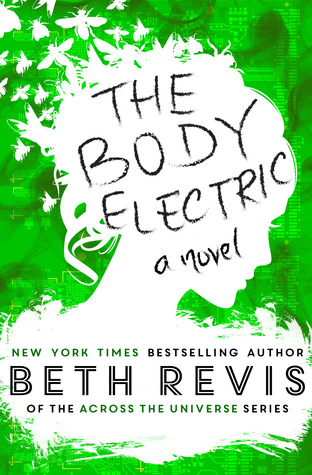
Book Review: THE BODY ELECTRIC by Beth Revis

Photo credit: Goodreads
As is my general MO with book reviews, I like to start with the Goodreads summary, and so here it
is:
The future world is at peace. 
Ella Shepherd has dedicated her life to using her unique gift—the ability to enter people’s dreams and memories using technology developed by her mother—to help others relive their happy memories. 
But not all is at it seems. 
Ella starts seeing impossible things—images of her dead father, warnings of who she cannot trust. Her government recruits her to spy on a rebel group, using her ability to experience—and influence—the memories of traitors. But the leader of the rebels claims they used to be in love—even though Ella’s never met him before in her life. Which can only mean one thing… 
Someone’s altered her memory. 
Ella’s gift is enough to overthrow a corrupt government or crush a growing rebel group. She is the key to stopping a war she didn’t even know was happening. But if someone else has been inside Ella’s head, she cannot trust her own memories, thoughts, or feelings. 
So who can she trust?”

Right! So as I’ve mentioned before and will probably mention again, Beth Revis is one of my all-time favorite YA Sci-Fi authors. I very much credit Across the Universe for showing me I actually really like YA Sci-Fi and dual POV. Anything she writes is basically an instal-buy for me, but you can imagine how excited I was when I won a signed, limited print edition (aka: VERY excited). 

While I did find the opening to be a little on the slow side, the rest of the plot more than made up for it. I generally expect action, explosions, swoons and lots of twists from Revis, and in those respects, The Body Electric did not disappoint. I was expecting some sort of Inception-type elements, which were definitely present, but the twists in the book went so beyond what I was expecting and I really enjoyed the direction the book went in. 

The Body Electric is very Sci-Fi with a fascinating futuristic world set in Malta (which was totally fun to read about) with ties to the Across the Universe series that were really fun to come across. Between cyborgs, androids, nanobots and more, I was totally immersed in The Body Electric’s otherworldy-yet-not-unrealistic setting. As a bonus, the protagonist is a PoC and there are several PoC secondary characters, which was really nice to see. 

I did notice that there were quite a few filter phrases throughout the work (which, to be honest, is more of a peeve I only notice because I’m a writer), and I did feel that the villain near the end bordered on a little too unequivocally evil—I tend to prefer my villains to be more nuanced and, at best, even somewhat sympathetic. But those flaws in no way ruined my enjoyment of the novel. I’m giving The Body Electric 4/5 stars, and I recommend it to those who like YA Sci-Fi rife with plot twists. 

I can’t wait to see what Revis comes up with next! 

What have you been reading lately?

Twitter-sized bites: 
.@Ava_Jae gives 4/5 stars to THE BODY ELECTRIC by Beth Revis. Have you read this twisty YA Sci-Fi? (Click to tweet)    
Looking for a twisty & exciting YA SF read? Check out THE BODY ELECTRIC by Beth Revis. (Click to tweet)

Rejection Doesn’t Stop

Photo credit: Daniel Kulinski on Flickr
Some tough love today.

Every once in a while, I’ll get an e-mail from writers who say they’re having trouble with rejection, or scared of rejection, or getting tired of rejection, etc. These are feelings, I think, that just about every writer can identify with. After all, rejection is never easy to handle, especially over and over and over again.

Unfortunately, if you’re a writer, that’s too bad.

I hate to sound callous or cold, because I get it. I do. I’ve dealt with close to a decade of writing-related rejection and I expect more in my future. Rejection sucks. It’s exhausting and eats away at your confidence and motivation and it’s really hard.

It’s also inevitable.

The truth is, for writers, rejection never goes away. Not after you get an agent. Not after you get your first book published (or publish it yourself). Not after you publish five, ten, twenty novels. Rejection will always be a part of the writing life. Always.

Before you get an agent, rejection will come from agents in answer to query letters. Many writers see hundreds of rejections before they sign with an agent. It’s normal. It sucks. It’s reality.

After you get an agent and you go on submission, rejection will come from editors in answer to submissions. Many writers wait for months and see rejection after rejection before they sell their book. Some writers don’t sell their first book on submission at all. It’s normal. It sucks. It’s reality.

After you get a book deal or self-publish your first book, rejections will come from readers in the form of bad reviews. All writers get bad reviews. Many of them. It’s normal. It sucks. It’s reality.

It doesn’t matter how successful you are, or how many books you publish, or how popular your books become—rejection doesn’t stop. And yes, it’s hard, but the truth is, one way or another, writers just have to learn how to deal with it. That’s really all there is to it.

The good news is other writers understand. When you get agented, your agent understands. There are people around you who you can go to when rejection starts to feel like too much, when it weighs you down and makes it hard for you to continue.

But most importantly, I think, is to remember you’re not alone. All writers deal with rejection over and over and over again. And while it’s absolutely hard to handle, I like to think that with a little support and a lot of determination, it’s manageable. Eventually, at least.

What do you think?

Twitter-sized bites: 
"The truth is, for writers, rejection never goes away." (Click to tweet)  
Having trouble with rejection? @Ava_Jae shares her thoughts on this inevitable part of the writing life. (Click to tweet)
Related Posts Plugin for WordPress, Blogger...