On Diversity Within Diversity

Photo credit: OregonDOT on Flickr
So I’ve been thinking about diversity within diversity; about the way we represent minorities and diverse peoples of all races, sexual orientations, disabilities and neurotypicalities.

I am, by no means, a voice of authority on this topic. Or any topic, really. It’s just something I’ve been thinking about and something I’d like to work toward.

What I mean about diversity within diversity is this: I think it’s absolutely fantastic that writers are pushing toward writing diversity into literature, and I love that so many people are supporting and sharing the importance of including diversity within our work, but sometimes, when we do that, we forget to look at the people themselves. We see the race, or the disability, or the sexual orientation, or the neuroatypicality and we forget that two Hispanic asexual men may be vastly different from each other, or two teenagers struggling with OCD may have hugely different symptoms.

Sometimes, we look at a representation of a minority, and we forget this is one person in a community of people who are gay, or black, or chronically ill, or blind, or a combination thereof, or whatever the case may be. Sometimes we forget that the community of that one sect of people is just as beautifully diverse as the world as a whole. Diversity within diversity.

I came across a great example of this a while ago, in a post from Marie Lu on her half-Asian, blonde-haired, blue-eyed character, Day. Here’s just a snippet of it (which I emphasized with bolding), but if you’d like the real the full post, which I think is really thought-provoking, it’s here.
“I suppose what I’m trying to say is that I didn’t mean to create Day to fill a quota or to make a statement. I didn’t mean to ‘hide’ his Asian-ness behind a blond-haired, blue-eyed mask. To think so is to discredit the fact that many people of color exist on a gradient—we are not always so noticeably Asian or Caucasian or Hispanic or African-American, etc. I’ve received quite a few emails over the years from parents who have hapa children with blond hair and blue eyes, and it makes me smile. Day is half-Asian and half-white, but he is not defined by it, nor does he dwell much on it. He’s just….Day.”
This is something I’ve barely touched on in my work, but I’d like to work on more going forward. It’s something that I think is important, because not every OCD person feels the need to count everything and keep their pens lined up, and not every asexual is uninterested in sex or relationships.

It’s important, because people are made up of much more than labels, because people are people first, and every one of us is different from another.

What do you think? Do you know of any books that show diversity within diversity?

Twitter-sized bites: 
"Sometimes we look at a representation of a minority & we forget this is one person in a community..." (Click to tweet)  
Are your characters diverse? Writer @Ava_Jae shares her thoughts on diversity, labels, and individuality. (Click to tweet)

On Momentum and Consistency for Writers

Photo credit: crdotx on Flickr
Fun fact: I don’t actually write every day, 365 days a year. 

When I’m not first-drafting, my writing schedule looks like this: 

Mon, Wed, Sat: write a blog post. 

Tues, Thurs, Sun: edit and schedule blog post.

Every day (if applicable): work on revisions or edit CP MS. 

Sometimes in between those, I’ll write posts I’m not going to publish any time soon for the hell of it. And sometimes I brainstorm book ideas. And as much as I can, I try to get some reading in, which isn’t technically writing, but it’s related and just as important. 

And yet, despite my relatively lax writing schedule, whenever I see advice out there about writing every day, I share it. And I’ve even said it myself—writing consistently is important. Because it is important. But I think writing consistently might really work best for everyone in slightly different ways. 

When I am first-drafting, my writing schedule is different. Because on top of everything I listed above, I write at least 2,000 words a day, seven days a week, no exceptions until the first draft is complete. 

Same goes for when I’m revising, as I mentioned above—I try to keep it consistent until the task is complete. 

Why? Because for me, what works is momentum. It’s like mental physics—when I stop doing something, it is so much harder for me to start up doing whatever it is again (it’s Newton’s First Law…except in my mind). This applies to just about anything—exercising, reading, and definitely writing. 

That’s why when I did NaNo last year and accidentally wrote 5,000+ words a day the first couple days in a row, I decided to stick with it—the momentum was working for me, but I knew if I let the word count drop a day, then it’d be twice as hard to get back to it. So I didn’t let it drop until I was done. 

But then after fast-drafting, I usually need a break. Sometimes, if I have another project ready to go, it’s a week, but usually it’s a month. And during that break time, I go back to my so-called relaxed writing schedule, which is what I posted above. 

But the thing is, this is what works for me. And while I think consistency is key both to improvement and actually making progress, I think it’s important for everyone to figure out what kind of consistency works for them. Maybe it’s writing five days a week, maybe it’s just all day Saturday, maybe it’s a couple hours Friday-Sunday. 

Or maybe it’s like me—every day in spurts, with break periods in between. 

The point is, everyone works differently, and as long as you make an effort to improve your writing in some way consistently, you’re on the right track. 

Do you write every day? What does a normal writing schedule look like for you? 

Twitter-sized bites: 
Writer @Ava_Jae discusses the importance of momentum and how consistency varies from writer to writer. (Click to tweet
Do you write every day? Join the discussion at @Ava_Jae's blog. (Click to tweet)

Every Journey is Different

Photo credit: creativelenna on Flickr
This is something I’ve said before, many times in fact, but it’s so important I think it deserves it’s own post.

We often hear about writers who debuted with their first ever written novels, writers who get an agent a couple days after querying, and writers who self-publish and are crazy successful seemingly overnight. We often hear about the outliers, the ones who hit the proverbial publishing lottery and when we compare ourselves to them, we feel…not good.

What we talk about less often are the writers who didn’t get an agent until their eleventh manuscript. The writers who work for a decade before seeing their work published, the ones who publish, whether self or otherwise, and mid list.

The thing is, publishing isn’t a one-track road. There isn’t a method or time frame that’s right for everyone, and there isn’t a magical twelve-step plan that can guarantee your success as a writer.

For some, the answer is self-publishing. It’s finding an editor, and a formatter, and a cover artist, and taking full control of the publishing process. For some, the answer is traditional publishing. It’s finding an agent and getting a publishing contract, whether with a small press, mid-sized publishing house, or one of the Big Five. For some, the answer is a mix of both.

The point is, there isn’t one answer. Everyone has their own journey with their own obstacles and lessons, and for some it takes a year and for others it takes ten, and in the end, it doesn’t matter.

In the end, we’re all in this together, trying to become better writers and create the very best work that we can.

What do you think?

Twitter-sized bites: 
Publishing isn't a one-track road, and other reasons why the comparison game doesn't work. (Click to tweet
Writer @Ava_Jae shares yet another reason why the comparison game doesn't help anyone. (Click to tweet)

I Was That Teenage Writer

Photo credit: nicole.pierce.photography on Flickr
I was the teenage writer with big dreams.

I was the weird thirteen-year-old sitting at her desk during free period, huddled over a piece of paper with a pencil and a story rolling through her fingers.

I was the fourteen-year-old smiling shyly as her mother proudly announced to anyone who would listen that her teenager had written a book and was going to be published one day.

I was the fifteen-year-old who secretly enjoyed those English writing assignments and whipped out that four page essay so that she could get back to writing her next book.

I was the sixteen-year-old pretending to take notes in math class while actually writing a passage for her novel.

I was the seventeen-year-old disappointed with “I like this” non-critiques from Creative Writing class and anxiously dreaming all day about those query letters she sent out the night before.

I was the eighteen-year-old starting to realize that she might not be a published teenage writer after all, that she might not even get an agent as a teenager, that maybe her writing wasn’t as good as she thought it was.

I was the nineteen-year-old coming to terms with the fact that she may very well leave her teenage years with nothing to show for it except for many trunked manuscripts and a pile of rejection letters.

Here’s what I wasn’t as a teenager:

I wasn’t published.

I wasn’t agented.

I wasn’t a prodigy.

I wasn’t the next Christopher Paolini.

But now, looking back on those years, I’m glad I wasn’t any of those things. Because yes, I was a decently good writer for my age, and yes, I learned a lot from writing all of those books, and yes, it hurt to come to realize that I was going to have to give up my dream of being a published teenage writer. But at the end of it all, I was focused. I knew how to handle rejection (for the most part), I knew the value of patience (even if I struggled to maintain it), and I knew that time was on my side after all—that getting published wasn’t a race and I didn’t regret a second that I spent focused on my dream as a teenager.

Because it may have taken me a long time to come to terms with everything, but in the end, I know I’m a better writer for it.

I guess I just want to say this: to all you teenage writers out there, I know it’s tough. I know it sucks to give up so much to make your writing dream happen, and realize it might not happen in the time frame you were hoping for, even despite the sacrifices. I know it sucks to start writing young and have all your loved ones tell you how you’re going to be so successful because look how young you are and you wrote a book (or many books!), and meanwhile the clock is ticking and nothing seems to be happening and you start to wonder if maybe everyone’s just humoring you and you’re not that good after all.

I want to say that for those of you who are eighteen or nineteen or reaching that point of I may not be a published teenage writer after all, it’s ok. It’s more than ok. You’re not a failure for not getting published or agented as a teenager. You are amazing and talented and so very wonderful and I salute you. I salute you for hunkering down and chasing your dream while the rest of your friends goof off in class. I salute you for quietly taking rejection after rejection and continuing to write despite the pain. I salute you for not rushing to self-publish and taking your time to get your writing right, to really hone your craft.

What you’re doing isn’t easy. And if I’m being honest, it doesn’t really get easier. But it does get better. You’ll get better. Your writing will get better and you’ll be so glad for those manuscripts you had to put away and those rejections that branded your soul.

I guess I just want to say don’t give up if you don’t make your dream come true before you turn twenty. You’ve got your whole life ahead of you and as a bonus, you started on that path nice and early, which is pretty darn cool if you ask me.

Hang in there, pal. Everything is going to be ok.

Twitter-sized bites: 
Writer @Ava_Jae shares an open letter to all current and former teenage writers. (Click to tweet)  
"What you're doing isn't easy...but it does get better." #writinglife (Click to tweet)  

But Can’t I Send My Best Pages?

Photo credit: RLHyde on Flickr
Sharing a dose of somewhat ugly truth today.

Sometimes while scrolling through Twitter, I see writers asking if the fifty pages they have to send in a submission have to be the first fifty pages, or I see agents reminding writers that the chapter attached to their query should be the first one, not the thirteenth.

I understand the plight of writers who want to send chapter three because that’s when the story gets really excited or pages 102-152 because that’s where the best writing is, but you guys, the hard truth is this: every page needs to be your best page.

I know there are writers out there thinking yeah, my first chapter is good, but my fifth chapter is amazing and to that I say your first four chapters need to be just as incredible. Because the truth is, most readers aren’t going to care that your fifth chapter is awesome if your first four chapters are only mediocre—and neither will publishing professionals.

This is why oftentimes, when writers ask whether or not to include a prologue with a query, agents often say if you don’t think your prologue is good enough to grab me, then it needs revising or shouldn’t be there.

But this goes beyond the first few chapters or the fifty-page sample. Because if your first fifty pages are amazing and polished and beautifully written, but the rest of your manuscript hasn’t received as much attention, publishing professionals are going to notice. And you’re going to get a rejection.

But don’t just take my word for it. Literary Agent Juliet Mushens (The Agency Group) said as much just a few days ago:
Before you start querying or submitting, you need to make sure you’ve polished every page of your manuscript. You need to be proud of every chapter, you need to show it to beta readers and critique partners and you need to go through several rounds of revision on your entire manuscript. These steps aren’t optional. Not if you want someone to take your work seriously.

If you want someone to take your work seriously, then you need to take it seriously first and put the work into every single page. And that’s all there is to it.

What do you think? 

Twitter-sized bites: 
"The hard truth is this: every page needs to be your best page." (Click to tweet)  
Writer @Ava_Jae shares the importance of making sure every page is your best before you start querying. (Click to tweet)

How to Write Fights

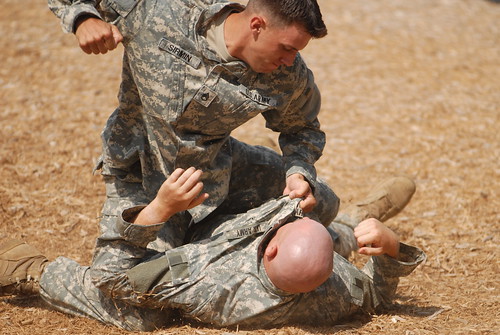
Photo credit: US Army Africa on Flickr
I like writing fight scenes. So much so, that I’m relatively sure every single manuscript I’ve written so far had at least one fight scene (though if we’re being honest, I suspect most, if not all, had more).

Considering I love action movies, am obsessed with Assassin’s Creed, took martial arts as a kid and am drawn to books with plenty of fighting within the pages, it probably isn’t a surprise that I love writing them so much. But a properly written realistic fight scene takes a lot of considering both before, during, and after the scene is written.

Here are some tips I’ve picked up along the way:

Do:

  • Use short sentences. One of the easiest ways to up the pace and make the writing feel faster is to cut down on sentence length. Use short, punchy sentences in your fight scenes to have your readers racing through to see what happens. (But still vary your sentence length to avoid monotony…just go for shorter sentence length in general).

  • Consider your character’s background. A trained soldier is going to approach a fight way differently than a college kid who took a taekwondo class in seventh grade. And a soldier from the US army will fight differently than a Russian or Israeli soldier. Even two equally trained fighters with different body types (tall vs. short, lean vs. muscular, male vs. female) are going to fight differently. There are many factors that go into a characters fighting ability and style, so remember to consider them while writing your fight scenes.

  • Utilize resources. If we’re being honest, one of the best resources involves leaving your computer and taking some martial arts classes. It’s hard to describe a punch if you’ve never punched someone and sometimes getting kicked in the stomach once is enough to imagine all sorts of injuries for your characters. But being how that’s not always possible due to time or health concerns, the internet is a wonderful place chock full of information.

    One of my personal favorites is howtofightwrite on tumblr. They give some fantastic information not only on fighting, but how to write realistic fighting scenes, covering just about anything you could think of on writing a fight scene. As a bonus, they answer questions writers have about fighting pretty regularly. So.

    Otherwise, consider checking out instructional or sparring fighting videos on YouTube.

Don’t:

  • Use Hollywood as a reference. Hollywood is great for really flashy fighting choreography inspiration, but it isn’t (usually) terribly accurate. It’s fine to use movies to inspire some fun fighting scenes, but remember to do your research before making assumptions about fighting.

  • Make your character magically skilled. If your character has never been in a sparring match or fight in his life, then he’s going to make rookie mistakes and probably lose the fight (unless his opponent is just as unskilled). That’s realistic. Just because he saw that Bruce Lee movie the other day doesn’t mean he’ll magically know how to be an incredible fighter.

  • Let your characters off easy. If your newbie fighter MC is facing off with a skilled MMA fighter, don’t let his opponent slip on a patch of ice and knock himself out before delivering the finishing blow to your protagonist. That’s cheating, and it’s cheap, and your readers will call you out on it. Besides, it’s ok to let your characters lose a fight and get their butts kicked.

Consider:

  • Injuries matter. I know in movies people often get stabbed, but continue fighting like it’s nothing, or get knocked out then jump up and kick ass the second they wake, but the truth is, injuries matter a hell of a lot more than Hollywood may lead you to believe.

    In the heat of the fight, a character may be able to ignore the pain of a few punches thanks to adrenaline. A shallow cut from a knife and a few graze wounds aren’t going to necessarily put your character on the ground, but a few broken ribs, or a broken nose, or a deep knife wound, or any other number of more serious injuries are going to hurt. And even if adrenaline may dull the pain, it’s going to affect how well they fight, especially if the injuries start to add up. Not to mention that a smart opponent is going to start targeting those injuries to get your character down faster.

    Injuries from an earlier fight or incident will also come into play during a fight. That bruised shoulder is going to make punching painful and that injured knee is going to be the first thing a smart opponent attacks.

  • Gender doesn’t (necessarily) matter. Repeat after me: women who know how to fight do not need any special advantages to defeat a man in a fight. We have biological advantages, that if used correctly, can give any guy a run for his money while fighting. Howtofightwrite can explain it a lot better than I can, so refer to their thoughts on it here.

  • Real fighting is ugly. Bruises swell, broken limbs become deformed, blood gets everywhere, people sweat and spit and cry, and sometimes there’s snot and other bodily fluids and if we’re being honest, real fighting can get pretty disgusting. It’s also brutal—real fighting isn’t beautiful spinning kicks and fancy flips—it’s about going for the jugular and doing whatever you have to to get your opponent out for the count.

Have you ever written a fight scene? If so, what tips do you have? If not, what books have you read with a well-handed fight scene?

Twitter-sized bites: 
Struggling with a fight scene? Writer @Ava_Jae shares dos, don'ts & tips for when your characters start punching. (Click to tweet)  
Are your fight scenes realistic? Here are some tips to remember when your characters trade punches. (Click to tweet

5 (More) Writing Truths

Photo credit: fractured-fairytales on Flickr
So back in December 2011(!!), I wrote a two part post on ten writing truths that I’d learned along the way. For those who are interested, the posts are here and here.

Now, over two years later, I thought it’d be a good time to add some more truths that I’ve picked up over the past two years. So without further ado, here are five more writing truths:

  1. No matter how many times you edit, you will still find typos.  Now, that doesn’t mean that you shouldn’t bother editing, it just means if you send out a query and realize you wrote “ths” instead of “this” on page three of your sample even though you looked at it a hundred times and you were sure there weren’t any typos, you don’t need to panic. Typos happen, and as long as your work isn’t riddled with them, they’re not a death sentence. 

  2. Your query letter should be just as polished as your manuscript. I wrote a whole post explaining why this is important, but the short version is this: if you spend months perfecting your manuscript and only five minutes on your query, chances are publishing professionals aren’t going to get past your slap-dash query to see the hard work of your writing. Your query is your first impression—spend extra time on it to make sure it’s a good one. 

  3. You shouldn’t write to a trend, but you don’t want to ignore them, either. The problem with writing to a trend is the trends you see in stores now were in editors hands something like two years ago. So even if you dash off an amazing manuscript quickly, editors are going to be tired of seeing whatever trend is on the shelves today—they’re looking for something different to put out in the next couple years.

    That being said, it’s important to be aware of what’s selling and what trends are overcrowded. As a writer, your field is publishing, and it’s important to know what’s going on in your field. 

  4. Some days everyone’s good news will make you feel terrible. Chances are the day will come when you’ve received yet another rejection and you’re feeling pretty discouraged, then someone posts about how they just got an agent or book deal and you want to be happy for them, but instead you just feel like a failure. And you know what? Those days are normal, and you aren’t a terrible person for feeling disappointed.

    The good news is those days don’t last forever, because other days will come around when someone shares their good news and you’ll be in the right frame of mind to genuinely celebrate with them. And that’s pretty great. 

  5. Writing is hard, but waiting is harder. This is why my frequent advice to those in the query trenches is to write something else. Few things are more maddening than sitting around waiting for a response to that query, or that submission, with absolutely nothing else to distract you. Distractions are good. Distractions are wonderful, in fact, and the best kind are the ones that will leave you with a shiny new manuscript at the end of it. 

So those are my writing truths—now I want to hear from you. What writing truths would you add to the list? 

Twitter-sized bites:
Writer @Ava_Jae shares five truths all writers must face. What would you add to the list? (Click to tweet)  
Have you faced these five writing truths? Join the discussion at @Ava_Jae's blog. (Click to tweet)
Related Posts Plugin for WordPress, Blogger...