Showing posts with label query letter. Show all posts

Vlog: 4 Common Query Mistakes

So you've written your manuscript, revised it death, traded with critique partners, revised it again, and now you're ready to query. But before you start, make sure you aren't making any of these four common query mistakes.


RELATED LINKS: 


Have you made any of these query mistakes? (I know I sure have!)

Twitter-sized bite: 
Getting ready to query? Make sure you don't make any of these common query mistakes. #vlog (Click to tweet)

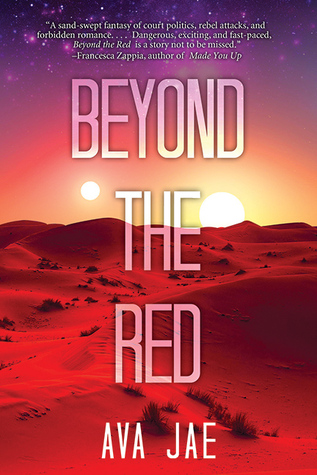
Looking Back: BEYOND THE RED's Query

So! YA Scavenger Hunt is over (and for those of you who participated—I hope you had fun!), and for the hunt as exclusive content I shared BEYOND THE RED's query. Now that the hunt is over, however, I thought it'd be fun to share with you guys.

So without further ado, here is the query that led to my signing with an agent:

Dear Ms. Fury:

I am querying you because you requested that I do so with the first three chapters of my manuscript after reading my Secret Agent pitch. 
Kora, an eighteen-year-old alien queen, has a problem as vast as the endless crimson deserts. As she’s the first female ruler of her territory in generations, her people clamor for her younger twin brother on the throne, even in the face of his violent rages. But despite assassination attempts, a mounting insurgency of nomadic human rebels, and pressure to find a mate to help her rule, she's determined to protect her people from what think they want: her brother ruling them. 
Eros is a nineteen-year-old rebel soldier hated by aliens and human alike for being a half-blood. But that doesn’t stop him from defending his people, at least until Kora’s soldiers raze his camp to the ground and take him captive. He’s given an ultimatum: be an enslaved bodyguard to Kora, or be executed for his true identity—a secret kept even from him. Some choice. Without another way out, he begrudgingly agrees to keep her safe.

When Kora and Eros are framed for the attempted assassination of her betrothed, they must flee. Alone, under the light of the four moons, Kora realizes her feelings for Eros may be more than respect. But out in the vastness of the desert, they aren’t safe from predators—or dehydration. Their only chance is to turn themselves in to the high court, but when they uncover a violent plot to end the human insurgency in the process, they must find a way to work together to prevent genocide.

SLAVE & SIRA is a dual-POV 74,000-word New Adult Sci-Fi novel with crossover potential that may be described as THE GIRL OF FIRE AND THORNS on a technologically advanced alien planet. It is a standalone novel with series potential.

I run a writing blog, Writability, which is two years old and receives nearly 1,000 daily page views. I've also written guest posts for top-tier blog Problogger, and I am a reading intern at [redacted literary agency].

Thank you for your time and consideration.

Fun asides:

  • Beyond the Red was originally New Adult (which surprises approximately no one when I mention it).

  • Beyond the Red's old title is not nearly as awesome as the one it ended up with (have I mentioned how much I agonize over titles?)

  • This query was actually later revised again and again and again as I continued submitting to other agents (before I got the call, of course). Goes to show there's some wiggle-room in terms of polish.

  • Due to a blog contest (which I mention here) my now-agent actually read the first page before the query. Which in this case worked very well in my favor. :)

Twitter-sized bite:
Want to see a query that worked? @Ava_Jae shares the query that led to her signing w/ an agent. (Click to tweet

Top Ten Querying Tips

Photo credit: Bethan on Flickr
So it occurred to me that it's been a while—a long while since I've posted about querying, probably because querying has been far from my mind as of late and also I have a ton of posts about querying. But! Querying is still very much a very important part of the traditional publishing process, and as I've been reading plenty of queries for work, I realized there's no time like the present to talk about it on the blog again.

So here we go. Top ten querying tips, many of which have existing blog posts to expand upon. Enjoy!

  1. Do your research! I really can't emphasize enough how important research is before you start querying. Your query letter may be absolutely incredible, but if you send it to someone who is closed to queries, or who doesn't represent your genre, it's not going to get read. Furthermore, you want to make sure the agent you're querying is someone you genuinely would want to work with—so do your best to try to get a feel for what the agent is like before you start sending out query letters. (Bonus: here's a vlog on query research.)

  2. Follow submission guidelines. This is so important! Not following submission guidelines is a really easy way to get rejected. Don't send page 30-35 of your book if the submission guidelines ask for the first five pages. Don't use attachments if the submission guidelines tell you not to. Follow directions and you are much more likely to leave a good impression.

  3. Stick to one page. This is the expected format, and considering how many queries agents and editors see every day (that is to say, a TON), you can probably easily understand why. Furthermore, if you can't keep your query to a page, agents and editors may get the impression that you're overly wordy and don't know how to make cuts in your manuscript, either. Which is not in your favor.

  4. The book is the most important. While it's great to know if you have some sort of credentials for your particular book, the focus and bulk of your query should absolutely be on the story. Trust me when I say you don't need three paragraphs about yourself—the story is what agents and editors need to know about the most. (Bonus: here are five things you don't need in your query.)

  5. Use details. This is the number one problem I see in queries and pitches alike—the summary is so general that it sounds like a hundred other books. When writing your query, make sure to include details that are specific to your book. What sets your book apart from others like it? How is this story uniquely geared to your book? What makes yours different? In an industry where thousands of pitches pass across agent and editor desks every year, this is absolutely vital. (Link in title of this point shares tips for writing details in queries.)

  6. Book comps are your friend. I've actually really come to love book comps and use them even now when I pitch a story idea to my agent—or before that, when I'm brainstorming an idea to start with. Book comps are great because they show you know the market, they give an idea of where your book would fit on the shelf, and they show there's a potential audience for your book. For tips on choosing book comps, check out the link at the beginning of this point.

  7. Get your query critiqued. This is a frequently overlooked step, but I think it's really, really helpful. I highly recommend getting your query critiqued by both your critique partners, who have read your book, and by writers who haven't read your manuscript. Their combined feedback will help you determine whether the query fits your book and whether it's intruiguing on it's own without being confusing to those who haven't read your book.

  8. Keep track of your submissions. This is a very helpful organizational step that will ensure you don't send the same query to the same agent, or you don't accidentally send simultaneous submissions to two agents at the same agency. I highly recommend QueryTracker for this purpose.

  9. Pitch contests are cool too. There are pitch contests semi-frequently on Twitter, that are both really exciting and fun and also can be a great opportunity to get requests from agents. I actually found my agent through a blog contest, so I know first hand that these can sometimes be effective. :)

  10. Find distractions. Once you've started querying, I highly recommend you find something to distract you. If you're able to write while querying, working on a new project can be great, but if not, now's a good time to catch up on your TBR pile, or spend time with family, or watch a couple movies you've been wanting to see, etc. Just find something to keep your mind busy. (Bonus: here's a vlog on how to survive the query wars.)

What tips would you add to the list? 

Twitter-sized bite: 
Getting ready to query? @Ava_Jae shares her top 10 query tips + lots of linked resources. (Click to tweet)

Pitch Tip: Make Your Stakes Personal

Photo credit: Stephen Burch on Flickr
So I’ve been working on Twitter pitch critiques all week, and I’m not sure how many I’ve read, exactly, but it’s been a lot. And while I’ve spoken quite a bit about the essentials of a good pitch and making stakes clear before, there’s one related aspect that I sort of glossed over. I’m fixing that now, because to be honest? It’s pretty essential.

I’m talking about making your stakes personal. To your protagonist, that is.

Many times, I’ve seen pitches with stakes that are mentioned, but it’s unclear why it matters. For example, take this (completely made up) pitch:

When a serial killer abducts Michael, it’s up to Johnny to save him before Michael becomes Victim 13. 

I frequently see pitches about the protagonist needing to save someone from certain doom, but like the fake pitch, it’s not always clear why it matters to the protagonist. In this case, what is Michael’s relationship to Johnny? Is he Johnny’s brother? Best friend? Boyfriend? Husband? Is he just another random person, but it’s up to Johnny because Johnny is the detective tracking down the serial killer? There are loads of possibilities here, but without the specifics, pitches like these fall flat regardless of how big the stakes may seem on the surface.

Repeat after me: we must know why the conflict matters to your protagonist. 

Another pitch type I see revolves around characters having to save the world. On paper, this sounds like it’d be a really solid set-up for high stakes, but the truth is, personal stakes have a much greater impact than macro-stakes. Saving the world is great, but saving a loved one, or a child, or sibling, is so much more powerful.

The thing to remember is if we don’t know why the conflict matters to your protagonist, then the stakes (that is, what your protagonist has to lose) fall flat. So next time you’re working on a pitch, I encourage you to take a good, hard look at your set-up and make sure it’s absolutely clear why the conflict is so important to your protagonist.

After all, if your MC doesn’t care, why should your readers?

What do you think—are personal stakes important in a pitch? 

Twitter-sized bites: 
Working on a query or pitch for your WIP? Writer @Ava_Jae says to make sure it's clear your stakes matter to your MC. (Click to tweet
"We must know why the conflict matters to your protagonist." —@Ava_Jae on pitching your novel. (Click to tweet)

Vlog: How to Query: The Query Letter

So you've set up your list of agents and your manuscript is ready to go, which means you need a query letter. Here's how to get started and a few things to remember while writing your query.


RELATED LINKS: 


What tips do you have for query letter writing? 

Twitter-sized bite: 
Struggling to write your query letter or don't know where to start? @Ava_Jae vlogs about what goes into a query. (Click to tweet)

5 Things You Don’t Need in Your Query

Photo credit: smlp.co.uk on Flickr
Querying is a tough, sometimes soul-crushing business—and writing a query letter can in many ways be the most difficult part. After all, being asked to condense your 60-100k (or more?) manuscript into a page-long letter that makes your book sound intriguing and also personalizes to that specific agent with the teeny tiny stakes of  the agent reading your manuscript (or not)? It’s ridiculously tough.

I’ve read my fair share of query letters over the years, and with the WriteOnCon query critique forums still fresh in my mind, I thought now as good a time as ever to write about five things you don’t need in your query.

  1. Explanation of the lessons the reader/your characters will learn. I understand the impulse to include this, I do—English teachers have told us for years that a book isn’t really literary gold unless it has some grand, over-arching, bigger than thyself message. But here’s the thing—even if your book does have that kind of message (and, um, you know what it is?), it’s best to leave it out of your query letter.

    Now, I can already hear what you’re thinking (apparently my online self is a telepath)—but Ava, I worked so hard to get those messages into my book—why wouldn’t I talk about them? The why is pretty simple actually: 99% of the time writers include the message or lesson the characters or readers (or both) are going to learn when reading their book in their query letter, it sounds preachy—and worse, it sounds like your manuscript is preachy (or teacher-y, which isn’t any better), which leads to a ginormous no thank you.

    I know that seems a little unfair. It’s totally possible that you have messages in your book that aren’t preachy at all and are woven really nicely into the story, and if that’s the case, that’s great, it really is. But don’t mention it in your query if you don’t want someone to assume your book is going to be preachy/teachy. 

  2. Vague phrases. I actually wrote a whole post about why details are so important in queries and pitches, so I won’t rehash the whole thing, but in queries, vague phrases are you enemy. Mentioning your protagonist's dark secret or life-changing quest or how they meet a mysterious stranger or will have to make a life-altering choice whose consequences will affect all of humanity? Yeah, it’s not helpful.

    The thing is, agents and editors read thousands of queries a year. They have books getting pitched to them all the time and the only way you’re going to pique their interest is if you show them how your book is unique. If your query is full of vague phrases, not only can I guarantee they’ve seen someone else (or many many many someone elses) describe their manuscript the same exact way, but you’re completely missing out on a vital opportunity to show them how your book stands out from the crowd. 

  3. Quotes from your manuscript. I did this in my first ever query (spoiler: it so didn’t work), and it’s something I’ve seen especially amongst new writers.

    Again, I get the temptation: you’ve worked so very hard on your manuscript and you want to share some gems with the agent/editor in the hopes that it’ll pique their interest. But the query is not the place to show off your writing (or at least, not the writing of your manuscript)—the query is the place to explain your manuscript in a condensed, interesting way to make the reader want to learn more (and hopefully read) your book.

    But Ava, you’re thinking (boy, telepathy is fun), this super amazing quote isn’t in the first sample that I’m attaching to the query letter. What if they don’t see my really awesome quote because they don’t read enough? Well, my friend, I’m going to share a little tough love: if they don’t read far enough to get to your super awesome quote it’s because a) it wasn’t for them b) your query wasn’t strong enough to represent your manuscript or c) your manuscript wasn’t ready.

    Leave the quotes for the actual manuscript. Your query is not the place for them. 

  4. A huge bio. Let me start off by saying that bios are definitely important—and a vital part of the query. However, the focus of the query letter should absolutely be on your manuscript. Not you.

    Your bio should be a few sentences to a paragraph long. That’s it. And that paragraph, quite frankly, really doesn’t need to take up all that much space.

    Agents don’t need to know that you worked on this book for four years. They don’t need to know that your mom thought it was the best book she ever read, or that you won that online poetry award, or that you’ve known since kindergarten that you were meant to be a writer. All that should be in your bio are publishing or manuscript-related credentials (i.e.: you’re writing a medical drama and you’re a surgeon, or you’ve published short stories in The Glimmer Train, etc.). If you don’t have publishing credentials, that’s totally okay! Just say it’s your first book (or, you know, don’t? There’s some debate on this point) and let your manuscript do the talking (no debate on that one). 

  5. Anything in either of these two posts. Self-explanatory, really. For your sake, (and the agents’ sakes) don’t do anything in those posts. Please. 

What would you add to the list?

Twitter-sized bites:
Working on a query letter? Writer @Ava_Jae shares 5 things you DON'T need in your query. (Click to tweet)  
MS quotes & vague phrases are 2/5 things writer @Ava_Jae says you don't need in your query. What do you think? (Click to tweet)

Query & Pitch Tip: DETAILS

Photo credit: jamelah on Flickr
So while I no longer enter pitch contests and things of the like, I do enjoy browsing through them when I have the free time. And oftentimes, when I do, I’m reminded of a very important tip some very wise writers and publishing people have shared regarding your pitch. 

Thou shalt include specific details.

Details are ridiculously important when you write a pitch, whether it’s a query-length pitch, or a Twitter-length pitch. Why? Because without them, your story starts to sound really general and, I hate to say it, unremarkable.

The thing is, without details specific to your novel, we don’t know what makes your manuscript stand out from the rest. We don’t know what’s unique to your story, what makes your book special—and if you want to snag some interest in your manuscript, you need to make that unequivocally clear.

Here are two examples of the difference between a generalized summary and a detailed one.

Throne of Glass by Sarah J. Mass
Generalized summary: An eighteen-year-old fights for her freedom in a competition that will choose a new royal mercenary. 
The actual summary: “After she has served a year of hard labor in the salt mines of Endovier for her crimes, Crown Prince Dorian offers eighteen-year-old assassin Celaena Sardothien her freedom on the condition that she act as his champion in a competition to find a new royal assassin.”  
I bolded some of the parts that are most specific to the novel—the details that really make the second (and actual) summary stand out from the generalized version. The details here really give us a sense of the world in Throne of Glass as well as hinting at some of the underlying tension between the crown prince and our protagonist. 
The Coldest Girl in Coldtown by Holly Black
Generalized summary: Worried that she will Turn after surviving a vampire attack, seventeen-year-old Tana heads to a quarantine zone to protect people from herself.  
Actual summary: “When seventeen-year-old Tana wakes up following a party in the aftermath of a violent vampire attack, she travels to Coldtown, a quarantined Massachusetts city full of vampires, with her ex-boyfriend and a mysterious vampire boy in tow.” 
The details here tell us more about the actual attack, give us a great sense of the world that Tana lives in and hints as massive tension between Tana, her ex, and this mysterious vampire boy. 
I could go on, but I think these two really illustrate my point.

Your query or pitch shouldn’t just summarize your book—it should summarize it in a way that highlights what makes it unique, because it’s those unique points that’ll really grab someone’s attention when looking through a flood of pitches.

Do you have details specific to your manuscript in your pitch or query?

Twitter-sized bites: 
“Your query or pitch shouldn’t JUST summarize your book…” (Click to tweet)  
Do you have details specific to your MS in your pitch? Writer @Ava_Jae discusses why it’s so vital. (Click to tweet)

How to Choose Book Comps

Photo credit: sleepyneko on Flickr
If you’ve been researching query tips for some time, chances are likely you’ve probably heard someone suggest that you use a book comp within your query (and if you haven’t heard, you’ve heard it now).

For those who don’t know, a book comp is a comparison of your manuscript to one or two books, movies, TV shows or authors (or a blend thereof). Usually these are some sort of mashup, for example, x book meets x book, or x book meets x element.

Book comps are great for several reasons:

  • They show the agent/editor you know the market. 
  • They give a specific sense of the uniqueness of your book. 
  • They show there’s a potential audience for your manuscript. 
  • They’re fun. (Well. To me.)

When you’re first starting out, choosing a book comp can sound a little terrifying—there are so many books to choose from, and initially and it can seem a little overwhelming to have to choose one or two that fits your manuscript. But once you get the hang of it, choosing book comps isn’t nearly as difficult as it may seem.

Before I go on, here are some actual examples that were used successfully, whether to land an agent or book deal (or both):


So when you’re trying to come up with book comps, here’s how to begin:

  1. Make a list of books/TV shows or movies similar to your book. By similar, I don’t mean “exact.” What you’re looking for are elements that could be pulled from a book that your manuscript has. For example, if you wrote a Middle Grade Fantasy with a humorous vibe, you may comp the Artemis Fowl series, or if you wrote a YA Fantasy involving time travel and medieval-like assassins, you may say Hourglass meets Throne of Glass. A YA Contemporary Fantasy-like Beauty and the Beast retelling could be Cruel Beauty in the 21st century. The possibilities are pretty endless. 

  2. Figure out the unique aspect of your book. Remember, the idea isn’t to say how your book is exactly like another book—it’s to say your book is similar to another book, but different enough that it’s unique. You can explain this by mashing two books together like some of the examples above, or by adding a twist like “The Girl with the Dragon Tattoo for teens” above. 

  3. Start mashing. It might take a couple combination attempts before you figure out something that really fits your book, and that’s okay. Bounce some ideas off your beta readers and critique partners to see if they think it fits. Play around with a couple options until you settle on one you really like. Once you’ve chosen, you’re done! Yay!  

Some things to keep in mind:

  • Stay away from mega-bestsellers. The problem with using hugely successful books, is it doesn’t really show you know the market (because everyone’s heard of that book) and it also insinuates that you have mega-high expectations of instant bestsellerdom. Which hopefully isn’t true. 

  • Make sure it makes sense (or explain if it’s a stretch). Be careful when you’re choosing your comps that they’re not so out there that it doesn’t make sense. For example, Vikings meets House is a bit of a stretch, however if you can concisely explain how it works, more power to you. 

  • Stick to one or two comparisons, tops. Hourglass meets Cruel Beauty meets Shatter Me meets The False Prince meets Ocean’s Eleven doesn’t work. Why? Because you’re throwing way too much at once, and instead of giving a specific idea of your books, you’re just throwing a bunch of titles in the air to see what sticks. And in that case, nothing is going to stick. It’ll just look like you don’t really know your manuscript well enough to narrow it down to one or two comparisons, and that’s definitely not the message you want in your query. 

  • Bonus tip: come up with your book comp before writing the manuscript. I did this with my last two WIPs, and not only did it make me even more excited for the WIP, it helped me keep focus of the big picture of the manuscript. Also, I had a quick description of the WIP when people asked what I was working on, which helps. 

So that’s it! Now I want to hear from you: what tips for book comps do you have to share? 

Twitter-sized bites: 
Getting your query letter ready? Writer @Ava_Jae discusses how and why to include book comps. #querytip (Click to tweet)
Do you have a book comp in your query? Writer @Ava_Jae discusses why it's important and shares some tips. #querytip (Click to tweet)

Encouraging Stats for the Querying Writer

Photo credit: ladytimeless on Flickr
Fun fact: I love reading How I Got My Agent stories. They’re exciting and often full of smile-worthy GIFs and squeeing and it’s kind of the whole reason I like watching the blind auditions of The Voice; there’s something really special about seeing someone taking a real-life step into their dream.

Oftentimes, at the end of these How I Got My Agent stories, writers will include their query statistics, which include numbers like how many queries they sent out, how many rejections they received vs. how many partial/full requests they received, etc.

What I found really interesting was the sheer number of writers who reported sending well over fifty queries before finding representation. And so out of curiosity I collected data from thirty How I Got My Agent stories scoured across the web.

The results, to me at least, were both surprising and somewhat encouraging.

Out of thirty now-agented writers, the average number of queries sent before finding representation was 59. The most was 154 (although four writers sent over 100 queries), and the least was ten. The majority of those writers only received one offer of representation—and that’s all it takes. You only need one yes.

Think about that: most of these writers, all who now have agents, received a lot of rejections. When we say rejection is just part of the process, that all writers face their fair share and then some, we really mean it.

Everyone gets rejected. Everyone gets disappointed or discouraged, and I’m willing to bet that just about every writer who has entered the query trenches has at one point or another seen a form rejection.

It’s an unavoidable part of the process, and it’s not fun, but it’s ok.

So whether you’re querying now or will be in the future, remember that rejection is expected.

And above all, remember this: in the end, it doesn’t matter how many rejections you get. Because all you need is one yes.

Have you entered the query trenches? 

Twitter-sized bites: 
Entering the query trenches soon? Here are some encouraging statistics to keep you going. (Click to tweet)  
"In the end, it doesn't matter how many rejections you get. Because all you need is one yes." (Click to tweet

Post-#PitMad Thoughts

Photo credit: nvk_ on Flickr
A fun post today, after a long week of #PitMad prep and a day full of the twelve-hour event itself.

The point of pitch events like #PitMad is, of course, to try to get some requests from publishing professionals, but there are a lot of other benefits that people tend not to talk about quite as much:

  • Meet other writers. Events like #PitMad brings writers out from all corners of the internet. Making new friends and connections is the whole point of social media, and these events are the perfect time to meet new people.

  • See what agents and editors like. I saw someone suggest that check out favorites from publishing professionals to see what they’re requesting, which I think is a really smart strategy. If you’re looking to query, for the next few days at least, you should be able to scroll through their favorites to see what they’re looking for at the moment.

  • See what others are writing/pitching. Nothing reveals the querying trends like scrolling through an hour of #PitMad. Writers who pitch during these events are the same writers who are querying while you’re querying, and it helps to be able to see what agents and editors are seeing a lot of.

  • Learn what makes one pitch more effective than others. Just looking at the pitches and determining which ones grab your attention and which ones make your eyes glaze over can be a big help when writing or rewriting your pitch later on.

Some things to remember:

  • There will always be trolls. Whenever there are public events, there are going to be people who use the opportunity to spam, or put others down, or make fun of those participating. It happens, and the best response is to brush them off. Don’t let a few negative people get you down.

  • Just because your pitch isn’t favorited doesn’t mean you shouldn’t query. Or as Agent extraordinaire Jessica Sinsheimer said:
So for those of you who participated or glanced at #PitMad (or have in the past), what did you learn from the event?

Twitter-sized bites: 
Did you participate in #PitMad this week? What did you learn? Join the discussion at @Ava_Jae's blog! (Click to tweet
One writer shares her post-#PitMad thoughts. What did you learn from the Twitter pitch party? (Click to tweet)

So Your Manuscript is Ready...But is Your Query?

Photo credit: vancouverfilmschool on Flickr
I’ll be the first to admit that I’ve queried too early in the past. It wasn’t until recently, however, that it occurred to me that the dangers of querying too early don’t just apply to your manuscript—they applies to your query, as well. 

Writers spend months—sometimes even years—revising, and editing, and polishing our manuscripts until they gleam like the Walkie-Talkie skyscraper in London (except maybe minus the accidental death ray capabilities). What we sometimes don’t realize, however, is that we need to spend just as much effort making our query letters shine.

You see, the query letter is the first impression. It’s what agents and editors see before they even take a look at your initial pages—and unfortunately, if your query letter doesn’t grab their attention, chances are likely that many will never make it to your pages.

I know why it happens. By the time we get to the query stage, writers are usually itching to start the submission process. After all, we’ve spent loads of time making the manuscript near-perfect, and submissions are the natural next step. It’s scary, and exciting, and all-too easy to jump in immediately.

But if you take the time to get your query critiqued, if you make sure that your stakes are clear, your plot isn’t confusing and your premise is attention-grabbing, if you take your time to get your query right, your odds of success will be much better than if you jump in with the first or second draft of that query you slapped together last night.

Don’t rush and take your time to perfect your query. It may be difficult to restrain yourself now, but you’ll be glad you did later.

What steps do you take before sending out your query? 

Twitter-sized bites: 
Is your query ready for submission? Writer @Ava_Jae discusses the dangers of submitting without a refined query. (Click to tweet)  

The dangers of querying too early don't just apply to your MS. (Click to tweet)

Hope: The Best Remedy for Rejection

Photo credit: DieselDemon on Flickr
I’ve written several times about the inevitability of rejection. As a writer writing about writing (say that five times fast), it’s a topic that I would be remiss to avoid. 

Today, however, I don’t want to talk about how much rejection sucks. I want to talk about my master strategy for taking the bite off an otherwise difficult experience: that is, how to cultivate hope despite the no’s sitting in your inbox. 

There are two steps that I take to dull the sting of rejection, and I find they work best when done (or at least started) simultaneously. 

Hope Rejuvenizer # 1: Revise your query and try again.

If you only send one query out, and you receive one rejection in response, it’s going to hurt. You know that saying about eggs in one basket? It’s the same idea—if all of your hope is resting on one query, it hurts twice as bad if it doesn’t work out and you have nothing to lean back on. 

Instead, make a list. Decide on five to ten agents or editors (or both) you’d like to send to, and send your queries in batches. If you get nearly all form rejections, that’s a sign that you should probably rewrite your query before sending out batch two (remember what I said about getting your query critiqued? Do it), but the point is that you get a batch two out there. 

The reason I call this a Hope Rejuvenizer is because with every query you send out, you have a new chance. A new open door. And maybe it won’t work out, it’s true, but maybe it will. And that’s what hope is all about. 

Hope Rejuvenizer # 2: Work on a new manuscript. 

This may sound like an anti-rejuvenizer because some may consider working on a new manuscript as a sort of throwing in of the towel. I know I did when I first started out in my writing journey, but it’s not true. 

You see, there are two benefits of working on a new WIP while querying another manuscript. 

  1. Distraction. Do not underestimate the power of distraction. When you’re querying, it can often be very difficult to focus. Every e-mail feels like it could be the e-mail, even if you only sent that query out ten minutes ago. When you’re busy working on another WIP, it is much easier to set those panicky thoughts aside and immerse yourself in a new world where queries don’t exist.


  2. Backup plan. Eventually there may come a time when you decide to trunk the novel you were querying. This often happens after a slew of rejections, and it can be very difficult to accept, especially if you don’t have something else to work on. Something else to be hopeful about. By working on a second (unrelated) manuscript while querying your novel, you have something to fall back on if you decide to trunk the first. You can say, ok, maybe this one didn’t work out—but the one I’m writing might! 


    Take my word for it. It really takes the edge off the sting. 

So those are my main hope rejuvenizers, but now I want to hear yours: what do you do to keep your chin up while dealing with rejections? 

Twitter-sized bites: 
Dealing with rejection? Here are two strategies to help you to keep moving forward. (Click to tweet
Rejection is hard, but here are two steps to remaining hopeful despite it. (Click to tweet)

Query Research Red Flags: When NOT to Submit

Photo credit: misteraitch on Flickr
When entering the query trenches, probably the most exciting (if not slightly nerve-wracking) part of the researching stage is to make the list. The record of agents that will have your query in their hands over the next couple weeks.

But while sending your query to more agents than you have fingers is a common practice among querying writers, it’s important to remember to tailor our choices to agents who actually be a good fit.

So while you’re developing your to-submit list, look out for these red flags indicating that you may want to move on to someone else.

You probably SHOULDN’T submit to agents who...

  • Don’t represent your genre. I know what you’re thinking. Sometimes you’ll come across a totally amazing agent who has exactly the personality your dream agent has, has made a bajillion sales and made debut authors very happy and is totally witty on Twitter. Sometimes, said agent is even following you on Twitter and you’ve talked to them via the interwebs and they just seem completely perfect.

    Except, you know, the whole not-representing-your-genre thing.

    I know this is hard when it happens. I know just how tempting it can be to send your query anyway and hope that maybe you’ll be the exception. I know.

    But the thing is, agents know what they’re doing when they choose genres to represent, and they have reasons for not representing certain genres. As amazing and wonderful as this dream agent may be, if they don’t represent your genre, then I can promise you that they aren’t the right fit for you. They will not be your dream agent, because for one reason or another, they will not be able to best represent your book.

    So keep admiring dream agent for being awesome, but resist the temptation to submit.

  • Are closed to submissions. This should really go without saying, but I’ve seen a couple agents comment about this, so I guess I’ll say it anyway.

    If an agent is closed to submissions, that means you shouldn’t submit to them.

    No, you shouldn’t DM them on Twitter or Facebook to ask if they’ll make an exception. No, you shouldn’t send it just for kicks (because the only one who will get kicked is you).

    It’s sad when an agent you want to submit to is closed, but it’s usually not a permanent closing. If you want to submit to them that badly, you’ll have to wait until they open up again.

    But until then, save everyone some aggravation and don’t send.

  • Don’t have publishing credentials or sales and are on their own. The reason I lumped these together is because individually, they are sometimes ok. I have absolutely nothing against new agents, and in fact, they can often be great opportunities for writers because they have a much more open list than agents who are already established.

    What I’m talking about here, are agents who set off on their own without any experience whatsoever. Agents who start up their own agency and have absolutely no background to support them. Agents with zero credentials and zero sales and aren’t working with more experienced agents at said agency.

    This may sound a little crazy, but it does happen. There are people out there (both well-intentioned and not) who call themselves agents and set up a so-called agency without any experience whatsoever.

    Avoid these people.

    You want someone who knows the ins and out of the publishing industry. Someone with great connections to dozens of editors, with very happy clients who rave about their awesomeness. Someone well prepared to help and guide you along your writing career.

    So if the establishment you’re looking at seems a little sketchy, listen to that gut feeling and find someone else. 

What red flags do you look out for while choosing agents to query? Any you’d like to add to the list?


Twitter-sized bites: 
Are you a querying writer? Look out for these red flags when deciding who to submit to. (Click to tweet).  
For the querying writer, here are three signs that you SHOULDN’T submit to that agent. (Click to tweet). 

Query Critiques: More Important Than You Think

Photo credit: Frederic Guillory on Flickr
While I’ve written several times about the importance of having critique partners and getting your work (gently) ripped to shreds, it has occurred to me that we’ve yet to discuss another very important step to the critiquing process: getting your query letter looked at.

Most writers are not enormous fans of the query letter writing stage—in fact, many writers have no problem admitting that it’s on the lower end of enjoyable things to write.

Writing a good query involves summarizing your book into a couple paragraphs in a way that makes others have a good understanding of your story and want to read more, while also making your book stand out. It also involves accurately reflecting the tone of your book, giving away enough so that readers understand the main idea of your novel without giving away too much, and writing it in a way that flows.

In short: query letters are hard.

Good news, is there is a way to improve your query and get valuable insight into how to improve it, and it’s called a critique.

The nice thing about query critiques is that they don’t take a huge commitment. Writers can trade three or four drafts of their critiques over the course of a couple days, versus trading 60-100k word manuscripts over the course of a month.

But like beta-reading and manuscript-swapping, query critiques are enormously helpful, because they allow you to get outside feedback before industry professionals start looking at it critically.

Because the truth is this: the query is the first impression industry professionals have of your work, and if you don’t polish it as well as you did your book, it won’t matter how much you edited, or how beautiful your writing is, because many professionals won’t get to your actual pages. Your query has to make your book stand out and shine, or you’re likely to get rejections regardless of how well-written your book is.

Query letters aren’t easy to get right, but if you trade query critiques with other writers, not only will you get valuable feedback on how to improve your letter, but you’ll also begin to develop an understanding for what works and what doesn’t in a query.

It’s a win-win, and it’s a step that you definitely don’t want to skip.

Have you ever critiqued a query or had your query critiqued? What was your experience like? 

Query Tip: Keep Track of Your Submissions

Photo credit: Pimthida on Flickr
The submission process is often a time of high anxiety for the writer. Between the seemingly endless waiting period, the inevitable rejections and the half-excited half-terrified jumpiness that comes with the arrival of every new e-mail, the query wars are nothing to scoff at. 

But while certain anxieties are pretty near inevitable when dealing with the submission process, a little organization can go a long way to making the process of sending those dreaded query letters a little easier.

I keep track of all of my sent queries in an Excel spreadsheet meant to help me before and after the query is sent. While I’m researching, I keep track of all potential submissions in this spreadsheet, organized by agency. I include information like hints for personalization (to that specific agent), what exactly they’re looking for (ergo: why I’m querying them), submission policies, average response time, and e-mail.

Once I have everything filled in, I usually have more than enough information to tailor my query to that specific agent, which makes it much easier to tweak my query as necessary.

After the query is sent, I keep track of the date on the spreadsheet. While this type of information isn’t immediately useful, it does become helpful to keep a record of the date you sent your queries and the date you received a response (whether positive or negative), to help get a general idea as to actual response times (or at least your experience of said agent’s response time).

The final bit of usefulness from this spreadsheet is a little sobering, but useful nonetheless. The truth is, regardless of how incredible your query and your book is, chances are you aren’t going to get a 100% positive response rate. Keeping record of who has already seen your query can save you from accidentally re-querying an agent with the same novel (which is helpful because unless you’ve made enormous revisions, chances are an agent who rejected your query doesn’t want to see it again).

While I won’t say that this sort of organized record keeping is mandatory for querying writers, I will say that it’s helpful in the long run to keep some sort of systemized record of your submissions.

After all, it’s unlikely that you’ll regret keeping a record, but not so unlikely that you’ll be glad you did.

Do you keep a record of your submissions while querying? What methods do you use to keep organized? 

Query Tip: Do Your Research

Photo credit: andercismo on Flickr
Most writers are well aware that writing successful query letters is no easy task. We gripe and groan about them nearly as often as we do about synopses writing (which is another bucket of glitter and sunshine). Pile the added pressure of knowing that the query letter is the first (and sometimes last) impression publishing professionals have of your book, and it's no wonder that query letter writing is every writers favorite (*cough*) task.

While I've already written about ways (not) to write the best query letter in existence, I'd like to talk about a hugely important part of the querying process that gets overlooked far more than it should; that is, the research.

I follow quite a few agents on Twitter and I'm always surprised by the amount of times I see them talking about query letters they receive for genres they don't represent, or queries that blatantly disregard their guidelines. It seems obvious, but those are mistakes that writers frequently make simply because they failed to do their research.

In a way I understand—for the new writer who has never traversed the parts of the internet that make agent and editor research easy, it can be a little daunting. So to help to amend that, I've put together a list of my top five favorite go-to places for agent research all nice and easy for you to find:

  1. Literary Rambles. Run by the fantastic Casey McCormick and Natalie Aguirre, Literary Rambles is the first place I check when researching agents. They have a huge database of spotlighted literary agents that is frequently updated, and every spotlight is chock full of information—a bio, likes, dislikes, quotes, links to interviews, clients, sales, submission guidelines and query tips. For an example of this fabulousness, check out agent Sarah LaPolla's spotlight

  2. AgentQuery. What I really like about AgentQuery is the ability to search their literary agent database by genre. If you use their full search feature (recommended), you can tailor your search by keywords, multiple genres (fiction and non-fiction) and filter it by whether or not the agent accepts e-mail queries, is a member of AAR, and is actively seeking clients. AgentQuery really takes the hard work out of finding agents for your genre. 

  3. Predators & Editors. This site is a must when researching. Predators & Editors has an enormous list of agents and editors, both legitimate and not. They'll let you know if the agency you're looking into has sales or if you should be wary of them. There are a lot of scammers out there, as well as well-intentioned but entirely inexperienced people out there. Be careful and make sure the agency or publishing house you're looking into is legitimate before you submit your query. 

  4. Absolute Write Water Cooler. What I really like about Absolute Write is that while the other sites provide a neutral, objective profile of the agents, Absolute Write has an agent forum where writers share their personal experiences. Everything from submission times, to responses, to happy news is discussed on the boards as well as not-so happy warnings and bewares. Absolute Write is yet another fantastic place to check before you hit send, and the agent and publishers index is a great place to start. 

  5. Twitter. I know Twitter doesn't sound like a helpful research stop, but you would be surprised what agents tweet about. I've seen a fair share about agent tastes, current wish lists, query tips and faux pas on Twitter alone. For those who are interested, I have a running Twitter list of agents (currently 128 members and growing) that makes it easy follow some fantastic publishing pros. 

Regardless of what you use, make sure you take the time to do your research before you start to write your query letters. Not only will it save you time, but you'll learn quite a bit about agent preferences and the pulse of the industry.

So those are my top five to-go research places, but now I want to hear from you. Where do you go to do your agent research?

How (Not) to Write the Perfect Query Letter (Part 2)

Photo credit: Meredith Harris on Flickr
Nearly a year ago I shared some golden advice on how to write the best query letter in the history of awesome query letters. Luckily for all of you reading this post, the query letter gods have imbued me with query masterpiece mana and I’m a generous person.

So.

How to Write the Perfect Query Letter (Part 2)*:

  1. Drown them in rhetorical questions. Agents love rhetorical questions—they live for them. Ask them questions that will make them want to jump out of their seat and scream, YES, GOD YES.

    Here’s one guaranteed to work: Don’t you want to represent a fiction novel that will make you bajillions? (I mean, you just can’t say no to that. It’s impossible). 

  2. Bribery. The only thing agents love more than rhetorical questions is chocolate. Just sayin.

  3. Don’t take no for an answer. Got a form rejection letter? Don’t let that get you down—send your query again! Send it enough times and they’ll have to represent you if only to shut you up.

  4. Pretty fonts are pretty. Pretty colors are pretty too and the best way to distract the agent from your query is with beautiful, hypnotic colors that make them stare at the shiny. (Agents love shiny). 

  5. No shorter than ten pages. Let’s face it—you’re a writer and writing is what you do. Writing a query letter any shorter than ten pages is completely selling yourself short. You have a lot to say! How else can you expect to sell your novel? 

  6. Let them know it’s a temporary offer. Nothing makes agents want to represent you faster than knowing they’re on a clock. 

  7. Stamp your copyright everywhere. And it doesn’t hurt to slip your lawyer’s name in there. 

  8. Talk about how wonderful you are. I mean, you have ten pages, so you might as well use them to talk yourself up. And what better way to let them know how wonderful you are to work with than to go on and on about your awesomeness? 

  9. Query before you’ve finished writing. That way by the time you’ve finished your book, you’ll be all set for publishing. 

  10. Make sure they know how stupid they’d be not to take your project. Just in case they missed the part about becoming a bajillionaire from your rhetorical question. 

*This post is sarcastic! As in not meant to be taken seriously. As in don’t do these things PLEASE.

I obviously haven’t covered all of the secrets to query letter gold, so now it’s your turn: what "tips" would you add to the list? 

How to Survive the Waiting Game

Photo credit: lett -/\= on Flickr
It's no secret to most writers that a large part of the writing process is actually the waiting process. Let's face it, we writers have to learn to wait a lot. For example:
  • We wait for our manuscripts to cool between writing and editing. 
  • We wait for beta readers and critique partners to get back to us. 
  • We wait to hear back from agents and editors while querying
  • We wait to hear back from agents and editors while editing again. 
  • We wait until we're able to share fantabulously exciting book-related news to the world. 
And so on.

They say patience is important, but I think it's twice as important for writers as it is for everyone else, because we truly can't escape the inevitability of waiting, nor should we try to.

You see, the trick isn't to try to avoid the waiting altogether, it's to learn how to deal with the waiting so we don't go crazy. Here are a few tips to help you along the way:

  • Don't look at it. What "it" is depends on what exactly you're waiting for. If you're waiting to hear back from beta and CPs about your WIP, then don't look at your WIP. If you're waiting to hear back from agents and editors while querying, hide that query. If you're waiting to hear back from agents and editors who are looking at your partial or full—put the WIP away and for the love of God, don't look at it. Why? The answer is simple. If you look at your WIP or query letter after you've already sent it, chances are you're going to find a mistake. A typo. A misplaced comma. Something that's going to drive you crazy and give you an unnecessary panic attack about how whatever you sent is atrocious because of that one error.

    Look, you've already sent your work out. You can't retract it now, you can't update with edits, you can't fix anything. So save yourself the anxiety attack and keep your work hidden until you get feedback. In this situation, ignorance is most certainly bliss. 

  • Distract yourself. This may seem somewhat obvious, but we writers tend to be a little obsessive. It's one of the quirks that many writers share, and because of that, it makes the waiting game much more difficult because we can't. Stop. Thinking. About it. It's all in our heads, and we're usually aware of it, but it really makes things much more difficult than need be.

    Solution? Find a distraction. Many distractions. Read a bunch of fabulous books, start brainstorming your next WIP, watch a lot of crappy TV and catch up on your Hulu queue. Whatever it is, make sure it's sufficient enough to keep your mind off whether or not you have fantastic (or terrible) news sitting in your e-mail inbox. 

  • Set your e-mail to automatic notifications. Whether or not you're able to do this step will depend largely on the technology you have available. I've had my e-mail set to automatically notify me when I have mail for years (both on Windows and Mac computers, so it's available on both platforms) and truly, it's a lifesaver during the waiting game because it saves me the temptation of sitting in my e-mail inbox and pressing "refresh" every five minutes. My computer and devices tell me when I have e-mail without having to check it, so unless I've been notified, I know I can rest easy because there isn't a response waiting for me in my inbox. It's a little convenience that has saved me quite a few headaches. 
Those are just a couple tips for surviving the waiting game, but now I want to hear from you: What tips do you have for waiting writers?

On Dealing with Rejection

Photo credit: BookMaMa on Flickr
When I first set out to become a writer so many years ago, there were four words that I heard over and over again, four words that reappeared everywhere I turned: develop a thick skin.

At the beginning of my journey I had this hope, you see. This flutter inside me that secretly wished I wouldn't have to, that whispered maybe not me. I clung on to that hope, and when my very first query letter brought back a request for a partial, I was ecstatic. I thought maybe I would be an exception, maybe, just maybe, I would be the writer that didn't have to deal with rejection.

I didn't send out any more query letters. I waited.

My first rejection arrived in the mailbox many weeks later. It was a heavy thing, literally, because it was attached to the first fifty pages I had printed out and sent to New York, now returned to me in a large yellow envelope. It was a nice rejection, personalized with a little feedback on why the agent had passed, but it didn't hurt any less. To my inexperienced eyes, a rejection was a rejection and the hopeful whisper died.

Since then, over the course of many years and manuscripts, I've collected more rejection letters than I care to count. But I'm not here to whine about rejection, in fact, I am, in a way, grateful for them. Because while they were difficult lessons to learn, dealing with rejection has taught me a few things:

  • Not all rejections are created equal. There's a world of difference between a form rejection letter and a personalized one. Personalized rejections mean it was a near-miss, it means the agent (or editor) took the time to personally write you a rejection letter rather than doing the easy thing and sending a quick form rejection. True, they both mean "no," but the latter is a subtle way of saying you're almost there. Keep going. 

  • Rejections aren't the end. I know sometimes it doesn't feel like it, but life goes on after five, ten, fifty, a hundred rejections. Rejections don't mean that you're a terrible writer, or that you'll never be published, or any of those awful doubts that tend to creep in upon receiving bad news about your writing. Every writer has dealt with rejection of one form or another and the best thing you can do is keep going. Keep writing. 

  • For the writer, rejections are a part of life. Believe it or not, post-publication writers still receive rejections—they're called bad reviews, and even the legendary New York Times Bestselling authors receive them pretty regularly. As harsh as it sounds, the rejections that you receive while querying are teaching you an important lesson—they're teaching you how to develop a thick skin and continue working when the stones are being thrown. They're teaching you how to ignore the negativity and keep pushing forward. 

These are lessons that are essential if you want to be a successful writer, and for that, I'm grateful. No, it's not easy, and truth be told, those rejections start to get heavy after a while, even when they're not attached to fifty pages of the manuscript that you poured your heart into.

But despite all that, I honestly believe that in the end, we'll all be better for the experience.

Have you dealt with rejection? What did you do to help you get through it?

How to Survive the Query Wars

Photo credit: ashley rose, on Flickr
Maybe it's because summer is finally starting or maybe it's just a coincidence, but I've noticed more than a handful of writers mentioning that they've finished their WIP and will shortly be entering the trenches of the query wars as of late.

Querying is not an easy process for either partyfor agents and publishers it means reading hundreds (or even thousands) of letters a month in search for a story that refuses to be passed up, and for writers it means researching agents until your eyes are about ready to fall out and forcing yourself to write letter after letter to be sent into cyberspace only to sit back and... wait. And wait.

No, it's not easy to send out query letters (or even write the darned things for that matter) nor is it easy to wait for responses and receive inevitable rejections (because regardless of how good your story is, it's very near impossible to avoid receiving any rejections).

However! There is hope! It is indeed possible for writers to survive the query warsin fact, slews of writers do it all the time, and with these easy tips, you can too.

How to Survive the Query Wars: 

  • You will be rejected. Accept this. I'm not being a pessimist when I say you're going to be rejected, nor am I saying that everyone you query is going to reject you. What I am saying is that as a writer you're going to face a lot of rejection throughout your career, both in the form of form letters from agents and publishers and in the form of reviews later on. You are a writer. Rejection is part of your life, now. But that's ok, because every writer has faced iteven those who went on to become multi-billion dollar successes (*cough* J.K. Rowling *cough*). 

  • Learn to discern. Not all rejection letters are created equal. Receiving a form rejection means something a little different than receiving a personalized rejection (more on that here), and when you receive the rejection (i.e.: upon initial querying, after a partial/full request, etc.) speaks volumes about you might need to revise to get more positive responses. Remember: personalized rejections are a good sign. It means it was a near miss. Don't lose hope. 

  • Write something else. I sometimes forget how important this is, but remembering to write something entirely unrelated to whatever project you're querying truly is essential. Working on another project accomplishes a few things: 

    • It distracts you: distractions are worth their weight in gold during the query process. The less energy you spend worrying about that query letter you sent, the more energy you can spend on your writing.

    • It reminds you that even if this project doesn't work out, you are a writer and will write again

    • It takes the edge off rejection:I can't tell you enough how much easier it is to accept that your current project might not be ready for publication (or might have to go in the drawer) when you're excited about another new WIP. 

    • As a bonus, if you get an agent or publishing contract, you now have another WIP with publication potential for the future.

Finally, when you do get that coveted agent or publishing contract...

Celebrate! 

Seriously. You've done it! Now go get some drinks, or have a nice dinner, or bake some cupcakes (or all of the above). You've gone through the query wars and came out on the other side whole. Now go celebrate.

What tips do you have for writers entering the query wars?
Related Posts Plugin for WordPress, Blogger...