How to Edit in Passes

Photo credit: Law H8r on Flickr
As I work on the second draft of my newest WIP, I’ve decided to try something a little different while working on my edits. 

I’ve mentioned in the past that I like to be pretty organized when I tackle my edits, and I often employ editing lists to help me to capitalize on that organization. Even with the list method, however, editing can quickly become exhausting, and so this time around I wanted to focus on a method that would allow me to get through my edits without burning out. 

And so I decided to enhance the list method with focused passes. 

You see, oftentimes the biggest issue with editing is that writers start to feel overwhelmed by the enormity of the edit at hand. Most times there will be several things to fix in any given draft, but the focused pass forces you to tackle one problem at a time. 

Basically, the idea behind a focused edit pass is to go through your WIP with one goal in mind. Maybe it’s to authenticate dialogue, or expand on your setting, or fix a major plot hole, but whatever it is, you go through your WIP and fix that one problem, until whatever it is is cohesively worked out throughout the entirety of your WIP. 

For example, say you’re adding a character. Using the focused pass method, you would go through your WIP from beginning to end, adding all scenes, mentions and effects that character leaves, and you ignore all other problems while doing so. It isn’t until you’ve fully integrated the new character into your WIP that you move on to the next problem—and again, you focus solely on the new issue. 

Ideally, I recommend starting with the most difficult fix and moving on from there, because once you’ve fixed the big problems, everything else will feel easier in comparison. 

So far, I’ve found that isolating the issues and focusing on them one at a time has allowed me to handle the issues without being overwhelmed. And when you’re neck-deep in edits, that can be quite a blessing. 

How do you handle your edits? Do you try to tackle everything chronologically, use passes, or another method? 

Twitter-sized bites:  
Do your edits leave you feeling overwhelmed? Here's a quick tip to help avoid writer burnout. (Click to tweet).  
Is your list of needed edits enormous? Here's how editing in passes helps one writer keep focused. (Click to tweet)

Writing Tip: Describe with Telling Details—Character

Photo credit: horizontal.integration on Flickr
On Wednesday, I covered the importance of telling details when writing description for settings. Now I want to discuss an equally important type of description that also relies (when done well) on the same kind of details.

I’m sure you’ve all come across a passage, whether in your writing or someone else’s, in which a character was meticulously described from the specific tint of his eyes to the size of his nose and the make of the shoes on his feet. And chances are, the description started to lag and didn’t really leave a lasting impression, despite everything the writer threw at you. 

The problem wasn’t that the character wasn’t described enough, in fact, it was the opposite problem—the character was drowning in so much description that nothing could stand out and leave an impression. 

That’s why a few telling details are always better than paragraphs upon paragraphs of listed descriptions. If you use too much description, your readers won’t be able to pick out what physical markers are unique to your characters—but by utilizing a couple telling details instead, you’ll paint a picture of your characters much more effectively.

Let’s take a look at some examples. In both excerpts, the respective protagonists are seeing a love interest for the first time, and both authors do an excellent job characterizing them with just a couple specific details.  
“A boy was staring at me. 
I was quite sure I’d never seen him before. Long and leanly muscular, he dwarfed the molded plastic elementary school chair he was sitting in. Mahogany hair, straight and short. He looked my age, maybe a year older, and he sat with his tailbone against the edge of the chair, his posture aggressively poor, one hand half in a pocket of dark jeans.” 
—The Fault in Our Stars by John Green, pages 8-9.
What really seals the description here? To me, it isn’t his mahogany hair that makes the image—it’s his “aggressively poor” posture and the way his long form dwarfs the plastic elementary school chair. Those are the kinds of details that you want focus on when describing your characters. 

Next example:
“I turn toward my new husband. My cheeks are hot; I know they will be blotchy and shining with sweat when he lifts the shield from my face.  
He releases my hand. I clench it into a fist to keep from wiping it on my terno. I see his fingers on the hem of my veil. They are brown and thick with short, clean nails. Not scholar’s hands, like Master Geraldo’s. He lifts up the veil, and I blink as cooler air floods my cheeks. I peer up at the face of my husband, at black hair that sweeps back and curls at his neck, at brown eyes warmer than cinnamon, at a mouth as strong as his fingers.” 
—The Girl of Fire and Thorns by Rae Carson, page 14.
What I love about this excerpt is that our very first impression of her new husband isn’t his stunning good looks—it’s his fingers and clean nails as he grasps her veil before lifting it over her face. I also love the way that Ms. Carson reminds us of his fingers by comparing the strength of his mouth to the strength of his hands at the end of the paragraph.  

So those are two examples of excellent use of telling details while describing characters, but now I want to hear from you. Do you use telling details when describing characters? Any examples you’d like to share from your work, or books that you've read?

Twitter-sized bites: 
Do you use telling details to describe your characters? Here's why you may want to. (Click to tweet) 
Are you drowning your readers in description? Here's how to make your character descriptions pop. (Click to tweet)

Writing Tip: Describe with Telling Details—Setting

Photo credit: Armando Maynez on Flickr
I've often found that you can tell a new writer from an experienced one by the way they handle description. 

New writers often feel as though they have to describe everything. They go on paragraph after paragraph (or even several pages) going through every last minuscule detail of every setting (and/or every character), oftentimes stopping the action altogether to paint a perfect picture of the character’s surroundings. 

To be fair, it’s an easy mistake to make, and one that I readily admit I made with my first novel. You see, writers understand how important it is to paint a picture for the reader and make the setting come alive. What many new writers often mistakingly believe, however, is that they must describe the hell out of everything in order to make the readers see. 

But the truth is, that’s not the case at all. You don’t need to describe everything in order to create full images for the reader—you just need to describe a couple important telling details. 

What I mean by important telling details are specific aspects of your setting that embody the spirit of the surroundings. Ideally, you’ll want details that appeal to all five senses (although you don’t need to use all five at once). 

Because I’m about to re-read Shadow and Bone by Leigh Bardugo before reading the sequel Siege and Storm, I thought I’d show you a great example of an effective description of one of the many places the main character Alina encounters in the richly decorated world that Ms. Bardugo created. And I’ve bolded examples of telling details: 
“For a moment, all my fear disappeared, eclipsed by the beauty that surrounded me. The tent’s inner walls were draped with cascades of bronze silk that caught the glimmering candlelight from chandeliers sparkling high above. The floors were covered in rich rugs and furs. Along the walls, shimmering silken partitions separated compartments where Grisha clustered in their vibrant kefta. Some stood talking, others lounged on cushions drinking tea. Two were bent over a game of chess. From somewhere, I heard the strings of a balalaika being plucked. The Duke’s estate had been beautiful, but it was a melancholy beauty of dusty rooms and peeling paint, the echo of something that had once been grand. The Grisha tent was like nothing I had ever seen before, a place alive with power and wealth.” 
—Shadow and Bone by Leigh Bardugo, page 40. 
One paragraph. That’s all Ms. Bardugo uses to describe the bulk of the Grisha tent, and yet I think we can agree that by the end of the paragraph, you have a great sense of not only Alina’s current surroundings, but how it differs from the surroundings she’s accustomed to (ergo: the Duke’s estate). 

The fact of the matter is, you don’t need very much to build a rich setting. You just need to describe a handful of the right details and let the reader fill in the rest. 

What are some of your favorite settings from books? Do you remember any of the telling details that made it stand out to you? 


Twitter-sized bites: 
Is describing everything necessary to paint a rich setting for the reader? One writer says no. (Click to tweet).  
What are telling details and why are they important? Writer @Ava_Jae explains. (Click to tweet)

New Adult: Here to Stay?

Photo credit: midnightglory on Flickr
If you keep an eye on the publishing pulse, or otherwise are a writer on Twitter, chances are you’ve heard of the emerging categorization of New Adult. 

While there have been many definitions and speculations on what exactly the category entails floating around the internet, I’ve found the one off NA Alley to be the most helpful: 
“Typically, a novel is considered NA if it encompasses the transition between adolescence—a life stage often depicted in Young Adult (YA) fiction—and true adulthood. 
Protagonists generally fall between the ages of eighteen and twenty-six, though exceptions may apply. NA characters are often portrayed experiencing: college, living away from home for the first time, military deployment, apprenticeships, a first steady job, a first serious relationship, etc.”
For more information on what NA is all about, check out their full “What is New Adult?” page, which has a great explanation. 

Far more interesting than the actual definition of the category, to me, has been people’s opinions on NA (which range from we don’t need it to where have you been all my life?) and people’s expectations of where NA will go from here. 

Right now, NA has been pretty focused on contemporary romances such as Cora Carmack’s Losing It and Faking It, Jamie McGuire’s Beautiful Disaster and Tammara Webber’s Easy, which is fine, but I’d love to see it expand to other genres—and I truly believe that it has the potential to do so. 

But as agent extraordinaire Suzie Townsend said in her post on New Adult and different genres, where the category goes from here will depend entirely on the readers. And to me, that’s an exciting prospect. 

The eighteen to early twenties segment has always been difficult to break into—a large part of the reason most of the characters I’ve written about until recently are about seventeen. Many publishers were convinced that readers didn’t want to read about characters within that age bracket, and so it went largely ignored for a long time. 

But now self-publishing has changed that. The massive success of self-published NA novels has brought attention to the previously unmarketable age range, and now people are starting to pay attention. 

In essence, readers have created New Adult, and whether or not it evolves and grows will depend largely on readers’ reception of this new category. 

And to me, that is something very special. 

What do you think? Is New Adult a fad, or will it continue to grow and change? 

Twitter-sized bites: 
Do you think New Adult is a fad, or is it here to stay? Join the discussion at @Ava_Jae's blog! (Click to tweet)

Why one writer thinks readers are making New Adult something special. (Click to tweet)

5 Ways to Support Your Favorite Authors

Photo credit: Mark J P on Flickr
Not too long ago, I wrote a post on how (not) to be an awesome fan, in which I detailed ways to make your favorite authors extraordinarily (un)happy people.

Today I'd like to take the opposite approach and talk about some real ways to support your favorite authors, and become the kind of fan that every author wants and appreciates.

So without further ado, here are five ways to support your favorite authors and be a great fan.

  1. Write honest reviews. This doesn’t necessarily mean good reviews, although it can. Honest reviews, the ones where you share the good and bad and what you really thought about the book (without rudeness, that is) are the best kind—readers believe them because you’re not just raving madly about their awesomeness (not that there’s anything wrong with that), and writers more times than not appreciate your honesty.  

  2. Let them know you enjoyed their book. Twitter is perfect for this, because it allows you to directly contact authors and let them know that they’re appreciated with just a couple keystrokes. Naturally, this doesn’t mean you should spam them (please don’t spam anyone), but a quick note saying that you really enjoyed their book may be just what they needed to hear that day. 

  3. Spread the word. Did you like the book? Then tell people about it! Word of mouth is one of the best marketing tools out there, and what’s fantastic is that it works exponentially—you may tell one person about it, who may then go on to tell two others, and each of them may go on to tell a few more. Before you know it, your favorite author has a dozen new fans just because you told one person how much you enjoyed their book. 

  4. Buy their books. I know it’s not always possible to buy every book from every one of your favorite authors, and that’s ok (as long as you’re getting it from legal means, that is). But every book you buy, whether e-book or print, is a monetary vote of support for the author, and for traditionally published authors, sales play an important role in determining the future of their contracts.

  5. Give their books as gifts. Obviously this only works if the recipient of the gift is a cool person who loves books, but this is a great way to not only make a reader you care about happy, but to possibly give your favorite author a new fan. And that’s a win-win all around. 

Have you done any of these to help support your favorite authors? What other suggestions would you add to the list? 

Twitter-sized bites: 

Do you support your favorite authors? Here are five easy ways to do so. (Click to tweet) 
Do you want to show your favorite authors how much you appreciate them? Try some of these easy steps. (Click to tweet)

YA: It’s Not a Genre

Photo credit: ginnerobot on Flickr
I imagine the title of this post may have some lovers of Young Adult novels arriving with pitchforks and calling down fire and brimstone from the heavens, but hold your horses, because it’s not what you think.

Anyone who so much as peeks at my Goodreads shelf can see that I love YA. Out of the fourteen books I’ve read thus far this year, eight of them were YA novels, and out of the twenty-one I read last year, fourteen were YA. I also love writing YA, and the first thing I do upon walking into Barnes & Noble is beeline it over to the Teen section, so I think it goes without saying that I’m a YA junkie. (It’s not a problem. I can stop whenever I want to—I just don’t want to).

So when I say that YA isn’t a genre, I’m not trying to insult anyone, or somehow degrade the wonderful world that is YAtopia. I’m actually talking technicalities.

YA, like MG, Adult, and I suspect NA as well (although that’s another post all on its own), are all categories. They describe a target audience and expectations of general themes threaded throughout the books. For YA, that means a protagonist between the ages of thirteen and seventeen, and a sort of coming-of-age theme, to start. That’s a super simplified version, and there’s more to YA, but for the sake of not drowning you in information, let’s leave it at that.

Within each of those categories, there are then genres: Sci-Fi, Fantasy, Romance, Contemporary, Horror, Historic, Thriller, Mystery, etc. And within those genres, there are sub-genres: dystopia, epic fantasy, paranormal romance, urban fantasy, contemporary romance, regency, post-apocalyptic, psychological thriller, the list goes on.

All of the books within those genres share close similarities; all paranormal romance involve some sort of creature or supernaturally-enabled love interest; dystopias involve some sort of future society, usually with an extremely controlling (and often evil) governmental system; epic fantasy involves swords and horses, and occasionally magic and otherwise magical creatures.

But within the category of YA, the books are markedly different. The Fault in Our Stars is nothing like The Hunger Games, and Graceling is nowhere near similar to City of Bones. What brings them together is the general age group of the protagonists and the coming-of-age theme woven throughout their respective stories. But they’re certainly not the same genre.

So those are my thoughts on the categorization of the wonderful realm that is YA, but now I want to hear from you: do you consider MG, YA or Adult a genre? Why or why not? 

Twitter-sized bites: 
Is YA a category or a genre? One writer shares her thoughts on the matter. (Click to tweet) 
Are MG, YA and Adult genres? Join the discussion at @Ava_Jae's blog. (Click to tweet)

Do You Read E-Books Faster than Print Books?

Photo credit: wck on Flickr
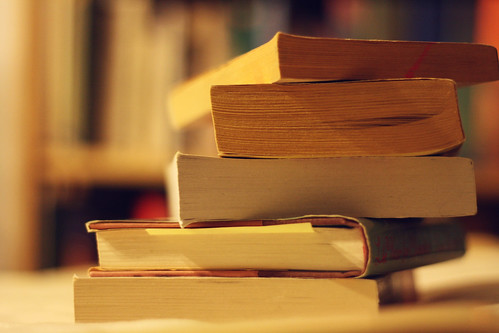
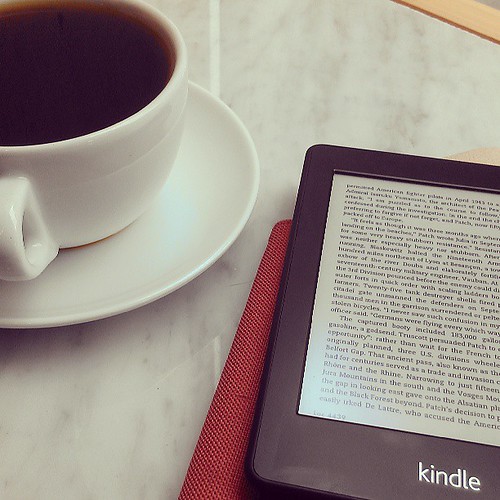
After reading three e-books in a little over the course of a week, it occurred to me that as of late, I’ve developed a tendency of reading more quickly when I use my e-reader. 

To confirm my suspicions, I did some quick math (or rather, had Excel do some quick math) and measured how many days on average it took me to complete an e-book and a print book, using the data Goodreads had from books I’ve read thus far this year. 

I wasn’t surprised to find a big difference between the two. 

On average, it took me 15 days to finish reading a print book. With e-books, however, my average was five days. 

I knew, however, that e-books were sometimes shorter than their print counterparts, so I broke it down further to determine how many pages a day I read on average with each. Again, the difference was undeniable: 46 pages a day with print books, and 79 with e-books. 

What I really found interesting, however, was that if I averaged these statistics with my reading average over the course of a year and a half (ergo, my reading stats from 2012 and this year so far), my averages were much more comparable: it took me an average of 12 days to finish a print book and nine days to complete an e-book. The difference was still there, until I factored in the pages; 59 print pages per day versus 58 pages per day with e-books. 

So what happened between last year and this year? 

For the longest time, I treated my e-reader with as much care as I did my print books. You see, I’m a little OCD when it comes to my beautiful books, and I’ve always been very careful to keep them clean and undamaged. I treated my e-reader much the same, until I started to realize more recently that my little e-reader is sturdier than I gave it credit for. 

Most times I read with my NOOK Simple Touch, so it’s not as delicate as an iPad or tablet. This realization allowed me to start carrying my e-reader around a little more often—I’d prop it up while eating, for example—something I’d never do with a print book, God forbid I got food on it. 

So I suspect that may be part of it, but I think the other part is an active attempt on my part this year to make more use of free moments to read. Combined with the ease of reading off an e-reader (sliding my finger across a screen versus flipping a page, which really shouldn’t be a big deal but it does make for easier single-handed reading), I’ve started to find that on average I breeze through e-books a lot faster than I do their print counterparts. There are exceptions, of course (i.e.: reading The Fault in Our Stars in two days, or Unravel Me in three), but overall, e-books seem to be winning the speed race. 

I don’t know if this is a trend that will continue with me, as it’s something that seems to have really developed over the course of the last six months, but I found it interesting nevertheless. 

And so I’m curious: do you read e-books faster than print? 

Twitter-sized bites: 
One writer's findings when comparing her print and e-book reading statistics. (Click to tweet)  
Print versus e-books—do you read one faster than the other? Join the discussion at @Ava_Jae's blog. (Click to tweet)
Related Posts Plugin for WordPress, Blogger...