How to Build an Online Platform: Blogging

Photo credit: Magnet 4 Marketing dot Net on Flickr
So way back in July I started this how to build an online platform series (focusing on Twitter) then sort of left you guys hanging? My bad. The series is back!

Today’s focus is the blog! Because I just hit a special milestone (*EHEM* so maybe check out Writability next week? JUST SAYING). So yay!
Blogger birthday: May 2011 (3.5 years, as of this writing). 
Followers/subscribers: Roughly 1.1k (according to feedburner, as of this writing). 
Total pageviews: +1,000,000!!! *squee* 
Time spent weekly: Roughly 3-4 hours ish.

Tips: 

  • Post consistently. So in three and a half years, I’ve yet to miss a post. I’m not saying this to be braggy, I’m saying this because posting consistently? It’s important if you want to build a blog following.

    I’ve already written a whole post about why posting consistently is so important, so I’m not going to get into the nitty gritty again. But the main benefit to bloggers is by posting consistently, you’re allowing your readers to get into the habit of checking/visiting your blog on a regular basis. Whether that’s weekly, bi-weekly, several times a week or monthly is up to you, but no matter what, consistency is key. 

  • Figure out what you want your blog to be about early on and stay within that realm. While having a blog where you post about anything and everything under the sun can be fun, it's much harder to find an audience if you don't pinpoint a particular interest to target. 

  • Ask a question after your posts to encourage discussion. Case in point: 95% of my blog posts. :) 

  • Answer your comments. You won’t always get comments. In fact, there will often be long stretches where you barely get any comments at all. (FWIW, this is something that STILL happens to me, three and a half years later). But when you do get comments, I think it’s really important for bloggers to make a point of answering them. Yes, all of them. (Or nearly all of them, at least).

    Why? To me, it’s common courtesy—your readers have taken the time to read your post and respond in some way, and by answering their comments, you’re telling them you appreciate their time and reciprocated with their own. I also don’t think it’s a coincidence that on the posts where I answer comments quickly, I tend to get more comments—readers like to see that the blogger is taking the time to interact with the community.

    As an added bonus, I’ve had some really awesome discussions happen in the comments of my posts—and those would’nt have happened if I hadn’t answered the comments to begin with. 

  • Share your posts elsewhere. I habitually share every one of my blog posts on Twitter, tumblr and Facebook, because that’s where I’m most active. Pinterest is another good one, but I’m not very consistent with Pinterest so I tend to let other awesome people pin my stuff for me. (People are nice).

    But basically, if you’re on a social media site that allows for link or text sharing, then I highly recommend you take the time to share your posts. Just don’t get spammy about it (as in, posting about it twelve times in the same day). 

  • Make it easy for others to share. As in those lovely Twitter-sized bites below (directions on how to create those here). Or the sharing buttons below that. But the point is, the easier you make it for people to share, the more likely they are to do it. 

  • Comment on other people’s blogs (especially at first). This is something, that sadly, I haven’t had very much time for as of late. But at the beginning, one of the number one ways I found new blogs, connected with other bloggers, and found new readers was by commenting on blogs with topics similar to mine. This is especially helpful at first when you don’t have a lot of readers and you want to find people with similar interests, but one caveat: do NOT include a link to your blog at the bottom of your comment. That’s considered spammy and kind of rude. Instead, people will find your blog by clicking your name (because you usually have to include a link to your website (aka: your blog) in order to leave a comment). 

  • It’s okay to stop. Thankfully, this isn’t something I’ve had to (or wanted to) do. I love running Writability, and even though it’s time consuming, it’s something that I intend to continue to do for as long as I can.

    But that being said, if you’re a blogger and you find that you’re no longer enjoying it, or it’s taking way too much time and becoming a burden, then it’s okay to stop. Really. The last thing you want is to dread writing your posts, because then it’ll become an emotional drain and quite frankly, your readers will likely notice. 

Do you run a blog? What tips do you have for new (or even established!) bloggers? 

Twitter-sized bites: 
Looking to build a blogging platform? @Ava_Jae shares her experience and a few tips. (Click to tweet
"Consistency is key," and other blogger platform building tips from @Ava_Jae. (Click to tweet)

The New Adult Speculative Fiction Landscape

I've got a super special post for you guys, today! My CP and New Adult author of awesome, Caitlin Sinead, has agreed not only to share the super awesome cover reveal of her debut NA novel HEARTSICK, but she's sharing some super interesting thoughts on NA Spec Fic as well!

Take it away, Caitlin! 

When I began writing HEARTSICK in the late spring of 2013, the New Adult landscape was still shifting (as it is now!) and it wasn’t clear if speculative stories would work well in the category. But I was optimistic. I loved the idea of writing YA-style speculative stories with older characters and more mature themes.  So I was going to write it, gosh darn it!

When I began querying HEARTSICK in the fall, I got much more pushback on Quinn’s age (from agents who didn’t feel comfortable pitching New Adult but didn’t think the book fit well within the adult category either) than I did on the speculative elements. And when I did get an agent and we went out on submission, only one editor flatly turned it down because it wasn’t a pure (i.e., non speculative) contemporary romance.

Meanwhile, more and more speculative NA has been surfacing and doing well. To the point that NA Alley recently wrote a blog post entitled “New Adult Speculative Fiction is here to Stay.”  However, I find it interesting that they don’t necessarily see the current NA audience as being receptive to speculative NA. Instead, they mention that, “readers of speculative fiction are already out there, and most of them don't realize that New Adult can satisfy their fantastical cravings as well.” The blog goes on to add, “it’s not about pushing spec fic on readers who love contemporary, it’s about targeting our own readers.”

I agree with the idea that there may be a large audience out there just ready for NA speculative. But have we, as a writing/publishing community, actually reached them? Is the common perception that much of NA is contemporary romance inaccurate?

I dug into the stats on Amazon to see if I could find some answers and had way too much fun playing in excel with graphs. I won’t bore you with all of my graphical creations, but I thought the comparison between YA and NA and general fiction might be interesting.


Now, before I get into my analysis *cleans glasses while pausing to look intelligent,* it’s important to note multiple caveats:

  • Before you say, “Caitlin, those percentages don’t add up,” let me explain. I searched for ALL the “Young Adult” books on amazon. ALL of them! Then, I searched for ALL the “Young Adult Paranormal.” I then used that to get the percentage of YA books that are tagged as YA paranormal. 
  • “Contemporary romance” doesn’t preclude speculative elements. HEARTSICK has the “contemporary romance” label. And that’s great! 
  • I’m a little dubious that only 12% of NAs are contemporary romance, so this likely gets into issues of how things are tagged.
  • To get the general numbers, I based them against a search for “fiction.” (When I tried searching for “adult” books a lot of NSFW stuff came up…heh). So, I think this worked! But, I suppose it’s possible a lot of fiction isn’t ever tagged with the generic “fiction.” 

Still, even with all those caveats I think this data gives us an idea of what currently makes up NA, and it’s still very heavily leaning to contemporary romance with paranormal books being the only speculative books in the category with more representation than YA and general fiction.

The scenario gets even less optimistic for popular New Adult books. When I checked last week, in the top 100 Romance > New Adult and College there were only eight speculative books. In the top 100 Women’s Fiction > New Adult and College there were only two. Two! None of these were in the top 20. (It’s important to note that Amazon also has a Fantasy > New Adult and College category as well, where, obviously, 100 percent at speculative. They do not have an NA category under Science Fiction).

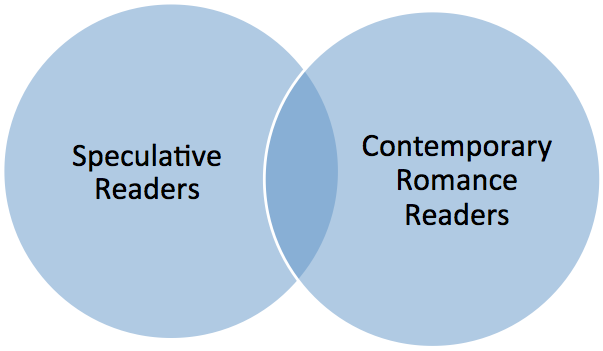
So, has that NA speculative audience really been found? As an optimist, I believe they’re out there, but we’ve only really pierced the surface. Perhaps, right now, we’re seeing the dark blue part of the venn diagram (I told you I had fun with charts!) below. Those readers who love NA contemporary romances AND also speculative fiction. And that dark blue area has been encouraging and fueling the NA speculative stories. Now we just need to figure out how to get to the rest of the “speculative readers” circle. Hopefully, with each NA speculative release, we reach even more readers.

Completely Made-Up Venn Diagram


Wasn't that great? I love the venn diagrams and I think Caitlin's perspective on New Adult SpecFic is totally fascinating. But the fun isn't over yet because as I said before, Caitlin has been gracious enough not only to share the blurb and an excerpt from HEARTSICK, but we're revealing the cover, too! Woot! 

Here we go: 

Blurb: 
Quinn is looking forward to her senior year. She has big plans to hang out with her best friend Mandy, flirt with cute boy-genius Rashid, party at her favorite dive bar, and figure out what she’s going to do after graduation with her not-so-useful art major degree.  But that is before she meets Luke, a hot townie who moves back home to help take care of his dying sister. And it is before the weird epidemic that starts sweeping campus in which people’s eyes mysteriously turn purple.  Is it an odd side effect from a new party drug? Is it a rogue bacteria that was developed in a campus lab? Whatever it is, tensions are heating up as the town starts blaming the university, and the student religious group is convinced that it’s the mark of the devil. Quinn and Luke are caught in the middle, especially when Quinn learns that Luke isn’t just a happy-go-lucky, redneck boy-next-door—he is a detective—a fact that triggers Quinn’s phobia of guns and memories of her deceased uncle.  In spite of herself and her desire to remain unattached and independent, Quinn finds herself falling for him.  But when town and gown relations heat up even further, and Quinn’s friend Danny mysteriously falls to his death, Quinn vows to discover the truth behind the epidemic.  As she searches for the people responsible, she realizes that sometimes to gain your independence, you have to be willing to give a little bit of it up.
Excerpt: 

“Did you go to college?”  
His jaw is tight. “Yes.” 
“Do you think I could guess your major?” I ask.  
“Probably not,” he says. 
I don’t like that I don’t even get a hint at what he did before or what he studied. I shrug, start on my second hotdog and then lean back, really aiming for a glint in my eye, if that’s possible to control. I’ll make this a game. “Well, do you think you can guess mine?” 
He smiles. “Do I get something if I guess right?” 
I hop up onto a stool and let the tip of my toe brush against his knee. When I make contact, he starts, before leaning in. “What do you want?” 
“I want a lot of things…” He stares at me. “But for now, I’d settle for a second date.” 
“Okay, if you can guess my major, on the first try—” I emphasize that bit with a pointed finger, “—then I’ll reluctantly agree to go out with you again.” 
“I don’t like the reluctant part, but I’ll take what I can get. Now, let’s see…” He rubs his chin as though he’s an old-timey detective. He’s ready to pace back and forth across the room with a pipe and a deerstalker hat. “You like photography.” 
Shit, he does know that. I start to hum the Jeopardy! theme song. Maybe if time is running out he’ll be more likely to guess quickly and get it wrong? Do I want him to get it wrong? 
“Okay, I got it.” He rubs his hands together. “You’re an art major.” His cheeks swell with the weight of his smile.  
“You got that just because I take pictures?” I rub my forehead.  
“I know more than that.” 
“Someone told you,” I say. “If this bet was rigged, it doesn’t count.” 
He jerks back and shakes his head, frowning. “No, I wouldn’t do that,” he says. “I noticed you had some pottery on your coffee table, with initials on it, a Q. B.?” 
I nod. He’s talking about the bowl I made last year. Initials usually go on the bottom, but I painted them big and proud in the middle. And the bowl is empty. Mandy and I haven’t decided what to put in it. We narrowed it down to fake fruit (lame), M&M’S (which we would devour) or Micro Machines. Clearly, we’re leaning toward Micro Machines. 
Luke takes my hand. I think he’s trying to convey his earnestness, his respectability and seriousness of not tricking me into a bet. The pads of my fingers brush against his rough palms and I suppress a sigh. His thumb runs along my pointer finger, sliding to the fingernail. “You also have paint under your nails.” His victorious, smug smile is in full bloom.  
I pull my hand away, embarrassed. “Yeah, it’s hard to get all the paint off.” 
“I’m sure,” he says.

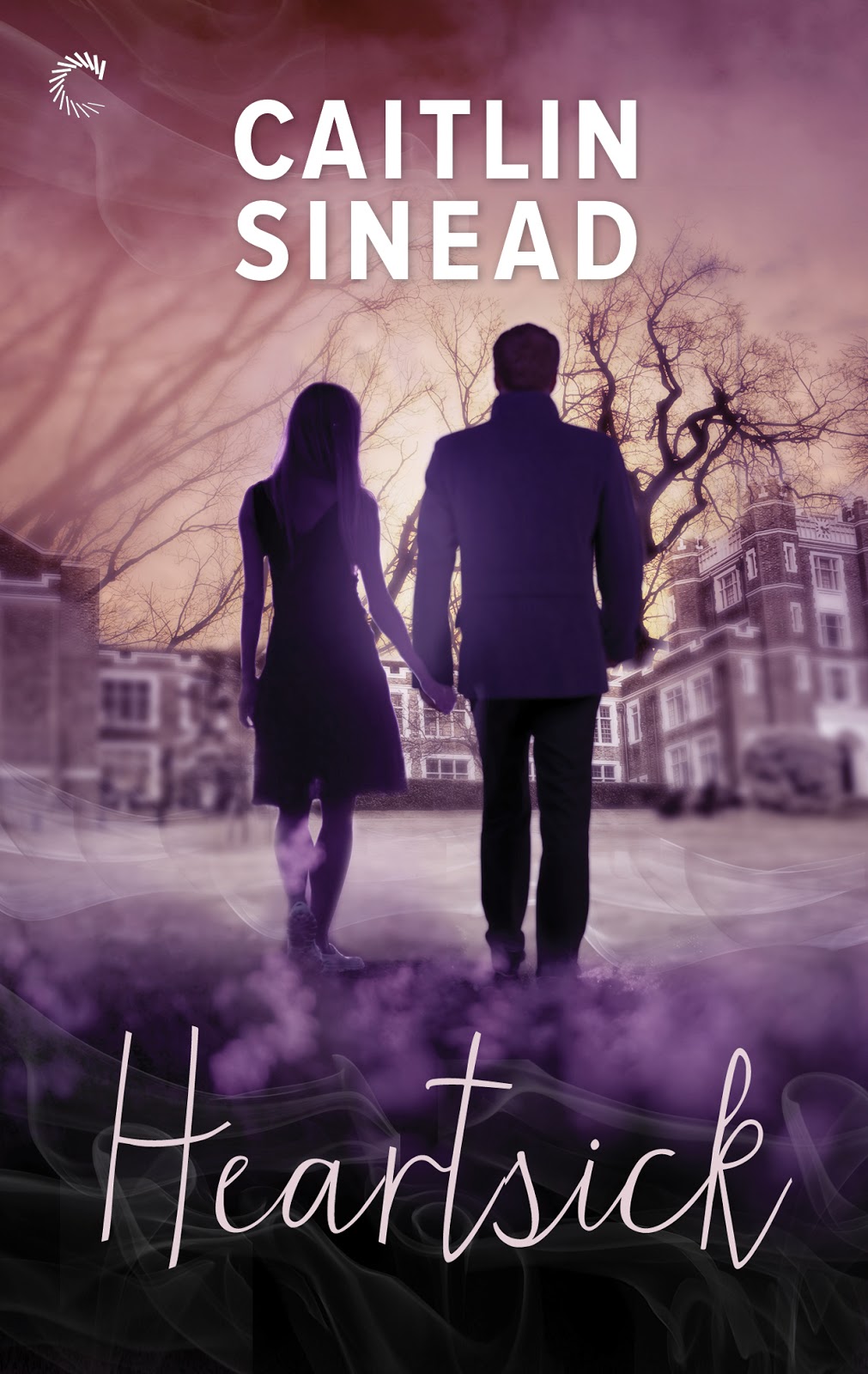
And here's the gorgeous cover!


I love this cover and as someone who has read the book, I can tell you the book is just as excellent (and also the cover fits so well aggghhh). 

You can add HEARTSICK to your Goodreads TBR shelves right here!

And here are the other links: 
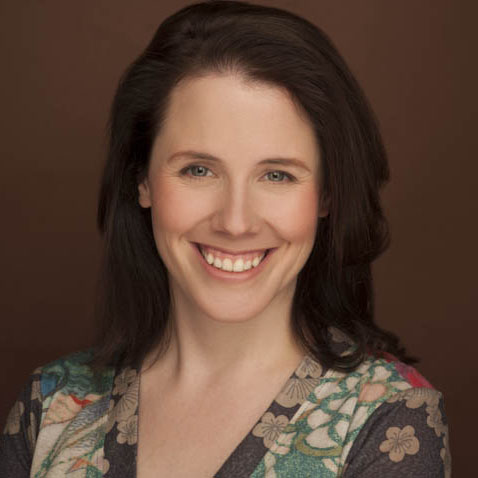
Caitlin Sinead is represented by Andrea Somberg at Harvey Klinger, Inc. and her debut novel, Heartsick, will be published by Carina Press in 2015. Her writing has earned accolades from Alfred Hitchcock's Mystery MagazineGlimmer Train, and Writers & Artists, and her stories have appeared in multiple publications, including The AlarmistThe Binnacle, CrunchableJersey Devil Pressand Northern Virginia Magazine. She earned a master's degree in writing from Johns Hopkins University.

Twitter-sized bites: 
Check out the cover reveal for @CaitlinSineadJ's debut HEARTSICK + her thoughts on NA SpecFic on @Ava_Jae's blog. (Click to tweet)  
Have we found the NA SpecFic audience? @CaitlinSineadJ shares her thoughts + her debut's cover reveal! (Click to tweet

Vlog: How to Survive NaNoWriMo Week 1

It's the first week of NaNoWriMo and if you're participating, you might be having some FEELS. But not to worry, I'm sharing some thoughts on how to survive the first week.


RELATED LINK:


Are you participating in NaNoWriMo this year? 

Also, there are EXCITING THINGS coming to Writability veryyyy soon! Keep an eye out! :)

Twitter-sized bite: 
Are you NaNoWriMo-ing? @Ava_Jae shares some thoughts on how to survive NaNoWriMo week 1. (Click to tweet)

10 Promises to Myself (as a Writer)

Photo credit: Send me adrift. on Flickr
  1. I will treat my writing like a job (because even long before I get my first paycheck, it is). 
  2. I will act like a professional online, while speaking to those in the publishing industry, and whenever I’m in a space as a writer. 
  3. I will read. In my genre and category, out of my genre and category, debut authors, new (to me) authors, authors whose every book I’ve read, books with nice covers, books with ugly covers and most importantly, I will never ever be ashamed of anything I enjoyed reading. 
  4. I will always push myself and strive to improve my writing. 
  5. I will consider all feedback I get on my writing before deciding whether or not to make suggested changes. 
  6. I will veg out and not write when I need a break (and I won’t feel guilty about it). 
  7. I will say no to friends and family when I need time to write (and I won't feel guilty about it).
  8. I will write horrible first drafts (and be proud of them). 
  9. I will be patient. With myself. With others. With the very slow process that is publishing. 
  10. I will listen to my beta readers, my critique partners, my agent, my editor, and anyone else working on my book, and I will remember they want what’s best for my book and me. I will also remember they have a perspective I can’t have on my own, and their opinions are valid even when I disagree.

What writing-related promises have you (or will you) make to yourself?

Twitter-sized bite: 
.@Ava_Jae shares 10 writing-related promises she's made to herself. What writing promises do you keep yourself to? (Click to tweet)

Is Writing a Series Before You’re Published Worth It?

Photo credit: [phil h] on Flickr
So two years ago I wrote this post about why I’ve yet to write a sequel. And, well, I still haven’t written a sequel (but it’s more likely now than it was two years ago, so yay!), but one of you fabulous people sent me a question about the value of writing series vs. standalone and. Well. Here I am again. 

Before I go on, please do note that just about everything I’m going to say here applies to those who want to get traditionally published. For those who plan to self-publish, it’s a whole different ball game. 

Okay. So. 

It’s no secret that for many many years, series books, particularly trilogies, have been massively popular, especially with children’s books. Over the years, however, with the recession and people just in general getting tired of the same series format over and over, series books have started to fall a little out of style. Not entirely, of course—there are loads of totally successful series still being released—but there’s definitely been a push toward companion novels (rather than strict linear series books), dialogues (instead of trilogies), and standalones. 

It’s not impossible to sell a series. But there’s also no guarantee that if you sell your novel, you’ll end up with a multi-book deal, even if your book does have series potential. 

So what does this mean for unpublished and/or unrepresented writers? 

Basically, writing a full series before you sell the first novel (and yes, I mean sell, not find representation for) is really really risky. In the sense that you could potentially lose a lot of time and effort if your book doesn’t sell (or if your book does sell, but it when it hits the shelves it doesn’t do as well as everyone hoped and you don’t get the chance to publish the sequel). 

Something that’s equally risky? Writing a book with a cliffhanger-type ending that can’t stand on it’s own. Hell, I’d say this is even riskier, because in most cases, books need to stand on their own to sell at all (though, of course, there are always exceptions). Still, it’s probably best you just don’t do this. 

Here’s the thing: sequels are fun—or at least, I think they are—but when you’re a writer, there’s absolutely no guarantee that you’re going to get that multi-book deal. Or that after you sell your debut, you’ll also sell the sequel. I mean, yes, they both happen, but they don’t happen always

I’m absolutely not saying that you should give up all your hopes and dreams of writing and publishing a successful series. I’m not saying that you should never write a book with series potential again. What I am saying, is when (or if) you do, you need to be a professional and be realistic about it. 

Sequels can be good news for everyone—writers, agents and editors alike—but they’re only good news when they sell well. And sometimes you need to prove yourself as a writer before you can get that multi-book deal everyone dreams about. And you know? That’s okay. 

In the end, I think the thing to remember is publishing is a business. And if you act like a professional, and listen to your agent and your editor and your book sells well, then you know what? You may very well see a multi-book deal in your future. 


But until you’ve reached that point, it’s important to keep yourself grounded and focus on what’s important—writing your books, one at a time.

So those are my thoughts, but I want to hear from you—what do you think? 

Twitter-sized bites: 
When writing a novel, @Ava_Jae says every book needs to stand on its own. What do you think? (Click to tweet)  
Writer @Ava_Jae says writing a series before you sell the first novel is risky. What do you think? (Click to tweet

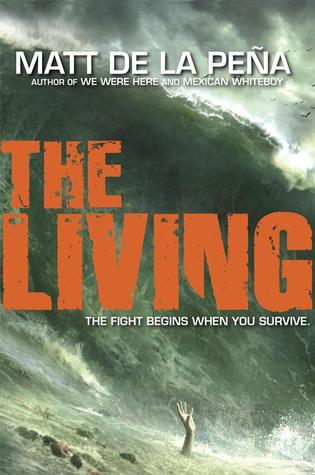
Book Review: THE LIVING by Matt de la Peña

Photo credit: Goodreads
So this was a really fun read. 

I do happen to love my YA full of action and intensity and The Living definitely met those expectations. But before I go on, here’s the Goodreads summary:
“Shy took the summer job to make some money. In a few months on a luxury cruise liner, he'll rake in the tips and be able to help his mom and sister out with the bills. And how bad can it be? Bikinis, free food, maybe even a girl or two—every cruise has different passengers, after all. 
But everything changes when the Big One hits. Shy's only weeks out at sea when an earthquake more massive than ever before recorded hits California, and his life is forever changed. 
The earthquake is only the first disaster. Suddenly it's a fight to survive for those left living.” 
So, yeah, this was pretty much as intense as it sounds. I’ve heard people say this is like a YA Lost without the smoke monster weirdness, and it definitely has that vibe, though I think it reminded me more of I Shouldn’t Be Alive for YA. Either way, The Living is a super interesting read.

Something I appreciated was the incidental diversity. Shy is (half?) Mexican American and many of the important side characters have diverse racial backgrounds, which was really nice to see. And while there are absolutely some themes of race and class coming into play, The Living doesn’t read as an issue book (and it’s not supposed to), and overall, I think it was very nicely handled.

I will say that the ending was kind of predictable and the confrontation between Shy and a particular baddie was, shall we say, a teensie bit evil bad guy Hollywood cliché? Also, there was a thing with super aggressive sharks that I wasn’t totally buying, but the issues were minor and I still definitely enjoyed reading. Now The Hunted just has to come out so I can find out what happens. *frets*

I’m giving The Living 4/5 stars and I recommend it to those who enjoy fast-paced, Adventure/Disaster-type books.

Have you read anything good lately? I’m always open to recommendations (especially YA & NA)! 

Twitter-sized bites: 
.@Ava_Jae gives 4/5 stars to THE LIVING by Matt de la Peña. Have you read this intense YA Adventure? (Click to tweet)   
Looking for a fast-paced, intense YA read with high stakes and a diverse cast? Try THE LIVING by @mattdelapena. (Click to tweet)

Vlog: Top 5 NaNoWriMo Tips

NaNoWriMo starts THIS WEEKEND. And so in today's vlog I'm sharing my top five NaNoing (or general fast-drafting) tips.

Twitter-sized bite: 
Getting ready for #NaNoWriMo? @Ava_Jae shares 5 tips to help you reach your NaNo goal. (Click to tweet)
Related Posts Plugin for WordPress, Blogger...