Writing: Mastering the Balance


Photo credit: Digitalnative on Flickr

I received an e-mail the other day asking about how an author can balance having a voice, giving her novel a tone, and allowing her characters to have separate personalities. I’m pretty sure I read the question at least half a dozen times before I had any semblance of an answer.

Balance is one of those things in writing that takes a while to really get down—I’m still working on fine-tuning the balance in my writing myself. Our prose should have voice—but not so much that it drowns out our characters. We need to include detail—but don’t want to bombard our readers with too much. We need a good plot—but a well-formed plot means nothing if our characters are flat.

Balance.

I don’t know about you guys, but my first drafts are rarely balanced. Thinking back to the first draft of my current WIP, I had a lot of plot and action and barely any voice. My love-interest was as cardboard as it gets and my antagonist… well he had potential, but some of his dialogue was embarrassing in retrospect and his motivations were shaky, at best.

Finding balance the first time around in your writing is really hard, and I don’t think most of us get it right immediately. And that’s ok.

Balance doesn’t often flow naturally—it takes some tweaking. Think about anything you’ve ever done that required balance—balancing a soda can on its edge, for example. Chances are, unless you have some ridiculous ninja-like balancing skills, you didn’t just set the can on its edge and walk away—you held onto it and tweaked it until it felt like it might stay, then you let go.

Writing is the same way. Nine out of ten times, the first thing you throw onto paper isn’t going to be perfectly balanced. It’ll take revisions—a round where you focus on getting the voice right, a round where you get the details pitch perfect, another where you focus on dialogue and so on and so forth. In my experience, anyway, balance doesn’t come right away—you tweak your manuscript in every which way until— aha!— you get it right.

It’s not an easy thing to master, but no one ever said writing was easy.

Have you had trouble finding balance in your WIP? Tell us your experience!

Do You Really Know Your Characters?

Photo credit: Thomas Milne on Flickr
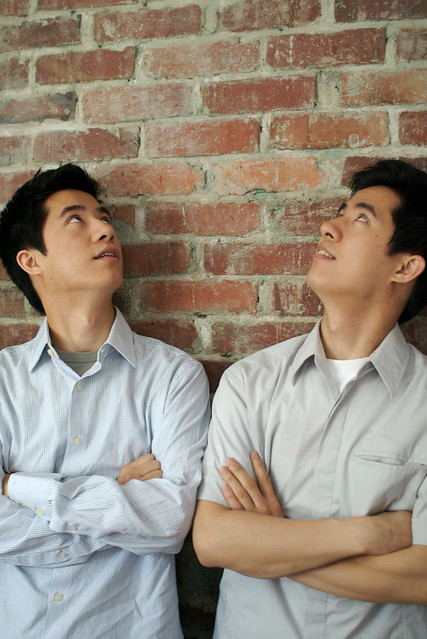
So I posted the other day about inner beauty versus outer beauty and it got me thinking: if every one of your characters looked and sounded exactly the same, would you be able to tell them apart?

This could be a really good test of characterization. In a hypothetical world where we are all copies, how would you tell your character apart from everyone else? Does he shuffle instead of walking? Does he keep his eyes low and shoulders hunched or is he brimming with confidence? What about the way he talks? Does he curse a lot? Does he stutter? Does he speak in short, abrupt sentences or long, eloquent phrases?

Since I’ve been rather philosophical and haven’t posted any exercises in a while, try this one:

Take two of your characters and pretend they looked and sounded exactly the same. Ask yourself how you would tell them apart and write down every difference you can think of. The way they hold themselves, the way they walk, they way they talk, how they would react to different situations—anything goes. If you have trouble differentiating between the two, you might need to work on a little more characterization.

Since I love The Hunger Games, I’ll use two of the main characters as an example:

Katniss
Peeta
Makes unwavering eye contact
Stands with her shoulders back
Walks with her chin up
Blunt—doesn’t really care about eloquence
Fiery temper
Makes eye contact, then looks away
Slouches slightly
Shuffles
Soft-spoken, has a way with words
Patient


I could go on, but I think you get the idea.

So lets see it, guys—how would you tell your characters apart? 

Are Your Characters Beautiful?

Photo credit: catherinetodd2 on Flickr
Maybe it’s just me, but I feel like half of novels out there with any type of romance have a subplot that goes like this:

In a world, where a beautiful woman falls in love with a Greek-God-of-a-man, the future for their offspring looks freaking gorgeous.

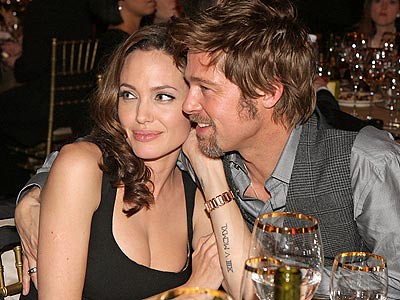
You’d think the whole world was made up of Bradgelinas in these books.

I’ll admit I’m guilty of having physically attractive protagonists and love interests—which isn’t a bad thing (to a point). Readers like to imagine gorgeous protagonists just as much as writers like to write them—it just becomes noticeable when either a) everyone in your book is gorgeous or b) everyone good in your book is gorgeous and all of the bad guys (or less important people) are meh.

Let me clarify—I’m not saying you’re doing something wrong if your book falls into either one of those categories (I’ll readily admit more than a few of my WIPs certainly do), it’s just something I’ve started to think about lately and I’m going to address it in my future WIPs.

Because it turns out, just like in real life, what makes a character beautiful isn’t always a symmetrical face or toned body—it’s their personalities, their actions that make the readers fall in love with them.

What I find especially interesting is that books with characters that aren’t described as gorgeous often end up with readers who fall in love with them anyway and think the characters are hot. (Beth Revis talked about this in a very interesting blog post you should all check out).

Why does that happen?

Books allow us to do something that movies don’t—while movies show us what everyone looks like and paint a picture that we can’t ignore, books allow us to create our own images. Maybe the future love interest isn’t gorgeous…but as he does things that show his inner beauty, readers start to amend their mental image of him (or her, for that matter). A character that started off as ok physically, may end up looking straight-out beautiful by the end of the book in a reader’s mind.

Inner beauty trumps a less-than-perfect physical description.

I’m not saying you should stop writing beautiful characters—I just think we need to consider more about what makes a character beautiful. What does that word “beauty” mean anyway? I don’t think it always has to apply to something physical, in fact, I think it’s even more powerful when it doesn’t.

We live in a world where physical beauty is coveted—but to create a world in our books where there are no imperfections is unrealistic and shallow. Most of us agree, I think, that inner beauty is the more important of the two, so why not show our readers that it’s possible to fall in love with someone who isn’t physically perfect?

That kind of love story may be the greatest of them all.

So that’s my opinion, but what do you think? Am I underplaying the importance of physical beauty, or does inner beauty really trump all?  

On Underestimating Your Readers


I thought I knew about this rule, but it was really only recently that I fully grasped it.

Photo credit: Per Jensen on Flickr
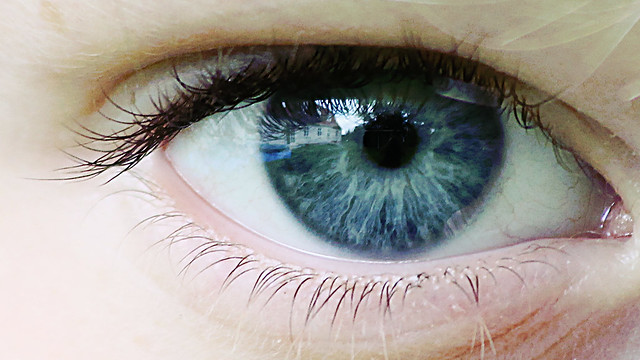
You see, I’m a little obsessed with eyes (turns out, much of the female population is—go figure). In my art, for example, if I don’t like the way the eyes turn out, chances are I’ll dump the whole thing. I didn’t think this obsession translated into my writing until someone pointed out to me that my very male, very distressed protagonist probably wasn’t going to be noticing everyone’s eye color in the opening scene. A quick scan through my manuscript showed that I’d mentioned pretty much everyone’s eye color—including minor show-up-once characters.

Oops.

Turns out, that pretty much applied to hair color too. Apparently my knee-jerk descriptions rely on the two.

As the author of our stories, we know what everyone looks like. We have a mental image of every character, every face, and our instinct is to try to paint in our readers the exact same image as the one in our minds.

Yeah, not gonna happen—nor should it.

We all have imaginations—and that includes our readers. Even if you go through the trouble of describing the way your love interest’s blonde hair never looks neat and the tint of his brown eyes and how he’s just shy of six foot and athletic and loves Levi jeans and Etnies and wears the same blue t-shirt every day, your readers will each have a different mental image of your character.

So if they’re going to imagine their own version anyway, should you really take the time to describe every character in every scene down to hair and eye color?

The short answer is no.

Guess what? Readers don’t want to know about every detail—they want to know the important details. Don’t tell us your character has black hair, blue eyes, stands at 5’9” and has a runner’s body—tell us about his crooked smile and the dimple on his cheek and the way his eyes completely pass you up when he walks past you. That’s much more powerful—agreed?

Truth is, if you leave out that your love interest’s dark hair is actually dark brown (not black) like Veronica Roth did, your readers aren’t going to feel cheated, nor will they be unable to picture your character. Whatever you don’t tell them, they’ll fill in for themselves.

It seems that sometimes we forget that readers have imaginations, too. Don’t underestimate them—they can fill in the blanks.

Leave out the general details and strive for the specific, important ones and your readers will love you for it. 

Do your favorite descriptions fully describe the character or setting, or do they choose specific details?

A Guaranteed Way to Fail

“I don't know the key to success, but the key to failure is trying to please everybody.”—Bill Cosby
Most of us like to make people happy. We want to be liked and accepted and when it comes to our writing, we want people to enjoy it. As many people as possible—ideally, everyone.

I mean really, how great would it be if everyone loved your writing?

Photo credit: kate.gardiner on Flickr
Unfortunately, that’s not going to happen. Truth be told, there’s always going to be someone who doesn’t like your style, or your characters, or your pacing or sentence structure or the way you throw virtual confetti around like it’s nobody’s business.

You can’t please everyone—there will always be bad reviews or people who unsubscribe to your blog or a stack of rejection letters.  That’s just the way the world works and it’s not a bad thing. Let’s face it—the world would be a boring place if everyone liked the same thing.

So what’s my point?

If you try to please everyone, you will fail. I usually say there are exceptions, but there really aren’t any here. You can’t please everyone, period.

It doesn’t matter if everyone else likes your work, what matters is that you are happy with it. Are you proud of your writing? Do you love your characters, your story? If the answer is no, then it probably needs more work.

If the answer is yes, then don’t worry about everyone else. Write until you know you’ve done your best and you smile when you read the words you put on the page. That’s when you know you’ve succeeded.

And chances are someone else will like it too.

Have you ever fallen victim to trying to please everyone? 

Writing--What's Your Favorite Part?

Photo credit: _StaR_DusT_ on Flickr
We all know writing isn't an easy thing—finding the time, getting ideas, discovering voice, editing and rewriting and editing and rewriting again—it’s a lot of work, and quite frankly, sometimes it’s frustrating.

But what about the moments that make it all worth it? I don’t think we talk enough about them.  

So, let’s talk: what’s your favorite part of writing?

For me, there are two parts that I can’t get enough of:

  1. The discovery—the moment when a character comes alive—really comes to life for the first time on the page—when they do something unexpected or say something that makes you grin every time you read over it, that moment when you can say, “Wow, I really found you.” Discovery can be in the characters, in a world you’ve created that finally clicks, in that plot point that you’ve needed for days that suddenly hits you…the discovery is easily one of my favorite parts of writing.

  2. Wow…I wrote this?—This part I suppose is more of my favorite part of rewriting, since it tends to come up much more often after a bajillion drafts, but when you read over something for the umpteenth time and it hits you that it’s right, that it sounds finished, that you wrote it…that’s something really special.

Let’s take a moment to focus on the parts that make everything worth it. Tell me guys, what’s your favorite part of writing? 

Time is on Your Side


Photo credit: kamera.obskura on Flickr
At the beginning of my writing career, I was racing against the clock.

I read about authors like Christopher Paolini who wrote the first draft of Eragon when he was 15 and had it published traditionally five years later at the age of 20. I devoured books and read so-called “instant” best-sellers and wondered what they were doing that I wasn't.

I worried that I was taking too long.

It wasn’t until much later, after rounds of rejections and trunking novel after novel that I realized that time wasn’t working against me—it was working for me.

The fact of the matter is it takes time to hone your craft. It takes years of practice and writing and reading and getting feedback and writing and reading until your skill level matches your passion. Stop running and take the time to enjoy the ride.

Don’t rush the writing—the process of discovery, of improving, of falling in love with your characters and the world you’ve created is beautiful. Take the time to marvel at what you’ve created.

Don’t rush the editing—as they say, writing is rewriting and there is just as much to be learned from the editing as there is from the writing.

Don’t rush the submissions—take the time to make sure your book is the best that it can be before you send it out. Research agents and guidelines and take the time to personalize your queries—it makes a difference.

Don’t rush the publication—I’ve said this before, but I’ll say it again: please don’t publish for the sake of publishing. Go indie if you think it’s the right choice for you, but don’t slap your book up on Amazon just because you can.

Slow down and remember that time is on your side—the more time you take to improve your craft, the better prepared you’ll be when your time to shine comes.

Have you ever been tempted to rush through part of the process? Share you experience in the comments! 
Related Posts Plugin for WordPress, Blogger...