Showing posts with label patience. Show all posts

NaNoWriMo Winner? Hold On to that Novel!

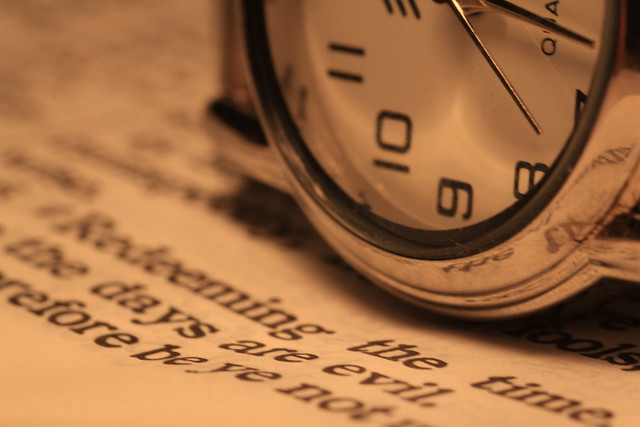
Photo credit: theurchiness on Flickr
Now that the NaNoWriMo frenzy has ended, many writers around the world are happily sitting on sparkling new novels, still steaming from the presses. For many, December is an exciting time—after all, with a new manuscript under their belts, there are more than a couple dreamers out there with their eyes on the magical "p" word: published.

Unfortunately I'm going to have to rain on that parade a little bit—at least, for the time being.

It's no secret that many NaNoWriMo winners feel tempted to immediately publish (or try to publish) their freshly written novels—hell, with five free CreateSpace copies of their NaNo novels given to all winners, the temptation to hit "upload" or begin querying instantly is indisputably there. But it's a temptation that you absolutely must resist.

You see, there's this tricky little tidbit of information about writing that many writers, especially new writers, sometimes overlook: your first draft is never meant to be your final draft. Never. Never never never. Did you get that? Your first draft is NOT equal to your final draft.

Usually this is the time when I say there are very rare exceptions, but I'm going to go out on a limb and say that there are no exceptions for this rule—even the most beautifully written first drafts (i.e.: first drafts written in a span of much more than thirty days) need some form of editing. Sorry, guys.

I've said it before and I'll probably say it again in the future, but I'm glad that self-publishing wasn't a thing when I wrote my first novel. More than glad—relieved—because as the impressionable, young, dreamy-eyed new writer that I was, I'm not sure how well I would have resisted the temptation had it been a legitimate form of publishing at the time like it is now. Because as a new writer, I hadn't yet learned just how terrible first drafts tend to be, and I hadn't yet accepted that when writers talk about massive revisions, they often mean necessary massive revisions, and no, you are not an exception to the rule.

That being said, I'm not saying that your NaNoWriMo novel is terrible, or that it's never going to get published, or anything like that. Many NaNoWriMo novels have in fact been published and there's certainly nothing stopping you from joining the ranks. But these novels all have something in common—their respective authors spent a considerable amount of time and effort editing them. They didn't send out query letters to agents on December 1st, or upload them to Amazon moments after writing "The End."

If you're a NaNoWriMo winner or a writer who just recently completed a novel—congratulations! You just achieved something great and you should be proud of yourself. I hope you've celebrated appropriately and given yourself a nice, good pat on the back.

I also hope you've put your novel away and distracted yourself with something else.

Post novel-completion time is not the time to publish your work, nor is the time to immediately start editing. Now is the time to rest, develop some distance from your work so that you can actually effectively edit and be proud of your accomplishment. Now is the time to read some really great novels, and watch movies, and brainstorm your next work or write something new. But any thoughts you have of publishing your new novel? Yeah, put those away for many more months. You have plenty of work to do first, after you've developed the proper distance from your writing.

Then, when you're ready, you can dive into some edits and second and third and fourth drafts. Take your time and make your work as good as you possibly can—the publishing world will still be there when you're finally ready to give it a try.

Have you ever been tempted to publish or query too early? Did you give in to your temptation? Share your experience in the comments below!

How to Finish Writing a Novel

Photo credit: Johan Larsson on Flickr
So the other day, the lovely @j_a_bennett brought up an interesting topic on her blog—namely, finishing a novel from first draft to polished prose.

I know a lot of writers who struggle with this—especially when they haven’t fully completed a novel before. And let’s face it—finishing a novel from start to finish isn’t easy. It’s difficult enough to put together a coherent first draft and even harder to take that first draft and transform it into a fully revised, layered story.

But truth be told, I feel like finishing the first book is more of a mind game than anything else. If you have a pattern of not finishing, it can sometimes be difficult to overcome that little voice that says the reason you haven't finished a novel is because you can't (which isn't true, by the way. The little voice lies). It’s often a matter of self-confidence, of fighting the underlying doubts that tell you inevitably something is going to happen to keep you from completing your story—whether it’s a gaping plot hole, loss of inspiration (or interest) or something else.

There are a million and two reasons to stop writing a novel. When battling these doubts, what you need to find is the one reason to ignore everything else and write it anyway.  

For me, finishing a novel from first draft to last revision takes two very important things:

  1. You have to LOVE your book. Really. You're going to be working on that baby a long time. If you don't love it, it's going to get exhausting very quickly, and another shiny novel idea may very well pop out of the blue and rip your attention away.

  2. Patience/perseverance. I know technically those are two different things, but they go hand-in-hand. You don't need to survive just one round of revision—but anywhere from 3-10+ drafts, and that's before you even try to get it published.  Not only that, but you need to be patient with yourself. You need to accept that you’re still learning, that it isn’t going to be perfect, and that it’s ok.

There’s a third thing too, that mostly ties in with the second point—understanding and acceptance. I’ve talked about this before, but not every novel you write is going to get published. Not every story is meant to be released to the world—some of them are meant for you, the writer, to learn from.

You need to understand that you may very well spend a couple months or even years working on a novel that will sit in your desk drawer. You need to understand that it’s only natural to write two or three (or five or seven) novels before you’ve developed your writing skill enough to be ready for the publishing world.

You need to understand that if you really want to be a writer, you’ll need to go through this process many many times. And sometimes you’ll get tired. And sometimes you’ll get bored. And sometimes you’ll wonder if you’re wasting your time with your current WIP and if you should start on something else or if you’ll really be able to survive a couple rounds of revision.

And all of that is ok.

Love your book. Have patience with the process and with yourself. Push through the obstacles, both mental and physical, until you have a gleaming, fully polished novel.

Then go write another one. You are a writer, after all.

What tips do you have for completing a novel? 

On Writing and Waiting


Photo credit: mynameisrichard on Flickr
In response to my post on whether or not writers should delay their gratification, I received many interesting and thoughtful answers. A common theme I noticed, however, was that most of us agree there isn’t a straightforward one-size-fits-all answer.

It goes without saying that when it comes to things of the writerly nature, answers will vary depending on the writer/ manuscript/ season/ day of the week/ what you ate for breakfast/ how many ferrets you have (ok, maybe not those last few). But delayed gratification is interesting because, for writers at least, it’s mostly inevitable.

Regardless of whether you choose indie or traditional publishing, a lot of work goes into a novel before you get anything in return. Writers spend years honing their skills before anything they write is anywhere near publishable. Writers work without pay and give up their precious free time to work on that novel/ screenplay/ poem/ short story/ what-have-you.

So at the beginning of a writer’s journey, at least, there is no escaping delayed gratification.

The question we truly face as writers, with the rise of indie publishing upon us, is how long to continue to delay that gratification. How long, for example, should you edit before querying agents or uploading to Amazon?

This is where matters start to get tricky. There isn’t a magic number we can point to and say after x-amount of hours, words or books you’re ready to be published (although there is a theory that in order to master any skill or subject, you have to spend 10,000 hours developing said skill, but that’s another matter entirely).

The best thing writers can do is practice some patience while honing their skills. Take your time to perfect your story, to learn about the craft, to become a better writer. Make publishing decisions carefully and take all the time you need to make the decision that’s best for you and your career as a writer.

Keep calm and carry on. Seriously. Whenever you start to feel rushed, take a deep breath and remember that time is working for you. Don’t rush the process. 

What do you think? Is delayed gratification just part of the process? Can we (or should we) try to avoid it? 

When Writing, Take Your Time


Photo credit: listentothemountains on Flickr
We often talk about writing quickly, editing quickly, reading and revising and getting those word counts down as quickly as humanely possible.

We share secrets about how to write faster, how to make the most of our time as writers, how to go, go, go in a culture that only seems to be speeding up.

And sometimes it's not a bad thing, sometimes the difference between 100 and 1,000 words written in a writing session is directly related to mindset or strategy. Sometimes writing quickly is exactly what we need to finish our WIPs, especially when we're short on time.

But sometimes we need to slow down.

I've already written about how for writers, time is on our side, but I'd like to reiterate something that I think is important because it's something that's easy to forget: we all write at our own pace.

Each of us writers has our own journey— for some of us it takes a couple years to meet our goals, for others it takes over a decade. Some writers write four to five books a year, others take two or three years just to complete one novel. There are writers who self-publish immediately and writers who spend years seeking representation, even long after the advent of indie publishing.

What I'm trying to say is that it doesn't matter how much time it takes for you to reach your goal. It doesn't matter if it takes you a month or a year to write a first draft. It doesn't matter if you spend three years to bring your manuscript to the best it can be, while your writing buddy finishes in a couple months.

What matters is that you take all the time you need to write the very best work that you can.

When you see other writers speeding past you, don't let it get you down. When it takes much longer than you expected to finish your novel, while your family peers over your shoulder, don't let it bother you.

A writer's journey is not a race. It's not about who gets to the finish line first, or how many times they race around you on the track.

A writer's journey is about one thing: meeting your goals on your time. At your pace. At the time that's right for you.

So next time you feel tempted to rush through a writing stage, take a deep breath and remember to take your time. As long as you keep moving forward, one way or another, you'll meet your goals, too.

Have you ever felt like you were taking too long to finish a writing stage? What did you do to combat it?

Time is on Your Side


Photo credit: kamera.obskura on Flickr
At the beginning of my writing career, I was racing against the clock.

I read about authors like Christopher Paolini who wrote the first draft of Eragon when he was 15 and had it published traditionally five years later at the age of 20. I devoured books and read so-called “instant” best-sellers and wondered what they were doing that I wasn't.

I worried that I was taking too long.

It wasn’t until much later, after rounds of rejections and trunking novel after novel that I realized that time wasn’t working against me—it was working for me.

The fact of the matter is it takes time to hone your craft. It takes years of practice and writing and reading and getting feedback and writing and reading until your skill level matches your passion. Stop running and take the time to enjoy the ride.

Don’t rush the writing—the process of discovery, of improving, of falling in love with your characters and the world you’ve created is beautiful. Take the time to marvel at what you’ve created.

Don’t rush the editing—as they say, writing is rewriting and there is just as much to be learned from the editing as there is from the writing.

Don’t rush the submissions—take the time to make sure your book is the best that it can be before you send it out. Research agents and guidelines and take the time to personalize your queries—it makes a difference.

Don’t rush the publication—I’ve said this before, but I’ll say it again: please don’t publish for the sake of publishing. Go indie if you think it’s the right choice for you, but don’t slap your book up on Amazon just because you can.

Slow down and remember that time is on your side—the more time you take to improve your craft, the better prepared you’ll be when your time to shine comes.

Have you ever been tempted to rush through part of the process? Share you experience in the comments! 

Patience: A Virtue

When I wrote about being absolutely positively 100% sure that you were done editing your WIP before submitting to agents or uploading to Smashwords the other day, I noticed a theme cropping up in the comments: patience.

Ohh patience, you tricksy hobbitses you.

Patience does not come naturally to me, and I have a sneaking suspicion (correct me if I’m wrong) it doesn’t come naturally to many of us. Most people aren’t born with a large dose of patience (although some are blessed with more than others); it’s something we learn to embrace over the course of our lives.

Don’t believe me? Look at kids. Kids are about the least patient people on the planet. And it’s understandable; they’re kids. We don’t expect them to be patient. What about the elderly? As a whole, much more patient. Now of course, I’m making broad generalizations. I’m fully aware there are some patient kids out there and I’ve met some rather impatient senior citizens, but in general, patience is something we develop as we get older.

At least it was.

Nowadays we’re becoming accustomed to everything happening now. We have instant streaming online, music we can download in seconds, internet connections that (when working properly) get us from page to page within the blink of an eye, books we can download in minutes, on-demand movies available at our fingertips, now, now, now!

Not only that, but things are getting faster.

Ten years ago if a webpage took a minute or two to load, no one threw a fit about it. If downloads took five or ten minutes, we’d groan a little, but it wasn’t a big deal. Not so much today. Unless you’re downloading something HUGENORMOUS (like, say, Mac OS Lion?) we expect downloads to take a few minutes tops. Anything beyond three minutes is taking too long.

Technology is teaching us it’s ok to be impatient. It’s conditioning us to on-demand, to instant results. And I’m certainly not complaining about it, I like instant streaming and quickly loaded pages and speedy downloads.

The problem arises when people apply the expectation of now to other parts of their lives. Like writing. Writing is not a now industry. Writing takes time, editing takes time, and up until recently, publishing took time.

But once again, technology stepped in and told us it’s ok to be impatient. It gave us e-book publishing and offered us the gleaming red apple of now. You can get published now, it said. See? It’s easy! Just upload and press this button and voila! You’re a published author!

This is where traditional publishers are starting to run into problems. Why wait two years to get published when you could have your e-book up tomorrow?

So it’s true that publishing doesn’t necessarily have to take time anymore, but writing still does.

Repeat after me: writing takes time. Let me add to that, writing takes time and it always will. It doesn’t matter how quickly you can upload to Kindle or Smashwords or wherever you want to e-publish your book. Technology is getting faster, yes, but we aren't.

Here’s an important distinction: speed in technology = productivity; speed in humans = sloppy.

We can only work so quickly before we start to lose quality. We’re not computers guys, we’re only human. We need to take time in our writing, and we need to take more time in our editing.

Here’s a confession: I am currently working on a WIP that I’ve been slaving over for going on two years now. Granted I took a six month break, but that’s 18 months of writing, of editing, of re-writing, of re-writing, of gnashing of teeth and pulling of hair and REWRITING AGAIN.

Is it done yet? Nope. I’ll probably be re-writing it at least one more time. At least.

I know not everyone will take as long as I do, and that’s ok. Everyone is different; some people will take longer, some will whip out a fully polished manuscript or two a year like a machine. And that’s ok, too.

Guys, it’s entirely possible to get a first draft down quickly. But editing. Editing isn’t like that. You need to take time between edits to see your manuscript with fresh eyes. You need to let betas read it, critique partners rip it apart, then you need to rewrite and rewrite and rewrite until it glows like the Eiffel tower at night (which, if you've never seen it, is very pretty and glowy).

So does writing require patience? Not always. But good writing does.

And it always will.

Have you struggled with patience in your writing? Tell me about it in the comments below! 
Related Posts Plugin for WordPress, Blogger...