On Writing Symbolism into Your Work


Photo credit: frank95 on Flickr

So last week one of my lovely commenters did that thing that's entirely fantastic when they suggest a blog topic for me to write about, which I absolutely encourage because it's more helpful than I can even describe, especially on those mornings where I stare at an empty Word document wondering what I could possibly write about for tomorrow's post.

Except this time said amazing commenter asked if I'd be willing to write about symbolism and I froze a little inside.

I put writing this post off for a bit (a whole week, I know, I'm such a procrastinator), not because I thought symbolism was a bad topic, but because it's such a huge, intricate topic with so many levels and nuances. How could I possibly cover all of that in one post?

Truthfully, I can't (not in its entirety, at least), but I'm going to try, anyway.

Let's start with a definition from dictionary.com:


Which then of course requires the definition of a symbol (also from dictionary.com):


Now symbolism comes in many varieties and levels, and for those of you who have ever taken (or taught) a Literature course, you know that just about anything can be turned into a symbol, from the color of someone's shirt, to the place a character is introduced (or killed off), to a seemingly unimportant object, to the entire plot itself. The level and depth of the symbols you write into your story will depend on how intricate you'd like it to be.

While writing the first draft of the story, many writers don't think much about symbolism because it’s tied innately with the essence of the story, which you may or may not as a writer have quite figured out yet in your first draft (with the exception of those writers who are detailed pre-plotters). And it's ok not to have symbolism figured out right away, because while it isn't absolutely 100% necessary to have symbolism in your writing, it adds an extra depth to your story, an extra layer, so-to-speak, that ties to the very heart of your novel.

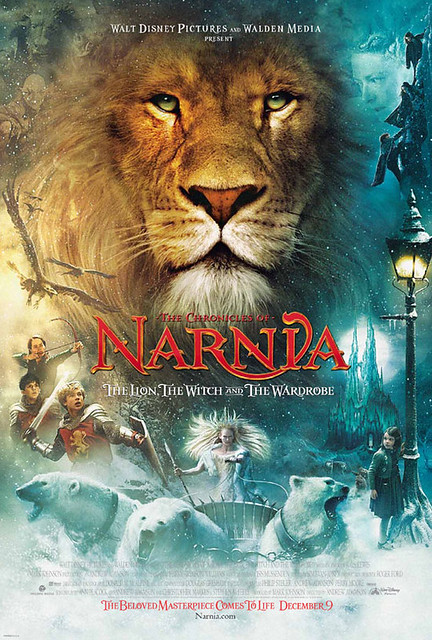
An example of this is C.S. Lewis' The Lion, The Witch and The Wardrobe.

For those of you who have read (or watched) the book or movie and are even somewhat familiar to Christian themes, the allegory is pretty clear: with some spoilers to those of you who haven't read it, the sacrifice and rebirth of Aslan (the lion and king of Narnia), who agrees to sacrifice himself in order to save Edmund (one of the main characters), then comes back to life later in the story very clearly mirrors the death and resurrection of Jesus in the Bible, who sacrificed Himself in order to atone for the sins of man, then rose again three days later.

There are also various examples of symbolism in J.K. Rowling's Harry Potter, one of which fellow writer tweep Susan Sipal writes about much more eloquently than I could in her post Symbolism in Writing: Shell Cottage: A Respite from the Storm

While not an absolutely necessary element, writing symbolism into your story is a fantastic way to deepen the meaning of your novel and tie everything together. Not all of your readers will pick up on every element of symbolism that you write into your novel, but those who do will appreciate the nuances in your work.

Do you write symbolism into your story? What examples can you think of from a book or movie?

Is Your Idea Novel-Worthy?

Photo credit: qisur on Flickr
When it comes to ideas for a novel, there are many different approaches that writers take. Whether it's keeping a notebook or box full of snippets of ideas that are written down regardless of how much sense they make or how ridiculous they are, or storing ideas away in your mind while working on a WIP, every writer has his own method of idea keeping.

Many writers will eventually find that they have more ideas than they know what to do with. Their idea box is overflowing with scraps of paper begging to be remembered or their brains are bursting at the seams with stories that could be interesting to pursue.

But how do you know if any of those ideas are novel-worthy?

I came across this tweet the other day via @4KidLit that I thought summed it up particularly well:


It really is that simple.

Writers will encounter thousands of ideas within a lifetime—snippets of an image, fragments of a character, a haunting scene, interesting line of dialogue or intriguing thought—and no one has enough time to turn every idea into a novel. But the truth is, not every idea has enough substance to be turned into a fully plotted story, and that's ok.

Because the ideas that are novel worthy demand to be written. While other ideas fade with time, a novel-worthy idea will haunt you day and night. Rather than disappearing with time, it'll grow and develop into something complex, something that can't be ignored, something that has to be written.

Those are the ideas that you need to pursue.

Writing a novel is tough. It takes months, even years to turn a first draft into a polished, readable story and throughout that time if you aren't passionate about your idea, the novel will never reach completion. Writing a novel is an exhausting thing, which is why those other ideas, those non-novel-worthy ones will fade with time. Because if the idea hasn't fully captivated the writer, there's little chance it'll contain the spark it needs to captivate the reader.

So next time you're unsure whether or not your latest idea is novel worthy, give it some time. You'll know it's right when the idea refuses to leave you alone.

Writers: how do you tell if an idea is novel worthy? 

How (Not) to Be a Successful Blogger

Photo credit: marsmet544 on Flickr
While the Great Blogging Bubble is a thing of the past, as every single one of you reading this can testament, blogging is still very much a thing that is alive and well. New writers take up the call to online journaling every day, while others jump ship, leaving their blogs to gather virtual dust online (or, alternatively, obliterating them altogether).

So it is little surprise that many surf the interwebz to try to glean insight as to what makes a blog popular, how to gather more traffic for their new online venture and how, ultimately, to be a successful blogger.

Well, my fellow web-surfer. You have come to the right blog.

From the mysterious blast of ingenious insight that brought you the likes of How to Write a Masterpiece and How (Not) to Write the Perfect Query Letter, I bring you ten secrets to being a successful blogger:

10 Golden Rules to Blogging Success*: 
  1. Write ridiculously long sentences and paragraphs and actually it’s best if the post is one hugenormously long paragraph (no shorter than 1000 words because really, who wants to waste their time reading a tiny post?) because everyone knows that the more words you fit into a sentence the better the sentence is and also, no one wastes their precious time skipping from one paragraph to the next anymore so you might as well fit whatever you can into one single large paragraph (or title, if you’re that skilled). The heading basically says it all, I think.

  2. LIGHT COLORS ON A DARK BACKGROUND—OOH IT’S SO PURDY. Without pretty, eye-popping colors to give your readers the migraine of a lifetime, your little blog will never be remembered.

  3. ALSO EVERYONE LOVES CAPS LOCK. WHAT’S THE POINT OF EVEN TURNING CAPS LOCK OFF ANYWAY HUH? PLUS IT’S COOL BECAUSE SUDDENLY YOUR READERS WILL READ WITH AN EXTRA-LOUD VOICE IN THEIR MINDS SO IT’S KIND OF LIKE YOU’RE EMPHASIZING YOUR POINT WITH YOUR LOUDNESS. READERS LOVE LOUDNESS.

  4. Comment on other people’s blogs about your blog. There’s little point in commenting if you don’t leave a link to your blog, anyway.

  5. Ignore your blog comments. It’s not like your readers actually appreciate when you take the time to answer their comments, so why bother?

  6. Change up your blog topics. Everyone knows your readers will get bored if you start doing that thing where you consistently write about one topic.

  7. Only post once or twice a year. Too much more and you might clog up your subscribers’ feeds, which in turn could scare them away.

  8. Proper grammar and spelling is conforming. aND ur nawt a cuhnformisst R U?

  9. Only post about your one-eyed gerbil, Alfredo. Because, as I’m sure you already know, the one-eyed gerbil is the international mascot of the blogging world, so no one really wants to hear about anything else, anyway.

  10. Don’t put any thought into the design of your blog. No one cares about the design; they just want to know about Alfredo.

And just like that, the secrets to gaining a raving horde of fans for your blog are yours. Use them wisely.

* = Please don't actually do any of this. Please? 

What blogging secrets would you add to the list? 

On Writing and Waiting


Photo credit: mynameisrichard on Flickr
In response to my post on whether or not writers should delay their gratification, I received many interesting and thoughtful answers. A common theme I noticed, however, was that most of us agree there isn’t a straightforward one-size-fits-all answer.

It goes without saying that when it comes to things of the writerly nature, answers will vary depending on the writer/ manuscript/ season/ day of the week/ what you ate for breakfast/ how many ferrets you have (ok, maybe not those last few). But delayed gratification is interesting because, for writers at least, it’s mostly inevitable.

Regardless of whether you choose indie or traditional publishing, a lot of work goes into a novel before you get anything in return. Writers spend years honing their skills before anything they write is anywhere near publishable. Writers work without pay and give up their precious free time to work on that novel/ screenplay/ poem/ short story/ what-have-you.

So at the beginning of a writer’s journey, at least, there is no escaping delayed gratification.

The question we truly face as writers, with the rise of indie publishing upon us, is how long to continue to delay that gratification. How long, for example, should you edit before querying agents or uploading to Amazon?

This is where matters start to get tricky. There isn’t a magic number we can point to and say after x-amount of hours, words or books you’re ready to be published (although there is a theory that in order to master any skill or subject, you have to spend 10,000 hours developing said skill, but that’s another matter entirely).

The best thing writers can do is practice some patience while honing their skills. Take your time to perfect your story, to learn about the craft, to become a better writer. Make publishing decisions carefully and take all the time you need to make the decision that’s best for you and your career as a writer.

Keep calm and carry on. Seriously. Whenever you start to feel rushed, take a deep breath and remember that time is working for you. Don’t rush the process. 

What do you think? Is delayed gratification just part of the process? Can we (or should we) try to avoid it? 

Should Writers Delay Their Gratification?


Photo credit: its caleb on Flickr
Not too long ago, we lived in a time where writers were forced into a scheme of delayed gratification. We would hole up in our writing spaces for hours, weeks, months, even years slaving over a novel while giving up time with our families/ friends/ video games/ television shows/ extra-curriculars in order to finish the darned book. We would then submit to agents and maybe, if it was the right time, months later we’d have representation. After that—editing, then submission to publishers, more editing, until the glorious book contract sat on our kitchen countertops, waiting to be signed.

After that, eventual publication. You know, in a year or two.

Now things are a little different. Although the delayed gratification traditional publishing scheme is certainly still an option, it is now just that—an option.

With the advent of upload-now-insta-publish indie publishing upon us, suddenly it is up to us—the writers—whether or not to delay the gratification of being published. The power, my friends, is in your hands.

Now that’s not to say that indie authors are avoiding delayed gratification altogether—there’s still the matter of writing the book which is anything but instant, but from there writers have a choice: do you publish now? Spend a couple months (or years) editing? Go the traditional route?

Why delay our gratification at all?

I don’t need to tell you that the temptation for instant gratification is there—most of us know by now how to prepare and upload a book onto Amazon, Barnes & Noble and Smashwords and even if you don’t, it’s not difficult to find out how. But should you?

Friday’s post will cover my thoughts on delayed gratification, but first I want to hear from you.

What do you think? Should writers choose to delay the gratification of publishing? What are the benefits? The consequences? Share your thoughts in the comments below

How to Plot Without Plotting

Photo credit: jepoirrier on Flickr
Whether you’re a plotter or a pantser, most of us can probably agree that it’s generally a good idea to have some idea of where you’re going before you start a novel. Even if the idea is as vague as cyborg falls in love with anti-technological hippie girl or when marshmallows attack, it’s necessary to have some form of direction before you launch into the enormous project of writing a book.

So I’ve talked in the past about plotting with flashcards, and this is even quicker and easier than that.

For those of you who follow the amazing Nathan Bransford’s blog, you might have seen this post two years ago on how to write a one sentence pitch. Combined with some fantastic advice from various plot posts and writing books, I’ve found the one sentence pitch to be a great tool not only for summarizing your book to friends, family and potential agents and publishers, but to give you a focus right from the beginning of the novel-writing stage.

For those of you who haven’t heard of the one sentence pitch before, it’s basically what it sounds like—your book summarized into a single sentence that, according to the wise Nathan Bransford, contains the inciting incident, obstacle, and the quest (for more detailed information, definitely check out his post).

The entire plot summed up into a single sentence.

You can find these pitches at the very beginning of many novels on the same page as the copyright information. Here are some examples:

  • The Hunger Games (Suzanne Collins): “In a future North America, where the rulers of Panem maintain control through an annual televised survival competition pitting young people from each of the twelve districts against one another, sixteen-year-old Katniss’s skills are put to the test when she voluntarily takes her younger sister’s place.”

  • Shatter Me (Tahereh Mafi): “Ostracized or incarcerated her whole life, seventeen-year-old Juliette is freed on the condition that she use her horrific abilities in support of The Reestablishment, a postapocalyptic dictatorship, but Adam, the only person ever to show her affection, offers hope of a better future.”

  • Dark Inside (Jeyn Roberts): “After tremendous earthquakes destroy the Earth’s major cities, an ancient evil emerges, turning ordinary people into hunters, killers, and insane monsters but a small group of teens comes together in a fight for survival and safety.”

Now although these single sentence summaries are often developed long after the book was written, it can be a very powerful plotting tool if they’re created before you begin writing. The one sentence pitch gives you the full scope of the story before you start writing, while still allowing for a great amount of creativity between the lines. For pantsers, it means laying down basic groundwork to build off of without restraining any spontaneous creativity and for plotters it means establishing the nuts and bolts of the story in a single fluid sentence.

It’s an effective tool for any type of plotter.  

So what do you think? Have you ever tried using the pitch as a plotting tool? 

Why the First Draft is Usually Awful (And Why it's Ok)


Photo credit: readerwalker on Flickr
If you've been a writer for any amount of time, you probably know that the first draft is not exactly perfection—in fact, it's usually on the way other end of the spectrum somewhere between embarrassing and I’m-going-to-hide-this-away-forever.

If you're a writer, you know that writing the first draft can feel painful. The words that appear on the page don't match up with the images in your head. The epic story you dreamt up, when written, falls flat. Your witty, flawed, fantastic characters border on stereotype and you're slightly terrified no amount of writing will fix it.

You start to question whether you're cut out for this writing thing, after all.

Good news, is no one expects perfection from the first draft—far from it. You see, I read something not too long ago that really stuck with me (sadly, I can't find the link despite my futile efforts to dig it up) and it's something I think is important for every writer to remember.

The first draft isn't meant to be perfect, friends, because the first draft is much more for the writer than it is for the reader.

Allow me to explain.

Regardless of whether you're a pantser or a plotter or somewhere in between, the first draft is the place where the writer learns the story. It's where you get to know your characters, where you discover the world you're creating, where the plot starts to really form in front of you. While writing the first draft, you really get to know the story and everything it encompasses and chances are by the end of the draft, you know a lot more about your story than you did when you first began writing it.

So naturally, the first draft is going to be a little scatter-brained. There will be plot holes and the characters will be far from perfect and the writing, well...it's usually not your best.

But that's ok.

The point isn't to write a perfect first draft—the point is to learn about your story. The point is to get to know your characters and to work out the plot so that you can go back and really flesh it out. The first draft is the skeleton—the basic idea of what the final draft is going to be.

The meat of your story will be developed through revisions.

And that's not to say that you should expect your second draft to be perfect, or even your fourth or final draft, for that matter, but with every revision you make, with every passage you re-write, you'll get closer to that completed story—the one you originally envisioned when you set out upon the enormous task of writing a novel.

And that terrible first draft experience will be entirely worth it, after all.

Have you ever been discouraged by a first draft? What helped you get through it?
Related Posts Plugin for WordPress, Blogger...