Reviving Characters: Should It Be Done?

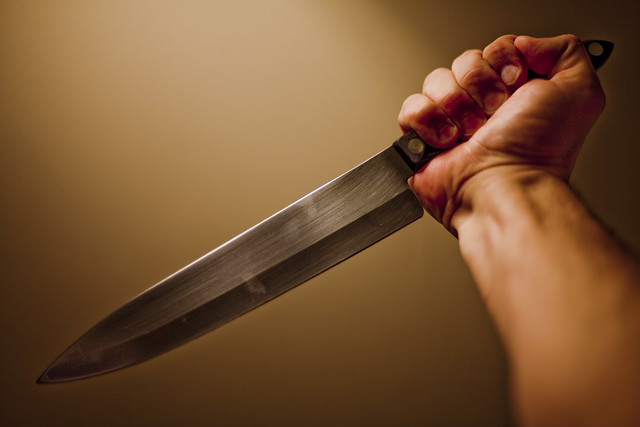
Photo credit: Superburschi on Flickr
Now that we've discussed how to kill our characters off, I'd like to talk about a related (and less depressing) issue: bringing our characters back from the dead.

I'm sure most of you have encountered this phenomena in a book—and if you haven't, you almost certainly have seen it in a movie: the protagonist (or an otherwise beloved character) is presumed dead, then—TA DA!—by some miraculous feat/magic/loophole/bending of time and space the character turns out to be alive.

I sort of have mixed feelings on the whole just kidding, he's not dead thing. On one hand, it usually turns out to be either a character that we absolutely adore, so I'm normally pretty happy that said character survived, if only because the alternative is slightly horrible. On the other hand, the technique sometimes feels like cheating.

That's not to say that every character revival ever written is cheating, and so it should never be used—I think when handled well, character revivals can be a great way to play with the reader's emotions. However, if you aren't careful, character revivals can start to cheapen death within the story.

What I mean is this—when the character revival trick is overdone, readers start to expect it. Future character deaths become less meaningful because readers begin to anticipate that chances are, the character will be revived later on. It's not permanent—it doesn't mean anything.

And even if the revivals aren't overdone, it's very easy for a character to start to feel invincible after cheating death. After all, if he can't die, that's one less thing for the reader to worry about.

I'm not saying that I don't enjoy the occasional character revival (particularly when they save my favorite characters), nor am I saying that I've never (or never will) write a character revival—as I said earlier, I think there's a time and place for them and that they can be effective, when done carefully.

But as writers, it is something we have to be careful with if we don't want to risk cheating our readers.

So what do you think? Should character revivals be used? Do you enjoy reading or writing them, or do they make you feel cheated? Don't forget to share your thoughts in the comments below!

How to Kill Characters With Impact

"You are writing children's books. You need to be a ruthless killer." —J.K. Rowling (via this fabulous interview on BBC) 
Photo credit: bionicteaching on Flickr
A somewhat morbid topic, today.

Depending on the genre, it's not uncommon for writers to begin a novel knowing that not all characters will survive to see the final pages. Writing an effective character death, however, is more than just describing how they meet their unfortunate end—you have to make the readers care. But how?

Let's take a look at some examples:

SPOILER WARNING: If you haven't read any of the below books (or seen their movies, for that matter), please skip over their examples, unless you'd like to see some major plot spoilers.

  • The Hunger Games (Suzanne Collins): Yes, I know I use this example a lot, but it was particularly fitting for this post. Needless to say, a lot of characters die over the course of The Hunger Games trilogy, and some character deaths left more impact than others. The first few unnamed tributes who die around the cornucopia at the very beginning of the hunger games have forgettable deaths—Katniss doesn't even know their names, and as horrible as it sounds, when they die the readers don't particularly care. This is the case for many of the less important tributes that Katniss isn't emotionally connected with.

    But then Rue passes away, and everything changes. Rue's death matters to Katniss, and so it matters to us. She's more than just another tribute—Katniss had taken a protective role over her, so when Rue dies, Katniss is devastated, and it certainly does not go forgotten amongst the readers.

  • The Fellowship of the Ring (J.R.R. Tolkien): Like The Hunger Games, to say that a lot of characters die throughout the course of the Lord of the Rings trilogy is a bit of an understatement. In books like these with a lot of character deaths, it is especially important to make certain deaths matter. Near the end of The Fellowship of the Ring when Gandalf is pulled into the abyss of the cavern (and thus, supposedly dies), he leaves the fellowship deeply impacted by his absence. Gandalf was the wisest and in many ways strongest of the fellowship, so when he is lost, the fellowship loses a great deal of hope with him. His death matters.

  • Harry Potter (J.K. Rowling): There were quite a few powerful character deaths throughout the course of the Harry Potter series, but the one that affected me the most was that of Sirius Black. Sirius was by no means a perfect godfather to Harry, but he represented hope for change and a better life for Harry. For the first time, Harry had the opportunity to live away from the Dursleys, to live with a wizard who understood him, cared for him and actually valued him. Even more so—Sirius was a link to the parents that Harry never knew.

    So when he died, readers were stunned. Harry was entirely ripped apart by Sirius' death, and even J.K. Rowling admitted that she cried after writing it. Why? Because his death left great emotional impact—it mattered. 

I think the pattern here is clear—reader cared about these various character deaths because their deaths left an impact. These weren't arbitrary characters— they were important to the protagonists of their respective novels, and thus important to the readers.

The key to making your readers care about a character death is a) to choose characters who have connected with the readers and b) make those deaths mean something—not just to the plot, but to the surviving characters.

If it matters to the protagonist, chances are it's going to matter to the readers. Allow your character deaths to leave a large impact and your readers will remember it.

What do you think goes into an effective character death? Any tips for writing the end of a character?

Discussion: Should Chapters Be Getting Shorter?

Photo credit: Siddy Lam on Flickr
While discussing the tendency of e-readers to influence people to buy and read more books, one of you wonderful readers asked an interesting question, namely, whether or not long chapters are becoming less desirable in a world with decreasing attention spans.

I found this question particularly interesting because I hadn't thought much about the connection between decreasing attention spans and chapter length, but I do think the two are somewhat related.

Like many things in the writing world, I think the answer to the question largely depends. You see, I don't believe that there's a magic one-size-fits-all chapter length that works in every situation. In a sense, chapters are like paragraphs in that their length depends largely on their content.

Yes, decreasing attention spans are an issue, but I think they're less correlated to the physical length of the chapter and more to the writing itself—most readers, I imagine, would have little problem reading a thirty-page chapter as long as the writing keeps them interested. On the other hand, a five-page chapter could be unbearable if the story is boring and the writing simply doesn't grab the reader.

In my experience, at least, I've found that chapter length is often influenced by the style and tone of the book—some books are filled with fifty+ short 2-10 page chapters, while others are divided into significantly larger (and fewer) sections. Furthermore, I suspect that average chapter length is also probably affected by genre, although I unfortunately wasn't about to find any statistics on that online (although if you find any, please feel free to leave me a link in the comments).

So what does this mean for writers?

While working on your story, I would worry less about chapter length and more about keeping the chapters interesting. Chapter length tends to come somewhat intuitively to writers—we often have a good idea as to when it's time to start a new chapter, and when we get it wrong, there's always editing. If your story calls for longer chapters with many sections within the chapters, then so be it. Short attention spans don't matter as long as you keep the reader interested.

Those are my thoughts, but now I want to hear from you: do you think long chapters are becoming less desirable over time? How do you decide how long to make your chapters?

On E-Readers and Reading More

Photo credit: spykster on Flickr
Before getting an e-reader of my own, I'd read online that surveys showed that people with e-readers had a tendency to buy and read more books than people who read only print books.

It's relatively easy to understand why—e-readers capitalize on impulse buys and the ability to download a book in seconds rather than driving to the nearest bookstore or waiting for a print book to be delivered to you certainly makes the whole book-buying process much faster and more convenient. Combine that with the (usually) lower prices of e-books, and it's not all that surprising that people with e-readers tend to buy and read more than those without.

Over the course of the last five years, the most I'd ever read in a year was eleven books (pitiful, I know). Now that I've had an e-reader for nearly a year, however, I've found that the survey results have proven true for me as well: the year isn't out yet, and I've already read nearly nineteen books—ten (and a half) e-books and eight print.

While I know for many of you, eighteen books in a year is nothing, having an e-reader has made a huge difference in the amount I read—in fact, I've already doubled the amount of books I read last year.

I'll admit I was hesitant about trying out e-readers—I even wrote a post about my reasoning behind my hesitation before I tried it out. I worried about eye fatigue and had thoughts like it won't be the same and I talked about the texture of pages and the smell of a new book.

But nearly a year later, I've come to realize it's not supposed to be the same. Yes, reading a print books feels entirely different from reading an e-reader. Yes, you lose some nuances in the print reading experience—the feel of the paper, the weight of the book, the rustle of pages and satisfaction of adding a book you've read to your bookshelf. Those things don't exist with e-readers.

But I don't believe that you have to choose between print or e-books. I don't believe that it's impossible for e-books to thrive in a world where print books are popular. I don't believe that it has to be a one or the other mentality—the two can, and should exist side by side.

For now at least, e-readers make it easier and more convenient to read—and as a bonus, they encourage people to buy more books than they might have otherwise. And as a writer, that sounds pretty great to me.

What do you think? If you have an e-reader, have you found that you're reading more than you did without it? If you don't have an e-reader, why have you held back?

Discussion: How Do You Get to Know Your Characters?

Photo credit: This Year's Love on Flickr
Easily one of my favorite parts of writing is getting to know new characters—whether it's learning about my protagonist from page one, or becoming enamored with a minor character who surprises me, meeting these characters throughout the writing process never fails to excite me.

For me, the process of getting to know my characters happens over time. It starts with their conception: usually while brainstorming for main and major characters, or occasionally spontaneous existence for minor characters. Usually at this stage I know only the basics about the characters: generally personality traits or circumstances that are a significant part of who they are and sometimes a few physical characteristics. For those spontaneous minor character cases, at this stage I usually know even less about them.

From there I try to think less about general characteristics (i.e.: hair color) and more about what it is that makes them unique. I look for personality quirks, unusual physical markers and flaws. I want to know their secrets—things that I might not necessarily reveal to the readers, but will help me understand them better. Memories, fears, dreams, weaknesses—I want to know it all, regardless of whether or not I plan to actually use the information explicitly in my WIP.

This is where character profiles can become extraordinarily useful. While I admit I don't use them as often as I could (and probably should), profiles and character sheets are a great way to keep track of and organize information about your characters—from the basics to the nuances of their personalities and backgrounds. For a particularly thorough character worksheet, check out this post from Martina Boone.

With or without a character profile, after the building blocks of the character are completed, I tend to find that much of the rest is discovered while writing the story. Everything from unexpected quirks and fears, unplanned tendencies and mannerisms and favorite words often reveal themselves as the characters progress through the story. Pre-planned aspects of my characters sometimes disappear, while new ones develop. This process continues well beyond the final draft—characters often continue to surprise me during second and third drafts and even later revisions.

So while that's the gist of my character development process, I'd like to hear from you: how do you get to know your characters? Do you use worksheets or is your process more organic? I'd love to hear your experience.

Writing Tip: Explore Alternate Universes

Photo credit: Paumadou on Flickr
Very rarely is anything—writing-related or otherwise—done perfectly the first time. Sometimes, while writing or reading a WIP draft, you'll come across a scene that feels off. Your protagonist isn't reacting properly, or a decision she made doesn't seem right, or the outcome of that fight seems less effective than when you originally wrote it or dreamed it up.

Sometimes, it's not the writing itself that's off—it's the plot behind it.

When this happens, a writer is faced with many options: come back to it and try to fix the problem later, fix the reasoning or motivation surrounding the decision or outcome, or rewrite the plot point entirely.

The latter tends to sound least appealing to writers—just the word "rewrite" often makes us want to curl up with our manuscript in a corner and hide. But when the plot itself is the issue, it's often helpful to consider rethinking the plot point that needs adjusting, then rewriting it rather than reliving what you already wrote.

What I'm saying is sometimes it's helpful to explore alternate universes within your WIP.

Let's say your protagonist gets in a fist fight with a rival or another character he dislikes. In your current version your protagonist gets hit a couple times, then knocks the rival out, but the fight goes too quickly and it doesn't have much impact. Rather than rewriting the scene as is, you might want to try exploring other versions of the fight.

For example:

  • Version A: Your protagonist goes in believing this will be an easy fight, starts off strong, then gets hit hard enough to knock him off balance (or injure him) and the rival gets the upper hand. 

  • Version B: Your protagonist gets hit a couple times, then overwhelms the rival. Rather than giving up, however, the rival pulls out a knife. 

  • Version C: Your protagonist wins the fight, then the rival attacks him from behind as he walks away. 

  • Version D: Your protagonist wins the fight, but goes overboard and injures the rival more than intended. 

These are only a couple of options, but the point is this: when something in your story isn't working, you can always try out other possibilities. The best part is if you decide you don't like the way your alternate universe experiment turned out, you don't have to include it in your WIP. If you do decide you like the way your AU turned out better than the original, however, then you now have a more dynamic scene.

It's a win-win scenario, and it's one that I hope you experiment with.

Have you ever tried this type of rewriting? If so, how did it turn out? If not, what do you do to fix unremarkable scenes?

How (Not) to Be a NaNoWriMo Champ

Photo credit: rachel a. k. on Flickr
With the excitement for NaNoWriMo surrounding the writing world, and preparations for thirty days of mad writing beginning, many of you wonderful writers are probably now wondering what it takes to be a NaNoWriMo winner, so you can win some fantastic prizes and have 50,000 new words two months from now.

So without further ado, I present to you the infallible keys to becoming a NaNoWriMo champ.

Ten Foolproof Secrets to Winning NaNoWriMo*

  1. Don't come up with your new WIP idea until November 1st. Where's the fun in knowing what you're going to write about beforehand? 

  2. Don't think about daily word count goals. Those are for amateurs who strangle themselves with over planning and actually try to write every day (I mean really, who writes every day? Yeesh). 

  3. Write only when you feel inspired. You don't want to waste your precious time writing uninspired (and thus, uninspiring) junk, do you? I didn't think so. You writing should be beautiful and life-changing, but that kind of genius only comes when you're inspired. 

  4. Listen to inspiring music like Pavarotti and Gangnam Style all month long. Preferably on a constant loop. 

  5. If you don't like it—rewrite it. It doesn't matter if you have to rewrite it a hundred times before you move on to the next chapter, just make sure it's perfect the first time around. Otherwise you'll have to edit later, and you're too talented for editing. 

  6. Live off of Starbucks and/or Red Bull. And nothing else. This is the food of the gods. Don't corrupt your body with non-writerly foods like fruits and—*shudder*—vegetables. 

  7. Ignore the other writers. It's National Novel Writing Month not National Make Friends With Everyone Who is Writing a Novel Month. 

  8. Choose every word carefully. Remember, while everyone else is pounding out 50,000 words that they'll have to rewrite later, you're writing a masterpiece. 

  9. Polish, polish, polish. It has to be PERFECT. The essence of perfection, these words. 

  10. When you realize your writing is terrible—start over. Don't settle for anything less than writing deserving of the Nobel Prize. If that means starting from scratch, so be it. Everyone else may have 50,000 words at the end of the month, but you'll have the beginnings of the book that's going to make you a millionaire. 

*Like the rest of my How (Not) to posts, these "tips" are not meant to be taken seriously. If you do the opposite of most of these things, I'm sure you'll do just fine during NaNo. Good luck!

Now it's your turn: what so-called "tips" would you add to the list?
Related Posts Plugin for WordPress, Blogger...