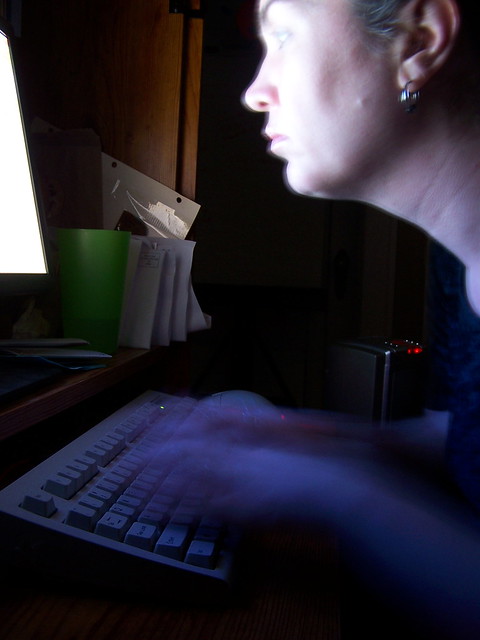
Why Evernote is Great for Writers

Photo credit: Johan Larsson on Flickr
We live in a world inundated with technology. Laptops, desktops, tablets, e-readers, iPods and smartphones have become a part of our daily lives, and as these various devices become more accessible and economical, the trend will only continue.

Chances are you probably have at least two of the devices I've mentioned above, which brings up an interesting situation for writers who like to use these devices to write on the go—how to sync your work across devices.

There are many different methods and applications—both easy and cumbersome, free and paid—to help people synchronize their work or share documents across their devices, or from a public computer to a personal one. My method of choice, as you could probably guess from the title, is Evernote.

For those of you who don't know, Evernote is a note-taking application with free storage up to 60 MB a month for computers, tablets and smartphones, and it's quickly become one of my favorite note-taking apps.

I know I don't normally talk about technological things here, but with NaNoWriMo less than a month away, I'm willing to bet many of you are preparing for the big event with brainstorming or plotting or whatever it is you like to do in anticipation of a new WIP—and Evernote is a fantastic tool for recording and organizing those preparations. And for the record, I'm not being paid to write about Evernote —I'm just sharing this tool with you guys because I enjoy using it.

So why is Evernote so great for writers? One word: synchronization.

Most writers are not just writers, and even when individuals do write for a living, there are still life things that pull them away from the computer, and thus, from their writing. People often suggest that a writer should always carry a small notebook around so that they can record ideas and inspiration that hits them while they're away from home, and it occurred to me recently that you don't necessarily need to carry around a physical notebook as long as you have a smartphone, tablet, or some other portable device that you carry with you throughout the day.

You see, Evernote can act as that notebook—it's a virtual storage bin accessible anywhere as long as you have a portable device, and even if you don't, the website version is still accessible on any computer with an internet connection, public or otherwise.

So maybe you get up early to get some brainstorming in before you leave for work or school or whatever engagement you have for the day, but you don't finish as much as you would have liked. If you write your brainstorming in Evernote, you can access it later and write more while you're away from the computer. The beauty of it is when you return home, the note will synchronize automatically, so your updates are there to continue off of at home.

It's a wonderful thing, and it's helped me tremendously with completing blog posts, organizing notes and keeping track of various ideas for WIPs and otherwise, all accessible to me away from my computer.

It's simple, it's easy, and I can't recommend it enough to writers. If you haven't already, I hope that you check it out.

What tools and applications do you use for writing tasks, on the go and otherwise? Any recommendations?

NaNoWriMo Discussion: Are You In?

Photo credit: Sashala on Flickr
Incredibly, there are now officially less than thirty days until November, which means, of course, that NaNoWriMo is less than a month away.

Confession time: I mentioned this last year, but I haven't ever done NaNoWriMo. I've written a book in a month before, and I've definitely written 50k in a month more than once, but November tends to be a notoriously busy time for me, so I never accomplished either of those feats in the month of November.

As a writer who has never participated in NaNoWriMo, I can't talk about the event from experience (obviously), but only from what I've observed. From what I've seen, NaNoWriMo seems to be a fantastic opportunity for writers to get a significant amount of writing done with the encouragement and excitement of thousands of other writers also working on a project at the same time.

Now, I may not be able to talk about NaNoWriMo from experience, but I can tell you that writing with encouragement from a supportive community of writers not only makes the sometimes grueling experience of writing a novel much more enjoyable, but it can also help motivate you to write faster, longer and more often. As a bonus, when you finish your WIP, there are writers out there happy to celebrate with some virtual confetti and balloons with you.

Getting back to NaNoWriMo, from what I understand the celebration is a lot more than just virtual confetti. Last year some of the prizes for those who completed 50k within the thirty days got 50% off of Scrivener and five free paperback copies of their book from CreateSpace as well as other goodies.

In short, NaNoWriMo is a month long event that I feel could be highly beneficial to writers of all skill levels, regardless of whether or not you actually complete the 50k. Don't underestimate the power of an encouraging community and extra motivation to write—sometimes it only takes a little push to inspire you to create something great.

So now I turn the discussion to you, fellow writers. For those of you who have done NaNoWriMo in the past, what was your experience like? For everyone else, will you be doing NaNoWriMo this year? Why or why not? Share your thoughts in the comments below!

Writing Danger: Don’t Create a Cliché

Photo credit: CharliePev on Flickr
During last week's discussion of whether or not cursing is acceptable in YA novels, there was one point that came up repeatedly that I thought was particularly important, namely, overuse of particular words and phrases.

Naturally in the discussion, the words referred to were curse words, but I think it's an important point nonetheless that goes beyond cursing in literature, because any word or phrase repeated too often starts to become a cliché.

Most writers will at some point or another realize that they have a sort of crutch phrase, description or word. Sometimes it varies WIP to WIP, other times it's the same word or phrase that slips it's way into every manuscript you write. Whatever the case, it's not an uncommon plight for the writer.

And when you think about it, that kind of issue doesn't sound so bad. Sure, maybe you repeat a word or phrase a little more than probably necessary, but is that really such a sin in writing?

In short? Yes.

The problem with creating these sorts of clichés is that they don't go unnoticed. You see, writing is a tricky thing because your goal as a writer is to create complete images, worlds, characters, and scenes without bringing attention to the words actually stringing the story together. You goal as a writer isn't to rub oh, look at my gorgeous writing in the reader's face—it's quite the opposite, in fact. You want to tell a story with invisible words.

So when you create a cliché in your writing with a particular word or phrase, you're bringing attention back to the words themselves. The overused phrase becomes distracting, because even if only for a second, the reader will come across the words and think, hmm, I've seen that a lot. For a second, the reader has left the story and noticed the writing.

This isn't something you necessarily need to worry about while first drafting—in first draft mode you should be solely focused on getting the words down, regardless of how many times you've repeated a particular phrase. When you're editing, however, keep a sharp eye for potential overused words and phrases and cut them out before your readers notice your words.

It's not a particularly difficult fix (the find function of most word processors is a beautiful thing), but it's definitely one worth doing.

Have you ever overused a word or phrase? How did you amend the issue? Share your experience!

On Being an Unpublished Writer: Enjoy it While You Can

Photo credit: Martin Bekkelund on Flickr
If you're a writer, then you've probably dreamed of being published. Whether your wildest dreams involve your debut novel being chosen for Oprah's Book Club or reaching Amanda Hocking-like indie publishing success, I'd say that 99.9% of writers have probably at one point or another have dreamed of making it big with their writing and finally earning that coveted title of "published."

The why is obvious—we all want to be successful, and to be successful doing something that you love is even better, so it's only natural that writers would find themselves daydreaming about their book becoming a New York Times or Amazon bestseller. 

But becoming published isn't something that you can do with a snap of your fingers—even independent authors have to take the time to write and edit their book, as well as deal with proper formatting and other issues of the like. On top of that, because developing your writing skill enough to reach the level of ready for publishing takes a lot of time and hard work, most writers will spend years working unpublished before they see their dreams come true. 

Time as a unpublished writer can be difficult—you put a lot of effort into something with very little reward, recognition or monetary feedback in return. Unpublished writers are rarely just writers—they're parents, students, employees, etc. and just finding the time to sit down and write can be a challenge, so it's no wonder that we like to dream of a published future. 

But while making our way through the daily grind, we often forget to appreciate our experience now. We forget that being an unpublished writer has it's pros as well, because while most of us want to eventually become published, being a published writer isn't much easier than being an unpublished one. 

What do I mean by that? Let's take a look at some of the things published writers have to do: 

  • Write under a deadline. The published writer lives deadline to deadline, book to book. Even after the grueling process of fully completed a novel, there's always another book to write with editors, agents and readers all waiting for you to meet the next deadline. 
  • Edit under a deadline. And the same goes for editing. Meeting deadlines are not optional for published authors if they hope to be successful. 
  • Market their book. Regardless of whether you're an independent or a traditionally published author, some aspects of marketing the book falls on the writer's shoulders. How much of it will likely depend on the route the writer takes and the publisher they end up with, but avoiding it entirely is impossible if they want their book to sell. 
  • Write author bios, synopses, back cover copies, pitches, etc. Even when the published author has finished writing and editing the book, there are pitches and synopses of various degrees that need to be completed. And every writer loves writing synopses. 
  • Attend publishing/book promotion events. Whether it's BEA, a panel at Comic Con or any number of book tours, published authors (especially traditionally published ones) have to attend promotional events throughout the year to keep up with the publishing industry and (again) market their book. 
  • Work. Just because an author is published doesn't mean writing is their only job. Many authors, both traditionally and independently published, work a full-time job in addition to juggling the responsibilities that come with being a published author. Time management isn't any easier just because your book is on sale.

Now don't get me wrong—I'm not saying that being a published author is awful, but there's something nice about being able to work off a deadline—to being able to write whatever you want, whenever you want just because you want to, rather than because people are waiting for your work. There's a freedom to being able to learn at your own pace and not suffer serious consequences if you can't get to your latest WIP for a few days, or weeks, or however long you need. 

Yes, we all hope to one day be published, but don't forget to enjoy the freedoms of the unpublished writer while you can. 

What do you think? Am I overstating the pros of being unpublished? Share your thoughts in the comments below!

How to Give a Fair Critique

Photo credit: Nic's events on Flickr
Now that we've talked about why critique partners are so important and how to find and choose critique partners that work well with you, I thought it important to talk about the other side of the coin—giving critiques.

You see, while receiving critiques is essential to the learning process for writers, giving critiques is just as important, because giving critiques teaches you to pay attention to things that do and don't work in other people's writing. As a bonus, what you've learned from the critiquing experience you can then apply to your own writing, so in a way you're teaching yourself how to improve your craft.

Before you delve into the realm of giving critiques however, it's important that you remember a few things so that you give a fair and constructive critique.

  1. Establish the rules first. Not all critiques are created equal. Sometimes the writer is looking for more of a polish or copyedit—and in those cases you want to pay more attention to sentence structure, word choice, etc. Other times it's about the plot, or character development, or pacing, and in those cases it's more important to pay attention to the overall story rather than honing in on the misplaced commas. Before you start the critique, talk to your CP about what kind of critique they're looking for, so that you know how you can be the most helpful. 

  2. Read carefully. Reading for a critique is different than reading for pleasure. That's not to say that you can't enjoy the writing while you critique (and in fact, I hope that you do enjoy it), but it's important that you pay attention to whatever the writer wanted feedback on. 

  3. Search for the good and bad. A good critique is balanced—it's not helpful if all you do is tell the writer how wonderful their writing is, but neither is it constructive if all you do is rip their work apart without mentioning a single redeeming quality. Remember: they're critiquing your work, too (or at least, they probably will be in the future), and if you want this partnership to continue, both of you need to be fair in your critiques. 

  4. Be kind. Don't misunderstand me—by "be kind" I don't mean "don't talk about the bad stuff." Your number one goal is to give a fair critique that talks about the beautiful and ugly bits of the writing. By "be nice" I'm referring less to what you say and more to how you say it. Regardless of whether or not you know your CP in person, there's a writer on the receiving end of your critique—an actual person with feelings who is probably just as anxious to see what you have to say as you are to read their critique of your writing. In short, what I'm saying is don't be a jerk. Talk about what needs improvement, but don't bash their work. There's a difference between a tough and constructive critique and a mean one. 

So those are my tips on giving critiques—now it's your turn: what tips do you have on giving fair critiques?

Discussion: Is Cursing in YA Novels Acceptable?

Photo credit: Jennifer R. Graevell Photography (Flickr)
As some of you may have guessed by my reading habits displayed for all to see on Goodreads, or based off my not-so-subtle theme of nearly all YA books in my book reviews, I write YA novels. Over the past few months I've seen this question that's really made me pause and think come up again and again, namely, is cursing acceptable in books meant for teenagers?

The thing is, there isn't a straightforward right or wrong answer. YA writers face an interesting dilemma, because while we know that most teenagers do indeed use less than flowery language, some wonder if using foul language in books (or other media) just perpetuates the problem.

Personally, I avoid cursing. I make a point to keep this blog clean of any foul language and rarely do I share any posts on Twitter/tumblr/Facebook/what-have-you that contains any sensitive four-letter words. But as I progressed through my journey as a YA writer, I slowly had to come to accept that while I rarely cursed, that didn't mean that my characters couldn't (or wouldn't) either. My censorship of their language felt forced and unrealistic.

You see, we are not our characters, nor are we required to always agree with everything our characters do, think or say, however, that doesn't necessarily save us from the argument that cussing in literature can influence teenagers and young readers in a negative way.

It's a chicken-or-the-egg argument—do teenagers curse because they hear and read it in the media, or is the cussing that they're exposed to in books, music, video games and movies negligible because by the time they start exposing themselves to that kind of media, they've already heard it?

I don't have the answers, but I think it calls for an interesting discussion, so I turn it over to you guys.

What do you think? Is cursing in YA novels acceptable? Does it negatively influence readers, or is it just a part of creating realistic teenage characters?

How to Choose Critique Partners

Photo credit: Steve Rhodes on Flickr
Now that we've discussed the importance of having critique partners, I thought it an appropriate time to go over an equally important (and related) topic—how to choose the wonderful writers who will critique your work.

As fantastic as critique partners and beta readers usually are, they're only helpful if said partner knows how to give constructive and insightful criticism. And as nice as it is to receive comments like, "I like it" and "this was good," that type of feedback doesn't qualify as critique, nor does it fall anywhere near the realm of "helpful."

So how do you choose a critique partner who will help you to improve?
  1. Find potential critique partners. There are many different places where you can search for a good critique partner. Part of a writer's group? Start asking your fellow writers if they’d be interested in swapping critiques. Have a Twitter/Facebook/Google+/LinkedIn account connected to other writers? Start networking and see who might be interested. As I understand it, there are even websites dedicated to helping writers find like-minded critique partners. The resources are out there—use them.

  2. The testing grounds. Once you've found a writer (or a couple writers) interested in swapping WIPs for critique, it's time that you do a trial run. While you could hypothetically send off your whole WIP right at the start, it's generally a good idea to start small and just trade a couple pages, or the first chapter, or something of the like before diving into a full critique. This will allow you to a) see you're a good fit and able to critique their work as well (because chances are you'll be swapping critiques) and b) see if your new critique partner’s insight works well with you. If you give a thorough critique and your new partner only mentions things he likes or gives vague, "this is cool"-like comments, it might be a good sign that you should find someone else.

  3. Dive in. Was the critique slightly painful and mostly helpful? Did you enjoy reading the other writer's work and give helpful insight? If you answered "yes" to both, then it looks like you've found a good partnership and it's time to work in larger sections. However you decide to spread out your critique is up to the both of you, but make sure you lay out the rules and timeframe at the beginning (i.e.: what type of critique you're looking for and how long you expect to take). Once the details are settled, it's time to get to work.

Now it's your turn: What tips do you have for finding good critique partners?
Related Posts Plugin for WordPress, Blogger...