The Prologue War


Photo credit: tonyetone on Flickr
If you’ve been paying attention to the realm of writing for any lengthy amount of time, I’m sure you know about The Great Prologue Debate. It’s a war that’s been going on for ages and undoubtedly has many casualties.

To prologue or not to prologue, that is the question.

So before we start throwing punches and whipping out weapons of mass destruction, let’s take a look at the core of the matter: What is a prologue?

According to dictionary.com, the definition of a prologue is this:

Since we’re talking about writing, the definition I’m most interested in is number four: “an introductory scene, preceding the first act of a play, opera, etc.” (emphasis added)

The keyword there (as I’ve emphasized with certain slanty letters) is “preceding.” Prologues, by definition, happen before the action—before the story really starts.

So now you’re thinking, yes, ok Ava, we know what a prologue is—what’s your point? Well, my point is pretty simple: most of the time, the story should start where the story starts. You’d think that goes without saying, but prologues break that rule.

I’m not saying that they never work—in fact I'm guilty of writing a prologue myself (albeit, in my first ever WIP) and I've read prologues that I liked. But prologues are used and abused and oftentimes they aren’t necessary.

Sometimes they give the readers valuable background information or set the mood or a dozen other functions. And sometimes the only way to accomplish that goal effectively is indeed through a prologue.

However. If you have a prologue and there is any other way to get that information in, to set the mood, whatever you’re trying to achieve by writing a prologue, then you don’t need it. Could you conceivably tell the reader that your story's version of magic only works during the day and that faeries are actually fatally allergic to mushrooms within your prose? Yes? Then cut the prologue.

Maybe you need the prologue to slap some tension in the beginning of your novel because your first chapter starts off a bit slow. In that case, yes a prologue works, but it’d be even better if you inserted tension in your first chapter instead of relying on a prologue. Just a thought.

So, to prologue or not to prologue? Truthfully, it’s up to you. But if you must include a prologue, my advice to you is simple: make it snappy, make it interesting and make it important. Then finish writing the rest of your story.

Now it’s your turn to weigh in, my lovely readers. To prologue, or not to prologue?

How Important is Loving Your Novel?


Photo credit: quinn.anya on Flickr
So not too long ago I read this post from fellow writer Ara Grigorian (@araTHEwriter on Twitter) in which he made an interesting statement:

If you don't have a passion for your story, you'll get sick of her, before she's had the chance to evolve and shine into the beauty you know she will become.”

He argued that you need to love your story if you hope to reach a fully completed manuscript, then went on to ask if he was being overdramatic.

I don’t think he was being overdramatic—in fact, I think he was right on.

The thing with writing a book is it takes a long time—more than time, it takes a huge amount of effort. It’s emotionally draining and exhausting work that often requires huge amounts of rewriting after you’ve already poured your heart and soul into the story. And no, I’m not being overdramatic, either.

Seriously guys, if you don’t believe 150% in your novel, who else is going to believe in it? If you aren’t absolutely sure that you love your characters, your story—then guess what? Maybe you shouldn’t be writing it at all.

I’m going to push further. Maybe you love your story, but there’s this one character you aren’t so sure about. That iffy feeling you have about that character shouldn’t be ignored. That’s a sign, guys. That’s your subconscious telling you, “Hey, you could probably do better with that character.” Do NOT ignore the iffy feeling!

Here’s a homework assignment: if you have a completed manuscript and you feel “meh” about one of your characters—scrap them and rewrite them completely. It’s a scary thought, I know. It’s a lot of work. But it’s absolutely worth the effort, trust me. I’ve done it myself.

Maybe it isn’t a character you feel iffy about, maybe it’s a scene, or a chapter, or a paragraph or a sentence—hell, maybe it’s even a word. Point is, if you don’t love it, then chances are you could make it better. So what are you waiting for?

Because the truth is guys, you need to love every aspect of your story. How will you endure reading it 10-15 (or more) times if you don’t believe in the words on the page? How will you survive a review that points out the flaws in your story if you weren’t sure about it to begin with?

You need to be passionate about your story—there’s no way around it. Writing a novel isn’t easy. There will be times you’ll be tempted to give up, moments when you’ll glare at your manuscript and swear that if you’d rather be mauled by a pack of rabid ferrets then read it one more time. And when you reach that moment, you’ll have to make a choice—do I continue, start over or give up?

And there isn’t a wrong choice, really. It just comes down to how much you love your story.

What do you think? Are we being overdramatic? Is loving your story really that important? 

How to Plot with Flashcards

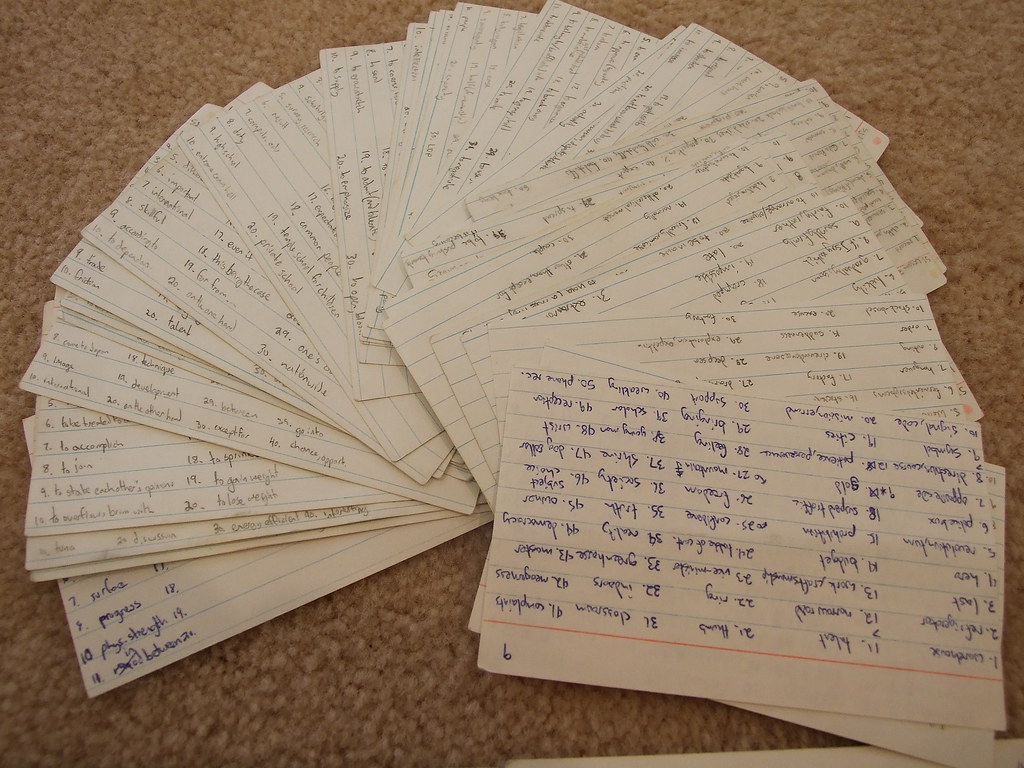
Photo credit: konrad.lawson on Flickr
Once upon a time I read Your First Novel 
by Ann Rittenberg and Laura Whitcomb. I felt a little silly buying it because at the time I’d already written four novels so it wasn't really going to help me write my first, but hey. Why not?

It was full of useful information for both pre-publishing and after publishing (although it was written before the explosion of e-books, so I suppose it’s a little out of date in that sense, but it’s still useful if you'd like to try to get an agent). The most useful technique I got from it however, has nothing to do with agents.

It’s a plotting technique. With flashcards.

So I don't remember the exact method the book uses (it’s been a while since I've read it), but I've found that the flashcard method is very useful, which is why I'm sharing it with you.

SO. How to begin? 

Step 1: Build MOUNT DOOM (with flashcards, of course).

Step 2: Get your handy-dandy writing pencil. Or pen. Or crayon or marker or Sharpie or lipstick tube, whatever suits your fancy, really.

Step 3: Plot! Plot like the wind! It doesn’t matter where you begin, just take a flashcard and write down a scene idea. It could be something short like, “Katie kicks a clown in the shin at her birthday party.” or something much more complex like, “Alfredo discovers his albino gerbil is really an alien that’s going to take over the world with his army of adorable fuzzy creatures and tries to tell his mother but all she does is give him a handful of prayer beads.” Ok, so that wasn’t that complex, but you get the idea.

Step 4: Keep writing flashcards. The book recommends you have at least twenty before you try to start writing your novel because chances are you don’t have a fully fleshed-out story if you can’t even come up with twenty scenes. I agree. Write as many flashcards as you can. The more the merrier.

Step 5: SPREAD ‘EM (the flashcards, I mean). If you have a hugenormous desk or table, spread your flashcards out there. Otherwise spread them out on the floor, it’s just as effective. They don’t even necessarily have to be in order, the idea is to just look and see what you have so far.

Step 6: Line them up! Ok, I know I just said order doesn’t matter, but that was Step 5. This is Step 6 and now order matters (don’t question my logic). Once you have them organized, take a look at your time line. Ask yourself what you could add. Are there any gaping holes in your plot? Do you have two or three slow scenes in a row? Is there enough leading up to the climax? For some reason, looking at it visually like this helps me see flaws in my plot faster than just writing up an outline.

Step 7: KEEP. WRITING. FLASHCARDS. I know you can add more in there. Try to shove in at least five more. You can always take them away again later.

Step 8: Numbers! Once you’re satisfied with the order of your scenes, go through and write a number at the bottom based on their order (the first card is 1, the second 2… so on and so forth).

Step 9: Throw them in the air and do the IT’S RAINING FLASHCARDS dance! Ok, not really. But shuffle them. And if you want to shuffle them by throwing them in the air and rolling around in flashcards, that’s totally cool, too.

Step 10: Re-organize! Take a look at your random order. Obviously some scenes will need to be in the beginning and some in the end, but can you keep any of the new arrangements? What would happen if you kept mixing your scenes up? Try experimenting as you put them back in order—flip some scenes around and play with them until you’re happy with your new order.

Step 11: Now go write.

So that’s it guys, the flashcard method unveiled. Give it a try! Maybe you’ll like it as much as I do. Or maybe you’ll have fun dancing in a papery rain. Either way it’s worth a shot.

I’ve shared my method, let’s hear yours! What techniques do you use to plot?

How to Write a Masterpiece

Late Saturday night: after a particularly whimsical session of #wordmongering, I was chatting with fellow mongerer @Babseth, when we were struck with a lightning bolt of inspiration—the gates of heaven were opened to us and the secrets of writing a masterpiece were downloaded directly into our minds.

I guess you just had to be there.

Being the generous person that I am, I decided to write down these surefire ways to complete a novel of brilliance. Don’t skip any steps. They are all essential.

Golden Writing Advice Right Here, People:
  1. Linear plots are overrated. Readers enjoy trying to figure out what the hell is going on. It’s an adventure.
  2. Consistent character development? Pshh!
  3. 100% evil, mustache-twirling villains are a must. WHERE IS YOUR VILLIAN’S MOUSTACHE? And he should probably be bald, too.
  4. Don’t waste your time establishing setting—especially not setting that will be important later on.
  5. Foreshadowing? Completely superfluous.
  6. Don’t even THINK about cutting that lengthy telephone conversation about the neighbor’s dog and the scene where your MC ordered delicious food at the restaurant. Enough said.
  7. Every outfit must be meticulously described—down to the last painted toenail.
  8. We need to know every aspect of every characters background—from birth to present day.
  9. Remember to start your story with either your characters waking up/looking into a mirror or a really long, irrelevant prologue about another character you’ll never hear about again. Clearly, there are no other legitimate ways to start a novel.
  10. The twist readers will never see coming: IT WAS ALL JUST A DREAM! *queue Twilight zone music*
  11. Include flashbacks in every chapter, especially flashbacks about adorable childhood memories. I mean…he was just so cute!
  12. Your manuscript isn’t finished unless you’ve reached 200k words. 199k? KEEP WRITING.
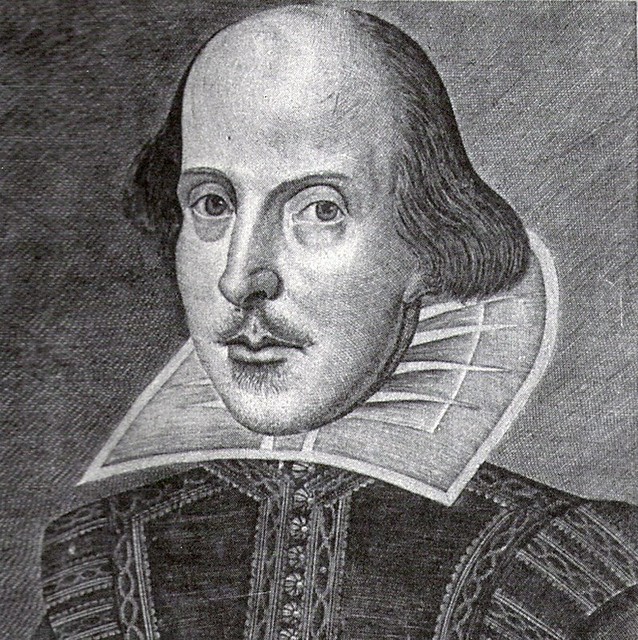
  13. Invent your own spelling and grammar. This is a creative field! Shakespeare did it, why don’t you?
  14. Precise, effective language is boring. Show off your pretty writing with flowery metaphors and similes.
  15. Varying sentence and paragraph length is a completely waste of time that will clearly only give your readers anxiety attacks. Lull them into your writing with uniform sentences instead.

Brilliance, I know. In case you missed the dripping sarcasm, here’s some real advice:

Do the opposite of everything you just read. I can’t guarantee you’ll have a masterpiece on your hands if you do, but you’ll certainly be better off.

Now, as for that lightning bolt of inspiration…

Do you have any not-advice you’d like to share? Share them below! 

Patience: A Virtue

When I wrote about being absolutely positively 100% sure that you were done editing your WIP before submitting to agents or uploading to Smashwords the other day, I noticed a theme cropping up in the comments: patience.

Ohh patience, you tricksy hobbitses you.

Patience does not come naturally to me, and I have a sneaking suspicion (correct me if I’m wrong) it doesn’t come naturally to many of us. Most people aren’t born with a large dose of patience (although some are blessed with more than others); it’s something we learn to embrace over the course of our lives.

Don’t believe me? Look at kids. Kids are about the least patient people on the planet. And it’s understandable; they’re kids. We don’t expect them to be patient. What about the elderly? As a whole, much more patient. Now of course, I’m making broad generalizations. I’m fully aware there are some patient kids out there and I’ve met some rather impatient senior citizens, but in general, patience is something we develop as we get older.

At least it was.

Nowadays we’re becoming accustomed to everything happening now. We have instant streaming online, music we can download in seconds, internet connections that (when working properly) get us from page to page within the blink of an eye, books we can download in minutes, on-demand movies available at our fingertips, now, now, now!

Not only that, but things are getting faster.

Ten years ago if a webpage took a minute or two to load, no one threw a fit about it. If downloads took five or ten minutes, we’d groan a little, but it wasn’t a big deal. Not so much today. Unless you’re downloading something HUGENORMOUS (like, say, Mac OS Lion?) we expect downloads to take a few minutes tops. Anything beyond three minutes is taking too long.

Technology is teaching us it’s ok to be impatient. It’s conditioning us to on-demand, to instant results. And I’m certainly not complaining about it, I like instant streaming and quickly loaded pages and speedy downloads.

The problem arises when people apply the expectation of now to other parts of their lives. Like writing. Writing is not a now industry. Writing takes time, editing takes time, and up until recently, publishing took time.

But once again, technology stepped in and told us it’s ok to be impatient. It gave us e-book publishing and offered us the gleaming red apple of now. You can get published now, it said. See? It’s easy! Just upload and press this button and voila! You’re a published author!

This is where traditional publishers are starting to run into problems. Why wait two years to get published when you could have your e-book up tomorrow?

So it’s true that publishing doesn’t necessarily have to take time anymore, but writing still does.

Repeat after me: writing takes time. Let me add to that, writing takes time and it always will. It doesn’t matter how quickly you can upload to Kindle or Smashwords or wherever you want to e-publish your book. Technology is getting faster, yes, but we aren't.

Here’s an important distinction: speed in technology = productivity; speed in humans = sloppy.

We can only work so quickly before we start to lose quality. We’re not computers guys, we’re only human. We need to take time in our writing, and we need to take more time in our editing.

Here’s a confession: I am currently working on a WIP that I’ve been slaving over for going on two years now. Granted I took a six month break, but that’s 18 months of writing, of editing, of re-writing, of re-writing, of gnashing of teeth and pulling of hair and REWRITING AGAIN.

Is it done yet? Nope. I’ll probably be re-writing it at least one more time. At least.

I know not everyone will take as long as I do, and that’s ok. Everyone is different; some people will take longer, some will whip out a fully polished manuscript or two a year like a machine. And that’s ok, too.

Guys, it’s entirely possible to get a first draft down quickly. But editing. Editing isn’t like that. You need to take time between edits to see your manuscript with fresh eyes. You need to let betas read it, critique partners rip it apart, then you need to rewrite and rewrite and rewrite until it glows like the Eiffel tower at night (which, if you've never seen it, is very pretty and glowy).

So does writing require patience? Not always. But good writing does.

And it always will.

Have you struggled with patience in your writing? Tell me about it in the comments below! 

Are You Really Done Editing?


So you’ve finished editing. You’ve poured your heart and soul into your manuscript then spent countless hours cutting, rearranging, rewriting, reimagining your WIP. But have you really finished editing?

Time and time again I’ve seen new writers announcing to the world that their WIP is ready for submission after a month or two of writing and editing. I’ve seen the excitement turn to eventual disappointment when the stack of rejections arrives. And it’s frustrating. Because I’ve been there. I know how it feels. And when I see someone else making the same mistake I did, I kind of want to repeatedly bash my head into a wall.

But of course, that wouldn’t do anything but damage the wall and give me a migraine.

It goes without saying that finishing a manuscript is exciting, I mean, you just wrote a book for crying out loud, you have every right to be excited! And when you finish that first round of edits, it’s exhilarating—you’re that much closer to a completed, fully polished novel.

But 9/10 times, one round of edits doesn’t cut it.

I’m not saying that it’s impossible to write a beautiful first draft that only needs a round or two of edits—every writer is different and I can think of at least one published author that I know of that writes tight first drafts, but that’s not the norm.

I’ve written before about the Never-Ending Editing Syndrome, but I failed to mention the other end of the spectrum: not editing enough.

It happens; even I’ve done it, and it’s an honest mistake, because when you’re looking at your work it’s hard to tell when it’s ready.

A few years ago, the consequences of premature submission were relatively minimal: most of the time, agents just wouldn’t bite. It hurt, but the determined writer would move on and create another book. They’d learn from their experience and become better.

But now, with self-publishing available, the consequences are much more serious. Publishing an e-book prematurely equates to low sales and mediocre (or bad) reviews. It damages not only your reputation, but your self-confidence. It’s a crushing blow.

Of course there are ways to recover from such a mistake, but it hurts a lot more than being privately rejected by agents. So what can you do to prevent premature submission?

Get beta readers and critique partners. I recommend readers who aren’t related to you or your best friends. Friends and family tend to go one of two ways when it comes to beta reading and critiquing: too nice or too mean. Are there exceptions? There are always exceptions. But for our purposes I’d suggest finding at least one writer to look at your work first. They’ll be the most helpful in making sure it’s ready.


Take your time. Repeat after me: this is not a race. This is NOT a race. Don’t rush through the writing, don’t rush through the editing, don’t rush through any part of the process. I don’t care if it takes you years to finish. Don’t think about publishing when you’re writing. Don’t think about submitting to agents or when you’re going to self-publish when you’re editing. Focus on making your story the best it can be and worry about that other stuff later.

Do at least three drafts. To repeat what I said about exceptions, I’m not claiming that it’s impossible to write a tight manuscript in less than three drafts. However, I am saying that for many of us, three drafts is a minimum. Why?

The first draft is the first draft. It’s to get your thoughts down, to learn about your characters and slap down a basic plot. It’s where you learn about your story.

The second draft is the beginning of refinement. That’s when you prepare it for readers, when you deepen your characters and fill in plot holes and strengthen the weak sections of your manuscript.

The third draft incorporates feedback from your readers. It’s takes into account where people got bored, what they didn’t understand, what they thought could use a little more work and it fixes it.

By the third draft you’ve hopefully covered most of your problems. But unless you’re the Chuck Norris of editing (and maybe you are! I’m not doubting your ability, really I’m not), please don’t submit before you’ve done three.

Stop comparing. Stop that. It’s not doing anyone any good and it’s just going to get you all nervous and doubty and you really don’t need the added stress.

There’s isn’t a magic number of drafts when it’ll be perfect every time. Everyone is different, every manuscript is different. But if you remember to breathe, to take your time, to focus only on improving your work, then you’ll know when it’s ready.

And it’ll be worth the wait.

What are your thoughts on editing? Are three drafts too much (or too little?) Have you ever submitted too early? 

Social Media for Writers


Photo credit: the tartanpodcast on Flickr
I have social media on the brain this week.

I’m sure many of you have seen little explanations of what each social media site is useful for, but in much of my searching, I’ve only seen a few directed especially to writers. SO. Figuring this must be amended, I thought I’d make one myself, based on my experience.

I’ll say right from the start I can’t account for all social media sites (there are SO. MANY.) and I think it’d be unfair for me to judge sites I’m not on, so I’m going to limit this to the ones I’m familiar with.
So here we go! In order of usage!

Twitter—I’m sure most of you guessed this would be first on the list. I use Twitter probably more than I should (but I regret nothing). Regardless of my not-addiction, I’ve found Twitter to be an enormously helpful tool for writers. Not only is it chock full of excellent, bookmark-worthy links (my bookmarks bar has exploded since joining Twitter, EXPLODED), but it just so happens there are tons of writers on Twitter (who knew?).

Twitter is a great place to connect with others in your niche, make friends, promote your work (and the work of your new Twitter friends) and find fantastic blogs. If you write and you don’t have a Twitter, go get one. Seriously. Go do it. Right now. I’m waiting.


Blogger—I say Blogger because (obviously) I use the Blogger platform, but Word Press is another fantastic option. I suppose I should have titled this one blogging, but I digress.

Blogging is great for writers for many different reasons. First, it gets you writing. I know that seems obvious, but you need to write consistently to maintain a blog, and learning about self-imposed deadlines is essential to anyone’s writing career.

The second reason is slightly less obvious: networking. I wrote an entire post about how it’s not about you, and I’m going to say it again: building your blog isn’t only about building your blog. Go out there and connect with other bloggers. Create a blog roll, promote each other. Making connections with other writers is just as important (if not more) as building your blog.

tumblr—I was really confused when I first started a tumblr account. Who am I supposed to follow? What do I do? WHAT DOES THIS BUTTON DO?

I wouldn’t call myself a tumblr expert, I still stumble around the site and I’m relatively sure I haven’t used it to its maximum potential, however there is a LOT of good stuff on tumblr. From fantastic quotes, to articles, to amazing pictures and works of art, tumblr has a little bit of everything. Great for inspiration (and distraction).

Best part? You can link it to Twitter and whatever you reblog (the equivalent of re-tweeting for my Twitter fiends) will be sent to your Twitter to share with your followers.

See why having a Twitter account is so useful? Hmmm?


Facebook—You’re probably wondering why this is so low on the list. It’s not that Facebook isn’t useful (it is), it’s just that I haven’t quite maximized the potential of my page yet and I did say I was ordering this list on my usage.

Despite that, Facebook is another great place to connect with other writers and share with each other. The like button has virtually invaded the internet (try to count how many times you see it while surfing the web in one day—it’s a LOT), which makes it another great platform that should definitely be on your list.


Goodreads—I’ll be honest, I haven’t utilized my Goodreads page AT ALL. I go there to update what I’m reading and find out more information about books I might be interested in. Occasionally, I’ll browse the forums, vote on various lists and post a book review. That’s about it.

But just because I haven’t used it as much as I could, doesn’t mean it’s not useful. Goodreads is chock full of readers and writers (big surprise, right?) just waiting to be connected with! Plus, it’s a pretty fantastic site for discovering books. And it’s kind of fun to build your online bookshelf.


There are other platforms of course (Google + for example) that I’ve yet to check out, so I can’t really tell you about them. However, the theme with social media is pretty much the same: sharing. Every site does it a little differently, but in the end, the goal (regardless of the site) is to share and make connections.

So go out there and make connections.

What social media sites do you use? Which are your favorite? 

Related Posts Plugin for WordPress, Blogger...