On Combining Two Ways to Plot

Photo credit: erstwhile ungulate on Flickr
Over the weekend, I finished first drafting my fourteenth manuscript. It was short—like, under 50,000 words short—and I'm legitimately not sure I'll ever take it out of the drawer ever (right now I have a 50% trunk-without-editing rate), but it accomplished what I most needed: a distraction and reminder that yes, I'm still capable of first drafting something totally new thank you very much.

I'm not going to lie, though—plotting this WIP was really hard. So hard that I actually took a break halfway through and put it away for several months before I opened it up and looked at it again.

The thing is, as completely necessary as pre-plotting is for me before I write even a single word of the WIP, it's not exactly the easiest of processes. With this most recent WIP I sort of forgot about one of the two plotting processes I've played around with that maybe would've made the experience a little easier, but for my next project I think I'm going to combine my two methods.

The methods I'm talking about are:

  • Scrivener cork board. So I've described this method before in my On How I Plot a WIP and How to Use Scrivener's Cork Board posts, so I won't go into super detail here, but it basically involves writing brief summaries of every scene in your planned book, each on a separate flashcard that gets "pinned" to the cork board. Some scenes are more fleshed out than others, but I write just enough for me to understand the gist of what has to happen in each scene. This is the only method I did for the last WIP I plotted, and yes, it worked, as it has worked in the past, but I found it more difficult than the previous two projects I'd plotted, which involved a combination of this method and...

  • Pre-draft synopsis. So I know on paper this sounds like voluntary torture, but I have been pleasantly surprised to find that writing the synopsis before I've written the book is a million times easier and more enjoyable than writing it after. Go figure. (I've written about this discovery in this post.) But basically this is exactly what it sounds like—opening up a document and writing however many pages you need to go step by step through what will happen in your book. 

In the past, when I've combined the two it usually involved having both Scrivener and Word open at the same time. (I don't know why my brain insists on writing a synopsis in Word when Scrivener is perfectly capable of handling both the outline and synopsis, but whatever, brains are weird.) I'd write the synopsis part first, expanding more and more as I go along, and gradually transfer over what I had to the flashcards, which I would later need for first drafting. Both times I did this I managed to finish fully plotting the projects in a week or less. 

Would have been nice if I'd remembered that while plotting the last project, but I digress... 

Sometimes playing around with new strategies or combining ones you have can be extra effective, which is why I'm sharing it with you guys. After all, you never know what methods will work best for you if you don't try new strategies here and there. 

Have you tried either of these methods for plotting? 

Twitter-sized bite: 
Looking for a new way to plot? @Ava_Jae shares a combination method you might want to try. (Click to tweet)

Vlog: World Building Part 4

Continuing from last week's part three vlog, here's the fourth and final vlog in the mini-series focused just on world building.


RELATED LINKS: 


What are examples of your favorite book worlds? 

Twitter-sized bites: 

Struggling w/ world building? Author @Ava_Jae completes her 4-part world building vlog series with part 4. (Click to tweet
How do you build the world of your book without info-dumping? @Ava_Jae explains in today's vlog. (Click to tweet)

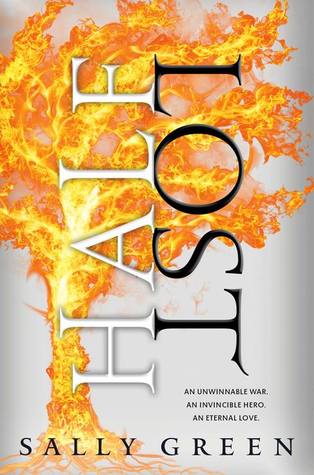
Book Review: HALF LOST by Sally Green

Photo credit: Goodreads
It's going to be hard to write a review about this without spoiling anything, but I will do my darndest. Because this finale to one of my favorite YA Fantasy series deserves a very good review. 

Before I go into how much I loved this book, however, here is the Goodreads summary:
"This is the final battle. 
The Alliance is losing the war, and their most critical weapon, seventeen-year-old witch Nathan Byrn, is losing his mind. Nathan’s tally of kills is rising, and yet he’s no closer to ending the tyrannical rule of the Council of White Witches in England. Nor is Nathan any closer to his personal goal: getting revenge on Annalise, the girl he once loved before she committed an unthinkable crime. An amulet protected by the extremely powerful witch Ledger could be the tool Nathan needs to save himself and the Alliance, but this amulet is not so easily acquired. And lately Nathan has started to suffer from visions: a vision of a golden moment when he dies, and of an endless line of Hunters, impossible to overcome. Gabriel, his closest companion, urges Nathan to run away with him, to start a peaceful life together. But even Gabriel’s love may not be enough to save Nathan from this war, or from the person he has become. 
Set in modern-day Europe, the final book in the Half Bad trilogy is more than a story about witches. It’s a heart-achingly visceral look at survival and exploitation, the nature of good and evil, and the risks we take for love."

So given how much I loved Half Bad and Half Wild, I had pretty high hopes for Half Lost. I was ready to see one relationship I despised crash and burn; I was ready to see the relationship I'd been dying to see since book one flourish; I was ready to see Nathan come into himself and become the truly powerful witch everyone knew all along he would be.

I got all of that and more.

The character development in this book is truly amazing; at the beginning, Nathan has gone extremely dark side. His obsession with exacting revenge on someone was so intense it was disturbing, and seeing him morph from book one into this dark, hurting person was legitimately hard to read. My heart ached for him, and for Gabriel, who stood hurting by his side as he watched someone he cared so much about become this unrecognizable person.

Half Lost is just as dark and raw as Half Bad and Half Wild. There were moments that made me cringe, and images that were disturbingly vivid. Green doesn't hold back or shy away from the harsh realities of war; it's there on the page for everyone to see, and I found it to be incredibly powerful.

And speaking of powerful, this book nearly made me cry twice. As I've said in my other reviews, I am not someone who cries easily—to this date I've never actually broken down over a book. But there was one moment in the book that made me so happy I actually got teary-eyed, and the other...well, I won't spoil, but I will say if I hadn't taken a break, it's very likely I would've full-on sobbed by the end of the book.

There are a lot of people who took issue with something that happens at the end—and I understand their grievances. But I feel it's important to say that I think what happened was handled really deftly, and it absolutely fit the story; as another reviewer said, it felt inevitable. And for me, at least, I found it a very powerful—and beautiful—ending to a wonderfully memorable YA Fantasy series.

Overall, the Half Bad series will remain on my favorites list. I really enjoyed the diverse characters woven into the story—from a bisexual and biracial protagonist with a learning disorder, to a gay major character, and not one, but two gender nonconforming characters, and more, the Half Bad series is one I'll continue to recommend to those who like (very) dark YA Fantasies and a story that will break you and put you back together again.

Diversity note: As mentioned in the review, Nathan, the protagonist, is biracial, bisexual, and has a learning disorder. A major character, Gabriel, is gay, and there are also two gender non-conforming characters.

What have you been reading lately? 

Twitter-sized bites: 
.@Ava_Jae gives 5 stars to HALF LOST by @Sa11eGreen. Is this dark YA w/ a bisexual & biracial boy MC on your TBR? (Click to tweet)

Like dark YA Fantasy? Want to see queer boys kicking ass? Check out HALF LOST by Sally Green. (Click to tweet)

Fixing the First Page Feature #22

Photo credit: phalinn on Flickr
Incredibly, May is just two days away, which means spring allergies are in, summer is on its way, and it's time for the next Fixing the First Page feature! Woot!

As per usual, I'll start by posting the full first 250 excerpt, after which I'll share my overall thoughts, then my redline critique. I encourage you guys to share your own thoughts and critiques in the comments (because I'm one person with one opinion!), as long as it's polite, thoughtful, and constructive. Any rude or mean comments will be unceremoniously deleted.

Here we go! 

Title: CYBER HAZE

Genre/Category: New Adult Paranormal/Urban Fantasy

First 250:

"I’m paralysed. Everything from the neck down no longer responds. I breathe in sharp and try to move my toes, my hands, my fingers. 
Nothing. 
The only thing I can do is stare up into a light ― a bright blue light. 
Tears leak from my eyes as probes and electrodes are attached to various part of my body. The needle-like instruments stab underneath my fingernails as the straps pinning me down to the surgical table are tightened. 
My heart thunders in my chest. 
'It’s alright, just be a good girl. This will hurt, but if you be a good girl I promise you can play with the yoyo again. You like the yoyo, don’t you, Raven?' 
A masked man comes into view. 
'Do you want me to administer another, Doctor?' a nurse asks. 
'No, she’s had the maximum dose already. We’ll continue in her current state.' 
Wires jostle above my head as the doctor moves away, a huge surgical light now being lowered over my body. 
I’m hyperventilating. 
'Doctor, she’s panicking. I have to give her another.' 
'She won’t respond if we do that.' 
Something sharp is attached to each of my temples. 
'MRGHHHHH!' I scream against my gag, the nurse trying to calm me as tears pour down my face. 
'Doctor! Doctor, she’s going to have another seizure! We have to sedate her!' 
'Just leave it, Edith! She has to be conscious or this won’t work! This has to work this time!'

'But she―' 
'I’m starting the procedure! Injecting the solution. Just keep her stable!'"

Are you sure this isn't a horror novel? Kidding, kidding...

Okay, well I am definitely interested after reading the opening, in a sort of horrified fascination. I'd say you've definitely got a good hook here, and I'm very curious (and disturbed) about what's going on. All of this is good, because it means if I had more pages, I'd definitely keep reading to find out what was going on.

So great start so far. Let's take a closer look now.

"I’m paralysed. Everything from the neck down no longer responds. I feel like this could be more evocative. Starting off with this unexpected paralysis is definitely interesting, but right now we're being told she's paralyzed—literally told. I'd like to really be in her head and feel what she's feeling. What is she thinking when she can't move? Is this expected? Does she panic? How does it feel to try to move but not have your body respond? You start to get a taste of that with her sharp breath in the next sentence, but I'd really like to see more. I'd like to know exactly what's going on in her head and how it feels to be literally trapped in your unresponsive body. I breathe in sharp and try to move my toes, my hands, my fingers. 
Nothing. 
The only thing I can do is stare up into a light ― a bright blue light. This is a nice detail of the blue light. What I'm missing from this opening so far is emotion, though. This could be a very powerful start if we got a glimpse into how this ordeal is making her feel from the start.
Tears leak from my eyes as probes and electrodes are attached to various part of my body. This is passive phrasing—probes and electrodes are attached. Instead, I'd like to see tis shifting so we can see who is doing this to her. The instruments aren't attaching themselves and stabbing themselves into her. Show us who is doing this to her. Also, what various parts of her body? The needle-like instruments stab underneath my fingernails as the straps pinning me down to the surgical table are tightened. 
My heart thunders in my chest. This is good, but I think we could use more of her bodily reactions showing emotion even up to this point. If you haven't bought it already, I highly recommend The Emotion Thesaurus by Angela Ackerman and Becca Puglisi—it's a fantastic resource full of entries that show exactly how different emotions affect the body, which makes showing emotion a million and two times easier. 
'It’s alright all right (common mistake—"alright" is technically not a real word), just be a good girl. This will hurt, but if you be a good girl I promise you can play with the yoyo again. You like the yoyo, don’t you, Raven?' I'm very curious about why they're speaking to her like a child when the age category would indicate she's not a child. Unless...this is a flashback? If this is a flashback, I would recommend against it—starting with flashbacks are pretty confusing for readers, and especially when the flash back is more exciting than the actual opening scene, it tends to irritate readers because it's a bait and switch. Of course, I don't know for sure that this is a flashback, but just in case...
A masked man comes into view. Masked how? I mean, in the next sentence we figure out he's a doctor, but "masked" could mean a lot of things. I'd slip in a short, quick description to indicate it's a face mask or something. 
'Do you want me to administer another, Doctor?' a nurse asks. 
'No, she’s had the maximum dose already. We’ll continue in her current state.' 
Wires jostle above my head as the doctor moves away, ; a huge surgical light now being is lowered over my body. 
I’m hyperventilating. Again, I think this could be more evocative. It'd be much more powerful to see her struggling for breath, getting dizzy from lack of oxygen, etc., than being told she's hyperventilating.
'Doctor, she’s panicking. I have to give her another.' 
'She won’t respond if we do that.' 
Something sharp is attached to each of my temples. Attached how? Did they press the sharp thing into her? Is it held by something else? This is important because in the next line I'm not sure if she's screaming because this hurts or because she's panicking, or both. Also, this is passive again—rephrase to make it more active and show who is doing what. 
'MRGHHHHH!' I scream against my gag, the nurse trying to calm me as tears pour down my face. How? What does the nurse do? Again; more evocative when we see what people are doing rather than being told they're doing it. Is the nurse patting her? Shushing her? Holding her hand? Touching her cheek? There are a lot of possibilities. 
'Doctor! Doctor, she’s going to have another seizure!Wwe have to sedate her!.' I recommend cutting down on the exclamation points. Too many and the dialogue starts to drift into melodramatic territory. :) 
'Just leave it, Edith! She has to be conscious or this won’t work!Tthis has to work this time!.''

'But she―' 
'I’m starting the procedure!. Injecting the solution. Just keep her stable!.'"

Okay, so, overall, assuming this isn't a flashback, I think this is a strong—and disturbing—start. The two biggest issues I'm seeing are a) making sure that you really dive into the writing and get into Raven's head so the readers feel what she's feeling and understand exactly how she's experiencing this and b) that you remove the passive phrasing and reword it so the readers understand exactly what's going on and who is in control. And just for a refresher, here's a great article on active versus passive voice.

As I said, I think this has a ton of potential and with some tweaking could be incredibly powerful. I just sincerely hope this isn't a flashback because if so...I'd have to strongly recommend against starting here.

If I saw this in the slush, I would definitely keep reading to see where it goes.

I hope that helps! Thanks for sharing your first 250 with us, Peta!

Would you like to be featured in a Fixing the First Page Feature? Keep an eye out for the next critique giveaway in May!

Twitter-sized bite:
.@Ava_Jae talks delving into the POV character's head and flashbacks in the 22nd Fixing the First Page critique. (Click to tweet)

On Major Character Deaths

Photo credit: kev-shine on Flickr
So as I work on various projects, watch Game of Thrones, and read books that I suspect will have major character deaths (and finish a book that did have an important character death that destroyed me), I've been thinking lately about how we kill characters off—and what it means when we do.

Now, I've already posted about how to kill characters with impact, so I'm not going to reiterate that again. But instead I'm thinking about the why—why we choose to kill characters, how we choose what characters to kill, and what it means when we pick one character over the other. I've been thinking about how certain marginalized groups are frequently killed off first on TV, and I've been thinking about all the factors that go into deciding why one character should be killed off over another or why certain characters need to die at all.

I've thinking about controversial decisions in which major characters have been killed (like the protagonist of one major YA series not all that long ago). And I've been thinking about why some readers freak out and trash one book if a protagonist or major character dies, but not another book with another major character death. What makes one character death better than the other? What makes one death acceptable and one not so much?

There are a lot of factors to think about when killing off characters, especially if said characters come from marginalized groups with high fictionalized body counts. You need to think about what it means for this particular character to die. You need to think about why it's essential for that character, and not another, to be killed off. You need to think about what it'll mean to the readers that this character survives, but this other one doesn't.

I personally don't have a problem with major characters, even protagonists, dying (aside from, you know, the emotional trauma)—it's just a sign to me that no character is safe in that particular author's works, which if anything just makes future reading of their books more terrifying...in a good way. But I think the key to pulling off major character deaths is to make sure you have a good reason for it besides bottling reader tears for science. It has to mean something for the overall plot and the story itself—it has to be so integral to the story that anything else couldn't work as effectively.

Of course, it can be really tough to figure out what's essential and what isn't in your own work sometimes, which is yet another reason why critique partners are 100% necessary in the writing process. And even then you may get conflicting opinions—writing is super subjective!—so you'll have to listen to your gut. But I think the thing to remember, when considering a major character death (or several), is to make sure there's a reason for it so it doesn't read as an arbitrary attempt at shocking readers and to be sure that you pull it off in a way that is thoughtful and meaningful.

Easier said than done, of course. But when done well, and done with purpose, it can be an incredibly effective way to make sure your story leaves a mark.

What do you think about major character deaths?

Twitter-sized bite: 
Author @Ava_Jae talks killing major characters with purpose & making sure the death fits the story. (Click to tweet)

Vlog: World Building Part 3

Continuing from last week's part two vlog, here's part three of a four part series focused just on world building.


RELATED LINKS: 


Have you utilized any of these elements in your world building? 

Twitter-sized bite: 
Struggling w/ world building? Author @Ava_Jae continues her 4-part world building vlog series with part 3. (Click to tweet)

Fixing the First Page Winner #22!

Photo credit: smcgee on Flickr
Quick pre-vlog post to announce the winner of the twenty-second fixing the first page feature giveaway! Yay!

*drumroll*

And the twenty-second winner is…

PETA HEN

Yay! Congratulations, Peta! Expect an e-mail from me shortly.

Thank you to all you awesome entrants! If you didn't win, as always, there will be another fixing the first page giveaway in May, so be on the lookout! :)
Related Posts Plugin for WordPress, Blogger...