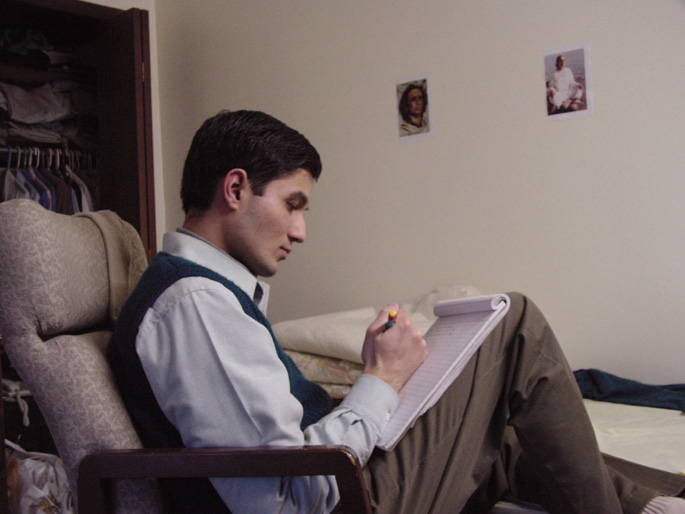
On Writing a Synopsis Before the First Draft

Photo credit: gautamnguitar on Flickr
Like most writers, I despise synopsis-writing. It’s easily my least favorite part of the writing process, and one I tend to put off until I absolutely have to. Because trying to condense 60-100,000 words into a page? It’s tough. It’s ridiculously tough.

But I’ve been trying this new thing lately.

I’ve often heard writers talk about writing the synopsis before they write a single word of the manuscript. While this is something that never sounded particularly appealing to me (after all, synopsis writing = the tenth circle of hell Dante forgot to mention), I figured I’d try it out for a potential future WIP.

While I’m not currently done with this brainstorming/synopsis experiment, and it is absolutely more than a page (which I think is fine, considering this is the time to expand on ideas to turn into a book, not condense them), I’ve noticed a couple interesting things along the way.

Firstly, it’s been working surprisingly well as far as idea-generation goes. I’m a very linear writer—I tend to build up scenes and come up with ideas by working off of what I already know has happened—so writing a condensed, summary version of what I think will happen chronologically has definitely helped me come up with how to get from point A to point B, which is something I tend to struggle with while plotting.

Secondly, it is way easier to notice potential plot problems or places where I could tweak and expand when working on this summarized version. It’s actually kind of exciting, because I can look at the synopsis I have going and add a couple sentences a few pages back and voila! NEW PLOT THREAD. This synopsis brainstorming thing makes it so much easier to see macro issues and weave new plot threads in before I start writing, which will hopefully make revising easier in the future. I think.

All in all, the pre-draft synopsis has been a really fun experiment, and one that I’ll probably continue and do again in the future. And maybe, just maybe, having this early synopsis will make future synopsis writing a teensie bit less painful. Hey, I can dream, right?

Have you ever tried writing the synopsis before the first draft? 

Twitter-sized bites: 
Writer @Ava_Jae blogs about the pre-draft synopsis and how it can help with plotting. #writingtip (Click to tweet)  
Have you ever written a synopsis before the first draft? Here's why you may want to consider it. (Click to tweet)

Fixing the First Page Feature #3

Photo credit: n0brein on Flickr
All right! So as these things go, I’m going to start off by posting the full 250 excerpt, then I’ll share some overall thoughts, then my redline critique. I absolutely encourage all of you to share your own thoughts and critiques (after all, I’m only one person with one opinion), as long as it’s polite, thoughtful and constructive. Any rude or mean comments will be deleted.

Let’s go!
Title: THE SILENT WORLD 
Genre/Category: YA Post-Apocalyptic 
First 250:

David paced the apartment, cradling his infant cousin. She had stopped crying, too exhausted and miserable to do anything but lie in his arms. Barely two weeks since her mother died and already he was struck with the horrible conviction that he had failed her. 
There were three cans of green beans but that didn't help: the baby was too little to eat canned food. He peered out the window. The streets were quiet right now, but he could smell smoke.  David didn’t want to go outside, but he had no choice—he needed to get formula for the baby. He could survive longer without food than she could. He fashioned a sling to carry his cousin, then packed his meager possessions: the cans of green beans, a can opener, a flashlight, a Swiss Army knife, and a photo album. 
He didn't need to be told about all the dangers that waited outside the complex’s iron gates. Every day, the air echoed with gunfire; thick, grey smoke rose. David took a deep breath and peered through the bars as the wind whipped through the gates. The sky was ash-grey—it smelled of smoke and decay. He reached for the Super's keys and stepped through the gates, making sure to lock them behind him. 
Though David had lived in this city since he was ten, he felt like a stranger, as he walked the twisting streets. He had been away too long, hiding with Mai in the Heavenly Hills apartment complex.

Okay, so an overall note that you (and other YA Post-Apoc writers) will hopefully find helpful: thus far, just about every time I’ve seen a YA Post-Apocalyptic (or dystopia that happens to be post-apocalyptic) submission, it’s started with characters thinking about how little food they have and how they need to endanger themselves to feed their families. This isn’t inherently bad, per say, but the problem is a) most times, it opens with the characters not doing anything, just thinking about how they’re hungry/don’t have food/need to do something etc. and b) it’s done a lot. Whenever you have an opening that follows a pattern often seen for the genre (or in general) it’s much harder for you to stand out, so that’s something to think about.

Now the in-line notes:

David paced the apartment, cradling his infant cousin. She had stopped crying, too exhausted and miserable to do anything but lie in his arms. Barely two weeks since her mother died and already he was struck with the horrible conviction that he had failed her. I’m guessing you mean the cousin’s mother, but it’s not clear who “her” is in this sentence.
Another note on the first paragraph: as far as hooks go, I think this could be stronger. Yes, we feel a little sympathetic for David and his baby cousin, but as is, there isn’t anything there that really grabs me as a reader. Whether you want to achieve that by changing where it starts, adding more to the voice or something else is up to you, but I’d recommend testing different openings with betas to try to figure out how best to hook your readers.  
There were three cans of green beans but that didn't help: the baby was too little to eat canned food. He peered out the window. The streets were quiet right now, but he could smell smoke.  Two notes here: 1) What does it look like when he peeks outside? You give us auditory information (it’s quiet) and olfactory information (it smells like smoke), but what does he see? We don’t even know the time of day here. 2) This is a bit of a technicality, but how does he smell smoke if he’s standing inside? Is the window open? If so, is the air outside cold? Stifling hot? David didn’t want to go outside, but he had no choice—he needed to get formula for the baby. He could survive longer without food than she could. Do you think you could show us some of this information through his thoughts and actions, rather than telling us? He fashioned a sling to carry his cousin, then packed his meager possessions: the cans of green beans, a can opener, a flashlight, a Swiss Army knife, and a photo album. Can you give us more details? Are these new items? Rusty, old, falling apart items? A mix of the two? 
He didn't need to be told about all the dangers that waited outside the complex’s iron gates. Maybe not, but we do. Could you show us some of those dangers? Every day, the air echoed with gunfire; thick, grey smoke rose. David took a deep breath and peered through the bars as the wind whipped through the gates. Is this cold wind? Hot wind? The sky was ash-grey—it smelled of smoke and decay. He reached for the Super's keys and stepped through the gates, making sure to lock them behind him. Which are where? Hidden somewhere? In his pocket? Somewhere else? 
Though David had lived in this city since he was ten, he felt like a stranger, as he walked the twisting streets. He had been away too long, hiding with Mai in the Heavenly Hills apartment complex.

As far as this opening goes, I think you may want to consider starting a little later on. As is, the pace is a little on the slower side, and as I mentioned above, I think you could use a stronger hook. My guess is the pace increases as he wanders the street searching for food and something happens? Or something else, but I think it would benefit you to consider starting maybe a little later on.

If I saw this in the slush, I would probably anticipate a pass, but I think this is a relatively easy fix after you figure out where best to start your story, assuming you decide to change it. (In the end, of course, it’s absolutely up to you—it’s your story!).

Thanks for sharing your first 250, Jenny!

Would you like to be featured in a Fixing the First Page Feature? Keep an eye out for the next giveaway!

Twitter-sized bite: 
Writer @Ava_Jae talks pacing and choosing the right place to start your book in the third Fixing the First Page critique. (Click to tweet)

Vlog: 5 Things Writers Need

I read this guest post back in August about ten things you don't need to be a writer, and it inspired me to talk about the opposite. What DO writers need? I've got five things.


What would you add to the list? 

Twitter-sized bites: 
.@Ava_Jae vlogs about five things you need to be a writer. What do you think? (Click to tweet)  
Persistence, patience & support are 3/5 things @Ava_Jae says you need to be a writer. What do you think? #vlog (Click to tweet)

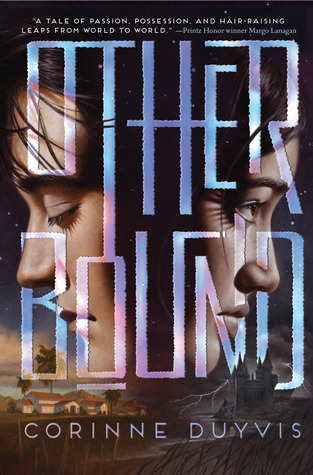
Book Review: OTHERBOUND by Corinne Duyvis

Photo credit: Goodreads
I always love when I read a book from a nice person on Twitter and it turns out that along with being really super nice, they’re actually totally awesome at the whole book-writing thing, too.

Otherbound by Corinne Duyvis is one of those examples.

Before I go into why, however, here’s the Goodreads summary:
“Amara is never alone. Not when she's protecting the cursed princess she unwillingly serves. Not when they're fleeing across dunes and islands and seas to stay alive. Not when she's punished, ordered around, or neglected. 
She can't be alone, because a boy from another world experiences all that alongside her, looking through her eyes. 
Nolan longs for a life uninterrupted. Every time he blinks, he's yanked from his Arizona town into Amara's mind, a world away, which makes even simple things like hobbies and homework impossible. He's spent years as a powerless observer of Amara's life. Amara has no idea . . . until he learns to control her, and they communicate for the first time. Amara is terrified. Then, she's furious. 
All Amara and Nolan want is to be free of each other. But Nolan's breakthrough has dangerous consequences. Now, they'll have to work together to survive--and discover the truth about their connection.”
So I began reading Otherbound thinking it would be a cool fantasy story with a diverse cast and an interesting premise. I was right, but wow, I didn’t realize how impressive this book would be.

The world building and magic system alone makes the unique world of Otherbound so very interesting—I’ve never seen a magic system quite like what Duyvis put together in Nolan and Amara’s intertwined worlds, and it was totally refreshing to see a fantasy world where there are consequences to magic use (can you say FINALLY?). Combined with the intricate details of the cultures (yes! more than one! thank you again!) and norms of Amara’s world and the totally fascinating epilepsy-not-really-epilepsy-like attacks Nolan gets in his reality when slipping into Amara’s world, and it all makes for one really interesting story.

I will say that there were some aspects of Amara’s world that confused me and/or I had trouble grasping, but all in all, the world building was really well done and I totally admire the way Duyvis wrote Nolan and Amara’s worlds.

Oh, and have I mentioned the diverse characters? This made me so happy. Nolan is a latino amputee with “epilepsy” (and even though we know it’s not epilepsy, the way Amara’s world affects him in a way that totally breaks your heart) and Amara is a mute bisexual girl. Not only that, but the full cast beyond the protagonists are so very diverse and it really was an extra bonus in an already fabulous book.

I totally recommend this book to those who enjoy YA Fantasy, and I look forward to more books from Duyvis!

Twitter-sized bites: 
.@Ava_Jae gives 4/5 stars to OTHERBOUND by @corinneduyvis. Have you read this unique YA Fantasy? (Click to tweet)   
Want a diverse YA Fantasy w/ unique magic & fabulous worldbuilding? Try OTHERBOUND by @corinneduyvis. (Click to tweet)

Fixing the First Page Feature #3 Giveaway Winner!

Photo credit: mae.noelle on Flickr
Quick off-schedule post today to announce the winner of the third fixing the first page feature
giveaway! Are you ready? The winner is…

JENNY LYNN! 

Yay! Congratulations, Jenny! Except to see an e-mail from me very shortly. 

Thanks to everyone who entered! I'll have another one next month, so keep an eye out! :) 

How to Write Awesome Kiss Scenes

Photo credit: °]° on Flickr 
“Stop.
Stop time.
Stop the world.
Stop everything for the moment he crosses the room and pulls me into his arms and pins me against the wall and I’m spinning and standing and not even breathing but I’m alive so alive so very very alive
and he’s kissing me.” 
Ignite Me by Tahereh Mafi (Pages 316-317)
My characters like kissing. Some more than others, but amongst my characters at least, it’s a well-known fact that kissing is fun.

Kissing, as it turns out, is also fun to write (coincidence? I think not), but when someone on Twitter asked me for tips for writing good kissing scenes, I realized I’d somehow managed to neglect this topic here on Writability. What. An. Oversight.

I’m remedying that right now.

When it comes to books, kissing scenes tend to be significant for one reason or another. Whether it’s a first kiss, a make up kiss, a crap we shouldn’t have done that (but we really wanted to) kiss, a love-declaring kiss or a kissing because we have to but wait I actually like this kiss (or something else entirely), kissing, in novels, tend to be pretty big turning points for characters.

The best kisses, I’ve found, are rife with meaning. What makes them so fun to read and write isn’t just that the characters are mashing their lips together (though don’t get me wrong—that’s fun too), it’s the implications behind the kiss. Whether it’s the yes! Finally they’re together! or noooo you two aren’t supposed to make out! what makes kissing so fun to read and write is that it means something.

Now, that’s not to say that your characters can’t ever kiss just to show affection, or because they just can’t keep their faces off each other (both are valid reasons for lip-smooshing). But chances are, in writing and in reading, the kisses that get the most page time and in-depth description are the ones that are significant for one reason or another.

As far as the actual writing and description of said kissing goes, it really depends 100% on you and your book. Whether you’re writing YA, NA or even Adult, how much description you go into completely depends on what you’re comfortable with and what’s right for the book. Cruel Beauty by Rosamund Hodge, for example, completely glosses over the kissing and sex, barely getting into any description at all—which is totally okay. Ignite Me and Unravel Me by Tahereh Mafi, meanwhile, go into way more description and include a lot of metaphors and poetic language and those make out scenes last several pages. Let it be known Ignite Me and Unravel Me have some of my favorite YA kisses ever. Which is why I shared that one above.

Anyway.

The important thing to pay attention to while writing kiss scenes is what the kiss means for your characters (especially your POV character). If your character is kissing some random stranger at a party and thinking about what a terrible kisser the partner is, that’s just as important to note as a love-declaring let’s be alone together kiss. Even if your characters don’t know what this kiss means, just that they’re kissing and they like it (or not), it’s important to get that across to your readers.

So next time your characters start getting it on, make sure you take some time to think about the significance behind their physical togetherness. Oftentimes an extra spike of meaning into an already awesome kiss can be exactly what you need to take it to the next level.

What books have some of your favorite kisses? 

Twitter-sized bites: 
"What makes kissing so fun to read and write is that it MEANS something." #writetip (Click to tweet)  
Do you have kissing in your WIP? Writer @Ava_Jae shares some tips on getting those romantic scenes right. (Click to tweet

On Prioritizing Your Time

Photo credit: becosky... on Flickr
Sometimes, life gets busy. There’s work, schoolwork, parenting work, house work, writing work, marketing work and life stuff, sometimes all rolled up into a week, or a day. And sometimes, finding the time to get that writing work done can be a massive struggle. 

It inevitably happens to all of us at some point or another. 

The key, I’ve found, to consistently keeping up with everything and finding time to write is to carefully prioritize your time. I tend to break things up by hard and soft deadlines. 

My hard deadlines are ones that I need to have done by a certain date. This is usually something that someone else is expecting, whether it’s school work, internship work, a revision, pre-scheduled blog posts/vlogs etc. These are deadlines that generally, I can’t move. If I miss them, there will likely be repercussions. 

Soft deadlines are ones I usually set myself. These are deadlines that I’d like to get done by a certain time, but if need be, I can move them. These are tasks I can put aside for a day or two without having to worry about it. 

Hard deadlines I try to get done first. Because I’m a person that likes to schedule my days, I usually have a to-do list of things that need to be done and things I’d like to get done. I often make sure to check off all the hard deadline items first before I worry about the soft deadlines. 

This is something I had to learn the hard way: the fact of the matter is, some days, writing can’t be a top priority. Some days there’s too much life stuff and work stuff and family stuff and health stuff and everything else to make much writing progress, and you know what? That’s okay. You don’t need to kill yourself to get your daily writing in and you don't need to write every single day to call yourself a writer (really). 

Because other days you will have the time, or some time at least, and those are the days where you can really capitalize on that time to get writing work done. You just have to make sure to get your butt in the chair and do it. 

Do you prioritize your time to try to get your writing work done? 

Twitter-sized bites: 
"The fact of the matter is, some days, writing can’t be a top priority." (Click to tweet)  
Writer @Ava_Jae shares some tips on prioritizing your time and fitting writing into your hectic schedule. (Click to tweet
Related Posts Plugin for WordPress, Blogger...