Showing posts with label debuting. Show all posts

Lessons From a Year of Swag

Photo credit: me
Over the weekend I had my last author event of 2016—so it was kind of fitting that I ran out of bookmarks that day too. It was a little surreal to run out; when I'd ordered my swag in mid 2015, I'd gotten 500 bookmarks and 500 postcards, mostly because GotPrint was running a weird deal that made the upgrade from 250 each just a few dollars more, so I figured eh, why not? It turns out that was a good decision because bookmarks, apparently, are very popular.

You see, aside from giveaways, bookmarks are kind of gold at author events. Generally, non-panel author events go like this: you have a table at a bookstore, set up whatever swag you have and pile up your books, then smile as people walk past you and try to avoid eye contact and while you get people to talk to you so you can tell them about your book.

That actually sounds way more terrifying than it is, but I quickly learned a way to get people to engage: offer free bookmarks.

"Hi, would you like a bookmark?" I'd say, holding out a bookmark. Some people say no, but more times than not people say sure and take your bookmark. Then one of two things happen: either they eye your books and you have an in to talk about it, or they walk away with your bookmark.

My bookmarks have a pretty clip of my cover on one side, then on the other have a teaser and information about my book. This has worked well because I've had people come back after they walked away with my bookmark to ask about my book. Victory! As a bonus, I know even if people just take them home, they have a reminder of my book there.

So lesson learned: bookmarks are author gold. Now that I'm out, I'll definitely be ordering more.

Now postcards. So I kind of took a risk with my postcards in that I put information on both sides. This turned out not to work so well, because it made mailing them harder since I had to put them in envelopes which sort of defeats the purpose of the postcard. Because one side is just my cover, however, I use them more often than not to also give away at author events, but I've found they're not nearly as popular as bookmarks. I'll continue to bring them to author events until I'm out, but next time around I'm definitely keeping one side blank—or at least enough of one side blank so I can stamp/address without covering information—so I can mail them more easily.

Lesson learned: leave space on postcards for stamp and address.

Finally, I didn't have bookplates this year, but I found they were actually requested with relative frequency, so I'll definitely have to look into getting some before Into the Black's release. They're handy especially since my ability to get signed copies out is pretty limited, and shipping for a book is (understandably) a lot more than just mailing a bookplate out.

So those are some of the lessons I've learned from having and giving out swag over the last year and a half. Hope you guys find it useful when the time comes to get some swag for your books. :)

Twitter-sized bite: 
Thinking about getting swag for your book? @Ava_Jae shares lessons she learned from a year of using swag. (Click to tweet)

What I Learned From Debuting

Photo credit: Chiara Cremaschi on Flickr
This time last year, I was full of excitement and some trepidation. My debut date, March 1st, was less than three months away, ARCs were out in the world, reviews were coming in, and the knowledge that in just a handful of months I'd be able to live my dream—walking into a bookstore and seeing my book on the shelf—buzzed endlessly in the back of my mind.

December 2015 was an exciting and scary time for sure, and now, with my debut year coming to a close and a class of new, talented authors getting ready to take up the debut year mantle, I thought I'd share some lessons I learned this year.

  1. If you haven't already, memorize your elevator pitch. The first question people always ask when they hear your book is going to be published is "What is your book about?" When you're on any kind of panel or go to any kind of author event, the question you will answer most is "What is your book about?" And if you are anything like me, not having an answer ready for that question will make you freeze up and freak out.

    Practice your elevator pitch until you can say it in your sleep. Say it aloud in front of your computer, in front of the mirror, as you're walking to your car, as you're waiting on line. Say it until you don't have to think about it anymore, because that question—"What is your book about?"—will show up in the most unexpected places, and trust me, you'll be glad you had a quick answer ready.

  2. Everyone handles debuting differently—and that's okay. I love hearing when people are reading my book—it gives me a little thrill and a smile—but I have some author friends who really would just rather not know, and that's okay. Milestones that feel exciting for you may feel terrifying to someone else—and vice versa, and what you find amazing or terrifying says nothing about you except that it's how your brain processes things. Everyone handles debuting differently—all that's important is that you prioritize taking care of yourself along the way and do what works best for you.

  3. The wait feels like forever; but it's over really quickly. When you agree to the offer, your publication date is probably two years away. Two years feels like forever, then a year later one year feels like forever, then six months later six months feels like forever, and well...you get it.

    But once things start happening, they start happening really quickly. Your cover, your cover reveal, your edits, more edits, ARCs, trade reviews, Edelweiss & Netgalley release, blogger reviews, guest posts and interviews, debut day preparation, author copies, giveaways, then, at last: publication day.

    Things get really quiet after publication day.

    The nature of publishing is cyclical. It's this enormous build up until Your Day, then a week later it's someone else's day. Then it's been a month since Your Day, then six months, so on and so forth. Eventually, Being Published and everything that it means becomes your new normal. Eventually, you answer questions like "Yes, I'm a published author and you can get my book [here]" as second nature. Eventually, that you were published will start to feel like No Big Deal—don't let it. Savor those amazing moments along the way—every single one of them—and remember you've done something so many others have only dreamt about. And that's pretty darn amazing.

  4. Celebrate in the way you want to. About a year before my debut, I imagined having an awesome launch party. It felt like a rite of passage, a thing that I had to—and had to want to—do, and I took for granted that I'd want to do it. About four months before debut, I realized reality was a different story for me: not only did I not really know more than a handful of people I could potentially invite, but the stress of putting it together and preparing for The Day was starting to really weigh on me. I was getting nervous, and dreading everything involved, and thinking about how happy I'd be when it was finally over—

    Until I realized I didn't have to do a launch party at all. Until I realized doing one wouldn't be a celebration for me as much as it'd be what I felt was an obligation.

    Celebrate the way you want to. I ended up doing an online launch party thanks to the amazing Heidi Heilig who volunteered to help me put it together so I could celebrate with friends online. It went really well—I answered questions, made some cupcakes, chatted with friends, did a few giveaways, all from the comfort of my pajamas and a hot cup of tea. It was exactly the way I needed to celebrate and I'm so grateful to Heidi for reaching out to me and offering to help.

    If I lived somewhere closer to my bookish friends—like New York or something—I may have chosen to do a physical launch party anyway, because the trade off would've been worth it. But since I don't, and since I was already stressed enough with everything going on, celebrating online was definitely the right decision for me. So make sure you celebrate the way you want to—because ultimately, the celebration is for you.

  5. When you can, keep working on your next book. Remember what I said about everyone handling debuting differently? I handled it by distracting myself with other projects—something that worked really well for me. Some of my author friends, however, couldn't juggle debuting with writing other books, which is totally understandable and okay. Eventually, however, you'll need to get back on the horse and start working on your next book. Careers are very rarely made on a single book—for most of us, our careers will be built on long backlists—and that means putting in the work to get your next book going whenever you can.

  6. Don't read your reviews...or do. Here's another "everyone handles debuting differently" thing—I have author friends who don't read any reviews, author friends who only read positive reviews, and author friends who love reading all of their reviews. Whatever you decide, what's important is that you don't let it become an obsessive thing to check. I personally like perusing through my four star and up reviews, and when I have the headspace for it I'll sometimes look at three-star reviews. I have to be careful though, because reading negative reviews is an insta-anxiety trigger for me, so it's just not healthy for me to look at negative reviews. By looking at three-star and up reviews, however, I have been able to glean some trends that I found helpful to keep in mind while working on Into the Black, so my selective glancing at reviews (which I do much less of now than I did initially) did prove helpful.

But once again, what matters here is you. Whether you look at reviews or not, just make sure that the choice you make is healthiest for you and don't worry about what everyone else does.

Twitter-sized bite:

With 2016 drawing to a close, @Ava_Jae shares six lessons she learned from debuting. #pubtip (Click to tweet)

Debut Lessons by Kate Brauning

Photo credit: Xelcise on Flickr
NOTE: Hey everyone! Today I've got a really special guest post from Kate Brauning, author of How We Fall, which has just had its paperback release! Woot! Kate's going to share some lessons she learned from debuting—hope you guys enjoy!

Hello, readers! It's Kate here. I'm so happy to be here with Ava with a post for writers on my paperback release blog tour. One year ago, my debut novel was released in hardcover. It’s been hectic, it’s been hard, it’s been wonderful. It’s been more fulfilling than I ever expected. And last week, the paperback released, so I'm here to talk about six things I've learned during my debut release:

  1. Focus on writing a better book. I can’t control reviews, publication timeline, what other fabulous book releases the same week, deadlines, or bestseller lists. I can’t control how much my publishing house invests in my book, whether the concept appeals to readers, or whether YA contemporary is hot right now. Not everyone is going to like a first cousins romance, and a lot of people are going to really not like it. What I can do is write the best book I possibly can—and then to make it even better. “Good enough” is not good enough. If you know you struggle with pacing, don’t let that remain an issue. Tackle it. Resolve it. If you suspect there’s a tension wobble somewhere, dig into the problem. How We Fall had both of these issues, but I didn’t listen to myself and kept plowing on through drafts, revising other things and ignoring those problems because I didn’t know what to do about them. I convinced myself it wasn’t that big a deal, that no book was perfect. Don’t do that. Have the guts to stop, evaluate, and dig into those problems you half-suspect are there. Don’t stop at “good enough.” Go all the way. My writing, my book, is what I can control. I can become a better writer, I can push myself, and I can write a better book.

  2. Books are made in revisions. The first draft of How We Fall was 60,000 words, and it’s now 89,000. The story was there in the first draft, mostly, but it needed a lot of work. In its final version, the mystery is darker, the romance between the cousins is a little more obsessive, and the pacing is much faster. Between revisions with critique partners, my agent, and my editor, it went through six major rounds of revisions. Even in final edits, it gained a new first chapter and a new final chapter. Revisions made my ugly first draft almost an entirely new book.

    Don’t get discouraged when you’re drafting if you’re not seeing magic happen. That magical touch and those insightful moments you see in great books aren’t magic at all. They’re the result of blood and sweat. First drafts are limp and flat and awkward—that’s normal. The depth and layers come as you revise. And revise. And revise. Revisions are where it becomes a book.

  3. Teach your gut, then follow it. Writers get told a lot to follow their intuition. And that’s great advice—as long as you’re training your intuition. Good writers aren’t born knowing how to magically write brilliant books. They learn and learn and learn until it becomes second nature. So read, and read a lot. A book a week—or two. Consume, so you can see what’s been done and what hasn’t, and how it was done, and how you could do it differently or better. Read out of your genre to see what those authors tackle, and how they pull it off. Make your own blend. And as you’re reading so much, and reading new and different things, dissect what you’re reading to see what worked, what didn’t, and why. Teach your gut, and then listen to it when it says something is forced or too thin or just right.

  4. Keep your eyes on your own plate. When I was querying, it was sometimes a struggle to not be jealous when someone else signed with an agent. When I was on submission, it was hard to not be jealous when someone else landed a book deal. Even though I was happy for my friends, it often turned into a “does this mean I’m not as good?” self-defeating little sad-party. And now that I have a book out, there are other authors’ awards, bestseller lists, and publicity and buzz I could be upset over.

    But no one else’s success diminishes mine. One of the most wonderful things I’ve been realizing as I find critique partners and connect and blog with other authors, particularly in YA, is that we’re much more colleagues than competitors. Readers can pick up my book, and they can pick up someone else’s, too. Another author’s success doesn’t limit or detract from mine. What does limit my success is me looking at someone else’s plate, and wishing I had what they had, and letting my own work suffer.

  5. When family and friends say, “I read your book!” don’t say, “what did you think of it?” That almost never turns out well, especially if the people saying it are friends or family. If they loved it, they will most likely tell you without you having to ask, and if they didn’t love it, you probably don’t want it to turn into an awkward moment. Instead, I say, “thank you so much for reading!” and divert the discussion.

    Great follow-ups can be asking them if they’ve read anything else lately, mentioning something you’ve read and loved, or talking about the publishing journey instead of the book. Friends and family are often curious about it, and talking about the story you wrote is just one way they might try to connect with you over that topic. If you’re getting the feeling they want to talk not just about books in general but about your writing, turn the discussion toward how exciting it was to get your author copies, or how long it’s been a dream of yours to be published, or any detail like that. And when you can, change the topic. Short and sweet is generally less likely to be awkward.

  6. Be deliberate when discussing your choices with friends and family. The more common advice is just to not discuss them, but that can also mean you miss out. The best and worst moments involving friends and family dealing with my book were discussing those hot-button topics. For example, since I write YA, the things that people close to me were bringing up were questions and comments like “I didn’t think the swearing was necessary.” “There are some pretty high heat make-out scenes for a teen book. Do you think that’s appropriate?” or “I just can’t see why you would write a romance since it has all that angst.” “So you let them drink under age?”

    Every one of those issues are things I’m passionate about, and they’re areas where I want the people close to me to understand what I’m doing and not think less of me for making choices I strongly believe are positive ones. And that makes any discussion of those things risky.

    I don’t want to always divert the conversation, because engaging in conversation about why swearing can belong in YA is a great topic and I want to share my beliefs with people who are close to me. If it’s not for you, then by all means avoid it, but if you want to bring your family in a little more, the best way I’ve found to deal with it is to be intentional about picking the place, the time, and the people. The family dinner table with a mixed group is likely not the time. A crowded room where people can mishear and others can jump in without having heard the context is likely not the best place. An event that's special to you, like a signing or launch party, is not the time. And there are some people who are more interested in hearing what you have to say in order to respond, not necessarily in order to understand—and that’s where I usually don’t want to discuss the issue. It won’t be productive. Some of my relatives have different beliefs and no matter what explanation I have, it won’t be a productive conversation there, either. But if you have family and friends who are up for a genuine discussion, I think it can be great to go for it, in small pieces. It also may help to discuss those issues in general, and not as they relate to your particular book. Some of the best conversations I’ve had with some of my relatives came from that, and I’m closer to them and more open with them now because of it.


So set strong boundaries with friends and family, keep in mind that genius writing likely won’t happen in the first few drafts, and train your instinct. Read out of your genre, read a lot, focus on your own successes, and keep writing the best book you can front and center. This career takes blood and sweat and persistence, but to me, every bit is worth it.


About the Book:

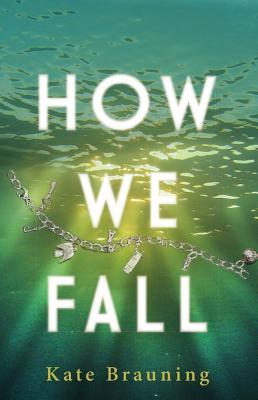
How We FallEver since Jackie moved to her uncle's sleepy farming town, she's been flirting way too much--and with her own cousin, Marcus. Her friendship with him has turned into something she can't control, and he's the reason Jackie lost track of her best friend, Ellie, who left for...no one knows where. Now Ellie has been missing for months, and the police, fearing the worst, are searching for her body. Swamped with guilt and the knowledge that acting on her love for Marcus would tear their families apart, Jackie pushes her cousin away. The plan is to fall out of love, and, just as she hoped he would, Marcus falls for the new girl in town. But something isn't right about this stranger, and Jackie's suspicions about the new girl's secrets only drive the wedge deeper between Jackie and Marcus. Then Marcus is forced to pay the price for someone else's lies as the mystery around Ellie's disappearance starts to become horribly clear. Jackie has to face terrible choices. Can she leave her first love behind, and can she go on living with the fact that she failed her best friend?


How We Fall by Kate Brauning
Goodreads Book Giveaway 
How We Fall
by Kate Brauning

Giveaway ends November 30, 2015.
See the giveaway details at Goodreads.
Enter Giveaway

How We Fall is available through:


Author Bio: Kate Brauning grew up in rural Missouri and fell in love with young adult books in college. She now works in publishing and pursues her lifelong dream of telling stories she'd want to read. This is her first novel. Visit her online at www.katebrauning.com or on Twitter at @KateBrauning.


Twitter-sized bites:
What lessons did @KateBrauning learn from debuting? Find out in her guest post on @Ava_Jae's blog. (Click to tweet
HOW WE FALL author, @KateBrauning, shares 6 lessons she learned from debuting. #pubtip (Click to tweet)
Related Posts Plugin for WordPress, Blogger...