Showing posts with label Across the Universe. Show all posts

My Favorite Multi-POV Novels

Writing multi-POV novels is a tough business. Between writing a fully-formed plot with multiple characters who are all (somewhat) equally involved and invested in the narrative (and thus deserving of their perspective), keeping all the voices distinct, making sure the multiple character arcs line up, and everything else involved, it can be a lot. I've already written posts on how to write multi-POV novels, dual-POV writing tips, choosing POV characters, etc., but one tip I give a lot is to read what you want to write. So if you want to write multi-POV novels, reading them can be really helpful.

I haven't, however, really talked much about multi-POV novels I've enjoyed, so I'm going to fix that now with a list. So if you're looking for multi-POV books, take a look at these:


Six of Crows duology by Leigh Bardugo

What's extra great about this one (besides, you know, everything) is Bardugo mastered not only third-person multi-POV, but she did it while also honing each POV character's distinct voice. It is excellent.


Illuminae Files trilogy by Jay Kristoff and Amie Kaufman

This one's an interesting example, because there are SO many POV characters. In Illuminae, there's Kady, Ezra, AIDAN (the AI), people transcribing video files, and probably more than I'm forgetting. The trilogy is told in a found materials format, which is unusual, and awesome, and the way multiple POVs are balanced and played with makes for super interesting reading.


Shades of Magic trilogy by V.E. Schwab

Another excellent multi-POV in third person trilogy. Also I just really love V.E. Schwab's third person voice like whoa.


Across the Universe trilogy by Beth Revis

This is the first dual-POV YA I read and wow, I loved it. It's an old example but remains the book that taught me how effective first person dual-POV can be, so I will continue recommending it forever.
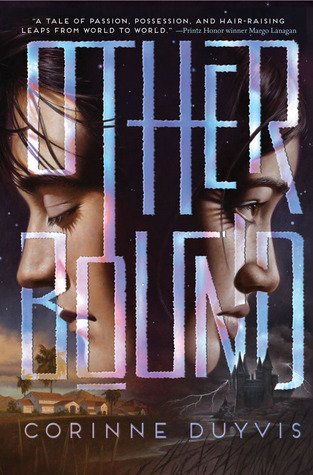


Otherbound by Corinne Duyvis

This is a great one because not only is it dual-POV chock full of great representation, but the two POV characters literally live in different worlds. So that's pretty neat.


The Scorpio Races by Maggie Stiefvater

This book is really beautifully written and another great example of distinct YA third person dual-POV voices.


Others (both that I've read and haven't): The 5th Wave by Rick Yancey, Carry On and Eleanor & Park by Rainbow Rowell, The Mortal Instruments series by Cassandra Clare, Faking It by Cora Carmack, Starbound trilogy by Amie Kaufman, Under the Never Sky trilogy by Veronica Rossi, Legend trilogy by Marie Lu, This is Where it Ends by Marieke Nijkamp, and Mind Games by Kiersten White.

What are some of your favorite multi-POV novels?

Twitter-sized bite:
What are some of your favorite multi-POV novels? @Ava_Jae shares some picks & kicks off the discussion on her blog. (Click to tweet)

How YA Books Have Made Me a Better Writer


NOTE: Don't forget, you have until THIS Friday (6/13) to enter a guest post that could be featured here on Writability! Go here for details.

So I’ve already mentioned several times the importance of reading what you write, and why reading is not optional for writers, and why we shouldn’t shame each other for our reading choices.  

But in light of a certain article shaming adults for liking YA, and in honor of the fabulous #PromoteaYAInstead and #NoShameYA, I want to share how YA books have made me a better writer. Because they have.

The Shatter Me series by Tahereh Mafi taught me that the conventional rules and styles of language can be broken, and broken beautifully. They taught me that poetry, beautiful imagery and action aren’t mutually exclusive. The Shatter Me series also remains an awesome example of how to completely nail character development over the course of a series.

The Across the Universe series by Beth Revis arguably has influenced me the most with my writing. The AtU series taught me Sci-Fi doesn’t have to be robots and super technical science-y things—it can be mixed with romance and mystery and make for some awesome reading. It taught me that dual POV is a thing I actually like, and, as it turns out, love to write. It also taught me some really neat stylistic tricks and reminded me that action, death and things blowing up is fun to read and write about.

Every Day by David Levithan taught me about the power words can have when they connect to a reader and really get them to empathize. It’s a reminder that every person (and character) has their own story. It also serves as a brilliant example of how to get your readers to connect to a character with just a couple pages.

There are so many lessons to be learned from YA, whether it’s for writers or everyday life. And if YA isn’t your thing, that’s totally okay, but know that the rest of us? We’ll continue to proudly read some really awesome books, and learn from them along the way.

These are just a few examples of lessons I’ve learned from YA, but now I want to hear from you. What have you learned from YA novels? 

Twitter-sized bites: 
Writer @Ava_Jae shares lessons she's learned from YA novels. Have you learned anything from YA? Join the discussion! (Click to tweet)  
How YA books have made @Ava_Jae a better writer. #PromoteaYAInstead #NoShameYA (Click to tweet

When Writing, Cannibalize Everything

Photo credit: Jody Art on Flickr
It happened again! One of you fabulous readers (thank you, Robin) asked a question I haven’t yet answered that I thought most certainly merited a post (yay!). The question was this:
“I read your post about reading what you write, and coming to love your genre. So I was wondering, what if one incorporates other genres and mediums? One of my WIPs is a YA-fantasy adventure with a lot of fairytale elements, but I've taken what I learned reading horror (mostly of Poe) to create dread in my story, and I've paid attention to cinematic techniques seen in films by Studio Ghibli to create an endearing and living world. What is your perspective on cross-referencing genres and mediums?”
I’m sure most of you have heard that you should write what you know. While I partially agree with that (more on that topic some other time), I think it applies especially well when referencing incorporating what you have learned from creative mediums, whether writing, movies, music, etc. You see, I’ve written in the past about why it’s so important for writers to be well-read, and this question right here is one of the many reasons why.

While I tend to read a lot of YA and some MG novels, within those age groups I read from various genres: paranormal fantasy, straight fantasy, sci-fi, dystopian, etc. And from every book that I’ve read, regardless of the genre, I’ve learned something—whether it’s the importance of voice, or including poetry in prose, or what a good opening and memorable characters look like. And when I write and revise, I make a point to look back on those lessons and continue to learn new ones from whatever books I read throughout the course of the year.

One of the most important tasks a writer has is to absorb everything possible—what rain feels like in November when you’ve forgotten an umbrella, how that movie gave you the chills, why that book was so gripping that you stayed up until three in the morning on a work night to finish it, how that song makes you pause every time it comes up on your playlist. Nothing is sacred to the writer—not that terrible cut that required stitches, or your first kiss, or the first time you laid eyes on your newborn. Writers make note of and store their experiences for writing reference later on.

In short, writers cannibalize everything. Or at least, they should. And when it comes to genre, I don’t believe it’s any different.

Let’s think for a moment: when is the last time you read a book or watched a movie that was 150% one genre? Nearly every non-romance genre has some sort of romantic subplot (even The Lord of the Rings which is as straight fantasy as it gets has romance) and many non-mystery novels have some sort of mysterious intrigue and so on. Don’t believe me? Let’s take a look at a couple novels.

  • Across the Universe by Beth RevisAcross the Universe is undoubtedly a YA Sci-Fi novel, but it certainly cross-references other genres as well, the most obvious of which include a romantic subplot and murder mystery. That doesn’t make it a mystery or romance novel, but it still has elements of those genres. To further draw a point, it’s listen on Amazon under “Teens > Mysteries” and at Barnes & Noble.com under “Teens- Romance & Friendship” and “Teens- Science Fiction.” 

  • The Fault in Our Stars by John Green—I would have thought that The Fault in Our Stars would be listed under YA Contemporary, but I’ve found that it is often listed under romance. Regardless, it has elements of romance, realistic fiction, humor and even tragedy. That doesn’t mean you’re going to find it in the Humor section at Barnes & Noble (if you do, it’s been terribly misplaced), but you can’t deny that elements of those genres exist within the novel. It’s listed on Amazon under “Teens > Love & Romance” and at Barnes & Noble.com under “Teens: Realistic.” 

Just two examples of many, but the point is this: genre is rarely cut and dry and you certainly shouldn’t be afraid of drawing from absolutely everything you’ve learned along the way. Your writing will be better for it.

How do you pull from other genres, mediums and experiences in your work? What multi-genre novels can you think of as examples?

Why Use Multiple POVs?

Photo credit: --Tico-- on Flickr
So not too long ago I wrote a post on how to choose a POV character and once again, one of you fantabulous commenters asked a question that inspired a post—this time, on using multiple POVs. 

Adding a second or third POV into your story isn’t a decision to be taken lightly—it’s much more challenging to write two or three (or more) distinctive voices than it is to write one, and creating effective transitions between the POV shifts is tricky. On top of the technical challenges behind crafting multiple POVs into a novel, there’s the added obstacle that some readers just don’t like multiple POVs because they find the head-hopping jarring and difficult to follow. When you write multiple POVs, you run the risk that a reader may put your book down simply because they didn’t like the way you handled having more than one POV character.

However, when done correctly, multiple POVs can add an interesting dimension to your story.

Multiple POVs allow your reader to see your story from many angles—they don’t necessarily have to take one character’s word for granted, and the ability to hop between many characters’ heads can be especially interesting when the characters don’t necessarily see eye to eye. As an added bonus, it also allows you to give the reader more information than either one character has—not only do they know what Character A knows, but they have access to Character B’s mind as well.

In Across the Universe (Beth Revis), for example, the readers have access to both Amy and Elder’s thoughts, who see the events that unfold in the story from completely different perspectives as Amy is a passenger on the spaceship Godspeed who was cryogenically frozen and accidentally awakened many decades before she was supposed to be woken up, while Elder is a ship-born teenager who is being raised to become the next leader of Godspeed. Readers very quickly learn the customs, beliefs and shifts in language (i.e.: “frex” instead of another four-letter word) from Elder’s thoughts, while we sympathize with Amy who is, in essence, one of us—an Earth born girl trying to understand the new world she was thrust into.

Unlike Across the Universe, however, The Iron Fey series (Julie Kagawa) used multiple POVs in an entirely different way—while the first three books were told from Meghan Chase’s POV, the final book of the series, The Iron Knight gave readers a glimpse into winter fey Ash’s mind. Without spoiling anything, this shift in POV was necessary due to events that happened in the third book that led to Meghan and Ash’s separation, and The Iron Knight is largely about Ash trying to return to her. While the POV shift was a little more jarring as readers were already accustomed to hearing from Meghan (not Ash), I personally found the extra insight into Ash’s mind to be a fascinating experience.

There are many different ways of handling multiple POVs, but the key to writing it is to make sure that both POVs are absolutely necessary to the story. If so, it can be a great way to add an extra layer of complexity to your plot, but if not, you run the risk of losing readers who will wonder why the extra POV was necessary to begin with.

What do you think of multiple POVs in books? Do you enjoy reading or writing them? Why or why not?

Book Review: Across the Universe by Beth Revis


Picture credit: Mine!

So I’m going to change the way I do book reviews.

Turns out, at least this year, my choices of what to read have been pretty stupendous, because ever since I’ve started writing reviews I’ve read books that I thought deserved five stars. Call me soft or just really good at choosing good books, but it doesn’t help you guys if I rate every book the same way.

So! Rather than rating every book on a number of stars, I’m just going to tell you guys what I did and didn’t like about it and whether or not I recommend it. Fair? I thought so. To sweeten the pot, if you still want a numeric rating, you can friend me on Goodreads, where I will still be handing out the sparkly golden stars.

Onto the review!

I’ll start off by saying that I don’t normally read sci-fi, so if you’re not a hard-core sci-fi lover, don’t give up on this one yet—in fact, Across the Universe is the first sci-fi-ish book I’ve read in years.

So if I don’t read sci-fi, why did I pick up this book? Truth be told, the cover had a lot to do with it—it caught my eye on the shelf and I picked it up and liked the summary, and the first chapter. Not only that, but I read Beth Revis’ blog and she seemed like a pretty cool author. Plus she interacts on both Twitter and tumblr which is a pretty nice bonus if you ask me.

So what’s the book about, you ask?

From Goodreads:

“Seventeen-year-old Amy joins her parents as frozen cargo aboard the vast spaceship Godspeed and expects to awaken on a new planet, three hundred years in the future. Never could she have known that her frozen slumber would come to an end fifty years too soon and that she would be thrust into the brave new world of a spaceship that lives by its own rules.

Amy quickly realizes that her awakening was no mere computer malfunction. Someone - one of the few thousand inhabitants of the spaceship - tried to kill her. And if Amy doesn't do something soon, her parents will be next.

Now, Amy must race to unlock Godspeed's hidden secrets. But out of her list of murder suspects, there's only one who matters: Elder, the future leader of the ship and the love she could never have seen coming.”

I really enjoyed this book. I was worried that it might be too spacey for my tastes (since, as I said, I don’t often read sci-fi), but Across the Universe had me hooked. There’s a murder mystery, romance that isn’t overdone (which, I have to say, is pretty refreshing) and some memorable characters. The only thing that bothered me was the dual-POV—the book is told both from Amy and Elder’s alternating first person POV, which was a little difficult to adjust to at first, but I actually enjoyed it later on. In fact, the dual POV really made the ending particularly fantastic stylistically, in my opinion.

Oh, and have I mentioned the twists? There aren’t many books that have surprised me like Across the Universe did, and I can count on one hand how many book surprised me more than once (Across the Universe, of course, being one of them).

Mystery. Romance. Twists. I highly recommend this one. It’s a great read and I’m definitely looking forward to the sequel.

So I’ve got to ask—what are you guys reading right now? 

To Be Read: The Ever-Growing List

So since I thought I might change things up a little, I decided to talk about books. Specifically, my to be read pile.

Because I write YA, it should be no surprised that my favorite genre to read just so happens to be YA. Specifically dystopian or paranormal. Something about those genres gets me excited every time, provided it has a decent story behind it.

Have I mentioned I’m a little picky with what I read?

Anyway, here we go. My TBR pile. I got all the pictures and summaries off of Goodreads. 
  1.        Across the Universe by Beth Revis
    “Seventeen-year-old Amy joins her parents as frozen cargo aboard the vast spaceship Godspeed and expects to awaken on a new planet, three hundred years in the future. Never could she have known that her frozen slumber would come to an end fifty years too soon and that she would be thrust into the brave new world of a spaceship that lives by its own rules.

    Amy quickly realizes that her awakening was no mere computer malfunction. Someone - one of the few thousand inhabitants of the spaceship - tried to kill her. And if Amy doesn't do something soon, her parents will be next.

    Now, Amy must race to unlock Godspeed's hidden secrets. But out of her list of murder suspects, there's only one who matters: Elder, the future leader of the ship and the love she could never have seen coming.”

    I picked this one up at Borders and was drawn in immediately. Something about the nasty, painful procedure that makes you “frozen cargo” and the first person POV pulled me in. The book alternates in POVs between Amy and Elder (I’m assuming her future love interest) and though I found that a little jarring, I think it still works. From the little bit I read, anyway. I suppose I’ll find out.

  2. 2.    Matched by Allie Condie
           “Cassia has always trusted the Society to make the right choices for her: what  to read, what to watch, what to believe. So when Xander's face appears on-screen at her Matching ceremony, Cassia knows with complete certainty that he is her ideal mate . . . until she sees Ky Markham's face flash for an instant before the screen fades to black.

    The Society tells her it's a glitch, a rare malfunction, and that she should focus on the happy life she's destined to lead with Xander. But Cassia can't stop thinking about Ky, and as they slowly fall in love, Cassia begins to doubt the Society's infallibility and is faced with an impossible choice: between Xander and Ky, between the only life she's known and a path that no one else has dared to follow.”

          I read the first page of this one at Borders, too. I like the voice, and I’m a sucker for the occasional love triangle. Looks interesting and I currently can’t get enough of dystopia so…added to the list!

  3.        Forbidden by Ted Dekker and Tosca Lee (September 13, 2011)
    “A terrible truth has been revealed to one man: the entire human race has been drained of every emotion except one— fear. To bring life back to the world, Rom must embark on a journey that will end either in his own demise or a reawakening of humanity. But to bring love and passion back into existence will also threaten the powers of the world with the revolution and anarchy that had nearly destroyed them previously.

    After happening upon a journal through strange circumstance, Rom's world is shattered. He learns that humanity long ago ceased to "live," that it exists today in a living death of emotions. In a terrible risk, Rom exposes himself to the vial of blood folded into the old leather of the journal. His change is fearful and fraught with mind-bending emotion. A once-pious observer of the Order's passionless statues, he is filled with uncontrollable impulses. He is filled with love.

    He is undone, terrified, and alone in the desolate world.”

    Ok, I was ready to preorder this one before I even knew it was about, but that’s because Ted Dekker co-authored it and well…I’ve mentioned my Dekker obsession before. ANYWAY. This book isn’t out yet, but I seriously can’t wait. I’ll be preordering it without a doubt.

  4.        Shatter Me by Tahereh Mafi (November 15, 2011)
    “Juliette hasn't touched anyone in exactly 264 days. The last time she did, it was an accident, but The Reestablishment locked her up for murder. No one knows why Juliette's touch is fatal. As long as she doesn't hurt anyone else, no one really cares. The world is too busy crumbling to pieces to pay attention to a 17-year-old-girl. Diseases are destroying the population, food is hard to find, birds don't fly anymore, and the clouds are the wrong color. 

    The Reestablishment said their way was the only way to fix things, so they threw Juliette in a cell. Now so many people are dead that the survivors are whispering war- and The Reestablishment has changed its mind. Maybe Juliette is more than a tortured soul stuffed into a poisonous body. Maybe she's exactly what they need right now. 

    Juliette has to make a choice: Be a weapon. Or be a warrior.

    Sadly, the cover hasn’t been released for this one yet, but I am very excited about this. Dystopian novel AND paranormal elements? C’mon, that’s like combining my two favorite genres in one. IN ONE. Needless to say, I’ll be preordering this one, too.

  5.          Insurgent by Veronica Roth
    Ok, ok, I know it’s a little presumptuous to put this on my TBR pile before it has a blurb or a cover, but Divergent was just that amazing. I loved it and as soon as there’s a release date for Insurgent, I’ll be preordering it. 
So for the sake of not drowning you in a ridiculously long post, I’m ending it there, even though there ARE more.

Now! The fun part! I want to know, peeps, what’s in YOUR TBR pile?

Related Posts Plugin for WordPress, Blogger...