On Developing Characters

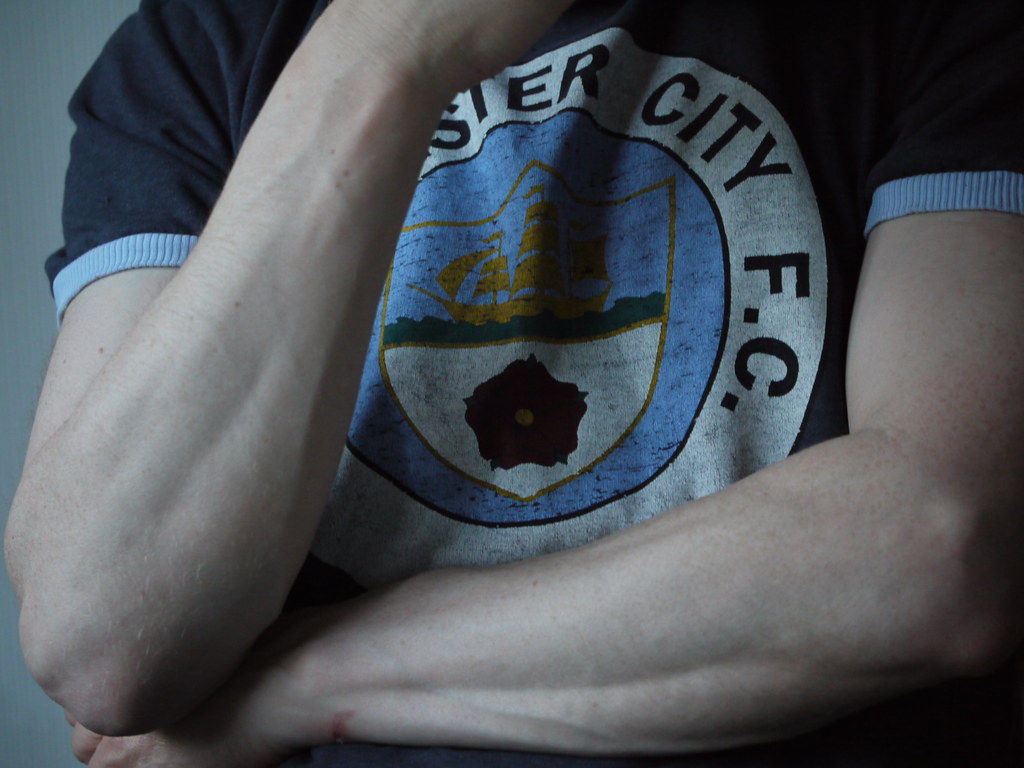
Photo credit: notfrancois on Flickr
Fun fact: after I’ve finished plotting a potential book from start to finish and I’ve prepared everything I need to to start writing, I know very little about my characters.

I mean, when it comes to my protagonist and love interest(s), I know super basics like name and physical description, but if I’ve fleshed out any personality at all it’s usually only a really vague idea, if anything.

The truth is, I don’t really get to know my characters until I’ve started first drafting—and that also goes for my protagonist. And for me, this where the fun almost-pantsing comes in—because while I know pretty much how the plot is going to lay out, I don’t really know how my characters are going to develop, at least, not in the first draft.

This is also why I don’t call a WIP a WIP until I’ve hit 10,000 words—I have, on more than one occasion, started writing a totally solid idea then put it away because the protagonist’s voice just didn’t sit with me. But that’s something I really can’t predict until I’ve started writing.

There are a few things my protagonists tend to have in common: they’re often snarky because I’m a snarkmonster IRL, they’re often internally conflicted because I love writing internal conflict, and many times they’re outcasts of some sort, because I love writing characters on the fringe of society.

But honestly? That stuff can manifest in limitless ways, and there’s still so much room for drastically different personalities, and ways of speaking and thinking and viewing the world. And I love figuring it out along the way, and I never tire of having a protagonist surprise me with a stray thought, or memory, or off-handed comment, or unexpected action that I never could have predicted from day one.

In later drafts is where I then take those personality seeds and push them further. It’s where I dig into characters and unearth the stuff the first draft hinted at—it’s where I push them harder to be raw and real.

Unlike plotting, I tend to develop my characters really instinctively. From a wisp of an idea upon character conception to a fully-developed, layered character over time.

And that’s how I develop my characters. How do you develop yours?

Twitter-sized bite:

Writer @Ava_Jae shares how she develops characters instinctively. What does character development look like for you? (Click to tweet)

Discussion: What’s Your Favorite Type of Swag?

Photo credit: darknesschildsin on Flickr
So somehow, 2015 is halfway over, which means things are starting to gear up for 2016 debuts. Which is crazy, and exciting, and yay.

One discussion point I frequently see on Twitter is what everyone’s favorite swag is, which I think is an excellent question, partially because I hadn’t thought much about it before I saw people asking and partially because…well it’ll be good to know when I start ordering swag. So. :D

Personally, I like bookmarks because they’re useful and pretty, but I also like pins, those rubber bracelet things (I still have one that says “Nerd is the New Black” for Megan Erickson’s Make It Count), and though I’ve yet to get a book poster, I would love me some book posters.

I’ve also seen people mention tote bags (cool!), and I know pens exist but I never found those all that interesting probably because I don’t often use pens (and on Twitter at least, I haven’t seen them mentioned much). I’ve also seen super creative suggestions though, like necklaces and book-specific swag like Down With the Shine’s jars (which makes sense if you look at the super-awesome cover) or Mockingjay pins for The Hunger Games.

I’ve seen super-cool t-shirts, fun postcards, nail polish, awesome temporary tattoos, cute magnets, and I’ve heard people mention bookplates.

So all in all, the swag choices are close to limitless. But for those of you who like swag, I’m curious: what’s your favorite type of swag?

Twitter-sized bite:
Do you like book swag? What's your favorite type? Join the discussion on @Ava_Jae's blog. (Click to tweet)

Types of Tension

Photo credit: Smabs Sputzer on Flickr
So I’ve blogged about the vital importance of conflict in a story, as well as how tension can (and should) be used, but it’s been a while since I’ve blogged about either and I’d like to break it down a little more.

To reiterate quickly, a story without conflict or tension isn’t really a story—or, if it is, it’s a rather boring one, to put it nicely. Readers don’t want to read about characters with perfectly happy lives—we want to see characters deal with challenging circumstances, whether realistic or super speculative, and face them one way or another. But without the challenge? There’s no story to be had.

Similarly, tension is necessary throughout the story to keep the interest and build up throughout the plot until we hit the peak point of conflict. The great thing about tension, however, is it can manifest in so many different ways.

  • Circumstantial tension. This is tension that comes from extenuating circumstances/some kind of outside force. Whether it’s caused by poverty, an authoritarian government, being on the run, or trying not to flunk out of college, this is tension that weighs down on the protagonist caused by circumstances out of their control.

  • Tension between characters. I wrote a whole post on this one, so I won’t go into every detail, but the short version is this: characters who always get along without a problem are characters who are not being used to their fullest potential.

  • Sexual tension. Whenever there’s a love interest, you know this has to play a part. Romantic relationships in books aren’t just about being near each other and kissing and getting it on—it’s the tension between them when they notice each other, when they’re close and realize they’re attracted to each other, when they want to kiss but don’t. It’s noticing every glance and touch—and it’s internalizing the building need to be closer. Without the sexual tension, the romantic relationship falls flat because they characters won’t have real chemistry. 

While this doesn’t cover every type of tension out there, hopefully it’ll get you thinking a little more about the different possibilities available to you for ramping up the micro-conflict in your story.

Do you utilize different types of tension in your writing?

Twitter-sized bites:

Writer @Ava_Jae says, "a story without conflict or tension isn't really a story." What do you think? (Click to tweet
Do you use different types of tension in your writing? Join the discussion on @Ava_Jae's blog. (Click to tweet)

Vlog: Do You Have to Write Every Day?

There are a million and two quotes online about how writers have to write every day—but is it true?


RELATED LINKS: 

Do you think writing every day is an essential part of being a writer? Why or why not?

Twitter-sized bites: 

"If you work yourself to exhaustion, it's going to show in your writing." (Click to tweet)  
"It is absolutely NOT a requirement to write every day to call yourself a writer." (Click to tweet
Do you have to write every day to call yourself a writer? @Ava_Jae doesn't think so. #vlog (Click to tweet)

Why I Can’t Talk About Your Novel

Photo credit: markus spiske on Flickr
NOTE: I want to add that this post isn't geared to any one person. I get messages like these a lot, and it's totally okay, and I don't mind giving general pointers. Really, I don't. But it felt important enough to talk about why I can't get too specific.

So as a writer who blogs, vlogs, and tweets about writing and writing tips, it’s not really all too surprising that I frequently get questions about how to make someone’s MS better—questions that are really specific to that person’s WIP. And while I’m not at all that bothered by it, it happens often enough that I thought a post might be a good idea.

Because the truth is I can’t talk to you about your novel.

Writing is so super-crazy-subjective and so very specific to a case-by-case basis. And yes, of course there are general tips and techniques and strategies I can and do share, but there are always exceptions, too, and the only way anyone can really figure out what the best move is for your specific manuscript is to read it with a critical eye.

Only problem is most of the time when I get e-mails from lovely readers asking about their MSs, I haven’t read their work. So it’s really difficult for me to even begin to try to talk about whether or not something is hypothetically working, and I can’t really offer to look at it either because quite frankly? I need that time for my writing stuff and my CPs and betas.

So while I’m happy to point people back to blog posts that talk about general issues mentioned, I unfortunately can’t talk about any specific cases unless I’m critiquing something like in a Fixing the First Page post. And even then I can only talk about the first 250 words, which, in the grand scheme of a 50-100,000 word novel isn’t that much.

But I do what I can here, talking about writing stuff in general terms. And I try to listen to see what people are asking questions about, what people want to see more of, what I didn’t articulate well enough.

I don’t know if it’s enough, but I do know it’s the best I can do. And I hope it’s acceptable to you guys too.

Twitter-sized bite: 
How specific can writing advice posts be? @Ava_Jae explains why the general usually works best. (Click to tweet)

Book Review: MORE HAPPY THAN NOT by Adam Silvera

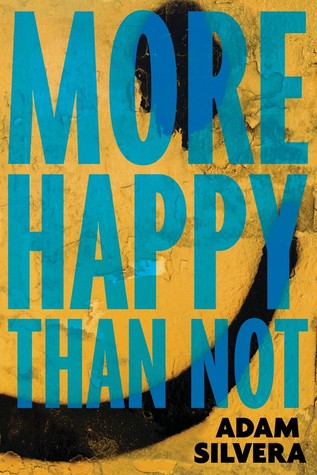
Photo credit: Goodreads
So I’d heard a ton about this book and did that thing I don’t do very often and pre-ordered a book from an author I hadn’t read before. And while More Happy Than Not by Adam Silvera wasn’t quite what I was expecting, I definitely didn’t regret it. 

Before I go on, here’s the Goodreads summary:
“The Leteo Institute's revolutionary memory-relief procedure seems too good to be true to Aaron Soto — miracle cure-alls don't tend to pop up in the Bronx projects. But Aaron can't forget how he's grown up poor or how his friends aren't always there for him. Like after his father committed suicide in their one bedroom apartment. Aaron has the support of his patient girlfriend, if not necessarily his distant brother and overworked mother, but it's not enough.  
Then Thomas shows up. He has a sweet movie-watching setup on his roof, and he doesn't mind Aaron's obsession with a popular fantasy series. There are nicknames, inside jokes. Most importantly, Thomas doesn't mind talking about Aaron's past. But Aaron's newfound happiness isn't welcome on his block. Since he can't stay away from Thomas or suddenly stop being gay, Aaron must turn to Leteo to straighten himself out, even if it means forgetting who he is. 
Adam Silvera's extraordinary debut novel offers a unique confrontation of race, class and sexuality during one charged near-future summer in the Bronx.”
It’s kind of hard to write about this one without spoiling anything, but I do have several thoughts:

Firstly, the intersectionality in this book was so great to see. I loved reading a protagonist who is Latino but not necessarily Spanish-fluent (which doesn’t sound like a big deal, but as a Latina but not exactly Spanish-fluent person myself, it was very nice to see we exist), and I realized while reading this is one of the few YA books I’ve seen with characters from a lower socioeconomic background.

Secondly, this book broke my heart so many times. Emotions go all over the place with this one, with big highs and really sad lows, and I absolutely loved the twist. Aaron and many of the other characters are complicated, layered characters who felt completely real, and they were a treat to read.

I will say that the pacing in the first third of the book or so was a little slower than my liking, and for a while I wasn’t really sure where the plot was going (and when I did think I knew where the plot was going, I was so wrong which was great). But as things began coming together, the whole story wove together really nicely and I definitely enjoyed it.

More Happy Than Not will bring on the feels and really make you connect with the characters. This book was a delight to read and I definitely recommend it to those looking for something different, gritty, and honest.

I’m giving 4/5 stars to this wonderful YA and I can’t wait to read Silvera’s next book!

Diversity note: The protagonist is Latino, gay, and like many of the characters, from a lower socioeconomic background. Other major characters were also PoC, including the main love interest, and the protagonist also suffers from depression.

What have you been reading lately? 

Twitter-sized bites: 
.@Ava_Jae gives 4/5 stars to MORE HAPPY THAN NOT by @AdamSilvera. Have you read this intersectional YA? (Click to tweet
Looking for an emotional, twisty, honest YA read? Check out MORE HAPPY THAN NOT by Adam Silvera. (Click to tweet)

Top 10 Favorite Reads of 2015 (So Far)

So I follow a lot of bloggers on Twitter (surprise! not) and I learned very quickly that yesterday was Top Ten Tuesday, a meme created by The Broke and Bookish. Yesterday's theme was top ten reads of the year, and that looked like a ton of fun, so I thought I'd join in a day late.

As it so happens, I've rated exactly ten books 4.5 or 5 stars, so choosing my top reads of the year so far was pretty easy. Yay!

So without further ado, here are the top ten books I've read in 2015 (which may or may not have actually been released this year) so far in no particular order:

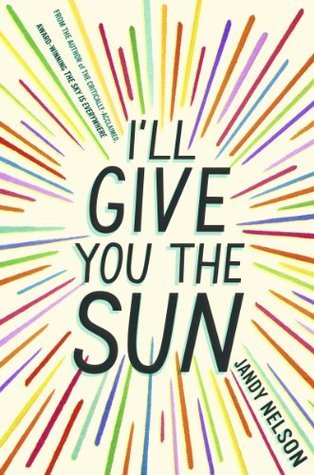
Photo credit: Goodreads
  1. I'll Give You the Sun by Jandy Nelson—This book actually jumped onto my favorites list, because wow, it was just so emotional, and beautifully written, and it really, truly made me feel so many things while I was reading. Also, bonus points for showcasing some diversity (one POV character is gay). (Full review)

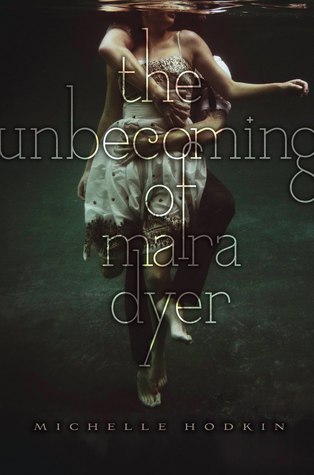
  2. Photo credit: Goodreads
  3. The Unbecoming of Mara Dyer by Michelle Hodkin—I know I'm way late to the party with this one, but I finally got around to reading it and whoa. It was so eerie and twisty, and totally left me wondering what the hell I just read in the best way possible. (Full review)


  4. Photo credit: Goodreads
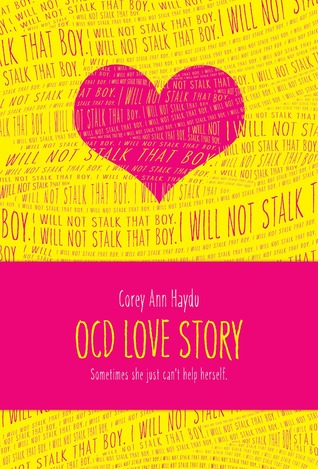
  5. OCD Love Story by Corey Ann Haydu—So this one was recommended to me by Dahlia Adler, and I'm so, so glad a very smart person picked it off my Christmas book list and gifted it to me. This is the first book I've read with explicit OCD representation, and I thought it was really respectfully done. So much so that I wrote a post about why books like this are so important to me.

  6. Photo credit: Goodreads
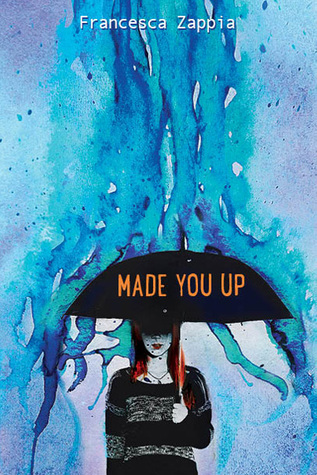
  7. Made You Up by Francesca Zappia—Kind of similar to Mara Dyer, but not nearly as creepy, Made You Up really makes you stop and think about what's real and what's not. This is the first book I've read featuring a protagonist with paranoid schizophrenia, and not only does it have a brilliantly unreliable narrator, but the whole book was completely fascinating and a really, really unique read. (Full review)

  8. Photo credit: Goodreads
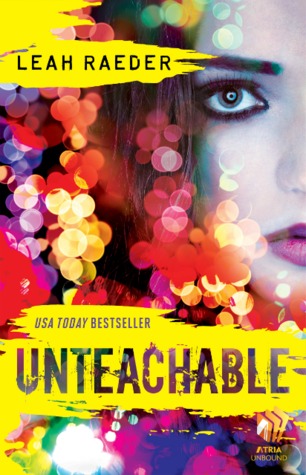
  9. Unteachable by Leah Raeder—So this was my first glimpse at Leah Raeder's work, and now I'm 100% a fan because her work is everything I love about the sexier side of New Adult. Unteachable is swoony, very steamy and really explores the depths of a forbidden student/teacher relationship, punctuated with Raeder's really gorgeous prose.

  10. Photo credit: Goodreads
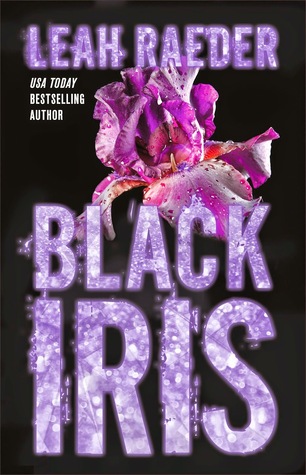
  11. Black Iris by Leah Raeder—Another (really friggin' amazing) Leah Raeder book! Unlike Unteachable, Black Iris is a NA Thriller, and it is super, super dark (as well as sexy because, c'mon, this is a Raeder book). Once again I was really impressed by Raeder's prose, but more than that I loved seeing how she combined this super dark plot with incredibly layered, twisted characters and a hell of a lot of diversity. (Full review)

  12. Photo credit: Goodreads
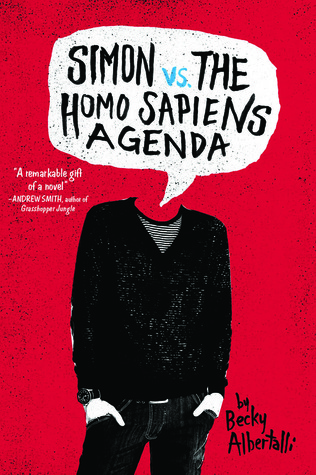
  13. Simon vs. The Homo Sapiens Agenda by Becky Albertalli—This book was so cute. SO. CUTE. Unlike many on this list, Simon vs. is a really happy, adorable book with a super cutesy m/m romance and actually had me giggling and saying "aww" out loud while reading. (Full review)

  14. Photo credit: Goodreads
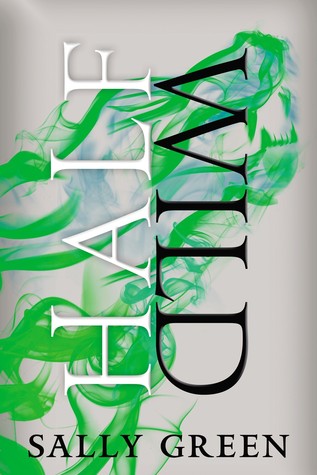
  15. Half Wild by Sally Green—So Half Bad jumped onto my favorites list when I read it, which meant I had super high expectations for Half Wild, and boy, those expectations were 150% met. Half Wild is super dark and exciting and the series has my favorite depiction of witches since Harry Potter and as a bonus? The MC is bi and there is angst and stuff between boys. My heart. (Full review

  16. Photo credit: Goodreads
  17. Trust the Focus by Megan Erickson—So this is one of my favorite NA romances, and I keep recommending it because it gave me all the warm fuzzies and a full spectrum of emotion while reading. Justin and Landry's journey together was a memorable one that I still think about, and the next book in the series, Focus on Me, comes out this month and I seriously can't wait. (Full review)

  18. Photo credit: Goodreads
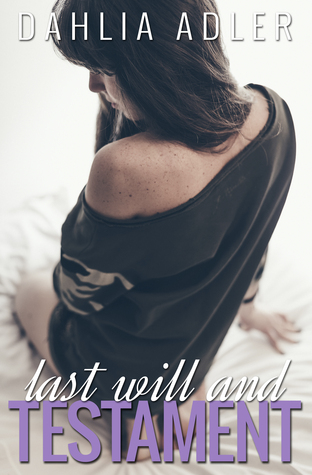
  19. Last Will and Testament by Dahlia Adler—This was another really great NA read; very swoony and sexy, and I loved the awkward flirting, and the student/TA relationship was A+. Furthermore, Last Will and Testament presented a situation rarely seen in NA—a college student who loses her parents in an accident and becomes the guardian of her two younger brothers.
What are some of your favorite reads of 2015 so far?

Twitter-sized bite: 
.@Ava_Jae shares her top 10 reads of 2015 so far. What books are on your list? (Click to tweet)
Related Posts Plugin for WordPress, Blogger...