Discussion: What are Your Favorite Titles?

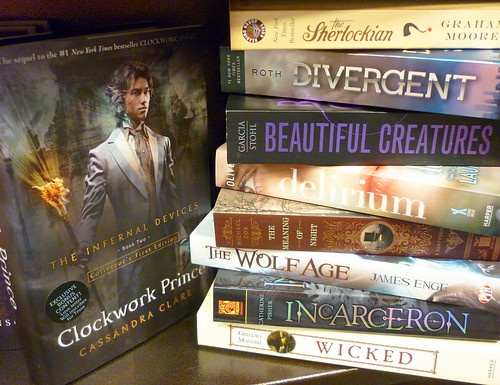
Photo credit: cheri228 on Flickr
I’ve been thinking about titles a lot lately.

There was once a time when I loved single-word titles. They were snappy, cool and easy to remember, and in my head, basically the bomb. Some of my favorites included Saint and the sequel Sinner by Ted Dekker.

But over time, I’ve come to realize that I’ve been gravitating more and more to longer, more evocative titles. I’ve realized I really love titles that create interesting images, titles that intrigue and echo elements of the book in an interesting and haunting way.

Some of my favorite titles include:


Interestingly, I haven’t actually read any of those books (yet!), but I’ve found their titles to be particularly memorable.

But now I want to hear from you: what are some of your favorite titles and why? 

Twitter-sized bite: 
What are some of your favorite book titles? Join the discussion at @Ava_Jae's blog. (Click to tweet

5 Dual-POV Writing Tips

Photo credit: kurichan+ on Flickr
So as many of you already know, I love dual-POV narratives. Reading multiple perspectives to me, is fascinating when done correctly, and writing it just never gets boring.

Writing dual-POV narratives, however, can be a little tricky, particularly if you haven’t done it before. Before you start, you’re going to want to make sure that having multiple perspectives is the right choice for your WIP (quick way to figure this out is to determine if you need more than one POV to tell your story. If you don’t, then stick with one POV). Even after you decide it’s the right option, multiple POVs can be tricky to manage, and so I’d like to share five tips to make your lives a teensie bit easier:

  1. Make sure the voices are distinct. This one can be a killer if you don’t get it right. In any multi-POV novel, you should be able to flip to a random page, read a couple sentences, and know which character is speaking. If you find yourself reading and having to check back to the beginning of the chapter to see whose speaking, then that’s usually a blaring sign that your voices aren’t distinct enough. Which leads me to the next point… 

  2. Really get to know your characters. This is the number one way to get two distinct, interesting voices—you need to know your characters inside and out. Level of education, slang, language choices, how their backgrounds affect their perspectives, temperament and values all play into perspective, and you need to know every one of those elements and how they affect your character’s voice.

    Even description varies in POV—what one character notices, pays attention to, and what they think about their surroundings will all vary depending on their individual perspectives. (More on that here).

  3. Pick up where the other character left off. I’m not going to say that I’ve never seen a successful flashback-like format where we went through the same event (or parts of the same event) from multiple character perspectives—I have, and it can work if the perspectives are enormously different. But most of the time, the most effective multi-POV method I’ve seen involves one character picking up where the other left off.

    The reason this works so well is because it avoids redundancy—if two characters are in relatively similar situations, then we really don’t need to see both of them eating lunch together twice from each perspective. By picking up where the previous POV character left off, you keep the story moving without giving readers a sense of massive deja vu. 

  4. Carefully consider why you’re choosing one POV for a particular scene. Dual-POV narratives often alternate back and forth with every chapter—but it doesn’t have to. The most important thing to consider when plotting out your dual-POV book, is why you’re choosing that particular POV for that particular scene.

    Generally, the POV we want to be in is the POV most affected by the events unfolding in that scene. So, for example, if a character’s house catches fire, we want to be in the POV of the character in the house, experiencing the fire—not the neighbor walking down the street outside. If a character is being arrested, we want the POV of the arrested character, not the friend watching from the sidelines, etc.

    Sometimes this can be a little tricky because both characters are affected by the unfolding events. When this happens, you’ll want to think about who is most affected, and if that’s equal, then consider which POV would be the most interesting. 

  5. Read books with multiple POVs. This almost goes without saying, but before you even start thinking about writing a multi-POV novel, you’re going to want to pick up some books with multiple POVs to see how it’s done. Some of my favorite multi-POV novels include the Across the Universe series by Beth Revis, The 5th Wave by Rick Yancey, and Faking It by Cora Carmack. I also recommend Every Day by David Levithan, which doesn’t have multiple POVs, but one POV in several bodies, which brings to light a lot of really interesting points about perspective. 

So those are my dual-POV tips—now I want to hear from you: what have you seen that works (or definitely doesn’t work) in effective dual-POV narratives?

Twitter-sized bites: 
Working on a dual or multi-POV WIP? Writer @Ava_Jae shares five tips you may find helpful. (Click to tweet)  
Five tips you may want to keep in mind when writing a dual-POV novel. (Click to tweet

How to Make Cuts Without Losing Anything Useful

Photo credit: SerenityRose on Flickr
Oftentimes, when editing, there comes a time when we have to make cuts. Whether it’s because the word count is way too high, or the plot is on the sluggish side, or there are unnecessary words floundering about, it’s pretty inevitable to avoid some eventual cutting.

However, cuts don’t have to be painful, and sometimes, they can even be relatively simple. And so I’d like to share five easy cuts to make without experiencing too much pain.

  1. Suddenly. “Jimmy crept around the corner, then, suddenly—” aaaaand stop right there. Suddenly is one of those words that we’ve been tricked into believing are useful. When we write “suddenly,” we’re trying to convey to our readers that whatever happens next happened without warning, but there’s just one problem—you’ve already warned your readers.

    Every time you use the word “suddenly” you’re basically shooting yourself in the foot. “I suddenly felt sick,” for example, takes away the suddenness of the nausea, because your readers read “suddenly” and knew something was about to happen. “Suddenly” doesn’t tell our readers not to expect something, it does the opposite—it warns our readers that something is about to happen. And that’s not very sudden, is it? 

  2. Very, really, etc. These are often throwaway words. I want to say 7/10 times you use “really” or “very”, you can probably replace it with a single word that’s more powerful and effective. “Very tall” for example, could be “towering.” “Really slowly” could be “sloth-like.” Etc. etc.

    There is an exception, however. Sometimes words like “very” and “really” are used to accentuate a voice, especially with younger characters. For example, while “very fast” can almost always be changed to “quickly,” but “navy” may not be better than “very blue” if your POV character isn’t likely to say “navy.” 

  3. Filter phrases. If you haven’t read Chuck Palaniuk’s post on “Thought” verbs, you need to do so now. I’ll wait. Go read it. I mean it.

    Did you read it? I hope so, because I can’t begin to tell you how incredibly helpful it is. Filter phrases are fine for first drafting, but when it comes to revising, it’s time to remove them and replace them with something more powerful.

    In case you didn’t read it, filter phrases are phrases like “he thought” “she wondered” “I knew” “he felt” “she saw” “I smelled” etc. The problem with them is that they add an extra layer of filtering, which distances the readers from the narrative.

    For example, “I smelled freshly baking cinnamon rolls” could be changed to “The sugary scent of cinnamon and sweet glaze was so thick in the air, I could almost taste it.” By showing us what the character is smelling rather than telling us what he/she is smelling, the imagery becomes much more powerful, almost as though the readers are experiencing it themselves.

    Yes, it can be a little tedious going through your manuscript and removing them, but I highly recommend you do. It’ll definitely make your work much stronger. 

  4. I am, do not, will not, did not, etc. This is a super easy one. Oftentimes, especially in dialogue, I’ve seen writers forget their contractions. Sentences like “No, Jim, I do not think I will be going to that party” immediately sounds stilted just because the contractions were forgotten. “No, Jim, I don’t think I’ll be going to that party” sounds much more fluid, yes? (The answer is yes).

    It’s an easy mistake, and you certainly don't have to change all of them to include contractions (in fact, depending on your voice and the voices of the characters, you may only change a couple), but it’s definitely something to keep in mind because changing just a few can really add to the flow.

  5. Unnecessary scenes. This one’s a little trickier, but 9/10 times that I see a plot that’s dragging, it’s because of this little evil sucker.

    Every scene needs to have a purpose. Every. Single. One. If you can’t go through each and every one of your scenes and identify the purpose (for example, character development, plot development, foreshadowing, etc.), then chances are it doesn’t need to be there. Another great way to determine this is imagine what would happen if you removed it—would your story still make sense? If your book would work without the scene, then chances are likely that you don’t need it.  

What other easy cuts can you think of when editing?

Twitter-sized bites:
Gearing up to submit your MS? Writer @Ava_Jae shares five easy cuts you may want to make first. (Click to tweet)  
Why suddenly is not sudden, filter phrases are evil, and other editing tips from writer @Ava_Jae. (Click to tweet

Why Mega-Successful Authors are Good News for Everyone

Photo credit: Beacon Radio on Flickr
So there’s this post floating around from the Huffington Post that activated some massive internal raging. 

I’m not going to link to it, because I don’t want to give it extra free traffic, but if you’re so inclined, it’s pretty easy to find on Twitter, as it involves telling J.K. Rowling to stop writing adult books because she’s hogging up all the success—but it’s ok for her to write kid lit because those books aren’t as good anyway. Yep. 

As much as I'd like to rage about why kidlit is just as important as adult literature, I know I'm preaching to the choir here, so I'm going to focus on something equally important (and a little less screamy).

The thing that some people, particularly people outside of the publishing industry tend to forget, is that there’s room for everyone to be successful. In fact, one author’s mega-success is actually good for everyone else.

Think about it.

Let’s take J.K. Rowling, for example. The Harry Potter series was one of the first major crossover kid lit titles that blew the door wide open for other kid lit successes. Why? Well let’s take a look.

Harry Potter, as we all know, sold incredibly well. Incredibly x a million. Hugely successful books means more money for publishers—who then have more cash to buy more books from writers and give more debuts a chance, more money for bookstores—who then run less of a risk of crashing and burning like Borders, and more money for the authors—who, quite frankly, deserve their success. But it’s not just the money—hugely successful books are the direct result of more people reading. 

Why is more people reading a good thing, you ask? I can’t even tell you how many people I’ve heard say “I didn’t like reading but I loved [insert popular book title here].” Successful books show people who didn’t think they liked to read that reading can actually be great. Successful books get more people buying books, and guess what? Many times when they finish reading said successful book, they look for another book. Because maybe reading isn’t so bad after all and they’ll like the next book just as much as that successful book they just read.

Time and time again, successful books have proven that they help so much more than the author.

The Twilight series brought the spotlight down on YA lit.

The Hunger Games series opened the door to a variety of fantastic dystopian novels, like say, a little series called Divergent.

The 50 Shades of Grey series gave a huge boost to erotica sales.

All of these books created new readers—people who didn’t really read much before because they thought they wouldn’t like it and changed their minds after reading that successful book. And that’s good for everyone, because more readers = more book sales, and more book sales = good news for writers.

See, this one huge aspect of the publishing world that I love—we can genuinely be happy for each other’s successes, even (and especially) crazy-massive successes, because it’s good news for everyone. Books are not a market like cars or laptops or iPads where the customer will only buy one for several years. The success of one book opens the door for the successes of many others, and to me, that’s one of the many things that makes this community so incredibly wonderful.

So let’s cut the jealousy and the bitterness and just be happy and supportive for one another, okay? There’s no need for negativity in this incredible community that I will always love.

What do you think? 

Twitter-sized bites: 
Writer @Ava_Jae breaks down why mega-successes like J.K. Rowling & E.L. James are good for the publishing community. (Click to tweet)  
.@Ava_Jae says “…there’s room for everyone to be successful [in the publishing industry].” What do you think? (Click to tweet

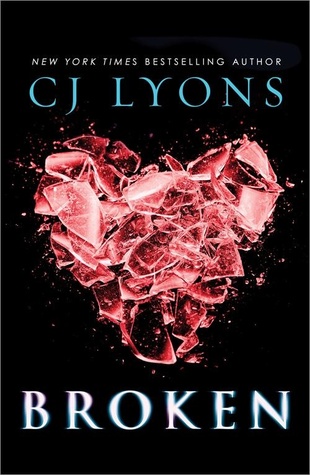
Book Review: BROKEN by C.J. Lyons

Photo credit: Goodreads
I guest posted on Deanna Di Lello's blog just recently on what keeps me writing. Feel free to check out the post and say hi! :)

So I don’t usually do two book reviews in such close proximity, but after I finished reading Broken by C.J. Lyons, I knew I’d have to make an exception. Because this book deserves a boost.

As per usual, let’s start with the Goodreads summary:
“The only thing fifteen-year-old Scarlet Killian has ever wanted is a chance at a normal life. Diagnosed with a rare and untreatable heart condition, she has never taken the school bus. Or giggled with friends during lunch. Or spied on a crush out of the corner of her eye. So when her parents offer her three days to prove she can survive high school, Scarlet knows her time is now... or never. Scarlet can feel her heart beating out of control with every slammed locker and every sideways glance in the hallway. But this high school is far from normal. And finding out the truth might just kill Scarlet before her heart does.”
So what really drew me to this book was the combination of a disabled protagonist (which I was pretty psyched about) and the promise of a fast-paced thriller, according to the blurb on the back cover. And I’ll admit, for the first 150 pages or so, I was wondering when the thriller bit was going to kick in, because I didn’t find the first half of the book to be particularly fast-paced.

That being said, the beginning wasn’t boring. I enjoyed reading about Scarlet’s life, and her perspective as a teenager never having been to public school before was pretty fascinating—it just wasn’t the fast-paced thriller that I’d been promised.

Queue plot twist.

I don’t want to spoil anything, so I’m not going to give details, but I finished the second half of the book in a couple hours. I don’t usually stay up late to finish a book (which I know is rare for a voracious reader like myself, but I tend to be pretty self-disciplined), and yet I totally did with this book. Post plot twist, the “fast-paced thriller” promise really did live up to my expectations.

Broken features a disabled protagonist who is doing everything she can to live her life to the fullest, covers mental illness in a powerful and realistic way and definitely ends with a bang. I’m rating it 4/5 stars and giving it a definite thumbs up.

I'd love to read more books that cover disability and/or mental illness while still providing an exciting plot. Any recommendations? 

Twitter-sized bite: 
Writer @Ava_Jae gives BROKEN by C.J. Lyons 4/5 stars. Have you read this book? (Click to tweet

To Pen Name or Not to Pen Name?

Photo credit: Athanasius on Flickr
So here’s a topic I’ve somehow managed not to cover, or even mention for that matter—pseudonyms!

Pen names are relatively common amongst writers and are used for various reasons, some of which include:

  • Avoiding gender bias. Unfortunately this one really only applies to ladies, because most people don’t really think twice about reading a book written by a male author regardless of the genre. But unfortunately, there are people out there who won’t read books written by women. Or won’t read books of a certain genre written by women. Which I find infuriating, but that’s another post all on it’s own.

    Oftentimes, writers will abbreviate their names to make them more gender-neutral in order to avoid this. J.K. Rowling, for example, famously chose the pen name J.K. over her name, because some boys might have been put off by reading a book written by Jo Rowling. 

  • Famous name confusion. If your birth name happens to be Barbara Kingsolver or Stephen Koontz or Nicholas Sparks, etc., then you may want to consider choosing a pen name to avoid confusion and awkward conversations that end in “No, I’m not that Nicholas Sparks.” 

  • Difficult to pronounce name. If your name is made up of mostly consonants or is otherwise difficult to pronounce, then that’s another reason to consider a pen name. 

  • Writing in multiple genres. As I understand it, this is usually only a reason if the genres are extraordinarily different, like, say, Middle Grade and Erotica. Or if you’re an Elementary school teacher who writes Erotica, and you don’t want your students (or their parents) stumbling onto your work. Or something of the like. 

  • Privacy and/or other personal reasons. Some people just like their privacy. Or have a variety of other personal reasons that lead them to choose a pen name. And that’s totally fine, too. 

The only downside I can really think of using a pen name is that you obviously won’t see the name you were born with on the cover of your novels. But of course, if you chose a pen name, that was sort of the point. So.

Would you ever consider using a pen name (or do you already use one)? Why or why not?

Twitter-sized bites:
Debating whether or not to use a pen name? Writer @Ava_Jae shares a couple reasons why you may consider it. (Click to tweet)  
Would you ever consider using a pen name (or do you already use one)? Join the discussion at @Ava_Jae's blog. (Click to tweet

How to Determine Your WIP's Genre

Photo credit: Send me adrift. on Flickr
Oftentimes, I’ve seen agents talk about receiving queries for manuscripts pitched with three or more genres, which is a problem because it shows that the writer isn’t really sure what the genre is.  

Determining your genre can, at times, be tricky, especially if your WIP has crossover elements (that is, elements that would appeal to other genres or categories). But long before you begin querying, it’s very important that you have a solid grasp on what your WIP’s genre and category are.

That being said, here are some steps to take when determining your manuscript’s genre and category.

  1. Understand the difference between genre and category. Genre and category are not words that can be used interchangeably—they refer to two very different categorical labels.

    A book’s genre refers to the type of subject matter, that is, Fantasy, Contemporary, Adventure, Thriller, Horror, Sci-Fi, etc. Within a genre there are sub genres—Paranormal Fantasy, Urban Fantasy, Space Opera, Dystopia, Steampunk, etc.

    The category, on the other hand, refers to the age group, such as Picture Book, Middle Grade, Young Adult, New Adult and Adult. Within each category is a wide range of genre possibilities—Middle Grade Adventure, Young Adult Sci-Fi, New Adult Paranormal, Adult Thriller, etc. For your WIP’s purposes, you’ll want to know the category and genre (or subgenre, if applicable). One of each. There’s no such thing as a Middle Grade Young Adult Adventure Contemporary Romance Fantasy. Got it? Ok.

    For a slightly more detailed look at category vs. genre, take a look at this post.

  2. Narrow down to whatever genres you think your WIP might be. If you’re going through this process, it’s because you’re not entirely sure what genre or category fits your book best. That’s ok, like I said, it can be tricky sometimes. Write down whatever genres and/or categories you think may fit your book, then move on to the next step. 

  3. Get to know those genres/research. This is the step that will take the longest. The only way to really determine what genre best fits your manuscript is to get to know those genres. Read books in the genres you’re considering, get to know the tropes that exist within the genres and do some research online. Read, research, repeat until you’re comfortable with the genres. 

  4. Ask yourself, “Which genre is closest to my manuscript?” Now this, to me, is the trickiest step. The thing is, there’s a lot of variety within every genre. For example, the Twilight series is extraordinarily different from The Coldest Girl in Coldtown, even though both are YA Paranormal dealing with vampires—and both are markedly different from Ink, which is still Paranormal but doesn’t have any vampires at all. Matched is not the same as The Hunger Games even though both are YA Dystopias and Across the Universe is very different from The 5th Wave even though both are YA Sci-Fi.

    The key is not to look at every element your WIP has. Just because there’s romance doesn’t mean you’ve written a Romance novel, and just because you’ve written a futuristic Sci-Fi novel doesn’t mean you’ve written a Dystopia.

    What you want to focus on is what the main elements of your WIP are and decide what genre best embodies those elements. The Shatter Me series, for example, has many paranormal elements, but the prevailing main element is fighting the oppressive Reestablishment, which is a dystopian-type government in a very dystopian setting, and thus is mainly categorized as a Dystopian novel. The Mortal Instruments series has vampires, werewolves, fairies, etc. but is categorized as Urban Fantasy because of it’s very urban NYC-setting. Across the Universe has a heavy mystery element, but is categorized as Sci-Fi because the main elements involve a spaceship and technological advances like long-term space travel and cryogenics. 

If your WIP has crossover appeal, that’s definitely not a bad thing, but it’s not an excuse to slap three or four genres on your manuscript, either. Choose the category and genre that fits your manuscript best and let your book (and the summary of your book) reveal the rest.

Have you had difficulty determining a category or genre for your manuscript or a book you’ve read? How did you figure it out? 

Twitter-sized bites: 
“If your WIP has crossover appeal…it’s not an excuse to slap three or four genres on your MS…” (Click to tweet)  
Struggling to determine your WIP’s category or genre? Writer @Ava_Jae shares four steps to figuring out your genre. (Click to tweet
Related Posts Plugin for WordPress, Blogger...