New Adult: No Sex Required

Photo credit: Muffet on Flickr
As New Adult novels have become more popular and successful over time, I’ve seen a lot of talk, both interesting and infuriating about the emerging category. 

The stereotype, which I’m sure most of you have seen, is that New Adult novels are Young Adult novels with explicit sex. 

It’s not hard to see where the misconception comes from. The most popular New Adult novels, the ones that really brought attention to the category, are largely Contemporary Romance novels in which their characters partake in steamy scenes. Sex, explicit or not, happens in New Adult and is completely acceptable. 

The issue that people seem to be getting confused on, however, is that sex is somehow a requirement for a novel to be categorized as New Adult. This, to me, is mindblowingly erroneous. New Adult novels are about a lot of things: independence, new responsibilities, being away from home for the first time, serious relationships, starting a family, grappling with the question of what it truly means to be an adult and so much more. Yes, some of them have sexy scenes. But New Adult is so much more than the sex. 

The point of New Adult novels was and never will be the sex. There's a genre for that already, and it doesn't encompass the entire category of New Adult. 

To infer that sex is somehow a requirement of New Adult novels is like saying that an Adult thriller that doesn’t have sex isn’t actually intended for the Adult audience at all, or like saying that a Young Adult novel without dark themes isn’t Young Adult. 

But don’t take my word for it. 

Last week, literary agent Suzie Townsend from New Leaf Literary & Media, Inc. (who, as an agency, collectively represent awesome books like Divergent, False Memory, Losing It and Shadow & Boneinterviewed several agents and editors about their opinions of New Adult and what New Adult meant to them. Here are some answers I found particularly telling: 
“‘OMG. I'm an adult. Now what?’ in any genre. Like YA, it concerns a lot of first-time issues and struggles, but they're what most people face in/after college rather than in high school. It's a different focus and a different mindset. Repeat after me: NA is not sexed-up YA.”—Gordon Warnock, Foreword Literary
“I'm seeing way too many NA submissions that are simply YA with sex. That's not NA and that's not what I'm looking to add to my list. I want to see more novels about the experience of being NA. Unsure what this is? See my definition in GIFs here.” —
Kathleen Ortiz, New Leaf Literary 
For those who want to learn more about how the industry views New Adult, I definitely recommend reading through the whole post. 

The way I see it, New Adult novels, like Adult novels, can have sex in all it’s varying literary degrees—from explicit to “fade-to-black” scenes. But sex doesn’t determine whether or not a book fits into the category any more than it determines whether or not a book may be sold as an Adult novel. 

So that’s my opinion, but what do you think? Is sex a requirement for New Adult novels? Why or why not?

Twitter-sized bites: 
Is sex required for a book to be considered NA? Here's why one writer says no. (Click to tweet
Do you think sex is a requirement for New Adult novels? Join the discussion at @Ava_Jae's blog. (Click to tweet)

Post-#PitMad Thoughts

Photo credit: nvk_ on Flickr
A fun post today, after a long week of #PitMad prep and a day full of the twelve-hour event itself.

The point of pitch events like #PitMad is, of course, to try to get some requests from publishing professionals, but there are a lot of other benefits that people tend not to talk about quite as much:

  • Meet other writers. Events like #PitMad brings writers out from all corners of the internet. Making new friends and connections is the whole point of social media, and these events are the perfect time to meet new people.

  • See what agents and editors like. I saw someone suggest that check out favorites from publishing professionals to see what they’re requesting, which I think is a really smart strategy. If you’re looking to query, for the next few days at least, you should be able to scroll through their favorites to see what they’re looking for at the moment.

  • See what others are writing/pitching. Nothing reveals the querying trends like scrolling through an hour of #PitMad. Writers who pitch during these events are the same writers who are querying while you’re querying, and it helps to be able to see what agents and editors are seeing a lot of.

  • Learn what makes one pitch more effective than others. Just looking at the pitches and determining which ones grab your attention and which ones make your eyes glaze over can be a big help when writing or rewriting your pitch later on.

Some things to remember:

  • There will always be trolls. Whenever there are public events, there are going to be people who use the opportunity to spam, or put others down, or make fun of those participating. It happens, and the best response is to brush them off. Don’t let a few negative people get you down.

  • Just because your pitch isn’t favorited doesn’t mean you shouldn’t query. Or as Agent extraordinaire Jessica Sinsheimer said:
So for those of you who participated or glanced at #PitMad (or have in the past), what did you learn from the event?

Twitter-sized bites: 
Did you participate in #PitMad this week? What did you learn? Join the discussion at @Ava_Jae's blog! (Click to tweet
One writer shares her post-#PitMad thoughts. What did you learn from the Twitter pitch party? (Click to tweet)

When is a Good Time to Tell?

Photo credit: World Bank Photo Collection
So I’m sure you’ve all heard about the evils of telling rather than showing. When I critique, it’s the number one thing I mention, because it’s so important to get it right, and so difficult to nail down.

However, something that writers don’t talk about quite as often—and really should—is when you should tell instead of show. Because as evil as telling sometimes is, it’s important to know when you don’t need to show everything.

Some good times to tell instead of show include:
  • When showing the passage of time. Sometimes books take place over the course of several weeks, or months, or even years—and in those scenarios the readers don’t usually need to know what happens every single day. This can also be used to speed through a couple hours, or even a couple minutes to get to the meat of the story. 

  • When skipping over unimportant/uneventful moments of your characters’ lives. No one has a life so interesting that every moment of every day needs to be detailed. There’s a reason publishing professionals often say they don’t want to read about your characters brushing their teeth. Even J.K. Rowling summarized much of Harry’s summers with the Dursleys. 

  • When conveying backstory or history. Of course there are times when history or backstory is better conveyed through showing, but that’s a case-by-case basis. In most situations, you’ll want to gradually reveal bits of history and backstory, and oftentimes that’ll be done through bits and pieces of telling. 

Some times you definitely shouldn’t tell:
  • When writing emotion. This is so huge to me. Whenever I see in my own writing or someone else’s a named emotion (ergo: He was sad, She looked excited), I immediately mark it with a big fat red SHOW DON’T TELL. When it comes to emotion, showing is nearly always more effective than telling, regardless of the POV or whose emotion you’re describing. (This is yet another reason The Emotion Thesaurus is my best friend). 

  • When writing sensory descriptions. If you’re writing sensory descriptions, you’re already well on your way to showing wonderful details, but it’s still possible to fall into the telling trap. Sensory descriptions are there to help the reader picture what’s going on, so “He smelled garbage in the air” isn’t as powerful as “The night reeked of rotting bananas and spoiled milk.” 

  • In your opening. This one isn’t set in stone by any means, and I’m sure there are exceptions where it could work, but whenever I look at openings, something that nearly always grabs me is effective showing, whereas something that nearly always makes me close the book is telling right off the bat. The opening is supposed to suck the reader into the story and make them forget they’re reading—if you start your book with summary (which is, in essence, what telling is), you immediately distance your reader, something very dangerous in your opening. 

Those aren’t comprehensive lists by any means, so I want to hear from you: what other situations can you think of in which you should or definitely shouldn’t tell? 

Twitter-sized bites:
They say, "show don't tell," but when SHOULD you tell? (Click to tweet
Writers often say, "show don't tell," but here are a couple instances where telling may be preferable. (Click to tweet)

#PitMad Pitch Critiques!

Photo credit: stevegarfield on Flickr
It’s Twitter pitch time! Or at least, it will this Thursday from 8AM to 8PM Eastern. If you’ve never participated in a Twitter pitch party before, the rules and other details are all here.

In preparation for one of my favorite Twitter events of the season, I’m offering Twitter pitch critiques right here at Writability from right now (September 9) to Wednesday, September 11 at midnight EST. 

The rules are pretty simple. Post your twitter pitch (or pitches) in the comments and critique three other pitches. I ask that you guys critique each other’s pitches for two reasons: first, it’s common courtesy to pay it forward, and second, I truly believe that you can learn just as much from critiquing other people as you can from receiving a critique. 

I’m going to try to get to everyone’s pitches, although if you post more than one and the comments get crowded, I can only promise that I’ll get to one. But I’ll do my best to critique them all. *rolls up sleeves* 

For a reminder of the necessary elements in a Twitter pitch, check out this post. And for examples of winning pitches (that is, pitches that got requests) from March's #PitMad event, check out this lovely roundup from Carissa Taylor

Some tips for the event itself: 
  1. Try not to post more than once an hour. I’d recommend you post twice an hour at most. I understand the temptation of posting several times, particularly when new agents or editors enter the fray, but I promise you that spamming the feed will not do you any favors. Publishing professionals know how to scroll, and by over-tweeting your pitch, all you’re doing is crowding the feed. 

  2. Have more than one pitch ready. I usually like to set up three or four pitches to tweet throughout the day. The reason this is helpful is because sometimes one pitch may not work for one professional, but another does. It also helps fight against pitch fatigue, which can happen when people read the same pitch over and over again. 

  3. Don’t do anything on this listRead it. Memorize it. Avoid it at all costs. 
So that about covers it! To start this off, I’ve posted the three pitches I’m preparing for Thursdays event. Feel free to rip them apart. 
When 19 yo 1/2 human rebel soldier Eros is enslaved, he must serve the alien queen who ordered the slaughter of his tribe. NA SF #PitMad  
#PitMad A 1/2blood slave & alien queen are framed for her fiancĂ©'s attempted murder.THE GIRL OF FIRE & THORNS meets future alien world NA SF 
His home razed, Eros must choose: serve the alien queen who ordered his tribe's slaughter or be executed for his true identity NA SF #PitMad
What are you waiting for? Let’s see your pitches! And don’t forget the genre, category and hashtag!

Twitter-sized bites: 
Are you entering #PitMad? Get your pitch critiqued before Thursday's event! (Click to tweet)  
Thinking about entering this week's #PitMad? Get a free pitch critique from writer @Ava_Jae here. (Click to tweet)

CRITIQUE IS NOW CLOSED! THANKS TO ALL WHO PARTICIPATED AND GOOD LUCK! :)  

So Your Manuscript is Ready...But is Your Query?

Photo credit: vancouverfilmschool on Flickr
I’ll be the first to admit that I’ve queried too early in the past. It wasn’t until recently, however, that it occurred to me that the dangers of querying too early don’t just apply to your manuscript—they applies to your query, as well. 

Writers spend months—sometimes even years—revising, and editing, and polishing our manuscripts until they gleam like the Walkie-Talkie skyscraper in London (except maybe minus the accidental death ray capabilities). What we sometimes don’t realize, however, is that we need to spend just as much effort making our query letters shine.

You see, the query letter is the first impression. It’s what agents and editors see before they even take a look at your initial pages—and unfortunately, if your query letter doesn’t grab their attention, chances are likely that many will never make it to your pages.

I know why it happens. By the time we get to the query stage, writers are usually itching to start the submission process. After all, we’ve spent loads of time making the manuscript near-perfect, and submissions are the natural next step. It’s scary, and exciting, and all-too easy to jump in immediately.

But if you take the time to get your query critiqued, if you make sure that your stakes are clear, your plot isn’t confusing and your premise is attention-grabbing, if you take your time to get your query right, your odds of success will be much better than if you jump in with the first or second draft of that query you slapped together last night.

Don’t rush and take your time to perfect your query. It may be difficult to restrain yourself now, but you’ll be glad you did later.

What steps do you take before sending out your query? 

Twitter-sized bites: 
Is your query ready for submission? Writer @Ava_Jae discusses the dangers of submitting without a refined query. (Click to tweet)  
The dangers of querying too early don't just apply to your MS. (Click to tweet)

How Social Media Has Made Me a Better Writer

Photo credit: Yon Garin on Flickr
Two and a half years ago this blog didn’t exist, I barely knew what a tumblr was and I associated Twitter with cat pictures. I’d written six manuscripts, been through the query trenches four times and regularly read all of one blog (albeit, a particularly informative blog, but one blog nonetheless).

Two and a half years ago I had two friends who enjoyed writing, but didn’t really show much interest in pursuing it professionally. I had a couple people who read my work and gave me feedback, but writing wasn’t their craft, so while their feedback was helpful, it didn’t really help me to grow as a writer.

Two and a half years ago, when I entered the query wars, I kept it mostly to myself, with exception of my immediate family and closest friends. And they were supportive of course—and still are—but as they hadn’t experienced it themselves, they didn’t fully understand how the process worked or what it was like.

I’m not exaggerating when I say that when I created a Twitter account in April of 2011, my life changed.

Suddenly I was pushing myself to try new things. I created a blog and realized I loved it. I wrote more than ever before—both on posts three times a week and on new manuscripts. I realized just how much there was to read out there and more than doubled my yearly reading count.

And, most importantly, I connected to the online writing community.

I can’t even begin to tell you how much easier it is to handle pre-querying nerves, and rejection, and shelving manuscripts, and first draft woes, and editing gnashing of teeth with a community of thousands of people who know exactly what you’re experiencing. Not to mention that my wonderful CPs, who have pushed me to make my work so much better than it was, were all found through various forms of internet wonder.

I don’t think I’m a better writer since diving into the world of social media—I know I am.

Has social media made you a better writer? How? 

Twitter-sized bites: 
How social media has changed one writer's life for the better. (Click to tweet)  
"I don't think I'm a better writer since diving into the world of social media—I know I am." (Click to tweet)  
Has social media made you a better writer? Share your experience at @Ava_Jae's blog. (Click to tweet)

Writing Tool: THE EMOTION THESAURUS

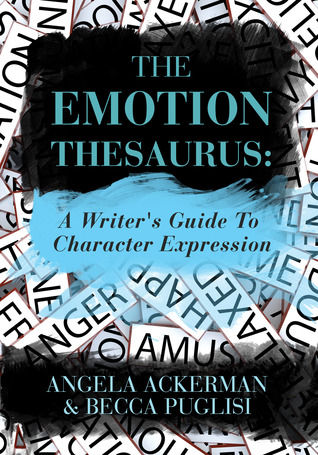
Photo credit: Goodreads
Every once in a while I’ll come across a book that I can’t help but rave about and recommend to everyone who will listen. The Emotion Thesaurus by Angela Ackerman and Becca Puglisi (who also run the ever-so-helpful blog The Bookshelf Muse) is one of those books. 

Before I rave about its awesomeness, here’s the Goodreads summary:
“One of the biggest problem areas for writers is conveying a character's emotions to the reader in a unique, compelling way. This book comes to the rescue by highlighting 75 emotions and listing the possible body language cues, thoughts, and visceral responses for each.  
Using its easy-to-navigate list format, readers can draw inspiration from character cues that range in intensity to match any emotional moment. The Emotion Thesaurus also tackles common emotion-related writing problems and provides methods to overcome them.  
This writing tool encourages authors to show, not tell emotion and is a creative brainstorming resource for any fiction project.”
I tweeted a while back that The Emotion Thesaurus is perpetually open in my Nook app while revising, and I wasn’t exaggerating. Whenever I reach a moment where I’m struggling to describe an emotion, or I get a CP note asking for more emotion from a character, I open up The Emotion Thesaurus.

It’s not a book that you necessarily read from cover to cover (although you’re more than welcome to), it’s a resource that you open when trying to describe a particular (or several) emotions. What I love about it is it not only lists body language cues, thoughts and physical responses, but it also lists cues of suppressed emotion (which I use all the time). As a bonus, it has writing tips at the end of every chapter.

To top it off, none other than Kristen Lamb recently recommended The Emotion Thesaurus in The Huffington Post (under #4) as have dozens of other writers across the web. And out of nearly 500 reviews on Goodreads, it has a 4.57 star average—and with good reason.

I honestly can’t recommend this book enough to writers of all stages. It will forever change the way you think about and write emotion—or at least, it did for me.

What resources do you use to help write emotion? 

Twitter-sized bites: 
Is THE EMOTION THESAURUS by @AngelaAckerman & @beccapuglisi on your bookshelf? Here's why it should be. (Click to tweet)  
Do you struggle with writing emotion? Then this wonderful writing tool may be exactly what you need. (Click to tweet
Related Posts Plugin for WordPress, Blogger...