A Lesson from Bestsellers: Write Whatever You Want


Photo credit: K. Denman on Flickr
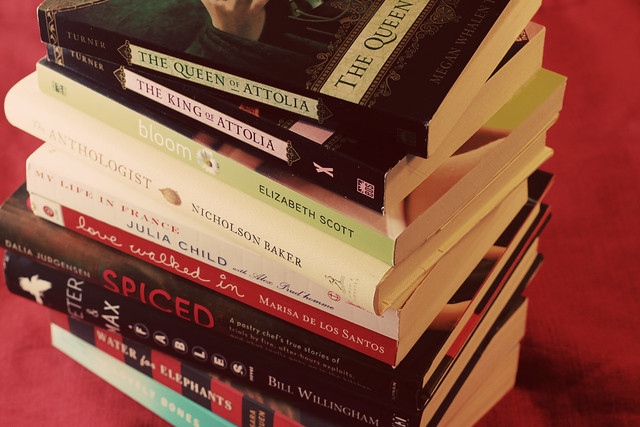
Not too long ago I wrote a post on What Makes a Book a Bestseller, and with The Hunger Games breaking all sorts of records in the box office, many people are left wondering what will be the next big thing.

Although fans would most certainly disagree, many have called The Hunger Games the next Twilight, and others have speculated what the next Hunger Games would be, but I think if bestsellers have taught us anything, it's that very rarely is there a next x (where x is a previous franchise, anyway).


Allow me to explain. If, for example, the fan base behind a non-Twilight vampire series exploded, meriting a debut on the screen and ridiculous merchandise sales, then yes, it might be appropriate to call the new phenomena the next Twilight. But as it is, The Hunger Games is about as similar to Twilight as Edward Cullen is to Mad-Eye Moody—both are fictional characters with recognizable names, but there ends the similarities.


Now I'm aware that when people refer to a phenomenon as the next x, they aren't referring to the similarities between the two, but the popularity of the franchise. That's fair, but comparing the two, at least to me, indicates some sort of lumping together (i.e.: Twilight and Hunger Games), which isn't fair to either book.


Harry Potter and Twilight and The Hunger Games are all their own separate entities. They were bestsellers for various reasons, none of which include their authors trying to write the next x. Time and time again when successful authors have talked about their experience writing their book, by and large they have talked about writing the story—their story, the story that only they could write. The point wasn't to be hugely successful or write the next big thing, the point was, and always will be, to write the book that demanded to be written.


And that is a lesson that all of us should remember.


The next hugely popular book won't be the next Harry Potter or Hunger Games or Twilight— it'll be the next it. It'll be its own thing with its own synthesis of ideas and characters and the right combination of word-of-mouth and captivating story. It'll be the book that the author had to write, the book that they pounded into the page over the course of years, the book that the author never equated with the other bestsellers because it is its own it.


The bestsellers are telling us something, and it's not just that vampires and magic and dystopians are popular— they're telling us to write the story that you want to write and worry about the rest later.


Or don't worry about it at all. Who knows? One day your book may be the next it.


What do you think? Have you learned any lessons from the bestsellers? 

Why Tough Critiques Are Exciting (To Me)

Photo credit: Roxanne Cooke on Flickr
I’m a quirky sort of writer. Aside from being a perfectionist and overly detail-oriented, I’m also a rather competitive person. Not so strange, I know, until you consider I’m competitive with myself.

This will make sense in a moment. Bear with me.

Last week, fellow awesomesauce writer/twitterer Daniel Swensen (@surlymuse) wrote a post about taking criticism gracefully. I recommend the post both for its insightfulness and his masterful way with dry wit and humor, but I digress.

The post reminded me that taking writing criticism gracefully has never been much of a problem for me—and that’s not because I have the patience of a Tibetan monk (I don’t) or because I’m a particularly graceful person (let’s not even pretend). The reason I’ve been able to take much of the writing criticism I’ve received in stride is, in fact, largely due to my competitive nature.

You see, when I receive a manuscript or chapter from a critique partner dripping with red ink, I don’t see it as a mountain load of work (even though, let’s face it, it usually is) or as another chore I have to now complete. To me, a manuscript that’s been ripped apart by my most difficult and nit-picky critique partner is a challenge. The red ink dares me to be better and the notes are arrows giving me a not-so-gentle nudges to a much improved manuscript.

When I see weaknesses pointed out in my WIP, something riles up inside me challenging me to do better, to be better, to make this WIP the very best it can be. I “compete” so-to-speak, with my desire to submit the manuscript for publication now now now and the part of me that is exhausted from years of work on a single story with the perfectionist, challenge-seeking part of me that loves nothing more than to rip the weaknesses out of my work until I’m confident it has reached its potential.

I also adopt the same attitude when critique another writer’s work—to me, when a writer hands over a chapter or manuscript for critique, they’re challenging me to find the weaknesses (I know that’s not actually the case, but try telling that to my competitive side). This can sometimes make me a rather nit-picky critique partner, but I digress.  

Now that’s not to say that I don’t get tired of doing revision after revision after revision only to have a critique partner tell me that it’s nowhere near ready. That’s not to say that sometimes I don’t feel like Sisyphus, forever pushing that boulder up the hill, with no end in sight. That’s not to say that sometimes this writer thing doesn’t feel ridiculously hard and I wonder if I’ll ever get published at all.

We all have those moments at one time or another. But that’s when we have to ask ourselves what kind of writer we want to be: one who buries his head in the sand and ignores the need to improve, perfectly content with his current writing ability or one who strives to continuously be better.

I for one choose the latter, even when it’s the more painful and exhausting option of the two. And a good critique partner can certainly help you get there.

How do you handle tough critiques? 

How to Use Timers to Be More Productive


Photo credit: purplemattfish on Flickr

So the other day I was twittering with fellow tweeple @RaiscaraAvalon when it was discovered we share a rather unexpected similarity, namely, the use of timers.

My first experience with consciously writing on the clock came with the Twitter hashtag #wordmongering, in which writers get together at the top of every hour and write as much as they can for thirty minutes, then share their word count results and pass around electronic goodies and bubbles of happiness.

Something about being aware of the ticking clock and knowing I only had thirty minutes to write really gets my fingers moving. I’m racing against the clock (and other writers) to get the most words down I can.

This ticking clock experience was amplified when I started using Write or Die, which literally has a timer in the corner of the application that shows the seconds and minutes slipping away as you work (it also has a running word count meter in the opposite corner that I personally find both encouraging and motivating, but that’s another matter entirely).

Point is, timers are a great tool for forcing you to focus on a particular project—whether it’s writing, editing, brainstorming, etc. All you have to do is decide how long you’ll be doing said activity (I find that thirty minutes is a good amount of time for a focused sprint), turn off all other distractions (yes, that means Twitter, too), set the timer and go.

The only rule: DO NOT STOP UNTIL THE TIMER IS FINISHED.

By turning on the timer, you are making a silent contract with yourself to dedicate that set amount of time to do whatever it is you’re setting out to do, and nothing else. No checking Twitter, or e-mails, or tumblr or Facebook or taking phone calls or getting a snack. If you absolutely must stop for some reason (like, say, if your house is on fire), pause the timer and come back to finish the sprint later (unless your house actually is on fire, in which case completing your sprint should be the last of your worries).

The great thing about timers, however, is that they’re multifunctional. Not only are they a great tool for forcing you to focus for a certain amount of time, but they’re fantastic for cutting down on daily distractions.

It’s important to note that some amount of daily distraction isn’t necessarily a bad thing—we all need to take breaks throughout the day, and sometimes there’s nothing better after a particularly exhausting writing sprint than watching some mind-numbing YouTube videos or snickering at random tumblr GIFs or sharing your half-coherent thoughts with the Twittersphere. It’s only when we slip into relaxing-distraction-seeking mode and suddenly its 10 PM and you still haven’t finished that chapter you were supposed to write today and the laundry is piling up and you forgot to eat dinner, that it can become a problem. And that’s when the timer comes in.

It’s very easy to say, “I’m only going to spend fifteen minutes on Twitter,” then realize an hour later that you still haven’t finished your work. As they say, time flies, especially when you’re procrastinating (or something like that).

Believe it or not, it’s significantly harder to claim that time ran away from you when you set a timer for fifteen minutes and it beeps incessantly until you turn it off, thus letting you know you have spent your permitted fifteen minutes and now it’s time to get back to work.

Be warned: setting a timer means you’re serious. It means you actually only want to fifteen minutes on Twitter and after that you’re actually going to go back to work. It means you really intend to spend thirty minutes adding to your manuscript, and nothing else. It means you understand that your time is limited and you want to make the most of it.

You don’t have to use a timer to be productive, but if you’re serious about using your time wisely and hunkering down and focusing on your work for a period of time, I highly recommend it.

Or you can go check Twitter for fifteen more minutes.

Do you use timers to be more productive? Have you used it while writing? 

Writers: Would You Publish Traditionally if You Could?

Photo credit: Emily Carlin on Flickr
Imagine for a second that you've been offered representation for your novel. Although you know having a literary agent doesn't 100% guarantee that you'll be published, let's say this particular agent is very confident that your book will sell to one of the Big Six and your odds of being published are pretty good. Your initial reaction, I imagine, is pretty darn happy, but now you're faced with a choice.

You see, you have a good manuscript in your hands; one that you're pretty certain will sell. If you accept the agent's offer of representation, you will enter the ranks with other traditionally published writers. If not, you can take the title of self- published writer.

So let me ask you, my fellow readers: would you publish traditionally if given the chance?

It's a bit of a weird question, I know, and five years ago if you asked any writer, the answer would be a resounding: well, DUH. But nowadays the answer of how to publish isn't so cut and dry. More stories surface every day about writers who, when faced with the decision, choose self- publishing rather than going traditional. There are the Amanda Hockings and J.R. Konraths of the world who have made bundles through independent publishing and more than a handful of writers who have been able to make a living off self- publishing.

And yet, traditional publishing is still a very viable option, because while to some writers the how of getting published doesn't matter, to others it does. Then there's also the matter of all the work that goes into publishing that writers have to tackle largely by themselves when they choose to self- publish, that others would rather let a traditional publishing house take care of.

Some believe that there's more money to be made through self- publishing and others through traditional publishing—and still others don't care about the money either way: they want to see their book on the shelves (or in the case of self- publishing, they just want to be published one way or another).

When it comes to how to publish, I truthfully don't believe there's a blanket right or wrong answer— it most certainly depends on your goals as a writer (more about that in this post).

So I'm curious. If the aforementioned hypothetical situation happened to you, what would you choose? Would you accept representation or choose to brave the waters of self- publishing?

Time and Priorities for Writers


Photo credit: pOOfkAt on Flickr
So the other day I wrote a post about Why I'm Glad I Joined Twitter in which I basically wrote 500 words about how awesome Twitter is, especially for writers.

However. As awesome as Twitter and other social media sites (hello tumblr and Facebook) are, there is one very scary danger that we writers are particularly vulnerable to: the Time Suck of Doom.

All writers have their own time management challenges. Many of us have a full time job, or are full time students, or full time parents or some combination of all of the above, and then on top of that we're writers and we're putting together a book (or books) and maintaining a blog and popping in to Twitter and Facebook and tumblr to try to keep our web presence from shriveling up and dying, all while trying to remember to eat three square meals a day and keep a healthy lifestyle (oh, and someone needs to do laundry. You should probably get on that).

Point being, writers don't often have an abundance of time— and we rarely have any time to waste.

So when you consider just how easy it is to fall into the trap of spending hours scrolling through your Twitter/tumblr/Facebook feed (what I like to call the Time Suck of Doom), social media can be just as dangerous as it is useful.

Truth is, too much of anything can be a bad thing, and social media is no exception. For writers, our number one priority (after family, bills and remaining generally healthy) must be the writing. It doesn't matter what you're writing, what matters is that you constantly improve it, add to it, practice it until you have a finished manuscript (or four), and then when you've completely polished it and are ready for publication, you keep writing.

Because for writers, there is nothing more important than improving our writing skill. Because yes, the connections you make through social media are fantastic and yes, a web presence is important for writers in this day and age and yes, you do find some really incredible and useful links through social media, but the writing must always come first.

So next time you catch yourself surfing the web/streaming videos/playing XBox when you know you really should be writing that book/blog post/poem/short story, remember what your top priority is as a writer and get back to work.

You can tweet about it later.

What do you do to fight the Time Suck of Doom?

Why I'm Glad I Joined Twitter

Photo credit: Coletivo Membembe on Flickr
Roughly a year ago (on April 10, 2011, to be exact), I did something I never imagined I would do: I created a Twitter account. Had you told me just a few weeks before that fated day that a year from then I’d be an active Twitter user, I would've thought it a joke. Me? An active Twitter user? Funny.

Well. After reading post after post about how it takes about three years to build a solid platform, I took a leap, figuring I might as well try it out for a couple of weeks before I decide it’s not for me. I made a pact with myself that if I reached 150 followers, I’d finally start that blog I’d been putting off for so long.

I didn’t really expect to meet my goal, especially not in a couple of weeks. But I did. And something weird happened: I realized I actually liked Twitter. A lot.

Because for every “my cat just threw up a magical hairball on the carpet” tweet, there were three of these:


Because I was suddenly able to connect to a whole community of wonderful writers I never knew existed.

Because I was discovering incredible new books and blogs daily.

Because people like @taherehmafi post tweets like this:


Because hashtag groups like #wordmongering motivated me to keep writing.

Because Twitter is more than just a site where people post about their ferrets and one-eyed gerbils; it’s a place of connections, of relationships, of sharing things that make us laugh and cry and smile and think and feel.

A year later I am convinced more than ever that Twitter is a fantastic resource for writers, and I couldn't be happier with my decision to join the party.

Do you have a Twitter account? If so, are you glad you joined? If not, why not?

Why Writing Through Resistance is Essential

Photo credit: ~Minnea~ on Flickr
As a writer, you'll soon find there are good writing days and desperately bad writing days. We all love the good days—the moments when the words come easily and the new pages stack up quickly and you look at your fresh words with a smile and a dash of something else—pride.

When we think about writing, those are the days we like to remember.


But then there are those other days. Those awful periods when every time you look at the page you feel the powerful need to do something else—anything else. Check Twitter. Play with your Pandora settings. Scroll through your tumblr/Facebook feed. Check Twitter. Find a snack. Read that blog post. Check Twitter (someone could have @ mentioned you in the last thirty seconds, right? Right).


Then slowly, painfully, you drag yourself back to the page. Stare at it for a while. Write a few words and remember you haven't checked your e-mail in a whole hour. Check Twitter.


You get the idea.


Point is, writing isn't always easy or fun or even remotely enjoyable. Sometimes it's downright hard—so difficult, that even the most unpleasant of tasks sounds easier. All writers experience this at one point or another, and sometimes the best thing you can do is take a break. But sometimes even after your break, the words continue to fight you every step of the way.


And that's when you have to put the proverbial gloves on and get to work.


Because no, writing isn't always easy, but you knew that when you decided to do this writer-thing and you chose to pursue it anyway. Because the successful writers are the ones who don't give up, who write through the resistance, through the rejections, through the exhaustion and doubts and fears.


If you really want to do this writer-thing, you have to accept that that thing called writer's block isn't as much of a block as it is a ball-and-chain, a weight that makes every new word difficult to reach, that resists forward motion.


But it's not impossible to write through it. Difficult, yes, but not impossible. And there's a certain amount of gratitude you get from writing through the resistance because no, the words aren't perfect, but they're there. You put them there, even when you wanted to give up. They're yours.


So next time you're staring at a blank page and the resistance makes finding the words a battle, remember this little nugget of wisdom (via About.com):


"Don't get it right. Just get it written." James Thurber

Then get back to work.

What do you do to help break through the resistance?

Related Posts Plugin for WordPress, Blogger...