Showing posts with label Tahereh Mafi. Show all posts

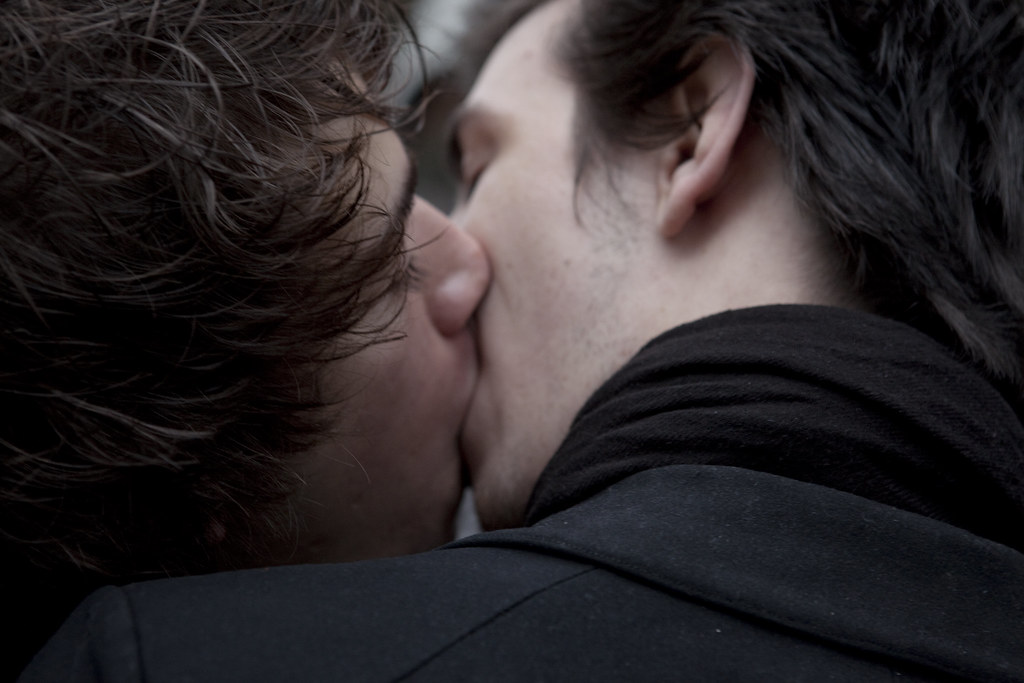
How to Write Awesome Kiss Scenes

Photo credit: °]° on Flickr 
“Stop.
Stop time.
Stop the world.
Stop everything for the moment he crosses the room and pulls me into his arms and pins me against the wall and I’m spinning and standing and not even breathing but I’m alive so alive so very very alive
and he’s kissing me.” 
Ignite Me by Tahereh Mafi (Pages 316-317)
My characters like kissing. Some more than others, but amongst my characters at least, it’s a well-known fact that kissing is fun.

Kissing, as it turns out, is also fun to write (coincidence? I think not), but when someone on Twitter asked me for tips for writing good kissing scenes, I realized I’d somehow managed to neglect this topic here on Writability. What. An. Oversight.

I’m remedying that right now.

When it comes to books, kissing scenes tend to be significant for one reason or another. Whether it’s a first kiss, a make up kiss, a crap we shouldn’t have done that (but we really wanted to) kiss, a love-declaring kiss or a kissing because we have to but wait I actually like this kiss (or something else entirely), kissing, in novels, tend to be pretty big turning points for characters.

The best kisses, I’ve found, are rife with meaning. What makes them so fun to read and write isn’t just that the characters are mashing their lips together (though don’t get me wrong—that’s fun too), it’s the implications behind the kiss. Whether it’s the yes! Finally they’re together! or noooo you two aren’t supposed to make out! what makes kissing so fun to read and write is that it means something.

Now, that’s not to say that your characters can’t ever kiss just to show affection, or because they just can’t keep their faces off each other (both are valid reasons for lip-smooshing). But chances are, in writing and in reading, the kisses that get the most page time and in-depth description are the ones that are significant for one reason or another.

As far as the actual writing and description of said kissing goes, it really depends 100% on you and your book. Whether you’re writing YA, NA or even Adult, how much description you go into completely depends on what you’re comfortable with and what’s right for the book. Cruel Beauty by Rosamund Hodge, for example, completely glosses over the kissing and sex, barely getting into any description at all—which is totally okay. Ignite Me and Unravel Me by Tahereh Mafi, meanwhile, go into way more description and include a lot of metaphors and poetic language and those make out scenes last several pages. Let it be known Ignite Me and Unravel Me have some of my favorite YA kisses ever. Which is why I shared that one above.

Anyway.

The important thing to pay attention to while writing kiss scenes is what the kiss means for your characters (especially your POV character). If your character is kissing some random stranger at a party and thinking about what a terrible kisser the partner is, that’s just as important to note as a love-declaring let’s be alone together kiss. Even if your characters don’t know what this kiss means, just that they’re kissing and they like it (or not), it’s important to get that across to your readers.

So next time your characters start getting it on, make sure you take some time to think about the significance behind their physical togetherness. Oftentimes an extra spike of meaning into an already awesome kiss can be exactly what you need to take it to the next level.

What books have some of your favorite kisses? 

Twitter-sized bites: 
"What makes kissing so fun to read and write is that it MEANS something." #writetip (Click to tweet)  
Do you have kissing in your WIP? Writer @Ava_Jae shares some tips on getting those romantic scenes right. (Click to tweet

Book Review: IGNITE ME by Tahereh Mafi

Photo credit: Goodreads
I have so many things I want to say about this book, but unfortunately many of them are slightly spoilery, so this review is actually kind of tough to write.

First let’s start off with the Goodreads summary:
“Juliette now knows she may be the only one who can stop the Reestablishment. But to take them down, she'll need the help of the one person she never thought she could trust: Warner. And as they work together, Juliette will discover that everything she thought she knew-about Warner, her abilities, and even Adam-was wrong.”
So, that’s actually a pretty vague summary, but anyway. Ignite Me is the third and final book of the Shatter Me series. I already reviewed the previous two books Shatter Me and Unravel Me, if you’re interested.

Now for Ignite Me. I have to say, throughout the first two books, Juliette was not my favorite protagonist ever. I didn’t hate her by any means, but while I loved her voice (because Tahereh Mafi has the most gorgeous prose I’ve basically ever read), I didn’t particularly love all of Juliette’s decisions or her outlook.

That being said, Juliette’s development from first book to last is incredible. This series easily has some of the most nuanced, dramatic and yet believable character development you’ll find out there (so, for YA writers, this is a fabulous example of how to do character development right. Seriously).

What I also loved about the conclusion to this trilogy is that it didn’t end anything like I expected it to. I don’t want to spoil anything, so I’ll just refer back to the character development note, but that’s really what resonated with me so strongly.

The only gripe I have is that I felt climax came and went a tad bit too quickly, but honestly, I loved the book far too much to really care.

So that about covers it! If you like fast-paced YA with fabulous character development and a truly unique and beautiful voice, I highly recommend this series. I loved every book and look forward to more of Mafi’s work.

Have you read the SHATTER ME series? 

Twitter-sized bite: 
Writer @Ava_Jae gives IGNITE ME by Tahereh Mafi 5/5 stars. Have you read this book? (Click to tweet)

My Favorite Books of 2013

So the end of the year is nigh, which means it’s time for the 2013 countdowns to begin. I had the pleasure of reading so many good books this year, and of the ones published this year, these were (in no particular order) my favorite five:

Photo credit: Goodreads

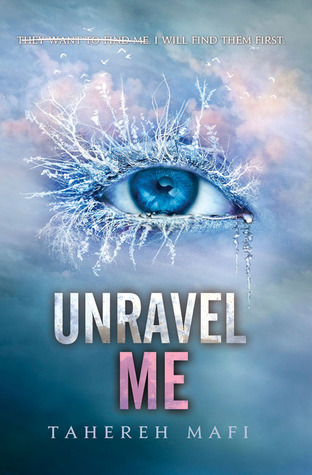
I posted a review here for the second book of the Shatter Me trilogy, but to take a quote from that review, “Unravel Me will take your emotions, rip them up, stomp on them, set them on fire, then hand them back to you with a wink and a smile.”

Yeah. That basically sums it up.

Unravel Me is an incredible sequel that’ll have you racing through the pages. I loved it and I can’t wait for Ignite Me to be released early next year.

Photo credit: Goodreads


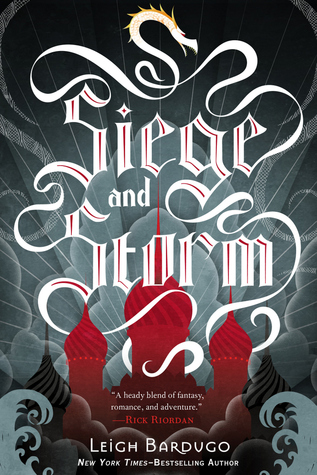
Again, I’ve already raved about how awesome this book is, but Siege and Storm is the second book to what is turning out to be one of my favorite YA fantasy series ever. Between the awesome Russian-inspired setting, some truly incredible characters including my favorite antagonist ever, a great magic system and an interesting plot, I can’t recommend this series more.

Photo credit: Goodreads


Unsurprisingly, this is another one I’ve already reviewed (I tend to do that to my favorites), but this an an unexpected favorite for me. I hadn’t heard all that much about Ink, and I think it deserves a lot more buzz because it’s a fantastic book with a beautiful setting and a truly unique magic system. Ink was a wonderful read and I’m definitely looking forward to the next installment.


Photo credit: Goodreads

So this one did get quite a bit of buzz, and it was well-deserved. I’d heard people raving about how exciting and unputdownable it was long before I finally picked up my copy, and they were right. Cassie is an interesting protagonist with a great voice, the pacing is breakneck awesomeness and the next book really needs to be published already.

Photo credit: Goodreads


Now for something totally different—or at least, different for me.

I don’t read a lot of contemporary romance—in fact, before Losing It, which I read before Faking It, the last contemporary novel I’d read was The Fault in Our Stars back in 2012. But you guys, I loved this book. Max has to be one of my favorite female leads and Cade is easily one of my favorite book boyfriends. Their story was hilarious and awkward and heartwarming and I couldn’t have loved it more.

What are some of your favorite books of the year?

Twitter-sized bites: 
Writer @Ava_Jae shares her favorite five books of 2013. Are any on your list? (Click to tweet)

How to Make the Most of Your Chapter Endings

Photo credit: mfhiatt on Flickr
While we recently discussed the importance of getting a book ending right, I’d like to talk about another form of endings, that to me are equally important.

Of course, as you I’m sure so astutely gathered from the title, I’m talking about chapter endings.

While writing and revising, I like to imagine that one day, a reader will be reading my book in the middle of the night, and will eventually have to decide do I read another chapter or go to bed?

My goal, in that hypothetical situation, is to make it difficult for the aforementioned reader to put the book down. I want my readers to think I’ll just read one more chapter, then realize ten chapters later that they hadn’t intended to read this much. If I do my job correctly, putting the book down will never be an easy decision.

Although it may feel like it, accomplishing this feat isn’t a work of magic—it’s a combination of tension, intrigue and great chapter endings. But what exactly makes a great chapter ending?

My favorite kinds of chapter endings tend to go one of three ways:

  1. They drop shocking information. Usually this is a big reveal, some kind of plot twist, or unexpected danger to the character. I tend to be quite fond of these in my own writing, because as I’m drafting they make me want to continue writing.

    Example: “Someone closes a hand over my mouth.” —Unravel Me by Tahereh Mafi (page 341)

  2. They leave you asking questions. These questions can range from how the hell is the character going to get out of this to who is that mysterious stranger that keeps appearing everywhere? The point is, if you leave your readers with questions about the story at the end of a chapter, chances are they’ll want to continue reading to try to get those answers.

    Example: “‘He’s not joking,’ Brendan says to me. ‘And I hope you know how to use a gun.’” —Unravel Me by Tahereh Mafi (page 119)

  3. They end on a haunting or particularly evocative note. These can vary pretty widely, but sometimes the right image to echo the mood of the book or whatever is happening can be just the transition a reader needs to push them on to the next chapter.

    Example: “Because it’s so difficult to fight what you cannot control and right now I can’t even control my own imagination as it grips my hair and drags me into the dark.” —Unravel Me by Tahereh Mafi (page 109)

I used all of my examples from Unravel Me because I particularly love how Ms. Mafi ends her chapters, and I often found myself saying one more chapter while reading. I raved about its genius here.

While those aren’t the only three ways to end a chapter in an interesting manner, they happen to be my favorite techniques, and I’ve found that they work well. But now I want to hear from you: what techniques do your favorite chapter endings use? 

Twitter-sized bites: 
What makes a great chapter ending? Writer @Ava_Jae shares some tips on effective ways to end your chapters. (Click to tweet)  
Are you making the most of your chapter endings? (Click to tweet)

For YA Readers: Read These Now

So I've been reading a lot, lately. While I haven't written any book reviews in a while, I'd like to share with you some fantastic YA novels that I've had the pleasure of reading recently that more than deserve an enthusiastic recommendation.

So, without further ado, and in no particular order, I give you three YA books that you really must read.


Goodreads summary:
Photo credit: Goodreads
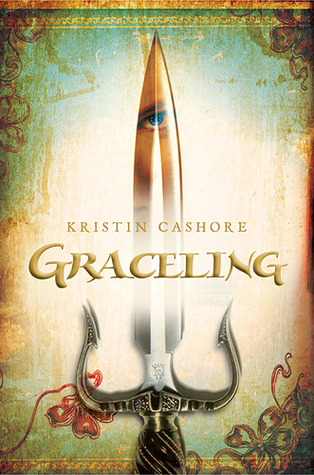
"In a world where people born with an extreme skill—called a Grace—are feared and exploited, Katsa carries the burden of the skill even she despises: the Grace of killing. She lives under the command of her uncle Randa, King of the Middluns, and is expected to execute his dirty work, punishing and torturing anyone who displeases him. 
When she first meets Prince Po, who is Graced with combat skills, Katsa has no hint of how her life is about to change. 
She never expects to become Po's friend. 
She never expects to learn a new truth about her own Grace—or about a terrible secret that lies hidden far away...a secret that could destroy all seven kingdoms with words alone."
I'm not sure why I put off reading this for so long, but I am so glad I finally sat down with it. Graceling was my favorite combination of elements: action, romance, loss, victory and a supernatural twist. The romance especially stuck with me—it was realistic, perfectly paced, and at times heartbreaking. It didn't fall for typical YA tropes and I found Cashore's take on Katsa and Po's relationship refreshing.

As for the characters themselves, Katsa was a breath of fresh air. She's easily one of the strongest female protagonists I've ever read—stubborn without being unlikable, and caring without being weak. I’ve added the companion novels (Fire and Bitterblue) to my TBR list and I look forward to reading more about the Graceling realm.


Photo credit: Goodreads
Goodreads summary:
"tick 
tick 
tick 
tick 
tick 
it's almost 
time for war. 
Juliette has escaped to Omega Point. It is a place for people like her—people with gifts—and it is also the headquarters of the rebel resistance. 
She's finally free from The Reestablishment, free from their plan to use her as a weapon, and free to love Adam. But Juliette will never be free from her lethal touch. 
Or from Warner, who wants Juliette more than she ever thought possible. 
In this exhilarating sequel to Shatter Me, Juliette has to make life-changing decisions between what she wants and what she thinks is right. Decisions that might involve choosing between her heart—and Adam's life."
This book. THIS BOOK.

If you caught my review for Shatter Me way back when, you know that I absolutely love Tahereh Mafi's unique writing style. She is truly an author whose voice you can't mistake for anyone else's, and she manages time and time again to blend poetry with high-action, emotion-packed novels. I devoured Unravel Me in 48 hours, and I loved it.

I will say that there were moments were I got a little frustrated with Juliette (the protagonist), but I was glad to see her growth in the story. Unravel Me will take your emotions, rip them up, stomp on them, set them on fire, then hand them back to you with a wink and a smile. I need to know what happens next.


Goodreads summary:
Photo credit: Goodreads
"Amy and Elder have finally left the oppressive walls of the spaceship Godspeed behind. They're ready to start life afresh—to build a home—on Centauri-Earth, the planet that Amy has traveled 25 trillion miles across the universe to experience. 
But this new Earth isn't the paradise Amy had been hoping for. There are giant pterodactyl-like birds, purple flowers with mind-numbing toxins, and mysterious, unexplained ruins that hold more secrets than their stone walls first let on. The biggest secret of all? Godspeed's former passengers aren't alone on this planet. And if they're going to stay, they'll have to fight. 
Amy and Elder must race to discover who—or what—else is out there if they are to have any hope of saving their struggling colony and building a future together. They will have to look inward to the very core of what makes them human on this, their most harrowing journey yet. Because if the colony collapses? Then everything they have sacrificed—friends, family, life on Earth—will have been for nothing. 
FUELED BY LIES. 
RULED BY CHAOS. 
ALMOST HOME."
So, as of this writing, I haven't actually finished Shades of Earth yet, but I couldn't leave it out because it is so good thus far. Seriously.

I don't usually read sci-fi, but the Across the Universe trilogy has easily become one of my favorite trilogies. I've reviewed the first two books (or should I say, rambled about how awesome they are) and the final book is turning out to be a doozy.

If you like exciting, twisty mysteries and with lots of deaths, I definitely recommend you give Across the Universe (and the rest of the trilogy) a try.

Has anyone else read these? If so, what did you think? And for those of you who enjoy YA, feel free to recommend some of your favorites—I'm always happy to add to the ever-growing TBR list

Character Development: Morals & Ideology

Photo credit: Walt Stoneburner on Flickr
Every one of us lives by a different standard of morality with a unique worldview etched into us over the course of our lives, beginning with simple lessons in childhood and culminating with deep introspection of controversy sitting in the moral gray.

Just as you and I have different ways of viewing and interpreting the world, our characters should each be unique in their worldview and moral code. And it shouldn’t always reflect your own, either.

Each of our characters have (or should have) a history that shaped them into who they are. This very same history will also help to mold the way that they view the world, from their outlook on life (pessimist? optimist? realist?) to the rigidity (or not) of their sense of right and wrong.

Knowing this aspect of your characters is essential to both character development and plot. Throughout the course of your novel, your characters will be pushed to their limits and challenged in various ways—and knowing the basis of how they view the world is the foundation to the decisions that they make.

Here’s an example: in the Twilight series (Stephanie Meyer), the Cullens drink animal blood because they believe it’s immoral to hunt humans. Most other vampires, however, have accepted their human diet as part of their nature, and see nothing wrong with it. This makes the Cullens act very differently around Bella than other human-hunting vampires. Different worldviews. Different moral codes. Different decisions.

Another example: in Shatter Me (Tahereh Mafi), Warner tries to manipulate Juliette into using her ability to torture people fighting against The Reestablishment. To Warner, it is a necessary part of living in a world torn apart by war, but Juliette refuses because she can’t bring herself to intentionally harm another human being. Different worldviews. Different moral codes. Different decisions.

There are many other examples out there, but they all lead back to the same conclusion: our worldview and moral code shapes our decisions, and they should affect our characters the same way.

Make a point not to neglect this aspect of character development—it is an essential part to truly understanding your characters and allowing them to act in a way shaped by their beliefs and understanding of the world.

How do you incorporate your characters morals and ideologies into your work?

On Reading and Learning from Books

Photo credit: JKim1 on Flickr
After writing about reading so-called "bad books" last week, I noticed a theme cropping up in the following discussion, namely, learning from what we read.

When you're a writer, reading is more than just a hobby to pass the time— books are our bread and butter and they provide us with an arsenal of tools to use in our writing. Reading is about as optional to the writer as watching movies is to a Hollywood director or studying the brain and nervous system is to the neurosurgeon.

The great thing about reading is that especially for the writer, it's never a waste of time— whether you like the book or not, there's something to be learned.

You see, when you don't like whatever you're reading, the writer asks why— what is it about the book that you don't like? Does the pacing feel off? Are the characters not connecting with you? Does the dialogue feel forced? Once you've figured out what aspect (or aspects) feel off to you, push harder— what is it about the dialogue that makes it feel flat? How would you make it better? Why aren't the characters connecting? Is it a particular character that isn't working? Why?

On the other hand, when you love whatever you're reading, the writer asks why again— what is it about the book that really resonates with you? Is it the voice? The characters? Something about the plot itself? What exactly is working and how could you incorporate something like it into your writing?

Here are two examples from books I really enjoyed:

From Shatter Me by Tahereh Mafi (page 22):

"I take a sharp hit of oxygen. 'Funny. So did I.'

1

2

3 seconds pass.

He cracks a grin so wide, so amused, so refreshingly sincere it's like a clap of thunder through my body."

Honestly, you can't open to a page in Shatter Me without finding at least one poetic line full of refreshing imagery and voice. Shatter Me taught me about putting poetry back into the novel and not being afraid to break the rules.

From The Fault in Our Stars by John Green (page 53):

"When I got out of the movie, I had four text messages from Augustus.

        Tell me my copy is missing the last twenty pages or something.

        Hazel Grace, tell me I have not reached the end of this book.

        OH MY GOD DO THEY GET MARRIED OR NOT OH MY GOD WHAT IS THIS

        I guess Anna died and so it just ends? CRUEL. Call me when you can. Hope all's okay."

Something I absolutely loved about The Fault in Our Stars was that both Augustus and Hazel sounded like actual teenagers I could meet at my local mall. Everything from the witty (and hysterical) dialogue, to the text messages like the ones I quoted screamed authentic teenager, and I loved how genuine it felt. The Fault in Our Stars reminded me about the importance of authenticity in dialogue and narration.

Lessons like these are best absorbed when we see them in action—that is, when we see them working in a book. So go pick up a book and read. You never know what you might learn that will help your writing in the future.

Now it's your turn: What have you learned about writing from reading a book?

Why Writers Must Be Observers

Photo credit: Raymond Larose on Flickr
Contrary to popular belief, a writer must be more than a person who just writes. Of course writing is our primary goal, but in order to write authentically, we must first be vigilant observers. All the time.

You see, we writers have a pretty unique job; we are tasked with a mission to bring the impossible to life on the page, to create stories that pluck our readers from their everyday lives and to bring attention to details of the world around them that ring perfectly true. 

But in order to achieve that, we must first observe the world around us. When there’s a wicked thunderstorm and the trees are bowing to the wind and the claps of thunder and lightning send most people searching for their flashlights, the writer should be listening and watching very carefully, while asking, how would I describe this?

When overwhelmed with emotion—whether it’s happiness, anger, frustration or something else—writers must pause and pay attention to exactly how they feel so that when their characters experience the same emotion, it can be described with authenticity. A great example of this is one of my favorite passages from The Fault in Our Stars by John Green:

“Much of my life had been devoted to trying not to cry in front of people who loved me, so I knew what Augustus was doing. You clench your teeth. You look up. You tell yourself that if they see you cry, it will hurt them, and you will be nothing but A Sadness in their lives, and you must not become a mere sadness, so you will not cry, and you say all of this to yourself while looking up at the ceiling, and then you swallow even though your throat does not want to close and you look at the person who loves you and smile.” (Page 213-214)

I know that seems like a pretty depressing favorite passage, but the reason it stuck out to me so much is because when I read it for the first time, I nodded along and thought, yes, it’s exactly like that. Granted, my way of thinking when upset is pretty different from Hazel’s (the POV character), but the clenching of teeth and looking up at the ceiling and swallowing when your throat is so tight it’s painful are all things I’m sure many of us have experienced when trying not to cry.

Another (lighter) example from Shatter Me by Tahereh Mafi:

“Every butterfly in the world has migrated to my stomach.” (Page 155) 

This example is less literal than the first, but I think we all know the feeling Juliette (the POV character) is referencing.

Our goal as writers is to take every day real things and translate them into words that remind our readers of that exact moment. That ring true and honest and have them nodding along and saying yes, that’s it, it’s just like that. But in order to do that we must first pay attention to everything, all the time, and take mental (or real) notes as we move through our lives and experience the world.

Then after observing, we translate those moments back into words so that we can share them with someone else.

Have you ever encountered a sentence or passage that felt exactly right? 

What Makes a Great First Sentence?

“When it comes to selling your book, the most important words you’ll ever write are those on page one.” –Jodie Rhodes, President, Jodie Rhodes Literary Agency (from Hooked by Les Edgerton).
Photo credit: soyrosa on Flickr
Most readers and writers alike can agree that the first page—and even more so, the first line—of a book carries a very heavy responsibility. I’d even go as far to say that the first line in your book is the most important sentence in the entirety of your WIP. Why?

The first line determines if the reader will go on to the second (then third and fourth, etc.) line (obvious, I know, but important).

The first line is the very first impression readers (and agents, and editors) have of your manuscript.

The first line carries the responsibility of hooking your readers into the story, or else they likely won’t move on. (No pressure).

Most of us can agree that the importance of the first sentence is undeniable. But what makes a good first sentence?

Hooked by Les Edgerton focuses on, as the title suggests, hooking your readers with your first scene and naturally, your first sentence (it’s a good read for those of you who’d like a really in-depth look at the topic beyond the little bit that I talk about here, but I digress). My favorite point in the book however, came with his theory on the two things that should belong in first sentences.

According to Edgerton, every first sentence should hint at trouble and raise a question. Taking a look at some great (in my opinion) opening lines, I have to agree with him. Let’s take a look:

“When I wake up, the other side of the bed is cold.”—The Hunger Games by Suzanne Collins

I’ve seen this line used time and time again as an example of a great first line and I don’t know about you guys, but I think it’s brilliant. It also holds up to Edgerton’s theory—although the trouble isn’t stated directly (it rarely is in first lines), there is certainly a sense of foreboding as our main character wakes to a cold, empty bed. The question of course is obvious—why is the other side of the bed cold? Who was she (Katniss, the protagonist) expecting to be there?

“I’ve been locked up for 264 days.”—Shatter Me by Tahereh Mafi

The trouble and questions are pretty clear here—the trouble is clearly that our protagonist (Juliette) has been locked up for nearly a year. We don’t know where exactly, but by the term “locked up” we can assume it’s some kind of prison. The question of course is why? Why lock someone up for that long? What did she do to deserve imprisonment? You must read to find out.

“I see darkness.”—Saint by Ted Dekker

Trouble? Well, waking to darkness isn’t often a good thing and although we know little about the protagonist’s situation from this first sentence, we most certainly have a sense that something bad is about to happen—or perhaps something bad already has. Either way, we want to know why our main character only sees darkness (the question), so we have to read on to find out.

“There is one mirror in my house.”—Divergent by Veronica Roth

The trouble here is a little more subtle than in the last two examples. We don’t know for sure from the first sentence that anything bad is going to happen, but just the fact that we have to ask why our main character only has one mirror in her house (and why, as we quickly find out, the mirror is hidden) gives us a sense that something isn’t quite right.

“Mr. and Mrs. Dursley, of number four, Privet Drive, were proud to say that they were perfectly normal, thank you very much.” –Harry Potter and the Sorcerer’s Stone by J.K. Rowling

How could I go through this kind of post without including Harry Potter? Obviously, I couldn’t.

In all seriousness, this is the kind of sentence that uses a sort of reverse-psychology. Just the fact that Mr. and Mrs. Dursley feel the need to say that they’re perfectly normal indicates that they probably aren’t (which foreshadows trouble) and also leads the reader to ask why they feel it’s important everyone know that they’re normal. Do people think they’re strange? If so, why? We must read on to find the answer.


A sense of foreboding and raising questions can go a long way to grab your readers’ attention right from the first line—are you using this technique in your writing?

What are your favorite first lines? Do they create a sense a trouble and raise questions? I’d love to hear them! 

Book Review: Shatter Me by Tahereh Mafi

Photo credit: Moi :)
If I could give Shatter Me six stars on a five-point scale, I would give it ten.

Long before the book came out, I heard a lot of online hype about Tahereh Mafi and her upcoming debut. I was curious, so I followed her on Twitter and started reading her blog—and I could immediately see why her fan base was growing so quickly.

Online, Mafi is funny, encouraging, genuine and sometimes even inspiring, so naturally I clicked on over to see what her book was about.

The Goodreads summary goes as follows:

Juliette hasn't touched anyone in exactly 264 days.  
The last time she did, it was an accident, but The Reestablishment locked her up for murder. No one knows why Juliette's touch is fatal. As long as she doesn't hurt anyone else, no one really cares. The world is too busy crumbling to pieces to pay attention to a 17-year-old girl. Diseases are destroying the population, food is hard to find, birds don't fly anymore, and the clouds are the wrong color. 
The Reestablishment said their way was the only way to fix things, so they threw Juliette in a cell. Now so many people are dead that the survivors are whispering war-- and The Reestablishment has changed its mind. Maybe Juliette is more than a tortured soul stuffed into a poisonous body. Maybe she's exactly what they need right now. 
Juliette has to make a choice: Be a weapon. Or be a warrior.”

I was hooked, and I waited patiently for my pre-ordered copy to come in the mail.

It arrived. I read it. I loved it.

Shatter Me is the best combination of elements—it’s exciting, the plot is interesting, the characters are diverse, the setting is a perfect touch of dystopia and most strikingly—the prose is absolutely beautiful. 

Mafi’s writing style is unlike anything I’ve ever read before and I’ve fallen in love with it. Truthfully, even if you don’t like dystopia or paranormal YA books, I’d recommend you read Shatter Me anyway if only for a brilliant example of a pitch-perfect voice.

It’s easy to see why Shatter Me was optioned for a movie so quickly—it’s a very exciting read with some truly memorable characters. (Remember that post I wrote about minor characters? Shatter Me gave me a new favorite secondary character to add to my short list—that’s how good it is.)

My only criticism with Shatter Me is a minor one—without spoiling anything, I thought some of the romance was a little over-the-top, however I understood the reasoning behind it, so really I didn’t mind it that much (or at all, to be honest).

In conclusion if you like YA—read Shatter Me.

If you like dystopia—read Shatter Me.

If you like exciting books—read Shatter Me.

Hell, if you don’t like any of those things but you like well-written books—for crying out loud, read Shatter Me.

I absolutely loved this book—it easily jumped into my list of favorites—and I am eagerly awaiting the unnamed sequel.

I’m going to be reading Matched by Allie Condie next—what are you reading? 

Why First Draft Writing Sucks

 "I'm increasingly convinced that while no great book can be written in a month, no great book can be written in a first draft no matter how long it takes you to write it." – John Green

Photo credit: Truthout.org on Flickr
With NaNoWriMo in full swing, a lot of you are writing first drafts. 

Getting the first draft down is, in many ways, the best and worst part of writing.

Most writers love getting the first draft down for many reasons— the discovery for example, of a new world, of new characters and situations and creating a universe that until that moment didn't exist is mesmerizing. Or that moment when you really get in the zone and the writing just flows— incredible.

But writers often hate writing the first draft, too— it just depends what day you ask them, because writing a first draft is hard. Sometimes you get stuck and getting even a single word out is about as painful as repeatedly watching a Teletubbies episode with your eyes taped open.

Then there's the moment when you realize everything you've written sucks. Sometimes it hits you half-way through, sometimes before that and sometimes after you've completed the whole thing— but most writers will reach a point where it occurs to them that this sparkly first draft isn't so sparkly after all. It sounded great in your head— why doesn't it feel like it on the page?

Truth is guys, writing the first draft is hard, and oftentimes it doesn't come out anything like the way you imagined. Your first draft can feel like a disappointment, like you've somehow let yourself (and your future readers) down by writing this terrible drivel and calling it a novel. Sometimes the doubt and disappointment is so intense that writers feel like giving up.

Don't do it.

Guess what? 9/10 times your first draft is going to suck. What's worse is that feeling isn't going to go away— it doesn't matter if it's your first novel or your fifth, writers are notoriously unhappy with their first drafts.

Don't believe me? That John Green quote up there comes from this amusing and informative video on NaNoWriMo— you should check it out:


In case you don't watch it though, he makes another great point about writing first drafts:

"…if you want to think about it like sculpture, writing a first draft is like digging the clay out of the ground and revision is when you actually use the clay to like, build something that you like."

And my last gem from the video:

"What NaNoWriMo does for writers young and old, is give us permission to suck. So NaNoWriMo forces you to be disciplined and it gives you permission to suck, which are two of the things you most need if you're going to be a novelist."

So yes, first draft writing often sucks, especially when we can't stand what we've written so far, but guess what? It's ok, in fact, it's even to be expected.

And John Green isn’t the only one who thinks so—Tahereh Mafi posted a while ago about not being afraid to write a bad book.

If writing is hard, then writing the first draft is excruciatingly difficult— but don't worry about writing poorly. Right now you're just digging up the clay. The masterpiece will emerge in revision.

First draft writing is pretty big right now with NaNoWriMo— tell us your first draft writing experience (past or present). What do you love and hate about getting the first draft down?

To Be Read: The Ever-Growing List

So since I thought I might change things up a little, I decided to talk about books. Specifically, my to be read pile.

Because I write YA, it should be no surprised that my favorite genre to read just so happens to be YA. Specifically dystopian or paranormal. Something about those genres gets me excited every time, provided it has a decent story behind it.

Have I mentioned I’m a little picky with what I read?

Anyway, here we go. My TBR pile. I got all the pictures and summaries off of Goodreads. 
  1.        Across the Universe by Beth Revis
    “Seventeen-year-old Amy joins her parents as frozen cargo aboard the vast spaceship Godspeed and expects to awaken on a new planet, three hundred years in the future. Never could she have known that her frozen slumber would come to an end fifty years too soon and that she would be thrust into the brave new world of a spaceship that lives by its own rules.

    Amy quickly realizes that her awakening was no mere computer malfunction. Someone - one of the few thousand inhabitants of the spaceship - tried to kill her. And if Amy doesn't do something soon, her parents will be next.

    Now, Amy must race to unlock Godspeed's hidden secrets. But out of her list of murder suspects, there's only one who matters: Elder, the future leader of the ship and the love she could never have seen coming.”

    I picked this one up at Borders and was drawn in immediately. Something about the nasty, painful procedure that makes you “frozen cargo” and the first person POV pulled me in. The book alternates in POVs between Amy and Elder (I’m assuming her future love interest) and though I found that a little jarring, I think it still works. From the little bit I read, anyway. I suppose I’ll find out.

  2. 2.    Matched by Allie Condie
           “Cassia has always trusted the Society to make the right choices for her: what  to read, what to watch, what to believe. So when Xander's face appears on-screen at her Matching ceremony, Cassia knows with complete certainty that he is her ideal mate . . . until she sees Ky Markham's face flash for an instant before the screen fades to black.

    The Society tells her it's a glitch, a rare malfunction, and that she should focus on the happy life she's destined to lead with Xander. But Cassia can't stop thinking about Ky, and as they slowly fall in love, Cassia begins to doubt the Society's infallibility and is faced with an impossible choice: between Xander and Ky, between the only life she's known and a path that no one else has dared to follow.”

          I read the first page of this one at Borders, too. I like the voice, and I’m a sucker for the occasional love triangle. Looks interesting and I currently can’t get enough of dystopia so…added to the list!

  3.        Forbidden by Ted Dekker and Tosca Lee (September 13, 2011)
    “A terrible truth has been revealed to one man: the entire human race has been drained of every emotion except one— fear. To bring life back to the world, Rom must embark on a journey that will end either in his own demise or a reawakening of humanity. But to bring love and passion back into existence will also threaten the powers of the world with the revolution and anarchy that had nearly destroyed them previously.

    After happening upon a journal through strange circumstance, Rom's world is shattered. He learns that humanity long ago ceased to "live," that it exists today in a living death of emotions. In a terrible risk, Rom exposes himself to the vial of blood folded into the old leather of the journal. His change is fearful and fraught with mind-bending emotion. A once-pious observer of the Order's passionless statues, he is filled with uncontrollable impulses. He is filled with love.

    He is undone, terrified, and alone in the desolate world.”

    Ok, I was ready to preorder this one before I even knew it was about, but that’s because Ted Dekker co-authored it and well…I’ve mentioned my Dekker obsession before. ANYWAY. This book isn’t out yet, but I seriously can’t wait. I’ll be preordering it without a doubt.

  4.        Shatter Me by Tahereh Mafi (November 15, 2011)
    “Juliette hasn't touched anyone in exactly 264 days. The last time she did, it was an accident, but The Reestablishment locked her up for murder. No one knows why Juliette's touch is fatal. As long as she doesn't hurt anyone else, no one really cares. The world is too busy crumbling to pieces to pay attention to a 17-year-old-girl. Diseases are destroying the population, food is hard to find, birds don't fly anymore, and the clouds are the wrong color. 

    The Reestablishment said their way was the only way to fix things, so they threw Juliette in a cell. Now so many people are dead that the survivors are whispering war- and The Reestablishment has changed its mind. Maybe Juliette is more than a tortured soul stuffed into a poisonous body. Maybe she's exactly what they need right now. 

    Juliette has to make a choice: Be a weapon. Or be a warrior.

    Sadly, the cover hasn’t been released for this one yet, but I am very excited about this. Dystopian novel AND paranormal elements? C’mon, that’s like combining my two favorite genres in one. IN ONE. Needless to say, I’ll be preordering this one, too.

  5.          Insurgent by Veronica Roth
    Ok, ok, I know it’s a little presumptuous to put this on my TBR pile before it has a blurb or a cover, but Divergent was just that amazing. I loved it and as soon as there’s a release date for Insurgent, I’ll be preordering it. 
So for the sake of not drowning you in a ridiculously long post, I’m ending it there, even though there ARE more.

Now! The fun part! I want to know, peeps, what’s in YOUR TBR pile?

Everything is Changing

So guys, confession time.

I understand that my chatty Tweets and bursts of OMG HYPER digressions might lead people to believe that I’m a sugar-high extrovert that gets excited in large groups and loves to schmooze at parties.

Alas, I’m afraid to say that’s not the case. It’s quite the opposite in fact.

Truth is, I’m an introvert. 100%. I was that quiet girl in class that nobody noticed because the only time she talked was to get participation points for class. The one that read while walking in the hallways and occasionally sat alone at lunch.

I know a lot of writers are the same way. Many of us like our privacy and cherish those moments alone because that’s when we can really slip into our writing. It’s when we can let our minds wander to faraway places and write some of our best. And twenty years ago, that was ok. Authors could get away with sitting in their offices with their treasured books and shying away from the masses.

Today, not so much.  

I’ve touched on e-books and how they provide new opportunities for writers. But as I’m sure many of you are aware, that’s not the only thing changing the game in the publishing industry. With social media exploding the way it is, writers can no longer afford to be introverts.

I’m not saying you have to totally change your personality, in fact I hope you don’t. It’s being genuine that gets people to connect with you.

I’m also not saying that I’ve pretended to be someone else. Truth is, rather than shying away from social media (which I’ll admit, I initially did) I’ve found that by embracing it, I’ve been able to get past my normally timid exterior and open up to other writers. To people like you, my lovely blog readers.

Social media is making waves, and beyond my own experience, I have a pretty epic example.

I’m sure you’ve heard of her: Tahereh Mafi.

First of all, if you’re on Twitter and you’re not following Tahereh, you need to. She’s funny, genuine and best of all, actually answers your tweets. Even annoying questions required to write an accurate blog post on her. :)
Tahereh is a living example of how social media has changed everything for the writer. She’s 23 years old and her first book SHATTER ME will be released in November. Five-ten years ago, that meant no one would have heard of her. She didn’t yet have a book on the shelf which meant she didn’t have a fan base.

But today that’s not the case at all. Between Twitter, Goodreads, her blog, Facebook and Tumblr she’s built an incredible fan base all before the release date of her first novel. When she went to BEA, the line to get her autograph was so long they had to cut it off seven minutes after she started signing. 7 MINUTES! 

And SHATTER ME isn’t even out yet. That was unheard of until now.

Let me get something straight, I’m not saying that because of social media we can all magically attain a level of super-fantabulous-amazingness like Tahereh. Like everything else, building a fan base is hard work. It requires hours online, making sure all your sites are beautiful and kept up to date and trying to connect with your followers all the while still writing and keeping the day job and everything else we have to do.

Yes, it’s another thing to add to the already overflowing plate of the writer, but it’s necessary.

And if used correctly and treated with care, the rewards are well worth it. Just ask Tahereh.

How do YOU think social media is changing the industry? The life of a writer? The life of a reader?  
Related Posts Plugin for WordPress, Blogger...