Discussion: How Many Drafts Do You Generally Do Per Manuscript?

Photo credit: tetracarbon on Flickr
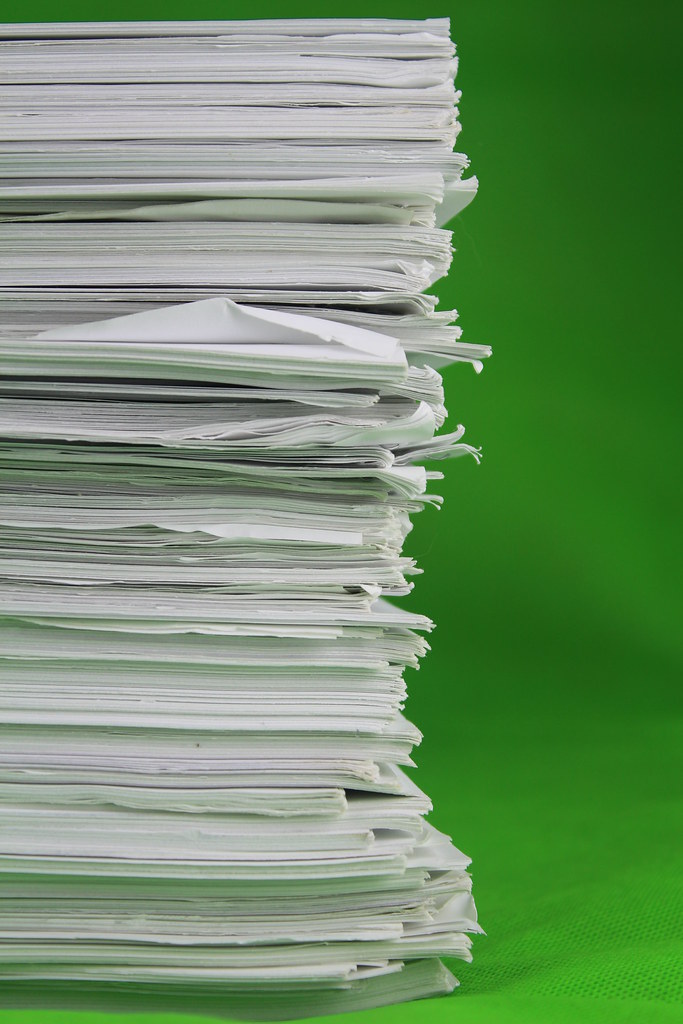
I know the answer to this question will vary greatly manuscript to manuscript (and writer to writer, of course), but as I work on Into the Black's sixth draft—which was, honestly, one of my cleanest manuscripts to date—I've been thinking about this. Judging by the last couple manuscripts I've sent to my agent, it seems I usually get to around five drafts before we consider it submission-ready—that is, ready to go to either my editor on submission, depending on the book.

But for me, five drafts usually means it hasn't needed major overhauls—or if it did I squished all those overhauls into one revision round (but not necessarily one pass!) and thus it didn't require extra checks with other people added to my process.

I suppose it also depends on how you define a draft. For me, I count a new draft every time I start a new serious revision round. So after the first draft, I work on my own revisions and create the second draft. Then it goes through two rounds with critique partners, after each of which I end up with the third and fourth draft. Then it goes to sensitivity readers (if necessary) and my agent and I use their notes to come up with the fifth and sometimes sixth draft. In between those, when I have multiple passes through a manuscript (usually to fix separate big things) I label them as partial drafts, like 3.1, 3.2, 3.3, etc. until I've finished. But I don't really count those as separate drafts—it's more of a way to mark how many passes I did per revision round.

But that's my method and a general trend based off a couple manuscripts I've gone the full process with. And so I'm curious—how many drafts do you generally do per manuscript?

Twitter-sized bite:
How many drafts do you generally do per manuscript? Join the discussion on @Ava_Jae's blog. (Click to tweet)

Vlog: How to Write an Elevator Pitch

Last week I mentioned how helpful it is to memorize your elevator pitch, which many of you seemed interested in doing. So this week I'm talking about how to write those elevator pitches.


RELATED VLOGS:


Have you ever written an elevator pitch? 

Twitter-sized bite:
Struggling to get your elevator pitch down? @Ava_Jae vlogs some tips. #pubtip (Click to tweet)

Do You Really Need That Scene?

Photo credit: bhayva999 on Flickr
A critique I've been finding myself make more often is questioning whether a scene is really vital to the plot—and I've been somewhat surprised with how often the answer is...well, questionable.

Unlike real life, everything that happens in the book must have a purpose—from your protagonist's daydream, to that witty banter, to that flashback or cute, fluffy scene. Every little thing must advance the plot or characters in some way, and sometimes, it can be hard to recognize whether or not that scene you love is actually doing something important, or whether its there just because you like it.

Really analyzing your scenes is an important part of large-scale revisions. It can be hard to admit that a scene might not be holding its weight, but once you reach that point, there are two things you can do: cut it or fix it.

Cutting a scene that isn't holding its own is self-explanatory, really—if it doesn't serve a purpose, then it doesn't need to be there. But in some cases, a scene may still have potential, in which case it can be reworked to serve some kind of purpose. Maybe you add a section where your characters talk about something important, or reveal something about themselves; maybe they stumble onto something that affects the plot. Whatever it is, what's important is that you make sure your revisions allow the scene to either further the plot or character—or both.

Analyzing whether or not a scene is really necessary can be hard when it's your own work—another reason why critique partners are so helpful. But by really putting each of your scenes under a microscope, you can discover some important ways to further your plot and character, ultimately strengthening your book as a whole.

Have you ever cut or reworked a scene that wasn't serving a purpose?

Twitter-sized bite:
Do you really need that scene? @Ava_Jae talks the importance of making sure every scene has a purpose. (Click to tweet)

Another Guest Post Contest!

Photo credit: Rick Payette on Flickr
It's that time again! I'm going to be traveling in May, so I've decided to run another guest post contest! I've done this twice before and the results have always been fantastic so I'm happy to do it again. I've got 4-5 openings for posts in May, which will be up Monday the 8th, Wednesday the 10th, Friday the 12th, Wednesday the 17th, and possibly Friday the 19th. I'll be accepting posts from TODAY to Friday, April 21st, and I'll notify those who have been chosen on the 28th.

Posts should be about writing, books or publishing. I’ll also accept posts about social media geared to writers (i.e.: my tumblr for writers post). Before you submit, make sure I haven’t already covered the topic you’ve written about (or are thinking you might write about) by checking my directory. As of this post, I’ve written 1,121 posts, so I’ve covered, um, a lot.

That said, if I've written about something you'd like to write about, but you have another take on it, or different tips, etc. you're welcome to enter a post on that topic. As long as it's not too similar to what I already have, it'll work. :)

Keep in mind! I’m all for taking a subject that might not traditionally be writing-related and show how it could be helpful to writers. Or put a writerly spin on it. Or something.

As for what I’m looking for, I'd love to host some new voices here on Writability. Bonus points to posts that make me laugh. Or think. Or see something in a new way. Given the political climate, I'm also open to political posts if they relate to writers or writing in some way.

The four to five posts I choose will include a mini-bio of the writer (you!) and up to five links of your choosing, which should hopefully get you some nice exposure since Writability gets pretty steady views (on average over 1,000 hits a day). I also expect that you try to answer any comments on your guest post because the community here is wonderful and they'd love to hear from you!

If I don’t get enough entries, I’ll just write up more posts myself. Or if I don’t feel the entries are quite what I’m looking for, I’ll write up posts myself. So as was the case with the last guest post contest, whether or not this works entirely depends on you guise.

So you’re interested in entering? Awesome!

  • Please use my contact form between now and Friday, April 21st 11:59PM EST to enter a guest post that you have written. The very first line should be "GUEST POST CONTEST ENTRY" in all caps. Like that. Copy and paste the whole post into the message box there below the first line.

  • You may enter as many posts as you like, as long as they meet the requirements.

  • Posts should be between 100 and 500 words. 250 is roughly average and anything longer than 500 will probably not be chosen. 

  • Please use block formatting (no indents, single space, double space between paragraphs, plain text) to make my life easy when copying and pasting. 

  • I’ll choose four to five of my favorite entries. What makes them my favorite may vary. Be yourself, write something that would work well subject-wise on this blog and you've got yourself a good shot. 

  • In the event that I get way more entries than I expected, I reserve the right to close the entry period early. Conversely, if I don't get enough entries that I think would fit, I may choose less than four or five (or none at all).

Good luck!

Twitter-sized bite:
Want a chance to guest post on a blog with +1,000 hits/day? @Ava_Jae is hosting a guest post contest until 4/21/17! (Click to tweet)

Word Games for Unwinding Writers

I love word games. They're usually strategy-oriented and make you think, but not in a way that's overly taxing. At the end of my work day, when I'm relaxing with Netflix, I like to pull up word games on my phone and unwind.

So on a slightly different but still related topic here on Writability, I thought I'd share my favorite free word games with everyone. Because there's no such thing as too many word games.


  1. Words With Friends

    This is an obvious one that most of you probably have, or have had at some point or another. It's a phone classic based off Scrabble (AKA: the best word game of all time) and remains a favorite to get my gears turning.


  2. Capitals

    This is a tough one I'm still working out the best strategy for, but it is addictive. The basic idea is to capture as many hexagon tiles as possible by building words with the letters in the tiles. By using a letter, you "capture" that tile and add it to your kingdom—and you win by capturing your opponent's capital and all of their tiles. It's a hard game but I really enjoy the strategic combination it requires to gain an upper hand.


  3. Crossword Quiz

    I recently picked this one up and I love it for many reasons. Firstly, it's completely free and you can unlock all of the levels just by playing. And second, it takes the crossword classic and puts it in a cool interface, but adds in a combination of emoji and picture clues. I like it a lot—it's low-key, and has a new daily quiz every day so you'll probably never run out of levels to play.


  4. Word Cookies

    This is my most recent addition to my word game collection, and it's a fun one too. Word cookies gives you a selection of letters and you have to come up with all the words the selection can make. The first several levels are so easy they're a bit bland, but it gets more challenging and it's another fun, relaxing game that you can play and go as you please. 

So those are my favorite free word games, but I'd love to add to my collection, so lets hear it. What are your favorite free mobile word games?

Twitter-sized bite:
Looking for some free fun word games to help you unwind during your free time? @Ava_Jae shares her favorites. (Click to tweet)

Vlog: 4 Things I've Learned Since Getting Published

It's been over a year since Beyond the Red was published! So today I'm looking back and sharing four things I've learned since that fateful day.


RELATED LINKS:


Twitter-sized bite:
Over a year after her debut, @Ava_Jae vlogs about 4 things she's learned since getting published. (Click to tweet)

How to Build an Online Platform: YouTube

Photo credit: clasesdeperiodismo on Flickr
So wayyyyy back in 2014 I started an online platform series. I covered Twitter, blogging, and tumblr, then decided I'd wait until I had more experience with YouTube before I talked about that avenue. 

I just recently crossed the 10,000 subscriber mark on my YouTube channel, bookishpixie, (which is a bigger following than any of my other social media sites, which is somewhat surprising because it's nowhere near the oldest of my social media accounts)—and it's honestly the most active community base I have, which has translated to a surprising (or maybe not surprising?) amount of book sales and editing clients. I guess you could say I have more experience now. So let's talk YouTube.

YouTube birthday: May 6, 2014 (nearly three years!) 
Subscribers: 10,315 (as of this writing)
Total views: 446,511 (as of this writing)
Time spent weekly: Roughly two hours. 

 Tips: 

  • Try to make your videos looks as professional as possible. This means getting a decent camera that can record in HD (which nowadays doesn't require anything super expensive), paying attention to lighting and sound, and learning how to edit videos. I'm somewhat lucky in the sense that I have an Associates in Digital Media/Film and did a year of a film-focused degree at an art college, so I have plenty of experience learning how to work cameras (and their manual settings), how to light a scene, and how to edit video. Not everyone has that obviously, but the good news is a lot of it is common sense and is pretty easy to learn. I want to one day upgrade my camera to a DSLR and get lighting equipment when I have more of disposable income, but I've made do with a relatively cheap camera and using just natural light and room lighting along with my camera's exposure settings to get mostly decent shots.

  • Figure out a script style that works for you. Some people like to write out an entire script, others prefer bullets. I'm more a bullet person, and I try not to write more than a sentence or two per bullet. I like using bullet points because it keeps my vlogs flexible and sounding more casual—and also I don't trip up on the exact wording that way, which helps a lot. (I also use the same technique for public speaking.) The exact method you use matters less than figuring out a method that works for you.

  • Like literally every other social media channel, the biggest key is to post consistently. I’ve already written a whole post about why posting consistently is so important, so I’m not going to get into that again. But the main benefit to YouTubers is by posting consistently, you’re allowing your viewers to get into the habit of checking/visiting your blog on a regular basis. For me, that means every Tuesday. Whether that’s weekly, bi-weekly, several times a week or monthly is up to you, but no matter what, consistency is key.

  • Similarly, your content should be somewhat consistent, too. For me this means I vlog about books, writing, and publishing, with few exceptions. It also means I try to keep my vlogs under four minutes whenever possible—because that's what I've always done and it's what my viewers expect from me now. And many of them have said they appreciate the brevity (and to be honest, so do I—it's a lot easier to edit and caption a short vlog than a long one!). 

  • Cross-posting. Cross-posting is helpful for just about every social media avenue, whether it's blogging, reviewing, Instagramming, etc. YouTube is no exception—I cross-post to Twitter, my blog, Facebook, and tumblr. Most of my traffic still comes from YouTube natively (which is great!) but cross-posting definitely helps get the word out.

  • Answer the (serious) comments. Yes, I've mentioned this for other social media sites, and yes it applies to YouTube, too. The different thing about YouTube is viewers are pretty used to being ignored in the comments, so when you do respond, they take note and kind of love it. But obviously you can ignore and report/block jerk comments because those happen from time to time. The comments on my YouTube channel are the most active of any of my social media sites—not only do viewers ask questions and comment on the vlogs, but they respond to each other, too. As a bonus, I've gotten a lot of great vlog ideas from questions and suggestions people have made in the comments, so really, it's a win-win. 

Have you ever considered starting a YouTube channel?

Twitter-sized bites:
Looking to build a YouTube channel? @Ava_Jae shares her experience and a few tips. (Click to tweet) 
"Find a script style that works for you," and other YouTube channel building tips from @Ava_Jae. (Click to tweet)
Related Posts Plugin for WordPress, Blogger...