Fixing the First Page Giveaway #24

Photo credit: wwarby on Flickr
2016 is whipping right past us and we're now nearly halfway through June! Which means it's time for the next Fixing the First Page feature—the 24th, in fact, which means this feature has been going on for two years now! Time definitely does fly.

So for those who’ve missed before, the Fixing the First Page features is a public first 250 word critique. Using the lovely rafflecopter widget, anyone interested in winning a PUBLIC (as in, featured in a post on this blog) first page critique can enter.

For an example of what this critique will look like, here's the last Fixing the First Page post.

Rules!

  • ONLY the first 250 words will be critiqued (up to finishing the sentence). If you win and send me more, I will crop it myself. No exceptions.

  • ONLY the first page. I don’t want 250 random words from your manuscript, or from chapter 3. If you win the critique and send me anything other than the first 250 words of your manuscript, I will choose someone else.

  • I will actually critique it. Here. On the blog. I will say things as nicely as I can, but I do tend to be a little blunt. If you’re not sure you can handle a public critique, then you may want to take some time to think about it before you enter.

  • Genre restrictions. I'm most experienced with YA & NA, but I will still accept MG and Adult. HOWEVER. If your first page has any erotic content on it, I ask that you don’t enter. I want to be able to post the critique and the first 250 in its entirety without making anyone uncomfortable, and if you win and you enter a page with erotic content, I will choose someone else.

  • You must have your first page ready. Should you win, you need to be able to submit your first page within 48 hours of my contacting you to let you know you won. If 48 hours pass and I haven’t heard from you, again, I will choose someone else.

  • You’ll get the most out of this if it isn’t a first draft. Obviously, I have no way of knowing if you’re handing me a first draft (though I will probably suspect because it’s usually not that difficult to tell). I won’t refuse your page if it’s a first draft, but you should know that this critique will likely be of more use if you’ve already had your betas/CPs look over it. Why? Because if you don’t, the critique I give you will probably contain a lot of notes that your betas & CPs could have/would have told you.

  • There will not be a round 2 (unless you win again in a future contest). I hate to have to say this, but if you win a critique, it’s NOT an invitation to send me a bunch of your revisions. I wish I had the time available to be able to look at revisions, but sadly, I don’t. If you try to break this rule, I will nicely say no, and also remember to choose someone else should you win a second contest. Which would make me sad. :(

So that’s it! If you’re okay with all of the above and would like to enter to be the twenty-second public critique on Writability, do the thing with the rafflecopter widget below. You have until Monday, June 20 at 11:59 EST to enter!


a Rafflecopter giveaway

2016 YA Cover Trends

So back in 2015 when the 2016 covers first started hitting the web, I thought it'd be fun to do a cover trend post. At the time there weren't quite enough covers out for me to do a comprehensive post, but now we're roughly halfway through 2016, so most of the books releasing this year have had their cover reveals.

Which means I can finally do this post.

Cover trends are always fun to look at—from the pretty girls in dresses, to the hands and feet trends of previous years, I've always thought it was interesting to see just how many books fit into any given trend.

For 2016 I noticed five main trends:

Water


Silhouettes


Big Text Down the Middle


People's Backs


Black Background


I'm not exactly sure why or how cover trends happen every year, but they're certainly fun to look at.

What other cover trends have you noticed this year?

Twitter-sized bite: 
What 2016 YA cover trends have you noticed? @Ava_Jae breaks some down. (Click to tweet)

How to Become a Writer YouTuber

So back in May 2014, I made a vlog to introduce myself to the internet. Prior to that, I had a stack of books as my avatar on all my social media sites, and for whatever reason, I thought the way I would show my face to the internet should be through a vlog rather than a selfie.

I made a channel, bookishpixie, just for that vlog, and then thought, what the hell? I'll just keep doing this.

So I did. And to be honest, I wasn't really expecting all that much in terms of subscribers—I figured there probably weren't that many writers on YouTube, right? It just seemed so different from the written media I was used to seeing writers interact on, and I knew of only a couple writing-related channels, so I figured there probably just wasn't much a demand for it.

Wellllll I was wrong. So wrong.

Turns out, there are a lot of writers and people interested in publishing on YouTube—and I have to say, the writerly community there has been one of the most supportive and welcoming I've ever seen.

So how do you vlog and build a community on YouTube? It's not as difficult as you might think.

Vlog preparation:

  1. Decide on a topic. Like blogging, this is easily the hardest step—figuring out what to vlog about. Luckily, I have nine times as many blog posts as I do vlogs, so if I ever really get stuck, I sometimes go through my archives and pick a topic I've blogged about but haven't vlogged about. Because while some of my YouTube audience has peeked over at my blog, a lot haven't, and even though I share my vlogs on the blog here too, I am more than well aware that most of you haven't read all 900+ posts, so reviving a topic here and there can be helpful for everyone.

  2. Bullet points. While some YouTubers rely on a script, I personally prefer to just jot down a few bullet points of the main things I'm going to cover, then improvise everything in between. This helps because I never sound stilted or get stuck trying to remember the exact phrasing of my script, and it also keeps things flexible. (Note: I use this same approach for speeches, too! Bullet points are so much easier to remember than line by line scripts.)

  3. Film! There's actually a lot that goes into this step—setting up lighting, figuring out where to put the camera, resetting the white balance and exposure on the camera every time I turn it on, etc. I have an advantage here in that I went to school for film for three years, so I know the basics in camera prep, but I'm also missing a lot of the professional gear I had access to in film classes way back when, so...maybe one day. Now I have most everything set up the way I want it all week so all I have to do is turn on the lights and camera when I'm ready to go.

  4. Edit. I have a Mac, so I use iMovie to edit all of my vlogs. Generally, I split up the vlog editing over three days (Thursday-Saturday). Day one: importing and cutting out the pauses and obvious mess ups (I do one long take instead of multiple takes, so this means when I mess up when I'm speaking I just stop and restart. During this step, I remove the in-between silences and frustrated outtakes). Day two: choosing the best takes/deleting duplicate takes (I repeat everything three times ish when vlogging) until I have the basic vlog. Day three: detailing (trimming clips, adding text when needed, cutting more if the vlog is too long, etc.) Note: I personally try to keep vlogs four minutes or under whenever possible, because too much longer than that and people start to lose interest.

  5. Upload to YouTube. This is actually multiple steps—the uploading itself, creating the title picture that will be the still when the vlog isn't playing, filling out the description for the vlog, and writing out the captions. I usually do this on Mondays.

So those are the basics for getting the vlog up. In terms of growing your channel, the main steps I've relied on are basically the same as growing any other social media account.

  • Consistent posting. I decided from the start I'd do one vlog a week (Tuesdays). Vlogs are a lot of work, so the weekly post works well for me because it doesn't add too much work to my already packed social media schedule. The reason consistency is so important, however, is because the more consistently you post, the better your audience will know to come back. Plus it shows your audience that you're committed and aren't going to just drop off the face of the internet.

  • Pay attention to your community (answer the comments). I can't tell you how many times I've had commenters say how nice it is to hear back from me, because most of the channels they comment on never get responses from the creators. While answering *all* the comments may one day be unfeasible (if the channel gets too big, for example), it's good to show your community that you're involved and listening to what they say. I'm not always able to answer channel comments quickly, but I do try to make sure I get to as many of them as I can.

  • Cross-post. Cross-posting whenever possible is sooooo helpful. I cross-post all of my vlogs to the blog here (which then links to my Twitter), tumblr, and Facebook. Cross-posting is a great way to get discovered and spread your creation around—you never know when a tweet or tumblr post will go viral and get you a host of new subscribers, even months after you posted.

So those are my YouTube channel-building tips! I definitely recommend vlogging if it's something you think you could consistently do—it's been a great experience for me even though I was *completely* terrified of the camera when I started, and has not only helped in terms of getting the word out for my blog and book, but has also made me way more confident when public speaking. Bonus! :)

Have you ever considered vlogging?

Twitter-sized bite: 
Curious about what goes into running a YouTube channel? @Ava_Jae breaks down some steps and tips. (Click to tweet)

Vlog: On (Terrible) First Drafts

Writing the first draft can be really challenging—not the least of which because it often feels like the writing is awful. Today I'm talking about first drafting and why terrible first drafts are totally okay.


RELATED LINKS: 

Do you struggle to get the first draft down?

Twitter-sized bites: 
Not feeling confident about your first draft? @Ava_Jae explains why terrible first drafts are totally okay. #vlog (Click to tweet)  
Do you struggle with the drafting process? @Ava_Jae vlogs about why terrible first drafts are okay. #writetip (Click to tweet)

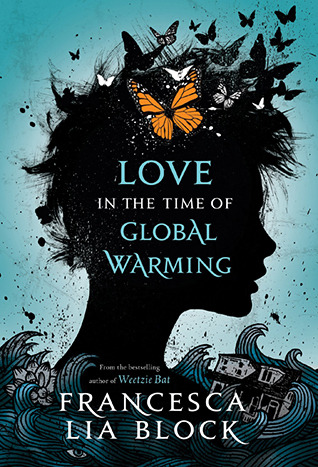
Book Review: LOVE IN THE TIME OF GLOBAL WARMING by Francesca Lia Block

Photo credit: Goodreads
So about a year ago I'd heard Francesca Lia Block's Love in the Time of Global Warming has a trans boy love interest, which I'd basically never seen in speculative YA (or Contemporary YA, for that matter), so when I saw it on sale at Book Outlet a while ago, I snatched it up. It then sat in my full physical TBR bookshelf for a while I tried to make a dent in my TBR, until I finally picked it up last week.

And I have to say, I'm glad I pulled it off my shelf, because it was a really enjoyable read.

Before I go into why, here is the Goodreads summary:
"Her life by the sea in ruins, Pen has lost everything in the Earth Shaker that all but destroyed the city of Los Angeles. She sets out into the wasteland to search for her family, her journey guided by a tattered copy of Homer’s Odyssey. Soon she begins to realize her own abilities and strength as she faces false promises of safety, the cloned giants who feast on humans, and a madman who wishes her dead. On her voyage, Pen learns to tell stories that reflect her strange visions, while she and her fellow survivors navigate the dangers that lie in wait. In her signature style, Francesca Lia Block has created a world that is beautiful in its destruction and as frightening as it is lovely. At the helm is Pen, a strong heroine who holds hope and love in her hands and refuses to be defeated."
So first of all, I think it helped going in knowing that this book would be weird. That was something I saw repeated over and over from reviewers—that they enjoyed it, but it was strange. I agree this is a strange one; the writing and events and the way it all blends together was very dreamlike. There's some really gorgeous, lyrical imagery, obvious Odyssey parallels (that the characters are aware of and comment on), and even the characters themselves have a dreamy, ephemeral-type quality to them. 

And you know? I liked it. The lyrical, imagery-heavy writing reminded me a bit of Elliot Finley Wake's style (except, you know, YA), and it was great to see a diverse cast in a post-apocalyptic YA, from the protagonist Pen, who is bi, to the love interest Hex, who is (*minor spoiler*) trans, to their two other companions who also turn out to be queer guys, it was really fun to read. 

My only critique is the ending felt a little too...neat, I suppose. Things came together easy after the main confrontation, which is okay, but it felt a teensie bit anti-climatic to me. That said, I still really enjoyed it overall, from the adventure-y plot, to the Odyssey-like mythology, and the lyrical writing, I definitely recommend Love in the Time of Global Warming for a quick, adventurous read with a cast you won't easily forget. 

Diversity note: As mentioned in the review, Pen, the protagonist is bisexual, the love interest, Hex, is a trans boy, one of the two companions is a gay Black boy, and the other is a boy who likes boys (though I'm not sure if he's gay, bi, pan, etc.).

What have you been reading lately?

Twitter-sized bite:

.@Ava_Jae gives ⭐️⭐️⭐️⭐️ to Francesca Lia Block's LOVE IN THE TIME OF GLOBAL WARMING—is this surreal YA on your TBR? (Click to tweet)

Discussion: How Do You Choose From Your TBR?

Photo credit: *Randee on Flickr
So as I look at my bookshelf full of owned-but-not-read books (yes, I have a bookshelf just for my physical TBR), it can sometimes be a challenge to figure out what to read next. I have so many choices in my TBR (forty-one at the moment, not counting e-books and pre-orders) without even attempting to look at my Goodreads TBR (which currently has over 300 books)—and sometimes the sheer number of options can be a little overwhelming.

What do I read next?

This month the choices have become a little easier because I'm quietly following along with #ReadProud hosted by Julia Ember to at least help me pick out some choices from my stack, including some that have been waiting to be read for a while, like Love in the Time of Global Warming (which I am loving so far) and Cut Both Ways. The only downside of course is once I've read those I will have read all the QUILTBAG books I own, but I suppose that just means I'll have to buy more...

Anyway. After those, I haven't quite decided what I'll pick up next. I've got quite a few series books I could jump into, though I'm thinking I should probably stick to the cases where I have the whole series, like Sekret, because otherwise I'll want to buy more. I also have quite a few stand alone titles I'd like to read, like The Last Leaves Falling, Bone Gap, The Scorpio Races, Dreamstrider, and My Heart and Other Black Holes.

I also have two series enders that I'd like to read, but are so thick I haven't delved in yet: Bitterblue and City of Heavenly Fire...and those will probably stay on the shelf until I've gotten ahead on my yearly goal enough that taking a while to read them won't put me back much.

This is all to say I have too many choices, which is the best problem ever, but I'm curious. How do you decide what to read next from your TBR?

Twitter-sized bite: 
Have a large TBR stack? How do you decide which book to read next? Join the discussion on @Ava_Jae's blog. (Click to tweet)

On Gendering and Books

Photo credit: upupandabear on Flickr
So last week I got an interesting question on Twitter, namely, if I had any tips for writing a book that would appeal to people across the gender spectrum. With Twitter being the place of brevity that it is, I told the person to just write whatever they want to, because stories aren't gendered, but I thought it was an interesting question to consider nevertheless.

I stand by what I said—stories in and of themselves aren't gendered—but the way we market and talk about books often is. And even more so, the marketing is often (not always, but often) tilted one way or the other based off not the story, but the perceived gender of the author.

For example, let's take a look at some YA contemporary covers with romances, authored by dudes and ladies.


It's interesting looking at the mini-breakdown, because while there are totally exceptions, even though these covers have the same general audience (teens who like YA Contemporary with a splash (or more than a splash) of romance), there's a pretty clear difference between the covers for books authored by guys and those authored by ladies.

To start with, the books authored by guys rarely have a girl on the cover (and when they do, there are also boys on the cover). Even The Fault in Our Stars which is narrated by a girl goes for a more gender neutral (or even boyish) illustrated presentation without any figures on the cover. The illustrated covers for books written by ladies, however, do tend to have girls on the cover, or some kind of feminine indicator, like lipstick. Covers for books written by guys tend to be more illustration-heavy with less gender markers present; covers for books written by ladies often have photographic covers featuring a girl, often with who we assume will be her beau.

That's without looking at font or color scheme, and yes, of course there are exceptions (Jay Asher's Thirteen Reasons Why, for example, has a photographic cover featuring the girl protagonist), but it's kind of hard to ignore some of the not-so-subtle gendering of book covers based solely on the author's perceived gender.

This is one of the many reasons why female-identified authors writing speculative fiction sometimes use gender neutral pseudonyms (most famously J.K. Rowling)—even when the books feature a male protagonist, there's an assumption of sorts that (some) guys won't pick up books written by women, and I can't help but suspect the gendering of covers has a lot to do with it.

Of course, especially in more recent speculative fiction, there are a lot of covers that avoid gender markers entirely regardless of the gender of the author, which makes sense in order to appeal to a wider audience.


But in a world where AFAB (assigned female at birth) kids are taught to identify with characters regardless of gender and AMAB (assigned male at birth) kids are shamed for being too girly and largely fed a host of media for boys, it's no wonder girls won't blink at picking up a book no matter how "boyish" the cover seems, whereas some guys may hesitate to do the opposite.

Ultimately, in terms of writing, my advice remains the same: if you want to write a story that isn't gendered one way or the other (and it is totally valid, by the way, to want to write for an audience of one specific gender) then write what you want, however you want, and the right readers will enjoy it regardless of their gender. But it's also good to be aware, I think, of the ways a book is packaged can affect who picks the book up and takes a look inside to begin with.

Twitter-sized bite: 
From book packaging to the story inside, @Ava_Jae talks about gendering and books. (Click to tweet)
Related Posts Plugin for WordPress, Blogger...