Vlog: About Pen Names

Today I'm talking about a very common publishing thing: pen names! Specifically, on why many writers choose to use them.


RELATED LINK: 

What do you think? Would you ever consider using a pen name? Why or why not? 

Twitter-sized bites:
Wondering why some authors use pen names? @Ava_Jae breaks it down in today's vlog. (Click to tweet)  
To pen name or not to pen name? @Ava_Jae vlogs about reasons some authors choose to use pseudonyms. (Click to tweet)

Discussion: Are You a Plotter, Pantser, or Hybrid?

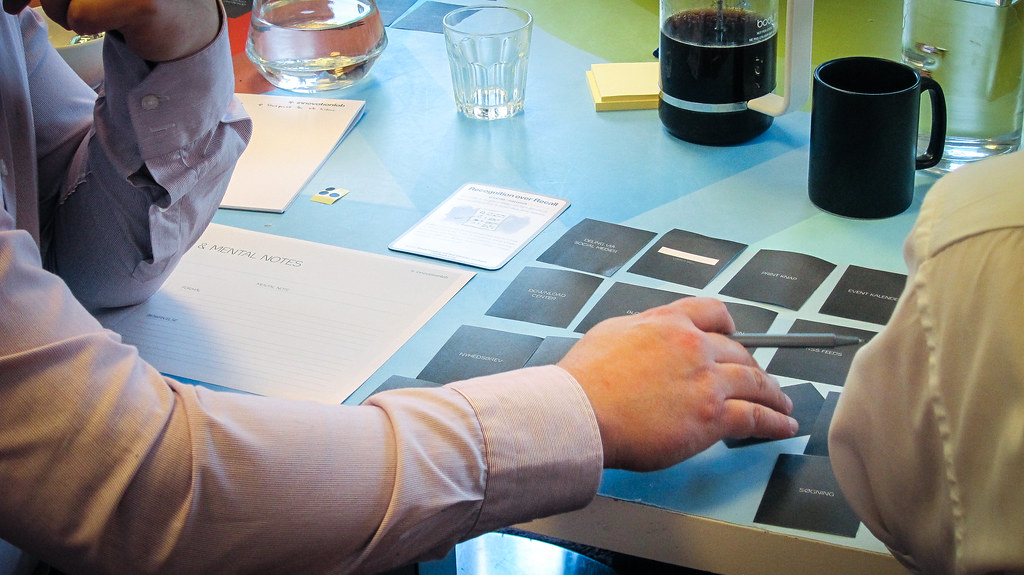
Photo credit: Innovation Lab on Flickr
So as I have frequently mentioned here on Writability, I'm a rather devout plotter—though I didn't start that way. When I first began writing, the idea of outlining my novel ahead of time gave me hives. I told myself it'd be boring and take the fun out of drafting, and I firmly stuck to that belief until I finally gave plotting a try.

Unexpectedly, plotting turned out to be a very effective method for me. I learned plotting ahead of time allowed me to write faster and helped eliminate most of my writers block, which turned out to be actually "don't know where to go from here" block.

While I don't necessarily stick 100% to my outlines while writing (as I've said before, I use them more as guidelines than rule books), I now don't start writing until I've fully plotted out the book idea. It's been an effective method for me so far.

That said! I am more than well aware that plotting doesn't work for everyone, or sometimes only works half the time, or only works up to a point for some. And if there's anything writing with the intent to publish for a decade now has taught me, it's that everyone's process is different. And sometimes one person's process is different book to book. And that's okay.

So since I haven't talked about this recently, I'm curious, and thus am making this discussion post: How many of you are plotters? Pantsers? Somewhere-in-between-ers? What do your first drafting processes look like?

Twitter-sized bite:

What's your first drafting process like? Are you a plotter? Pantser? Both? Join the discussion on @Ava_Jae's blog. (Click to tweet)

Never-Ending Editing Syndrome Part Two: Publishing Edition

Photo credit: stanjourdan on Flickr
So way back in June 2011 (as in, a month after I started blogging), I wrote this really hyper post on Never-Ending Editing Syndrome, which basically describes that ever-present feeling of never really being done with editing when working on a book. (You can read it if you want, but you’ve been warned—it’s hyper, as many of my 2011 posts were.)

One of you lovely readers happened upon that very old post, and asked about my take on it now, close to five years later with my debut on the way. The question specifically was: “How did you find the NEES when agents and editors tell you to change things?”

As I have, as of this morning, submitted (probably) final edits for Beyond the Red, I figured now was as good a time as any to answer.

I have, at this point, read through Beyond the Red a lot. A LOT. Like, I’m honestly not sure how many editing rounds I’ve done, but I’ve read those words more than I care to think about. A from the first round of edits, I already knew which round I was dreading the most: the final round. Where the edits are in and no more changes can be made.

There’s a safety net in knowing that you can always make changes later if you need to (and for that reason, I never really worried when working on revisions with my agent). Every time I hit “send” with the new round of edits to my editor, I reminded myself it’s okay, I can change something next round if I want to.

Except now I know I probably can’t. Not really. Not with anything significant, at this point anyway.

In a way, reading it over and over again helped, because by the time I got to that final round I was feeling pretty good—like in all likelihood I’d already made the changes I wanted. And I did, and sometimes reminding myself of some of those changes was reassuring, because I knew okay, but I fixed x.

The other part of me knows that once I get the final “no more changes at all” copy from my editor, I probably won’t read it. Partially because I’ve read those words so many freaking times but also because I’m afraid I’ll inevitably find a typo or a word choice I decide I don’t like and I won’t be able to do anything about it. And you know, ignorance is bliss and all that.

At this point, I’m keeping some truths locked away to keep in mind when I inevitably start worrying about not being able to change something:
  1. I wrote and edited to the very best of my ability—and then some. 
  2. A stray typo or eh word choice isn’t going to break the book. Or me. 
  3. I’ll always continue to learn and improve, so I can write and edit better next time around. 
So that’s where I’m at right now. It’s an exciting and nerve-wracking time, but overall, I’m proud of myself and of my book. And in less than two months, I’ll be able to share it with all of you. :)

Do you struggle with never-ending editing syndrome?


Twitter-sized bite:
Author @Ava_Jae talks dealing with Never Ending Editing Syndrome during her debut's the pre-publication days. (Click to tweet)

Book Review: SIX OF CROWS by Leigh Bardugo

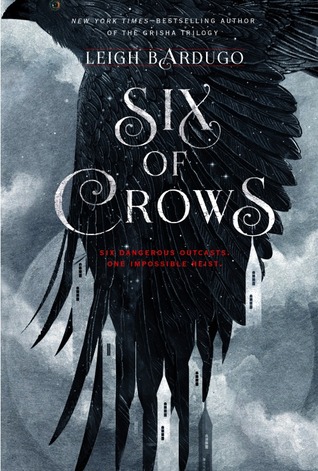
Photo credit: Goodreads
There are so many things I loved about this book.

Six of Crows has been on my TBR list pretty much since the moment it was announced because a) more Grisha and b) Leigh Bardugo, and this book totally lived up to my expectations. But before I go on about how amazing it is, here's the Goodreads summary:

"Ketterdam: a bustling hub of international trade where anything can be had for the right price—and no one knows that better than criminal prodigy Kaz Brekker. Kaz is offered a chance at a deadly heist that could make him rich beyond his wildest dreams. But he can't pull it off alone... 
A convict with a thirst for revenge. 
A sharpshooter who can't walk away from a wager. 
A runaway with a privileged past. 
A spy known as the Wraith. 
A Heartrender using her magic to survive the slums.

A thief with a gift for unlikely escapes.


Kaz's crew are the only ones who might stand between the world and destruction—if they don't kill each other first."

Right, so first and foremost, the question I've seen most about this book is whether or not it can be read without having read the Grisha trilogy. The answer is yes—pretty much everything is explained, and the only downside is you'll come across a few spoilers. But if you don't mind, Six of Crows is definitely understandable without previous Grisha universe knowledge.

I'll admit the first couple chapters were a little slower than I tend to like, pace-wise, but the story drew me in very quickly after that. I totally loved the vibrant Ketterdam and Fjerda setting, and I thought it was really cool that we got to see parts of the Grishaverse only mentioned in the previous books. The cast of characters are super diverse and I found that each POV (Kaz, Jesper, Inej, Matthias) were really interesting and drew me in for separate reasons, which was great because frequently in multi-POV novels, some POVs are more interesting than others, but I thought these were equally balanced.

Then the plot! The whole heist narrative was so ridiculously fun to read—it was incredibly smart and clever and I loved all the twists and wrenches in the plan. It reminded me very much of the Artemis Fowl series, in that the heist plot was super elaborate was unlikely odds and high stakes and the mastermind behind the plan (Kaz) repeatedly impressed me with his ability to think his way out of many problems.

And so many ships! I loved all the pairings in Six of Crows and was cheering for every single ship with equal fervor (which, when you have six mains/major characters, is impressive since again, I didn't find myself massively favoring one character or POV over another).

And finally, the thing I loved most—hello disabled protagonist in genre fiction! I actually didn't realize Kaz was disabled until after I bought the book, which was a really nice surprise. His disabilities (PTSD and chronic pain that causes a limp and necessitates the use of a cane) were very much part of the story and he didn't require a miracle cure to get around them—Kaz dealt with his disabilities in very real ways and I totally loved how he leveraged his cane to his advantage in various circumstances.

All in all, this book hit a home run. If you like fantasy and heist books or just really enjoyed the Grisha trilogy, I couldn't recommend this one more.

Now to wait impatiently for September when the second (and final) book, Crooked Kingdom, releases...

Diversity note: Kaz, one of the main protagonists, has chronic pain and a limp from an old injury and uses a cane to help him get around. He also deals with sometimes-debilitating PTSD. Another POV character, Jesper, is black and (slight spoiler) bisexual and (slight spoiler) Wylan also seems to like boys. 

Format note: I'm sure this book is equally excellent in e-book, but if you're able to get the print hardback, I do recommend it. It's one of the most beautifully designed books I own.

What have you been reading? 

Twitter-sized bites:
.@Ava_Jae gives 5/5 stars to SIX OF CROWS by Leigh Bardugo. Is this clever fantasy heist book on your TBR list? (Click to tweet
Looking for a smart YA Fantasy w/ a disabled MC? Check out SIX OF CROWS by Leigh Bardugo. (Click to tweet)

Vlog: On Writer Resolutions

It's a new year! Which means, among other things, many people are solidifying their 2016 resolutions. So today I'm talking about making healthy writing-related resolutions.


RELATED LINKS: 


What writing-related resolutions have you made for 2016?

Twitter-sized bites:
Do your writer resolutions rely on external factors? @Ava_Jae vlogs about why this isn't the best option. (Click to tweet)  
Finalizing your 2016 writer resolutions? @Ava_Jae vlogs about choosing resolutions you can control. #writetip (Click to tweet)

How I Dive Into New WIPs

Photo credit: Justin Ornellas on Flickr
So I’ve written a post about my plotting process and also vlogged about how I plot, but I haven’t actually talked about the step between drafting and plotting, where I start putting down the words. And the truth is, those first couple thousand words of a manuscript are super volatile for me.

Even though I’m a plotter, when I start writing, I don’t really know everything about the MS. My characters are, perhaps, the most vague of the information I start with—I generally know what they look like, their names, how they are marginalized (if at all), and while I’m plotting I usually start to get a sense for their personalities. But the most important element to me—the voice—is still very much out there and I don’t usually know much of anything about it until I start writing.

Which, for me, is the dangerous part. Because I can’t tell you how many stories I’ve started and abandoned because the voice just didn’t click with me. But for me, discovering the voice is very much a sink or swim experience—it either works or it doesn’t, and I usually know a couple thousand words in. Sometimes, if a voice is especially strong, I’ll know after a page or two that it’s going to stick. Many times I stop two or three or five or seven thousand words in because it just didn’t manifest into something that’s clicking with me.

This is why I tend to be so secretive about my WIP ideas before I start drafting—I don’t tell anyone, not my CPs, not my agent about those initial ideas until I’ve written at least 10,000 words and decided that the story is definitely going to get completely written. Once I get into the Safe Zone, so to speak, then I start being a little more open about what I’m working on. But before that, talking about it feels too risky, since my rate of abandoning projects early on is probably around 50%.

So starting a new WIP for me tends to be a scary thing. I mean, the blank page is always somewhat intimidating to me, but knowing especially at first that whatever I’m working on might not make it past 5,000 words feels a bit like walking along the crumbling edge of a cliff.

Last year I was too busy revising trunked manuscripts to start anything new, but this year I intend to write a new project. I don’t know what it’ll be, not yet, but I know I’ll be walking along some cliff sides and hoping for the best.

How about you?


Twitter-sized bites:
How do you start writing a new WIP? Join the discussion on @Ava_Jae's blog. (Click to tweet)  
Author @Ava_Jae talks voice, character development & more when it comes to starting the first draft. (Click to tweet)

End of Year Countdown: 5 Top Fives of 2015

Photo credit: derekskey on Flickr
It's 2016! Except I ran out of post days to post this annual tradition, so I'm squeezing it in here, on the first day of the new year. YAY 2016!

So here we go! My top fives of 2015. :)

Top 5 Most Popular Posts (On Writability)

As per usual, these are calculated with blogger’s page view counts. Like last year, the list is the same as the year before, with a little rearranging.
  1. Why Write Blog Posts Consistently? 
  2. Do You Listen to Music While Writing?
  3. Tumblr for Writers
  4. Writers: Start Acting Like Professionals
  5. Pirating Books: It's Not a Harmless Download
  6. How to Write Awesome Kiss Scenes
*Technically this is more than five but it was close-ish so I added a bonus post. Because kissing.


Top 5 Most Active Commenters

As explained every year, I use Disqus’s very nice widget on my sidebar to keep track of how many comments every lovely commenter makes. The system isn’t perfect and only keeps track of accounts, so if you comment on multiple accounts, it thinks you’re more than one person, but regardless, these five fabulous readers are the most active commenters of the Writability community—thank you!

Note: Those with two asterisks have been on the top five list for two years, and those with three asterisks were on the top five list the year before that! All the thank yous!
  1. Robin Red**
  2. RoweMatthew***
  3. Heather
  4. Jen Donohue**
  5. Daniel Swensen***

Top 5 Favorite (Writerly) Tumblr Blogs of the Year

Over time, tumblr has become one of my favorite social media sites. I’ve learned a ridiculous amount from the incredible finds posted there, and I’ve also really enjoyed the nerdy randomness that frequently appears on my feed.

These are my top five favorite writerly/bookish tumblr blogs, as calculated by tumblr based off which blogs get the most reblogs and likes from me.

Top 5 Favorite Books of the Year

So in previous years, this used to be favorite blogs, but I really haven't been keeping up with my blogs this year, so I decided to do books instead. Not-so coincidentally I reviewed all of these or in the case of the 2016 books, I have reviews on the way. :) So! Here are my favorite reads of the year, in no particular order:

  1. Focus on Me by Megan Erickson (Review)
  2. I'll Give You the Sun by Jandy Nelson (Review
  3. Half Wild by Sally Green (Review)
  4. Burning Glass by Kathryn Purdie
  5. The Girl from Everywhere by Heidi Heilig

Top 5 Favorite Twitter Accounts

Twitter remains my favorite favorite. And these Twitter peoples are amazing, uplifting, and insightful in topics like writing, marginalizations, publishing and more. (Again, in no particular order):

So those are my top fives of 2015—do you have any favorites of the year you’d like to share?

Also, Happy New Year, everyone!

Writer @Ava_Jae shares her top fives of 2015—what are some of your favorite writing resources of last year? (Click to tweet)
Related Posts Plugin for WordPress, Blogger...